


- ➔ Countries follow distinct trajectories in how food price inflation affects their food security outcomes. Despite facing comparable global food price pressures between 2015 and 2023, countries demonstrated remarkable variation in domestic food price inflation rates and food security.
- ➔ National policy responses varied across different food security trajectories. Countries with deteriorating or fluctuating food security situations relied more heavily on price control measures and agricultural production subsidies than countries with more stable food security trajectories. Low food-insecure countries with stable or improving food security tended to adopt a mix of trade policy instruments, in contrast to high food-insecure countries where the use of such instruments was more limited.
- ➔ Drawing on the experiences of countries during recent periods of food price inflation, several policy lessons emerge. These highlight practical measures that can help governments respond more effectively to future shocks, balancing immediate relief with long-term market resilience:
Design effective responses to high food price inflation
- ➔ Policymakers can use targeted fiscal measures to support vulnerable populations’ economic access to food during economic shocks such as high food price inflation. However, these measures should be aligned with the broader policy landscape within a country. They should also be time-bound with clear exit strategies to prevent them from becoming permanent, making it difficult to redirect resources when no longer needed.
- ➔ While reducing taxes on essential goods – including food – can ease inflationary pressures on households’ budgets, governments should balance this with revenue sustainability, especially in fiscally constrained settings.
- ➔ Governments should closely monitor whether tax cuts and exemptions are passed on to consumers to ensure effectiveness.
- ➔ Social protection programmes, including cash or in-kind transfers, are vital for protecting food security and nutrition of vulnerable households during food price crises. Cash transfers should be carefully designed to address the potential erosion of transfer value in high-inflation environments.
Improve monetary–fiscal policy coordination
- ➔ Sound fiscal policies that complement credible monetary policies are crucial for stabilizing domestic markets, including agrifood markets.
- ➔ Effective public debt management and well-targeted government spending on nutritious food for all can bolster economic resilience while maintaining long-term fiscal sustainability.
- ➔ Central banks should uphold a credible, independent and transparent monetary policy stance to anchor inflation expectations and prevent major currency devaluations. A clear commitment to price stability strengthens investor confidence and mitigates financial volatility, also in agricultural markets.
Enhance structural and trade-related measures to address food price inflation
- ➔ While price policies can address high food prices in the short term, their effects are temporary; moreover, they often distort markets and are an inefficient solution to food price inflation.
- ➔ While export taxes can offer short-term relief by lowering domestic prices, they often come at a high cost – distorting global markets, straining importing countries, and ultimately hurting domestic producers through reduced competitiveness and investment.
- ➔ Governments should opt for a stable, coordinated and transparent approach against long-term food price increases. This approach should consider policy measures to reduce the likelihood of prolonged high food price episodes while supporting both producers and consumers by, for example: i) managing food reserve systems adequately; ii) enhancing market transparency; iii) improving food price monitoring systems and data collection; iv) investing in trade-related infrastructure; and v) reducing non-tariff barriers to trade.
Build resilience through data, information and investments
- ➔ Transparent and functioning agricultural market information systems (MIS) may help ensure price stability. Given the increasing complexity of global agrifood systems, investing in data collection and strengthening MIS is essential to mitigate food supply chain disruptions, prevent speculation-driven price hikes and support smallholder farmers in accessing fair and competitive markets.
- ➔ Reducing the probability of future food price inflation events requires sustained investment in improved infrastructure of agriculture, including research and development, trade routes, and storage to improve market access and resilience against shocks and disruptions, enhance productivity sustainably, and strengthen food supply chains.
During the COVID-19 pandemic, governments worldwide implemented extraordinary fiscal measures to mitigate the social and economic fallout. These measures included price policies, tax exemptions, and cash and in-kind transfers to support households and businesses. Many countries also increased public health spending to strengthen healthcare systems and guarantee access to vaccines and medical supplies, as well as ensure food security and nutrition.1 In some cases, fiscal interventions amounted to unprecedented levels of public expenditure, significantly expanding budget deficits (see Chapter 3). Many high-income countries (HICs), in particular, were able to mobilize substantial fiscal resources through borrowing at low interest rates, while most low- and middle-income countries (LICs and MICs) faced more constrained fiscal space.2
Numerous governments introduced targeted fiscal support for specific sectors most affected by the crisis, such as agriculture. Subsidies were offered to maintain food production and protect smallholder farmers from income loss, while public investment programmes were launched to stimulate economic recovery. To cushion the impact on vulnerable populations, social protection programmes were expanded, including in-kind and cash transfers, as well as utility payment waivers.3, 4 While these measures helped stabilize economies and safeguard livelihoods, they also significantly increased public debt levels, raising concerns about long-term fiscal sustainability and the capacity to respond to future economic shocks.5
These extensive fiscal measures were complemented by highly accommodative monetary policies, as central banks around the world implemented monetary easing to support economic activity, driving inflation. Interest rates were rapidly lowered to near-zero levels in many advanced economies, while quantitative easing programmes injected liquidity into financial markets. Emerging and developing economies also adopted monetary easing measures, although often to a more limited extent due to inflationary concerns and exchange rate pressures. As inflationary pressures began to mount in the aftermath of the pandemic, central banks initially maintained a cautious stance, perceiving inflation as transitory. Consequently, monetary tightening was initiated relatively late, leaving economies exposed to rising inflation and increasing the challenge of balancing fiscal and monetary policy objectives.
As inflation was already gaining momentum, the outbreak of the war in Ukraine further exacerbated global economic pressures. The war, coupled with other political tensions and extreme weather events, intensified geopolitical fragmentation, prompting the reorganization of supply chains and increasing trade costs. Geopolitical risks intensified market uncertainty, increased price volatility and disrupted trade routes, while retaliatory tariffs and sanctions further strained the economy. The involvement of major trading countries amplified the adverse effects on international trade, compounding the challenges faced by economies already grappling with inflationary pressures.
Policies can both contribute to food price inflation and serve as part of the solution. Figure 4.1 illustrates the complex interplay between global shocks, policy responses, and their implications for food security and nutrition. Triggered by the pandemic, the war in Ukraine and other extreme events, both demand and supply shocks have emerged as key drivers of global food price inflation. In response, fiscal, monetary and trade policies have been deployed, though with varying approaches. On the one hand, excessive fiscal spending and expansionary monetary policies intensified inflationary pressures. On the other, the same policies, when well-designed – for example, targeted, time-bound, balanced and coordinated – can keep inflation at a desirable level. Policies are the key levers for influencing outcomes. Policymakers should, therefore, monitor their effects closely, consider and address trade-offs, and adapt them as conditions evolve to ensure they effectively support food security and nutrition objectives.
FIGURE 4.1 Policies can both contribute to food price inflation and serve as a part of the solution

This chapter examines how countries addressed episodes of high food price inflation and the effects of these policy measures on food prices and food security and nutrition, and it provides policy suggestions. The first part analyses different types of fiscal, monetary and trade policies commonly put in place in the most recent episodes of food price inflation. It also provides insights into how these policies may have contributed to food price inflation trends, as well as how they aimed to mitigate the impacts of food price inflation on food security and nutrition. The second part identifies patterns in the trends of food price inflation and food insecurity among different country groups for the period 2015 to 2023. Evidence from policy measures implemented in this period provides insights into how these policies could be associated with different food price inflation and food insecurity outcomes.
4.1 From relief to reflections
4.1.1 Fiscal responses to high food price episodes
Support measures to the agricultural sector
Fiscal policy is often the first line of defence when governments respond to episodes of high food prices, using taxation and spending measures to mitigate the impact on livelihoods. During the COVID-19 pandemic, governments worldwide allocated approximately USD 17 trillion to various fiscal measures,1 including efforts to ensure an adequate food supply for their populations. However, while such measures can provide critical relief, they may also contribute to higher food demand. If supply fails to keep pace, food price inflation can escalate.6 Moreover, efforts to curb food price inflation through subsidies can sometimes backfire, inadvertently driving global prices higher.7 For instance, fiscal and trade policies implemented to address the 2010 to 2011 food price surge could have been responsible for 40 percent of the global wheat price increase and 25 percent of the rise in maize prices.8 Therefore, while fiscal measures are essential for addressing short-term food security and nutrition challenges, they must be carefully designed to avoid exacerbating inflationary pressures.
The scale of financial support directed towards the agricultural sector during the pandemic underscores the significant efforts made by governments to mitigate the crisis. For instance, in 2020 alone, at least USD 157 billion was targeted to the agricultural sector in 54 HICs and MICs. Of that expenditure, 37 percent was directed to support agrifood producers.9 Many LICs, including Ghana, Kenya, Nigeria, Senegal, the United Republic of Tanzania and Zimbabwe, renewed efforts to assist farmers through subsidies aimed at reducing reliance on imported staple foods.10 Support included subsidies for fertilizers and seeds (e.g. in India and Malawi) and loans for agricultural firms (e.g. in the Dominican Republic and Germany) to sustain food supply.11
In 2022, global support for agriculture dropped significantly, reverting to slightly above pre-pandemic levels as governments scaled back pandemic-era assistance. This decline in support to agricultural producers was observed across all income groups. In HICs, agricultural support remained higher than in other country groups, with a large share directed towards aiding producers through subsidies and support programmes. Conversely, lower-middle-income countries (LMICs) and LICs exhibited lower overall levels of agricultural support. In response to rising food prices, countries increasingly prioritized boosting domestic food production, despite the overall reduction in agricultural policy support compared to pandemic levels.12 For instance, in the European Union, several countries, including Austria, Czechia, Italy and Poland, postponed or scaled back certain sustainability measures – such as restrictions on pesticide use and set-aside land requirements – to boost domestic food production.13
After the pandemic, many countries tightened fiscal expenditures, but inflationary pressures led to continued support for key sectors, including agriculture. Despite fiscal tightening, the return to pre-pandemic expenditure levels stalled in 2023 and 2024.14, 15 In response to high food prices, countries like Chile, India, Mexico and the Philippines introduced subsidies for agricultural inputs, particularly fertilizers, starting in 2022.13 The inflationary period after the pandemic made it difficult for countries to remove some support measures, as livelihoods were at risk due to food price increases. A flexible use of fiscal policy, considering well-targeted support for some segments of the population combined with fiscal restraints for other sectors, could reduce inflation while maintaining adequate levels of protection for the most vulnerable.14
Price policies: cutting the edge of soaring food costs
Price policies are among the most common policy responses implemented during food price inflation episodes. These policies are oriented to keep the price levels of specific food items below (or above) a certain threshold. They include initiatives such as price controls, which can provide immediate relief, or stimulate production and deliver a mid-term response – for example, by using minimum support prices (MSPs) to boost production of some commodities. Price policies are fiscally costly and distortive for food markets. The economic principle that “the cure for high prices is high prices” relies on the assumption that an increase in prices will moderate demand and trigger a supply response, either locally or externally, combining domestic production and imports to stabilize and reduce prices. Direct price controls may help mitigate the effects of food price inflation on households, but they also hurt farmer incomes, undermining long-term investments. When fiscal instruments like subsidies are used to reduce consumer prices while maintaining high producer prices, they require substantial government spending, can be regressive (particularly for non-targeted programmes) and difficult to remove in later stages,16–18 and may also fuel inflation.19, 20 The effectiveness of these policies depends on the sensitivity of supply and demand behaviour to prices – that is, their level of elasticity – and the nature of the initial shocks. Elastic systems characterized by strong market mechanisms benefit from allowing prices to adjust; meanwhile, it is important to prioritize other instruments such as social protection programmes.
While price policies were widely implemented in low- and middle-income countries during the most recent episode of high food prices, high-income countries implemented them to a lesser extent. In LICs and MICs, price controls and food subsidies were particularly common. For example, in Africa, countries such as Burkina Faso and Senegal introduced policies to stabilize food prices, with Burkina Faso implementing price ceilings on staple foods like maize and Senegal providing subsidies for rice. In Asia, Indonesia, the Philippines and Sri Lanka also focused on food price interventions, with Sri Lanka, for example, instituting price controls on rice and cooking oil. In contrast, HICs implemented fewer price policies. Many European countries, including Hungary, Portugal and Romania, primarily directed their price controls towards energy sectors to shield consumers from rising fuel costs, rather than focusing on food.16 This was driven by two key factors: first, in LICs and LMICs, food accounts for a much larger share of household income – up to 40 percent compared to around 10 percent in HICs – and second, as analysed in Chapter 3, a sharp rise in energy costs was one of the main drivers of food price inflation in the United States of America and in the euro area between 2022 and 2024.21
Effectiveness of price policies remains limited in the long term and can lead to an inequitable distribution of costs and benefits. Price caps at the retail level for some products resulted in the expected short-term effect of reducing prices and protecting consumers. For instance, in Pakistan low prices of wheat flour benefited consumers; however, this was at the expense of wheat producers.22 In the past, India’s rice procurement system was limited in reach, often excluding small and marginal farmers. As a result, larger producers and private actors disproportionately benefit, while many smaller farmers sell below the MSP.23 Minimum support price interventions can also distort price signals across crops, potentially leading to inefficient resource allocation and unintended production shifts, as observed across six Indian states.24 Stronger MSP support for rice and wheat, especially before 2014, has further driven land-use shifts away from oilseeds, reducing crop diversification, which in turn may negatively affect food security and nutrition.25–27 Price policies can also undermine the efforts to promote healthy diets if not adequately targeted. Recent evidence from ten South-eastern Asia and Western Pacific countries shows that many of them have established price policies on foods high in sodium and/or sugars that are not recommended in food-based dietary guidelines, as well as on breastmilk substitutes. Yet, many of these countries have other policies in place to promote the consumption of healthy diets, highlighting the need for increased policy coherence.28
During the most recent episode of price inflation, governments reduced or removed taxes on food and other items to mitigate prices. Low- and middle-income countries primarily focused their tax exemptions on food, aiming to alleviate the burden of rising food prices. For example, Fiji, Paraguay and Uzbekistan reduced value added tax (VAT) on selected food items to support household food security during the inflationary period.16 By May 2023, nearly 99 countries had implemented tax-related measures, with almost three-quarters of these involving reductions in or exemptions from indirect taxes like VAT on food.29 On the other hand, high-income countries largely targeted energy through tax exemptions to reduce the impact of rising fuel costs on consumers. Countries such as Belgium, Slovenia, Spain and Sweden introduced tax exemptions on electricity, fuel and gas. While these countries focused more on energy, others also took measures for food, with Poland cutting VAT on several food items and France applying a reduced VAT rate of 5.5 percent on certain food products to ease consumer spending.30, 31
Tax exemptions or cuts do not always translate into lower food prices for consumers, as the pass-through of these measures can vary significantly. Evidence on the pass-through of VAT reductions is mixed, with outcomes depending on other factors, for instance, market competitiveness.18 For example, during the pandemic, Germany implemented a temporary VAT reduction on food to stimulate the economy. On average, supermarket prices decreased by approximately 1.3 percent, indicating that about 70 percent of the VAT reduction was passed on to consumers.32 Poland implemented a temporary VAT cut on basic food items as part of an anti-inflation policy package. However, initially, this reduction had limited impact on consumer prices; almost a full pass-through was achieved after five months.31 In Argentina, high-income households benefited more from VAT policies, because price reductions were less likely to be passed on to consumers in independent grocery stores, where low-income individuals typically shop.33
In addition, removal of or reduction in taxes could lead to reduced fiscal revenues, which can be particularly important in countries with an already tight fiscal space. During the 2007 to 2008 food price crisis, the reduction in taxes led to a drop equivalent to 7 percent of the total tax revenue in Guinea-Bissau,34 while in the Niger a tax exemption for rice and sugar led to a drop of around CFA 12 billion (EUR 18.2 million)aq in tax revenues in 2008.36 The Swedish National Audit Office found that reducing food VAT cost SEK 30 billion (EUR 2.8 billion)ar in 2018, while alternative targeted measures such as increased pensions could have achieved the same benefits at half the cost.37 Conversely, these tax exemptions could be implemented alongside broader structural tax reforms designed to improve the relative prices of nutritious foods. For instance, imposing taxes on sugar-sweetened beverages could generate additional tax revenues.38 Currently, 115 countries have imposed taxes on sugar-sweetened beverages;39, 40 these increased revenues can then be directed towards funding policies that support nutritional objectives for the most vulnerable populations.
Social protection programmes: supporting the poorest consumers
Consumer-directed fiscal measures, such as direct food and cash transfers, are commonly used by governments to support households during periods of high food prices. During times of shocks such as the COVID-19 pandemic, climate extremes, conflict or high food prices, governments can implement social protection programmes like food vouchers and cash transfers to help households to cope with these shocks. In high-income countries, they can also expand targeted subsidies and increase funding for food banks to support those experiencing food insecurity.41
Social protection programmes were scaled up as part of the fiscal responses to the pandemic and were a key element of government support to households. On average, countries spent an equivalent of 2 percent of GDP on social protection in 2020 and 2021. The spending was higher in HICs and UMICs (above 2 percent) than in LICs and LMICs (below 2 percent). Most of these measures, even in high-income countries, were non-contributory social protection initiatives (i.e. social assistance).3
Such programmes were also implemented to address the effects of the more recent episode of food price inflation. Announcements of social protection programmes had increased since the 2021 to 2022 period, but their coverage was still lower than for the initiatives implemented during the pandemic. For example, by May 2023, 790 million people were covered by cash transfer programmes, compared to 1.36 billion covered during the pandemic (2020 to 2021).as, 29 The large increase in announced and implemented social protection measures began in 2022, with 563 initiatives recorded across 158 economies – a 62 percent rise since July 2021 (Figure 4.2). Social assistance accounts for nearly a quarter of these responses, with 76 percent provided as cash transfers, including widespread unconditional transfers in countries like the Islamic Republic of Iran (90 percent coverage) and Poland (52 percent).42 The cumulative expenditure of the announced social assistance measures between July 2021 and April 2023 amounted to USD 256.3 billion.29
FIGURE 4.2 Surge in social protection measures since 2022


The recent inflation surge highlighted the need to scale up nutrition-sensitive social protection programmes to address possible impacts on the consumption of healthy diets and nutritional outcomes. While several initiatives targeted households with children29 – a distinctive component of nutrition-sensitive programmes – few included other nutrition-related components. Well-designed nutrition-sensitive programmes can improve nutritional outcomes, especially for vulnerable groups like women and children, by enhancing dietary diversity and reducing malnutrition risks,43 even in periods of food price inflation. In 2023, a short-term, nutrition-sensitive cash transfer initiative in Sri Lanka increased the consumption of nutritious foods by children and caregivers; the transfers contributed to improving food consumption and dietary diversity despite the concurrent food price inflation.44 To this end, taking into account the “affordability gap” (i.e. the gap between food expenditure and the cost of a healthy diet) can support the design of social protection programmes that, combined with other health-related initiatives, protect and promote the consumption of healthy diets in periods of high food prices.45, 46
Cash transfer programmes have proven effective in mitigating the impacts of agricultural or price shocks on food security. In Zambia, cash transfers increased monthly food expenditures per capita by 29 to 34 percent and reduced the probability of severe food insecurity by 22 to 23 percent during times of crisis.47 On average, a USD 100 transfer led to a monthly increase in food expenditure of between USD 1.99 and USD 2.13. The positive effects of the transfers lasted around three years as, not only did they boost immediate household food consumption, but they could also be used for longer-term savings and investments.48 In Mexico, the Progresa-Oportunidades conditional cash transfer programme helped cushion the effects of rising food prices between 2003 and 2007. During the 2007 food price crisis, food consumption among households not producing food fell by over 30 percent, but the programme’s cash transfers mitigated this decline by approximately 11 percentage points. This highlights the programme’s important role as a buffer during periods of price volatility.49 In Togo, government cash transfer policies effectively mitigated the negative impacts of rising food prices. The simulation results show that cash transfers slightly outperformed food subsidies in improving household consumption and welfare.50
Cash transfers can sometimes exacerbate economic challenges during crises like food price surges. In high-inflation environments, the value of cash transfers can erode rapidly, requiring careful adjustments to balance beneficiary protection with fiscal costs.51, 52 For instance, if local food prices are already significantly higher than international prices and local market supply is limited, cash transfers can further drive food price inflation, as happened in Kenya with the Hunger Safety Net Programme.52 Similarly, Ethiopia’s Productive Safety Net Programme contributed to rising inflation, significantly reducing the purchasing power of the poorest populations.53 Indexing transfers to food prices or providing direct food assistance (Box 4.1) may be more effective in maintaining purchasing power.51, 52
BOX 4.1Humanitarian cash and in-kind transfers in high inflation contexts
Cash and in-kind transfers are widely implemented in humanitarian contexts to protect livelihoods.54 The choice of transfer modality is informed by assessments that consider market functionality among other factors, including operational feasibility, cost-efficiency, people’s preferences, and alignment with government and other actors.
The use of cash transfers in high-inflation settings has been debated due to concerns about their potential to contribute to price increases and loss of purchasing power. However, evidence indicates that cash transfers have limited effects on local food price increases when markets are functioning.55, 56 Furthermore, humanitarian cash transfers remain effective in high inflation contexts when various programmatic adaptations are implemented. These adaptations include mechanisms for regularly updating the transfer value, adjustments in payment frequency and currency, incorporation of economic risks in contingency plans, and frequent monitoring of local prices and other economic and financial variables.
In some humanitarian situations, when markets are disrupted and food prices are high, using in-kind assistance may be appropriate in order to avoid placing further pressure on local markets.54, 56 For example, before the escalation of conflict in Gaza, the World Food Programme (WFP) relied mainly on cash-based transfers, underpinned by a robust retail network and adequate market supply. However, when conflict disrupted access and markets, WFP shifted to ready-to-eat food parcels to maintain support. Similarly, in the Sudan, market assessments indicated severe increases in the price of sorghum – a key staple in the country – prompting WFP to deliver in-kind transfers of this essential commodity to mitigate the erosion of people’s purchasing power.
While evidence of the comparative effects of different transfer modalities on food security is mixed, the design and implementation of humanitarian social protection programmes should remain context-specific and people-centered to ensure maximum effectiveness and efficiency.
4.1.2 From easing to tightening: monetary policy during surging inflation
Monetary policy, managed by central banks, regulates money supply to stabilize prices and control economic fluctuations, often through inflation targeting. Easing expands the money supply, fuelling inflation;57 on the other hand, tightening curbs the supply by raising interest rates, which increases borrowing costs and discourages spending. Contractionary monetary policy has consistently reduced food price inflation in major emerging economies (e.g. Brazil, China, India, Russian Federation and South Africa), highlighting its effectiveness in stabilizing food prices.at, 59 Fiscal and monetary policies are closely linked, as government deficits require borrowing, making them sensitive to interest rate changes. Higher interest rates raise borrowing costs, limiting fiscal expansion, while fiscal policy affects exchange rates by shaping investor confidence – rising debt can weaken confidence, depreciating the domestic currency. The interplay of fiscal and monetary policies affects food prices across countries.
At the beginning of the inflationary period, low- and middle-income countries, especially those reliant on commodity imports, were among the first to respond to inflation concerns by raising interest rates. This was driven by rapid food price increases, wage-price indexation and less-anchored inflation expectations. Countries like Brazil, Chile and Mexico led the tightening cycle, with most LICs and MICs taking significant action by the end of 2021.15 In contrast, high-income countries, benefiting from strong policy credibility and historically stable inflation, initially delayed tightening, viewing inflation as temporary. However, once they shifted course, they moved swiftly, implementing aggressive monetary tightening policies despite complications from ongoing asset purchase programmes and forward guidance strategies.au, 61
The combination of pandemic-era fiscal stimuli and subsequent monetary tightening to control inflation has significantly exacerbated public debt levels, reducing countries’ ability to access financing including for investments for food security and nutrition. Low- and middle-income countries have been particularly affected, with their debt rising at twice the rate of that of advanced economies. By 2023, LICs and MICs accounted for 30 percent of global debt, up from just 16 percent in 2010. This rapid debt accumulation has dramatically increased interest payments, with 3.3 billion people now living in countries that spend more on debt servicing than on education or health care.62 This can compromise the availability of financing needed to end hunger, food insecurity and malnutrition by 2030.38, 63
4.1.3 A double-edged sword in a game of trade
Dynamic trade patterns: the evolving impact on food price inflation
Effective trade policies play a crucial role in stabilizing food prices and ensuring market resilience. During periods of high food prices, governments often adjust trade measures such as tariffs, quotas and export bans to protect domestic consumers. Reducing import tariffs can lower the cost and increase the supply of foods, thereby mitigating price spikes. Conversely, export bans can help stabilize domestic prices, but may disrupt global markets, particularly when implemented by major food exporters.18, 64, 65 Trade restrictions can alter the balance between global food supply and demand, with harmful effects on both exporting and importing countries.65, 66 Countries that are more open to trade usually achieve higher levels of adequacy of nutrient supply.67
The 2022 episode of food price inflation was less affected by trade measures compared to the 2007 to 2008 food price crisis. During the 2007 to 2008 crisis, major exporters like Argentina and Ukraine imposed wheat export bans, while China and India restricted rice exports.66 In contrast, during the 2022 commodity price surge, only a few major exporters implemented trade restrictions, and most were temporary with minimal long-term effects on trade flows.66 For example, export restrictions during the 2007 to 2008 crisis affected over 15 percent of internationally traded staple food calories, whereas in the early months of the COVID-19 lockdowns, this figure reached 7.5 percent. Following the outbreak of the war in Ukraine, trade restrictions impacted between 7 percent and 12 percent of traded calories throughout much of 2022.68
Nevertheless, global trade policies on agricultural products have remained a key tool for food security in recent years, with major economies adjusting tariffs and trade relationships in response to shifting market dynamics and geopolitical tensions. In response to the introduction of tariffs on steel and aluminium by the United States of America in 2018, several trading partners, such as Canada, China, Mexico and the European Union imposed retaliatory tariffs on a wide range of US agricultural products.69 These elevated tariffs remained largely in place through 2021, contributing to ongoing trade tensions and influencing global agricultural trade dynamics. In response to current or expected tariffs, many countries, including China, Nigeria, the Philippines and the United Kingdom of Great Britain and Northern Ireland, have increased diversification strategies towards their trade partners. For example, China has diversified by increasing imports from alternative countries such as Brazil and the Russian Federation, and by promoting domestic production through increased productivity and supportive policies, among other measures.70, 71
In response to the significant 2022 surge in agricultural commodity prices and its effects on domestic food price inflation, countries exhibited varied approaches regarding trade measures on agrifood products. India reduced import duties on edible oils.72 Similarly, Indonesia and Malaysia adjusted their export policies in response to volatile market conditions. While Malaysia withdrew an export ban on live chicken and chicken meat, Indonesia lifted an export ban and a tariff on wheat, but also implemented and then rapidly removed an export ban on palm oil to protect local supply.73, 74 Temporary export bans were also applied by Bangladesh (on rice), China (on corn starch) and India (on rice), among others. Conversely, Argentina took a different approach, maintaining tariffs while implementing price controls and export restrictions on wheat and other key agricultural commodities to manage domestic inflation. Meanwhile, the European Union increased regulatory scrutiny on potential price manipulation in international markets, reflecting a broader strategy of balancing trade liberalization with market oversight.75
Interestingly, most recent trade interventions have been short-lived, helping to avoid long-term market distortions and disruptions to global supply chains. In response to the pandemic and subsequent food price surges, many countries implemented measures – for example, export restrictions, import tariff reductions, and quotas – in order to stabilize domestic markets and ensure food security and nutrition. However, these interventions were often temporary and were lifted once market conditions improved or the immediate crisis subsided. For instance, several countries imposed export bans on staple foods during the pandemic (2020 to 2021), but most of these were removed within months as supply chains adjusted and food availability stabilized. Similarly, during the 2022 episode of high food prices, some governments introduced export controls on key commodities yet swiftly rolled them back to minimize trade disruptions. In general, countries tend to use short-duration trade interventions (Figure 4.3) to address short-term challenges without causing prolonged market distortions or harming trade relationships.
FIGURE 4.3 Shortening policy durations: a trend towards quick reversals

SOURCE: Authors’ (FAO) own elaboration based on Global Trade Alert. 2025. Global Trade Alert Data Center. [Accessed on 28 February 2025]. https://globaltradealert.org/data-center. Licence: CC-BY-4.0.
While export restrictions may offer short-term relief, they can exacerbate price volatility at the global level. Past events have shown how such measures can significantly inflate prices on a global scale. Trade restrictions on fertilizers, including phosphates, played a role in driving price spikes during the last three global food crises (2007 to 2008, 2011 to 2012, and 2022 to 2023) (Box 4.2). Given the interconnected nature of global food markets, uncoordinated trade restrictions can create cascading effects, disproportionately affecting vulnerable populations, and potentially lowering domestic producer prices below international market prices.19, 66, 76, 77 For instance, about three-quarters of the increase in the price of rice that occurred in 2008 can be associated with adverse policy responses, such as export bans, from some major exporters.78 Also, an announcement of trade restrictions and other trade measures can increase price volatility.79 To mitigate these risks, international cooperation is essential. Strengthening commitments to open and predictable trade, particularly through global and regional trade agreements, can help reduce uncertainty and promote market stability.
BOX 4.2Export bans and trade restrictions shaped global prices of phosphate fertilizers
Phosphate fertilizers are essential for agricultural production as they promote strong root development, enhance crop yield and support overall plant health, especially in nutrient-deficient soils. Phosphate fertilizer prices have historically been shaped by both long-term structural trends and short-term shocks, with trade restrictions playing a key role in market volatility. Three major price spikes – in 1974, 2008, and 2021 to 2022 – were driven in part by export restrictions, alongside supply–demand imbalances, rising energy costs, and geopolitical tensions.80
Export bans and restrictions have been critical factors in these disruptions (Figure A). In 2008, China imposed export restrictions on phosphate fertilizers to protect domestic supply, exacerbating global shortages.81 A similar pattern emerged during the 2021 to 2022 price surge, when China once again limited phosphate exports, worsening supply constraints at a time of rising global fertilizer demand.82, 83 The 2022 outbreak of the war in Ukraine further disrupted phosphate trade, as sanctions and supply chain shifts reshaped global commodity flows.84
Figure A MONTHLY Evolution of phosphate fertilizer prices, 1970–2024

SOURCES: Authors’ (FAO) own elaboration based on Brownlie, W.J., Sutton, M.A., Cordell, D., Reay, D.S., Heal, K.V., Withers, P.J.A., Vanderbeck, I. & Spears, B.M. 2023. Phosphorus price spikes: A wake-up call for phosphorus resilience. Frontiers in Sustainable Food Systems, 7: 1088776. https://doi.org/10.3389/fsufs.2023.1088776. Data are from World Bank. 2025. Commodity Markets "Pink Sheets" Data. [Accessed on 14 March 2025]. https://www.worldbank.org/en/research/commodity-markets. Licence: CC-BY 4.0.
Beyond these recent events, trade policies have historically influenced phosphate fertilizer markets. The United States of America, as a major phosphate exporter, has faced political sensitivities around its trade practices. In the 1970s, debates over the US State of Florida’s phosphate shipments to the former Soviet Union underscored concerns about resource security.85 Although large-scale phosphate fertilizer export bans are not widely documented from that period, some countries likely implemented export restrictions, quotas, or licensing requirements to stabilize domestic markets.
Are stocks essential again? The return of strategic reserves
Strategic food reserves play a role in mitigating the impact of food supply shocks and ensuring national market stability; the two most common types are emergency and buffer stocks. Both are designed to mitigate food supply disruptions, but they serve distinct purposes. Emergency stocks reduce consumer vulnerability during supply disruptions or food price shocks in emergencies, whereas buffer stocks stabilize domestic market prices to avoid excessive volatility, benefiting both consumers and producers.76, 86
The role of public stockholding programmes in managing food prices has been a topic of renewed interest in recent years. During the 1980s and 1990s, many countries significantly reduced or eliminated these programmes as part of structural adjustment and market liberalization policies. However, the food price spikes of 2007 to 2008 prompted a resurgence of public stockholding initiatives as governments sought to stabilize domestic markets and ensure food security (Figure 4.4). The recent surge in food price inflation has once again brought to the forefront the debate on the strategic use of public food reserves.76
FIGURE 4.4 Global cereal stocks on the rise after price volatility
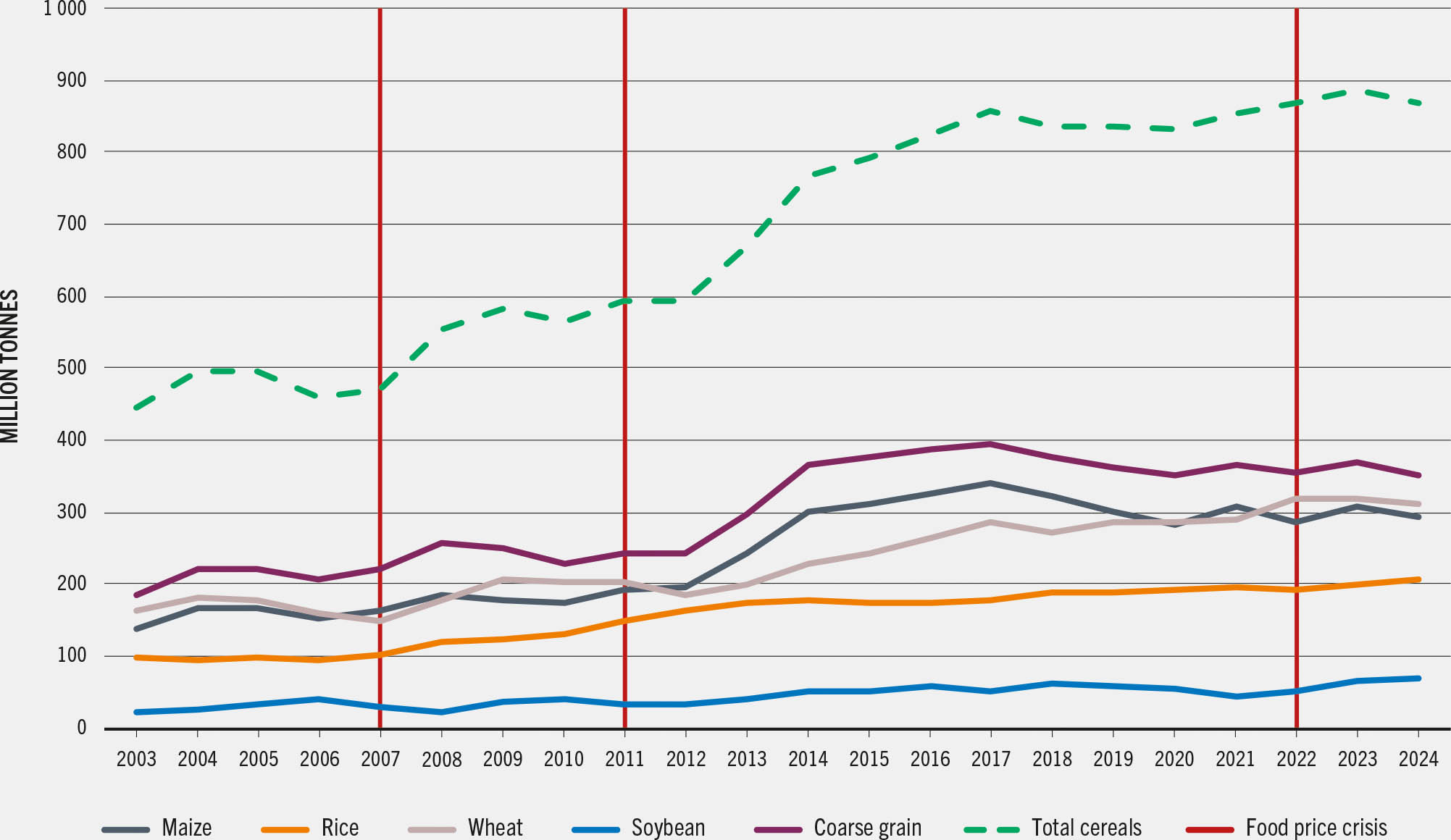
When effectively managed, reserves can help stabilize prices, reduce reliance on trade restrictions, and provide crucial support for vulnerable populations during crises.87, 88 For instance, in response to rising wheat prices, India implemented an open market operation in July 2023, releasing 10 million tonnes of wheat from public stocks. This intervention successfully curbed wheat price inflation, which had exceeded 12 percent, bringing it down to between 3 and 7 percent.89 Since 2021, Uzbekistan reformed its strategic grain reserves: the release of stocks through commodity exchanges to stabilize supply disruptions was complemented by temporary storage subsidies and cash payments to safety net beneficiaries. These adjustments significantly reduced procured wheat stocks – from 50 percent of total production in 2021 to just 12 percent in 2024 – while cutting the fiscal cost of the strategic grain reserves from USD 537 million (0.8 percent of GDP) to USD 197 million (0.3 percent of GDP) over the same period. Importantly, despite these changes, domestic wheat price volatility remained stable, even amid external challenges.90
However, the effectiveness of food reserves and their distribution depend on sound governance, cost efficiency and integration with broader market-based mechanisms. Poorly designed reserves can lead to unintended market distortions, fiscal strain and inefficiencies in food distribution, underscoring the need for careful planning and execution.91, 92 For instance, in 2023, the release by India of large quantities of wheat into the market reduced public stock levels, potentially limiting the government’s ability to respond to future supply shocks. The reliance on public stockholding as a primary tool for managing food price volatility may also lead to fiscal strain, as maintaining and distributing large reserves is costly.93 Such costs can be significant; for instance, the cost of buffer stocks in India (in 2009) and Zambia (in 2011) was 1.5 percent and 1.9 percent of the national GDP, respectively.94
Public buffer stockholding policies may have significant short- and medium-term impacts on domestic and international commodity markets. Increasing public stock levels can stabilize prices in the event of supply shocks, but may lead to higher procurement costs and elevated commodity prices, affecting market dynamics and public expenditures.95 Conversely, reducing public stock levels can enhance market availability, lower prices and reduce fiscal burdens, but may leave markets more exposed to future shocks.76 Export subsidies, often applied by large exporters when stocks are released, can depress international prices by increasing global supply, which may benefit consumers in net food-importing developing countries. However, this practice can negatively impact farmers in countries where comparable government support is lacking, making it challenging for them to compete in both domestic and international markets.76 Policymakers should carefully balance stockholding levels to ensure food security and nutrition while minimizing unintended market distortions and fiscal pressures.96
Public buffer stockholding programmes can have unintended consequences for market dynamics, particularly by discouraging private sector participation in grain storage and trade. Major and unpredictable government intervention in markets creates uncertainty among private actors, reducing their incentive to invest in storage infrastructure and trading activities. As a result, market liquidity declines, and the number of participants capable of stabilizing prices diminishes. Over time, this can lead to greater price volatility, undermining the very objectives of public stockholding policies: food security and nutrition, and market stability. This is one of the reasons that many buffer stock programmes have failed to decrease price volatility.94, 96
A well-functioning food reserve system requires a coordinated approach that combines reserve holdings with complementary measures such as early warning systems, regional trade cooperation, and private sector involvement. Clear and transparent rules for stock release are essential to ensure that reserves act as a last-resort mechanism rather than a tool for routine market intervention.91 Regional cooperation can reduce the need to have large stocks;93 for instance, the required stock levels for an emergency reserve in West Africa can be reduced by up to 40 percent compared to a non-cooperative approach, ensuring more efficient resource allocation and improved resilience to shocks.97
4.1.4 Mitigating price pressures with information systems
A well-functioning market information system, supported by timely and high-quality data, is important for fostering informed decision-making and improving the overall efficiency of agricultural markets. Market information systems play a pivotal role in this regard by collecting, analysing and disseminating data on both input and output markets. A robust MIS consolidates data from multiple sources – markets, major buyers and sellers, and government monitoring services – ensuring credibility and reliability. The accuracy, consistency and timeliness of underlying data are fundamental to the effectiveness of any MIS, as poor-quality data can mislead stakeholders and undermine trust in the system. By providing farmers, traders, processors and policymakers with timely and accurate market intelligence, market information systems help improve decision-making, enhance market efficiency, and reduce the risks of sudden price spikes and volatility.av, 99
By promoting transparency and improving policy coordination in global food markets, an MIS can contribute to mitigating unexpected price surges that can affect global food security and nutrition. For instance, the Agricultural Market Information System (AMIS) is an interagency initiativeaw – launched by the G20 Ministers of Agriculture in 2011 after the global food price crisis of 2007 to 2008 – to support the improvement of market transparency and reduce the risks of price volatility. During the pandemic and since the outbreak of the war in Ukraine, AMIS has facilitated information sharing among countries, enabling policymakers to better understand the dynamics of global agricultural markets and make informed decisions. For instance, the AMIS Rapid Response Forum held a series of policy dialogue events to reduce the impacts of the war in Ukraine on food trade.101
The ability to track and compare trends across different regions and commodities allows policymakers to identify vulnerabilities and respond proactively to potential price spikes. For instance, in India, during the pandemic in 2020, the government actively leveraged the eNAM (National Agriculture Market) platform, which connects farmers to wholesale buyers nationwide using real-time data to track prices and market trends, mitigate supply chain disruptions, and ensure farmers maintain market access. Beyond enabling online trading, the government further strengthened the platform by integrating additional markets and providing direct financial support to farmers, enhancing their resilience during the crisis.102
Quick access to market information systems, whether through traditional or modern communication channels, can significantly reduce price volatility and improve market efficiency. When information is limited or costly, market participants cannot engage in optimal arbitrage, leading to price dispersion and inefficient allocation of goods. However, internet access or mobile phones can help alleviate these issues. For example, in Kerala, India, between 1997 and 2001, the adoption of mobile phones by fishermen and wholesalers led to a dramatic reduction in price dispersion, the elimination of waste, and near-perfect adherence to the Law of One Price.ax, 104 Similarly, in the Niger, the introduction of mobile phone services between 2001 and 2006 reduced grain price dispersion by between 10 and 16 percent, with the greatest impact in remote markets.105 Box 4.3 showcases how the integration of innovative technology solutions into rural agricultural practices is transforming how small-scale producers access markets, resources and financial services in Latin America.
BOX 4.3Innovative market information tools supporting SMALLHOLDER FARMERS
In Latin America, innovative market information tools are making a significant impact on small-scale producers’ livelihoods by connecting the producers to financial and non-financial services, market opportunities, and critical agricultural information.
One notable initiative is the Innovatech project grant, which in its first edition collaborated with 12 tech startups across five Latin American countries (Plurinational State of Bolivia, El Salvador, Guatemala, Honduras and Mexico). The project aimed to mainstream the use of digital solutions developed by these startups, integrating them into the work delivered through other projects to support the development of agrifood value chains. By linking startups with agrifood value chain initiatives, the project provided target groups with digital solutions to address their pre-identified problems. The project reached approximately 21 000 households, including women, youth and Indigenous Peoples, by connecting 382 organizations with technology-driven solutions.
In the Plurinational State of Bolivia, Hola Tractor has transformed its business model to better serve smallholder farmers. Originally catering to medium producers, Hola Tractor now includes small-scale producers in its client base through alliances with large producer organizations. This expansion has provided a larger client pool, and has allowed them to introduce new equipment services, such as rototillers, tailored to the needs of small llama producers in the highlands. These changes enable small-scale producers to access affordable mechanized solutions, enhancing their productivity and reducing labour costs, thus improving the prices of their products.
In El Salvador, the Alfi initiative empowers small-scale producers by strengthening their financial skills through an engaging mix of gamification, microlearning and behavioural insights.
In Guatemala, SiembraCo leverages virtual planting techniques and advanced technologies such as satellite imagery to boost agricultural productivity. This initiative supports small-scale producers by providing training, access to high-quality inputs, appropriate tools and equipment, and technical assistance for crop implementation. By integrating these resources, SiembraCo aims to empower farmers to increase their yields and improve their livelihoods.
In Honduras, the MiCaja App was designed to digitalize all operations of small village banks. This app enables these banks to generate daily financial and profit-and-loss statements, significantly improving the transparency of their financial management. As a result, the banks are able to access more capital for their lending operations. This, in turn, has helped farmers secure more credit at better rates, thereby reducing their risk of over-indebtedness.
Finally, in Mexico, Nilus provides affordable and nutritious foods to low-income urban populations through disintermediation, food rescue, and group buying. The model relies on partnerships with commercial agribusinesses, restaurants, hotels and large agricultural producers to source fresh and rescued produce, which is then redistributed through a network of community leaders. Nilus has formed alliances with producer organizations and begun purchasing from small-scale producers in rural areas to supply urban consumers. This approach not only supports small-scale producers, but also ensures a steady supply of nutritious foods to urban communities at affordable prices.
4.1.5 Strategic investments to prevent future food price increases
Recent food price spikes in global food markets have underscored the need for sustained investment in agriculture to enhance the resilience of agrifood systems and protect food security and nutrition. Farmers in key agricultural economies, including China, India and the Russian Federation, responded to the crisis-induced price spikes of 2007 to 2008 with record levels of investment in agriculture.106 After a decrease during 2021 and 2022, global public expenditure on agriculture increased again in 2023, reaching USD 701 billion in nominal value.107 The year 2023 also saw an increase in credit to the agricultural sector, reaching USD 1.21 billion. However, this did not represent an increase in share (constant at 2.30 percent), because other sectors saw even greater credit increases in the same period.108 Sustained investment – both public and private – in agriculture have the potential to strengthen long-term food production capacity, improving market resilience; however, without complementary policy measures and considerations to ensure that these investments promote healthy diets, global food security and nutrition remains at risk should another crisis emerge.106, 109
Strategic investments in agricultural research and development (R&D) are reshaping global leadership in innovation, with shifting funding priorities across major economies. These investments can play a key role in reducing food prices through increases in agricultural productivity.110 Notably, China has emerged as a global leader, with annual average public agricultural R&D spending surpassing that of Brazil, India and the United States of America combined between 2019 and 2021.111 Conversely, the United States of America has experienced a decline in public agricultural R&D investment, with expenditures in 2019 approximately one-third lower in real terms compared to the peak in 2002.112 Similarly, while the European Union allocated EUR 381 billion to overall R&D in 2023, the growth rate in agricultural research funding has been modest compared to that in Japan and the Republic of Korea, for example.113
Investing in resilient transport infrastructure – including maritime corridors, port facilities and inland logistics networks – can enhance food supply chain efficiency and reduce the risk of price spikes caused by infrastructure bottlenecks. The stability of food supply chains increasingly depends on a handful of critical bottlenecks that facilitate the movement of key commodities. International trade of agricultural commodities is growing, increasing pressure on a small number of “chokepoints” – critical junctures on transport routes through which exceptional volumes of trade pass. Three principal kinds of chokepoints are critical to global food security and nutrition: maritime corridors such as straits and canals, coastal infrastructure in major crop-exporting regions, and inland transport infrastructure in major crop-exporting regions.114 A serious interruption at one or more of these chokepoints could conceivably lead to supply shortfalls and price spikes, with systemic consequences potentially reaching beyond food markets. More commonplace disruptions may not in themselves trigger crises but can add to delays, spoilage and transport costs, constraining market responsiveness and contributing to higher prices and increased volatility.
Similarly, investing in storage infrastructure is critical for enhancing price stability. Adequate storage facilities, including warehouses and cold chains, allow farmers to store their produce and sell at more favourable prices, rather than being forced to offload at low prices during peak harvest periods. This reduces price volatility and ensures a more stable supply of agricultural products throughout the year, contributing to food security and nutrition. Moreover, improved storage minimizes post-harvest losses, particularly in developing countries where inadequate facilities result in significant food loss.
Investing in cold chain infrastructure is crucial for improving the availability and quality of nutritious foods, enhancing producer prices and reducing food loss. Sustainable cooling technologies, which offer low operational costs, are increasingly being adopted, especially for the early stages of the cold chain, such as removal of heat from the field and storage of large quantities of produce.115 These solutions are particularly beneficial in off-grid remote areas116 and can contribute to reducing the price of nutrient-dense foods such as fruits and vegetables.110 For example, walk-in cold storage containers equipped with solar panels have become a cost-effective option for storing fruits and vegetables in South and Southeast Asia. An evaluation of this technology in Northern Nigeria demonstrated significant improvements in both the volume of produce sold and the profits of users, while reducing losses and waste before sale.117 Off-grid integrated solutions for cooling, transportation and solar-powered cold storage for vegetable value chains are currently being tested, often alongside innovative business models such as Cooling as a Service, which help address affordability and financing barriers, particularly in sub-Saharan Africa.116 Additionally, technologies are being developed to reduce the reliance on imported components and facilitate maintenance by combining traditional and modern materials. A hybrid technology project in Mali, supported by the Deutsche Gesellschaft für Internationale Zusammenarbeit GmbH (GIZ) [German Agency for International Cooperation] and Germany’s Federal Ministry for Economic Cooperation and Development, increased income by 25 percent and extended the shelf-life of potatoes by one month.116
Limited storage capacity creates a sequence of market distortions. Farmers are compelled to sell produce immediately after harvest, creating market oversupply that reduces prices, diminishes bargaining power and heightens susceptibility to price volatility. The magnitude of this problem is substantial – in sub-Saharan Africa, inadequate grain storage facilities result in post-harvest losses and seasonal price fluctuations with an annual cost of USD 4 billion for grains alone.118 In India, inadequate cold chains lead to substantial loss of produce before even reaching consumers, worsening food price inflation. Cold storage infrastructure is therefore vital to stabilize prices of perishable goods such as fruits, vegetables and dairy products. Investments in both traditional and cold storage facilities consistently reduce post-harvest losses and contribute to price stabilization and improved market functioning.
Investments in small and medium-sized enterprises (SMEs) in the midstream and downstream of agrifood systems play a critical role in rural economies by providing value chain opportunities for small-scale producers. These enterprises – which source, process, package and distribute food – are essential for increasing agricultural output, improving producer prices and reducing food losses along the value chain.119 However, they may struggle to access appropriate finance tailored to their needs, as microfinance institutions often provide insufficient funding while commercial banks may consider SME customers to be too risky.120, 121 Addressing these financing gaps enables agrifood SMEs to generate significant economic opportunities along the rural–urban continuum,122 and if oriented towards sustainable manufacturing of nutritious foods, they can support nutritional outcomes. In fact, investments in agriculture yield the highest leverage ratio for developing economies,123 with agrifood SMEs having strong multiplier effects that contribute to sustainable production and rural transformation. Several development projects have demonstrated the positive impacts of such investments. In Colombia, the Building Rural Entrepreneurial Capacities Programme (2012–2022) successfully increased income per capita by 34 percent, wages by 36 percent, and household assets by 10 percent. Additionally, project participants were less exposed to climate shocks and saw a 4 percent increase in dietary diversity.124 The Rural Clustering and Transformation Project (2017–2022) in Montenegro helped participants increase their income by 35 percent, primarily through livestock, with a remarkable 92 percent increase in livestock sales.125


