1. Introduction
2. Fish distribution
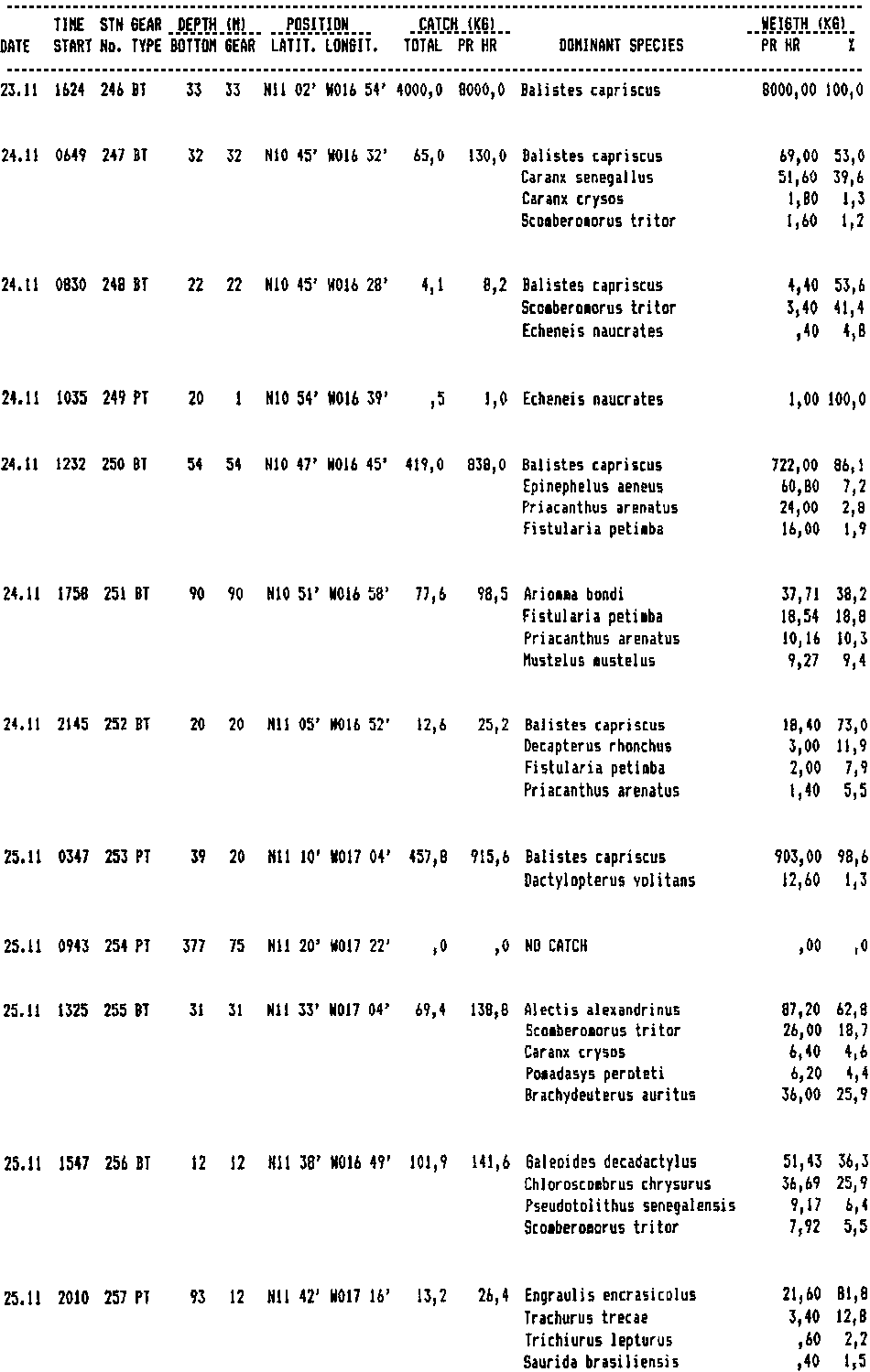
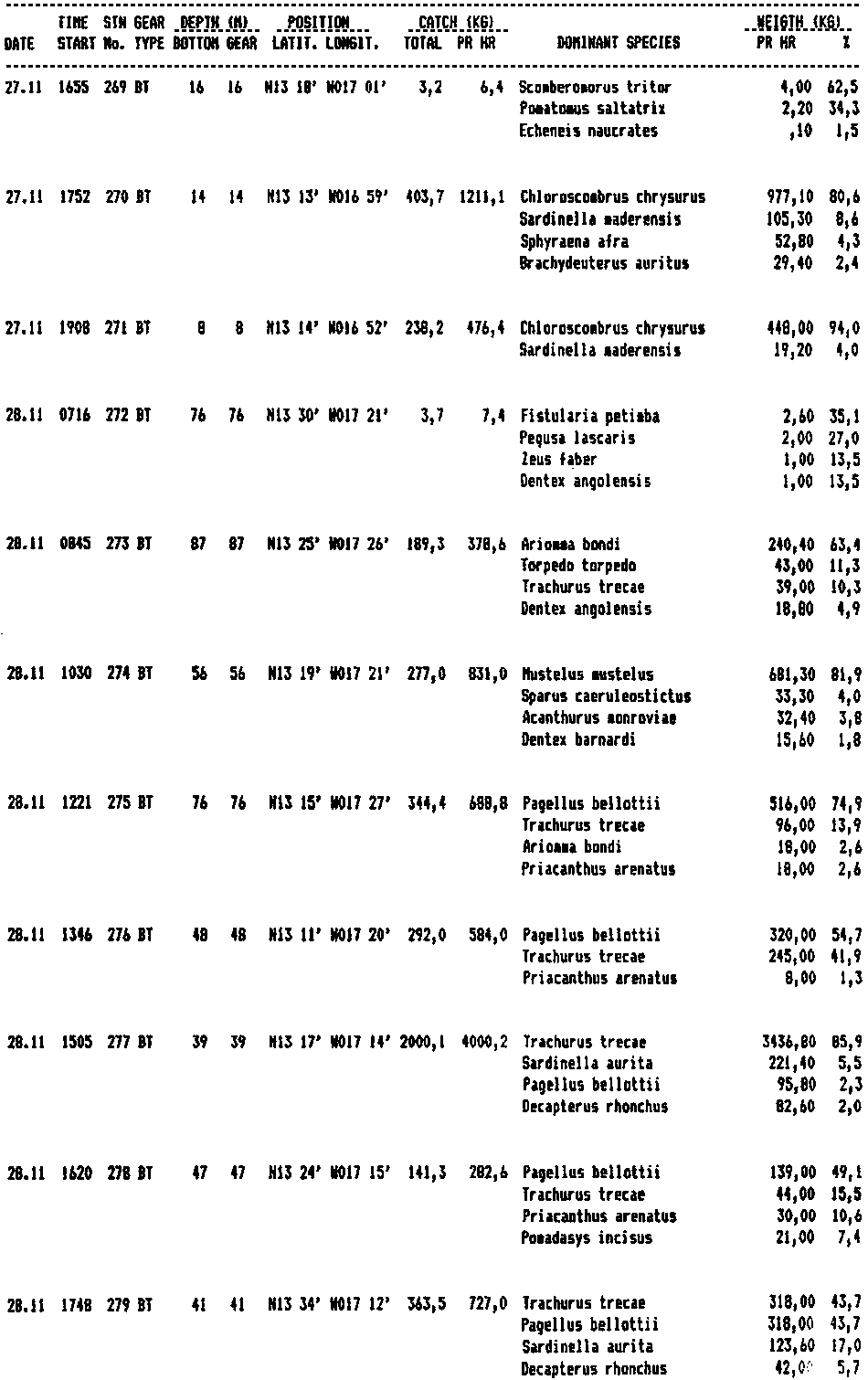
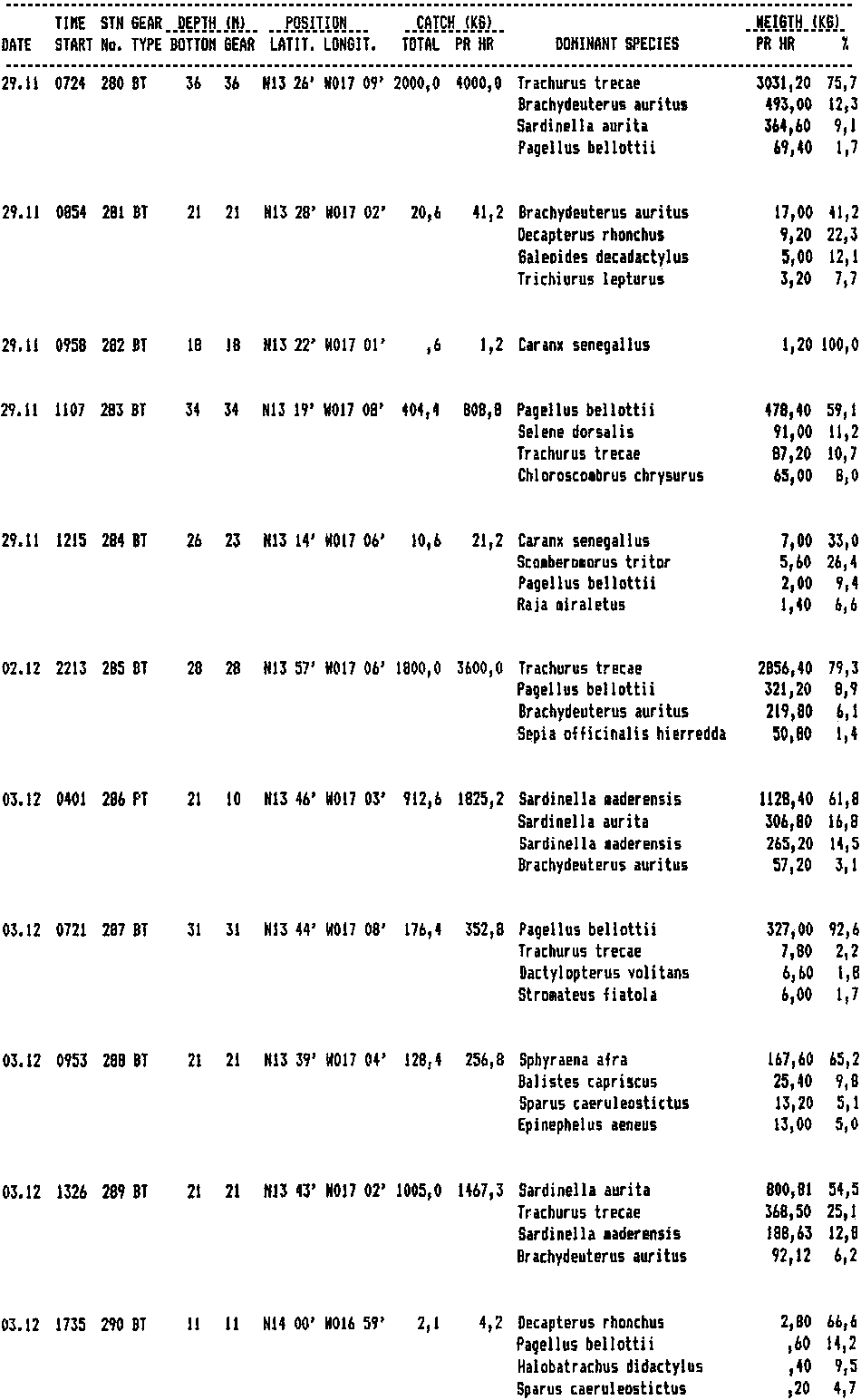
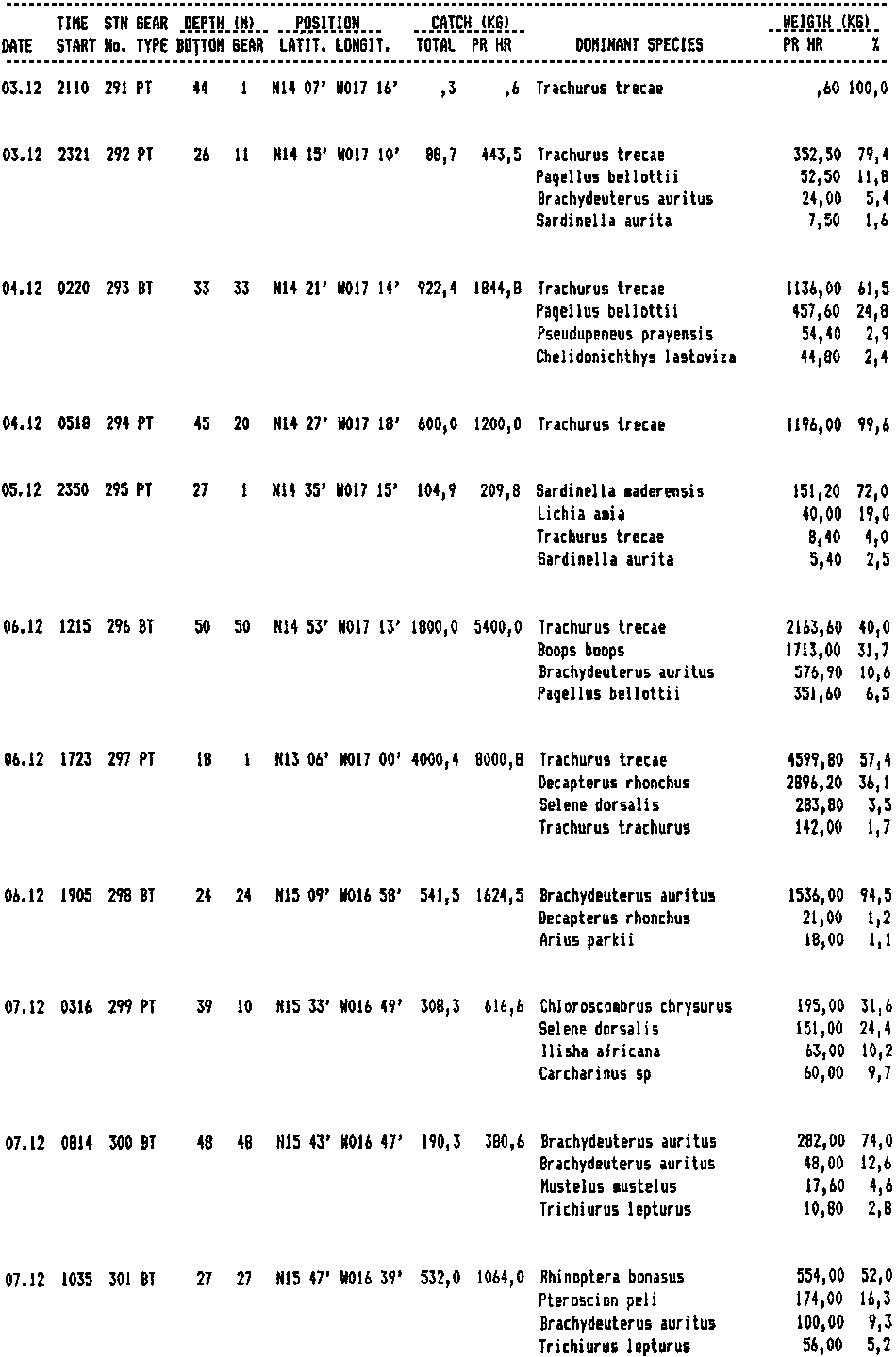
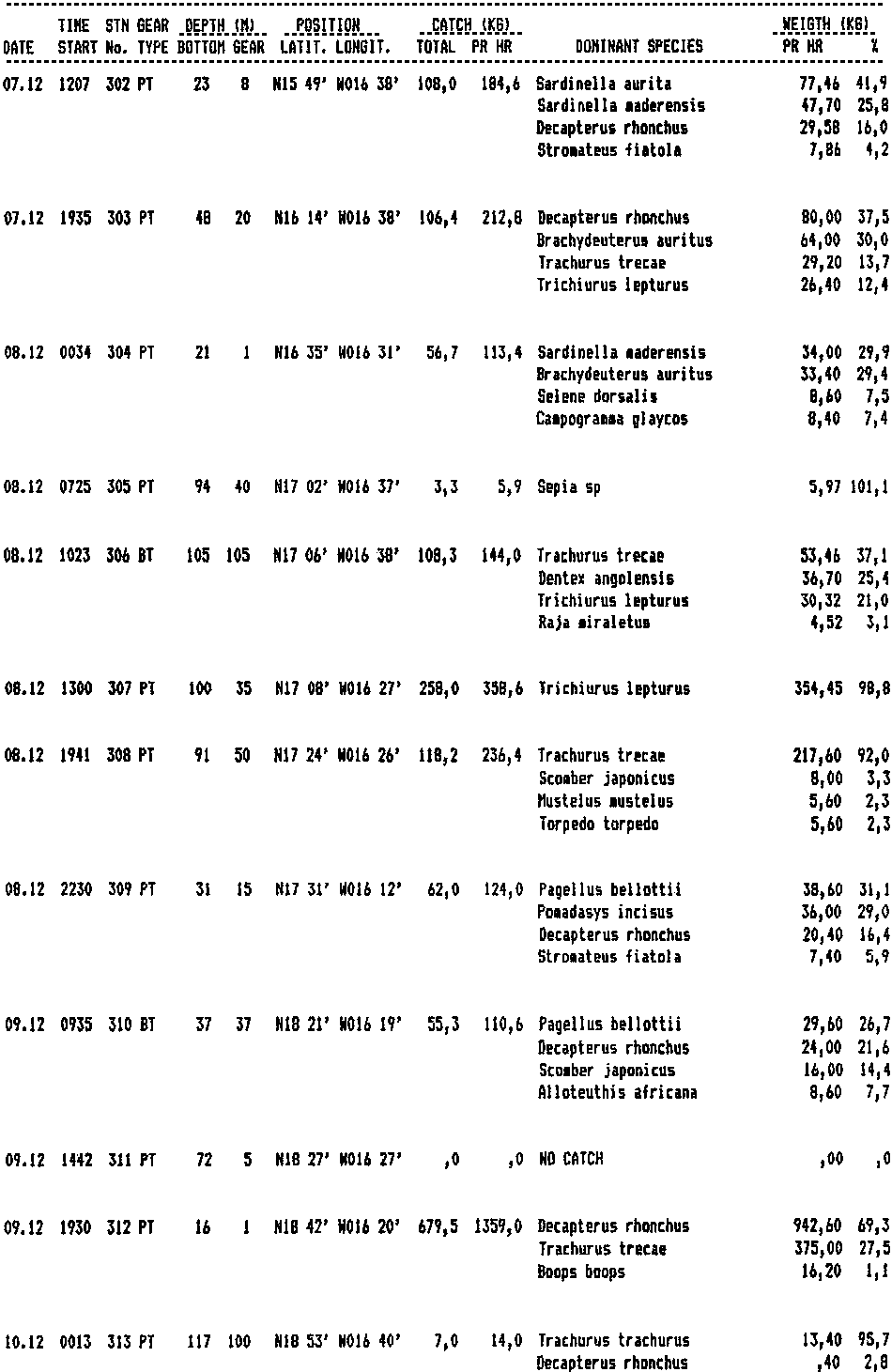
Annex 1. Abbreviated records of fishing stations
The agreed tasks for this part of the vessel's programme were as follows: to conduct intercalibration exercises/joint mini-surveys with the research vessels LOUIS SAUGER in Senegal and N'DIAGO in Mauritania, to repeat the acoustic fishing survey of the shelf from Guinea Bissau northwards also covered by the vessel in August - September and to conduct bottom trawl surveys of selected areas. Some formal problems arouse over the work permit for Sengalese waters which caused some delay. The intercalibration work was limited to Mauritanian waters.
The scientific staff was:
From Mauritania:
Ibrahima S. BaThe vessels staff:
Aliou Dia Mamaoudou
Ingvald Svellingen, Cruise leader,Itinerary:
Oddgeir Alvheim
Alvaro Abella
Tore Mørk
Øyvind Torgersen
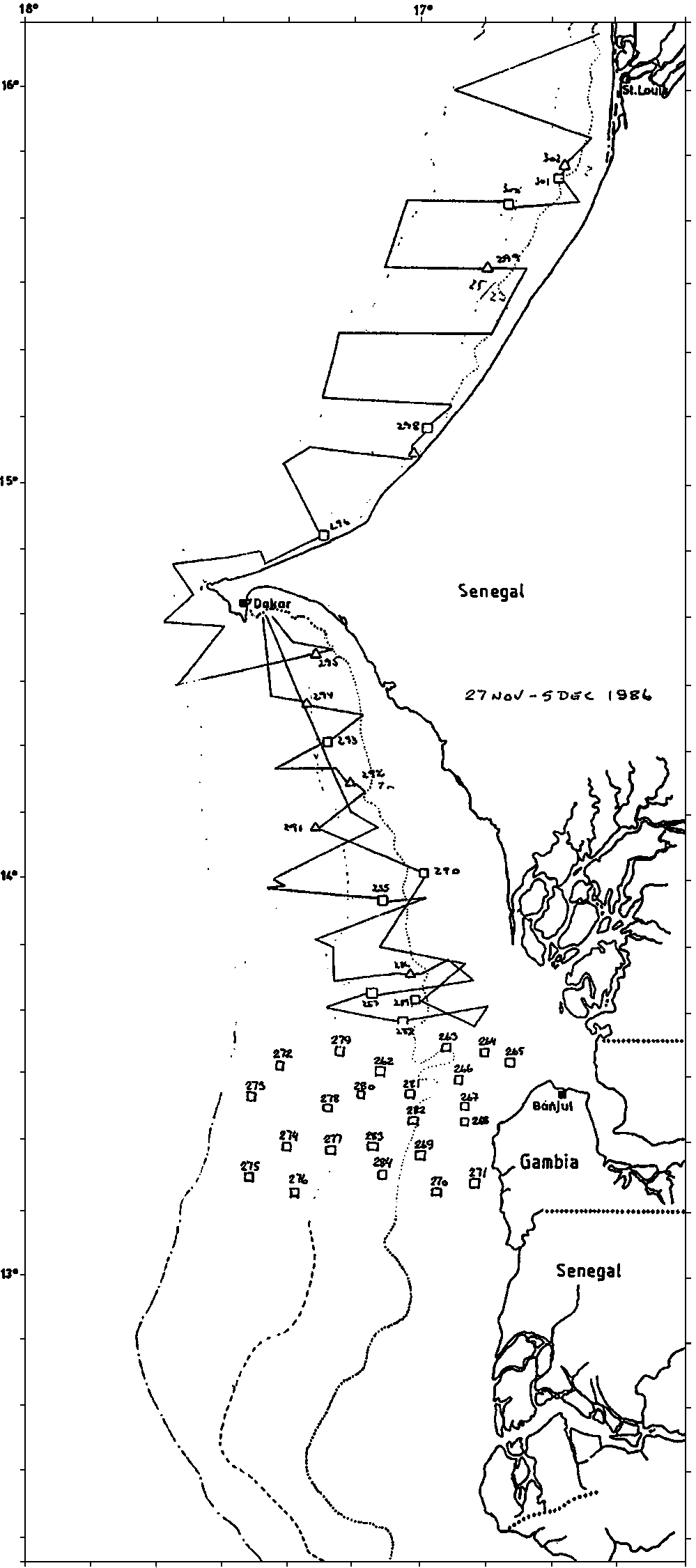
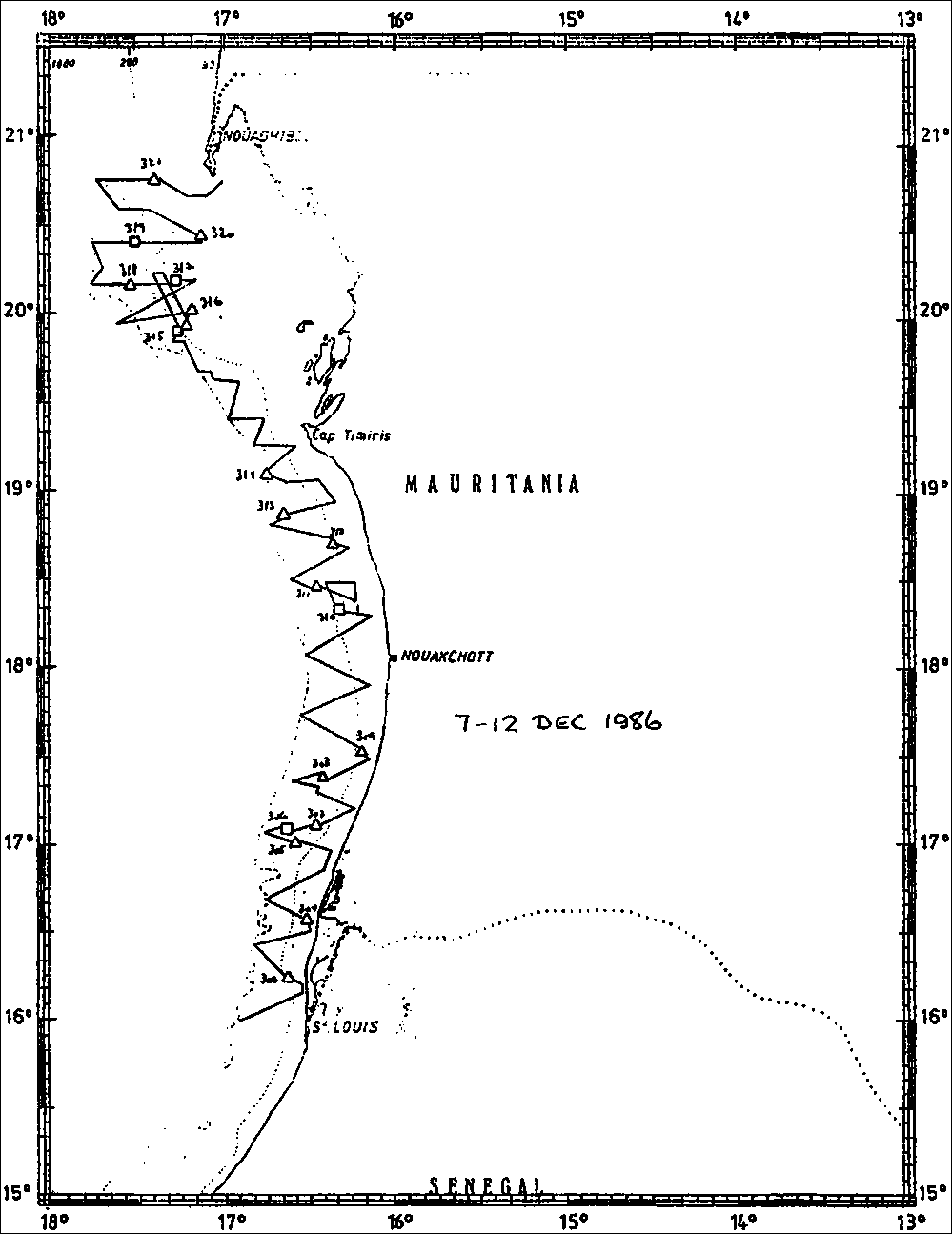
Call Dakar: 21-22 NovemberThe survey tracks with fishing stations are shown in Figures 1 - 3. An abbreviated record of the catches obtained are shown in Annex 1.
Work Guinea Bissau: 23-26 November
Trawl survey Gambia: 27-29 November
Call Dakar: 29 November - 2 December
Work Senegal: 2-7 December
Work Mauritania: 8-12 December
(Intercalibration with N'DIAGO 10-11 december)
Guinea Bissau.
Figure 4 shows the fish distribution from the acoustic observations. No dense concentrations of fish were located in this area. As previously triggerfish was found over the middle part of the shelf up to the Bijagos Islands. One catch of 8 tons pr hour of this species was made, but otherwise catches were low both in the bottom - and mid water trawls. Northwards towards Cape Roxo the relatively small catches consisted of some carangids together with Brachydeuterus, barracudas, hairtails, sharks a.o. Biomass estimates for this area will be presented later.
The Gambia.
A total of 23 bottom trawls stations (nos. 262 - 284) were worked over the Gambian shelf distributed in depth as in the similar survey during 10 - 12 September. The estimated mean density over the whole depth range 10 - 200 m was 16.7 tons per square n m, compared to 11.7 tons found in September. This gives a total biomass estimate of 23 500 tons compared with 16 500 tons for September. In addition comes the biomass of the pelagic fish.
Senegal.
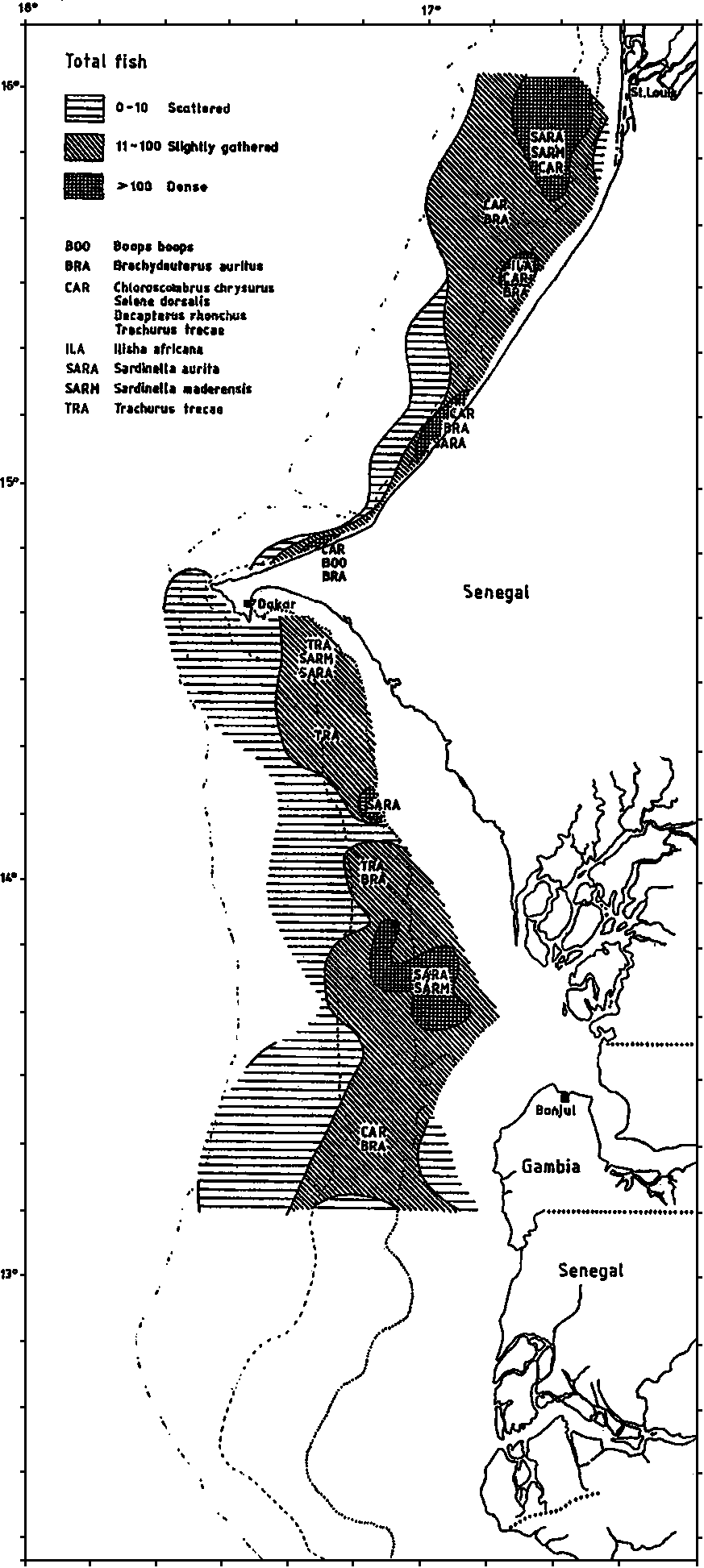
The Senegal shelf between Cape Roxo and The Gambia could unfortunately not be covered. Figure 5 shows the fish distribution for the shelf from The Gambia northwards to St. Louis based on the observations from the acoustic system and with identification from fishing (stations nos 285 - 302). A dense patch immediately north of the border consisted of flat and round sardinella. Catches in mid water trawl here reached abt. 1.7 tons per hour. Further north towards Dakar horse mackerel (trecae) dominated with catches exceeding 3 tons per hour.
Also between Dakar and St. Louis patches of dense concentrations were found inshore. Again horse mackerel dominated with some false scad, catches reaching nearly 5 and 3 tons of these species respectively. Towards the border with Mauritania a sardinella area with both species again was found.
The biomass estimates for the part of the Senegal shelf covered are as follows: (1 000 tons)
|
|
Pel 1 |
Pel 2 |
Total |
|
N of Dakar |
105 |
111 |
216 |
|
S of Dakar |
171 |
37 |
208 |
|
Totals |
276 |
148 |
424 |
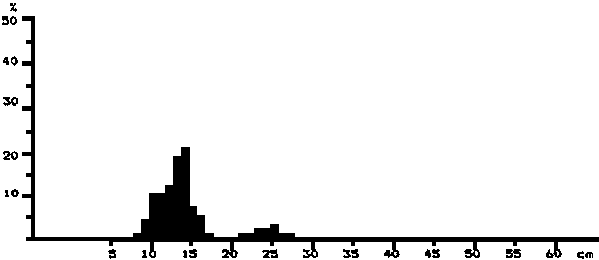
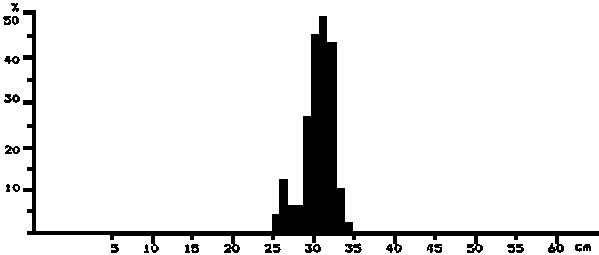
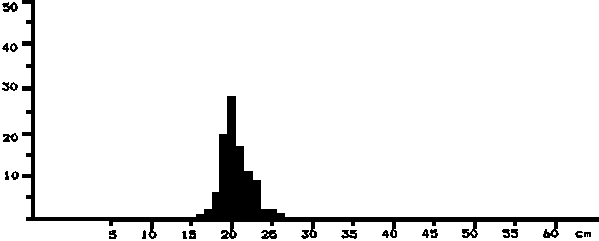
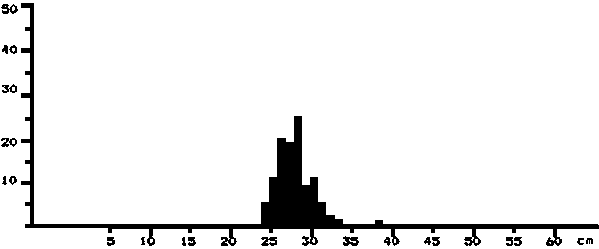
Figure 6 shows the pooled size distributions of the samples of the sardinellas and horse mackerel taken from catches south of Dakar, and Figure 7 presents the size samples from the northern Senegal shelf. There appears to be more juvenile sardinellas in the south, but the total number of samples is small.
Mauritania.
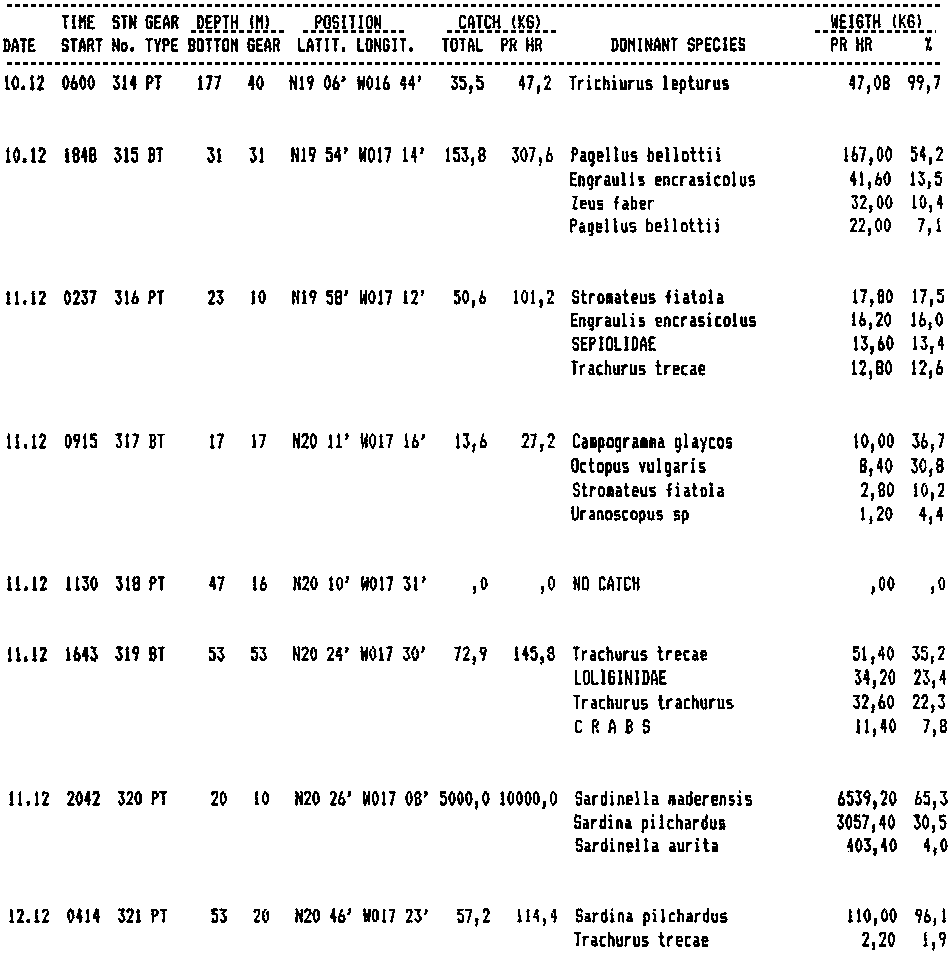
Figure 8 shows the fish distribution and Appendix 1 stations 303 - 321 presents the results of the fishing trials. A number of patches of high fish densities were located along the coast up to Cape Timiris. These consisted mostly of dense schools of large horse mackerel. Both species were caught, but their relative abundance is uncertain since there are great difficulties in obtaining representative catches of these fish. A very dense school area was found off Nouadhibou. A few catches gave a mixture of sardinellas and sardine, but it is likely that the latter species formed the main part of this fish.
The biomass estimates gave the following results: Pelagic fish type 1: 984 000 tons of which abt. 750 000 tons in the area off Nouadhibou. Pelagic fish type 2: 536 000 tons of which the major part was from the shelf south of Cape Timiris.
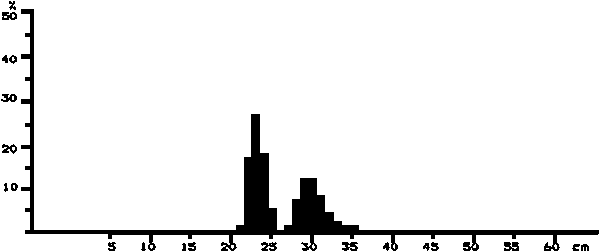
Figure 9 presents the size distributions of samples of the main species from the Mauritanian shelf. The sardinellas and the false scad were represented by medium and large fish, the horse mackerel by a wide range of sizes from 5 to 35 cm, while the sardine had a narrow size range between 20 and 25 cm.
Figure 1. Course tracks and fishing stations Guinea Bissau, 23-26 November 1986.
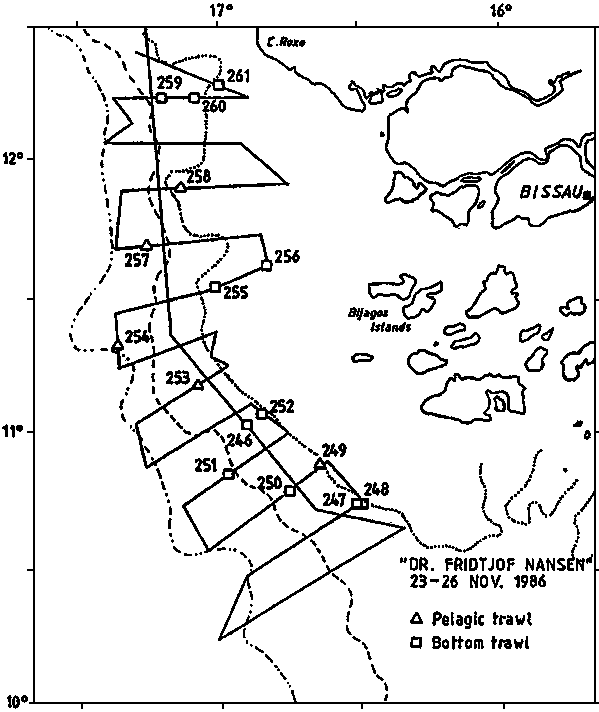
Figure 2. Course tracks and fishing stations, Senegambia, 27 November-7 December 1986.
Figure 3. Course tracks and fishing stations, Mauritania, 8-12 December 1986.
Figure 4. Fish distribution Guinea Bissau shelf.
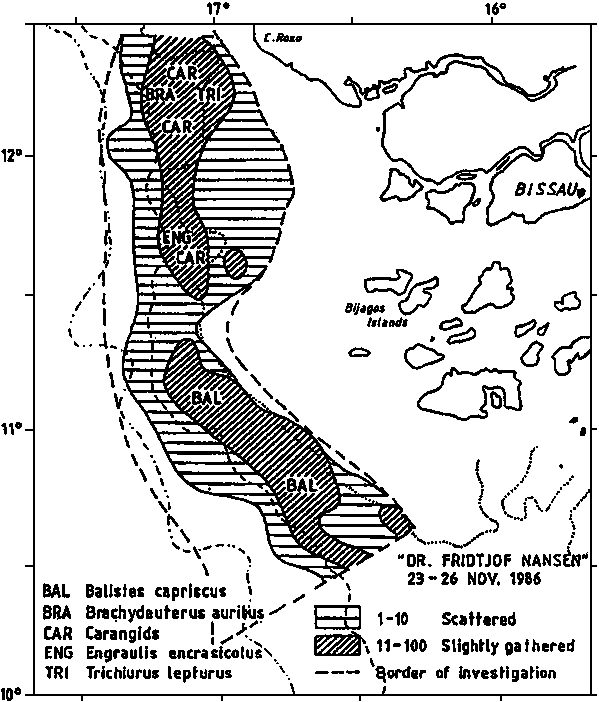
Figure 5. Fish distribution Senegambia shelf.
Figure 6. Size compositions of samples of main species southern Senegal shelf.
Sardinella maderensis (pooled data)
Senegal - South
MEAN LENGTH = 13,8 cm N = 397
Modes:, 14 cm, 25 cm
NUMBER OF SUBSAMPLES: 4
Sardinella aurita (pooled data)
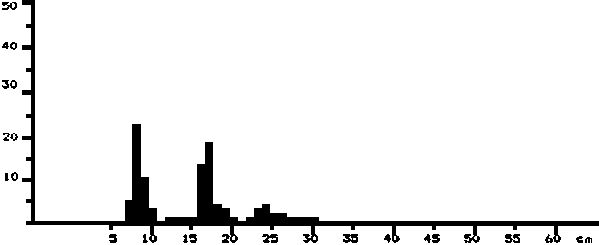
Senegal - South
MEAN LENGTH = 14,7 cm N = 224
Modes:, 8 cm, 17 cm, 24 cm
NUMBER OF SUBSAMPLES: 4
Trachurus trecae (pooled data)
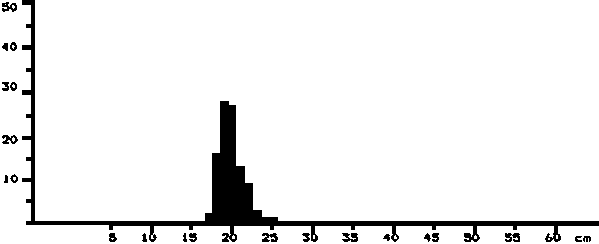
Senegal - South
MEAN LENGTH = 19,8 cm N = 505
Modes:, 19 cm
NUMBER OF SUBSAMPLES: 6
Decapterus rhonchus (pooled data)
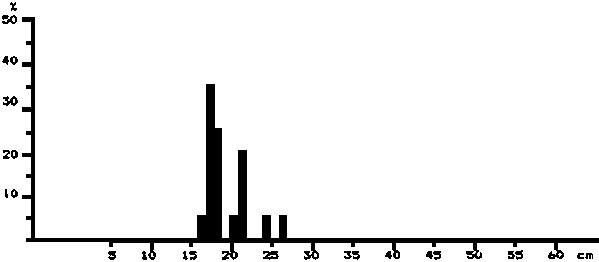
Senegal - SouthFigure 7. Size compositions of samples of main species, northern Senegal shelf.
MEAN LENGTH = 18,9 cm N = 20
Modes:, 17 cm, 21 cm, 24 cm, 26 cm
NUMBER OF SUBSAMPLES: 1
Sardinella maderensis (pooled data)
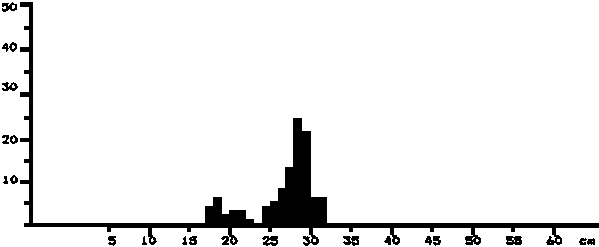
Senegal - North
MEAN LENGTH = 26,0 cm N = 100
Modes:, 18 cm, 21 cm, 28 cm
NUMBER OF SUBSAMPLES: 1
Sardinella aurita (pooled data)
Senegal - North
MEAN LENGTH = 28,7 cm N = 52
Modes:, 26 cm, 31 cm
NUMBER OF SUBSAMPLES: 1
Trachurus trecae (pooled data)
Senegal - North
MEAN LENGTH = 20,5 cm N = 339
Modes:, 20 cm
NUMBER OF SUBSAMPLES: 4
Decapterus rhonchus (pooled data)
Senegal - NorthFigure 8. Fish distribution Mauritania shelf.
MEAN LENGTH = 27,2 cm N = 169
Modes:, 26 cm, 28 cm, 30 cm, 38 cm
NUMBER OF SUBSAMPLES: 2
Figure 9. Size compositions of samples of main species, Mauritania.
Sardinella maderensis (pooled data)
Mauritania
MEAN LENGTH = 25,0 cm N = 135
Modes:, 23 cm, 30 cm
NUMBER OF SUBSAMPLES: 2
Sardinella aurita (pooled data)
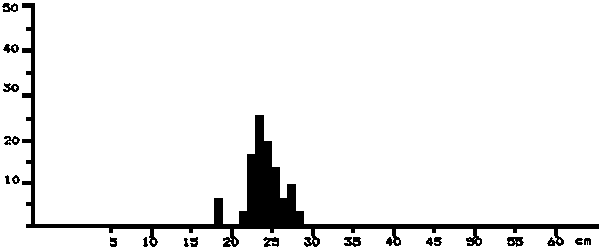
Mauritania
MEAN LENGTH = 23,6 cm N = 32
Modes:, 18 cm, 23 cm, 27 cm
NUMBER OF SUBSAMPLES: 1
Sardina pilchardus (pooled data)

Mauritania
MEAN LENGTH = 23,1 cm N = 216
Modes:, 24 cm
NUMBER OF SUBSAMPLES: 2
Trachurus trecae (pooled data)
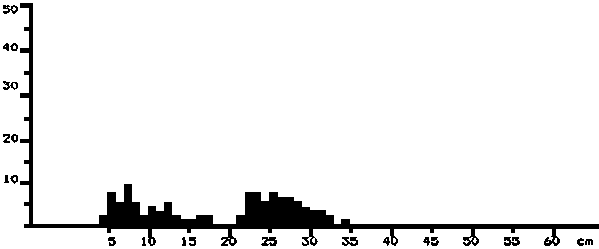
Mauritania
MEAN LENGTH = 17,2 cm N = 954
Modes:, 25 cm, 34 cm, 10 cm, 12 cm, 17 cm, 23 cm
NUMBER OF SUBSAMPLES: 11
Decapterus rhonchus (pooled data)
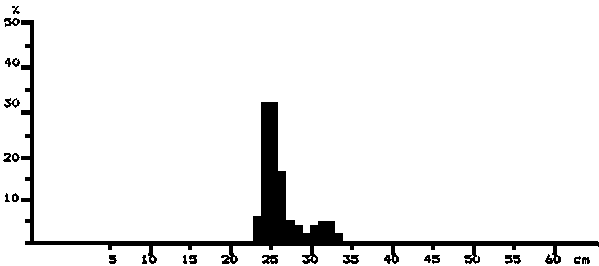
Mauritania
MEAN LENGTH = 25,2 cm N = 305
Modes:, 25 cm, 32 cm
NUMBER OF SUBSAMPLES: 5