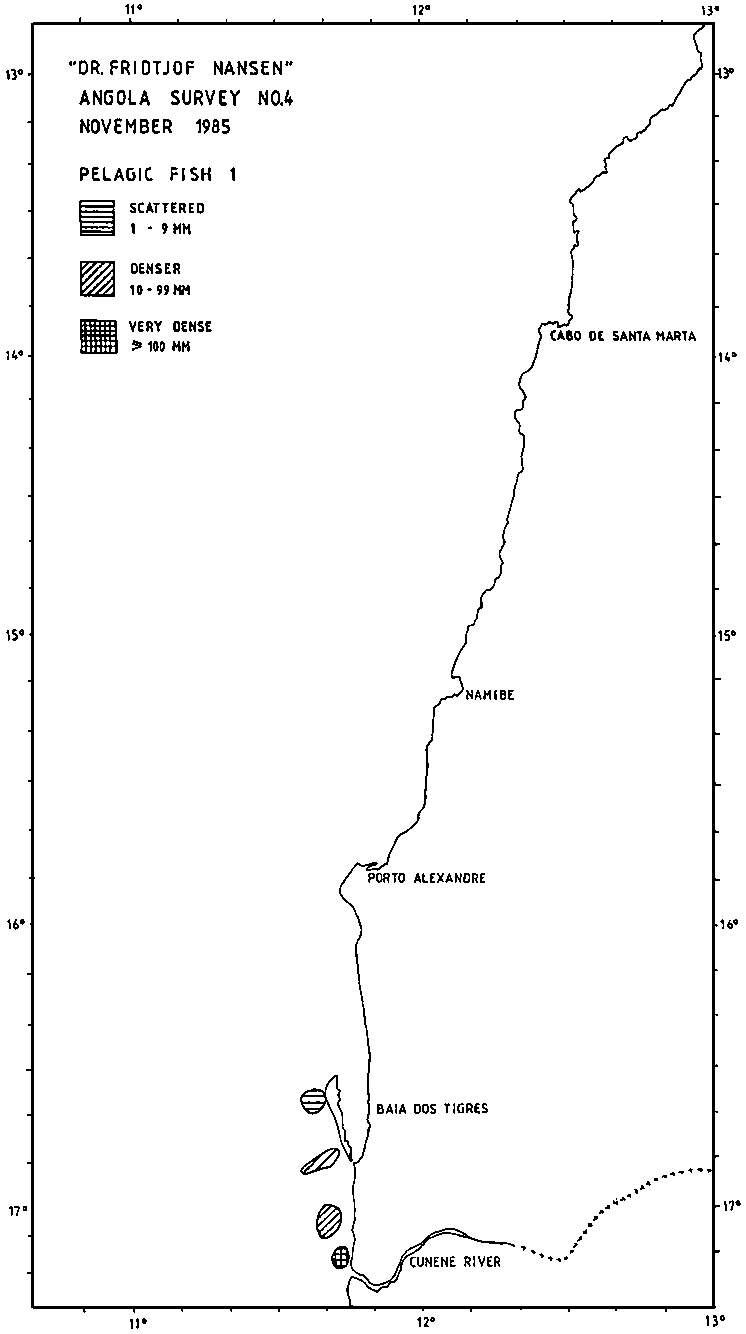
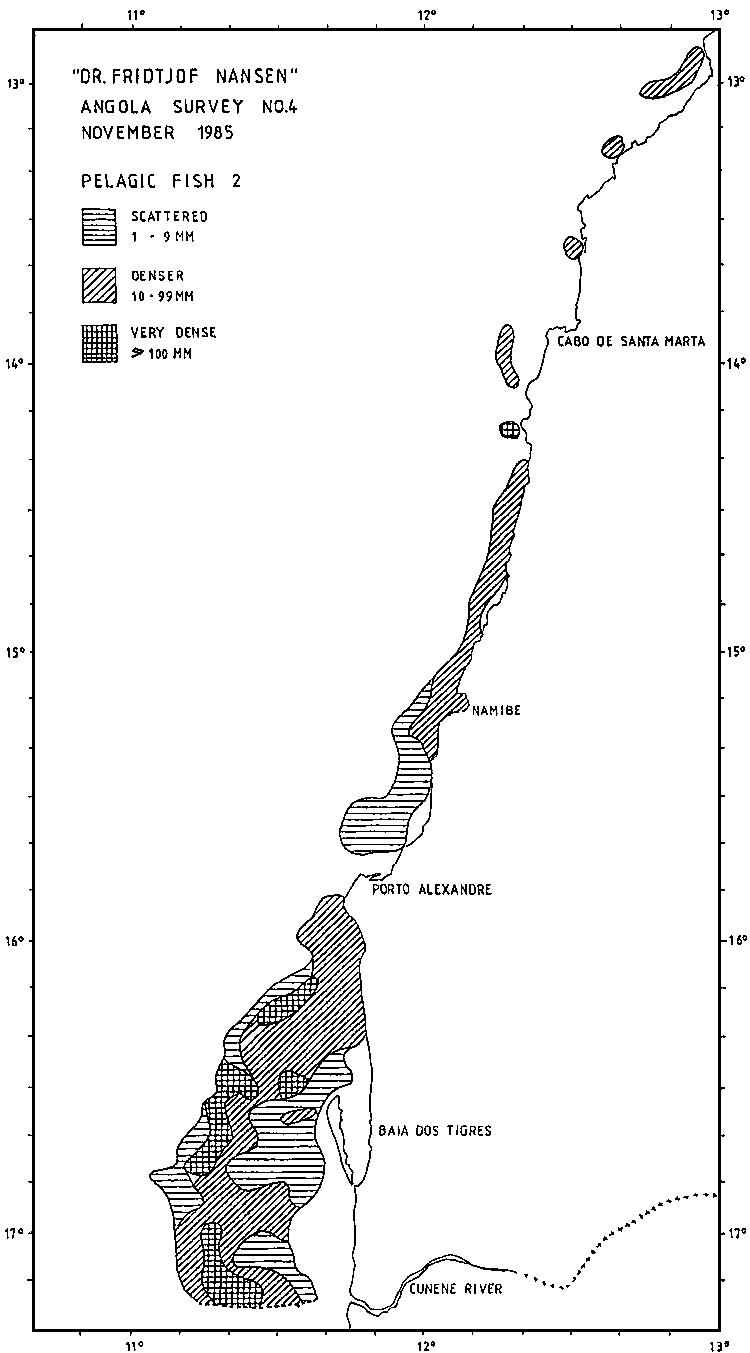
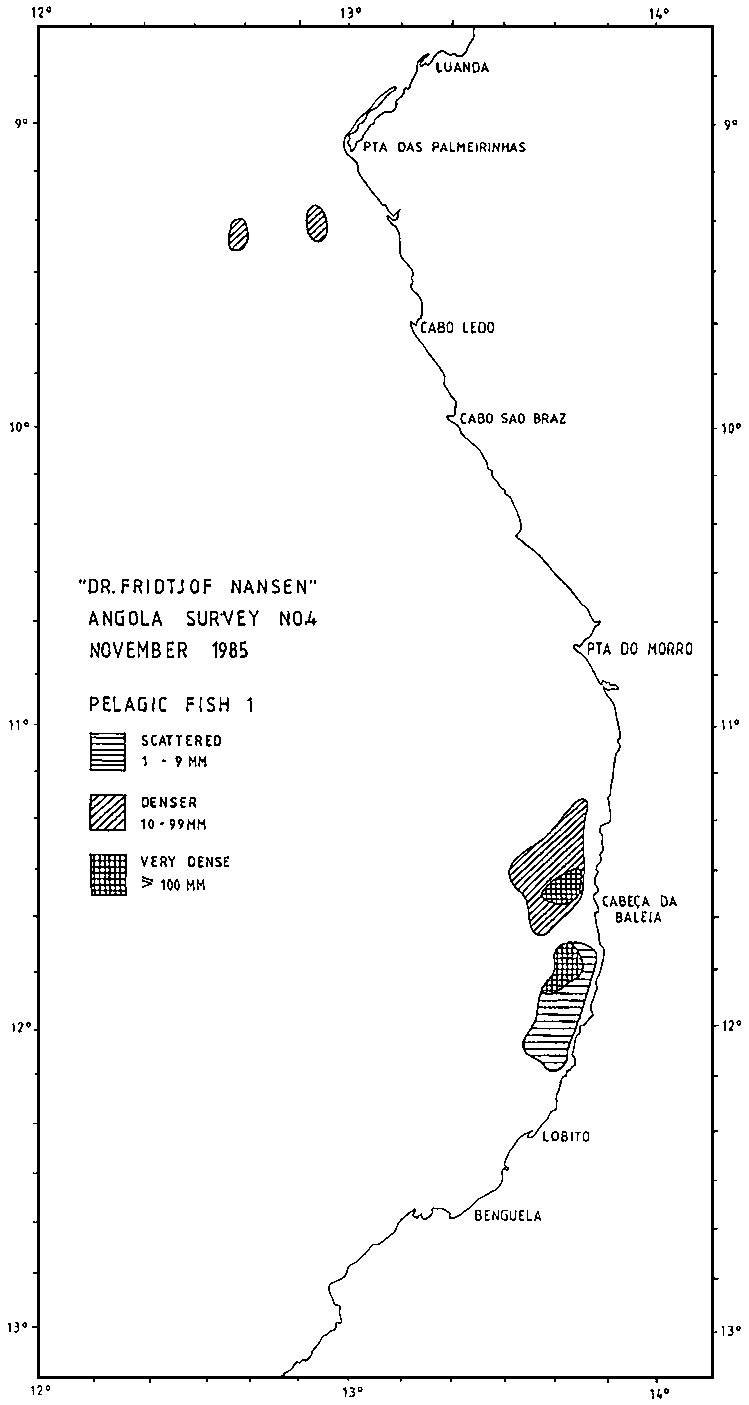
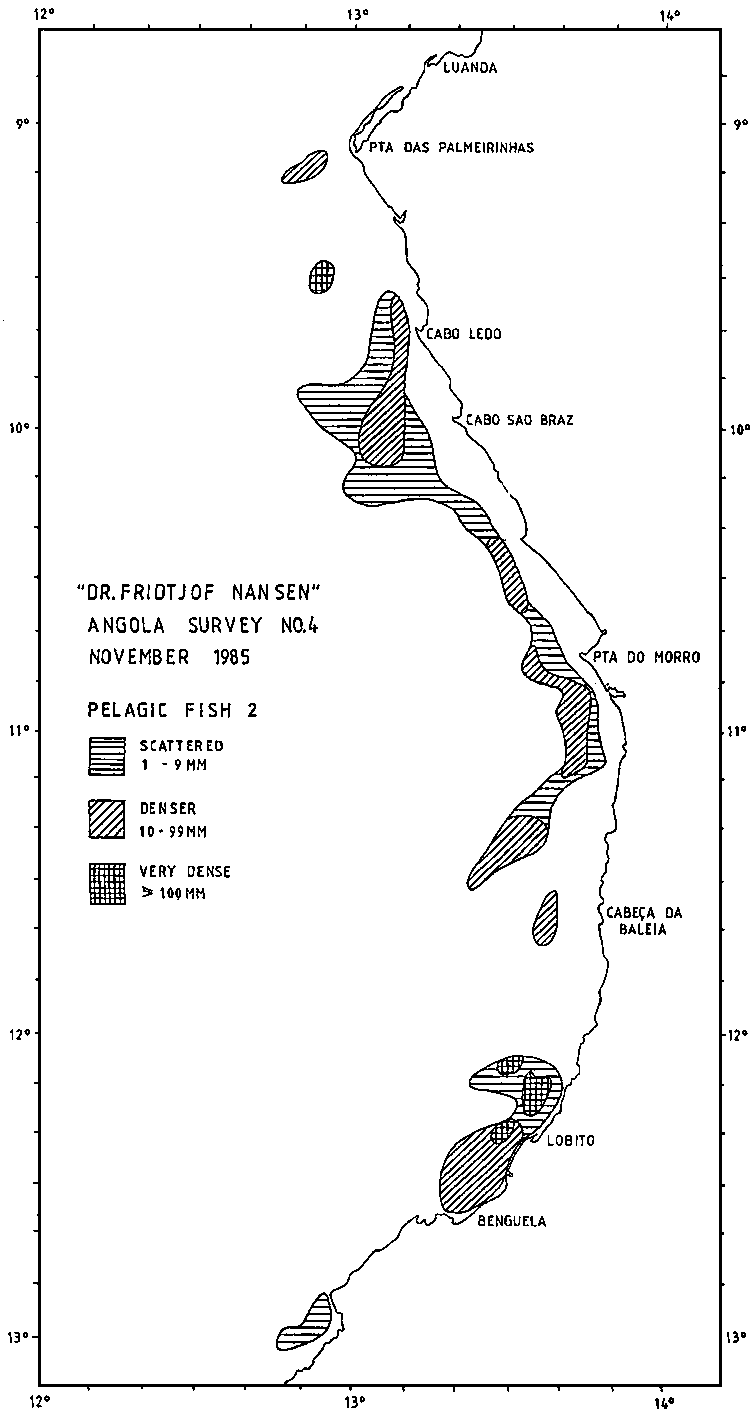
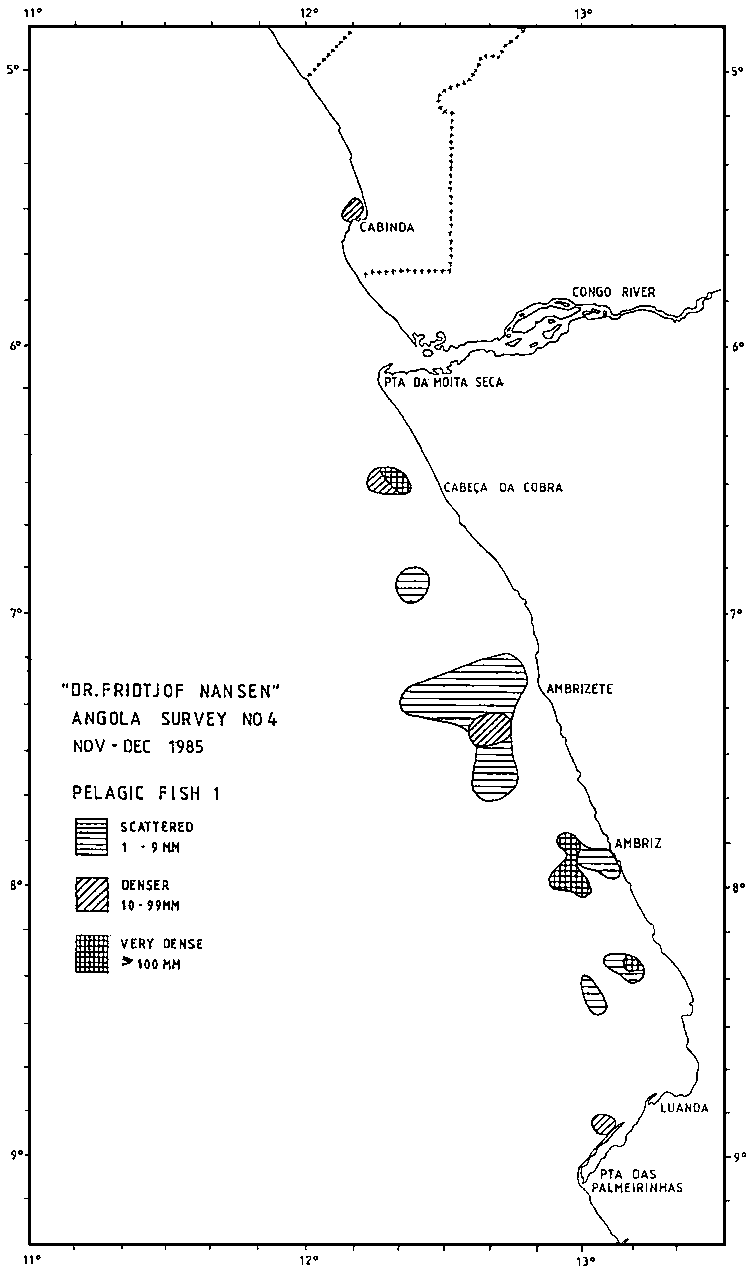
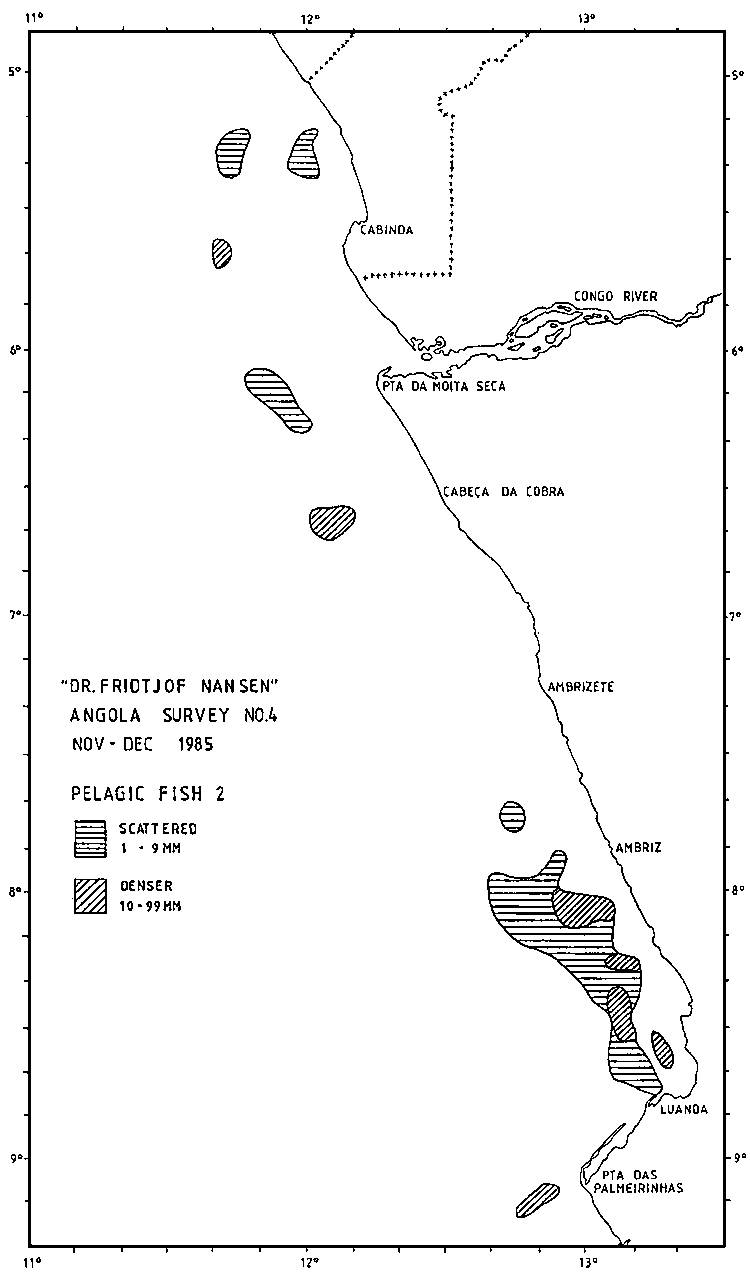
In accordance with the previous surveys the acoustic registrations of fish were sorted into three categories: Pelagic 1, Pelagic 2 and demersal.
Pelagic fish
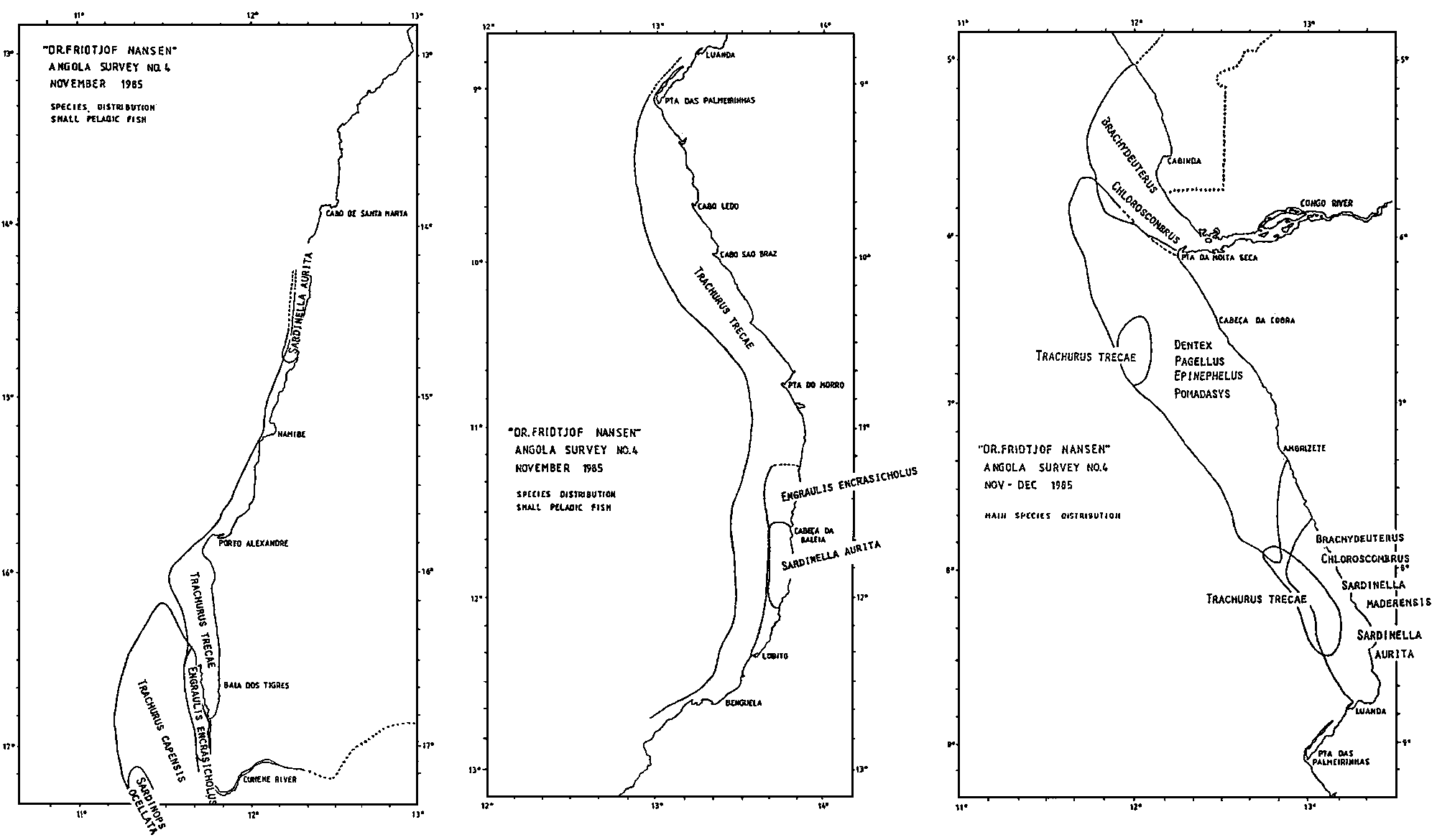
Figures 9 through 14 show the density distribution of the small pelagic fish, while Figures 15a-c show the main spatial distribution of the dominant species.
In the Baia dos Tigres area the shelf was mainly occupied by Trachurus capensis in the southern part and Trachurus trecae in the northern (Figure 15a). Schools of anchovy, Engraulis encrasicholus were observed in the near-shore areas. The pilchard Sardinops ocellata was found on one station only, close to the border to Namibia (Figure 15a), confirming that the stock had migrated south since the previous survey. Trachurus capensis was represented by juvenile and young specimens with modal lengths 12 and 18 cm TL in the samples (Appendix III). Corresponding lengths for Trachurus trecae were 12 and 15 cm. The highest densities of horse mackerel (both species), were observed at 100 to 150 m depth in the area 2 to 15 nm off the shelf edge.
From Porto Alexandre to Benguela the small pelagic registrations consisted mainly of Trachurus trecae. From abt. 15 Lat. S, Sardinella aurita was also present in the catches, but in low numbers.
From Benguela to Luanda the Pelagic 1 group consisted mainly of adult Sardinella aurita (30-35 cm TL) in the area Lobito to abt. 11 Lat. S (Figure 11) with some S. maderensis and anchovy, Engraulis encrasicholus. The pelagic 2 group was almost exclusively made up of Trachurus trecae, mostly young specimens (8 and 17 cm mod. length), but also lesser fractions of specimens in the range 20-39 cm (see Appendix III).
From Luanda to Cabinda the Pelagic 1 group was dominantly made of S. aurita and some S. maderensis at scattered locations along the coast (Figure 13) The highest abundances were found in the area Ambriz - Amriezete. The mean lengths of S. aurita were 30-32 cm. The pelagic 2 group was mostly Trachurus trecae in the region Luanda - Ambriz, with some scattered occurrences further north (Figure 14). The horsemackerel was predominantly young specimens with modal lengths 7 and 17 cm, although adults up to 37 cm were also present (Appendix III). The horsemackerel was mainly located at the outer half of the shelf. Closer to the shore Chloroscombrus chrysurus was present in Cabinda and north of Luanda.
Biomass estimates
Rounded figures of the acoustically estimated biomass from the survey are (thousand tonnes):
|
|
Pelagic 1 |
Pelagic 2 |
Demersal |
Total |
|
Baia dos Tigres area |
10 |
320 |
- |
330 |
|
Porto Alex. - Benguela |
- |
50 |
10 |
60 |
|
Benguela - Luanda |
220 |
120 |
20 |
360 |
|
Luanda - Cabinda |
120 |
60 |
50 |
230 |
|
Total |
350 |
550 |
80 |
980 |
Fishing experiments
A total of 132 hauls were made. Their distribution on areas and the range and mean value of the five highest catches in the bottom trawl were (in tonnes per hour):
|
|
Number of hauls |
Catch 5 highest demersal |
||
|
Area |
Pelagic |
Demersal |
Range |
Mean |
|
Cunene - Porto Alexandre |
14 |
9 |
1.4 - 2.8 |
2.0 |
|
Porto Alexandre - Benguela |
8 |
1 |
2.6 |
2.6 |
|
Benguela - Luanda |
11 |
33 |
1.7 - 2.4 |
2.1 |
|
Luanda - Cabinda |
10 |
46 |
2.1 - 6.0 |
4.1 |
From Lobito to Cabinda 29 hauls were carried out in the 200-600 m bottom range. All hauls were carried out during daylight. The distribution of the hauls by depth strata and the mean catches of the main groups were as follows:
|
Depth stratum |
Number of hauls |
MEAN CATCH (kg/hour) |
||||
|
Shrimps |
Shrimps, |
Merluccius |
Mean length |
Other fish |
||
|
200-250 |
8 |
33 |
- |
90 |
20 |
519 |
|
300-350 |
9 |
54 |
54 |
366 |
29 |
216 |
|
400-450 |
6 |
222 |
60 |
1050 |
36 |
102 |
|
500-550 |
6 |
9 |
27 |
60 |
40 |
102 |
(tonnes/nm sq.)
|
200-250: 3 |
300-350: 12 |
400-450: 35 |
500-550: 2 |
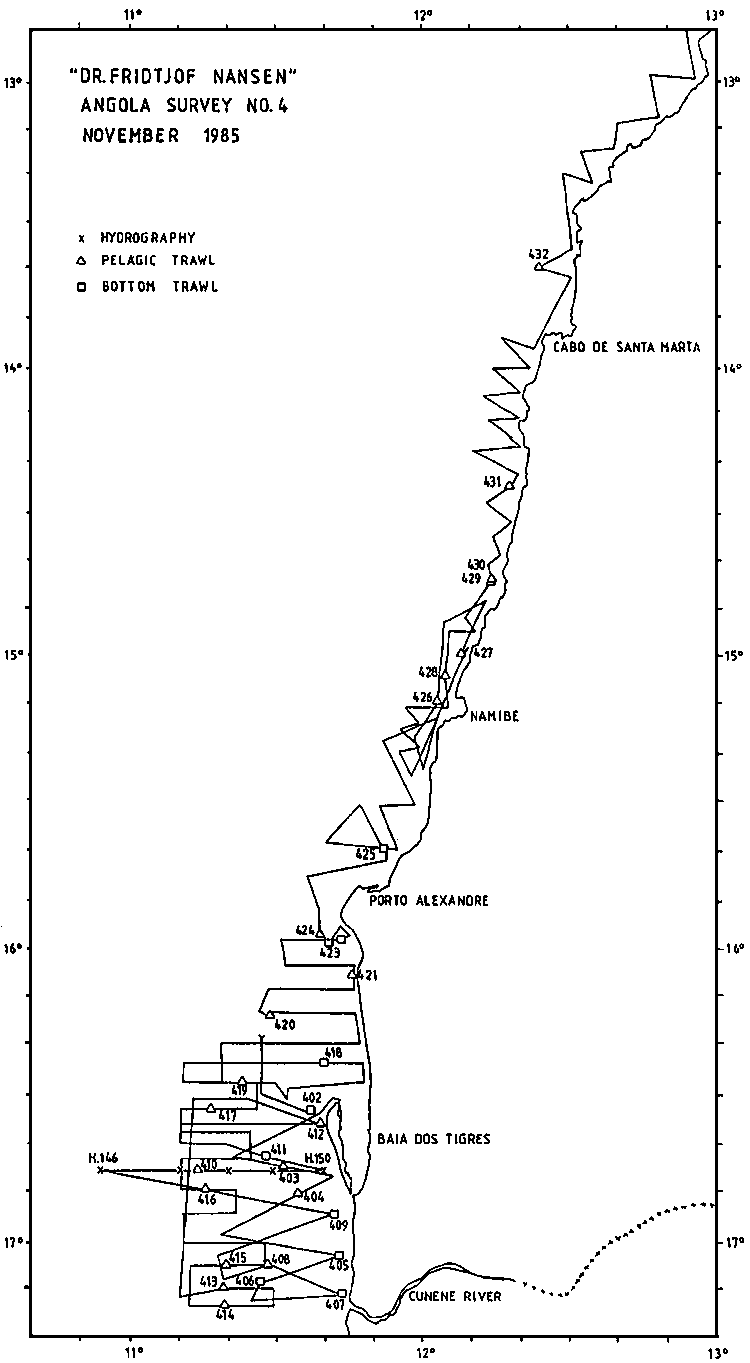
Figure 1. Cruise track and stations Baia dos Tigres - Benguela.
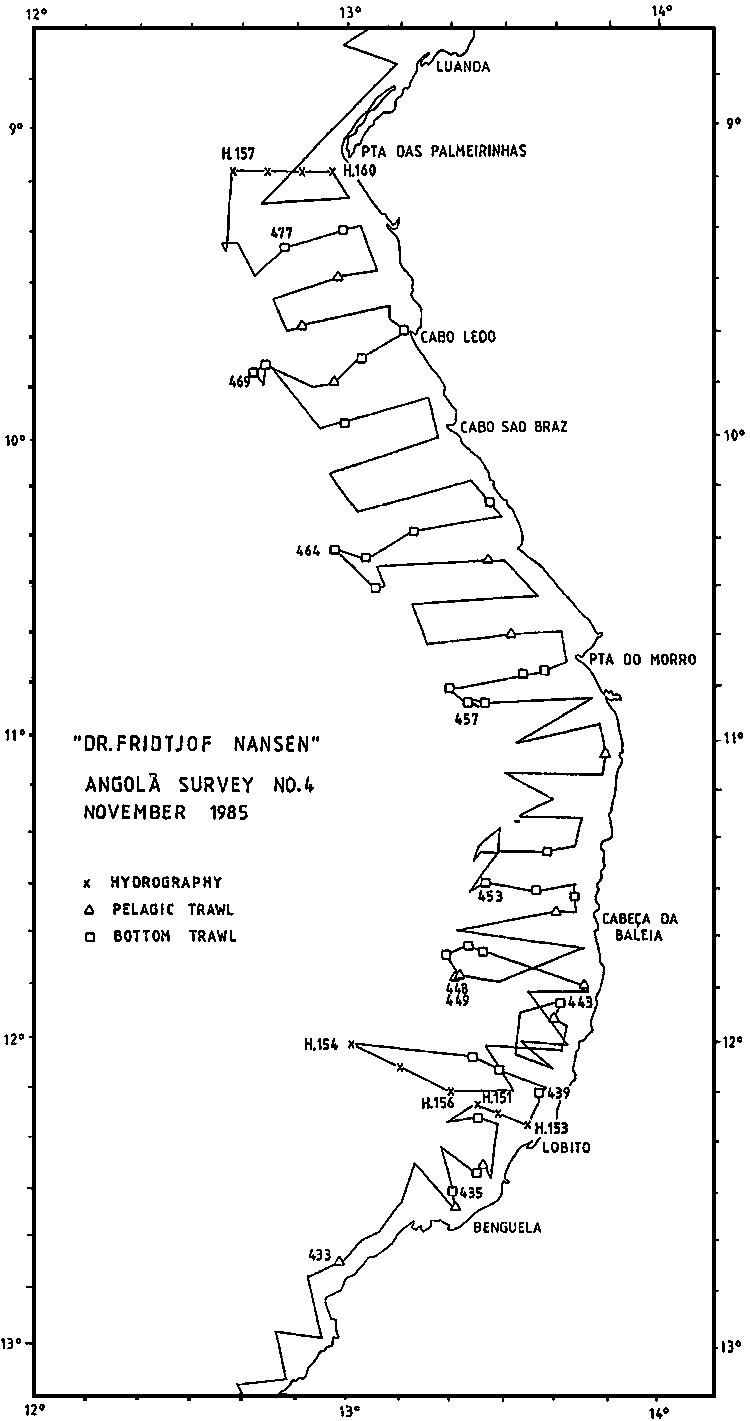
Figure 2. Cruise track and stations Benguela - Luanda.
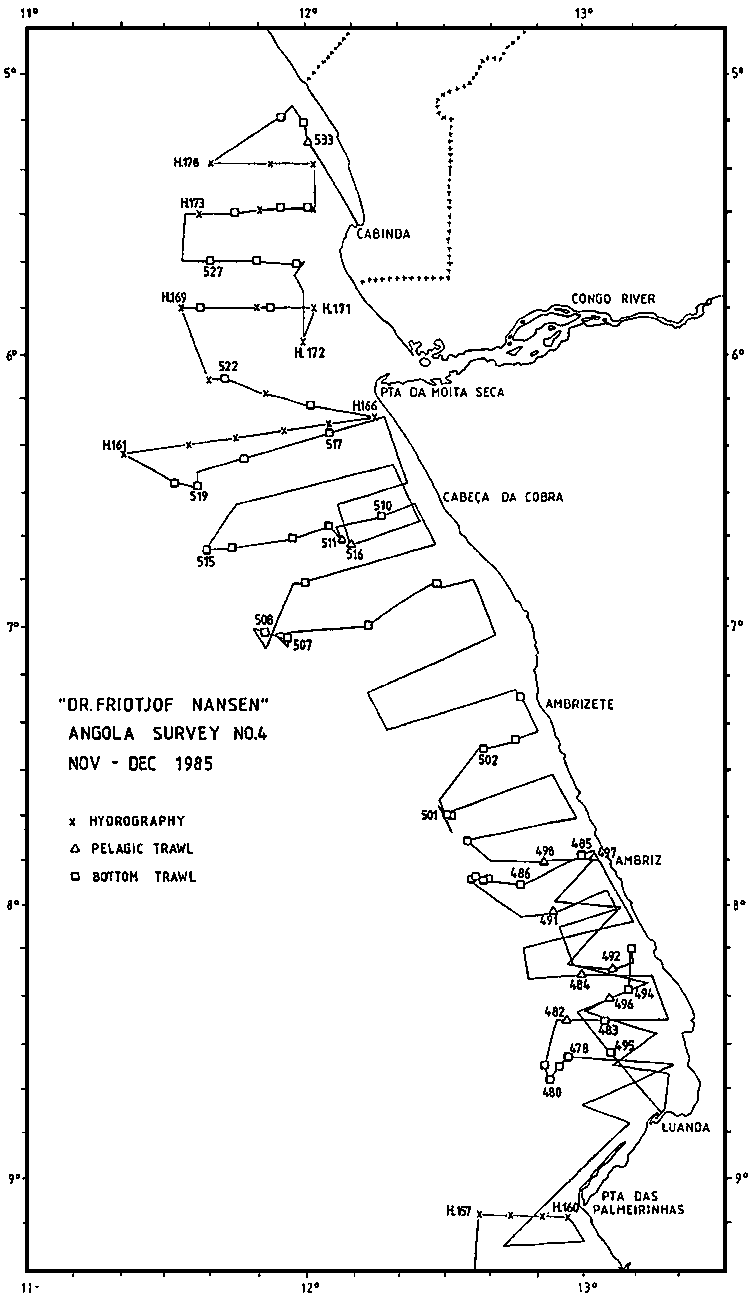
Figure 3. Cruse track and stations Luanda - Cabinda.
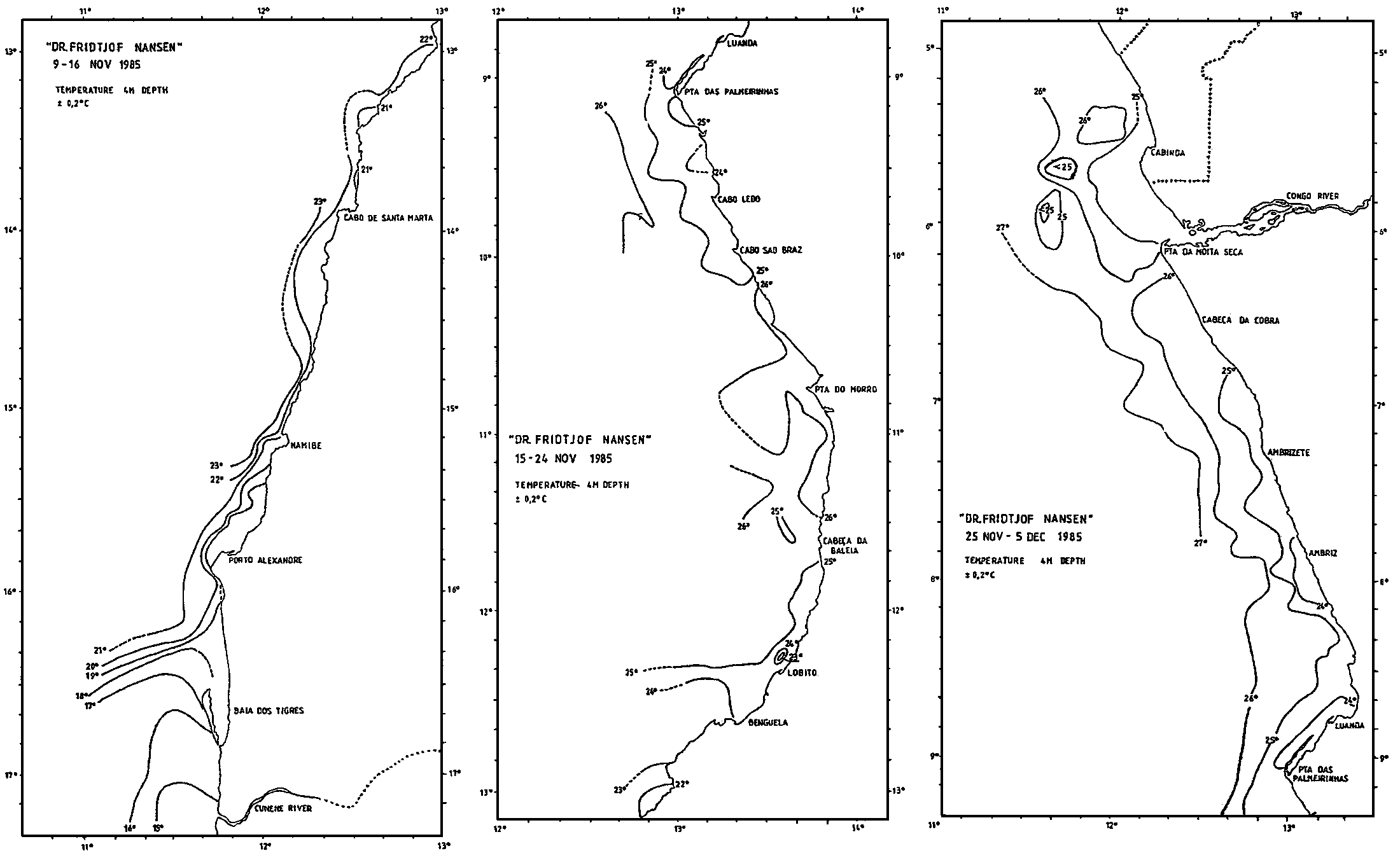
Figure 4. Temperature 4 m depth recorded by thermograph.
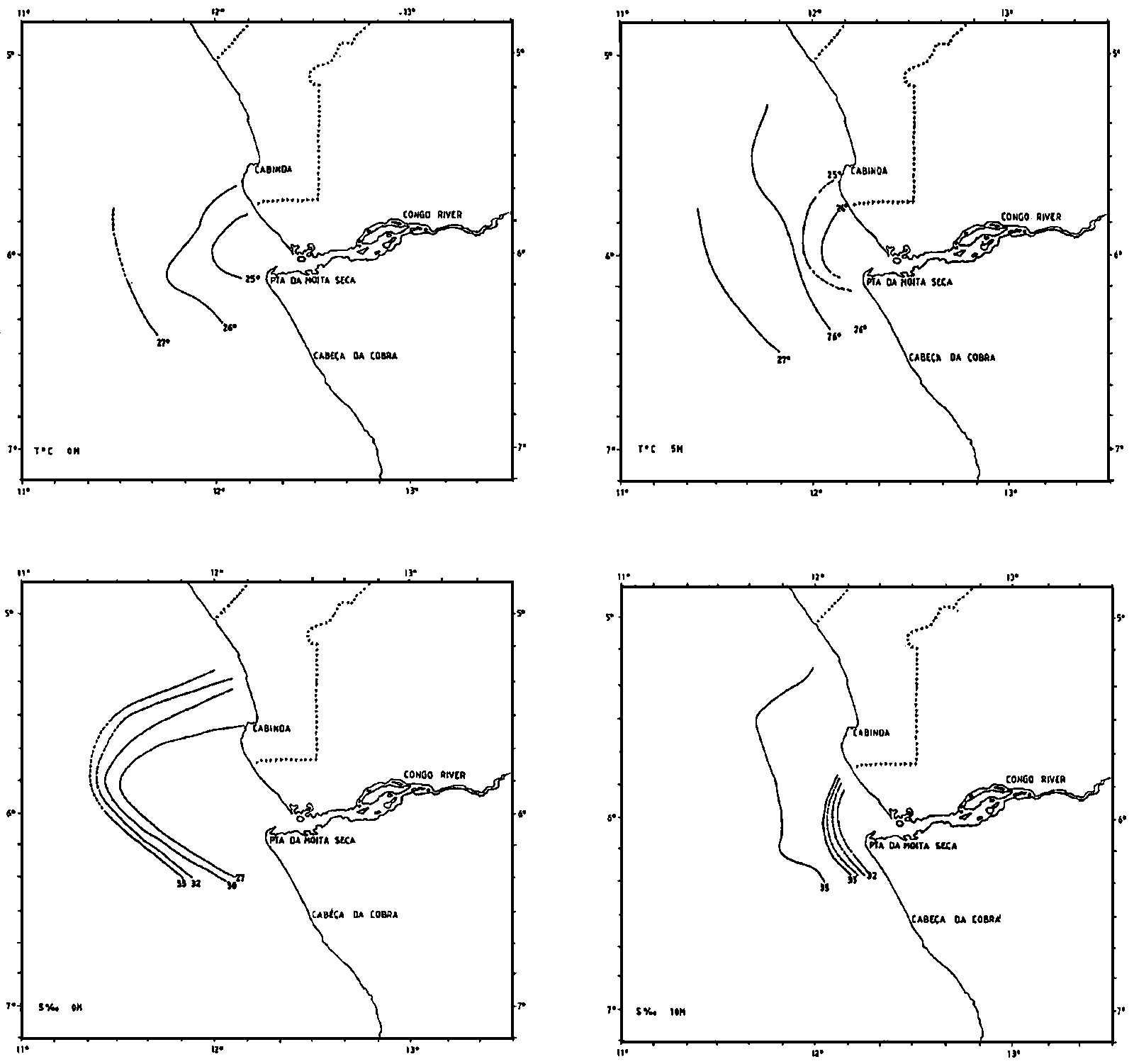
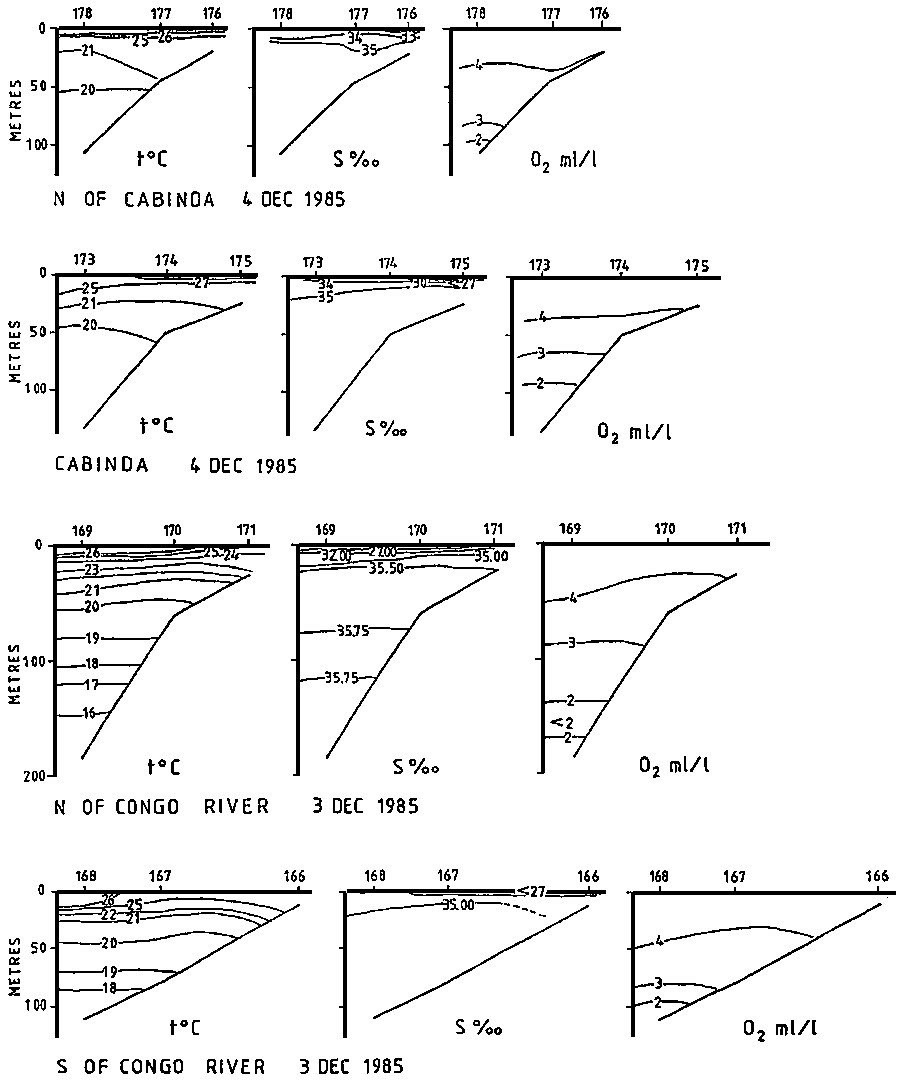
Figure 7. Distribution of temperature and salinity off the Congo River 3-4 Dec. 1985.
Figure 8. The hydrographical sections off the Congo River.
Figure 9. Fish distribution, Pelagic 1 Baia dos Tigres - Benguela.
Figure 10. Fish distribution, Pelagic 2, Baia dos Tigres - Benguela.
Figure 11. Fish distribution Pelagic 1, Benguela - Luanda.
Figure 12. Fish distribution Pelagic 2, Benguela - Luanda.
Figure 13. Fish distribution Pelagic 1, Luanda - Cabinda.
Figure 14. Fish distribution Pelagic 2, Luanda - Cabinda.
Figure 15. Main species distribution Nov-Dec 1985.