

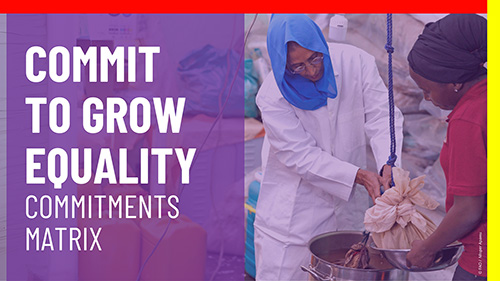
Guidance document
FAO, 2024
This Commitments Matrix presents overarching commitments and a series of thematic commitments, divided into five thematic areas and targeting three different stakeholder categories, available for stakeholders to associate with.

Brochure
FAO, 2024
This brochure presents the Commit to Grow Equality (CGE) initiative, a global process launched by FAO and a diverse group of partners to accelerate gender equality and women’s empowerment in agrifood systems through financing, investments and partnerships.

Full report
FAO, 2023
The report uses extensive new data and analyses to provide a comprehensive picture of women’s participation, benefits, and challenges they face working in agrifood systems globally. It shows how increasing women’s empowerment and gender equality in agrifood systems enhances women’s well-being and the well-being of their households, creating opportunities for economic growth, greater incomes, productivity and resilience.
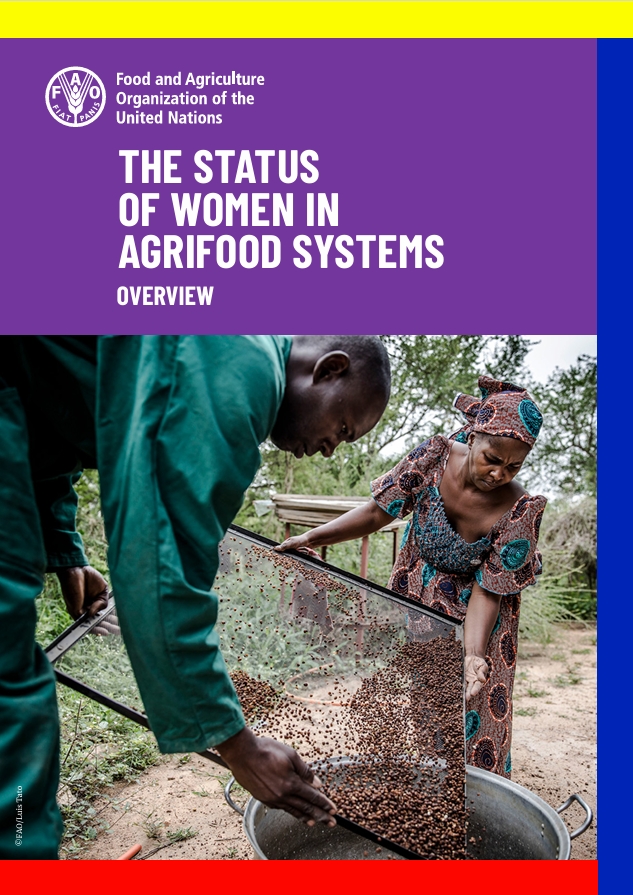
Summary
FAO, 2023
This brief summarizes the key messages and findings of FAO’s report “The status of women in agrifood systems” which provides the latest data, lessons learned and recommendations for policy and decision makers about gender in agrifood systems.
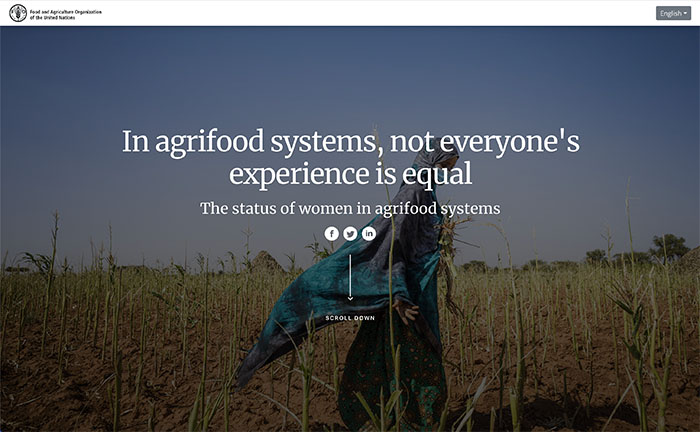
Interactive story
FAO, 2023
Women play a vital role in our agrifood systems: as farmers, retailers, wage workers, entrepreneurs, and beyond. But their working conditions and economic opportunities are influenced by gender inequalities within the household, the community, the institutions, and the broader society. In this interactive story, we meet María, who recently started a part-time job at a local tomato canning factory, and her friend Oumar who works on a farm nearby.
Video
FAO, 2023
The status of women in agrifood systems report, the first of its kind since 2010, goes beyond agriculture to provide a comprehensive picture of the status of women working across agrifood systems— from production to distribution and consumption.
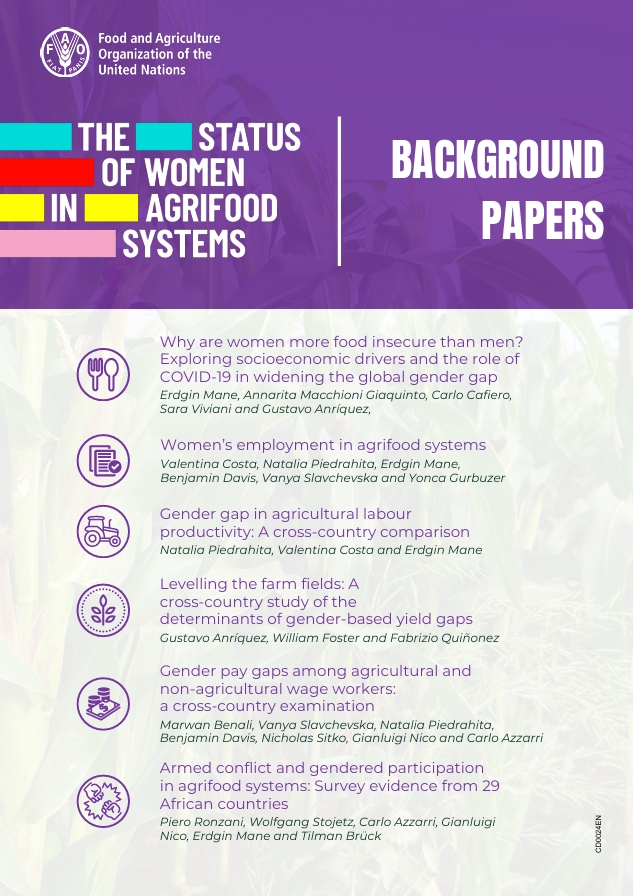
Background papers
FAO, 2024
This collection of background papers was prepared to inform several chapters of FAO’s report “The status of women in agrifood systems”.

Full report
FAO, 2024
This report assembles an impressive set of data from 24 low- and middle-income countries in five world regions to measure the effects of climate change on rural women, youths and people living in poverty. The data enable us to disentangle how different types of climate stressors affect people’s on-farm, off-farm and total incomes, labour allocations and adaptive actions, depending on their wealth, gender and age characteristics.
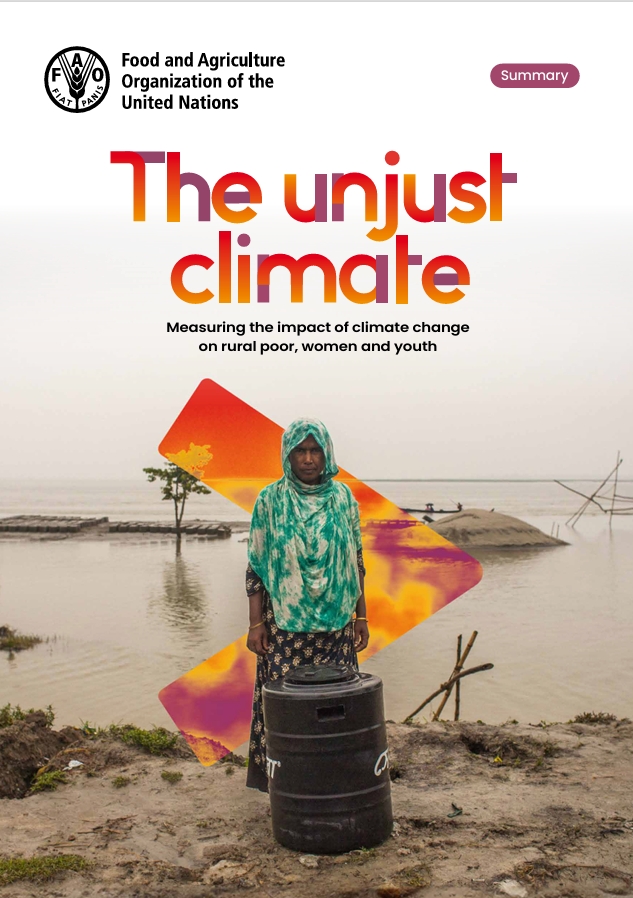
Summary
FAO, 2024
The brief summarizes the key messages and findings of FAO’s report “The unjust climate – Measuring the impacts of climate change on the rural poor, women and youth” which measures the effects of climate change on rural women, youths and people living in poverty.
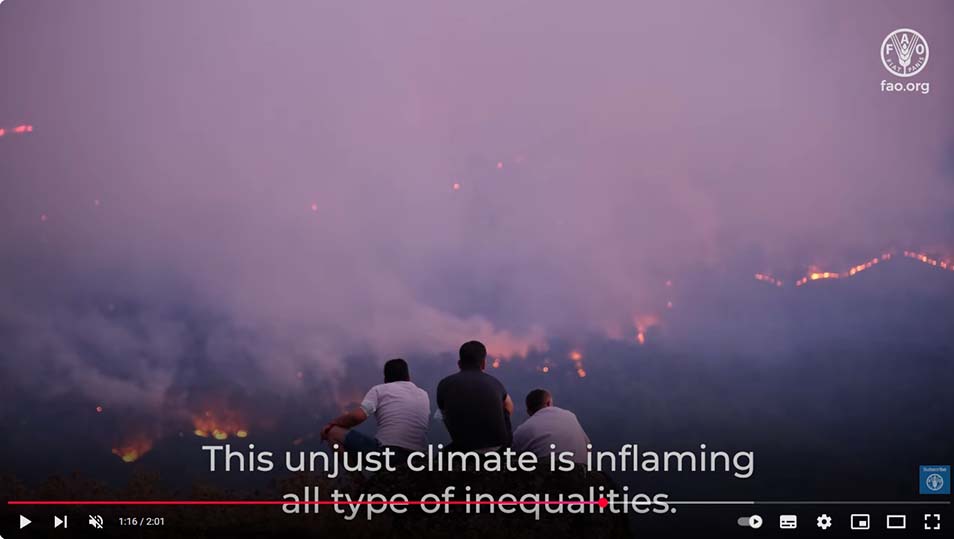
Video
FAO, 2024
The unequal impacts of climate change on countries, communities, and individuals undeniably pose a critical global challenge. Despite contributing minimally to the climate crisis, low- and middle-income countries bear the brunt of the consequences, particularly in rural areas where people heavily rely on agrifood systems and natural resources for their livelihoods.
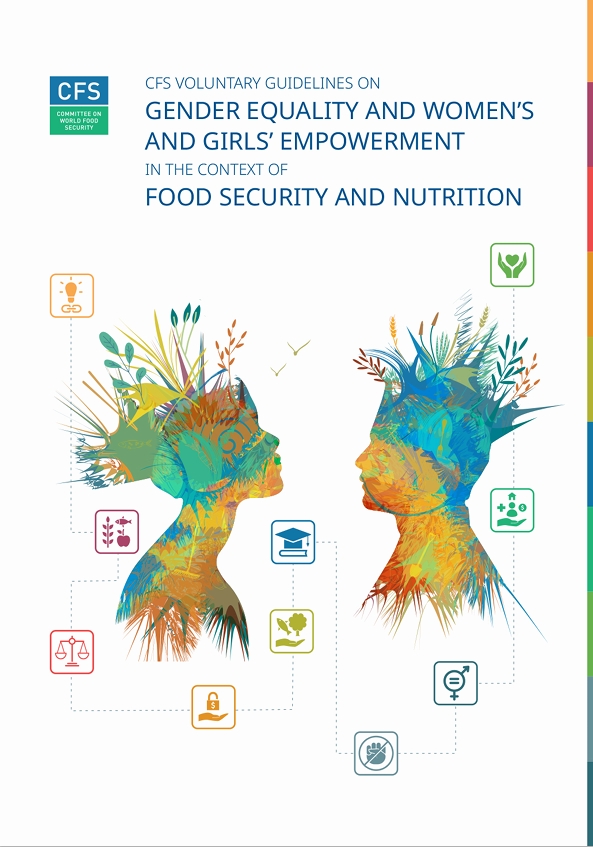
Policy document
FAO, 2024
These Voluntary Guidelines are the first inter-governmental and multi-stakeholder negotiated global policy agreement specifically focused on gender equality and women’s and girls’ empowerment within the context of food security and nutrition.
Brochure
FAO, 2024
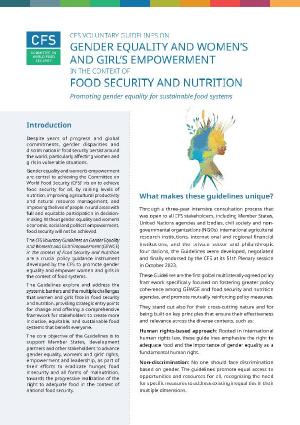
This brochure provides an overview of the CFS Voluntary Guidelines, the first inter-governmental and multi-stakeholder negotiated global policy agreement specifically focused on gender equality and women’s and girls’ empowerment within the context of food security and nutrition.

Video
FAO, 2024
This video aims to inspire and mobilize action around the implementation of the CFS Voluntary Guidelines on Gender Equality and Women’s and Girls’ Empowerment in the Context of Food Security and Nutrition by CFS Members and stakeholders at global, regional, and national levels.
Required citation:
FAO. 2025. Commit to Grow Equality: investing in the future of women in agrifood systems – Progress report 2025. Rome. https://doi.org/10.4060/cd4123en
The designations employed and the presentation of material in this information product do not imply the expression of any opinion whatsoever on the part of the Food and Agriculture Organization of the United Nations (FAO) concerning the legal or development status of any country, territory, city or area or of its authorities, or concerning the delimitation of its frontiers or boundaries. The mention of specific companies or products of manufacturers, whether or not these have been patented, does not imply that these have been endorsed or recommended by FAO in preference to others of a similar nature that are not mentioned.
The views expressed in this information product are those of the author(s) and do not necessarily reflect the views or policies of FAO.
© FAO, 2025
Some rights reserved. This work is made available under the Creative Commons Attribution-NonCommercial-ShareAlike 3.0 IGO licence (CC BY 4.0: https://creativecommons.org/licenses/by/4.0/legalcode.en).
Some rights reserved. This work is made available under the Creative Commons Attribution- 4.0 International licence (CC BY 4.0: https://creativecommons.org/licenses/by/4.0/legalcode.en).
Under the terms of this licence, this work may be copied, redistributed and adapted, provided that the work is appropriately cited. In any use of this work, there should be no suggestion that FAO endorses any specific organization, products or services. The use of the FAO logo is not permitted. If a translation or adaptation of this work is created, it must include the following disclaimer along with the required citation: “This translation [or adaptation] was not created by the Food and Agriculture Organization of the United Nations (FAO). FAO is not responsible for the content or accuracy of this translation [or adaptation]. The original [Language] edition shall be the authoritative edition.”
Any dispute arising under this licence that cannot be settled amicably shall be referred to arbitration in accordance with the Arbitration Rules of the United Nations Commission on International Trade Law (UNCITRAL). The parties shall be bound by any arbitration award rendered as a result of such arbitration as the final adjudication of such a dispute.
Third-party materials. This Creative Commons licence CC BY 4.0 does not apply to non-FAO copyright materials included in this publication. Users wishing to reuse material from this work that is attributed to a third party, such as tables, figures or images, are responsible for determining whether permission is needed for that reuse and for obtaining permission from the copyright holder. The risk of claims resulting from infringement of any third-party-owned component in the work rests solely with the user.
FAO photographs. FAO photographs that may appear in this work are not subject to the above-mentioned Creative Commons licence. Queries for the use of any FAO photographs should be submitted to: photo-library@fao.org.
Sales, rights and licensing. FAO information products are available on the FAO website (www.fao.org/publications) and print copies can be purchased through the distributors listed there. For general enquiries about FAO publications please contact: publications@fao.org. Queries regarding rights and licensing of publications should be submitted to: copyright@fao.org.
Cover photograph: © FAO/Peter Safari; © Patrick Zachmann/Magnum Photo for FAO; © FAO/ Jafaar Al Merei; © FAO/Gilles Sabrie; © FAO/Javid Gurbano


