


Part A: Management
Part B: Herding
Part C: Breeding
References
This module concentrates on specific aspects of livestock management which, though mentioned previously, have not been dealt with in any detail. They warrant special attention because of their importance in many African livestock production systems but should not be seen as unrelated to the topics discussed in the previous modules. Their study will, in most cases, involve the need to use the other modules in this section, and cross references are given for this purpose.
The main topics discussed in this module1 include management, herding and breeding.1 Since the type of data needed to determine management practices, as well as the methods involved in their collection, are described in detail in the modules which are referenced in the text, the format followed in this module differs, from that adopted elsewhere in Section 1 in that it focuses on the various components of livestock management.
MANAGEMENT. Though management is commonly cited as the key factor affecting animal production performance, it is a concept which is often loosely used. If the main components of management can be quantified, directions for improvement can often be identified. The material discussed in Module 5 will, therefore, often prove to be of immense help in its study.
HERDING. Almost all livestock production systems in Africa involve the use of labour for herding (Module 3).2 In most pastoral systems, herding is a major labour-using activity (Solomon Bekure et al, 1987), which, depending on the herding practice adopted, can have important effects on animal production performance (Module 5), animal nutrition (Module 7) and range condition (Module 6). Watering strategies and their effects are also discussed under this heading.
2 An exception are the intensive small-scale dairying enterprises in the high-potential areas of Kenya, for instance, where 'zero grazing' is practiced.
BREEDING. In this area, diagnostic research will concentrate on measuring the effects of breed on production performance (Module 5). The difficulties associated with separating out environmental and breed effects in an African livestock systems context are outlined.
While housing of livestock is practiced in some systems (e.g. with small ruminants in parts of the subhumid zone of West Africa), it is relatively unimportant as a management practice and is not discussed for this reason.3 Weaning practices are not discussed in the module either.
3 If stabling is practiced, the costs associated with constructing stables (Module 4) and the effect of the practice on production performance (Module 5) should be determined.
Definition
Indicators
Spurious indicators and relationships
Principal considerations in measuring management
Methods used to measure management
Management relationships
Livestock producers have a particular set of objectives with respect to the stock they own or hold. These objectives include production (e.g. of meat and milk), income generation (e.g. by sale of produce) and security, and will influence the manner in which resources (land, labour and capital) are used and managed. They will also differ between producers and system. The ability to make correct decisions about resource use in order to meet individual objectives thus indicates a producer' managerial ability'.
Management performance is, therefore, essentially an individual capability, dependent on the personal objectives of each manager which are often very difficult to define or For this reason, it can often be measured only by proxies (e.g. the management practices adopted, various performance criteria such as birth and mortality rates, and the personal characteristics of managers thought to influence management ability or performance, such as age, wealth or education).
While often providing an indication of managerial ability, the use of proxies such as those given above can lead to spurious conclusions.
For instance, a producer who user, modern' or recommended management practices, may not be a good manager of livestock. Compared with others who use more traditional methods of production, his herd/flock may perform poorly simply because the techniques he uses are inappropriate or improperly applied. Thus, an assessment based merely on the management practices adopted may lead to wrong conclusions.
Similarly, the use of performance criteria to assess management ability can be misleading. Low mortality rates or relatively high output levels may simply be a reflection of better resource endowment (e.g. better grazing resources) seasonal effects and genetic potential.
Relatively low levels of performance may, on the other hand, result from the adoption of risk-averting strategies which are rational within a particular environment.
For instance, the strategy of diversifying the species owned or held is often aimed at reducing risk (Dahl, 1979). Diversification - as opposed to specialisation (i.e. a concentration on one species) - may result in lower levels of performance per animal because resources (e.g. labour) are spread over a wider range of activities.
Relating educational level to managerial ability can also lead to spurious conclusions. A positive correlation between education and efficient management practices may, for instance, imply that education influences management. This may be true, or it may be that both education and management are determined by some other factor such as wealth.
When attempting to assess the effects of management on animal productivity, the following should be taken into account:
· for comparisons to be meaningful, they should be made between producers with similar resourcesTo ensure that producers with similar resources are studied, farmers/pastoralists are separated into recommendation domains or target groups and households are subdivided on the basis of wealth-ranking criteria (Modules 1 and 2, Section 1).
· different target groups within a system or between different systems will differ in their resources sad objectives
Comparisons between different target groups may be useful to isolate constraints which, in turn, determine whether particular practices are adopted.
· differences in output or performance measured in other ways will often result from factors other than managerial ability
For higher offtake rates may stem from the need to obtain cash to meet specific expenses such as school fees, rather than from a more 'commercial' emphasis in management.
Only when such factors have been identified, can the differences which are still evident be sometimes attributed to particular management practices or to the managerial ability of the producer.4
· differences in management practices within a group or between different groups may not always be easy to isolateWhen questioned about between-herd differences in performance, producers within a group can often separate the better managers from those whose performance is average or below average. However, it is often extremely difficult to get them to identify the specific reasons for varying performance. Soumare (1987) found, for instance, that better performance in an agro-pastoralist group in central Mali was commonly associated with having a 'better shepherd', but this is not likely to be very helpful unless the characteristics of such a shepherd are specified or can be identified.
4 Regression analysis is frequently used to isolate the effects of particular variables on animal production performance (Module 11). The use or non-use of particular practices is represented by means of the so-called 'zero/ore' variables which are then used to determine whether such practices have significant effects. In these equations, surrogate or substitute variables (e.g. education, age and wealth) may also be used for managerial ability, but there is always the danger that such variables will lead to spurious conclusions.
Management performance can be measured by using informant ranking, management indices and zero/one variables.
Informant ranking. When informants are used to identify within-group differences in management performance, the following procedure is suggested:
· Ask informants to rank producers according to management performance and to specify, if possible, the characteristics and practices distinguishing the different groups. Procedures similar to those outlined for wealth ranking in Module 1 (Section 1) could be developed for this purpose.· Stratify producers in the groups according to the criteria suggested and examine their characteristics and practices.
For practices which are continuous or regular in nature (e.g. herd splitting, dipping), continuous monitoring surveys may be needed (Module 2, Section 1). If once-off surveys are used, indications of the frequency and level of use can often be obtained by asking producers the following types of questions:
|
Example: How often do you dip your cattle? Enter the appropriate code number. 1. Once every month |
· Compare differences between producers within each stratum and across strata to determine whether the characteristics/practices identified have a significant effect on production performance (Module 11).· If significant differences occur between different strata, directions for improvement may then be identified.5
5 A similar ranking procedure could be developed for different groups within the same system and incorporated into an initial wealth ranking of producers (Module 1, section 1). If for instance, individuals are ranked according to wealth and if management differences are believed to exist within each wealth rank, then these differences could also be specified by informants during the interview and used for further inter-group comparisons. scores and weighted according to predetermined criteria to enable the ranking of producers on the basis of 'management performance' (Bailey, 1983; Mohamed, 1985).
|
Example (hypothetical): Informants grouped pastoralists from a target group into three categories on the basis of management activities said to influence production performance. Better management was believed to be related to the frequency of stock movement, prompted to avoid disease risks. A sample of producers was then selected from each group to observe herding practices and animal grazing behaviour, and to measure production performance (Modules 3, 5 and 7). Production performance was found to be significantly different between groups with respect to body condition and growth rate (Module 5). These differences were, in turn, found to be related to the level of worm infestation (Module 8). Subsequently, this information was used to design strategies for improvement, such as regular drenching. |
Management indices. Attempts have been made to measure the effects of management by the construction of 'management indices'. With this method, producers' management practices are assigned scores and weighted according to predetermined criteria to enable the ranking of producers on the basis of 'management performance' (Bailey, 1983; Mohamed, 1985).
|
For instance, Bailey (1983) used an index of management for cattle owners/holders in Botswana. He assigned (on the basis of input use) the scores 0-10 to individual producers in different herd-size groups. Five input indicators (weighted equally) were used for this purpose: |
||||||||
|
|
||||||||
|
|
- vaccines and medicines |
|||||||
|
- tick treatments |
||||||||
|
- feed supplements (salt and bonemeal) |
||||||||
|
- artificial insemination, and |
||||||||
|
- improved bulls. |
||||||||
|
|
||||||||
|
Bailey then related the average index score per group to herd-size category to determine whether herd size (an indicator of wealth) had any effect on the use of inputs (an indicator of 'management') (Table 1). |
||||||||
|
|
||||||||
|
Table 1. Management performance by herd-size class, Botswana. |
||||||||
|
|
||||||||
|
|
Herd size class |
|||||||
|
1-10 |
11-20 |
21-30 |
31-40 |
41-50 |
51-60 |
61-70 |
70 + |
|
|
Average index score |
41.3 |
40.1 |
45.0 |
49.1 |
53.9 |
56.0 |
60.5 |
56.8 |
|
|
||||||||
|
The author concluded that there was a significant relationship between herd size (wealth) and the management practices adopted. |
||||||||
The points to be taken into account when this kind of analysis is being planned are:
· the selection of management practices for the index will be based on subjective criteria and will thus be open to personal bias· the weights assigned to different practices and the scores given to individuals are also based on subjective criteria
· the final score is thus based on a subjective assessment of what constitutes 'good management'. Good management and the use of 'modern' practices are not necessarily the same, and
· relationships such as those used by Bailey (1983) may, therefore, be spurious. Another researcher, because of his/her own preferences, may come up with completely different results.
Zero/one variables. Because of the potential for bias in the use of management indices, producers are often ranked simply on the basis of use or non-use of a particular practice.
This approach also has its inherent dangers. It makes the implicit assumption, for instance, that the users of a practice are better managers than non-users. By categorising producers into one of the two possible categories, the method makes no distinction between users as to the frequency or level of use. For some practices where continuity and level of application are meaningful (e.g. herd splitting, dipping, drenching), zero/one information is therefore inappropriate. For 'once-off' practices (e.g. administration of certain vaccines), zero/one variables may be used to determine whether the adoption of these practices has any effect on performance (Flint, 1986) (Footnote 4).
If differences in management practices or producers' characteristics can be isolated, and if the methods used to measure these variables are appropriate, constraints may be identified and possible pathways for improvement may be indicated by examining the relationships between the management practices adopted and:
· production performanceFor instance, do the stock of pastoralists who drive them to salt licks perform better than those who do not? If so, correction of mineral deficiencies by the provision of salt licks may be appropriate.
· household size
For instance, do larger households adopt different practices? If so, is labour a constraint to the adoption of new techniques within a particular group? Do recommendation domains need to be redefined?
· herd size (wealth)
For instance, do the owners/holders of larger herds adopt different management practices? (Botswana, 1982; Bailey, 1983).
· diner producers' characteristics
For instance, do producers with greater access to services (e.& to extension agents) use different practices when compared with those who don't? If so, what distinguishes such producers location, education etc? Having compared herds of high and low productivity, Mohamed (1985) concluded that the age of the manager (as an indicator of experience) was positively related to livestock productivity in the agropastoral systems of subhumid Nigeria. Such correlations must, however, be treated with caution.
· cost of inputs used
For instance, Sandford (1983a) has shown that the use of vaccines in Tanzania declined after the imposition of fees by government. In Kenya, subsiding increased their use. Improvements in production may, therefore, come via changes in policy rather than through changes in technology.
Herding is one important element in management. It can be defined as the deliberate control and movement of livestock for the purposes of feeding, watering, avoidance of disease risks, crop damage etc. Dahl (1979) distinguishes between herding tasks and herding tactics, which are defined as follows.6
6 While Dahl's (1979) classification relates to pastoral communities in general, it is also applicable to most African livestock production systems.
Herding tasks consist of the daily movement of livestock to sources of feed and water. In Africa, such tasks are often carried out by young children. Other tasks such as the care of young stock by women and children at the household site are also included. Decisions about these activities are made on a daily basis (i.e. they are short-term management decisions).
Herding tactics involve the actual planning of stock movements or herding tasks and the collection and evaluation of various kinds of information relating to feed, nutrition, disease and water availability. These are essentially management decisions made usually by the household head or recognised elders of a herding group (Solomon Bekure et al, 1987). Herding tactics will be much influenced by herd/flock composition and the requirements of different animal species in terms of water, feed and disease management. Decisions made about herding tactics can thus be of a short- and long-term nature.
In the study of herding tasks, emphasis will be given to the measurement of labour spent on different activities7 in order to determine the sufficiency of labour for basic herding tasks. The amount of labour required for herding tasks will depend on the system of production, proximity to feed and water resources, seasonal conditions and herd or flock size.
7 Module 3 (Section 1) discusses the venous methods which can be used to measure labour inputs.For instance, time spent watering stock in pastoral systems is very much dependent on the distribution and adequacy of seasonal water supplies (Sandford, 1983a). For the Borana pastoralists in Kenya and Ethiopia, a critical constraint to production is the amount of labour available for watering from deep wells during the dry season. Insufficient labour to perform this task will affect the size of the herd a family can own or hold and may have significant effects on the productivity of animals (Dahl, 1979; Sandford, 1983b).
Larger households tend to have larger herds/flocks in most systems (Zimbabwe Government, 1982; Solomon Bekure et al, 1987). They thus often benefit from economies of scale, with less time being spent per animal on herding tasks.
To determine whether labour is sufficient to carry out herding tasks, data on household structure, the age/sex allocation of labour to different activities and the seasonal patterns of labour use will need to be collected (Module 3, Section 1). Where labour hiring and cooperative arrangements are used to compensate for shortages of herding labour, information on this type of arrangements will also need to be collected. While used to overcome labour deficits and increase mobility, such measures can have negative effects, e.g. through a loss in herding autonomy and the capacity to decide on herding tactics (Dahl, 1979; Solomon Bekure et al, 1987).
The emphasis in labour studies should always be to isolate constraints, examine relationships and determine directions for improvement.
|
Example: To determine the sufficiency of labour, one may, for instance, examine the relationship · the household labour available for herding and the size of the herd/flock owned or held, and |
As already mentioned, choosing herding tactics involves the planning of stock movements or herding tasks, and the collection or evaluation of data. Herding tactics are, therefore, a particular set of management decisions.
In this section we shall look briefly at the different kinds of people by whom these management decisions are taken and at the factors which determine which options are chosen, and then, in some detail, at the content and consequences of some of these management decisions.
There is substantial anthropological literature (of which Dahl (1979) is an example) of how rights in livestock (e.g. ownership rights) determine who makes management decisions of various kinds, and how these rights alter over time demographic, economic and social change.
For instance, in many parts of southern Africa where male household heads migrate out of their home areas in search of work, there has been a perceptible change in the power of women to make management decisions over livestock.
Different types of decision-maker (e.g. pure pastoralists, trader-pastoralists, absentee bureaucrats and female household heads) have access, in different degrees, to the different kinds of information needed to choose optimal herding tactics.
For instance, the bureaucrat will get early news of impending government actions, the trader of changes in market conditions, and the pure pastoralists of site-specific rainfall, pasture and stock-water conditions.
One set of constraints to good management is lack of information; and one way to diagnose the relative importance of different kinds of information is to relate the productive performance of the livestock of different types of decision-makers to the kind of information to which they have privileged access, bearing in mind, however, that they may differ in several other ways (e.g. wealth) as well as in access to information.
One of the most important factors determining which herding tactics are adopted is labour availability. In pastoral communities, the availability of labour will affect a household's capacity to adopt such strategies as herd splitting, as well as the selection of water points and watering frequency. This, in turn, may influence the choice of milking strategies which may have an effect on productivity (e.g. in terms of milk offtake).
In mixed farming systems, crop and livestock activities will often compete for available labour resources. This may result in a reduction of the time spent on herding and livestock care (Sandford, 1983b; Mohamed, 1985), or may lead-to farmers fencing areas for grazing in order to reduce herding labour requirements (Danckwerts, 1975).
In the examination of herding tactics, much of what has been said about management in Part A is relevant. In addition, specific attention may need to be given to herd splitting and watering practices.
Herd splitting
Herds and flocks are often separated into distinct herding units in order to exploit feed and water resources better and adjust mobility. The manner in which they are split varies with herd/flock size, season and productive function.
Herd splitting is common in pastoral communities (Dahl, 1979; Maaliki, 1982; Solomon Bekure et al, 1987) but less so in mixed systems, largely because of competition for labour from cropping. In pastoral systems, herd splitting is a management practice which can have significant benefits in terms of animal nutrition and productivity, and its relationship to performance should, therefore, be examined.
In the study of herd splitting as a management practice, the important considerations are:
· the frequency and timing of herd splittingHere we should find out whether herd splitting is a regular practice across seasons or only within particular seasons. If continuous surveys are not justified, approximations of frequency can be obtained by asking questions similar to those given earlier on page 235.
· the effect of herd splitting on herd mobility and on the exploitation of grazing and water resources
Studies which attempt to answer such questions are likely to be time-consuming, though quick impressions can be obtained by using low-cost techniques. They may involve studies on grazing behaviour (Module 7), animal nutrition (Module 7), labour use (Module 3, Section 1), animal production (Module 5) and range resources (Module 6).
If low-cost survey techniques are used, the main objective will be to estimate the distances over which different herd units are moved and the sources of feed and water they exploit. This could be done by following split and unsplit herds at different times during the year.
During the wet season, when surface water is abundant, pastoral herds are often moved to exploit distant feed resources, and difficulties may be encountered in tracking stock if visits are infrequent. One way of overcoming this problem is to attach enumerators to different herd units. They should be trained to record basic data on the utilisation of feed and water sources and on time spent grazing (or browsing) and walking.8 Average distances moved per day can then be estimated.
8 Grazing behaviour studies described in Module 7 can be modified to obtain more general data about the resource use by herds or flocks.
The same applies to monitoring herd-splitting activities during the dry season. The main objective of dry-season monitoring will be to establish the differences in the exploitation of feed and water resources by split and unsplit herds. Productivity differences between the different herd units could also be compared using simple rapid-survey techniques (e.g. condition-scoring). (See Module 5 for a description of the various rapid-survey techniques used to assess productivity.)
Watering practices
Studies of the watering practices adopted by livestock herders can be an important component of diagnostic research, particularly in the pastoral and agropastoral areas of the arid and semi-arid zones.9 The distance travelled to water, the amount of feed consumed and the frequency of consumption can influence animal production performance (Module 5), feed intake (Module 7) and range condition (Module 6). In some systems, water intake may be limited by the availability of labour (Module 3, Section 1).
9 The discussion is confined to those livestock systems in which water is a major constraint on production throughout the year or during particular seasons. Typically, these will include nomadic pastoral systems in arid and semi-arid areas and semi-nomadic pastoral systems and mixed farming systems in semi-arid areas (Sandford, 1983b). Ranching and small-scale dairy operations and systems in high-altitude or high-rainfall areas are excluded because water is not normally limiting in such areas.
The following management-related issues may need to be examined in studies on watering practices:
· water-management strategies, and· relationships between water use on one hand and labour, livestock productivity, range condition, and equity, on the other.
Water-management strategies. It is useful to distinguish between the various water-management strategies adopted by livestock herders to cope with water scarcity, because an understanding of their characteristics will often point to particular constraints or to avenues for improvement. The categorisation of strategies used by Sandford (1983b) for arid and semi-arid livestock production systems provides a useful guide.
Five water-management strategies can be identified:
· Investment strategies, which refer to the construction of water sources to alleviate water shortages (e.g. hafirs and dams in the Ogaden region of Ethiopia, boreholes on the communal grazing areas of Botswana, and deep wells in Niger and in southern Ethiopia).· Herd-composition strategies, in which owners/holders adjust the age, sex or species mix of their livestock in a way which matches their ability to cope with water shortage to the actual distribution of water resources. These adjustments are also used to ensure more even supplies of milk (Module 5) and better utilisation of grazing resources (Modules 6 and 7).
· Positioning and conservation strategies, in which there is careful adjustment in space and time of the location of livestock relative to water supplies. In general, positioning strategies will involve herd splitting to ensure that individual species' requirements are met (Cossins, 1971). They will also involve careful conservation of permanent water sources as fallback points during dry seasons and the exploitation of more distant ephemeral water supplies during wet seasons. This strategy is common in African pastoral systems (e.g. the Borana of Kenya and Ethiopia, the Bororo of Niger, the Maasai of Kenya).
· Husbandry strategies which have two essential components:
· the selection of livestock better suited to cope with water shortages (e.g. on the basis of species or skin colour)10 (King, 1983, pp. 34-37; Nicholson, 1985), and· the manipulation of watering frequency (Nicholson, 1986).
10 For instance, white coats in zebu cattle reflect 40% more heat than black coats (Nicholson, 1985).
Figure 1 gives an example from Kenya of the effect of rainfall on the relative composition of pastoral livestock holdings.
· Control strategies in which communities or individuals attempt to regulate access to water sources. The degree of control is related to the scarcity of water, the difficulty of extracting it and the amount of grazing adjacent to the water point. Attempts to obtain control are less common in situations where grazing and water are relatively abundant (e.g. during wet seasons).
Relationship between water use and labour. Labour required to extract water from ground and river wells can be a limiting factor in some systems (e.g. the Borana of Ethiopia, the Berti of Sudan). Households which are short of labour must enter into cooperative arrangements, or reduce herd size or the frequency of watering.
When operations such as watering are identified as critical during particular months of the year, rapid-survey techniques such as the 'critical task analysis' can be used to determine labour requirements(Grandin, 1983) (Module 3, Section 1). This data can then be used to examine the effects of labour supply and herd size on watering frequency.
Figure 1. Effect of rainfall regime on pastoral livestock holdings in Kenya.
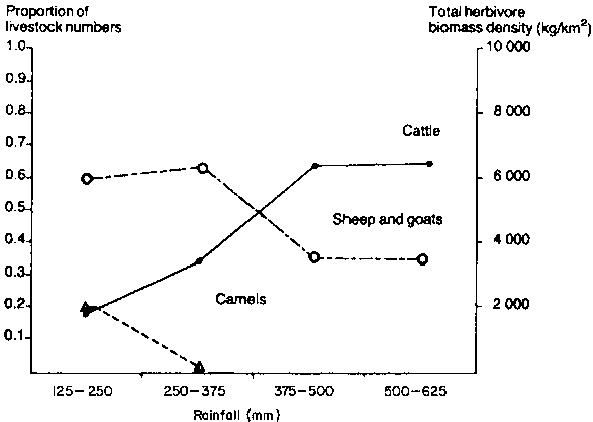
Source: King (1983, p. 79).
Relationship between water use and livestock productivity. Water functions in the body as a solvent for nutrients and as a medium for the excretion of metabolic waste. It affects feed intake and is important for the regulation of body heat. Water can, therefore, have important effects on animal nutrition and productivity.
In order to maintain the amount of water in body tissue within acceptable limits, water used (e.g. in evaporation, excretion or ilk production) must be replaced by drinking or by moisture in the feed consumed. The proportion of water used per unit of time is known as the ' turnover rate' and this varies between species and according to breed, size, physiological status and environmental conditions.11
11 King (1983) deals in detail with water use and species requirements and provides an extensive bibliography on the subject. Nicholson (1985) provides a more general discussion on water requirements of livestock in Africa. Basic texts on animal nutrition (see Module 7) deal with the nutritional aspects of water use in livestock.
For this reason, relationships between water use, water management and productivity need to be examined in diagnostic research. In arid/semi-arid rangelands, one will need to examine particularly how production performance is affected by:
· distance walked to water
· frequency of watering, and
· water quality.
The effect of distance walked to water. In arid and semi-arid areas, water development schemes have often been based on the premise that distance walked to water affects feed intake and thus animal productivity. The energy expended in walking long distances to water limits performance and forces pastoralists to keep livestock species and breeds which are able to withstand water shortage, not because of their relatively productive potential. Also, the distribution of water points modifies the spatial patterns of grazing pressure, thereby affecting range utilisation and productivity, and through these, livestock performance (Squires, 1978; Nicholson, 1985).
Sandford (1983b), for instance, argues that an increase in water points from 1 to 100 per 1500 km2 could more than treble milk production in pastoral areas. Nicholson (1985), however, argues that the evidence for energy loss through walking is inconclusive and that losses, if any, are likely to result from the added heat load caused by walking during the hotter time of the day, not from walking long distances
If the distance walked reduces the intake of food (Squires, 1978) and a net loss of energy occurs (from whatever the cause), animal productivity can be expected to decline. However, African livestock have been shown to adapt to submaintenance energy levels by lowering maintenance requirements (Ledger and Sayers, 1977; Butterworth, 1985) (Module 6). If this is the case then lower levels of feed intake caused by walking greater distances may have little effect on productivity.
The distribution of water points can affect the utilisation of rangelands and hence the number of animals which can be carried. In a study of the central Australian rangelands, Perry (1962) concluded that carrying capacities could be increased by 150-250% through better distribution of water points.
The relationship between water distribution and animal productivity could thus have important implications for water development policy in drier regions. Simple indicators of production performance (e.g. condition scoring for cattle, weight measurements for smallstock) for herds or flocks travelling different distances to water in the dry season could be used to estimate the significance of this relationship.12
12 Condition scoring has been shown to be closely correlated to productivity in terms of conception rates (Ward, 1968 Steenkamp et al, 1975) and body weight (Nicholson and Sayers, 1987).
To be meaningful, comparisons would need to be made between similar systems and environments with animals of the same breed, age and productive function. Several condition or body weight measurements would need to be taken during the dry season (e.g. per month or per a fortnight). Distances travelled to water could be measured by the technique described on page 240. Condition scoring is described in Module 5.
The effect of watering frequency. The frequency of watering can affect feed and water intake and the area over which an animal can graze. Its effect on productivity has not been widely tested, though the on-ranch trials conducted by ILCA in southern Ethiopia are worth citing as an example (Nicholson, 1985; 1986).
|
Example: Trial cattle were placed in four groups to test the effect of watering frequency on cattle production performance. The control group had ad libitum access to water, while the other three groups were given access at 1-, 2- and 3-day intervals, respectively. | |||
|
| |||
|
The results showed that there were no significant effects on calving rate but the weight and condition of lactating cows was affected during the dry season (Table 2). | |||
|
| |||
|
Table 2. The effect of watering frequency on the weight change and condition of lactating cows, southern Ethiopia, October 1983 - May 1984. | |||
|
| |||
|
Watering frequency |
Weight loss (%) |
Per cent of starting weight |
Condition loss (average points/month) |
|
Daily |
83.4 |
22.2 |
0.452 |
|
Every 2 days |
68.4 |
18.6 |
0.268 |
|
Every 3 days |
111.4 |
27.0 |
0.280 |
|
| |||
|
Growth of calves to weaning was affected as well. Compared with calves watered daily, calves under the 2-day watering regime were 9 kg lighter and those under the 3-day regime were 14 kg lighter. However, at 27 months there was no significant in the weight of steers, suggesting compensatory gain during the intervening period. In overgrazed and overstocked rangelands, the potential for compensatory gain may be limited, which, in turn, may mean that the growth of mature stock may be affected by the watering regime adopted. | |||
The method used to monitor watering frequency would depend largely on the system being studied. Monitoring would be done during the dry season when water becomes limiting. Condition scoring could be used as an indicator of weight gain and productivity. In systems where watering is done at fixed water points and where labour for watering is limiting, the same herdsmen are likely to come to the water point each time a particular group of stock is watered. In this case we can select a sample of these herdsmen and monitor their return to the water point over a period of 1-2 months. Since watering frequency is likely to increase as the dry season proceeds, the monitoring should be done when the dry season is well advanced, rather than at its beginning.
In systems where watering is done by different herdsmen, ear tags may need to be used instead. These can be complemented by simple questionnaires to establish herd ownership and location and to record watering frequency.
The effect of water quality. The quality of water drunk can have noticeable effects on livestock productivity. Water quality is affected by the presence of dissolved salts, toxic and contaminating substances and disease-producing organisms (Nicholson, 1985). Livestock species vary in their tolerance to dissolved salts; the amounts recommended for different species are given in Table 3.
Table 3. Tolerance to salty drinking water.
|
Species |
Total dissolved salts tolerated % |
|
Camels |
5.5 |
|
Goats |
1.5 |
|
Sheep |
1.3-2.0 |
|
Cattle |
1.0-1.5 |
|
Donkeys |
1.0 |
Source: King (1983).
Toxic substances may be natural or a result of pollution - e.g. arsenic and organophosphates near dips. Minerals dissolved in water can also reach toxic levels; data on these levels are available from Schoeller (1977) and Edwards et al (1983).
Disease is common at water points which are heavily utilised. Such sites are common sources of worm infestation (e.g. flukes) and other disease-bearing organisms (e.g. anthrax, rinderpest and foot-and-mouth).
It may thus be useful to examine the relationships between:
· stocking density adjacent to water points and the incidence of disease (Module 8), and
· water quality and animal production performance
The existence of toxic substances and dissolved salts in water can be tested by standard laboratory techniques.
Relationships between range condition, water use and stocking density. Overgrazing at, and adjacent to, water sources is widespread in Africa and is particularly serious in arid and semi-arid areas (Jarridge, 1980). Where water points are sparsely distributed, overgrazing normally occurs in concentric circles with vegetation conditions improving as distance from the water point increases.13 Table 4 demonstrates this for a wet-season water point in Mali.
13 The relationship between distance and grazing pressure is often sigmoid, not linear (Graetz and Ludwig, 1978). Pressure tends to be fairly constant in the first band. It then tends to increase sharply and in the extremities it flattens out again.
Table 4. The effect of gross overgrazing around a wet-season water point, Mare d'Arodouk, Mali.
|
|
Distance from water point (km) |
||||
|
1 |
2 |
3 |
4 |
5 |
|
|
Bare soil as % of surface area |
36 |
22 |
14 |
20 |
9 |
Source: Boudet (1976, p. 191).
Blench et al (1986) found in the subhumid zone of Nigeria that the number of water points per square kilometre explained 65% of the variation in cattle densities during the dry season. Fortmann and Roe (1981) also found a positive relationship between cattle density and proximity to water points in eastern Botswana. As the distance from water points increased, cattle and range conditions also improved.14
14 Fortmann and Roe (1981) used condition scoring and a simple range-scoring technique to demonstrate this.
The relationships between water-point use and livestock concentration can, however, be confounded by seasonal environmental conditions or soil type. Abel et al (1987) found in southern Botswana that, because the presence of ground water and of soil moisture content near the surface were positively correlated in space, grass biomass actually declined as the distance from water points increased. The stocking rate in an area will also affect the relationship between distance from water and range condition - e.g. at low stocking rates, it is unlikely that the relationship will be significant.
In some societies (e.g. the Borana of Ethiopia), less frequent watering of stock has resulted in better exploitation of the range and less pressure near water points. Management strategies of this kind may, in some circumstances, be preferable to the construction of more water points (Nicholson, 1986).
The methods used to evaluate range condition are described in Module 6.
For instance, one could use line transects radiating from selected water points to assess biomass, density, cover or composition of the vegetation (Fortmann and Roe, 1981). The following simple procedure could be adopted in this case:· Make a preliminary assessment of changes in range condition by walking or driving along two or three transects radiating from the water point· on the basis of this information, decide how long the transects should be (e.g. to the point where vegetation condition appears unchanged) and how the vegetation should be sampled (e.g. more samples may need to be taken initially if vegetation changes in the sigmoid pattern described in footnote 13), and
· relate changes in vegetation to distance, stocking rate or animal condition, as required.
Aerial surveys can also be used to assess relationships between the distribution of water points and vegetation or livestock density, respectively. The principles involved in the use of aerial surveys for the assessment of range condition are outlined in Module 6. Module 9 shows how they can be used to make stock counts (Milligan, 1983).
Relationship between water use and equity. In some production systems, individuals or groups of owners are able to control access to water points because of position or wealth. As a result, they effectively gain the control over adjacent grazing, particularly during the dry season (Peters, n.d.). The poorer members of the community may then be forced to pay to obtain the right of use or they may be excluded. If the latter happens, their stock will need to be watered at publicly used water points where overgrazing, range degradation and disease tend to be more pronounced (Fortmann and Roe, 1981; Nicholson, 1986). Losses through death may, therefore, be greater for those without access to controlled water points during the dry season.
Comparisons between those who control access to water points and those who do not on the basis of herd size and production performance points to the need for policy changes which redistribute control over water points more equitably. However, it may be extremely cliff cult to enforce such policies.
Livestock development and research programmes in Africa have often emphasised the need for breed improvement schemes to raise animal production performance. This part of the module, therefore, deals with the diagnosis of breed/genetic effects on the performance of livestock in traditional production systems. The principles of genetics, breeding and selection are not described since such information can be found in numerous texts on the subject (e.g. Lush, 1945; Butterworth and Presswood, 1978; Pirchner, 1983). Information on breeds in Africa by livestock species can be found in Mason and Maule (1960), Mason (1969) and OAU (1985).
When attempting to diagnose breed/genetic effects in livestock systems research, different animals are compared on the basis of productivity criteria (e.g. milk production, meat output, weight gain and mortality rates). The methods used to measure production performance are discussed in detail in Module 5.
In this module, the discussion will focus on:
· the difficulties involved in isolating breed/genetic effects when assessing production performance, and· some of the breeding practices used in African livestock production systems, and how their effects on performance could be assessed.
Production performance in any system is determined by the interaction of genetic characteristics and environmental conditions. Two types of genetic characteristics are commonly identified in animal breeding. They are:
· characteristics which distinguish different on the basis of visual appearanceFor instance, colour, horns, dewlap, hump etc. Such characteristics are relatively unimportant in livestock breeding though they can play a role in crossbreeding for hybrid vigour. Breeding for skin or coat colour may also be required.
· performance characteristics
For instance, growth rates, carcass quality, milk production, wool production etc. These characters respond to selection. The chief problem here is to separate environmental effects15 from gene/breed effects. If this can be done, selection of animals which are superior in genotype for one or more characters can be made.
15 The term 'environmental effects' refers to effects caused by such factors as climate, feed, water, disease and management. to be done between different systems where environmental factors are likely to differ as well. Since it is often impossible to isolate the effect of these factors, attributing differences to breed alone will tend to be spurious.
Under experimental conditions where environmental effects can be controlled or held constant, the effects of breed can normally be isolated without difficulty. However, when these factors cannot be controlled (as is the case in most African livestock production systems), it is extremely difficult to diagnose for breed or genetic effects.
Even if the effects of climate, feed, water and disease can be assumed to be fairly constant within a given system, management is often highly variable and its effects are difficult to isolate. If differences in management skills are randomly and fairly evenly distributed between the herders looking after different breeds, the result will be great within-breed variability and, therefore, probably no statistical significance between the performance of different breeds. If, as is not unlikely, the herders with one breed are better managers than the herders with another breed, then management and breed effects will be confounded.
Thus, there are substantial problems in determining whether differences between flocks or herds are due to management or genetic factors or a combination of the two. Moreover, management influences feed and water availability as well as the incidence of disease, so that the environment, though apparently constant within a system, may in fact be very different for different flocks/herds within that system.
In summary, isolating breed and genetic effects in on-farm diagnostic research presents substantial difficulties.. It has seldom been successfully done in African smallholder conditions. For further discussion see Peters and Thorpe (1988) and Peters (1989). Further issues to be considered in the diagnosis of breed/genetic effects in traditional African livestock production systems are:
· comparisons between animals of the same breedDiagnosing for genetic differences within the same breed and in the same production system has a very low chance of success unless management effects can be isolated. Moreover, time spent on this is likely to be unwarranted in traditional systems, since significant improvements can often be achieved by concentrating on the more obvious parameters such as disease or time of mating (if reproductive performance is low) (Module 5).
· comparisons between different breeds
Inter-breed comparisons within the same system tend to be difficult because, within a given system, animals of the same species are usually of the same breed. The comparisons thus need
Even if different breeds do occur within a system, it is often extremely difficult to identify purebred animals. This is because in most African traditional livestock production systems, breeding tends to be uncontrolled and crossing between breeds is common. If crossing results in heterosis (hybrid vigour), the inclusion of such animals in the sample is likely to result in spurious conclusions.
Also, even if different breeds are clearly distinguishable within a system, the number of purebreds will often be too small to make meaningful statistical comparisons. Alternatively, the cost associated with diagnosing breed differences over a sufficiently large sample may be prohibitive.
Three other aspects of breeding management warrants consideration in livestock systems research. They are:
· seasonal breeding control practices
· sire/dam ratios, and
· selection practices.
Seasonal breeding control practices. In some societies (e.g. the Maasai of Kenya and the various Islamic communities in the Sahel), aprons are used to control breeding in smallstock and, thereby, ensure that the young are born in the most favourable season. Such practices may point to potential areas for improvement (see Part A above) if significant differences in productivity occur between the users and non-users.
Sire/dam ratios. Sire/dam ratios in the traditional livestock production systems of Africa tend to be high: for cattle, ratios of 1:25 are common (Butterworth, 1985) and for small ruminants, ratios of between 1:4 and 1:6 have been widely observed (Wilson, 1988). In some instances differences in ratios between producers may point to potential improvements in management (Botswana, 1982), but in situations where communal grazing results in uncontrolled breeding there may be little scope for improvement by increasing the number of sires. Where excess breeding buss are kept, the reasons for doing so should be ascertained if possible.
Selection practices. Producers select males for breeding but the criteria for this selection are not well known.
For instance, do farmers in mixed production systems select males for castration because of superior weight and size? If so, are breeding males inferior in these respects? Does this affect the performance of the herd/flock owned or held?
If such questions can be answered, potential ways of improvement might be identified. Generally, however, it is usually extremely difficult to elicit uniform information about the selection criteria used.
Abel N O J. Flint M E, Hunter N D, Chandler D and Maka G. 1987. Cattle-keeping ecological change and communal management in Ngwaketse. Vol. 1. Summary, Vol. 2. Main report. ILCA (International Livestock Centre for Africa), Addis Ababa, Ethiopia; Integrated Farming Pilot Project, Ministry of Agriculture, Gaborone, Botswana and Overseas Development Group, School of Development Studies, University of East Anglia, Norwich, UK Vol. 1, 45 pp; Vol. 2, 82 pp. + tables, figures, references.
Bailey C R. 1982. Cattle husbandry in the communal areas of eastern Botswana PhD Thesis, Cornell University, Ithaca, USA. 367 pp. [Subsequently published by University Microfilms International, Michigan State University, Ann Arbor, Michigan, USA]
Blench R. Wint W and Bourn D. 1986. Systematic aerial reconnaissance flights and related ground-surveys in the Nigerian sub-humid zone. RIM (Resource Inventory and Management Ltd), Jersey, Channel Islands, UK 123 pp.
Botswana, Ministry of Agriculture and Commission of European Communities, European Development Fund. 1982. An evaluation of livestock management and production in Botswana with special reference to communal areas. Vol. 2. Main report; Vol. 3. Appendices. Carl Bro International, Malervangen, Glostrup, Denmark. Vol. 2, 281 pp.; Vol. 3, 243 pp.
Boudet G. 1976 Les pâturages sahéliens - les dangers de dégradation et les possibilités de regénération - principes de gestion améliorée des parcours sahéliens. FAO (Food and Agriculture Organization of the United Nations) and IEMVT (Institut d'élevage et de médecine vétérinaire des pays tropicaux), Rome, Italy and Maisons-Alfort, France. 58 pp.
Butterworth M H. 1985. Beef cattle nutrition and tropical pastures. Longman Inc., New York, USA. 500 pp.
Butterworth M H and Presswood J (eds), 1978. Beef production handbook. Second revised edition. Ministry of Agriculture, Animal Production Division, Mbabane, Swaziland. 204 pp.
Cossins N J. 1971. Pastoralism under pressure: A study of the Somali clans in the Jijiga area of Ethiopia. Livestock and Meat Board, Addis Ababa, Ethiopia. 99 pp.
Dahl G. 1979. Suffering grass: Subsistence and society of Waso Borana Department of Social Anthropology, University of Stockholm, Sweden. 287 pp.
Danckwerts J P. 1975. Livestock and land use in the T.T.L's of Rhodesia University of Rhodesia. 13 pp. [ILCA library microfiche number 65072]
Edwards KA, Classen GA and Schroten E H J. 1983. The water resource in tropical Africa and its exploitation. ILCA Research Report 6. ILCA (International Livestock Centre for Africa), Addis Ababa, Ethiopia. 103 pp.
Flint M. 1986. Crop and livestock production in the Pelotshethla Lands Area: Main Report of the IFPP. Phase 2: Farm Management Survey. Integrated Farming Pilot Project, Department of Agriculture, Lobatse, Botswana. 253 pp.
Fortmann L and Roe E. 1981. The water points survey. Botswana Ministry of Agriculture, Gaborone, Botswana and Cornell University, Ithaca, New York, USA. 450 pp.
Graetz R and Ludwig J. 1978. A method for the analysis of biosphere data applicable to range assessment. Australian Rangelands Journal 1(2):126-136.
Grandin B E. 1983. Labour data collection. In: Pastoral systems research in sub-Saharan Africa. Proceedings of the IDRC/ILCA workshop held at ILCA, Addis Ababa, Ethiopia, 21-24 March 1983. ILCA (International Livestock Centre for Africa), Addis Ababa, Ethiopia. pp. 305-319.
King J M. 1983. Livestock water needs in pastoral Africa in relation to climate and forage. ILCA Research Report 7. ILCA (International Livestock Centre for Africa), Addis Ababa, Ethiopia. 95 pp.
Ledger H and Sayers A. 1977. The utilization of dietary energy by steers during periods of restricted food intake and subsequent realimentation. 1. The effect of time on the maintenance requirements of steers held at constant live weights. Journal of Agricultural Science 88(1):11-26.
Lush J I. 1945. Animal breeding plans. plans Iowa State University Press, Ames, Iowa, USA. 443 pp.
Maaliki A B. 1982. Ngaynaaka Herding according to the Wodaabe. Summary version. Niger Range and Livestock Project, USAID (United States Agency for International Development, Niger) and Ministry of Rural Development, Tahoua, Niger. 22 pp. [Discussion paper in French dated 1981]
Mason I L 1969. A world dictionary of livestock breeds, types and varieties. Technical Communication 8 (revised) of the Commonwealth Bureau of Animal Breeding and Genetics, Edinburgh, UK Commonwealth Agricultural Bureaux, Farnham Royal, Buckinghamshire, UK 268 pp.
Mason I L and Maule J P. 1960. The indigenous livestock of eastern and southern Africa. Technical Communication 14 of the Commonwealth Bureau of Animal Breeding and Genetics, Edinburgh, UK Commonwealth Agricultural Bureaux, Farnham Royal, Buckinghamshire, UK 179 pp.
Milligan K 1983. An aerial reconnaissance of livestock and human populations in relation to land use and ecological conditions in the SORDU Project area of southern Ethiopia. Joint Ethiopian Pastoral Systems Study, Research Report 5. Joint ILCA (International Livestock Centre for Africa)/RDP (Rangelands Development Programme), Addis Ababa, Ethiopia. 76 pp. [ILCA library microfiche number S-85, No.5]
Mohammed S S B. 1985. Variation in cattle management systems among the agro-pastoral Fulani in Abet and Kurmin Biri. Diploma Dissertation, Department of Range Management, College of Agricultural Science, Ahmadu Bello University, Zaria, Nigeria.
Nicholson M J. 1985. The water requirements of livestock in Africa. Outlook on Agriculture 14(4): 155-164.
Nicholson M J. 1986. How water shortage can benefit pastoral society. ILCA Newsletter 5(2):4. ILCA (International Livestock Centre for Africa), Addis Ababa, Ethiopia.
Nicholson M and Sayers A R. 1987. Relationships between body weight, condition score and heart girth changes in Boran cattle. Tropical Animal Health and Production 19(2):115-120.
OAU (Organization of African Unity). 1985. Animal genetics resources in Africa: High potential and endangered livestock Proceedings of the Second OAU Expert Committee Meeting on Animal Genetic Resources in Africa, 24-28 November 1983, Bulawayo, Zimbabwe. OAU/STRC/IBAR (Organization of African Unity/Scientific and Technical Research Commission/Inter-African Bureau of Animal Resources), Nairobi, Kenya. 115 pp.
Perry R A (ed). 1962. General report on lands of the Alice Springs area, Northern Territory, 1956-57. Land Research Series 6. CSIRO (Commonwealth Scientific and Industrial Research Organization), Melbourne, Australia. 280 pp. + 20 pp plates and 4 maps.
Peters KJ. 1989. Trends in on-farm performance testing of small ruminants in sub-Saharan Africa. In: Wilson R T and Azeb Melaku (eds), African small ruminant research and development. Proceedings of a conference held at Bamenda, Cameroon, 18-25 January 1989. African Small Ruminant Research Network, ILCA (International Livestock Centre for Africa), Addis Ababa, Ethiopia. pp. 439-469.
Peters K J. (n.d.). Preliminary findings and observations on borehole syndicates in the Kgetelang District,, Botswana Government Printer, Gaborone, Botswana.
Peters KJ and Thorpe W. 1988. Current status and trends in on-farm performance testing of cattle and sheep in Africa Proceedings of the 3rd World Congress on Sheep and Beef Cattle Breeding, Paris, France, 19-23 June 1988. INRA (Institut national de la recherche agronomique), Paris, France. pp. 275-293.
Pirchner F. 1983. Population genetics in animal breeding. Second edition. Plenum Press, New York, USA. 414 pp.
Sandford S. 1983a. Management of pastoral development in the Third World. Overseas Development Institute, London, UK and John Wiley and Sons, Chichester, UK. 316 pp.
Sandford S. 1983b. Organisation and management of water supplies in tropical Africa ILCA Research Report 8. ILCA (International Livestock Centre for Africa), Addis Ababa, Ethiopia. 45 pp.
Schoeller H. 1977. Geochemistry of groundwater. Supplement No. 3 to Groundwater studies. UNESCO Technical Papers Series on Hydrology 7. UNESCO (United Nations Economic, Scientific and Cultural Organisation), Paris, France.
Solomon Bekure, de Leeuw P N and Grandin B E (eds). 1987. Maasai herding: An investigation of pastoral production on group ranches in Kenya ILCA (International Livestock Centre for Africa), Nairobi, Kenya. 457 pp. [ILCA library accession number 85360]
Soumare S. 1987. La différence de productivité chez les troupeaux étude de perception menée au Mali central dans 6 villages du sous système du riz (Km 26, Km 23 et N6) et du sous système du mil (Dalonguebougou, N'Dofinena, N'Tila). Programme Document AZ 184. ILCA (International Livestock Centre for Africa), Bamako, Mali. 38 pp.
Squires V R. 1978. Distance trailed to water and livestock response. In: Hyder D N (ed), Proceedings of the [First International Rangeland Congress], Denver, Colorado, USA, 14-18 August 1978. Society for Range Management, Denver, Colorado, USA. pp. 431-434.
Steenkamp J D G, van der Hoorst C and Andrew M J A. 1975. Reconception in grade and pedigree Africander cows of different sizes: Postpartum factors affecting reconception. South African Journal of Animal Science 5:103-110.
Ward H. 1968. Supplementation of beef cows grazing on veld. Rhodesian Journal of Agricultural Research 6:93-101.
Wilson R T. 1988. Small ruminant production systems in tropical Africa. In: Small Ruminant Research (Netherlands) 1(4):305-325.
Zimbabwe Government. 1982. Communal Area Development Report 3: South Matabeleland. South Gwanda Baseline Survey, 1982. ARDA (Agricultural and Rural Development Authority), Harare, Zimbabwe. 81 pp.
