


A forest is an ecosystem which can offer wood, biomass, energy, game, and other goods. It can also create or protect biodiversity, landscape elements, protect the quality of ground water and surface water, provide protection against avalanches and generate other services. The different goods and services must be taken into account in a balanced fashion. Forestry is a sustainable, long-term business where the needs of future generations are taken into account. Thus, although the mandate of ETTS V is to review the outlook for wood it is not sufficient to analyse the forest resource purely as a producer of wood: it is necessary to review external physical and biological factors which influence the forest, especially given that such factors might reduce its capacity for wood production. The external influence which has received the greatest attention in recent years is global change, but other influences, notably fire and game damage, will also be briefly presented.
This chapter, which must unfortunately be too short to cover these complex issues in depth, will first describe the nature of the external influences on the forest resource, and then indicate the possible outlook. This chapter may be considered a commentary on the level of certainty of the national forecasts for the forest resource presented in chapter 4.
The major portion of this chapter, on global change, was prepared by Mr. Pekka Kauppi of Finland, acting as a consultant to the secretariat. The secretariat takes this opportunity to thank Mr. Kauppi for his very valuable contribution to ETTS V.
The definition of global change used in this chapter is a broad one, in accordance with that applied within the International Geosphere-Biosphere Program (IGBP). The definition includes three driving forces of change: land use, atmospheric chemistry, and climate. However, since the first of these (land use) is covered fully elsewhere in ETTS, notably chapter 4, it is not treated here. The objective of this section is, first, to describe relevant changes of forest indicators over time, and then to create a professional view on the impacts of global change on European forest ecosystems, based on the observed trends of global change. The effects of forests on global change are also briefly assessed.
(i) Atmospheric chemistry
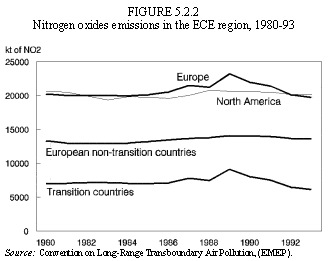
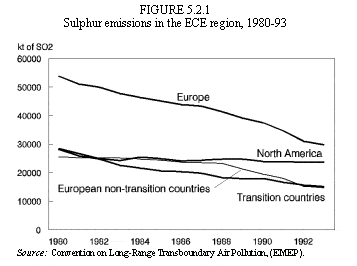
Air quality has changed in Europe over the past 30 years and will keep changing into the twenty-first century. Sulphur dioxide emissions have decreased and will most likely continue to decrease as a result of environmental protection policies, notably those related to the implementation of the ECE Convention on Long Range Transboundary Air Pollution and its Protocols. Ambient levels of sulphur dioxide and sulphate are decreasing accordingly. Ammonium emissions and concentrations follow a similar pattern, while nitrogen oxide emissions have not started decreasing in Europe, with the exception of some countries like Germany. The nitrogen loading of forest ecosystems is unlikely to decrease essentially by 2005.
FIGURE 5.2.2
Nitrogen oxides emissions in the ECE region, 1980-93
Tropospheric ozone concentrations have steadily increased in Europe since 1960. The ozone chemistry is complicated, and it is uncertain how the concentrations will respond to changes of the emissions of ozone precursors. It is likely that the ozone concentrations will increase in some areas and decrease in others. The upper atmosphere may have changed over Europe since 1960 and affected the total amount of solar irradiance and its spectral quality. However, there are little quantitative estimates of such changes.
The best recorded and most obvious change of atmospheric chemistry is the increase of carbon dioxide concentration from about 280 parts per million (ppm) in 1850 to 317 ppm in 1960, and further to 355 ppm in 1990. The change in the past 30 years was about 12 per cent. An additional increase of 10-20 ppm units will be observed in the atmosphere by 2005, since the main driving force (fossil fuel consumption) is so powerful that it is unrealistic to anticipate changes in consumption patterns before 2005. It is feasible that the carbon dioxide concentration will continue increasing beyond 2005.
FIGURE 5.2.1
Sulphur emissions in the ECE region, 1980-93
The concentrations of other greenhouse gases such as methane, nitrous oxide and the CFCs have also increased in the air in Europe in the same way as in the other parts of the world. However, unlike the carbon dioxide concentration, they may start decreasing before 2005.
(ii) Climate
The variability of climate has not changed in Europe since 1960 to the extent that one would speak of a new climatic pattern. There have been a few unusually warm years recently, but no convincing proofs of a change due to the greenhouse effect. The eventual greenhouse warming is relevant mainly beyond the year 2005 and, in particular, beyond 2020. However, given the tradition of forestry as a term business the issue is highly relevant. Most of the forest stands existing today will have to cope with whatever the environment is beyond 2005, and even beyond 2020.
5.3 Impacts of global change on forest ecosystems
(i) Past
The productivity of ecosystems has increased as a consequence of increases in carbon dioxide concentration in the atmosphere and nitrogen pollution (Kenk and Fischer 1988; Luxmoore et al. 1993; Johnson et al. 1994). In the Netherlands and parts of Germany, nitrogen deposition can be as high as 50 to 70 kg N per hectare and year.
The recorded changes in atmospheric chemistry have not been the only reason, and not even the main reason for the recorded 40 per cent increase in forest increment since 1960. Firstly, the increasing growing stock has provided the basis for a higher increment (effect of a higher "wood capital"). Secondly, silviculture has improved. However, these changes, although very important, cannot explain by themselves the observed increase of productivity in repeated measurements from given forest ecosystems (e.g. Kenk and Fischer 1988). A part of the observed increase of biomass productivity has been due to the increasing availability of carbon dioxide and nitrogen, that is, due to the eutrophication effect. The changes of atmospheric chemistry have contributed to an increase and not to a decrease of the forest biomass on average in Europe.
However, stand decline has occurred in various parts of the region covered by ETTS V, notably Germany, Poland, the Czech Republic and other countries. These impacts have been due to severe pollution, mainly by sulphur and heavy metal compounds, and in some cases also due to excess nitrogen pollution.
Biodiversity in forests has also been affected by air pollution. Numerous observations are available from the Netherlands, Sweden, Finland and elsewhere on changes in forest vegetation. Eutrophication has acted in favour of nitrophilous plant species. The species composition of lichen vegetation has changed in Finland, probably due to a combined effect of sulphur and nitrogen on the survival and the competitive advantage of the different species. Changes have also been observed in the ground cover vegetation.
In summary, the main adverse effects, on the European scale, of changes in atmospheric chemistry have been those on forest biodiversity. Biomass production has declined only in small areas. This effect has been more than compensated for by a substantial average increase of forest increment all over Europe.
Adverse effects have also been observed in forest service functions. Pollution has deteriorated the ability of forests to improve the quality of ground water and surface water. Decreasing visual quality of the ambient air has deteriorated the role of forests as landscape elements. Visibility is affected by sulphur particles, and the decreasing trend of sulphur pollution is expected to improve future visibility.
(ii) Future scenarios of impacts
The achieved and anticipated improvements in air quality contribute to combatting adverse effects on forests. For example, the prospects for conserving the pristine environment of protected forests are improving as the sulphur pollution load is decreasing. However, nitrogen deposition has not decreased, and the concentrations of atmospheric carbon dioxide continue to increase.
Strategies for air pollution abatement drawn up under the auspices of the Convention on Long Range Transboundary Air Pollution are based on the concepts of critical loads and levels. A "critical load" is "a quantitative estimate of an exposure to one or more pollutants below which significant harmful effects on specified sensitive elements of the environment do not occur, according to present knowledge" (EB.AIR/R.30, para. 48). The concept "critical level" means "the concentration of pollutants in the atmosphere above which direct adverse effects on receptors, such as plants, ecosystems or materials, may occur, according to present knowledge" (EB.AIR/R.30, para. 48) It has not been easy to determine such critical indicators of air pollution levels and loads, although much emphasis has been given to this important task. It is almost impossible scientifically to determine such indicators since it is the combination of environmental factors, and not one factor in isolation, that determines the productivity and biodiversity of a forest ecosystem. Moreover, different forests respond in different ways. For example, it has been observed that planted conifer forests at high altitudes in mountains are particularly sensitive to air pollution damage, especially if the trees are genetically of a wrong origin.
It is not certain that there will be ecological damage when critical loads or levels are exceeded. Neither is it certain that if emissions are reduced, and the critical loads and levels are no longer exceeded, the risk of damage completely disappears. The concepts of critical loads and levels represent a compromise between scientific accuracy and precision, and the requirement for simple environmental guidelines.
The favourable trends for forest biomass and forest increment in the past 30 years have been so strong that they can hardly change abruptly in the next 20 years. In the longer term, the further development of these trends depends on environmental policy measures. The greatest long-term uncertainty is due to a possible climatic change, and maybe to changes in the environment that have not yet been recognized adequately, such as pollution from industrial organic chemicals.
The development of climate is a critical and uncertain issue regarding the impacts of global change on forests. In a positive scenario, the climate remains unchanged, or changes very little. The current structures of the forest sector would be able to develop gradually and smoothly.
In a negative scenario, the development of greenhouse gases translates into significant climatic warming and eventual changes in rainfall patterns. The climatic change would be a global phenomenon, affecting the forest sector worldwide. There would be second and third order effects due to changes in agricultural land use and in global trade patterns. The subsequent impacts on the European forest sector are very difficult to predict.
The growing stock and forest increment in northern Europe might not decline, not even in the negative scenario. The ecosystems in that region are less vulnerable to climatic warming than to climatic cooling. In fact, a warming of the annual average temperature by 2-5 degrees Celsius in 50-100 years would increase the forest increment, and probably would not threaten the survival of the trees. In southern Europe, however, such a substantial warming, associated with an increase of severe drought periods, would probably decrease the forest increment. The risk of forest fires would also increase. Biodiversity would be negatively affected in all European regions.
It must be emphasized that this scenario is prepared from a narrow perspective. It omits the second and third order effects, and does not address the full array of objectives for long-term forestry. Improving and stabilizing the air quality would contribute to the predictability of forest ecosystems, an essential basis for long-term sustainable forestry. Reducing pollutant emissions would be a superior environmental policy from the perspective of sustainable management and conservation of European forests.
5.4 Impacts of forests on global change
Forests and trees do not just submit to the influences of external factors: they in turn influence various external factors. Trees, conifers in particular, filter pollutants such as sulphur and nitrogen compounds from the atmosphere into the ecosystem, and improve the air quality down wind. This is to the benefit of the down wind ecosystem, although it adds to the burden on the "filtering" ecosystem itself. Afforestation on acid soils can contribute to surface water acidification. Clearly, not all the impacts of forests on global change are positive, but many of them are.
Increasing forest biomass sequesters carbon dioxide from the atmosphere. The concepts "sink" and "source" refer to changes in the carbon reservoir of forest ecosystems. An increasing reservoir is a sink, and a decreasing reservoir is a source. The two main reservoirs are carbon in the soil, and carbon in forest vegetation. An additional, essentially smaller, reservoir is the carbon in forest products.
(i) Past
In the distant past the area of forested land and forest biomass diminished in Europe. The forests were a source of carbon dioxide into the atmosphere until the late nineteenth century. Since then, European forests have been a sink for atmospheric carbon dioxide. The soils have also been a sink, yet the best information is available on forest vegetation and forest products reservoirs.
Based on growing stock and wood products statistics, it has been estimated that European forests were an annual sink of 85-120 million tons of carbon in 1971-90. The forests controlled the rise of the carbon dioxide concentration in the air and contributed to the carbon budget by absorbing about 5 per cent of the carbon dioxide emitted in Europe in fossil fuel use.
About 70-105 million tons of the sink was due to the increase of growing stock, and an additional 15 million tons due to a build up of the stock of forest products (sawnwood and panels). Because the gap between forest increment and forest removal has increased, the sink impact has also increased. The ratio of wood removals to forest increment has declined to 0.7-0.8 in most European countries. This is the main cause of the sink effect.
(ii) Future scenarios for the carbon budget
In the near term, whether European forests are a sink or a source will depend mainly on the ratio of forest increment to forest removals: the lower the ratio, the larger the sink. As the increasing trend of the growing stock has been so universal and consistent in the different European countries, the current sink effect is likely to persist at least 15-20 more years. In the longer term, the low ratio of removals to forest increment -- the main reason for the current sink effect -- cannot be sustained. Three scenarios of the carbon budget can be developed for the period beyond 2010-15.
Firstly, the demand for current forest products and eventual new products could increase. As a result, forest removals would increase and approach the level of forest increment. Subsequently, the carbon sink would weaken, approach zero, and the current mitigating effect of European forests on the global carbon budget would essentially be lost. The full impact of fossil fuel emissions in Europe would be realized as an increasing tendency of carbon dioxide to concentrate in the atmosphere. However, the increasing removals would generate an increasing flux of wood, a renewable material, which eventually would make a contribution to sustainable development in Europe, notably by replacing non-renewable raw materials.
Secondly, the removals could remain at the current level, or be reduced. The growing stock would continue accumulating at the current rate, or even faster in the first phase. In the second phase, most forest stands would become mature. The carbon reservoir in vegetation would approach saturation. In this scenario also, the current sink effect would be lost and the forest increment would decline. The flux of wood, a renewable material, would decrease, which could contribute to an increasing consumption of non-renewable raw materials.
Thirdly, a new forest policy could be developed which would adopt a long-term perspective for carbon mitigation and find an acceptable balance between the different forestry objectives. It would be based on expanding forest area and increasing removals. New areas would be established in different parts of Europe for nature protection, and the carbon reservoir of forests would grow larger. Converting non-forest land to forest would also contribute to the increase of the carbon reservoirs in vegetation and soils in the long term. Wood removals would grow as a result of afforestation, improved forest management, and efforts to close the current gap between removals and increment in exploitable forests. An increased flux of forestry products would be used to substitute other, less ecologically sustainable products. Forests and forest management would make a positive contribution to the global carbon budget in both the short and the long term.
These three long-term scenarios are future visions rather than predictions: forestry objectives may well change substantially in the next 30-60 years as they have changed previously. A whole new array of uncertainties emerges if one assumes a change in climate. The mechanisms controlling the reservoirs and fluxes of carbon in forest ecosystems are sensitive to climate, particularly to temperature.
How do the above long-term scenarios compare with the detailed medium-term scenarios (to 2020) in chapter 4? The aggregation of the national correspondents' forecasts points to a continuing, but reduced, role for European forests as a carbon sink, as fellings are expected to rise from 69 per cent of annual increment in 1990 to 77 per cent in 2020. The annual difference between fellings and increment is expected to fall from about 200 million m3 to about 160 million m3, which is still a substantial volume. No significant expansion (or contraction) in forest area is foreseen. The forecast trend seems closer to the first of the long-term scenarios above (reduced sink effect through fellings closer to increment) than to the second (reduced sink effect through lower removals) although it could conceivably be seen as the first step on the way to the third (new forest policy). Nevertheless, there is at present no sign of a significant debate among policy makers as regards the optimum role of the European forests in the global carbon budget.
5.5 Discussion of the outlook for the relationship between European forests and global change
The impacts of global change on forests, and the impacts of forests on global change must be assessed from the perspective of long-term, multi-objective forestry. From this perspective, it is of the utmost importance to stabilize the atmospheric environment as much as possible in order to improve the predictability of forest ecosystems. If the predictability is lost, there will be no rational basis for long-term forestry policies. For example, the current uncertainty regarding the climate beyond 2010-20 is an obstacle for developing multi-objective forestry in all regions in Europe. Even such a basic matter as applying the forest yield tables is at risk, if the yield tables are no longer reliable because of changes in the atmospheric environment. In the meantime, as the atmospheric environment has not been stabilized, it is important to record and analyse the trends of the environment, and try to cope with changes as they occur.
While forests have been, and have been viewed, as victims of air pollutants, forestry can also contribute to the solutions regarding air pollution. Forests filter pollutants and shorten the life time of sulphur, heavy metals, nitrogen, and other types of pollutants in the atmosphere. Maintaining and creating forests serves the filtering purposes. For instance, planting more shade trees in southern Europe could contribute to home energy efficiency by alleviating the need to develop air conditioning, thus lessening energy emissions in the same way as has been reported from North America. In particular, forests can make a positive contribution to the global carbon budget and help alleviate the risk of an enhancement of the greenhouse effect. New objectives are thus emerging for contemporary forestry.
In summary, the current situation and the near-term prospects are very good in Europe in terms of biomass productivity and biomass reserves. However, for conservation of biological diversity, and for other ecosystem functions such as watershed and groundwater protection, the recent history and the near-term prospects are not as good. The pollution levels of sulphur and nitrogen compounds are high in Europe. Although the deposition of sulphur and some heavy metals has started to decrease in large areas in Europe, the flux of nitrogen deposition is still not decreasing, and the concentration of carbon dioxide in the atmosphere is increasing. A transient change of biological diversity has been observed in favour of nitrogen demanding (nitrophilous) species. This development extends to nature conservation areas.
Every year, there are 50,000 or more forest fires in Europe, affecting over 500,000 ha of forest and other wooded land. Almost all of this damage takes place in southern Europe.1 In 1994, about 0.85 per cent of the area of forest and wooded land in these countries was affected by fire. In fact, the percentage would be higher if those large areas (for instance non-Mediterranean France and northern Spain) which are in a southern European country, but are not really concerned by fire problems were deducted from the total. There are considerable year-to-year variations: over the last fifteen years, the number of fires has varied between 40 and 75 thousand and the area between 450,000 and 1 million hectares. Trends are difficult to identify, although the number of fires does seem to be rising since the late 1980s. For the area, no real trend is apparent, which might be interpreted as an improvement in the effectiveness of suppression, unaccompanied by progress in prevention.
The causes of forest fires, in addition to hot dry summers, are many and complex. In Europe, unlike in North America or Russia, the great majority of fires have human causes, whether arson or negligence. The factors underlying fires include rural depopulation, reduction of intensity of silviculture (including the build up of fuel, which previously had been collected for local uses), increased tourism, uncontrolled grazing, property speculation and social and political tensions, leading to arson of the vulnerable resource. All of these are complex issues and impossible to resolve in the short term by administrative measures.
In areas where fires are frequent, not only do they cause damage and sometimes loss of life, but they seriously constrain forest management options, sometimes preventing completely the establishment of productive high forests. In such cases, managers are left with few options other than low-grade shrub type "forest", which in turn is economically unviable and makes the forest manager even more dependent on public funding. As the natural forest ecosystem was in most cases irrevocably altered centuries or millennia ago, this fire damage cannot be considered a part of normal ecological processes, as is the case, for instance in many parts of North America and Siberia. The vicious circle of which fire is the most visible element seems to condemn many of the forests of southern Europe to a future which is precarious from the ecological, social and economic point of view, and in which wood production (other than small quantities of fuelwood) plays no role.
This is clearly an unsatisfactory situation and governments of the affected countries, and the EU, have addressed the issues by providing fire suppression services and by making the public more aware of the issues. No doubt, without these measures, the situation would be significantly worse. Nevertheless, at the European level, it does not appear that these major efforts are leading to a reduction in the number or area of fires. The secretariat does not, of course have a ready made solution to this persistent problem: it does appear, however, that if the number and area of fires are to be reduced, significantly more resources must be applied, or innovative solutions developed and applied, or, more probably, a combination of the two. For the former, the general limitations on public budgets will limit the resources available to forest fire prevention and control.
With regard to the ETTS V scenarios, it appears from the comments in chapter 4 that the effect of forest fires was taken into consideration by national correspondents when they prepared their national wood supply scenarios2, so there is no need to modify them.
If progress were to be made on preventing forest fires in southern Europe, then clearly both increment and ultimately removals could increase: however, even if forest fires were reduced in the next few years, the change in increment and removals would not be apparent within the time horizon of ETTS V. There is also uncertainty about the possible consequences of global change. If summers in southern Europe were to become hotter and dryer, as some models foresee, the fire problem would become even worse, making it more difficult to achieve sustainable forest management in the areas concerned.
5.7 Other external influences on the forest
Although global change and forest fires are the most well-known and politically most visible sources of forest damage, there are others which pose significant problems to forest managers. Chief among these are damage by game animals and by insect and fungal pests. On neither of these aspects are comparable international data sets available. Nevertheless, they represent important, if local and specialised, influences and constraints on forest management all over Europe.
There has been no policy level discussion of a possible major change in the circumstances with respect to damage from insects and fungi, although all administrations have a forest protection service, and it is clear that the forecast in chapter 4 takes into account the situation with regard to insects and fungi. In Poland, however, and neighbouring countries, there have been outbreaks of Lymantria monacha, which caused considerable damage before being brought under control.
The situation regarding game damage is rather different for two reasons:
- the damage is essentially due to a trade-off between two recognised functions of the forest, wood production and hunting, rather than an external influence on the forest, and, for that reason, lies within the area of forest policy;
- game damage has become so severe in some parts of Europe that it is preventing the regeneration of certain species (thus potentially changing the long-term species composition of the forest in question), or significantly increasing silvicultural costs by making it necessary to protect young plantations and regeneration areas by fencing.
For example, in Austria3, which has good data on the subject, 42 per cent of all regeneration areas in productive stands are browsed by game, especially fir and beech. In protection forests, the regeneration of fir has weakened as a result of browsing by game. According to the Austrian Ministry, the ecological balance is endangered by a spreading game population and the regeneration of those tree species which are required for an ecologically adapted silviculture is possible on only a quarter of the wooded land. The regeneration of over-mature and collapsing stands in protection forests is handicapped, and sometimes prevented, by damage caused by game. Balanced solutions for combined forestry and hunting management are being urgently sought.
In Finland4, stand quality is reduced by elk on 1.2 per cent of forest land (compared to 0.3 per cent by insects and 7.1 per cent by fungi). In Sweden5, medium, severe, or very severe browsing damage by moose occurred on 279,000 ha of young pine forest (out of 3.79 million hectares, a proportion of over 7 per cent). Although the authors of ETTS V do not have quantitative data for other countries, it is known that game damage is a major forest management problem in many other countries, notably in central and eastern Europe and the Baltic states. In some areas, it appears that, as in Austria, the continuation of the forest in its present form, notably with its species composition, is threatened.
Finding a balance between the game population and the regeneration of forest stands is challenging due not only to the technical problems of assessing and achieving the "right" level of game but also the need to build a consensus between hunters, foresters and the urban population, which has little understanding of the technical factors, but is increasingly opposed to any killing of animals.6 In some areas, the income derived from hunting is far larger than that from wood production, making it even harder to justify the lowering of game populations on economic grounds.
From the wood production point of view, the importance of the game damage problem as a factor is increasing the costs of forest management and, thus, of roundwood production (through lower production, lower quality, and higher regeneration costs). In the medium term, however, it appears that the damage from game has already been taken into account by the national correspondents when drawing up their scenarios.
It may be concluded from the trends described for the physical and chemical environment of European forests that the adverse effects on forest biomass brought about by changes in this environment have been limited. Forest increment and growing stock have developed favourably in all major regions of Europe. European forests have made a positive contribution to the global carbon budget. The favourable trends of forest increment and growing stock are likely to continue for at least 20 more years. However, the adverse effects of pollutants have been widespread on forest biodiversity. Not much improvement can be expected in this respect in the next 20 years.
In the long term, toward 2030 and beyond, the future interactions between forests and global change are uncertain and very difficult to predict. For example, the observed changes in the concentrations of greenhouse gases can bring about a climatic warming in 20-40 years, that is, within the life time of most forest stands.
Assuming a climatic warming, the long-term prospects for biomass productivity are good in northern Europe, moderate in central Europe, and uncertain in southern Europe. The prospects for forest biodiversity are essentially less good in all regions.
Forestry can be further developed to cope with changes in the physical and chemical environment. Sustainable management and forest conservation can make contributions to the mitigation of global change.
This chapter has identified several external influences on the forest resource which may affect its medium- and long-term development. However, if any changes were to take place, they would not have significant effects until after the time horizon of ETTS V, so there is no need to modify the scenarios for forest productivity and wood supply in chapter 4, at least on the European level. Nevertheless, any changes in the underlying situation with regard to pollutant emissions, fires or level of game damage should be carefully monitored.
Probably the most important conclusion to be drawn from the analysis in this chapter concerns the opportunity to develop a strategy for the role of European forests in the global carbon budget. Section 5.4 identified three broad scenarios:
- raising fellings until they converge with increment, thus ending their role as a carbon sink;
- continuing to keep fellings well below increment, which would lead to an over-mature forest age structure and thereby reduce the "sink" function;
- raising both fellings and increment, in part through the increase of forest area, enlarged conservation areas and intensified management for wood production on the remaining areas through a more dynamic forest policy, thus maintaining the sink function while increasing the contribution of wood and forests to the economic development of society.
A key aspect is that increasing consumption of wood-based materials helps the global carbon budget inasmuch as they replace materials from non-renewable sources.
IUCN (1994) Parks for Life. Action for Protected Areas in Europe. The World Conservation Union: Gland, Switzerland.
Johnson D.W., J.T. Ball and R.F. Walker (1994) Effects of Elevated CO2 and Nitrogen on Nutrient Uptake in Ponderosa Pine Seedlings, in Plant and Soil (in press).
Kenk G., and H. Fisher (1988) Evidence from Nitrogen Fertilisation in the Forests of Germany, in Environmental Pollution, 54: 199-218.
Luxmoore R.J., S.D. Wullschleger and P.J. Hanson (1993) Forest Responses to CO2 Enrichment and Climate Warming, in Water, Soil, and Air Pollution 70: 309-323.
OECD (1994) Core Set of Environmental Indicators. Publications Service, OECD: Paris.
1
This section is based on the regularly collected data on forest fires, published in the Timber Bulletin (most recent Volume XLVIII (1995), No. 4). For the forest fire statistics "southern Europe" is defined as Bulgaria, Croatia, Cyprus, France, Greece, Israel, Italy, Portugal, Slovenia, Spain and Turkey (a few southern European countries do not provide data).2
One correspondent specifically stated his assumption that the forest fire problem would not be resolved.3
Oesterreichischer Waldbericht 1993. Bundesministerium für Land- und Forstwirtschaft, Wien.4
Statistical Yearbook of Forestry 1995. Finnish Forest Research Institute, Helsinki.5
Skogsstatistisk arsbok 1995, Skogsstyrelsen, Jönköping.6
The hunters for their part are usually unwilling to accept the reintroduction of large predators which might "compete" with them.
