


Chapter 8 EUROPE'S TRADE WITH OTHER REGIONS
International trade is a vitally important part of the forest and forest products sector. In the early 1990s, world trade in forest products was worth about USD 100 billion. International trade represents about a quarter of world production of forest products. Furthermore, trade in forest products, like trade in most other products, has been growing faster than production or consumption.
Europe is a large importer of roundwood and forest products from other regions: around 1990, about 10 per cent of Europe's wood and fibre supply was accounted for by these imports. It is therefore essential that ETTS V review the outlook for Europe's trade.
This chapter will concentrate on Europe's trade with other regions, and in particular on what Europe's needs will be and whether they can be met, taking into account what is known about future demand outside Europe, and the potential of major world suppliers of forest products to meet this demand.
After an overview which places Europe in the context of world trade in forest products and briefly presents the world forest resource, the chapter will review the potential to expand supply from the major exporting regions outside Europe. The scenarios for net trade emerging from the supply/demand projections of chapter 6 are then assessed in the light of what is known about the potential of other regions, and conclusions are drawn on the future supply/demand balance in world forest products markets.
Data on international trade come from several different sources, and are not always consistent with each other. As full reconciliation of the data sets is practically impossible, there are inconsistencies between the data in different parts of this chapter: however, the broad position is not affected by these inconsistencies.
ETTS V is concerned above all with Europe; for the other regions examined, it draws on external sources, wherever possible official and international in nature. Readers are referred to these sources for information on methods, data problems, etc.
This chapter draws on work carried out for ETTS V by two experts whose services were made available by their governments: Messrs. Bruno Cinotti of France and Adrian Whiteman of the UK. The secretariat expresses its appreciation of the contribution by these experts and their governments to ETTS V.
8.2 Pattern of world forest product trade in the mid-1990s
Over 60 per cent of world trade in forest products (by value) is intra-regional, i.e. between countries situated in the same continent. However, there are some very large flows of forest products between continents. When only inter-regional trade is considered, the overwhelming importance of one exporting and two importing regions is apparent.
The world's largest supplier of forest products to other regions is North America, whose exports to other regions account for half of all inter-regional trade (USD 17 billion in 1993).
FIGURE 8.2.1
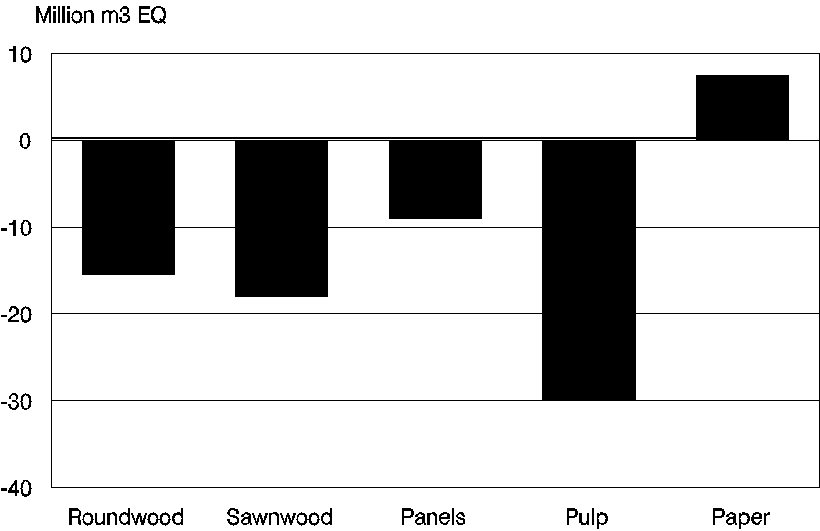
Net trade in Europe, 1992
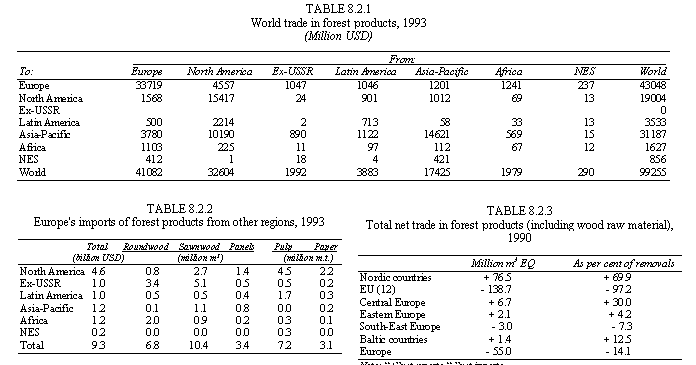
Half of the inter-regional trade is directed to the Asia/Pacific region (chiefly Japan), although other Asian countries are rapidly gaining in importance. By far the largest supplier to the Asia-Pacific region is North America, which exports pulp, paper, sawnwood, plywood and pulp chips to the region: the flow from North America to the Asia-Pacific region accounts for 29 per cent of inter-regional trade. However, other regions (Europe, Russia and Latin America) also send significant volumes of forest products to the Asia-Pacific region.
The second largest destination of inter-regional trade is Europe, whose imports from other regions account for 27 per cent of inter-regional trade. The major supplier is again North America (pulp, paper, sawnwood, plywood).
Europe as a whole is a net importer from other regions for all types of forest products except paper and paperboard. In terms of m3 EQ, pulp imports account for about half of Europe's imports from other regions, followed by sawnwood and wood raw material (less than a third each). There are small net imports of panels and significant net exports of paper and paperboard, partly counterbalancing the net imports for other product groups. All the above are net imports (i.e. imports minus exports) for all of Europe.
The volume and direction of trade flows fluctuate rather strongly in accordance with market conditions (level of demand, supply restrictions, exchange rates, tariff structures, etc.), but there is a certain stability as regards the main suppliers of forest products to Europe from other regions (not in order of size, since market shares may change relatively rapidly): coniferous sawnwood: Canada, Russia, USA; non-coniferous sawnwood; Indonesia, Malaysia, USA; plywood: Indonesia, USA; pulp: Brazil, Canada, USA; paper and paperboard: Brazil, Canada, USA; and wood raw material: Côte d'Ivoire, Gabon, Russia, Latin America (Argentina, Chile).
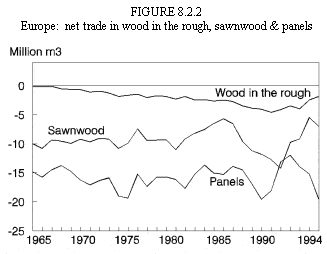
FIGURE 8.2.2
Europe: net trade in wood in the rough, sawnwood & panels
Europe's exports of paper and paperboard (and, in the mid 1990s, MDF) are directed to a wide range of countries all over the world.
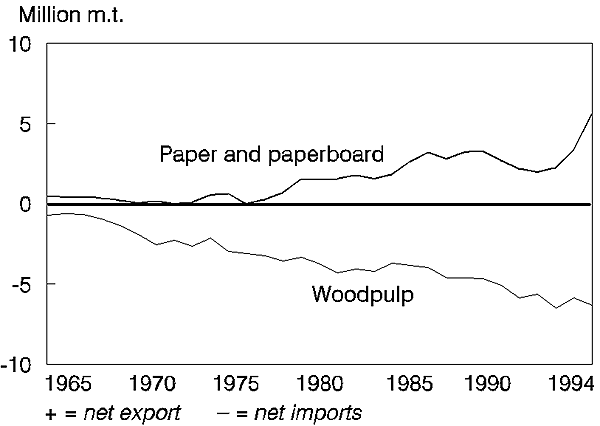
Is Europe's net trade with other regions roughly stable over time, or are there structural trends? If so, what are they, and what are the causes? It is unfortunately not possible in ETTS V to analyse these important questions in detail, but some indications emerge from the charts.
Net trade in wood in the rough is marked by strong cyclical fluctuations. When demand for forest products is high, Europe's net imports of wood in the rough (logs and pulpwood) rise sharply, as extra supplies are brought in from outside the region, which are not needed in "normal" times. There is however a structural level of roundwood imports of around 15 million m3, essentially composed of pulpwood from Russia and of tropical logs. There appears to be no upward or downward trend in the volume of raw material imports.
FIGURE 8.3.1
World forest area
(Total: 3.44 billion hectares)

Throughout the 1960s and 1970s, Europe's net imports of sawnwood remained roughly constant in volume terms, but nearly halved between 1979 and 1984, probably because of weak sawnwood markets. However they more than doubled between 1984 and 1990, which was a period of fairly strong sawnwood demand and market penetration by Canadian and south-east Asian suppliers. This trend was sharply reversed between 1990 and 1993, when Europe's net imports of sawnwood returned to their previous record-low levels due to extremely low sawnwood consumption and reduced availability from both Canada and Russia.
From the early 1960s to 1989, net imports of panels rose very steadily, regardless of market fluctuations, to nearly 5 million m3. This upward trend is attributable to market penetration by Indonesian and Canadian plywood. It was, however, sharply reversed in 1989: in five years, Europe's net imports of panels have halved because of Indonesian and Canadian concentration on other markets (Japan and USA), European exports of MDF and particle board to other regions, and weakness in European panels demand.
FIGURE 8.3.2 Forest Area per Person

The trend for net imports of pulp to grow is very clear and shows no signs of change in direction. Net imports now account for about 15 per cent of pulp consumption, as compared to about 3 per cent in 1965. This change has continued despite the stagnation in pulp consumption since about 1990 in Europe, and may be attributed to the very competitive position of large pulp mills outside Europe, notably in North and South America.
The only sector where Europe shows a net trade surplus is paper and paperboard. Europe's net exports have risen from marginal quantities in the mid 1970s to over 5 million m.t. in 1994. This may be attributed to the success of some firms in creating and expanding specialised ("niche") markets in some high value paper grades, where Europe's disadvantages of relatively high cost wood (and labour) can be overcome by technical skills and good marketing. Increasingly this paper production is based on pulp imported from other regions, as well as on waste paper.
There are, of course, quite significant variations between countries and country groups in their degree of import dependence, as appears clearly from table 8.2.3. In fact, net imports are very important only in the largest country group, the EU (12), where they account for nearly as much supply as domestic removals. However, both the Nordic countries and central Europe (chiefly Austria), are strongly export oriented, and most of their exports go to the EU (12). If the EU as of 1995 (i.e. including the three major European forest products exporters) is considered, net imports are just under 60 million m3 EQ (22 per cent of removals). Trade with other country groups is much less important in relative terms in eastern and south-eastern Europe, and not yet very significant in the Baltic countries (although this group may well become an export-oriented group).
8.3 Overview of the world forest resource1
FIGURE 8.3.3
Forest cover by region

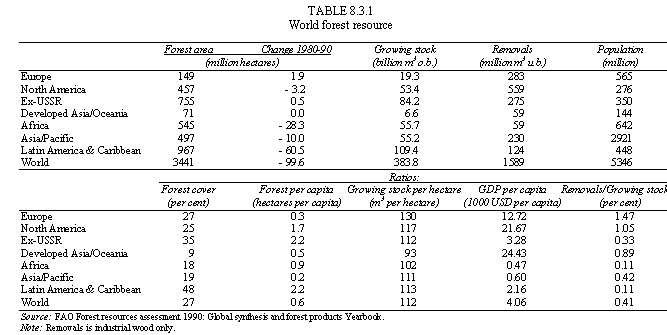
There were about 3.4 billion hectares of forest (not including "other wooded land") in the world around 1990. Over a quarter of this was in Latin America and a fifth in Russia, with about 15 per cent each in Africa, the Asia-Pacific region and North America. Europe has 149 million hectares, just over 4 per cent of the world's forest resource. Four individual countries (Russia, Brazil, Canada and the US) have more forest than Europe as a whole, and three others (China, Indonesia and Zaire) have over 100 million hectares of forest.
About 27 per cent of the world's land surface is covered by forest and another 13 per cent by "other wooded land". Within regions and between regions there are wide differences in forest cover. Latin America has 48 per cent forest cover, and the former USSR 35 per cent. By contrast, "developed Asia/Oceania" (i.e. Japan, Australia and New Zealand) has forest cover of only 9 per cent (66 per cent in Japan counterbalanced by 5 per cent in Australia).
The world's forest and other wooded land is shrinking by about 10 million hectares a year, with the greatest losses in Latin America (6 million hectares, or 0.5 per cent of the area of forest and other wooded land), Africa (2.8 million hectares, or 0.26 per cent) and the Asia-Pacific region (1 million hectares or 0.6 per cent). The forest resource is also shrinking, but much more slowly, in North America. In Europe it has been expanding, at a rate of 0.19 million hectares a year (0.13 per cent).
On average, there is 0.6 hectares of forest for each person in the world. However, there is only 0.3 hectares for each European, 0.2 hectares for each citizen of a developing Asian country, and 0.5 hectares for "developed Asia/Oceania" (0.2 hectares for each Japanese, despite that country's high forest cover). In contrast, in less crowded continents, there is less population pressure on forests: 1.7 hectares per person in North America, and 2.2 hectares in Latin America and former USSR. It is not surprising that attitudes to the forest are different in regions where there is 2 hectares of forest for each person than in those where there is ten times less.
The world's forests contain about 380 billion m3 of wood. As average growing stock per hectare is roughly comparable in different regions (a range from 93 to 130 m3 per hectare with most regions around 110 m3 per hectare), the distribution of growing stock by region is similar to the distribution of forest area: Latin America has over 28 per cent of the world's growing stock and Europe about 5 per cent.
There are major differences in the intensity with which forests are used to produce wood, which may be roughly measured by the percent of growing stock harvested each year. By far the most intensively used forests are in Europe, where removals are 1.47 per cent of growing stock, more than three times the world average, followed by North America (1.05 per cent). In Latin America and Africa, only 0.11 per cent of the growing stock is harvested each year.
8.4 Outlook for supply from other regions
Most of the world's forests do not produce any wood which will influence European wood supply in any way. This section examines in some detail the forestry situation, and issues and prospects for wood supply in those regions which supply wood or forest products to Europe: North America, Russia, the natural tropical forest and intensively managed plantations outside Europe.
(i) North America
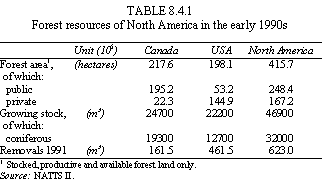
In 1993, North American exports to Europe were worth about USD 4.6 billion, including 2.7 million m3 of sawnwood, 4.5 million m.t. of pulp and 2.2 million m.t. of paper and paperboard. In value, European imports from North America were about four times larger than imports from any other continent. It is, therefore, of the greatest importance to develop a realistic understanding of North America's future potential to supply Europe with forest products.
Both North American countries have very large forest resources, but there are major differences between them:
- most Canadian forests are publicly owned, while the opposite is true in the US;
- Canada has huge expanses of climax forests. These contain enormous volumes of wood, often in areas of very low natural productivity;
- Canada's forest resource is predominantly coniferous, while non-coniferous is very important in the US, including for export markets;
- for many reasons, including natural productivity and closeness to markets, US forests supply more wood per hectare than Canadian forests: table 8.4.1, which already excludes reserved forests (e.g. for wilderness or national parks) and economically inaccessible or physically unproductive land, shows that US removals are three times greater than Canada's, from a slightly smaller area of stocked productive and available forest.
Over the past decade or more, both countries have seen an intense national debate on forest policy, in particular on harvesting practices and on how much climax forest should be withdrawn from management for timber production. These debates are by no means concluded, although a certain consensus may be emerging, particularly in the US. There is still major uncertainty about the long-term sustainable level of harvest in both countries. It does appear likely however that:
- in the US, the centre of gravity of the forest industry will continue to shift from the Pacific North West, where the national forests are a major part of the supply pattern, to the South, where most forest land is privately owned (by forest industry or small owners);
- the revision of the annual allowable cuts in Canada will lead to a reduction in harvests, especially in British Columbia.
Although both counties are major exporters to "overseas" markets (i.e. outside North America), the volume of these exports is rather small compared to that of domestic markets and that of trade between the two countries (the flow of forest products from Canada to the US is the largest international trade flow of forest products in the world).
The main factors determining the likely availability of forest products for export from North America to other regions are:
- future demand on North American markets, determined by speed of economic growth, strength of housing, technical development (for forest products and substitutes), relative price levels, etc.;
- level of roundwood supply from North American forests, itself determined in part by economic factors, including accessibility and investment in silviculture; roundwood supply is also determined by policy decisions about priorities in public forest management and desirable or minimum levels of conservation of biodiversity, and, particularly for Canada, the speed and extent of the conversion of climax forest to managed forest, approximating a "normal" age structure.
It is of course not possible for the authors of ETTS V themselves to carry out this analysis, which if carried out in detail would be the equivalent of another timber trends study. However, both the Canadian and US governments dispose of powerful analytical systems for the outlook for the forest products sector and have, in parallel to ETTS V, carried out a North American timber trends study2 which synthesizes the available information and the results of projections, including those for offshore exports (trade between Canada and the US is not covered). The outcome of this study, which is authoritative, is summarised below.
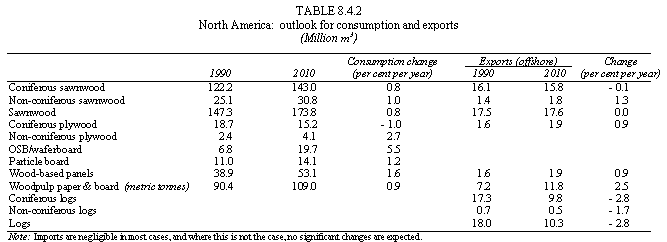
Consumption is expected to grow slowly, with some substitution effects, notably of coniferous plywood by OSB. Offshore exports are also expected to grow, but more slowly, with quite fast increases for non-coniferous sawnwood, coniferous plywood and, above all paper and paperboard (an increase of 4.6 million m.t. in 20 years) counterbalanced by declines for coniferous sawnwood and, above all, logs. Exports of the latter are expected to decrease by about 8 million m3, as availability of export quality coniferous logs on the Pacific Coast declines. There are no separate forecasts made of exports of chips or of pulp.
The study points out that conditions on North American, not offshore, markets will determine the supply/demand balance in what is by far the largest and most influential forest products market in the world. The authors foresee a rise in the price of roundwood to 2010 due to rising North American demand for forest products, combined with supply constraints on the Pacific Coast, until the more intensive forest management expected in the good growing conditions of the US South (stimulated by the expected rise in prices) begins to produce results. However, they point out that other factors might well mitigate this rise, including technology (new products, more wood-efficient processes) and the use of the large, previously under-utilised hardwood resources of North America. The higher prices forecast to about 2010 will not only reinforce the incentives to the forest industry to maintain plantation programmes, but will encourage private owners to invest in silviculture and raise harvest levels; they will also make large areas of Canada economically accessible, which have until now been considered too remote or unproductive to allow commercial harvesting.
In the very long term (i.e. beyond the time horizon of ETTS V), the potential to increase North American roundwood supply is very large, assuming certain social and economic conditions are met. In many parts of North America, forest management is, by European standards, very extensive; this is due to the low population density, the existence of large stocks of natural or quasi-natural forest (supplying wood at a relatively low delivered cost, which makes intensive forest management uneconomic), and because of local forestry traditions and techniques. When the remaining natural forest is either harvested or permanently reserved, and new codes of practice impose more stringent environmental protection also on "working forests", thus raising wood costs overall, the incentive to use productive forest land more intensively by increasing investment in forest management (thinning, genetic improvement, etc.) will become much stronger, provided, of course, that final markets accept the inevitable higher costs without significant substitution of forest products by other raw materials.
(ii) Russia3
Russia possesses the largest stock of coniferous wood in the world. In the former Soviet Union, there were 755 million hectares of forest land, spreading from St. Petersburg to Vladivostok, with 84 billion m3 of growing stock. Until around 1990, removals in the USSR were well over 300 million m3 a year, i.e. less than 0.4 m3 per hectare, or 0.35 per cent of growing stock. In the mid 1990s, due to the economic disruption in Russia, removals have fallen by more than half to less than 150 million m3. Clearly then, over the country as a whole, there is the physical potential to expand removals very significantly, even after taking into account the fact that very large areas will be reserved or remain permanently inaccessible to commercial harvesting because of remoteness or harsh climatic conditions.
How likely is it that this potential will be realised, and that Russia's exports to world markets recover and expand further? Several factors must be taken into account.
There are, as one would expect, enormous regional differences. In many parts of European Russia, harvests over the last 50 or so years have been over the allowable cut, so that the most accessible forests, on the most productive soils, are often young and not very productive, with little potential for short-term improvement.
There is large unsatisfied demand for forest products of all types from the domestic markets, which are still characterised by shortages and rationing. However, looking at the situation from an international perspective, demand from export markets is likely to take precedence over domestic demand, chiefly because the prices which can be paid on world markets are likely to remain higher than Russian domestic prices for the foreseeable future.
Finally, and most importantly, it is doubtful to what extent it will be physically and economically possible to reach and harvest the enormous volumes of wood in Siberia, whose physical infrastructure is still very sparse. At present, in addition to the underlying problems of distance and real cost, there are those resulting from the social and economic confusion brought about by the transition process, itself coming after a long period of fundamental distortion of costs. This distortion was typified by the transport subsidies which caused major parts of the processing industries to be located far from their raw material base, even in some cases leading to the hauling of logs for thousands of kilometres in one direction, followed by transport of sawnwood along the same tracks in the other direction. To resolve these problems necessitates not only the general recovery of the Russian economy, but also heavy investment in forest inventory, roads and railways, harvesting equipment, trucks, processing plants of all types, etc. At present, this does not appear feasible without significant injections of foreign capital.
Furthermore, if the Siberian forest resource is to be developed significantly beyond the situation of the late 1980s, this must be done in a way which is not only sustainable in the long term, but also seen (by external observers) to be sustainable. If forest products from Siberia, or Russia as a whole, are perceived as being based on the unsustainable exploitation of the largest area of natural boreal forest in the world, an opinion which is increasingly heard from some NGO sources, then it is quite possible that European consumers would react as they have to similar concerns about the tropical forest, by reducing their purchases of forest products from Siberia.
The future export availability of forest products from Russia depends on a complex interaction of technical, economic and policy factors. The degree of uncertainty is however much higher for Russia than North America, given the fundamental institutional changes, the huge areas of natural forest, and the generally poorer quality of the data. However, potential for Russia cannot be seen in isolation from demand on world markets. If the global supply/demand balance remains similar to that in the mid-1990s (i.e. marked by intense competition and downward pressure on prices of many assortments), it will be possible to develop Russia's forest resource only on the basis of becoming very competitive with other raw material suppliers. If, on the other hand, there are signs of supply shortfalls and prices rise significantly, it is reasonably certain that Russia's capacity to produce and export large volumes of raw material and products will be developed, using domestic and foreign capital and know-how.
In fact, in the mid 1990s, there are signs of strong foreign interest and investment in the Russian forest and forest products sector: there are joint ventures to harvest roundwood and export it both to the Nordic countries and to Asia (notably Japan), while foreign enterprises (both specialised forest products companies and pure investment vehicles, which contribute capital but not specialised skills) have bought shares in the largest Russian forest products companies, namely those with relatively modern pulp plants. It is possible that other investment decisions are being held back by uncertainty over the future legal situation regarding access to the resource.
It should also be borne in mind that Russia, like North America, is geographically situated between the two major importing areas of the world, Europe and Japan, and can shift supplies from one to the other. Thus, future demand from Japan and the rapidly developing Asian economies will very directly influence the availability of forest products for Europe.
(iii) The natural tropical forest
Traditionally, a significant part of Europe's forest products imports have been logs, sawnwood and plywood from the natural tropical forests of Latin America, Africa and, increasingly, south-east Asia. In 1993, an estimated 2.6 million m3 of logs and 2.5 million m3 of sawnwood were exported to Europe by these regions, and considerably more to Japan and other Asian countries: it may be assumed that at present almost all of this comes from natural forest.
The natural forest resource in several countries has been exhausted, and the desire to put forest management on a sustainable basis has led several major producer countries, notably the two most important, Malaysia and Indonesia, to reduce their allowable cut significantly. Nevertheless, it should be borne in mind that there remain huge physical stocks of wood in the natural tropical forest, notably in Brazil (65 billion m3) and Zaire (23 billion m3). These figures may be compared to world removals of roundwood of about 3.4 billion m3 in 1993.
Producer countries have worked to increase the share of further processed products in their exports, by investment in processing industries, and by discouraging or forbidding the export of unprocessed wood, which has included logs, but now also refers to sawnwood itself. Especially in Asia, strong "value added" industries, such as building joinery, windows, doors and furniture, have been founded and are exporting to Europe. Increased exports of value added goods have the statistical effect of reducing exports of sawnwood and logs.
Consumer concern about tropical deforestation has weakened demand for tropical timbers in many north-west European countries. Consumption of non-coniferous sawnwood in Europe dropped by 4 million m3 (about 18 per cent) between 1990 and 1993. Most of this concerned tropical, rather than temperate, sawnwood, and was in part due to negative consumer attitudes to tropical timbers, as well as to overall demand weakness.
In general, therefore, for both supply and demand-based reasons, it is to be expected that supply to Europe of forest products derived from the natural tropical forest will not increase and may well decrease in the long term.
(iv) Fast-growing industrial wood plantations
An increasingly important role in supply to global forest products markets is played by fast-growing industrial wood plantations in tropical and temperate countries. Although climatic, economic and social conditions vary widely, these plantations can produce large volumes of industrial wood, of standard and acceptable quality, in sufficient quantity and at a price low enough to justify the installation of world scale industrial capacity (usually pulp mills or export sawmills, but now also MDF, OSB, etc.) or the large-scale export of the wood raw material. Well-established examples include New Zealand, Chile and some parts of Brazil, where there are millions of hectares producing Pinus radiata, Eucalyptus spp., or other fast-growing commercial species.
Factors which have encouraged these plantations are the reduction of transport costs for bulk loads of forest products, the globalisation of forest products markets, and the availability of the capital and management skills, which are essential to plan and carry out such large-scale, long-term speculative ventures. Other factors include the potential to increase yields by genetic improvement (conventional tree breeding and clonal propagation for some species) and the market/product development progress, which has made it possible to produce a much wider range of products from a rather straightforward raw material base.
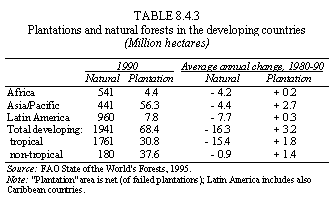
It is hard even to measure the present extent of this type of plantation, let alone to quantify its supply potential in the long term, given the difficulty of separating in a statistical sense those plantations which are now, or might become, competitive on a world scale from those which are not. A plantation might fail to become competitive for a number of reasons, including physical failure, due to lack of management follow-through, disease, etc., or because it is on a small scale or has objectives other than large-scale production of industrial wood (such as fuelwood production, erosion control, etc.). A recent FAO review of tropical plantations concluded that planning is generally poor, particularly for vital issues such as matching species and site.
The available data4 on plantation areas suggest that there are 69 million hectares in developing countries, not including about 14 million hectares of rubber, coconut and oil palm plantations, which are providing increasingly important volumes of wood, in addition to their primary products. About 50 per cent of the reported plantations were established during the 1980s. The area of plantations is estimated to have increased by 3.2 million hectares a year during the 1980s, compared to a decrease for natural forest of 16 million hectares a year. Six countries account for 85 per cent of plantation area in developing countries: China (32 million hectares), India (13 million) Indonesia (6 million), Brazil (5 million) and Vietnam and North Korea (1.5 million each). Most of these plantations are not oriented to world markets, but rather local ones.
Although most developing country plantations are not export oriented, some countries, notably Brazil, Chile and New Zealand, have already become major "players" on the world forest products markets on the basis of a highly competitive plantation resource and have major exports, notably of wood raw material and pulp, but also of sawnwood. Others, such as Indonesia and Argentina have the potential to join this group.
In New Zealand,5 new planting of Radiata pine (i.e. on areas not previously occupied by that species) reached 30,000 hectares in the 1930s, then declined to negligible levels, only to show strong growth in the 1970s and 1980s, exceeding 50,000 hectares per year for a short period. There are now 1.26 million hectares of plantation forest in New Zealand, almost exclusively Radiata on a 30-year rotation, producing nearly 14 million m3 per year, of which over 1 million m3 commonly come from trees which have been pruned (thus providing knot-free logs). This is forecast in the New Zealand official base scenario to rise to 23.6 million m3 by 2020 (of which 3.8 million pruned), and up to 35 million m3 if 100,000 additional hectares are planted per year. In New Zealand, the remaining native forest is now completely protected and not used for wood production.
In Chile, too, the commercial resource is essentially based on Radiata pine. There are 1.57 million hectares of plantations, of which 1.31 million hectares radiata and 0.17 million hectares Eucalyptus. Yields are around 30 m3 per hectare per year. The main product for export is chemical pulp (1.48 million m.t. exported in 1993, over half of the forest products exports by value). In 1995, it is expected that Chilean forest products exports will exceed USD 2.1 billion, compared to USD 0.9 billion in 1991. Wood supply is expected to increase sharply, perhaps to double, with more intensive forest management.
In Brazil, there are a number of contrasting experiences. A policy of state support for the establishment of plantations was widely abused in the 1970s and 1980s, and the plantations established were often abandoned. One very large-scale pioneering plantation/pulp mill project, based on US capital, failed financially because of excessive costs and technical problems, and was taken over by Brazilian interests. However, another very large-scale project, involving hundreds of thousands of hectares of intensively managed plantations with genetically improved stock, mostly on degraded ex-forest land, combined with a world-scale pulp mill (which later doubled in capacity), has been very profitable and is generally accepted as one of the lowest cost pulp producers worldwide. This latter example has been imitated elsewhere and is the major reason for the expansion in Brazilian pulp exports.
In Indonesia, the processing industry has up to now been largely based on products of the natural forest, especially plywood, but as the allowable cut under sustainable forest management has been reduced, policy has turned to the establishment of large-scale, intensively managed industrial wood plantations. In 1995, there were separate announcements of large plantation projects, one of 300,000 hectares and one of 100,000 hectares, each with a pulp mill planned for when the plantations' viability had been proved, for an estimated total of over 1 million m.t. of pulp per year. Species would be Eucalyptus, Albizzia and Acacia.
Why should intensive plantations be expected to play a significant part in future world wood supply? The answer lies in their potential to produce very high yields (and thus profitability, especially if economies of scale are realised) and their relatively short lead times.
In the right climatic and site conditions, especially if genetically improved stock is used, intensive large-scale plantations can reach yields which are unthinkable for managers of conventional forests in Europe: 20-30 m3 per hectare per year is achieved over wide areas in the first three countries mentioned above and certain plots, e.g. of Eucalyptus have achieved 60-70 m3 per hectare per year, compared to the European average increment around 3 m3 per hectare per year. Furthermore, when genetic improvements have also addressed wood quality, (notably density, which is important for pulpwood), there are supplementary gains. When these yields are combined with large-scale economically optimised methods for silviculture (notably short rotations), the costs of harvesting, processing and marketing the delivered wood are very low, compensating for other factors, such as distance from markets.
Intensive large-scale plantations are, however, very capital-intensive ventures with a fairly high degree of risk (e.g. from insects or fungi), so it is important that the time between plantation establishment (which may well be several years after the first exploration, land acquisition, planning, etc.) and income be short in forestry terms, although quite long in terms of conventional non-forestry investment opportunities.
Already now, a few of these plantations, especially when combined with a processing plant such as a world class pulp mill, play a major economic role on global markets as the lowest-cost producers, whose pricing strategy determines the conditions of economic viability for competitors.
This latter point is important for the long-term outlook: the supply of wood from the intensively managed plantations does not depend on actual or perceived "shortages" of wood raw material, but on commercial opportunities in present market conditions. The investment in this type of plantation is made because the investor believes he can produce wood at a lower cost than existing producers, provided he can bring together all the various elements necessary for success, including location, infrastructure, stability of ownership and policy, correct choice of species and silviculture, etc. Thus, if the venture proves viable, it is not so much a supplementary source of supply in a situation of scarcity as it is a downward pressure on world wood raw material prices. Experience with the Radiata pine plantations of New Zealand and Chile and, more spectacularly, with some Eucalyptus and Gmelina plantations in Brazil, has demonstrated the viability of this approach in certain circumstances.
The potential for wood supply of these plantations is large: 25-30 million m3 could be produced from about 1 million hectares of the right quality land. This area is only two and a half times the two above-mentioned Indonesian projects. Even taking into account the likely disappointments and failures to achieve stated targets, and the fact that inevitably most of the supplementary production will be directed to Asia, not Europe, the physical potential to increase supply considerably seems available, especially as there appears to be sufficient land (mostly former agricultural land or land degraded by bad management), at least with a ten-year time lag.
8.5 Scenarios for European net trade
Chapter 6 presented econometric projections for the consumption and production of sawnwood, panels and paper based on specific assumptions concerning GDP growth, costs and prices. As, by definition, the difference between consumption and production is net trade, inferences can be drawn from the projections of chapter 6 concerning the possible developments in Europe's trade balance in sawnwood, panels and paper with the rest of the world. The projections do not provide any information about direction of trade, but an indication of how much of each product would need to be imported from other regions if production and consumption were at the projected levels. In addition, like other scenarios in ETTS V, they take no account of cyclical fluctuations which cannot be projected on a long-term basis.
In addition, the consistency analysis model (described in more detail in chapter 11 and a working paper) generates scenarios for net trade in woodpulp, on the basis of the projections for paper production and the assumptions regarding waste paper recovery and consumption.
The scenarios in the consistency analysis for trade in wood raw material, presented in chapter 11, are in effect residuals of the modelling process and should not be discussed separately from the model structure in general; in particular, they should be compared with the scenarios for European removals, and so are not presented in this chapter.
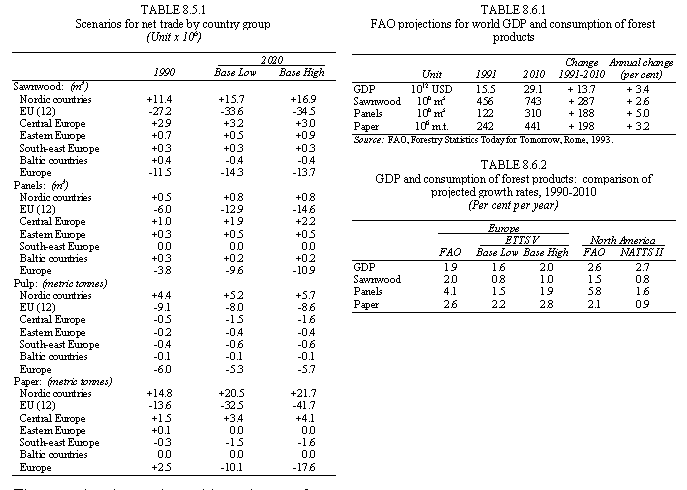
The scenarios show rather stable net imports for sawnwood and pulp, a steady increase in net imports of panels, and, for paper, a change from net exports of 2 million m.t. to net imports of 10-18 million m.t., essentially because in the EU (12) the projected increase in production is rather smaller than that for consumption. The overall trading structure by country group is not expected to change significantly. The forecast increase in European requirements from the rest of the world between 1990 and 2020 is as follows: sawnwood: 2-3 million m3; panels: 6-7 million m3; pulp: none; paper: 12-20 million m.t. This might be very roughly estimated as 50-80 million m3 EQ, which would have to be supplied to Europe by other regions, in addition to what is imported at present, if the assumptions and methods of the base scenarios are accepted.
It must be pointed out that the scenarios for net trade, which in this case is the difference, sometimes quite small, between two large numbers, are highly sensitive to the projected growth rates for consumption and production. For instance, the change from net exports of paper to net imports is essentially due to the scenarios for the EU (12): yet if paper consumption were to grow in the EU (12) between 1990 and 2020 at 1.8 per cent per year, rather than the 2.2 per cent per year projected, or if paper production grew at 2.4 per cent per year instead of 1.9 per cent per year, Europe would remain a small net exporter of paper. These small differences in growth rates are well within the margin of uncertainty of the methodology, or could be triggered by changes in prices and costs. The effect of different assumptions for prices and costs on the scenarios is discussed in chapter 12.
8.6 Outlook for world demand for forest products
The ability of other regions to export to Europe depends not only on the supply capacity of their forest resource, but also on demand for forest products within the supplying region and in other importing regions. Therefore, before reviewing the outlook for the supply/demand balance at the world level, this section reviews projections for world demand for forest products.
As was apparent from chapter 6, preparing long-term, comprehensive, scientifically based projections of demand for forest products in Europe is complex and data intensive and still leaves major uncertainties. At the world level, the task is even more difficult, as the data base is much poorer, the pace of change is faster, the countries being studied are not at all homogeneous, and there are huge uncertainties resulting from domestic and international conflict, political and administrative instability, social and cultural change, etc. The FAO is the only organisation to have prepared official global econometric projections of demand for forest products.
Assuming world GDP growth over the next 20 years of 3.4 per cent a year (but 5.8 per cent in Asia and 1.9 per cent in Europe), sawnwood consumption is projected to grow by 2.6 per cent a year, panels by 5.0 per cent a year and paper and paperboard by 3.2 per cent a year. On a rough estimate, this represents growth of 3.2 per cent a year in terms of m3 EQ. Panel consumption is expected to grow much faster than GDP, paper at about the same speed and sawnwood more slowly. It is widely expected that economic growth will be faster in developing than in developed countries over the next decades. Therefore, forest product consumption is expected to grow much faster than average in South America and Asia, and the slowest in Europe and the other developed regions.
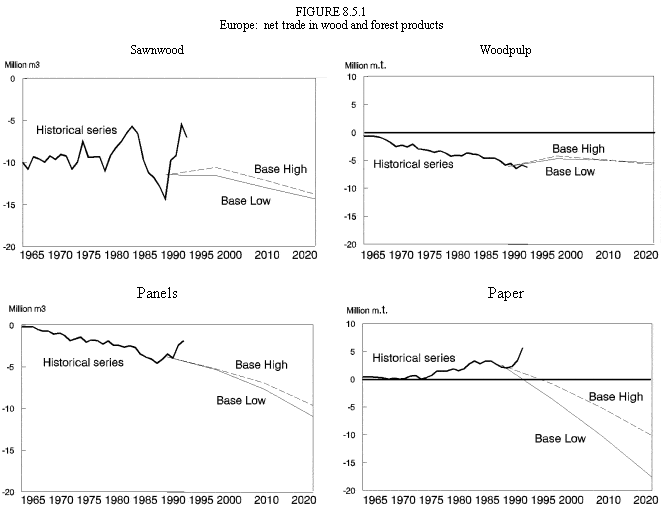
The implications of these projections for the world forest sector are significant: considering only the three major forest product groups (thereby ignoring the major use for wood, fuelwood, which is also expected to grow rapidly), according to these projections, demand for forest products would be about 1.4 billion m3 EQ greater in 2010 than in 1991. This is roughly equivalent to the world total removals of industrial wood in 1991. Doubling world wood harvests in 20 years6 would be a major challenge. However, are these projections realistic?
The FAO projections are compared in table 8.6.2 to independently prepared projections for individual regions: Europe (ETTS V) and North America (the second North American Timber Trends Study, NATTS II, summarised above). This shows that although the GDP assumptions of all three studies are very similar, the FAO projections of consumption are in almost all cases very much higher than those of ETTS V and NATTS II. What are the causes of these major discrepancies?
The methodology for the FAO projections was developed around 1986-87, and was severely constrained by the availability of analytical resources and, above all, data.7 The time series cross sectional approach used, although the only feasible alternative at the time (and perhaps even now), has several major weaknesses:
- consumption was considered price inelastic in almost all cases;
- consumption of all forest products was analysed essentially in relation to GDP8, ignoring the differing trends for construction;
- the time series cross sectional approach implicitly assumes that as countries get richer their pattern of forest products consumption will approximate that of those countries which are already rich. Yet, as discussed in section 6.3, this approach probably distorts reality;
- no account was taken of likely market saturation for wood-based panels, for which the projections predict a continuation of the growth rates of the initial market penetration phase;
- "emerging economies", notably in Asia, have shown astonishingly fast growth in recent years, but is it realistic to expect 6 per cent per year economic growth on average for twenty years in the most populated part of the world?
- the FAO projections are based on equations developed in the 1980s which are no longer "state of the art" and may result in higher projections of growth than more recent functional forms.
The first of these points may be the most important. Given the rigidities and lags (in the short to medium term) of the global supply system for forest products, a trend towards consumption levels similar to those in the FAO projections would inevitably trigger major price increases on global markets. These higher prices would certainly stimulate new sources of supply (with some time lag), but would also undoubtedly encourage substitution and depress growth in consumption, or even cause forest products to lose major market sectors completely. The FAO model system, based on negligible price elasticities, does not take this into account.
It appears therefore that the FAO projections should be treated as a starting point for analysis, and perhaps as a maximum level, rather than a definitive result, and reassessed in the light of more recent and comprehensive analysis of the world supply/demand balance for forest products. The FAO has started this type of analysis, but it is unfortunately not available for ETTS V.
8.7 Availability of forest products for exports to Europe
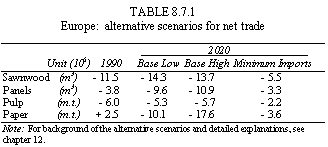
Section 8.5 has shown that the ETTS V scenarios foresee European net imports of sawnwood, panels, pulp and paper in 2020 50-80 million m3 EQ higher than in 1990, although it also pointed out that these estimates were very sensitive to the projections for growth rates for consumption and production. Is it realistic to expect that the rest of the world will be able to supply this volume? To answer this question, it is necessary to examine both the physical and biological potential of supplying reasons, likely demand for imports from other regions (namely Asia), and the interaction between the two, mediated by the price mechanism.
On the basis of the data and reasoning presented in this chapter the following remarks may be made:
- world consumption of forest products will continue to grow, but probably not as fast as projected by the FAO econometric model; if prices of forest products rose, levels of consumption would be reduced, compared to the initial projections;
- North American exports will expand slightly over the next 25 years, especially from the US South, but much of this will go to the Pacific countries, not Europe;
- supply from the natural tropical forest will decline in absolute terms and become even less important for Europe than it is now;
- supply from Russia, which has the largest growing stock volume in the world, could recover its pre-1989 levels and exceed them, but only if demand is strong enough;
- supply from established plantation sources such as New Zealand and Chile will continue to expand, notably because of their competitivity on global markets;
- there is the potential to supply much larger volumes from fast-growing plantations mostly in the tropics, producing low cost wood in large quantities for global markets, although these plantations may well not come on stream before the first decade of the twenty-first century.
It is, however, misleading to examine each of these aspects in isolation, or in purely physical terms, as the interaction is dynamic and largely occurs through the price mechanism. For instance, if consumption of forest products did rise rapidly in Asia, and traditional exporters were not able to expand their exports significantly in the short term, prices would rise worldwide; such an increase would lower growth rates of consumption (in Europe and elsewhere). stimulate production (including in Europe) especially in those countries most active on international markets (i.e. Austria, Finland and Sweden), and encourage substitution in vulnerable market segments. One alternative scenario (to be presented in chapter 12) presents scenarios assuming a marked price rise in Europe (an increase of 2 per cent per year in real terms), and constant costs: it results, for 2020, in a drop in net imports of sawnwood and pulp (compared to 1990), roughly constant net imports of panels, and considerably lower net imports of paper than in the base scenarios. Thus, with the same levels of GDP growth, construction and recycling as the Base Low scenario, but higher real prices for forest products, Europe's requirements for imports from the rest of the world would stay roughly constant in total, rather than rising by 50-80 million m3.
In this context, although it is misleading to deduce long-term trends from short-term market fluctuations, the events of 1993-94 are instructive. World forest products markets, which were strong at the time, were jolted by fairly sudden announcements of supply cutbacks in major regions (the Pacific North West, because of the spotted owl controversy and south-east Asia because of log export bans), creating concern about the possibility of markets to contain the disruption. In reality, however, adjustment was much quicker and smoother than expected. Not only did rising prices cause substitution rather soon (e.g. by steel for timber in the vital market for studs in North America) but supply reacted rapidly with higher production and exports from Chile, New Zealand, eastern Europe, the Nordic countries (which started to export to Japan) and, above all, Canada (notably British Columbia) which steeply increased its share of the US market. Within a year, sawnwood prices were falling.
The events of 1993-94 demonstrated the ability of the increasingly global forest products markets to react quite rapidly to clear market signals, without disruptive shortages, and should warn analysts against too rapid acceptance of scenarios for global wood scarcity.
There is at present no model system which would allow a quantitative exploration of these interactions at the global level, and indicate, for instance, whether the world forest products sector could supply Europe with 50-80 million m3 EQ more of forest products than in 1990 at constant price levels. However, it is possible to outline, in light of the considerations in this chapter and elsewhere in the study, two descriptive scenarios for the development of trade and prices of forest products world wide.
The first, a constant price scenario, assumes that growth in consumption of forest products is much less than the FAO projections, despite strong economic growth in south-east Asia and elsewhere (as the emerging economies reach high levels of material prosperity without correspondingly high levels of consumption of forest products). It assumes that North America, primarily concerned with domestic markets, raises its overseas exports modestly, but that entrepreneurs in Russia and large-scale intensive plantations in developing countries are able to produce large volumes of wood at prices which do not force up the prices of the derived products. Supplies from natural tropical forest taper off. European consumption and production levels are those of the base scenarios and European imports from other regions expand significantly.
In the second scenario, there are higher prices on global forest products markets due to strong demand for forest products from emerging economies. Exports from North America and the natural tropical forest develop as in the first scenario. However, although Russia and the intensive plantations significantly expand production and market share, the increase is not enough to prevent the prices of roundwood and forest products from rising, worldwide. In these circumstances, Europe's consumption is lower than in the base scenarios, and imports from other regions do not expand significantly beyond the 1990 level.
These, and other, alternative scenarios are examined and compared in more depth in chapter 12.
1
This section is based on FAO data, in particular, the Forest Resources Assessment 1990: Global Synthesis (FAO Forestry Paper 124), which is the most authoritative recent source of global forest resource data. AS ETTS V is concerned with wood supply, data are for "forest" and do not include "other wooded land," whose contribution to world industrial wood supply is marginal. Change data, however, apply to both types.2
North American Timber Trends Study, David Boulter and David Darr, United Nations, New York, 1996. ECE/TIM/SP/9.3
Although many of the available statistics refer to the former Soviet Union, the great majority of the forest resources are in fact on the territory of the Russian Federation.4
FAO State of the World's Forests, Rome 1995.5
Turland, J., S. Wakelin and P. Lane (1993) National Exotic Forest Description: 1992 National and Regional Wood Supply Forecasts. New Zealand Ministry of Forestry.6
In fact 15 years, as there has not been a dramatic rise since 1991.7
For most developing countries, the only series available are GDP, production and trade of major forest products, and even these series are often incomplete and of doubtful reliability. This necessitates a "lowest common denominator" approach.8
Gross fixed capital formation is included, but for the projections at least, it is dependent on GDP.
