


Seven out of the ten ECO member countries are classified among the low-income food-deficit countries (LIFDCs). Wars in Afghanistan dramatically increased rural poverty. Almost 60 percent of the villages have been destroyed or badly damaged. Insufficient food supply aggravates the precarious health status of rural communities, which remain disadvantaged due to poor infrastructure and lack of access to medical care. The conflict with Armenia resulted in loss of 1/5 of the Republic's territory and around one million became refugees and internally displaced. In spite of the recent improvement in the Kyrgyz Republic, the food security is very fragile. In the absence of any latest figures, 35 percent of the population are under the poverty line. The situation in some mountainous areas with less agricultural potential and less trade possibilities is even worse. Net domestic supply of food in Tajikistan is inadequate to meet local requirements. Imports of cereals amounted, for some years, to 80 percent of the total requirements. The situation for the vulnerable groups is becoming critical. For Turkmenistan, the main reason for food insecurity is the insufficient access to food and the deteriorating commercial and technical infrastructure. Malnutrition may become a serious problem, and chronic under nutrition as well as micro-nutrient deficiencies are prevalent in rural areas. The food security of Pakistan is fragile. The staple food of the country is wheat but its production caters only for 80 percent of consumption requirements. The per capita availability index has been quite erratic depending upon the fluctuations in aggregate production of cereals and pulses. About 40 percent of the population are below poverty line.
Although ECO countries collectively have abundance of resources with diversified nature of production, there are great variations among and within them in terms of natural endowment and development as well as the ratio of poor people in total population. Food insecurity in the ECO region has different roots and reasons which differ from country to country. Key factors that lead to changes in food security are population growth, economic distability, food production, and food demand and distribution. Also, inequality in distribution of economic benefits and access to the income and assets, high range of unemployment, migration and rapid urbanization, Voicelessness and powerlessness of poor people and civil society institutions, high rate of inflation and economic risks are among the important causes of poverty in these countries. Some of the important Food Security problems and challenges in the ECO region are being considered as below.
Central Asian and Caucasian countries as transitional economies of ECO region have experienced massive economic and social shocks during the past decade following the dissolution of the former Soviet Union. These countries are under the process of a complete overhaul at their economic, political and social systems, and are experiencing difficulties in the transition period, given the limited institutional capacity of the implementation of the structural reforms. In these countries the transition process has caused sharp decrease in GDP and income, deteriorated the economic situation, social infrastructures and delayed the introduction of structural reforms. A high rate of inflation during the transition period (especially 1990s) reduced real incomes, contributed to growing inequality and undermined social security and welfare. All these lead to considerable levels of food insecurity.
War and civil conflict in some countries i.e. war between Azerbaijan and Armenia, Iran and Iraq, Afghanistan situation and civil conflict in Tajikistan weakened the official as well as informal mechanisms of social protection, which contributed to rising poverty and deprivation. All these, also led to a massive release of labor and intellectuals. The most vulnerable groups to war and conflicts are children, women, the elderly and the sick or disabled people.
Afghanistan as the least developed member country of ECO is an special case which needs deep attention by the international community. Decades of war and civil conflict destroyed economic and social infrastructure of Afghanistan. Lack of health, education, and social security along with the deteriorating food insecurity and hunger are the characteristics of Afghanistan today. But hopefully the end of war in this country and the attention of international community may lead to a prosperous future for Afghanistan.
Information regarding food security and poverty measures is limited in ECO region. Missing data is common problem in the ECO member countries. Limited data constrains the true comprehension of the poverty level in the region. Furthermore, inadequate information makes it difficult to design appropriate policies. Establishing information systems in various sectors in order to monitor the economic development process can reduce this constraint.
Macroeconomic stability is essential for food security for three main reasons. First, declining GDP results in rising unemployment, and ultimately, labor productivity falls, which leads to human and natural resources being wasted. Second, the region's medium to high inflation lowers the purchasing power of the population; therefore, the population is unable to purchase necessary agricultural inputs or adequate food to ensure their food security. Third, macro economic stability provides opportunities for domestic and foreign investment in diversifying the agricultural products of the countries; which will efficiently use human and natural resources and increase employment and income. For example, Central Asia's food insecurity is an indirect result of the fall in national output and high inflation rates during the 1990s.
As countries become richer, on average the incidence of income poverty falls. Other indicators of well-being, such as average levels of education and health, tend to improve as well. For these reasons, economic growth is a powerful force for poverty reduction. But differences in rates of economic growth, and in the rates at which that growth translates into reduction of food insecurity, are not the consequences of simple choices. The patterns of growth, the changes in the distribution of income and opportunities and the rates of poverty reduction reflect a complex set of interactions among the policies, institutions, history and geography of countries.
In the ECO region, there has been considerable progress in stabilizing economic growth across the region during the last years. The Caucasian and Central Asian member states of ECO have taken significant strides towards market economy, particularly in the areas of privatization and liberalization. On the other hand, the founding members namely Iran, Pakistan, and Turkey suffered in varying degree from the global economic recession. In general, the economies of the member states remained vulnerable. Nevertheless, they continued to pursue structural reforms, financial and monetary policy regimes. The developing member countries of the region, while showing a considerable economic growth rate still have serious problems in enhancing the human development and food security.
Poverty gap ratio in the ECO member countries
| Population living below $1 a day (%) 1990-2001 | Poverty gap ratio (%) 1990-2001 | Share of poorest 20% in national income or consumption(%) 1990-2001 | Children under weight for age(% age 5) 1995-2001 | |
| Afghanistan | .. | .. | .. | 48 |
| Azerbaijan | 3.7 | <1 | 7.4 | 17 |
| Iran | <2 | <0.5 | 5.1 | 11 |
| Kazakhstan | 1.5 | 0.3 | 8.2 | 4 |
| Kyrgyzstan | 2.0 | 0.2 | 9.1 | 11 |
| Pakistan | ||||
| Tajikistan | 10.3 | 2.6 | 8.0 | .. |
| Turkmenistan | 12.1 | 2.6 | 6.1 | 12 |
| Turkey | <2 | <0.5 | 6.1 | 8 |
| Uzbekistan | 19.1 | 8.1 | 9.2 | 19 |
Source: Human Development Report, 2003, UNDP
The disparity in the share of different areas and social classes in consumption or income of the countries are quite considerable. The number of people living under 1$ a day are ranging from 1.5% to approximately 20% excluding Afghanistan where necessary data is unavailable. In most of the countries of the region the share of the poorest 20% in national income or consumption is less than 9%, while the share of richest 20% is more than 40%. Therefore, better distribution of income and assets at national level may lead to a better level of food security in the region. This should be considered in economic planning of the member countries.
Distribution of income or consumption in the ECO member states
| Country | Survey year | Share of income or consumption (%) | Inequality measures | ||||
| Poorest 10% | Poorest 20% | Richest 20% | Richest 10% | Richest 10% to poorest 10% | Richest 20% to poorest 10% | ||
| Afghanistan | |||||||
| Azerbaijan | 2001 | 3.1 | 7.4 | 44.5 | 29.5 | 9.7 | 6.0 |
| Iran | 1998 | 2.0 | 5.1 | 49.9 | 33.7 | 17.2 | 9.7 |
| Kazakhstan | 2001 | 3.4 | 8.2 | 39.6 | 24.2 | 7.1 | 4.8 |
| Kyrgyzstan | 2001 | 3.9 | 9.1 | 38.3 | 23.3 | 6.0 | 4.2 |
| Pakistan | 1998-99 | 3.7 | 8.8 | 42.3 | 28.3 | 7.6 | 4.8 |
| Tajikistan | 1998 | 3.2 | 8.0 | 40.0 | 25.2 | 8.0 | 5.0 |
| Turkey | 2000 | 2.3 | 6.1 | 46.7 | 30.7 | 13.3 | 7.7 |
| Turkmenistan | 1998 | 2.6 | 6.1 | 47.5 | 31.7 | 12.3 | 7.7 |
| Uzbekistan | 2000 | 3.6 | 9.2 | 36.3 | 22.0 | 6.1 | 4.0 |
Source: Human Development Report, 2003, UNDP
In order to overcome the existing difficulties in macro economic levels, the member states introduced various measures to reduce budget and balance of payment deficits, restrain inflation and bridge saving-investment gaps through mobilization of domestic resources. The private sector was encouraged to invest more in all fields of production. To facilitate this trend, fundamental reforms in trade and investment were carried out.
Market distortion is another problem affecting food security in some countries. Most of the ECO countries have embarked on programs to correct distortions. Without the successful implementation of these programs, the expected developments in the Regions intra-trade and its trade with the outside world would not be achieved. However, privatization has not been completed in the former socialist states, and government intervention in is till there in almost all member states, especially with respect to some food products. Examples of such intervention include the guaranteed purchase prices for wheat and the subsidies paid for the manufacture and distribution of farm inputs and agricultural machinery in Iran, the guaranteed purchase prices of grains and the input subsidy programs for seeds, fertilizers and chemicals in Kazakhstan, the support for producer prices and the subsidies for inputs and credit in Turkey, the delay in the phasing out of the administered price program for wheat in Pakistan. However, government intervention is not the only cause of market distortions. Other sources include, among other things, lack of market information for all the dealers in the market; insufficiency of seasonal and longer term credit, distribution networks, an organized markets; and the inexistence of suitable legal and regulatory framework and institutional structure for marketing in general and marketing of agricultural products in particular.
Several specific institutions and policy measures are needed to achieve better functioning of internal markets. First, government control over the procurement of agricultural commodities must be removed. Second, private producers of cash crops should be organized to form marketing associations to enable them to negotiate better prices for their products. Third, development of post-harvest and processing co-operatives should be encouraged through the use of institutional credit and agricultural diversification. Fourth, enabling better vertical market integration will reduce transaction costs for producers, which will help increase their incomes, keep prices of agricultural commodities low to local consumers, and make them competitive in regional and international markets.
In this connection, reforming state-owned enterprises into private enterprises is a necessary ingredient in increasing food security in ECO region. If industries are privatized, there can be several positive impacts. First, private agro-industries along with open markets will force agro-industries to efficiently use human and natural resources. Efficient use of natural resources can reverse the decline in output associated with the improper use of land and limited inputs used. Second, private agro-industries will alter their production in order to compete within the borders as well as outside of its borders. Third, privatization will allow new industries such as agro-processing to start up. Starting a new set of industries in ECO region will increase employment, which will have a positive impact on food security, and agro-processing will transform raw goods into finished products that can be traded at a higher value in the regional and international markets, which will increase foreign exchange.
ECO countries have followed different approaches to the privatization of their markets. ECO member states have made great progress although much more work is still needed. Slow internal market reform has ultimately restricted the liberalization of trade policies in some member states. However, even if semi-liberal trade policies are in place, weak internal market institutions in some countries of the region, have effected the integration into the world trading system. By continuing to privatize their markets, fuller integration into the global economy can be achieved. ECO encourages regional cooperation in field of privatization. In this connection the ECO Workshop on privatization was held in June 2002 in Turkey. Another workshop on private sector development is scheduled to be held in Tehran in the forthcoming months.
The liberalization of markets and the available workforce provides an excellent opportunity for private domestic and foreign investment in ECO region. Increasing private investment will stimulate the economy of these countries, which will help reduce the number of unemployed people. More people working will increase income, which results in lower poverty levels, and therefore increased food security. Private, foreign direct investment in ECO's food and agricultural sector will require an enabling environment for the investors, a stable political environment and transparency of licensing procedures, and organized efforts in order to increase its contribution to poverty reduction and food security. Unfortunately most of the countries are facing many problems for providing all these facilities.
However, domestic enterprises lack sufficient funds to participate in joint ventures. Furthermore, foreign firms must establish a contract with the government to sponsor community social programs. Moreover, foreign insurance companies have limited access to local markets. Finally, quotas on the number of foreign work permits that can be issued also reduce opportunities for private investment.
In order to induce private investment trade barriers, quotas on foreign workers and double taxation need to be eliminated. Foreign exchange and transparency in government activities need to be increased. Value-added tax rates need to be reduced and contract sanctity and transportation infrastructure need to be improved. More specifically, each country has its own barriers to foreign investment.
In order to facilitate the investment in the region and remove the constraints and barriers limiting private and foreign investment in the region, ECO organized the First Regional Investment Conference in February 2003 in Kish-Iran. The Second ECO Regional Conference on Investment will be organized in late 2003 in Afghanistan. During the First Conference on Investment, it was decided to establish a High Level Expert Group Meeting for formulation and finalization of the Agreement on Promotion and Protection of Investment in the ECO Region.
High import taxes and value-added taxes (VATs) impair the food security of the people in some MS. High import taxes raise the cost of needed agricultural inputs. Higher priced agricultural inputs reduce the consumption of these goods. The results of these taxes have been lower yields of agricultural commodities. In addition to the high import taxes, the increase in the VAT on agricultural products may increase government revenues, if people are able to purchase the same quantity of agricultural products; however, low incomes and higher taxes may cause less food products to be purchased. Lower purchasing levels will increase the level of food insecurity in the region.
Changes in the growth pattern of the member states' economy over the years have brought corresponding changes in the employment. Regardless of the increasing labor force in the ECO countries, unemployment rate generally remained at the level of previous years with slight increase in some countries. The member states pursued multi pronged employment policies focusing on higher investment and of labor intensive sectors viz small scale industries, social sectors and rural development programmes, provision of credit facilities for self employment, expansion of technical training facilities and involvement of private sectors to reduce the rising trend of unemployment and poverty in some cases.
Although unemployment has risen in both rural and urban areas, there are employment opportunities in the region. Domestically, market integration will eliminate inefficiencies, which will allow existing industries to expand and new non-farm industries such as agro-processing to begin. New industries will ultimately increase the number of jobs available, and therefore, lower unemployment.
Strengthening the knowledge of policymakers, policy analysts, and policy researchers in the monitoring and evaluation of development programs and the environment will bring to the forefront issues that need to be addressed to sustainably reduce food insecurity. Performing research conditioned on priorities determined by information generation through monitoring and evaluation activities will ensure that the needs of ECO countries are met. The Asian Development Bank (ADB) has made its first steps to strengthen this capacity by implementing technical assistance projects for environmental assessment and monitoring in some ECO Member States in Central Asia. Strengthening the capacity in structural reform and agricultural development will not only stimulate the privatization of these areas, but the transformation will be more efficient. Although technical assistance projects have been implemented in various countries, more capacity strengthening in these areas as well as in trade policy is needed to enhance economic growth.
Total land area of ECO member countries is some 794 million ha. arable land plus permanent crops cover some 117 million ha (1999) of which 42.1 million ha were covered by full or partial irrigation. Permanent pastures consisted of some 342.5 million ha. in 1999.
The cropping pattern in ECO countries in 2001 was dominated by cereals (49.79 million ha), particularly wheat. Less important in land size are barley, rice, tomatoes, and potatoes. Coarse grains cover 10.2 million ha, pulses cover 3.4 million ha, vegetables 2.4 million ha and fruits 1.4 million ha in 2001. Cotton, with 6.3 million ha, is the major industrial crop.
In the northern parts of the ECO, there has been a transition in farming systems and land tenure, from a situation where most farms were state or collectively owned to a situation where private ownership and management is favored. So far, the on-going reform has led to a variety of situations, from privately owned small farms to associations of farmers formed on voluntary basis. In all the CIS countries, irrigation was favored under the former Soviet Union, which resulted in 80% of all the cultivated land being fully or partially irrigated. In the southern parts of ECO, farms are cultivated under three land tenure systems: some are directly cultivated by owners, others are partly cultivated by owners and partly by tenants, and the remaining farms are cultivated entirely by sharecroppers. Land fragmentation is frequently a major constraint on agricultural production. Farms are particularly small in Pakistan (the average size decreased from 5.26 ha in 1972 to 4.68 ha in 1980 and 3.78 ha in 1990). The extremes of low rainfall areas are found in southern Afghanistan and Iran and in parts of Pakistan, where agriculture is largely dependent on irrigation. In Iran, about 40% of the total arable land is being cultivated under modern or traditional irrigation systems. In some parts of the region, particularly in Pakistan, the lowering of the water tables has become a major concern.
Except in dry land farming areas of south-west, land tenure is not a serious issue in Afghanistan. However, it is a major issue in the CIS countries. In Azerbaijan, privatisation in agriculture allowed, private ownership of farm land and varied forms of tenure. In August 1996 kolkhoz lands were allocated to the inhabitants of communities, while still being owned by the state.
Land reform is not yet completed in Kazakhstan. About 1 million hectares were distributed, where all rural residents were entitled to equal land share and non-land assets were distributed to farm employees. Still 60-70% of the land remains under collective/co-operative type. The fundamental issue is that agriculture land remains subject to designated use restrictions, which means that the State can rescind land use rights and repossess agricultural land if it is not used as such. In Tajikistan, land is a state property, but gradually more of it is being allocated to private farmers. No legal framework was issued for the privatization or restructuring of either the Kolkhoz or Sovkhoz farms. However, the land reform law allows long term leases of up to 100 years with inheritance rights. Hence, but agricultural land cannot be bought or sold. In June 1995 all collective and state farms in Turkmenistan were converted into peasant associations with existing member ship, land, assets and management. In Uzbekistan, almost all the State and collective farms have been transformed into joint stock companies or small private farms. Farm owners have become the main producers of agricultural goods. The non-State sector produces 97 per cent of the gross agricultural product. As a result of privatisation, the processing and marketing of farm products are undergoing considerable changes.
Under the land reform programs initiated in 1961 in Iran, large estates owned by absentee landlords were distributed among farmers. In 1975 nearly 64 percent of the farms were less than 5 ha while only 1% were larger than 50 ha. Most of these farms are managed by owners and utilise family labour.
Lack or sufficient rural finance, especially for agriculture and more particularly for small farmers is shared in all member countries, though not equally. The market for rural finance need to be organized, enlarged through encouraging the establishment of new financial institutions, and new instruments need to be utilized. Moreover, special programs for financing rural business and small farmers need to be designed and implemented. The need is also there for enhancing the capability of professionals in the financing institutions in general and those working in rural areas in particular. Some countries, such as most of the CIS countries, need to establish appropriate land ownership to enable farmers benefit from regular bank lending.
Pollution and other environmental issues are one of the main concerns in ECO member countries. Over cutting of woody vegetation for fuel wood and roofing in Afghanistan has caused severe soil erosion and has resulted in environmental degradation. The situation has been further exacerbated during the war years. Excessive irrigation and lack of drainage in Azerbaijan have significantly increased salinity in approximately two thirds of irrigated area. Moreover, the excessive use of chemicals contributed to soil and water pollution and the past intensive deforestation caused land erosion of almost 40% of the land. Environmental problems have also affected the fisheries sector. Pollution and management of natural resources are among the major challenges facing Kazakhstan. Both the Caspian and the Aral Seas suffer from serious environmental problems. Other surface waters along with groundwater are polluted with oil products, phenols, heavy metals and nitrites. Air pollution, radioactive contamination and soil degradation are also serious problems facing the development in Kazakhstan. The soils of Pakistan have been deteriorated over the years and are classified as marginally saline, moderately saline and badly saline. The organic matter in the soil is as low as 0.3 to 0.5 percent against the normative value of 1.5 percent. Planting without proper crop rotations has depleted the soils, which has adversely affected the productivity of Indus agriculture. Thus soil degradation is a serious threat to the food security. The past intensive use of chemical fertilisers and crop protection chemicals in Turkmenistan has resulted in heavy contamination of soil and ground water. This environmental damage was exacerbated by poor irrigation methods and lack of drainage facilities. Finally, the massive and inefficient use of rivers' water for irrigation in Uzbekistan resulted in the shrinking of the Aral Sea. The average net volume of the sea fell by 16% between 1961 and 1974 and by 36% between 1974 and 1985. The excessive use of fertilisers and pesticides constitute another source of concern.
A recent projection by International Food Policy Research Institute (IFPRI) has forecasted a 33-percent increase in the demand for cereals and 21 percent increase in the demand for livestock in the Central Asian countries between 1995 and 2020. This means a net import of 0.76 million tons of cereals in 2020 as compared to the import of 0.51 million tons in 1995. Similarly, net import of livestock meat will increase to 0.38 million tons in 2020 as compared to the import of 0.16 million tons in 1995 in these countries. Improvements in crop and livestock breeding productivity will be essential to meet the increases in demand projected for the region.
According to the State of World Population1, the population of the ECO region is estimated at 377.1 million in 2000, expected to grow at an average annual rate of 2,1 percent in the period of 2000-2005. The average annual rate of population growth in the region is expected to fall to 1,6 percent by the first quarter of the next century.
| Total population (millions) 2002 | Projected population (millions) 2050 | Avg. pop. Growth rate (%) (2000-2005) | Population Ages 0 -24 (% of Total) 2000* | |
| World Total | 6,211.1 | 9,322.3 | 1.2 | 27 |
| More developed regions | 1,196.0 | 1,181.1 | 0.2 | 20 |
| Less developed regions | 5,015.1 | 8,141.1 | 1.5 | |
| Least developed countries | 692.2 | 1,829.5 | 2.5 | |
| ECO Countries (2) | 378.8 | 57.2 | ||
| Afghanistan | 23.3 | 72.3 | 3.7 | 61 |
| Azerbaijan | 8.1 | 8.9 | 0.6 | 47 |
| Iran (Islamic Republic of) | 72.4 | 121.4 | 1.4 | 59 |
| Kazakhstan | 16.0 | 15.3 | -0.4 | 46 |
| Kyrgyzstan | 5.0 | 7.5 | 1.2 | 54 |
| Pakistan | 148.7 | 344.2 | 2.5 | 52 |
| Tajikistan | 6.2 | 9.8 | 0.7 | 60 |
| Turkey | 68.6 | 9.9 | 1.3 | 49 |
| Turkmenistan | 4.9 | 8.4 | 1.9 | 57 |
| Uzbekistan | 25.6 | 40.5 | 1.4 | 57 |
Source: The State of World Population 2002, UNFPA , Source: The State of World Population 2000, UNFPA
The region has a young population structure, with 57.2 percent of population is under the age of 24. In the ECO region, the average proportion of the urban population is 46.4 percent, growing at an average rate of 3.9 percent. Although this is above the world's average, being estimated at 3.7 per cent in mid-1997, once again large disparities between countries exist, since Afghanistan, Tajikistan, Pakistan and Kyrgyzstan, respectively, have urbanization levels under 40 per cent, while other countries reveal higher rates. Urbanization also accelerates expanding poverty in some countries especially in the margin areas of big cities.
Also, both internal and international migration is common within the ECO region. Due to armed conflict in some countries of the region and stagnant economic conditions, migration becomes one of the main variables of the planning schemes. In Azerbaijan, 13 per cent of the population is comprised of refuges and internally displaced persons. Movement of the refuges among some border areas in the region is still continuing. Most of the refugees and displaced people are living under the strong poverty.
In parallel to the levels of development in the rural and urban areas of the member countries, the status of access to food security varies. In all member states, the people living in rural areas have less access to the healthy situation.
A. ECO Regional Trade on Agriculture
Although regional and international trade has begun to increase in the ECO region, higher volumes of regional and international trade is needed in ECO region to raise the standards of living, and thus contribute to the attainment of higher levels of food security. Regional and international trade allows excess food grains to be exported, which will increase foreign exchange that could be used to import nutrient-rich foods that are demanded by the society. Increasing inter-regional trade will allow countries to grow comparative advantage crops as well as diversify it agricultural production; therefore, resources will be used more efficiently, and the result will be higher incomes. Higher incomes permit people to purchase necessary foods or agricultural inputs that will improve food security. Furthermore, efficient use of natural resources results in higher crop productivity.
A large portion of the population in ECO region works in agriculture. Exportation of processed food products will not only increase foreign reserves, which can be used to offset imports, but is also a productive method for increasing the incomes of the rural population. One possible pathway to expand food trade outside of the region is by accession to WTO.
B. Background to trade in agro-products and processed foods.
World trade in agricultural products has been expanding 3% year-on-year since 1990, to reach US$ 547 billion in 2001. Exports of food accounted for 80% of these (see figure 1). The share of global trade in agricultural products in world exports of merchandise contracted from 12.2% in 1990 to 9.1% in 2001.
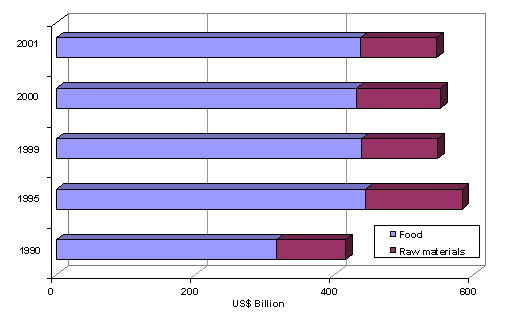
Figure1. World trade in Agricultural products- 1990-2001
Source: WTO, International Trade statistics 1996 and 2002
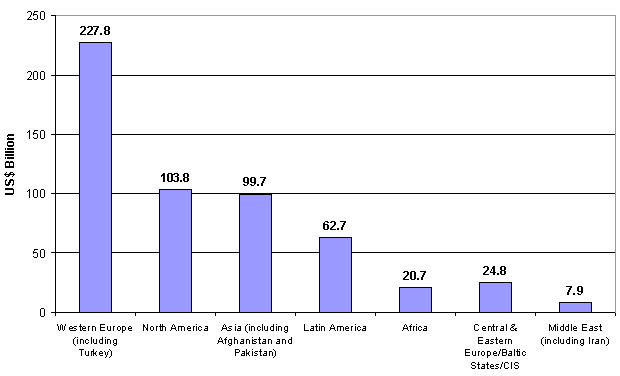
After Western Europe, which exported for US$ 228 billion of agricultural products in 2001, North America and Asia were the largest exporters at the end of the 1990s (see figure 2).
Figure 2: Exports of agricultural products by main regions in the world
The member countries of the Economic Cooperation Organization (ECO) exported US$ 4.9 billion worth of agro and food products1 in 2001, representing 6% of the ECO region's total merchandise exports to the world, while its imports amounted to US$ 4 billion. Both exports and imports have been declining since 1997, by 4.5% and 13.6% yearly on average.
In 2001, the region's largest exporters of agro and food products1 were Turkey, Iran and Pakistan. They together generated 80% of the ECO region's total exports of agro-products (see figure 3). Turkey was also the main importer, accounting for 60% of the region's external demand. Pakistan and Iran absorbed 15% and 13% respectively of the ECO region's imports.
 |
 |
| Figure 3: Share of ECO member countries in the region's trade in agro and food products in 2001 | |
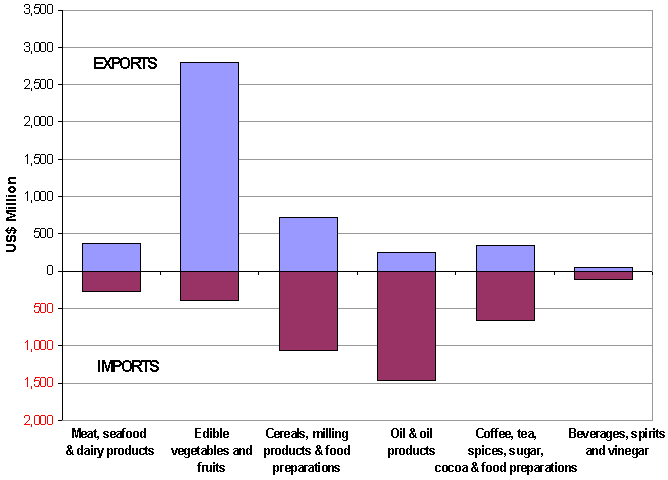
The ECO region's trade flows in the above selected product groups are predominated by exports of edible vegetables, fruits and food preparations, which amounted to US$ 2.8 billion in 2001 and by imports of oils and oil products, which reached US$ 1.5 billion (see figure 4). The other product groups recorded trade flows equal or under US$ 1 billion.
The ECO region recorded a trade surplus of US$ 0.1 billion in the sector of meat, seafood and dairy products and of US$ 2.4 billion in the sector of edible vegetables, fruits and food preparations. This indicates that supply conditions are likely to be favorable to stimulate intra-regional demand for those product groups.
Figure 4: The ECO region's global trade in selected agro products and processed foods in 2001
A number of products that displayed significant trade potential were identified in the sector of cereals, milling products and preparations of cereals (i.e. wheat, rice, biscuits and wafers) and in the sector of edible vegetables, fruits and food preparations (i.e. chickpeas, food preparations, pistachios, lentils and potatoes).
ECO Priority Areas - Strategies:
Trade and Investment
In the area of trade and investment, the strategy envisages the progressive removal of trade barriers, efforts for greater market access; expansion of the existing preferential tariff arrangements; simplification and harmonization of national procedures in customs, transit of goods, attraction and protection of investment; adoption of common approach in dealing with regional economic groupings and relevant international organizations particularly WTO; encouragement of border trade and free trade zone; and improvement of standards and conformity assessment for international trade.
Presently intra-ECO trade ratio stands at around 6% across the region. Several factors are at play namely tariff and non-tariff barriers, high transport costs, export competitiveness and lack of information regarding potential trade opportunities. Aware of these shortcomings, ECO follows a two-track strategy: firstly, remove or at least lower trade barriers in the region. For this, ECO is in the process of providing a regulatory and enabling environment through a possible trade agreement, i.e. ECOTA. Secondly, it is aimed at encouraging involvement of private sector in the relevant trade projects/programs.
The main activity with regard to the above mentioned component concerns the deliberations of High-Level Experts Group (HLEG), comprising officials from Ministries of Commerce/Foreign Trade of member states. This HLEG developed a regional trade agreement, called ECOTA, which is aim at gradually removal of tariffs and non-tariff barriers in the region. Other activities and projects in this regard include trade facilitation activities such as annual meetings of ECO heads of customs administrations, trade and investment information networking, joint ECO/WTO seminars, ECO trade and Development Bank and Reinsurance Company.
The second component (bottom-up approach) aims at encouraging participation of business communities in ECO's trade related activities and programs to create a useful interaction between policy makers on one side and major players on the other. Particular example of this kind is the ongoing ECO/ITC project on "Expansion of Intra-ECO Trade", basically aiming to raise awareness about business opportunities by bringing buyers and sellers in several product groups.
B. WTO Regime and Agriculture in ECO countries: National and Regional Perspectives
As a result of the conclusion of Uruguay Round Negotiations on trade liberalization and ensuing establishment of the World Trade Organization (WTO) in 1995, agriculture (and certainly trade in agriculture) was fully incorporated for the first time into the disciplines of the WTO.
Under the Agreement on Agriculture there are three major components:
The Doha Development Agenda also provides that negotiations for further liberalization of trade in agriculture should be launched. It is often reported that relatively little liberalization have taken place due mainly to tariffication process has provided for enhanced protection for some developed countries against the products of exports of developing countries. Therefore, it is argued that most of the liberalization was postponed for negotiations that were supposed to begin by January 2000. Several issues such as export subsidies, export credits, state trading enterprises, export restrictions, food security and food safety, though this is not exhaustive list, are on the agenda of the Doha rounds.
Concerning the national and regional perspectives to WTO and its rules in multilateral trading system, only Kyrgyzstan, Pakistan and Turkey among the ECO member countries are full members of WTO. Azerbaijan, Tajikistan, Kazakhstan, and Uzbekistan are observers and in the accession process; Iran has applied for initiating accession process, while Turkmenistan is considering to apply.
In the light of this, presently there are three issues facing ECO the member states individually and the region as a whole:
Since negotiations on further liberalization of agriculture will continue in the Committee on Agriculture (of WTO), the ECO member countries may adopt a common position with regard to the following issues (the list outlined here is not exhaustive):
Those member countries, which are also WTO members, could extend their technical assistance to the members who are in the accession process to WTO and support them in their accession working groups. On the other hand, the other members who are either in accession or application process may inform the ECO Secretariat about their needs and challenges with regard to adapting to the WTO's agricultural regime. Then, the Secretariat could decide further action to cooperate with WTO on agriculture matter.
The IMF and World Bank in annual meetings of Board of Governors in Dubai on 22-23 September 2003 announced that they will pickup from where Cancun failed and promised to increase aid for trade facilitation.
Furthermore, the technical Assistance Project signed between ECO and FAO with a view to preparing a regional strategy for food security and bankable projects for donor consideration is an ample opportunity for ECO member countries to adopt a common strategy concerning WTO matters and to approach to abovementioned institutions for financing these projects.
As it was mentioned in other chapters, the Secretariat has been pursuing several proposal/activities in the field of food security and agriculture. Despite the great potentials and opportunities and also prominent need for increased collaboration among the ECO Member States, the ECO cooperation in agriculture has not been up to the expectations. One of the important reasons behind such a performance was the lack of clear identification of priorities and a comprehensive and applicable strategy for agricultural development.
As it was highlighted in the report of the ECO First Ministerial Meeting on Agriculture, formulation of a regional agricultural development and food security strategy in line with the national strategies/plans of the Member States would lead smooth and successful cooperation among the member States. Such a strategy may include programmes and actions in different national, regional and international levels.
At the national level, the objectives of ECO strategy may generally entail actions aimed at conserving the resource base, increasing farm productivity, creating non-farm employment, enhancing freedom of mobility with respect to capital and labor, as well as the freedom of exchange of national and foreign goods and products. Such actions will have direct effects on the agricultural sector, and should stimulate synergies contributing to the gradual reduction of malnutrition and food insecurity among the population. Further specifications will be required, aiming in particular to define and implement the national strategies that were developed as a follow-up to the WFS.
At the regional level, and beyond the promotion of trade liberalization measures among member countries, the ECO could enhance collaboration among its members for jointly promoting regional food security. In particular, the preparation of common policies and joint programmes within the frame work of the above mentioned strategy could be envisaged for (i) food security to reduce poverty and to promote better access to food products, (ii) improvement of productivity with a view to reducing dependency on imported basic foodstuff, and (iii) initiating specially tailored programmes for sustainable agriculture which is a common need among ECO countries.
At the international level, the FAO Special Programme for Food Security (SPFS) could contribute meaningfully to the achievement of national food production, productivity and food security objectives. The application of SPFS will require access to various sources of financing. Therefore, more efforts should be made to mobilize bilateral and multilateral financial flows for different stages of the Programme. It is to be noted that FAO has signed agreements with the World Bank, UNDP, regional Banks and the Islamic Development Bank regarding the SPFS as well as with several developing countries for technical assistance within the framework of the South-South Co-operation. But, it is advisable that national Governments establish a special budget line reserved to the local part of financing the SPFS.
The institutional structure for agriculture usually includes the Ministries of Agriculture and the Ministries of Water, both having responsibilities for the planning and implementation of development activities. Other public institutions normally cover agricultural marketing, credit, research and extension organizations. The private sector is increasingly involved (or starts to be involved for CIS countries) in agricultural marketing and processing, as well as in the importation and sale of farm inputs.
The roles of the Ministries of Agricultures in many of the ECO member countries have undergone drastic changes, either because of the transformation of the economy to the market system, or for increasing their efficiency and effectiveness. For example, the responsibility for agricultural production, procurement and food processing and inputs supply has been shifted to the newly established commercial state agencies in Azerbaijan. In Kazakhstan agriculture research is carried out within the Ministry of Science, each district (oblast) operates an agricultural department responsible for food self-sufficiency at the oblast level independently from the MOA, agricultural economic policies are largely set by the Agency for Strategic Planning and Reform, and the State Committee for Water Resources is responsible for defining national policies on water and the existing inter-farm system for delivery of irrigation and rural drinking water. The dismantling of state institutions responsible for agricultural credit, input and output marketing, irrigation management, food processing, and others in Kyrgyzstan along with the inability or unwillingness of the private sector to perform some of these crucial functions seem to constitute a key constraint to further recovery of the agricultural sector.
The Amalgamation of the two ministries involved with agriculture into the Ministry of Jihad-e-Agriculture in Iran seems to have put sharper focus for an integrated approach to agricultural development. This amalgamation is expected to help in policy making, supervision and planning, decentralisation as well as downsizing of the government with a greater focus. In Pakistan, the Ministry of Food, Agriculture and Livestock is only a policy making ministry and agriculture per se is managed by four provinces through their respective agricultural departments. Moreover, the frequent change in the leadership of Ministry made it difficult to implement the agricultural policies, which is often lopsided. In Turkey, the key ministry for the agricultural sector is the Ministry of Agriculture and Rural Affairs. A separate Ministry for Forestry was established in 1991. In addition to these ministries, a wide range of government organizations are involved in policy-making and regulation of the sector. The structure of policy formulation and management within agriculture is recognised as being unnecessarily complicated and inefficient having direct effects on food security.
Most of the member countries suffer from ineffective and/or inefficient water resources management. The wars and land mines in Afghanistan caused more damage to the traditional irrigation system than and the government controlled irrigation network grossly suffers from lack of maintenance. The rehabilitation effort should also include institutional reforms such as creation of water users associations with a view to dismantling the monopolistic power of those who traditionally have control over water at the village level. Kazakhstan has one of the smallest amounts of accessible water resources among the Former Soviet Union Republics. The irrigation system, which was poorly designed and implemented, suffers from lack of maintenance and inadequate investment. The expansion in irrigation has reached the point of diminishing returns in many areas of Pakistan. Over-pumping of groundwater is causing a steady drop in water table. The pace of dam building is slowing down because of financial constraints, environmental concerns, and regional conflict. Turkmenistan's water resources depend largely on negotiated share of flow of international rivers. There is a dire need to create water users association to increase participation and improved management with supporting legislation and introduction of water charges. Uzbekistan shares most of its water resources with neighbouring countries and hence, the use of their water must be regulated in the light of national and regional interests. Almost half of its irrigated land requires rehabilitation. Moreover, water is highly saline.
Livestock production in the ECO countries is predominately based on traditional systems which are under the influence of land distribution. These include small farmers who raise small herds of cattle, sheep and goats in villages and small towns for their household requirements of milk and meat. Under this system, animals are fed mainly on crop residues, and concentrates are usually not given. Sheep and goats are raised in larger flocks by nomads and transhumant tribes in the steppes. They depend mainly on rangeland but in dry years they move closer to crop areas to graze agricultural by-products. The severe shortage of feed has encouraged many farmers to move towards an integrated system of farming in which forage production (berseem, alfalfa and green barley) are assuming increasing importance.
Livestock suffers from different sources of problems and constraints in ECO member countries. In Afghanistan, cattle and sheep stocks were reduced to 30 percent and more than 25 percent, respectively, between 1978 and 1999, mostly because of the wars. However goat population was doubled during the same period. Livestock numbers are in sharp decline since 1990 in Azerbaijan, mainly because of feed shortage. For the same reason, milk yield per cow and number of eggs per layer decreased to less than half between 1990 and 1994. In Kazakhstan, the livestock sub-sector seems to have been hard hit by the deterioration that took place during the period 1990-1995. Sheep flock decreased to less than one-third. Cattle herds fell by 21 percent, sheep and goats by 29 percent, pigs by 36 percent and poultry flocks by 20 percent. The same situation was faced by Kyrgyz Republic. Moreover, feed and feed supplements imports have almost stopped, resulting in closing most of the commercial poultry farms. However, both livestock inventories and productivity started to recover and increase in the two countries during the next half of the last decade, but did not reach the level of 1990. Total livestock off-take has experienced an uninterrupted decline of 35 percent since 1998 in Tajikistan. The decline in livestock production, however, has been concentrated in the state and collective farm sector which experienced almost 50 percent decline. Cattle population is showing a declining trend with slight decrease in sheep and sizeable decline in poultry between 1994 and 2001 in Turkmenistan. In Uzbekistan, cattle heads showed a slight decline but sheep, goats and poultry showed robust increase during the same period.
ECO region Asia in general is an area of outstanding bio-diversity, which is globally important. The area provides a habitat for a number of endangered species. However, the policies of the former USSR had an extremely adverse impact on the Central Asian country's ecology, especially in the Aral Sea region. Moreover, the pressure on natural resources has increased over the last few years and, among other things, has resulted in a significant decline of forest cover and excessive over-grazing. The deterioration of the economy in the early 1990s caused by the collapse of the socialist system in these countries led, among other things, to an increasing exploitation of natural resources. Simultaneously legislative enforcement, institutional effectiveness, legislative applicability and environmental monitoring have decreased. Furthermore, communities adjacent or within protected areas have increased their reliance on the protected area's resources, especially due to the additional demands for pasture, fuel-wood, and arable land.
Although great potential exists for agricultural diversification, the agricultural products produced in ECO region are limited. It is a good time for ECO countries to diversify their agricultural products because they are predominately an agricultural economy, agricultural commercialization is limited, agricultural markets are inefficient, and the environment is being degraded. Agricultural diversification will improve food security in the region through several different avenues. First, agricultural diversification will divert land and labor resources from the production of grain products, which have experienced lower real prices, to higher valued-added products such as animal and horticultural products. This adjustment will at least maintain prices and income in rural areas. Second, with urbanization expected to rise in ECO region, it is perceived that there will be a change in the demand of higher income elastic foods such as meat, fruits, and vegetables, agricultural diversification will assist achieving equilibrium in supply and demand. Third, agricultural diversification could lead to rural industrialization through post-harvest activities such as storage, transportation, processing, and marketing. Rural industrialization increases the amount of higher value products, but also provides employment opportunities and higher income in the rural areas. Fourth, with regional and global trade starting to grow, agricultural diversification is an opportunity to improve food security by increasing foreign exchange and producing comparative advantage goods. Diversifying agricultural products according to a country's comparative advantage will use its natural resources as well as other inputs such as labor efficiently. However, external markets will determine the tradability of goods; therefore, analyzing the tradability of agricultural products is essential to reap the benefits described above. In addition to all of the benefits previously mentioned, agricultural diversification will allow smooth transitions to occur when adjustments are needed.
However, agricultural diversification requires identifying and establishing assured markets for tradable agricultural commodities. With farmers not well organized, the scope for such market exploration is limited. Furthermore, an organized agro-processing sector is essential to exploit the opportunities of diversification, but well-functioning financing institutions are necessary for the development of small-scale private agro-processing units. These institutions along with institutional changes such as removal of barriers to entry of small-and medium-enterprises will assist in developing the private sector, which is essential in making agricultural diversification effective. Furthermore, adequate infrastructure and functioning rural institutions are also needed. Moreover, a stable macro economic environment is needed for domestic savings, foreign investment, and international institutions to invest in this process. Unless such policy and institutional constraints are removed, agricultural diversification will remain low in the member countries.
Policies are essential in assisting ECO countries in achieving agricultural diversification. In general, agricultural diversification is a result of markets and technological conditions changing as economic development progresses; however, market development in Central Asia has been interropted. Lack of markets inhibit smallholder farmers and rural enterprises in gaining access to technology, information, assets, input supplies, and output markets, which increases their transaction costs.
Therefore, policies that reduce transaction cost associated with sectoral barriers, infrastructure, and institutions can promote agricultural diversification. In addition, policy changes may minimize the costs and stresses associated with this transition.
The ECO countries need to adopt food safety regulations in order for their agricultural goods to be traded in the regional and global markets. By implementing food safety regulations, ECO will meet the needs of importing countries, and then producers, processors, and exporters of these goods will not face product and financial loss due to detention, rejection, or destruction of imported food goods. Implementing food safety regulations will ensure that food trade between ECO member states and the rest of the world continues and grows. Several constraints impede not only the adoption but also the implementation of food safety regulations in ECO region. First, the capacity of policymakers, analysts, scientists, inspectors, processors, and producers need to be strengthened. Policymakers need to have adequate training in order to design policies that meet the food safety needs of their own country and the international community. Even if appropriate, equivalent, harmonized food safety regulations are implemented in each country, the food export industries may not have the necessary training to handle, process, package, and transport food to meet the requirements of the importing country. Furthermore, capacity within export control programs (inspection and laboratory services) needs to be strengthened.
The second constraint is the lack of financial capacity to conduct training, to monitor and enforce food safety requirements, and to develop appropriate infrastructure (processing enterprises, storage, transportation infrastructure, etc.). The third constraint is food safety's importance to the political agenda. With the demand for food falling as a result of low purchasing power as well as caloric and nutritional needs not being met, the governments of member countries may not have food safety as a top priority for their exports. The fourth constraint is the fragmentation between the different agencies that handle food safety issues. The fifth constraint is the inadequate post-harvest infrastructure, which is related to market reform issues mentioned earlier. All of these constraints require political will and better organizational capacity within the government mechanisms responsible for food safety regulations.
Most of the countries seem to agree on the following as their major priorities fpr collective action:
1 UNFPA, http://www.unfpa.org/
