


Abstract
Introduction
Energy and nutrient needs for work
Nutritional constraints on work output and how these constraints might be overcome
Improving the quality of West African feedingstuffs to increase intake
Conclusions
Résumé
References
J.C. Mathers* and E.O. Otchere**
(* Dept of Biological sad Nutritional Sciences, University of Newcastle upon Tyne NE1 7RU, U.K.
** National Animal Production Research Institute, Ahmadu Bello University, Zaria, Nigeria)
Values for the energy and protein requirements for work by oxen from the literature are given and discussed. The importance of voluntary food intake (VFI) as a factor in total nutrient supply is emphasised and it is pointed out that the response of VFI to work varies according to species conditions of work and diet. In general however no systematic pattern seems to emerge. Various physical and chemical treatments to improve digestibility and VFI of poor quality roughages are described and suggestions are made as to which may be the most appropriate for draught animals in West Africa.
Nutritional research in this century has provided concepts and data which are applicable to many classes of animal including those used for work. Of particular value are frameworks or concepts which can be generalised so that it is not always necessary to make new measurements when considering a novel problem. This paper reviews the following topics:
1. Energy and nutrient needs for work,
2. Nutritional constraints on work output and how these constraints may be overcome.
Suggestions are made of where further research work may be particularly useful. Whilst data from many areas of the world have been reviewed, particular attention is paid to West African conditions when considering the applied aspects of the feeding of draught animals.
1. Energy
Several authors have suggested the potential value of the factorial method in determining the energy requirements of working animals (Lawrence 1985, 1987; Mathers 1984; Mathers et al. 1985; Graham 1985) which is based upon the metabolisable energy (ME) system originally devised in the UK (Blaxter 1962; ARC 1980). This method has the considerable advantage that only the additional energy costs associated with work itself need to be considered since the energy needs for maintenance, growth, lactation and reproduction can be assumed, with greater or lesser confidence, from studies of non-working animals (Mathers et al. 1985; Graham, 1985). Lawrence (1985,1987) and Lawrence and Stibbards (1990) reviewed the results from extensive treadmill experiments with cattle and buffaloes at the Centre for Tropical Veterinary Medicine, Edinburgh together with other published data and provided estimates for the energy costs of walking and load carrying and for the efficiencies of energy utilisation when pulling loads and when raising body weight against gravity (Table 1). The latter two efficiencies are similar to each other and also to the efficiency factor of 0.33 suggested by Blaxter (1989) from consideration of a wider range of species and a combined value of 0.33 will probably be adequate for many purposes.
As expected, the energy costs of work were found to be similar in experiments carried out at moderate (15-20×C) and high (30-33×C) temperatures (Mathers and Sneddon 1985; Thomas and Pearson 1986).
Whilst high ambient temperatures may limit the rate of working (because of problems in dissipation of heat; Pearson 1989a), it seems probable that the absolute energy cost of work is unaffected by temperature so that data obtained under temperate conditions may be directly applicable to the tropics. There was some evidence that carrying loads horizontally (Lawrence and Stibbards 1990) and uphill may be more energetically expensive than transporting the same mass of body tissue (Mathers and Sneddon 1985) possibly because movements of the load disturbed the animals' gait and energy had to be expanded in compensatory activities. This has obvious implications for the loading of pack animals.
Table 1. Empirical factors required to calculate the additional energy needs of working animals (Lawrence 1985, 1987).
|
Factor |
Dimensions (units) |
Preferred value |
|
Energy cost of moving body weight horizontally |
Joule per kg liveweight per m travelled |
2.0 |
|
Energy cost of carrying loads horizontally |
Joule per kg applied load per m travelled |
2.6 |
|
Efficiency of pulling loads |
Work done/energy used |
0.30 |
|
Efficiency of raising body weight against gravity |
Work done raising body weight/energy used |
0.35 |
All of these studies have employed firm, smooth surfaces for the animals to walk on and data are now needed on the extra costs associated with walking on rough, uneven or soft surfaces. By analogy with walking in snow, it is likely that the energy cost of forward locomotion in mud will rise exponentially as the depth to which the animal sinks increases (Fancy and White 1985; Blaxter 1989).
Since detailed consideration of this factorial method is given elsewhere (Lawrence 1987; Lawrence and Stibbards 1990), here it is only necessary to state that the additional energy expended in work can be calculated if the following are known: animal liveweight, distances travelled horizontally and vertically, load carried and work done whilst pulling. Of these, clearly the latter is usually the most difficult to determine, but practical methods have been developed by P.R. Lawrence as described by Lawrence and Pearson (1985, 1989) and by Pearson et al. (1989). Some of these methods have been rigorously tested under field conditions in Costa Rica and Nepal and provided valuable data. Perhaps one of the most useful results from these studies for those without access to sophisticated measuring equipment is the observation that regularly-worked animals had total estimated energy expenditures of 1.3 to 1.8 times maintenance (1.3-1.8 M; Lawrence and Pearson, 1985; Pearson et al. 1989; Pearson 1989), somewhat less than some earlier estimates (Goe and McDowell 1980).
2. Protein and Other Nutrients
There is no convincing evidence that work per se increases tissue needs for protein, mineral elements, vitamins or essential fatty acids in man or other animals and any extra food consumed to meet energy needs will inevitably supply the animal with the additional other nutrients. Of course, proportionate increases in B vitamins (thiamine, riboflavin and pyridoxine) are likely to be needed for normal metabolism of the additional energy-yielding nutrients but these will be provided via the additional food and especially by microbial synthesis in the rumen or large intestine. There is no marked increase in the urinary nitrogen (N) excretion associated with work (Kehar et al. 1943; Clapperton 1964; Lawrence, 1985). Sweat contains both protein (in the form of glycoproteins which may act as surfactants and aid sweat dispersion) and non-protein N and could be a source of increased N excretion. However, studies in the horse have shown that the protein concentration in sweat declines markedly as sweating continues (Snow 1985) and this loss is unlikely to be nutritionally significant.
For the working animal, the primary need is to raise food intake to achieve ME intakes of 1.3-1.8 times maintenance (see above) if energy intake is to match expenditure and body weight losses are to be avoided. With ruminant animals, voluntary intake of poor quality feeds may constrain energy intakes to maintenance levels or indeed less. In this context three questions need answers:
1. Does work per se influence voluntary food intake?
2. Are there satisfactory procedures for predicting food intake?
3. What methods are available to increase the intake of poor quality forages or byproducts?
Effects of Work on Appetite and on Voluntary Food Intake
Table 2 summarises the conclusions from recent studies carried out in Asia, Central America, Africa and Australia on the effects of work (ploughing, pulling carts or walking) on voluntary food intake (VFI) by oxen and buffaloes. In several studies, work had no significant effect on VFI, but in others there were increases (especially with buffaloes) and yet others, decreases. Whilst it might be tempting to conclude that, in general, work has no effect on appetite in ruminants, this may be a mistaken view. It is possible that working animals were unable to express an increased appetite by greater VFI for several reasons. For example, the work and associated activities may have left insufficient time for eating and for rumination. These temporal limitations would be particularly acute where animals are left to graze or browse on sparse vegetation, where coarse hays or cereal straws are fed in the long form or where night-enclosure restricts access to available food (Nicholson 1989). With low quality foods, a major constraint on intake is the rate at which food fragments are comminuted by physical and microbiological attack within the reticulo-rumen to a size (approximately 1 mm) permitting onward passage (Poppi et al. 1980, 1981; Weston 1985). Prior grinding of long roughages or provision of factors limiting rumen microbial proliferation is likely to increase intake. As an example of the latter, the intake of low N foods e.g. alkali-treated straw can be markedly increased by the provision of urea, sulphur, minerals and vitamins even under conditions of moderate heat stress (Table 3; Pearson and Archibald 1990). Note that in this study the highest level of urea supplementation, which greatly exceeded the calculated needs of the rumen microflora (ARC 1980), had no further effect on intake. Lastly, we have not found quantitative information on the extent to which physical exhaustion may curtail feeding activity in draught ruminants.
Table 2. Effects of work on voluntary food intake by cattle and buffaloes.
|
Country |
Animal |
Diet |
Response |
Author(s) |
|
Costa Rica |
Oxen |
Poor quality hay ad lib + 11 g concentrate/W0.75 per day |
(-) |
Lawrence (1985) |
|
Costa Rica |
Oxen |
Poor quality ha ad lib + 22 g concentrate/W0.75 per day |
(+) |
Lawrence (1985) |
|
Indonesia |
Buffaloes- |
Grass: rice straw (1:1) ad lib |
+ |
Winugroho (1988) |
|
India |
Oxen |
n.s. |
(-) |
Sreekumar and Thomas (1989) |
|
Thailand |
Buffaloes |
Grass: rice straw (1:1) |
|
Wachirapakor (1989) & Wanapat |
|
Nepal |
Oxen |
Rice straw + concentrates |
(-) |
Pearson et al. (1988) |
|
Australia |
Buffaloes |
Sorghum hay ad lib + urea + mineral |
|
Bakrie et al. (1989) |
|
Indonesia |
Buffaloes |
Rice straw grass (1:1) |
(+) |
Bamualim & Ffoulke (1988) |
|
Australia |
Oxen |
Rhode grass hay ad lib + urea + mineral |
(+) |
Bakrie et al. (1988) |
|
Indonesia |
Buffaloes |
Rice straw: grass (1:1) |
(-) |
Bamualim et al. (1987) |
|
Ethiopia |
Lactating cows |
Grass |
(-) |
Nicholson (1989) |
+ increase, - decrease, () insignificant change, n.s. not stated.
Table 3. Effects of urea supplementation on intakes of DM by swamp buffaloes and Brahman cattle housed at 32° and given ad libitum access to NaOH-treated barley straw.
|
Urea supplement (g/kg diet) |
Buffalo |
Brahman |
|
0 |
61 |
64 |
|
14.5* |
90 |
107 |
|
22 |
91 |
105 |
* Calculated to provide sufficient N and S for the rumen microflora on the basis of ARC (1980).
Since VFI has the largest influence on energy available for work, this is an area which requires further careful study. Those designing such studies should attempt to identify any factors e.g. physiological, temporal or dietary which might prevent their experimental animals expressing, as greater VFI, increased appetite following work.
Prediction of Voluntary Food Intake
Whilst many studies have identified factors including physical and chemical attributes of the food, body size, sex and physiological status of the animal and aspects of the physical and social environment which influence VFI, methods for predicting VFI are still relatively poorly developed and are subject to many limitations. Some predict on equations (ARC, 1980) developed in temperate areas for non-lactating Bos taurus animals and using the metabolisability of dietary energy (q) as the key predictor appear to describe VFI by Bos taurus and Bos indicus cattle and by buffaloes under tropical and sub-tropical conditions where severe heat stress is avoided (Mathers et al. 1985). However, the spread of observations around the predicted line is large and suggests that other factors need to be considered if the power of prediction is to be improved. Direct comparisons of VFI by temperate cattle and buffaloes in Edinburgh suggested that the latter had the lower food intakes, on a metabolic body weight basis (kg0.75) but that differences between the species were reduced at higher environmental temperatures and with poorer quality diets (Mathers et al. 1989). Buffaloes also ate consistently less than Brahmans in the study by Pearson and Archibald (1990) - see Table 3. However, the results from other studies have been inconclusive, with some authors reporting higher intakes by cattle (Grant et al. 1974, Bhatia et al. 1979,1980; Ponappa et al. 1971), others reporting no significant between-species differences (Johnson et al. 1968; Moran et al. 1979; Moran et al. 1983; Bakrie et al. 1989) and yet others observing significantly higher intakes by buffaloes (Williams and Dudzinski 1982; Sharma and Mugdal 1975; Sharma and Rajora 1977).
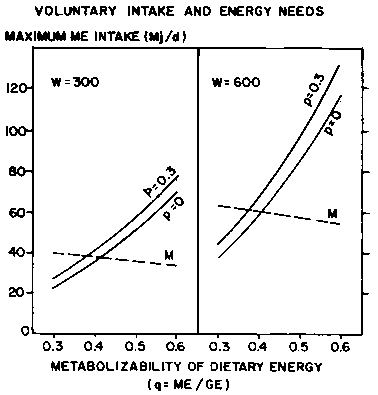
If it is accepted on the basis of the limited data available that VFI by temperate and tropical non-lactating animals is similar and that work has no effect on VFI, we can use ARC (1980) equations to illustrate how diet quality may affect the ability of working animals to achieve adequate energy intake. The results of these computations are shown in Fig. 1. These calculations predict that, when no concentrates are fed, the metabolisability of the dietary energy (q) needs to be approximately 0.47 (equivalent to M/D of 8.7 MJ ME/kg DM) before VFI matches energy expenditure equivalent to 1.3 M. To reach 1.8 M, q must be approximately 0.56 (equivalent to 10.3 MJ ME/kg DM). Fig.1 also shows that if concentrates equivalent to 0.2 of DM intake are fed, then the overall q of the diet required to meet energy needs can be slightly reduced. Energy intakes of 1.8 M are substantial and would be sufficient for 0.8 - 1.0 kg growth/d in a non-working animal of 300 kg liveweight fed a good quality diet with q=0.6. Clearly many unsupplemented and unmodified tropical forages would be incapable of supporting intakes of this magnitude.
Fig. 1 Predicted (ARC 1980) ME intakes (_) and requirements (-) when the metabolisability of dietary energy (q) varies from 03 to 0.6. Predicted intakes are shown when the proportion of concentrates in the diet DM (P) is zero and 0.2. In most circumstances, mean energy requirements for working animals will lie between 13 and 1.8 M.
Workbulls and/or oxen in West African graze on natural rangeland during the rainy season. According to Kowal and Kassam (1978) estimated rangeland dry matter productivity in the areas where AT is popular is low (Table 4). The quality of available grasses at the beginning of the rainy season is high (crude protein content of about 8-9%) and highly digestible (Zemmelink 1974; Saleem, 1986). This high protein and attendant digestibility of fodder from native pasture observed at the beginning of the rainy season does not persist for more than six months of the year in locations where AT is popular. Biomass on offer at the beginning of the rains is generally low. As the rainy season progresses, forage biomass and lignin content increase but there is a reduction in crude protein content and digestibility thereby leading to low voluntary intake.
Studies by Reddy (1988), Sangare et al. (1988) in Mali, Otchere et al. (1988) in the northern subhumid part of Nigeria and Bangura (1988) in Sierra Leone indicated that farmers who owned animals for traction did not consider rainy season feeding as a bottleneck. In Mali and Nigeria, owners of workbulls reported dry season feeding as a problem (Ready 1988; Sangare 1988; and Otchere et al. 1988). In the major AT areas, the rainy season is of a shorter duration (often less than four months) and overgrazing is widespread In Sierra Leone, however, Bangura (1988) reported that the feeding of animals for traction is not a major problem because of the relative availability of green pasture year-round.
Thus, in the Northern Guinea Savanna of Nigeria, de Leeuw and Agishi (1978) reported that over a dry season of six months duration, cattle on natural grazing lost 40g/head/day while supplemented groups on the same natural forage gained 350g/head/day. Animals were stocked at the rate of 150 kg liveweight per ha in each group. Zemmelink (1974) reported that unsupplemented cattle on natural grassland in the Northern Guinea Savanna of Nigeria lost 300-400 g body weight/head/day while Otchere (1981) reported that mature Bunaji cows in the Southern Guinea Savanna of the Kaduna Plains in the subhumid zone of Nigeria lost about 16% of their body weight in the 1980/81 dry season.
Cereal Crop Residues and Dry Season Feeding
Crop residues predominantly from sorghum, millet and maize form a major component of the forage biomass on offer in the areas where AT is traditionally popular or in the area beyond the Northern Guinea Savanna of the Western African sub-region. Crop residues of legumes such as cowpeas and groundnuts are also offered to workbulls as supplements to cereal crop residues. In Nigeria, Alhassan (1985) estimated that if all the crop residues from sorghum, millet and maize could be harvested after allowing for 50% loss in leaves due to shattering and trampling and assuming leaf dry matter intake of 4 kg/head/day, there would be enough material to feed about 8 million cattle over a 6 month dry season. Their availability for utilisation is, however, seasonal and immediately after harvesting crops, they have been shown to contribute immensely to the total roughage on offer.
The chemical composition and digestibility also exhibit considerable variation due to the length of time that the crop residue remains in the field after harvesting. The fluctuation in the quality and quantity of the potential components of the diet of grazing cattle in the subhumid zone (SHZ) of Nigeria is shown in Table 5 for grazable sorghum and millet residues. The chemical composition of the major crop residues (sorghum and millet) and the time spent grazing them indicate that they form a major source of nutrients during this period (Powell 1985).
Studies by Alhassan and Nwasike (1987) and by Alhassan et al. (1987) have also demonstrated differences in the chemical composition and digestibility of different plant parts of several varieties and cultivars of sorghum and millet in northern Nigeria. Farmers recognize the need to supplement cereal crop residues with oil seed processing by-products, other agro-industrial by-products or legume haulms for dry season feeding of draught animals. In the northern and southern tips of Kaduna and Katsina States of Nigeria however, owners of animals for traction do not regularly feed by-products like cotton seed cake or groundnut cake because of high cost and non-availability (Otchere et al. 1988). However, in Kano State, workbull owners resist the idea of feeding oilseed cakes or bran because they do not want their bulls to be fattened. Owners indicate that fattened bulls are lazy and sluggish (Mohammed Badawi, personal communication).
Improving the Quality of Cereal Crop Residues; Chemical Treatment of Cereal Crop Residues
There is the technology for improving the feeding value of cereal crop residues i.e. through chemical treatment. Chemicals such as sodium hydroxide, ammonium hydroxide, anhydrous ammonia, hydrogen peroxide and urea have been used to treat cereal crop residues. Such chemicals enhance fibre digestion through delignification or the swelling of plant cell walls so that rumen polysaccharide-degrading enzymes have better access to their substrates. In addition, such chemical treatments result in higher dry matter intake (Sundstol and Coxworth 1984; Saadullah et al. 1981; Lufadeju et al. 1985). Of the chemicals used, sodium hydroxide is exceedingly effective in improving the digestibility of the treated roughages but it is expensive, difficult to handle and not available in West Africa. Similarly, other chemicals like anhydrous or liquid ammonia are also not available. Fertilizer-grade urea appears to be relatively easily available in the sub-region.
It must be stressed however, that animal nutritionists in the sub-region need to adapt these technologies to local farmers' use. In Nigeria, the only report on widespread adoption of routine use of chemicals (i.e. fertilizer grade urea) to treat crop residues for animal feeding comes from the Kano State Agricultural and Rural Development Authority (KNARDA).
At KNARDA, the acronym for treating cereal crop residues with urea is CRUPROCESS. The process has been described in 'Cruprocess: dry season feeding for cattle and sheep handbook' (KNARDA 1985). According to Bunn et al. (1987) and Mohammed Badawi (personal communication), the Cruprocess is gaining widespread acceptance. Agricultural Development Project staff from Borno, Kaduna, Sokoto, Katsina, Kwara and Bauchi among others have undergone training and are propagating the Cruprocess in their various states. Table 6 shows the response of bulls to Cruprocessed sorghum stover and other supplements. The stover intake reported in Table 6 appears to indicate that the animals substituted the treated stover with hay and concentrate because intake of the treated stover was lower than the untreated. This requires further investigation.
Table 4. Estimated annual rangeland dry matter productivity.
|
Northern Sahel |
1082 kg/ha |
|
Southern Sahel |
1742 kg/ha |
|
Sudan |
2324 kg/ha |
|
Northern Guinea |
3097 kg/ha |
|
Southern Guinea |
3889 kg/ha |
Source: Kowal and Kassam 1978.
Table 5. Components and quality characteristics of forage from sorghum and millet fields at the start of grazing in the SHZ of Nigeria.
|
Component |
Sorghum |
Millet |
||||
|
D% |
CP% |
% yield |
D% |
Millet CP% |
% yield |
|
|
Immature panicles |
60 |
7.8 |
1 |
65 |
12.6 |
2 |
|
Upper leaves |
60 |
7.3 |
6 |
60 |
11.4 |
7 |
|
Lower leaves |
54 |
3.3 |
8 |
59 |
7.6 |
10 |
|
Upper stalk |
49 |
1.4 |
16 |
48 |
2.4 |
23 |
|
Lower stalk |
45 |
1.3 |
35 |
46 |
2.5 |
38 |
|
Total cereal |
48 |
2.8 |
66 |
50 |
4.1 |
80 |
|
Grasses and weeds |
55 |
7.0 |
34 |
55 |
7.0 |
20 |
|
Average |
50 |
4.2 |
3.3a |
51 |
6.8 |
2.1a |
Derived from Powell (1986).
D% = Dry matter digestibility
CP% = Crude protein content
a = t/ha
Table 6. Responses of growing cattle to Cruprocessed sorghum stover and other supplements.
|
Parameters |
Treatments |
|||
|
Cruprocess |
Legume* |
Feedblock |
Control untreated chopped alone |
|
|
No. of animals |
5 |
5 |
5 |
5 |
|
Days on trial |
81 |
81 |
66 |
81 |
|
Initial wt. (kg) |
175 |
176 |
172 |
173 |
|
Final wt. (kg) |
224 |
193 |
178 |
166 |
|
Total wt. gain or loss (kg) |
+49 |
+17 |
+6 |
-7 |
|
Average daily gain or loss (kg) |
0.61 |
+0.21 |
+0.08 |
-0.08 |
|
Stover intake/day (kg) |
2.5 |
2.7 |
3.3 |
3.8 |
Source: Bunn et al. 1987.
* Hay was fed at 2 kg/head/day
** Untreated stover contained 2.1 % CP while treated stover contained 9.2% CP.
*** 20 kg stover was treated with 10% urea solution
Physical treatment of poor quality roughages
Physical treatment of poor quality roughages includes chopping, shredding, grinding and pelleting. The indications are that grinding and pelleting of fibrous materials increases the surface area exposed to microbial attack and accelerates the rate of flow of digesta through the gastro-intestinal tract. This grinding and/or pelleting results in higher intake, up to 30% more (Kay, 1972). Studies in the Sudan (El Hag and Kurdi 1986) showed that physical treatment of bagasse was more feasible than chemical treatment. Pelleting increases feed intake and improves feed/gain, although the actual mode of action is not fully understood. However, the process of grinding and pelleting of roughages is hardly practiced in West African animal production. This may be connected with the non-availability of electricity and tractor power for grinding and pelleting.
Nutrient: Disease: Work Interactions
A reduction in food intake is one of the most common and important consequences of disease whether caused by microorganisms or endo- or ectoparasites. For chronically parasitized animals, decreases in food intake are more marked on poor quality diets (often the only food available to draught animals) and account for most of the reduced production (Dargie 1980). However, there is little documentary evidence of the effects of disease on work output. Rukmana (1979) found buffaloes infected with Trypanosoma evansi ploughed at only 0.71 of the rate of non-infected animals. Pearson (1989b) reported, that a buffalo team with an undiagnosed disease associated with anaemia suffered increased heat stress, reduced food intake and a rapid decline in work output. The stress of work may reduce tolerance to diseases such as trypanosomiasis and piroplasmosis while abrasions and other wounds caused by inappropriate harnessing increase susceptibility to streptothricosis. Reh (1982) recommend that draught cattle should be regularly dewormed and treated for lungworm and liver fluke.
To a large extent, the energy needs of working animals are known and can be calculated factorially with reasonable confidence. However, the additional energy costs of working on rough, uneven or soft surfaces requires further research. It is unlikely that work per se increases the need for protein or other nutrients independent of the need for these nutrients to facilitate food intake and its metabolism. Relatively low VFI attributable to low digestibility of available forages and crop residues may be an important constraint on work output by draught cattle in West Africa. Whilst many physical and chemical treatments for improving the digestibility and VFI of roughages have been developed, most, at present, are inappropriate for West African use. However fertilizer grade urea is often available and shows promise as an appropriate treatment raising the crude protein content of feedingstuffs, improving digestibility and with the potential to increase VFI. Deficiencies of minerals such as phosphorus and sodium reduce VFI and local research to ascertain the presence and severity of any such deficiencies would be beneficial. Although it seems obvious that disease may limit the work output of draught animals, this is an area which is largely unexplored.
Cette communication examine les chiffres repris de la littérature sur les besoins en énergie et en protéines des animaux de trait, et évoque l'importance que revêt l'ingestion volontaire dans l'apport nutritionnel total. Bien que les variations de l'ingestion volontaire en fonction du travail effectué varient avec l'espèce, elles ne semblent suivre aucun agencement systématique. Après une présentation des divers traitements physiques et chimiques utilises pour améliorer la digestibilité et l'ingestion volontaire des fourrages grossiers de qualité médiocre, les auteurs indiquent ceux d'entre eux qu'ils considèrent les mieux adaptés aux animaux de trait.
Alhassan, W.S. 1985. Advances in ruminant nutrition and their application to the utilization of poor quality roughages. Invited paper presented at the 10th Annual Conference, Nigerian Society of Animal Production, University of If e, Ile-Ife March 24-28.
Alhassan, W.S. and Nwasike, C.C. 1987. The chemical composition of straw and early maturing pearl millet varieties in Nigeria Paper presented at the 12th Annual Conference, Nigerian for Animal Production, University of Ibadan, Ibadan Nigeria.
ARC 1980. The Nutrient Requirements of Ruminant Livestock. Commonwealth Agricultural Bureaux, Slough, England. 351p.
Bakrie, B., Murray, R.M. and Hogan, J.P. 1988. The effect of work on intake and rumen fluid volatile fatty acid and NH concentrations of steers fed Rhodes grass hay. DAP Project Bulletin 7, 9-13.
Bakrie, B., Murray, R.M., Hogan, J.P., Teleni, E and Kartiarso 1989. Effect of load level on feed utilization by working cattle and buffaloes. DAP Project Bulletin 8, 23-26.
Bamualim, A. and Ffoulkes, I.C. 1988. Effect of work and level of feed intake on nutritional parameters and body weight change of swamp buffalo cows. DAP Project Bulletin 7, 2-7.
Bamualim, A., Ffoulkes, D. end Fletcher, I.C. 1987. Preliminary observations on the effect of work on intake, digestibility, growth and ovarian activity of swamp buffalo cows. DAP Project Bulletin 3, 6-10.
Bangura, B.A 1988. The utilization and management of draft animals at farm level. In Starkey, P.H. and Ndiame, F. (ed.) Animal power in farming systems. 293-298. Proceedings of workshop held 19-26 September, Freetown, Sierra Leone. German Appropriate Technology Exchange (GATE), GTZ, Eschborn, Federal Republic of Germany. 363 p.
Bhatia, S.K., Pradham, K and Singh, R. 1979. A note on the relative efficiency of feed intake and digestibility in cattle and buffaloes. Indian Journal of Animal Science 49, 468-469.
Bhatia, S.K., Pradham, K and Singh, R. 1980. Effect of dietary NPN and carbohydrate ratios on feed intake and nutrient digestibility in cattle and buffalo. Indian Journal of Dairy Science 33, 127-130.
Blaxter, K.L. 1962. The energy metabolism of ruminants. Hutchinson, London, England 332 p. Blaxter, K.L. 1989. Energy metabolism in animals and man. Cambridge University Press, Cambridge, England. 336p.
Bunn, D.R., Abubakar, Y. and McFarlane, J.B. 1987. A review of livestock undertaken by Kano Agricultural and Rural Development Authority (KNARDA). Internal Report, Kano, Nigeria.
Clapperton, J.L. 1964. The effect of walking upon the utilisation of food by sheep. British Journal of Nutrition 18, 39-46.
Dargie, J.D. 1980. The pathophysiological effects of gastro-intestinal and liver parasites in sheep. 349-371. In Ruckebusch, Y. and Thivend, P. (ed.) Digestive physiology and metabolism in ruminants. MTP Press Ltd. Lancaster, UK 854p.
El Hag, M.G. and Kurdi, O.I. 1986. Prospects for efficient utilization of agro-industrial byproducts and crop residues for ruminant feeding in the Sudan, with emphasis on quantification, nutritional composition, constraints and research results. In Preton, T.R. and Nuwanyakpa, M.Y. (ed.) ARNAB (African Research Network for Agricultural Byproducts) 1986. Towards optimal feeding of agricultural byproducts to livestock in Africa Proceedings of a workshop held October 1985 at the University of Alexandria, Egypt October 1985. ILCA, Addis Ababa, Ethiopia.
Fancy, S.G. end White, R.G. 1985. Incremental cost of activity. 143-160. In Hudson, R. and White, R.G. (ed.) Bioenergetics of wild herbivores. CRC Press, Boca Raton, Florida, U.S.A.
Goe, M.R. and McDowell, R.E. 1980. Animal Traction Guidelines for utilization. Cornell International Agricultural Mimeo. Ithaca, New York, USA.
Graham, N. McC. 1985 Relevance of the British Metabolisable energy system to the feeding of draught animals. 96-98. In Copeland J.W. (ed.) Draught Animal Power for Production. Australian Centre for International Agricultural Research, Canberra Australia 170 p.
Grant, R.J., Van Soest, P.J., McDowell, R-E and Perez, C.B.Jr. 1974. Intake, digestibility and metabolic loss of napier grass by cattle and buffaloes when fed wilted chopped and whole. Journal of Animal Science 39, 423-434.
Johnson, W.L., Hardison, W.A., Ordoveza, A.L. and Castillo, L.S. 1968. The nutritive value of Panicum maximum. III. Factors affecting voluntary intake by cattle and buffaloes. Journal of Agricultural Science, Cambridge 70, 67-71.
Kano State Agricultural & Rural Development Authority (KNARDA). 1985. Cruprocess: Dry season feeding for cattle and sheep: A hand book. KNARDA Media Centre, Kano, Nigeria.
Kay, M. 1972. Processed roughage in diets containing cereals for ruminants. In Cereal processing and digestion. United States Feed Grains Council, London, 39-52.
Kehar, N.D., Mukherjee, R. Murty, V.V.S. and Sen, K.C. 1943. Studies on protein metabolism. II. The effect of muscular work on endogenous protein catabolism in cattle. Indian Journal of Veterinary Science and Animal Husbandry 8, 263-266.
Kowal, J.M. and Kassal, A.H. 1978. Agricultural ecology of savanna A study of West Africa. Oxford University Press, Clarendon House, Oxford UK.
Lawrence, P.R. 1985 A review of the nutrient requirements of draught oxen. 59-63. In Copeland, J.W. (ed.) Draught Animal Power for Production. Australian Centre for International Agricultural Research, Canberra Australia 170p.
Lawrence, P.R. 1987. Nutrient requirements of working ruminants. 61-79. In Falvey, J.L(ed.) An introduction to working animals. MPW Australia, 302-304 Little Lonsdale Street, Melbourne 3000, Australia 198 p.
Lawrence, P.R. and Pearson, R.A. 1985. Factors affecting the measurement of draught work output and power of oxen. Journal of Agricultural Science, Cambridge 105, 703-714.
Lawrence, P.R. and Pearson, R.A. 1989. Measurement of energy expenditure in working animals: methods for different conditions. 155-165. In Proceedings of the Second ACIAR International Workshop on Draught Animal Power held 3-7 July 1987, Bogor, Indonesia.
Lawrence, P.R. and Stibbards, R.J. 1990. The energy costs of walking, carrying and pulling loads on flat surfaces by Brahman cattle and swamp buffalo. Animal Production 50, 29-39.
de Leeuw, P.N. and Agishi, E.C. 1978. A partial economic analysis of grazing systems in the savanna zone. Paper presented at Annual Livestock Conference, Samaru, Zaria, Nigeria.
Lufadeju, E.A., Olayiwole, M.B., Umunna, N.N., Buvanendran, V., Umoh, J.E. and Adu, I.F. 1985. The effect of urea treatment of A. gayanus (gamba) hay on rumen degradability. In Annual Report; NAPRI, ABU, Zaria, Nigeria
Mathers, J.C. 1984. Nutrition of draught animals. 60-66. Animal Energy in agriculture in Africa and Asia Technical paper presented at the FAO Exprt Consultation held in Rome, 15-19 November 1982. FAO Animal Production and Health Paper 42.
Mathers, J.C., Baber, RP. end Archibald, R.F. 1989. Intake, digestion and gastro-intestinal mean retention time in Asiatic buffaloes and Ayrshire cattle given two contrasting diets and housed at 20° and 33°C. Journal of Agricultural Science, Cambridge 113, 211-222.
Mathers, J.C., Pearson, RA., Sneddon, J.C., Matthewman, R.W. and Smith, A.J. 1985. The use of draught cows in agricultural systems with particular reference to their nutritional needs. 476-496. In Smith, A.J. (ed.) Milk production in developing countries. Proceedings of a conference held in Edinburgh 2-6 April 1984. Edinburgh University Press, Edinburgh, Scotland 555 p.
Mathers, J.C. and Sneddon, J.C. 1985. Effect of ambient temperature on the energy costs of activity by tropical cattle. Proceedings of the Nutrition Society 44, 32A.
Moran, J.B., Norton, B.W. and Nolan, J.V. 1979. The intake, digestibility and utilization of a low quality roughage by Brahman cross, buffalo, banteng and shorthorn steers. Australian Journal of Agricultural Research 30, 338-340.
Moran, J.B., Satoto, K.B. and Dawson, K.E 1981. Utilization of rice straw fed to zebu cattle and swamp buffalo as influenced by alkali treatment and Leucaena supplementation. Australian Journal of Agricultural Research 34, 73-84.
Nicholson, M.J. 1989. Depression of dry-matter and water intake in Boran cattle owing to physiological, volumetric and temporal limitations. Animal Production 49, 29-34.
Otchere, E.O., Ahmed, H.U., Olorunju, S.A.S. and Kallah, M.S. 1988. Utilization and management of work oxen in a northern Guinea savanna environment in Nigeria Initial results. In Starkey, P.H. and Ndiame, F. (ed.) Animal power in farming systems. Proc. 2nd West African Animal Traction Networkshop, September 19-25, 1986, Freetown, Sierra Leone, pp. 233-237.
Pearson, R.A. 1989a. A comparison of draught cattle (Bos indicus) and buffaloes (Bubalus bubalis) carting loads in hot conditions. Animal Production 49, 355-363.
Pearson, R.A. 1989b. Reduced work output of well-fed buffaloes pulling carts on the Terai in East Nepal. Tropical Animal Health and Production 21, 273-276.
Pearson, R.A. and Archibald, R.F. (1990). Effect of ambient temperature and urea supplementation on the intake and digest on of alkali-treated straw by Brahman cattle and swamp buffaloes. Journal of Agricultural Science, Cambridge 114 177-186.
Pearson, R.A., Archibald, R. and Campbell 1.1988. Nutrition experiments with draught cattle. Draught Animal News 9: 4-6, Centre for Tropical Veterinary Medicine, University of Edinburgh, Scotland.
Pearson R.A., Lawrence, P.R. and Ghimrie, C. 1989. Factors influencing the work done by draught oxen a study in the eastern hills of Nepal. Animal Production 49, 345-353.
Ponappa, G.G., Nooruddin, MD. and Raghaven, G.V. 1971. Rate of passage of food and its relation to digestibility of nutrients in Murrah Buffaloes and Hariana cattle. Indian Journal of Animal Science 41, 1026-1030.
Poppi, D.P., Minson, D.J. and Temouth, J.H. 1981. Studies of cattle and sheep eating leaf and stem fractions of grasses. III. The resent on time in the rumen of large feed particles. Australian Journal of Agricultural Research 32, 123-137.
Poppi, D.P., Norton, B.W., Minson, D.J. and Hendircksen, R.E. 1980. The validity of the critical size theory for particles leaving the rumen. Journal of Agricultural Science, Cambridge 94, 275-280.
Powell, J.M. 1985. Yields of sorghum and millet stover consumption by livestock in the subhumid zone of Nigeria Journal of Tropical Agriculture 62, 77-81.
Reddy, S.K. 1988. Use of animal power in West African farming systems: farm level problems and implications for research perspectives from Mali. 182-190. In Starkey, P.H. and Ndiame, F. (ed.) Animal power in farming systems.
Proc. 2nd West African Animal Traction Networkshop, 19-25 September, 1986, Freetown, Sierra Leone.
Reh, I. 1982. Animal husbandry and veterinary aspects. 67-132. In Munzinger (ed.) Animal Traction in Africa. German Agency for Technical Cooperation (GTZ), Eschborn, W. Germany. 490 p. (E).
Rukmana, M.P. 1979. Cited by Pearson 1989b.
Saadullah, M, Haque, M. and Dolberg, F. 1981. Effectiveness of ammonification through urea in improving the feeding value of rice straw in ruminants. Tropical Animal Production 6, 30-36.
Saleem, M.A.M. 1986. The ecology, vegetation and land use of subhumid Nigeria 59-84. In Kaufmann, R. von, Chater, S. and Blench, R (ed.) Livestock systems research in Nigeria's subhumid zone. Proc. 2nd ILCA/NAPRI Symposium held in Kaduna, Nigeria 29th October - 2nd November 1984.
Sangare, M.I., Landrette, C., Mungroop, R.R. et Berthe, A. 1988. Contraintes et ameliorations de la traction animale en zone Mali-Sud: l'experience de la DRSPR. 191-211. In Starkey, P.H. and Ndiame, F. (eds). Animal Power in farming systems. Proc. 2nd West African Animal Traction Networkshop, September, 19-25 1986, Freetown, Sierra Leone.
Sharma D.D. and Mugdal, V.D. 1975. Effects of various levels of urea on feed utilization in dry cattle and buffaloes. Indian Journal of Animal Science 45, 332-338.
Sharma, V.V. and Rajora, N.K. 1977. Voluntary intake and nutrient digestibility of low grade roughage by ruminants. Journal of Agricultural Science, Cambridge 88, 75-78.
Snow, D.H. 1985. The horse and dog, elite athletes - why and how? Proceedings of the Nutrition Society 44, 267-272.
Sreekumar, D. end Thomas, Comparison of Bos taurus × Bos indicus crossbred bullocks with Kangayam bullocks for draught capacity. Draught Animal News 10, 9-12, CTVM, Edinburgh University, Scotland.
Sundstol, F. and Coxworth, EM. 1984. Ammonia treatment. In: Sundstol, F. and Owen, E (ed.) Straw and other fibrous by-products as feed Elsevier Science Publishers, Amsterdam.
Thomas, C.K. and Pearson, R.A. (1986). Effects of ambient temperature and head cooling on energy expenditure, food intake and heat tolerance of Brahman and Brahman × Friesian cattle working on treadmills. Animal Production 43, 83-90.
Wachirapakorn, C. and Wanapat, M. 1989. The effects of nutrition on body condition prior to working in respect to draught capacity, voluntary feed intake, digestibility and physiological aspects of draught buffaloes. Draught Animal News 10,9. CTVM, Edinburgh University, Scotland.
Weston, R.H. 1985. Some considerations of voluntary feed consumption and digest on in relation to work. 8-83.
In Copeland J.W. (ed.) Draught Animal Power for Production. Australian Centre for International Agricultural Research, Canberra Australia 170 p.
Williams, C.K. and Dudzinski, M.L. 1982. Ingestion rates, food utilization and turnover of water and sodium in grazing buffaloes (Bubalus bubalis) and cattle (Bos taurus × Bos indicus) in monsoonal Northern Territory Australian Journal of Agricultural Research 33, 743-754.
Winugroho, M. 1988. The effect of work durations on voluntary feed intake and digestibility, liveweights and physiology of buffaloes fed a grass: rice straw diet. Presented at the Congress of the Sixth Federation of Asian Veterinary Association (FAVA), 16-19 October 1988, Denpasar, Bali.
Zemmelink, G. 1974. Utilization of poor quality roughages in the northern Guinea savanna zone. In Loosli, J.K., Oyenuga, V.A. and Babatunde, G.M. (ed.) Animal production in the tropics. Ibadan, Heinemann.
