


 UNDERTAKING A
GENDER ANALYSIS helps to frame questions about women's and men's different
roles, relations and activities in resource planning and management in order to
avoid making assumptions about who does what, when and why. This is particularly
critical in dryland areas where men and women may have to adopt new roles,
survival strategies and techniques to achieve food security for their
households, exploiting the dryland's potential while conserving and regenerating
the natural resource base. With such an analysis, development interventions are
better targeted to meet both women's and men's needs and constraints, giving
them equal opportunities to participate and benefit from development.
UNDERTAKING A
GENDER ANALYSIS helps to frame questions about women's and men's different
roles, relations and activities in resource planning and management in order to
avoid making assumptions about who does what, when and why. This is particularly
critical in dryland areas where men and women may have to adopt new roles,
survival strategies and techniques to achieve food security for their
households, exploiting the dryland's potential while conserving and regenerating
the natural resource base. With such an analysis, development interventions are
better targeted to meet both women's and men's needs and constraints, giving
them equal opportunities to participate and benefit from development.
|
Basic gender-sensitive questions
|
POLICY AND
PLANNING for agriculture and rural development, including in the areas of
land conservation, protection and rehabilitation, often fail to address
adequately men's and women's roles and needs through the life cycle. Gender
mainstreaming is necessary to ensure that attention to gender equality is a
central part of all phases of the interventions. This requires accurate and
systematic sex- and age-disaggregated data on women and men farmers.
INVOLVING RURAL
COMMUNITIES, especially the "voiceless", in resource management and in
decisions regarding environmentally sound practices and techniques aimed at
combating desertification (such as rainwater harvesting, insect control,
post-harvest storage, dune control) is a powerful way to mitigate the conditions
and the impact of land degradation. Special attention must be given to the
quality of the participation of disadvantaged groups, including women, who need
to gain time and confidence to fully participate in the decisions and
actions.
MEN'S AND WOMEN'S
INDIGENOUS KNOWLEDGE as regards biodiversity conservation, farming
techniques, etc. must be recognised and built upon. As indigenous knowledge
differs along gender lines, special attention must be given to men's and women's
knowledge, as innovators and end users.
FREEING UP
rural people from heavy workloads, such as the search for water and fuel
wood, is crucial if they are to spend more time on the gardens, fields and
conservation agriculture. Women living in drylands are particularly concerned as
they usually pay a higher price having to walk longer distances to collect water
and fuel wood and taking on more farming responsibilities in the absence of
men.
ACCESS TO, AND
CONTROL OF RESOURCES, is particularly pressing to the issue of dryland
management and should be addressed through a gender perspective to examine how
and why men and women have different rights and benefits.
WOMEN-SPECIFIC
PROJECTS tend to focus on women's traditional roles and do not have a real
gender approach that looks both at women and men, and the relations between
them. It is important to transform mainstream development activities so that
they take into account the wider socio-economic context, genuinely promote
gender equality and address gender gaps.
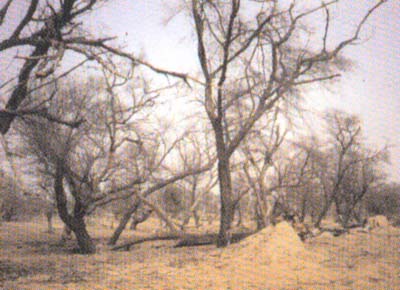
FAO/J. Piel
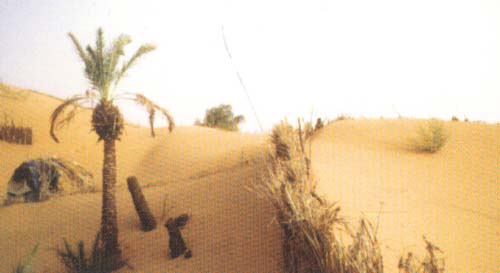
FAO/I. Balderi
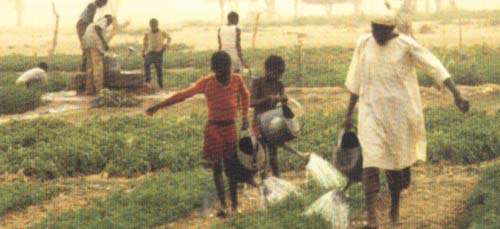
FAO/R. Faidutti
|
Gender Roles in Transformation Women's traditional roles such as collecting water, fuel and fodder, raising small livestock or growing food are particularly crucial in drylands in terms of natural resource management and food security. Men have usually been responsible for decision-making and planning of farming activities, but they increasingly leave the degraded areas to look for jobs in urban areas, leaving women to assume new roles and responsibilities on the farm. In such a changing context, it is fundamental to be aware of the obstacles hindering full participation of disadvantaged groups, including women. |
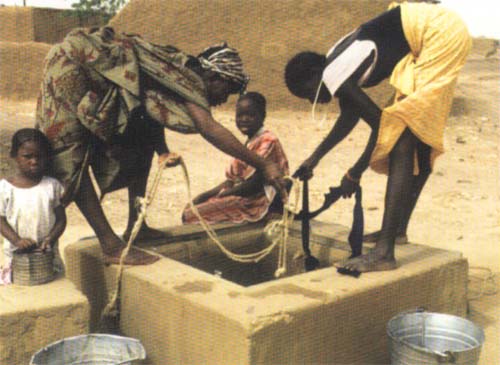
FAO/J. Isaac
