

Governments, development agencies and civil society organizations are increasingly incorporating a gender perspective in their policies, programmes and projects aimed at sustainable management of drylands. Several international agreements such as the Agenda 21 (1992), the Beijing Platform of Action (1995), the Framework Convention on Climate Change (1992) and its Kyoto Protocol (1997) and the International Convention to Combat Desertification (1999) have been adopted by the international community, all including commitments reflecting a broad-based consensus on the need to remove obstacles to women's and men's equal and active participation and benefit from development initiatives. It is believed that the full and equal participation of women and men will improve the effectiveness of strategies aimed at the sustainable development of drylands.
FAO's response to land degradation and desertification reflects its mandate; i.e. TO INCREASE AND SUSTAIN FOOD SECURITY, particularly for the populations in affected areas, and in line with the principle of gender equality. Through the establishment of an interdepartmental working group (IDWG) on Desertification in 1993, the Organization has been implementing numerous projects and programmes which combine the objectives of food security and combating land degradation and desertification.
|
FOUR PRIORITIES FOR GENDER-SENSITIVE ACTION
|
Further information on gender issues in dryland management
Women: Users, Preservers and Managers of Agro-Biodiversity, Paper, FAO www.fao.org/sd/wpdirect/wpan0025.htm
Gender Relations and Biodiversity. Issue Paper, GTZ, www.gtz.de/biodiv/pdf/gender_engl_klein.pdf
Biodiversity and Equality between Women and Men, SIDA. www.oecd.org/dac/gender/pdf/tipsheets/biodivers.pdf
Strengthening the Role of Women in the CCD, article on UNSO Web site, www.undp.org/seed/unso/women/
FAO Web site on desertification, www.fao.org/desertification/
FAO Land Degradation Assessment in drylands www.fao.org/ag/agl/agll/lada/
Gender and Population Division
Sustainable
Development Department
Food and Agriculture Organization of the United
Nations
Viale delle Terme di Caracalla - 00100 Rome Italy
Tel:
(+39) 06 5705 4550
Fax: (+39) 06 5705 2004
www.fao.org/sd
www.fao.org/gender
This fact sheet is based on a background document entitled "Gender and Sustainable Development in Drylands, an Analysis of Field Experiences", available on FAO web site.
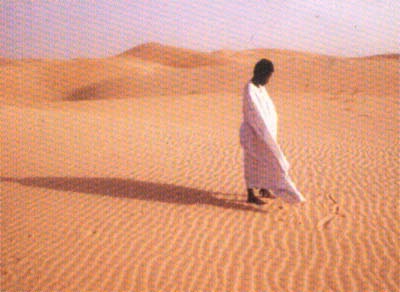
FAO/I. Balderi

 To
improve the understanding of gender and its translation into concrete
actions (through capacity building, gender mainstreaming tools, research,
etc.);
To
improve the understanding of gender and its translation into concrete
actions (through capacity building, gender mainstreaming tools, research,
etc.);