


4.1 Age at first calving
4.2 Fertility (calving) rates
4.3 Number of services per conception
4.4 Calving interval
4.5 Specific measures of cow productivity
4.6 Cow productivity and useful life
4.7 Effect of inbreeding and heterosis on reproduction
4.8 Summary
4.9 References
Fertility is the ability of male and female animals to produce viable germ cells, mate, conceive and deliver normal living young (Ensminger, 1969). The lifetime productivity of a cow is influenced by age at puberty (Chapter 3), age at first calving and calving interval.
This chapter presents data on age at first calving, calving rate, number of services per conception, calving interval and other measures that can be used to estimate cow productivity.
First calving marks the beginning of a cow's productive life. Age at first calving is closely related to generation interval and, therefore, influences response to selection.
Under controlled breeding, heifers are usually mated when they are mature enough to withstand the stress of parturition and lactation. This increases the likelihood of early conception after parturition. In traditional production systems, however, breeding is often uncontrolled and heifers are bred at the first opportunity. This frequently results in longer subsequent calving intervals.
The average age at first calving in Bos indicus cattle is about 44 months (Table 11), compared with about 34 months in Bos taurus and Bos indicus x Bos taurus crosses in the tropics (Table 12).
Heritabilities of age at puberty, at first conception and at first calving are generally low (Table 13), indicating that these traits are highly influenced by environmental factors.
Jochle (1972) studied the effect of season on the reproductive performance of Brahman heifers that first conceived at between 15 and 37 months old in the Mexican Gulf coast. Of 111 heifers that first conceived at 15 to 24 months old, significantly more (P<0.001) did so during the dry season than during the wet season. However, among heifers that first conceived at more than 24 months old, most conceived during the rainy season and overall there was no significant difference between the percentage of heifers conceiving first during the rainy or dry season
Oliveira (1974) observed that Nellore cows in Brazil that calved first in the dry season were younger than those that calved first in the rainy season. Miranda et al (1982a) found that age at first calving in Brazilian Nellore heifers was significantly affected by year and month of birth: calves born from January to May tended to be younger at first calving than those born between June and December. Sabino et al (1981) also found a year-of-birth effect among Haryana, Gir and another unspecified zebu type cattle in Venezuela, as did Sharma (1983) in Nagauri cattle in India. However, Sabino et al (1981) found that neither month of birth nor breed significantly affected age at first calving.
Table 11. Some estimates of age at first calving in Bos indicus cattle
|
Breed |
Location |
Estimate (months) |
Source |
|
Kenana |
Sudan |
23-58 |
Alim (1960) |
|
Gobra |
Senegal |
31-40 |
Dennis and Thiongane (1978) |
|
Boran |
Kenya |
34 |
Reinhardt (1978) |
|
East African Zebu |
Ethiopia |
35.1 ±3.1 |
Alberro (1983) |
|
Red Sindhi |
India |
35.6 |
Basu et al (1979) |
|
Sahiwal |
India |
35.8 |
Basu et al (1979) |
|
Azaouak |
Sahel |
36-60 |
Bartha (1971) |
|
InduBrazil |
South America |
36.8 |
Temblador and Sanchez (1977) |
|
Brahman |
Costa Rica |
37-50 |
Bazan et al (1976) |
|
Tharparkar |
India |
37.2 |
Basu et al (1979) |
|
Various zebu |
Brazil |
37.5-50 |
Weitze (1984) |
|
Sokoto Gudali |
West Africa |
38.6 |
Sada (1968) |
|
N'Dama |
West Africa |
39.2 |
Sada (1968) |
|
Nellore |
Brazil |
39.4 ±0.02 |
Oliveira (1974) |
|
White Fulani |
Nigeria |
40.4 ±0.7 |
Oyedipe et al (1982) |
|
Nganda |
Uganda |
42 |
Mahadevan and Marples (1961) |
|
Zebu |
Bangladesh |
42-52 |
Mia and Ali (1974) |
|
Haryana |
India |
42-56 |
Luktuke and Subramanian (1961) |
|
East African Zebu |
Uganda |
43 |
Galukande et al (1962) |
|
Butana |
Sudan |
44 |
Alim (1962) |
|
Deshi |
India |
45 |
McDowell (1971) |
|
Brahman |
Mexico |
45.9 |
Eversbusch (1978) |
|
Gir and Zebu |
Venezuela |
47 ±0.7 |
Sabino et al (1981) |
|
Nagori |
India |
47.43 ±1.06 |
Sharma 1983) |
|
Sahiwal |
Pakistan |
48.8 ±0.4 |
Ahmad and Ahmad (1974) |
|
White Fulani |
Nigeria |
49.4 |
Knudsen and Sohael (1970) |
|
Sudan Fulani |
Mali |
49.5 |
Wilson (1985) |
|
Horro |
Ethiopia |
50 |
McDowell (1971) |
|
Haryana |
India |
50 ±0.5 |
Kumar and Bhat (1979) |
|
Kenana |
Sudan |
50.1 |
Saeed et al (1987) |
|
Fulani |
Niger |
50.2 ±9.1 |
Wagenaar et al (1986) |
|
Haryana |
India |
51 |
McDowell (1971) |
|
Ankole |
Uganda |
51.3 |
Sacker and Trail (1966) |
|
Zebu |
Uganda |
51.7 |
Sacker and Trail (1966) |
|
Highland zebu |
Ethiopia |
53 |
Mukasa-Mugerwa et al (1989) |
|
Non-descript |
India |
58.6 ±1.0 |
Singh and Raut (1980) |
|
White Fulani |
Nigeria |
60 |
Pullan (1979) |
Table 12. Some estimates of age at first calving among Bos taurus and Bos taurus x Bos indicus cattle in the tropics
|
Breed |
Location |
Estimate |
Source |
|
Jersey |
India |
27.5 |
Kumar (1969) |
|
Jersey |
Egypt |
28.4 |
Khishin and El-Issawi (1954) |
|
Jersey |
Ceylon |
30.0 |
Mahadevan (1956) |
|
1/2 Jersey |
Uganda |
29.4 |
Kiwuwa and Redfern (1969) |
|
1/2 Jersey |
India |
31.7 |
Kumar (1969) |
|
1/2 Jersey |
Rwanda |
36.5 |
Compere (1963) |
|
3/4 Jersey |
Egypt |
27.4 |
Khishin and El-Issawi (1954) |
|
3/4 Jersey |
India |
39.5 |
Kumar (1969) |
|
Ayrshire |
Iraq |
35.0 |
Asker et al (1966) |
|
Friesian |
Nigeria |
29.0 |
Knudsen and Sohael (1970) |
|
Friesian |
India |
30.1 |
Arora and Sharma (1980) |
|
Friesian |
Uganda |
40.0 |
Trail and Marples (1968) |
|
F1 Friesian x zebu |
Ethiopia |
29.1 |
Alberro (1983) |
|
1/2 Friesian |
Nigeria |
31.9 |
Knudsen and Sohael (1970) |
|
3/4 Friesian |
Nigeria |
30.0 |
Knudsen and Sohael (1970) |
|
Brown Swiss x zebu |
India |
37.2 |
Iype et al (1984) |
|
Jamaica Hope |
Jamaica |
34.2 |
Wellington et al (1970) |
|
Costeno |
Colombia |
39.5 |
Lemka et al (1973) |
|
Blanco Orejine |
Colombia |
40.7 |
Lemka et al (1973) |
|
Bos taurus x Bos indicus |
Ethiopia |
35.5-40.3 |
Galal et al (1981) |
|
Boran x Charolais |
Kenya |
34.0 |
Gregory et al (1984) |
|
Two breed cross |
Various |
33.8 |
McDowell (1985) |
|
3/4 Cross |
Various |
44.5 |
McDowell (1985) |
|
Bos taurus |
Various |
36.5 |
McDowell(1985) |
Trail and Gregory (1981) found no significant difference in age at first calving (P>0.05) between Boran and Sahiwal heifers on a ranch in the Kenya Rift Valley, but Chhikara et al (1979) found that breed differences had a significant effect on age at first calving in Haryana, selected Haryana, Tharparkar and Sahiwal heifers in India. In an analysis of production data covering 14 years, Aroeria et al (1977) found that Gir heifers tended to be older than Nellore or InduBrazil heifers at first calving. Breed differences probably reflect differences in management conditions. The time taken by an animal to attain puberty and sexual maturity depends on the quality and quantity of feed available, which affects growth rate.
Wagenaar et al (1986) found a mean age at first calving of 50.2 ±9.1 months in 146 Fulani-type dams in Niger. None of the factors tested for in the least squares analysis (herd, season and year of birth of dam, sex of the calf) significantly affected this parameter. However, Saeed et al (1987) found that year of birth significantly (P<0.001) affected age at first calving in Kenana cattle in Sudan but that month of birth did not. Wagenaar et al (1986) observed a significant correlation (P<0.001, r = -0.52) between age at first calving and body weight at 3 years; heifers that weighed 10 kg more than average at 3 years old first calved 2 months earlier than average-weight heifers. There was no significant correlation between age at first calving and weight at 1, 2 or 4 years.
Table 13. Some estimates of heritability of age at puberty, age at first conception and age at first calving
|
Cattle type |
Estimate |
Source |
|
Age at puberty | ||
|
Haryana crosses |
0.4 ±0.21 |
Rathi (1979) |
|
Age at first conception | ||
|
Zebu |
0.14 ±0.19 |
Bastidas and Verde (1981) |
|
Guzerat |
0.20 |
Baliero et al (1981a) |
|
Age at first calving | ||
|
East African Zebu |
0.08 |
Mahadevan and Marples (1961) |
|
Guzerat |
0.15 ±0.18 |
Campos et al (1981) |
|
Gir |
0.15 ±0.24 |
Campos et al (1981) |
|
Sahiwal |
0.20 |
Mahadevan et al (1962) |
|
Gir |
0.20 ±0.11 |
Singh et al (1981) |
|
Zebu |
0.24±0.30 |
Bastidas and Verde (1981) |
|
Haryana |
0.24 ±0.02 |
Jegan and Tomar (1983) |
|
Small East African Zebu |
0.25 |
Galukande et al (1962) |
|
Haryana |
0.3 ±0.27 |
Kumar and Bhat (1979) |
|
Haryana crosses |
0.36 ±0.29 |
Rathi (1979) |
Dennis and Thiongane (1978) found that Gobra (Senegal Fulani) heifers kept on pasture and fed a balanced concentrate supplement calved first at 31 months old, compared with 40 months for unsupplemented heifers. El-Khidir et al (1979), working in Sudan, also found that improved nutrition significantly decreased age at first oestrus (P<0.001), which in turn reduced age at sexual maturity, first conception, calving and total rearing costs. Weitze (1984) found that supplemental feeding during the dry season reduced the average age at first calving from 45.0 to 37.5 months in Nellore, Gir and InduBrazil cattle in Brazil. Calving interval was also shortened by 52 days to 492 days (16.4 months), with a calving rate of 83%.
Singh et al (1982a) found age at first calving to be positively correlated with lactation milk yield and lactation length in Gangatiri cattle, as did El-Khidir et al (1979) and Singh et al (1981) working with Kenana and Indian-type cattle, respectively.
In general, earlier first calving increases lifetime productivity of cows. For example, Meaker et al (1980) showed that, despite lower first conception rates, Africander heifers calving first at 2 years old produced 0.6 more calves over their productive lifetime than those calving first at 3 years old, while Pinney et al (1962) estimated the increase to be 0.8 of a calf.
Meaker et al (1980) recorded heart girth, wither height, rump height, chest depth, body length, height and width, and hip width of beef cows until 6 years of age and found that only bodyweight at 2 years and wither height at 3 years were affected by early calving. They concluded that animal growth up to 6 years is not significantly depressed by early calving.
Ahmad and Ahmad (1974) found that late first calving was associated with longer first dry periods (r = 0.29) and longer calving intervals (r = 0.36). Basu et al (1979) observed also that the number of services per conception increased with increasing age at first calving. Most data thus suggest that it is advantageous to breed heifers as early as is physiologically possible.
4.2.1 Estimates
4.2.2 Effects of age and lactation
4.2.3 Effect of breed
4.2.4 Effect of bodyweight
4.2.5 Effects of year and season
4.2.6 Genetic effects
Fertility in cattle is affected by environmental, genetic, disease and management factors. These influence the reproductive process at ovulation, fertilization or implantation or during gestation and parturition.
The commonest estimate of fertility rate is the percentage of mated or inseminated cows that become pregnant (pregnancy rate) or finally calve (calving rate). However, fertility can also be expressed in other ways. For example, Singh and Sharma (1984) referred to two measures of fertility: a general fertility rate, which is the ratio of calves born to females of breeding age, expressed as a percentage; and a specific fertility rate, which measures the number of births within a given group or the total fertility rates of females over their reproductive life. Net reproductive rate was given as the extent to which the female calves of one generation survive to reproduce themselves as they pass through calf-bearing age, expressed as the number of female calves that survive per 100 females of breeding age.
Fertility rates can also be estimated prior to calving as the percentage non-return rate. This is the number of cows bred that do not come back in heat and are thus assumed to have conceived. This value may be derived at 60, 90, 120, 145 or 200 days after mating (McDowell et al, 1976). Where artificial insemination is employed, fertility rates can be expressed as the number of calves born per 100 inseminations (Macfarlane and Goodchild, 1973). Progesterone assay now makes it possible to determine conception rates as early as 21 days after breeding. It is also ideal for estimating the magnitude of early embryonic losses.
Fertility rates in zebu cattle are generally low, particularly in animals raised traditionally (Table 14) under less-than-ideal management. For example, Rennie et al (1976) estimated the calving rate of traditionally raised Tswana cattle in Botswana as 46.4%, compared with 74.0% for similar animals on a ranch. The higher calving rate on the ranch was probably due to the animals being better fed and managed than those under traditional management. Nuru and Dennis (1976) calculated a calving rate of 67% for White Fulani cattle raised on government ranches in Nigeria, compared with about 34-55% for similar animals raised by local herders. Trail et al (1971) reported a conception rate of 79% in Ankole, Boran and an unspecified zebu-type cattle in western Uganda where feed and water were abundant and diseases were controlled.
De Vaccaro et al (1977) studied reproductive performance in a herd of Nellore cattle in the Amazon over six mating seasons from 1968 to 1973. No animals were culled for reproductive reasons. Calves were weaned at 250 days old and breeding was between October and December each year. Overall calving rate was 59% (Table 15). The authors suggested that the low calving rate after the sixth mating opportunity (38%) was due to the small number of cows presented for breeding, but it may also have been age-related. At this time, most cows would have been 9 to 10 years old, and fertility commonly decreases in cows of this age in the tropics. Cows calved irregularly and 33% of those bred for the fifth time gave birth to only their third calf and 18% to their second. In addition, several cows calved for the first time after the third, fourth or even fifth breeding opportunity. Although such cows would have been culled in a commercial livestock enterprise, traditional smallholders usually have only one or a few cows and cannot afford to cull extensively for infertility. Many keep their animals for long periods in the hope of eventually getting a calf. This practice is unsatisfactory because scarce feed resources are used by unproductive animals.
Table 14. Some estimates of fertility (calving) rates among some Bos indicus cattle in the tropics
|
Breed |
Location |
Estimates (%) |
Source |
|
Traditional management | |||
|
Nellore |
Brazil |
20-66.6 |
Fonseca et al (1981) |
|
Fulani |
Nigeria |
34.2-54.5 |
Nuru and Dennis (1976) |
|
Fulani |
Nigeria |
36 |
Pullan (1979) |
|
Native zebu |
Botswana |
36.2-51.9 |
Reed et al (1974) |
|
Southern Darfur |
Sudan |
40.0 |
Wilson and Clarke (1976) |
|
Guzerat |
South America |
42.2-100 |
Pires et al (1977) |
|
Highland zebu |
Ethiopia |
46 |
Mukasa-Mugerwa et al (1989) |
|
Tswana |
Botswana |
46.4 |
Rennie et al (l976) |
|
Zebu |
Malawi |
52-69 |
Butterworth and McNitt (1984) |
|
Ranch/research station/migratory or improved pasture management | |||
|
Guzerat |
Central America |
32.5 |
Texeira Viana and Jondet (1978) |
|
Nellore |
Central America |
45.3 |
Texeira Viana and Jondet (1978) |
|
Boran |
Tanzania |
53-73 |
Macfarlane and Goodchild (1973) |
|
Africander |
Zambia |
54.2 |
Thorpe et al (1981) |
|
Native zebu |
Zambia |
57.6 |
Thorpe et al (1981) |
|
Nellore |
Brazil |
58.3-84.7 |
Fonseca et al (1981) |
|
Azaouak |
Sahel |
58.8 |
Bartha (1971) |
|
Nellore |
Peru |
59 de |
Vaccaro et al (1977) |
|
Dangi |
India |
60.5 |
Purbey and Sane (1981) |
|
Zebu |
Cuba |
61.18 |
Ronda et al (1981) |
|
Brahman |
Costa Rica |
62.8-81.7 |
Bazan et al (1976) |
|
Southern Darfur |
Sudan |
65.0 |
Wilson and Clarke (1976) |
|
Boran |
Zambia |
66.0 |
Thorpe et al (1981) |
|
Fulani |
Nigeria |
67 |
Nuru and Dennis (1976) |
|
Zebu |
Botswana |
69-82 |
Buck et al (1976) |
|
Angoni |
Zambia |
69.1 |
Thorpe et al (1981) |
|
Zebu |
Panama |
72.1-90.6 |
Espaillat et al (1979) |
|
Tswana |
Botswana |
74.0 |
Rennie et al (1976) |
|
Brahman |
Mexico |
75 |
Linares et al (1974) |
|
Boran |
Zambia |
75.4 |
Thorpe and Cruickshank (1980) |
|
Zebu |
Sudan |
77.0 |
El-Amin (1976) |
|
Various zebu |
Uganda |
79.0 |
Trail et al (1971) |
|
Angoni |
Zambia |
82.5 |
Thorpe and Cruickshank (1980) |
|
Brahman |
Mexico |
85.5 |
Eversbusch (1978) |
Table 15. Calving rates of Nellore cattle after successive mating opportunities
|
Mating opportunity |
Number of females exposed |
Percentage of females calving for the |
Overall calving rate (%) |
|||||
|
1st |
2nd |
3rd |
4th |
5th |
time |
|||
|
1 |
925 |
64 |
|
|
|
|
|
64 |
|
2 |
700 |
26 |
23 |
|
|
|
|
49 |
|
3 |
654 |
6 |
42 |
12 |
|
|
|
60 |
|
4 |
374 |
3 |
27 |
22 |
7 |
|
|
59 |
|
5 |
195 |
2 |
18 |
33 |
10 |
0 |
|
63 |
|
6 |
28 |
- |
10 |
10 |
18 |
0 |
|
38 |
|
Total |
2876 |
|
|
|
|
|
|
59 |
Source: de Vaccaro et al (1977).
Analysing data from Botswana, Buck et al (1976) found that fertility rate increased from 69% in 2.5-year-old cows to a maximum of 82% in 6- to 7 year-old cows and then declined. In Bolivia, Plasse et al (1975) also recorded an increase in pregnancy rate from 50% in 3-year-old purebred Criollo and Criollo x zebu crossbreds to 75% in 7-year-olds. Fertility then declined to 50% among 12-year-olds. Causes of these age-related differences include lactational stress in young growing animals and the ability of older cows to gain bodyweight and condition quickly after calving
Lactation has a negative effect on cow bodyweight and thus indirectly affects animal reproduction. Trail et al (1971) and Topps (1977), for example, observed that cows grazing medium- or low-quality forage used body reserves to maintain milk yield in response to suckling. Such animals should be supplemented during lactation to increase their conception rates (Warnick, 1976; Topps, 1977).
In a study by Reynolds et al (1979) involving Angus, zebu and zebu-cross cattle in which all heifers were bred at 2 years, heifers had a 6.8% lower pregnancy rate after 2 services (P<0.05) and became pregnant 4.2 days later (P<0.01) than older cows. Three-year-old lactating animals also showed a 10.9% lower pregnancy rate than older lactating cows (P<0.01), which suggests that lactation has a greater effect on postpartum anoestrus in young primiparous animals than in older cows. Bastidas et al (1984) confirmed this in Brahman first-calf cows: continuous suckling significantly reduced pregnancy rate compared to suckling twice daily (46.3 ±0.08 vs 79.8 ±0.08%).
One of the few studies reporting extensively on the effect of breed on fertility in Africa was undertaken by Thorpe and Cruickshank (1980) in Zambia. They found that conception rate (averaging 82.5,78.1 and 75.4% among 675 Angoni, 731 Barotse and 815 Boran cows, respectively) was significantly affected by year but not sire breed, although conception rate was higher in Angoni and Barotse cows when mated to bulls of their own breed. Evidence for dam breeds was also not conclusive. Among the Barotse, dry heifers had higher conception rates than lactating cows, whereas lactating Angoni and Boran cows had higher conception rates than dry cows. Perhaps the most significant observation among the Angoni and Barotse (but not the Boran) was that cows that calved early in the calving season were more likely to conceive during the following mating season than cows that calved late. This was consistent with observations by Trail et al (1971) on Ankole and Boran cows in Uganda, and by Buck et al (1976) on zebu cattle in Botswana.
Thorpe and Cruickshank (1980) observed that Barotse, Angoni and Boran cows that calved were marginally heavier at the beginning and end of the breeding season than cows that did not calve. This was consistent with the findings of Buck et al (1976) and Buck and Light (1982) in Africander, Tswana and Tuli cattle and de Vaccaro et al (1977) in Nellore cattle. The last authors calculated that heifers calving at the first and second opportunity averaged 272 ±33 kg liveweight, compared with 262 ±27 kg (P<0.01) for those failing to calve. Ward and Tiffin (1975) also emphasised the importance of cow bodyweight at time of breeding: Mashona cows that weighed 318-364 kg at mating had a calving rate of 87.5%, compared with 45% for cows weighing 237-273 kg.
Thorpe and Cruickshank (1980) attributed the significant effect of year on calving rate to differences between years in the quantity and quality of forage available. Bishop (1978) found that calving percentage of Africander cross cows in South Africa was positively correlated (r = 0.84, P<0.05) with rainfall in the previous year, as did Butterworth (1983) in an analysis of 18272 births from Nguni cattle in Swaziland. Monthly calving frequency was correlated with previous monthly rainfall records but most of the variation was accounted for by rainfall 10 months earlier in both the highveld (79%) and middleveld (50%). Jochle (1972) also found direct linear correlations between conception rate in Brahman cows and precipitation, pressure and temperature (Table 16). These findings further emphasise the importance of nutritional effects on fertility (see Chapter 6).
Heritability of fertility rate is low. It was estimated as 0.14 ±0.19 by Bastidas and Verde (1981) in Venezuela, while Cruz et al (1976) obtained values of 0.25 and 0.15 for conception rate, and 0.09 and 0.11 for calving rate in Brahman heifers and older cows, respectively. Conception rates often exhibit substantial heterosis after crossbreeding (see section 4.7).
Table 16. Linear correlations between the seasonal reproductive performance of Brahman cows and climatic factors
|
Variables |
2 |
3 |
4 |
5 |
|
1. Conception |
0.643 |
-0.751 |
0.827 |
0.324 |
|
2. Precipitation |
- |
-0.668 |
0.718 |
0.225 |
|
3. Pressure |
|
- |
-0.918 |
0.390 |
|
4. Temperature |
|
|
- |
0.161 |
|
5. Humidity |
|
|
|
- |
Source: Jochle (1972).
Sengupta (1975) found a relationship between fertility rates and blood groups in 645 Haryana cows randomly mated over 4 years. Cows with AA blood group had a significantly higher conception rate (67%) than cows with AB (47.5%) and BB (51.1%) blood type. Type AA cows calved significantly earlier (41.2 months) than either the AB (44.5 months) or BB (44.7 months) animals. It would be useful to investigate this further in animals from different populations, to find out if the phenomenon could be of use in identifying animals with higher inherent fertility.
The number of services per conception (NSC) depends largely on the breeding system used. It is higher under uncontrolled natural breeding and low where hand-mating or artificial insemination is used. A range of values for NSC is presented in Table 17. NSC values greater than 2.0 should be regarded as poor, and some of the factors contributing to high NSC values are elaborated below.
Choudhuri et al (1984) estimated the repeatability of NSC to be 19% from 2152 records for Haryana cattle. The NSC was 2.81 ±0.03 and was significantly affected by herd, season, placenta expulsion time, lactation length and milk yield. Since heritability can be broadly estimated from repeatability, this study indicates that heritability of NSC is low and most of the variation in NSC is attributable to environmental factors.
Table 17. Some estimates of the average number of services per conception (NSC)
|
Breed |
Location |
Estimates (NSC) |
Source |
|
InduBrazil |
South America |
1.4-1.6 |
Temblador and Sanchez (1977) |
|
Nagori |
India |
1.5 ±0.4 |
Sharma (1983) |
|
Dangi |
India |
1.65 |
Purbey and Sane (198 |
|
Zebu |
Ethiopia |
1.74-1.8 |
Azage Tegegn et al (l98 |
|
East African Zebu |
Ethiopia |
2.0 ±1.2 |
Alberro (1983) |
|
Haryana |
India |
2.1-2.7 |
Kumar and Bhat (1979) |
|
Various |
India |
2.1-3.6 |
Qureshi (1979) |
|
Arsi |
Ethiopia |
2.4-2.6 |
Swensson et al (1981) |
|
Haryana |
India |
2.8 |
Choudhuri et al (1984) |
Sharma and Bhatnagar (1975) found a significant effect of parity on NSC in Sahiwal, Red Sindhi and Tharparkar cattle. The NSC was highest at the fourth lactation for F1 crosses with Brown Swiss. Kumar and Bhat (1979) noted that Haryana heifers needed more services per conception than cows.
Azage Tegegn et al (1981), using 3 local Ethiopian breeds, the Barca, Horro and Boran, found that NSC was lower for animals from wet areas than for those from drier areas (1.74 ±0.6 vs 1.98 ±0.07). Crossbred cows required 0.12 and 0.14 fewer services per conception than local zebu cows in wet and dry areas, respectively.
El-Amin et al (1981) concluded that NSC did not differ significantly between Red Butana and Red Butana crosses (average 2.6) but was influenced by month of calving. NSC increased over the study period, probably due to changes in management. This is partly supported by an analysis by Busch and Furstenberg (1984) of 483 600 inseminations performed by 379 technicians on 623 farms in the USA, which showed that the 90- and 120-day non-return rate differed significantly among inseminators and the inseminator effect was greater than the farm effect. However, non-return rate did not differ among bulls.
4.4.1 Estimates
4.4.2 Genetic effects
4.4.3 Effects of year and season
4.4.4 Effect of nutrition
4.4.5 Effect of age
4.4.6 Other factors
Calving interval can be divided into three periods: gestation, postpartum anoestrus (from calving to first oestrus) and the service period (first postpartum oestrus to conception) (see Figure 12). Factors affecting gestation length were reviewed in Chapter 3. The following section therefore relates to factors that influence the length of the postpartum anoestrous and service periods. This is sometimes also called the "days open", period and is the part of the calving interval that can be shortened by improved herd management.
The "days open" period should not exceed 80-85 days if a calving interval of 12 months is to be achieved (Peters, 1984). This requires re-establishment of ovarian activity soon after calving and high conception rates. The duration of this period is influenced by nutrition (Wiltbank et al, 1962), season, milk yield, parity (Buck et al, 1975), suckling and uterine involution. At any time, the effects of one or more of these factors may be confounded.
Calving interval has been extensively analysed and reported. It is probably the best index of a cattle herd's reproductive efficiency. Resumption of ovarian activity in the postpartum period does not necessarily lead to conception and methods of stimulating oestrus must be considered in relation to their effect on conception (Holness et al, 1980) and, indirectly, calving intervals. The estimates of the duration of the various phases of the calving interval shown in Figure 12 are based on averages in the literature for cows raised under traditional management.
Pullan (1979) quoted previous work in which it was estimated that only about 4% of Nigerian zebu cattle calved each year, 22% calved every other year and 73% calved irregularly. Sada (1968) suggested that, in N'Dama, Sokoto Gudali and West African Shorthorn cows, calving intervals shorter than 410 days (13.6 months) are very good, those of 411-460 (13.6-15.3 months) are satisfactory and those greater than 461 days (15.3 months) are unsatisfactory.
Figure 12. Schematic representation of the relationship of progesterone levels to the calving interval and its main components

Estimates of calving interval in zebu cattle range from 12.2 to 26.6 months (Table 18). By Sada's (1968) standards, many of the calving intervals given in Table 18 are unsatisfactory. Most of the longer calving intervals were from traditionally raised animals.
Borsotti et al (1976) observed that genotype had a significant effect on the calving interval of Brahman cows in Venezuela. In Mexico, Valesio (1983) found calving intervals of 18.1 months for Gir and InduBrazil cattle, 18.8 months for Brown Swiss x zebu crosses and 20.3 months for pure Brown Swiss cattle. The long calving interval of the Brown Swiss probably reflects lack of adaptation to the humid environment. Nodot et al (1981) reported that calving interval was affected by maternal grand sire. However, Duarte et al (1983) found no significant effect of genetic grouping (proportion of zebu blood) among cows in Brazil.
Estimates of the repeatability of calving interval range from near zero to 0.37 (Table 19). Heritability estimates range from 0.003 to 0.33 (Table 20). The heritability values of 0.68 ±0.14 obtained by Parmar and Johar (1982) in Tharparkar cows in India, and 0.81 to 0.86 found by Weitze (1984) among Nellore cows in Brazil, appear to be exceptionally high.
Year effects on calving interval have been reported by Choudhuri et al (1984) in Haryana cows in West Bengal, India, Hinojosa et al (1980) in unspecified zebu cattle in Mexico, Miranda et al (1982b) in Nellore cows in Brazil, Alim (1960) in Kenana cows in India and Borsotti et al (1976) in Brahman cattle in Venezuela.
Table 18. Some estimates of calving interval in zebu cattle
|
Breed |
Location |
Estimate |
Source |
|
Horro |
Ethiopia |
12.2 |
McDowell (1971) |
|
Arsi |
Ethiopia |
12.9-15.1 |
Swensson et al (1981) |
|
Kenana |
Sudan |
13.2 |
Alim (1960) |
|
Native |
India |
13.5 |
Hedge et al (1978) |
|
Ankole |
Rwanda |
13.5-17.1 |
Furnemont (1981) |
|
Brahman |
USA |
13.6±0.1 |
Plasse et al (1968) |
|
Sahiwal |
Kenya |
13.7 |
Kimenye (1981) |
|
Deshi |
India |
13.7±5.9 |
Moulick et al (1971) |
|
Brahman |
Venezuela |
13.8-18.9 |
Borsotti et al (1979) |
|
Africander |
Zambia |
14.1 |
NCSR (1970) |
|
Nellore |
Brazil |
14.1 ±0.1 |
Oliveira (1974) |
|
White Fulani |
Nigeria |
14.2-18 |
Oyedipe et al (1982) |
|
Zebu |
Brazil |
14.4 ±3.4 |
Duarte et al (1983) |
|
Nellore |
South America |
14.7-15.6 |
Miranda et al (1982b) |
|
Brahman |
Mexico |
15.1 |
Eversbusch (1978) |
|
Haryana |
India |
15.6 |
Kumar (1982) |
|
Zebu |
India |
15.8 |
Ngere (1970) |
|
Haryana |
India |
15.9 ±3.9 |
Lemka et al (1973) |
|
Brahman |
Costa Rica |
16 ±6 |
Bazan et al (1976) |
|
Haryana |
India |
16.1 |
McDowell (1971) |
|
Gir |
Venezuela |
17.9 ±0.71 |
Montoni et al (1981) |
|
Zebu |
Malawi |
18 |
Butterworth and McNitt (1984) |
|
Gir and InduBrazil |
Mexico |
18.1 |
Valesio (1983) |
|
Fulani |
Niger |
19.6 ±5.1 |
Wagenaar et al (1986) |
|
Gir |
India |
20.1 |
Malik and Ghei (1977) |
|
Fulani |
Mali |
22.1 ±6.7 |
Wilson (1985) |
|
Native |
India |
23.3 |
Kartha (1934) |
|
Highland zebu |
Ethiopia |
25 |
Mukasa-Mugerwa et al (1989) |
|
Native |
Rwanda |
26.6 |
Compere (1960) |
Oliveira (1974), working with Nellore cattle, observed that animals calving in the dry season had an average subsequent calving interval of 13.9 months, compared with 14.5 months for those that calved in the wet season. Oyedipe et al (1982), working with White Fulani heifers, found calving intervals of 15.3 and 18 months for the dry and wet seasons, respectively. The authors suggested that the difference was due to the fact that cows calving in the dry season could take advantage of improved nutritional conditions during the subsequent rainy season to meet their total requirements for maintenance, growth and lactation. In addition, a larger proportion of dry-season calves die due to inadequate nutrition. Both factors lead to earlier re-establishment of oestrus in cows that calve in the dry season. These suggestions were supported by Landais et al (1980), who found that cows calving in October in Côte d'Ivoire usually conceived again in the following January while those calving in January were unlikely to conceive during the subsequent mating period. Early death of calves also reduced calving interval by more than 2 months and abortion shortened it by several days. The calving interval for cows whose calves died prior to fertile mating was estimated by the formula: CI = 328.3 + (0.992 x age of the calf at the time of death) days. A similar estimate by Wilson (1985) among Sudanese Fulani cattle in Mali yielded a prediction equation of CI = 499.5 + (0.318 x age at calf death) days.
Table 19. Some estimates of repeatability of calving interval
|
Breed type |
Estimate |
Source |
|
Zebu |
0.022 |
Hinojosa et al (1980) |
|
Brahman |
0.05-0.50 |
Borsotti et al (1979) |
|
Butana |
0.111 ±0.039 |
Alim (1962) |
|
Deoni |
0.20 |
Deshpande and Singh (1977) |
|
Deshi |
0.21 |
Moulick et al (1971) |
|
Kenana |
0.23 ±0.031 |
Saeed et al (1987) |
|
Haryana |
0.24 |
Choudhuri et al (1984) |
|
Haryana |
0.27 |
Dhoke and Johar (1977) |
|
Malvi |
0.29 ±0.02 |
Singh et al (1983) |
|
Brahman |
0.32 |
Borsotti et al (1976) |
|
Gir |
0.37 |
Singh et al (1982b) |
Table 20. Some estimates of heritability of calving interval
|
Breed type |
Estimate |
Source |
|
Haryana |
0.003-0.33 |
Dhoke and Johar (1977) |
|
Nellore |
0.022 |
Miranda et al (1982b) |
|
Deshi |
0.09 |
Moulick et al (1971) |
|
InduBrazil |
0.10 ±0.08 |
Nodot et al (1981) |
|
Gir |
0.22 ±0.11 |
Singh et al (1982b) |
|
Guzerat |
0.24 |
Baliero et al (1981b) |
Although these observations involved cows that aborted or lost their calves, they indicate that calf rearing strategies, such as early weaning, bucket feeding or partial suckling, can influence subsequent dam reproduction. For example, Wells et al (1986) found that partial suckling in Africander cows significantly (P<0.01) reduced the number of cows that were anovulatory for 100 days postpartum and increased conception rates (P< 0.001). Partial suckling reduced the interval from parturition to first ovulation by 20 days and the mean interval to conception by 21 days averaged over all cows. In a study of 6- to 10-year-old Bunaji cows, Eduvie and Dawuda (1986) found that the interval from calving to conception averaged 232.5 and 72.6 days for suckled and non-suckled animals, respectively. The associated calving intervals were 512.5 and 352.6 days with 60-90 day pregnancy rates of 21.1% and 72.7%, respectively. Serum progesterone levels showed that suckling interfered with ovarian activity and thus conception during the postpartum period, resulting in a prolonged calving interval.
Underfeeding delays puberty in taurine heifers Joubert, 1954a) and stops oestrus and ovarian activity in heifers that are already cycling (Bond et al, 1958; Terqui et al, 1982). Wiltbank et al (1962) demonstrated the same effect in mature Hereford cows. The cows were fed a high- or a low-energy ration before calving; half of the animals in each group were then fed a high- or low-energy ration after calving. The resulting pregnancy rates were 95, 77, 95 and 20% on the high-high, high-low, low- high and low-low ration, respectively. These results, which agree with those of Joubert (1954b), indicate that level of feeding after calving has a greater effect on subsequent pregnancy than level of feeding before calving. The high level of feeding after calving shortened the interval from first breeding to conception and thus reduced calving interval. In zebu cattle, Mukasa-Mugerwa et al (1989) found a calving interval of 780 days (26 months) in traditionally raised Ethiopian highland zebus. Lactation length was 239 days (8 months). Cows thus failed to conceive for more than 8 months after lactation had ceased. This may be the average period required to gain sufficient bodyweight and condition to start cycling and conceive again, given the limited nutritional resources of the traditional system.
Calving intervals also tend to be shorter in animals that are more productive in other respects. This may be a reflection of the effect of nutrition, since more productive animals are usually fed better than unproductive animals. For example, Baliero et al (1981b) found that the calving interval of Guzerat dairy cows decreased by 17.8 days for every 1000 kg increase in lactation milk yield. Dutt et al (1974) found a positive correlation (r = 0.33 - 0.60) between lactation length and calving interval in Tharparkar cows in Uttar Pradesh, as did Choudhuri et al (1984) in Haryana cattle and Singh et al (1982b) in Gir cows. Dutt et al (1974) found a higher correlation (0.67) between calving interval and the duration of the service period among Tharparkar cattle. However, Duarte et al (1983) did not find a correlation between length of lactation and calving interval in zebu cattle in Brazil.
Plasse et al (1968) found that dam age at calving, sex of calf and location all significantly (P< 0.01) affected calving interval in Brahman cows. The location x age interaction was also significant (P< 0.05). The differences due to location seemed to arise from differences in the length of the breeding season. In a study of 5356 Brahman cows in Costa Rica, Bazan et al (1976) also found herd and district to have a significant effect on calving interval as did Choudhuri et al (1984) in 2152 Haryana cattle in West Bengal, India.
In zebu cattle, calving interval is longest in first-calf heifers and older cows, and shortest in cows of intermediate age (6-9 years old).
Plasse et al (1972) reported a maximum calving interval of 496 days in 12 to 16-year-old cows, with similar values for young cows 3-6 years old. Calving interval was shortest (424 days) in cows of intermediate age (6-9 years old). Earlier, Plasse et al (1968) had also observed a tendency for calving intervals to shorten with increasing age in Brahman cows, as did Hinojosa et al (1980) in a commercial zebu herd in Mexico.
In an analysis of data collected over 20 years on zebu cattle in Venezuela, Montoni et al (1981) found that calving interval was longest between the first and second calving, and shortest between the fifth and sixth calving. Velarde et al (1975), working with Brahman cattle in Costa Rica, also found the longest calving interval between the first and second calving, and the shortest between the fourth and fifth calving. These observations were consistent with those of Miranda et al (1982b), working with Nellore cattle in Brazil, Baliero et al (1981b), who studied Guzerat cows, and Dhoke and Johar (1977), working on Haryana cows in India. The last authors found that calving interval continued to shorten until after the sixth parity. This was also observed by Kumar and Bhat (1979), Ram and Balaine (1979), Oyedipe et al (1982), Duarte et al (1983) and Singh et al (1983). De Vaccaro et al (1977) noted that the first calving interval was considerably longer than the second or third interval in Nellore cattle in Peru: only 14.5% of the intervals lasted less than 400 days (13.3 months) and 49.5% exceeded 601 days (20.0 months) (Table 21).
Table 21. Calving interval patterns of Nellore cattle in Peru
|
|
Percentage of intervals of various (days) |
|||||||||
|
Interval no |
n |
Mean ± SD (days) |
<300 |
300-400 |
401-500 |
501-600 |
601-700 |
701-800 |
801-900 |
901-1000 |
|
1 |
584 |
614 ±157 |
0.5 |
11 |
15 |
17 |
19 |
31 |
5 |
1.5 |
|
2 |
242 |
495 ±187 |
- |
20 |
25 |
18 |
19 |
13 |
4 |
2 |
|
3 |
60 |
464 ±141 |
1 |
25 |
27 |
18 |
28 |
- |
- |
- |
|
Total |
886 |
571 ±168 |
0.5 |
14 |
19 |
17 |
20 |
24 |
4 |
1.5 |
Source: de Vaccaro et al (1977).
Calving interval can be influenced by the sex of the calf (Plasse et al, 1968). In a study of zebu cows in Kenya, Reinhardt (1978) observed that cows with male calves had a longer calving interval than those with female calves (430 vs 383 days). Subsequently, Reinhardt and Reinhardt (1981) found that dams stopped suckling, and therefore weaned, female calves earlier than males (8.8 vs 11.3 months). Montoni et al (1981) noted that cows with male calves had a calving interval 19.1 days longer than that of cows with female calves. Wilson (1985) calculated 29 days more.
Calving interval may be influenced by placenta expulsion time (Choudhuri et al, 1984) and uterine pathology. Hinojosa et al (1980) found a favourable mean calving interval of 383 ±3.7 days (12.8 months) in a well-managed herd in Mexico. They attributed the shortness of the calving interval to the absence of brucellosis, which reduced abortion rate, and stringent culling of infertile cows.
4.5.1 Cow efficiency
4.5.2 Cow productivity index
4.5.3 Most probable producing ability
4.5.4 Expected progeny difference
4.5.5 Lactation index
4.5.6 Breeding efficiency
The productive efficiency of cows can be described in biological or economical terms. Biological efficiency is usually measured in terms of calf weight weaned per cow exposed per total digestible nutrients consumed, because this indirectly accounts for milk production, nutrition and reproduction (Ritchie, 1984).
Totusek (1984) suggested the following equation for economic efficiency:
profit = weaning weight x percent calf crop x selling price per pound of calf x number of cows - annual cost of cow-calf operation
In each case cow reproductive performance (fertility) is very important. Richardson et al (1975) estimated that 70% of the variability in cow productivity is attributable to calving rate.
Cow productivity index incorporates calf bodyweight at 6, 9 or 12 months and the bodyweight equivalent of milk produced. As used by Trail and Gregory (1981), measures of reproductive performance, cow and calf viability, milk yield, growth and cow weight are combined to derive the cow productivity index (kg) per cow per year or per 100 kg liveweight of cow of breeding age maintained annually. It is computed as:
(cow viability (%) x carving percentage x calf viability (%) x calf weighs et 6,9 or 12 months or at weaning (kg)) + (cow viability (%) x calving percentage x lactation milked-out yield (kg))/9.
This index may also be expressed as a ratio of cow bodyweight or estimated metabolic weight.
Most probable producing ability (MPPA) allows dams with different numbers of records for a given trait to be compared within a herd. It is estimated as 1:
1 J S Brinks, Colorado State University Fort Collins, Colorado, USA, personal communication
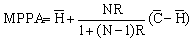
Where:
= herd average, always 100
N = number of carvings or parturition records per dam
R = repeatability of the trait= average value for the trait for all young produced by the dam (Lasley, 1972).
Expected progeny difference (EPD) uses information on sire performance as well as information from progeny and other relatives to account for non-random mating and genetic trends. The method produces EPDs for dams as well as sires. 2
2 J S Brinks Colorado State University, Fort Collins, Colorado, USA, personal communication.
EPDs are determined for different traits simultaneously. An EPD for a particular trait is based not only on data for that trait but also on data for other traits. An example of how EPDs can be used is given in the 1986 Sire Summary of the American Gelbvieh Association. 3
3 American Gelbvieh Association, 5001 National Western Drive, Denver, Colorado 80216, USA.
Narain and Chand (1980) proposed a lactation index for dairy cows, in which productivity is assessed by combining linearly four economically important traits such that variation between animals is maximised relative to that within. Data on lactation yield (X1), lactation length (X2), calving interval (X3) and dry period (X4) are required.
Productivity data from Sahiwal and Haryana cattle at the Merut and Agra military farms in India were used to obtain correction factors for converting subsequent lactation records to the first. The following indices were obtained.
Sahiwal cattle Y = X1 - 6.8 X2 + 7.43X3 - 7.33X4
Haryana cattle Y = X1 - 1.92X2 + 2.47X3 - 2.00X4
The indices were not, however, highly repeatable.
Spielman and Jones (1939) indicated that fertility in dairy cows depends on the frequency of reproduction and the total number of successful gestations. They obtained a significant correlation of 0.804 ±0.026 between reproductive efficiency measured in terms of calving intervals and longevity in terms of number of established pregnancies. Wilcox et al (1957) subsequently applied the principle using the formula:

Where:
N = total number of parturitions
D = days from first to last parturition.
Although zebu cattle tend to reach sexual maturity rather late, their productive life and that of their crosses tends to be longer than that of taurine cattle (Fowler, 1969).
The useful life of zebu cattle in the tropics varies from 4.5 to 8.5 years, during which cows give 3 to 5.4 calves (Alim, 1960, 1962; Aroeria et al, 1977; Pires et al, 1977; Saeed et al, 1987; Mukasa-Mugerwa et al, 1989). Wagenaar et al (1986) estimated that the average number of parturitions among Fulani cattle in Niger was 5.1, including abortions.
Basu et al (1983) estimated the heritability of herd life as 0.69 ±0.10. If animals with long productive life are also highly productive in other respects, it is advantageous to keep them in the herd as long as possible (Saeed et al, 1987). This might, however, increase the generation interval and thus reduce the response to selection. The trade-off between immediate productivity and herd improvement must, therefore, be carefully considered.
Khanna et al (1980) studied the effects of inbreeding on Haryana and Sahiwal cattle (Table 22). Inbreeding (coefficient 6.96%) increased age at first calving but shortened service period and calving interval in Haryana cattle. At a higher inbreeding level of 14.03%, Sahiwal cattle were older at first calving and had longer service periods and calving intervals than non-inbred cows.
Table 22. Effect of inbreeding on reproductive characteristics of Haryana and Sahiwal cattle
|
|
Haryana |
Sahiwal |
||
|
Non-inbred |
Inbred |
Non-inbred |
Inbred |
|
|
Average inbreeding (%) |
- |
6.96 |
- |
14.03 |
|
Age at first calving (days) |
1636 ±19 |
1712 ±32 |
1420 ±20 |
1441 ±30 |
|
Service period (days) |
241 ±4 |
205 ±9 |
209 ±8 |
222 ±16 |
|
Calving interval (days) |
522 ±4 |
490 ±4 |
463 ±10 |
528 ±22 |
Source Khanna et al (1980).
Odedra et al (1977) found little effect of inbreeding on Gir cattle production over a range of inbreeding coefficients from less than 6.25% to greater than 12.5%. However, first calving interval was markedly longer at an inbreeding level of 12.5% or more and the first dry period was longer in highly inbred animals (Table 23).
Table 23. Effect of inbreeding on production and reproductive characteristics of Gir cattle
|
|
Inbreeding level (% ) |
|||
|
<6.25 |
6.25-12.40 |
12.5 |
>12.5 |
|
|
Age at first calving (days) |
1715.00 |
1829.20 |
1807.00 |
1672.00 |
|
1st lactation yield |
1577.64 |
1811.69 |
1521.00 |
1792.40 |
|
1st lactation length (days) |
309.20 |
376.00 |
370.00 |
332.50 |
|
1st dry period (days) |
164.58 |
125.31 |
167.24 |
282.10 |
|
1st calving interval (days) |
491.90 |
491.80 |
537.30 |
612.60 |
Source: Odedra et al (1977).
Estimates of the heritability of economic traits are high; 0.13-0.48 for birth weight, 0.06-0.68 for weaning weight and 0.50-0.57 for weight to 12 to 24 months. However, reproductive efficiency and viability of zebu cattle are low, especially under traditional management. As a result, economic returns and response to selection are likely to be small. Most attempts to increase the productivity of zebu cattle have therefore used crossbreeding because the economic traits are also associated with substantial heterosis; 1025% for age at puberty, 10-20% for calving percentage, 5-20% for viability, 1020% for pre-weaning growth, 10-20% for post-weaning growth, and 25-50% for F1 cow productivity. Koger et al (1973) give an extensive account of the effects of crossbreeding Bos taurus with Bos indicus cattle. Examples of individual studies are given in Table 24. Nevertheless, maximum heterosis is only expressed when cows are well managed and fed according to their genetic potential.
Table 24. Effect of crossbreeding on reproductive performance
|
Type of animal |
Percentage pregnancy or calving |
Source |
|
British cattle |
78.7 |
Warnick et al (1960) |
|
Brahman cattle |
62.9 |
Warnick et al (1960) |
|
British x Brahman |
70.0 |
Warnick et al (1960) |
|
Angus |
85.1 |
Bazer (1973) |
|
Brahman |
60.9 |
Bazer (1973) |
|
Angus x Brahman |
88.8 |
Bazer (1973) |
|
N'Dama |
45.5 |
Egbunike (1984) |
|
German Brown |
77.9 |
Egbunike (1984) |
|
N'Dama x German Brown |
83.3 |
Egbunike (1984) |
McDowell (1985), in an extensive review of the merits of crossbreeding Bos taurus and Bos indicus cattle, found that crosses with European breeds calved earlier than local herd-mates, gave more milk per lactation, milked for more days and had slightly shorter calving intervals. F1 crosses generally performed better than indigenous breeds and had fewer health problems. The author noted, however, that 3/4 crosses tended to calve nearly 1 year later and have calving intervals approximately 1 month longer than F1 crosses. They also had higher early mortality rates and a tendency towards shorter herd life. Similar conclusions were reached by Franke (1980) in a review of work on Brahman cattle.
If meat and milk production are to be increased in the tropics, cow productivity, i.e. the number of calves produced per lifetime or per unit land area, must be increased and the time from birth to slaughter must be reduced. The number of animals available for finishing is also critical. Much of the information presented in this chapter suggests that the number of animals available for finishing would increase substantially if heifers were bred as early as physiologically feasible.
Fertility rates of Bos indicus cattle under traditional management are generally low but improve considerably, to 70-80% and more, under improved management. Calving intervals also shorten under improved management. Improving animal nutrition in traditional systems would increase animal productivity, and economic ways to achieve this need to be investigated.
The useful life of zebu cattle ranges from 4.5 to 8.5 years, during which they produce 3 to 5 calves. Very high levels of inbreeding depress fertility and fitness traits, while crossbreeding appears to increase both traits.
However, maximum benefit from crossbreeding is realised only when animals are well managed. Very high levels of taurine blood seem disadvantageous in tropical areas.
Ahmad Z and Ahmad M Z. 1974. Effect of age at first calving on length of first lactation length period and calving interval in Sahiwal cows. Agriculture Pakistan 25: 45-48 (Animal Breeding Abstracts 43: 5121).
Alberro M. 1983. Comparative performance of F1 Friesian x zebu heifers in Ethiopia. Animal Production 37: 247-252.
Alim K A. 1960. Reproductive rates and milk yield of Kenana cattle in Sudan. Journal of Agricultural Science 55: 183-188.
Alim K A. 1962. Environmental and genetic factors affecting milk production of Butana cattle in the Sudan. Journal of Dairy Science 45: 242-247.
Aroeria J A D, da Silva H M, Fontes L R and Sampaio I B M. 1977. Age at first calving, length of reproductive life and life expectancy in Zebu cows. Arquivos da Escola de Veterinaria, Universidade Federal de Minas Gerais 29: 301-309 (Animal Breeding Abstracts 46: 32-72).
Arora D N and Sharma J S. 1980. Performance of Jersey and Holstein-Friesian cattle under hot and semi-arid conditions. Indian Journal of Dairy Science 35: 598-602.
Asker A A, Juma K H and Kassir S A. 1966. Dairy characters of Friesian, Ayrshire, native and crossbred cattle in Iraq. Annals of Agricultural Science, University of A'in Shams 10: 29-45 (Animal Breeding Abstracts 35: 2276).
Azage Tegegn, Galal E S E and Beyene Kebede. 1981. A study on the reproduction of local zebu and F1 crossbred (European x zebu) cows. I. Number of services per conception, gestation length and days open till conception. Ethiopian Journal of Agricultural Sciences 3: 1-14.
Baliero E, de Silva S. Carnerio G G and Salvo A E W. 1981a. Reproductive efficiency in a herd of Guzerat dairy cows. I. Age at first conception. Arquivos da Escola de Veterinaria, Universidade Federal de Minas Gerais 33: 483-488 (Animal Breeding Abstracts 50: 5491).
Baliero E, de Silva S. Carneiro G G and Salvo A E W. 1981b Reproductive efficiency in a herd of Guzerat dairy cows. 2. Calving interval. Arquivos da Escola de Veterinaria, Universidade Federal de Minas Gerais 33: 489-495 (Animal Breeding Abstracts 50: 5492).
Bartha R. 1971. Studien zu Fragen der Zebu-Rinderzucht in den Tropen. Weltforum Verlag, Munich, Federal Republic of Germany. 172 pp.
Bastidas M P S and Verde S O G. 1981. Factors affecting conception rate and age at first calving in Bos indicus heifers. Memoria, Asociacion Latinoamericana de Produccion Animal 16: 123 (Animal Breeding Abstracts 52: 6441).
Bastidas P. Troconiz J. Verde O and Silva O. 1984. Effect of restricted suckling on ovarian activity and uterine involution in Brahman cows. Theriogenology 21: 525-532.
Basu S B. Bhatnagar D S. Taneja V K and Rao V P. 1979. Comparative performance of Indian dairy breeds. Indian Journal of Dairy Science 32: 497-499 (Dairy Science Abstracts 43: 2487).
Basu S B. Bhatnagar D S and Taneja V K. 1983. Genetic and phenotypic parameters of lifetime traits in Tharparkar cows. Indian Journal of Dairy Science 36: 207-210.
Bazan O. Munoz H. Deaton O W and Vohnout K. 1976. Reproductive performance of beef cattle in Costa Rica. Memoria, Asociacion Latinoamericana de Produccion Animal 11: 54 (Animal Breeding Abstracts 46: 1 254).
Bazer F W. 1973. A twenty-year summary of heterotic effects on reproduction in Florida cattle. In: M Koger, T J Cunha and A C Warnick (eds), Crossbreeding beef cattle Series 2. University of Florida Press, Gainsville, Florida. pp. 128-134.
Bishop E J B. 1978. The performance of a beef breeding herd subjected to continuous mating in the valley bushveld of the Eastern Cape. South African Journal of Animal Science 8: 15.
Bond J, Wiltbank J N and Cook A C. 1958. Cessation of estrus and ovarian activity in a group of beef heifers on extremely low levels of energy and protein. Journal of Animal Science 17: 1211 (Abstract).
Borsotti N P. Verde O and Plasse D. 1976. Repeatability of calving interval in Brahman cows. Memoria, Asociacion Latinoamericana de Produccion Animal 11: 26 (Animal Breeding Abstracts 46: 1259).
Borsotti N P. Verde O and Plasse D. 1979. Repeatability of calving intervals in Brahman cows. Journal of Animal Science 49: 374-377.
Buck N G and Light D. 1982. Breed and environmental factors affecting the reconception of indigenous beef cows in Botswana. Animal Production 35: 413-420.
Buck N G. Serena Z E and Stangaord H G. 1975. Artificial insemination in Botswana. British Veterinary Journal 13: 385-391.
Buck N G. Light D, Rutherford A, Miller M, Prachett T W. Capper B and Trail J C M. 1976. Environmental factors affecting beef cow reproductive performance in Botswana. Animal Production 23: 357-363.
Busch W and Furstenberg L. 1984. The environmental influences upon the reproductive performance in cattle. 10th International Congress on Animal Reproduction and Artificial insemination, 10-14 June 1984. University of Illinois, Urbana-Champaign, Illinois, USA. Paper No. 132. 3 pp.
Butterworth M H. 1983. Seasonality of calving amongst improved cattle in Swaziland. Tropical Agriculture (Trinidad) 60: 218-220.
Butterworth M H and McNitt J I. 1984. The Malawi zebu. World Animal Review 49: 6-12.
Campos F A A, Fontes L R and Sampaio I B M. 1981. Ages at first calving in a herd of Nellores at Uberaba Experimental station. Memoria, Asociacion Latinoamericana de Produccion Animal 11: 58 (Animal Breeding Abstracts 51: 3553)
Chhikara B S. Balaine D S and Chopra S C. 1979. A study on age at first calving in zebu cattle. Haryana Agricultural University Journal of Research 9: 94-99 (Animal Breeding Abstracts 47: 5988).
Choudhuri G. Banerjee G C and Guha H. 1984. Studies on the breeding efficiency traits and some of the factors affecting them in the Hariana-type cows. Indian Veterinary Journal 61: 585-590.
Compere R. 1960. Results obtained at the Mulungu station with the first cross of Swiss Brown on native cattle. Bulletin Agricole du Congo Belge et du Ruanda Burundi 51: 617-645 (Animal Breeding Abstracts 31: 1833).
Compere R. 1963. A study of the first cross Jersey x Ankole at the Nyamiyaga Zootechnical station (Rwanda). Bulletin d'Information de l'Institut National pour l'Etude Agronomique du Congo 12: 43-74 (Animal Breeding Abstracts 35: 1041).
Cruz V O. Koger M, Warnick A C and Frankie D E. 1976. Heritability of reproductive characters in Brahman cattle. Memoria, Asociacion Latinoamericana de Produccion Animal 11 25-26 (Animal Breeding Abstracts 46: 1264).
Dennis J P and Thiongane A I. 1978. Effect of intensive feeding on reproductive performance in female Gobra Zebu at the CRZ, Dehra. Revue d'Elevage et de Médecine Vétérinaire des Pays Tropicaux 31: 85-90.
Deshpande K S and Singh B P. 1977. Genetic studies on Deoni cattle. 1. Age at first calving. Indian Veterinary Journal 54: 454-456.
Dhoke M V end Johar K J. 1977. Variations in calving interval of Haryana cows. Indian Veterinary Journal 54: 619-622.
Duarte F A M, Valle A, Lobo R B and Bezerra L. 1983. Phenotype and genetic study in reproductive and production characters in the Pitanguieras breed. 2. Calving interval. Agronomia Tropical (Maracay, Venezuela) 30: 325-334 (Animal Breeding Abstracts 53: 1281).
Dutt M, Sharma R C, Tomar S S and Singh B P. 1974. Analysis of a Tharparkar herd of Uttar Pradesh. Indian Veterinary Journal 51: 583-590 (Animal Breeding Abstracts 43: 3355).
Eduvie L O and Dawuda P M. 1986. Effect of suckling on reproductive activities of Bunaji cows during the postpartum period. Journal of Agricultural Science 107: 235-238.
Egbunike G N. 1984. Reproductive performance of N'Dama (N), German Brown (GB) and NGB cows in a humid tropical environment. 10th International Congress on Animal Reproduction and Artificial Insemination, 10-14 June 1984. University of Illinois, Urbana-Champaign, Illinois, USA. Paper No. 137. 3 pp.
El-Amin F M. 1976. Analysis of reproductive efficiency in a herd of dairy cattle in the Sudan. Acta Veterinaria (Belgrade) 26: 133-141.
El-Amin F M, Simeri N A and Wilcox C. 1981. Breed and environmental effects on reproductive performance of crossbred dairy cows in the Sudan. Memoria, Asociacion Latinoamericana de Produccion Animal 16: 151 (Animal Breeding Abstracts 52: 6458).
El-Khidir O A, Khalifa H A, Khalafallah A M and Gaili E S E. 1979. A study of some economic traits in a herd of Kenana cattle (Northern Sudan Zebu). II. Age at first calving and effects of improved nutrition on body development and sexual maturity. Zeitschrift fuer Tierzuechtung and Zuechtungsbiologie 96: 210-215 (Animal Breeding Abstracts 49: 3850).
Ensminger M E. 1969. Animal science. Interstate Printers and Publishers, Danville, Illinois, USA. 1253 pp.
Espaillat J M, Weltz W. Peterson R A, Hargus W and Santhirasegaram K. 1979. Effect of nutrition, age at weaning and stage of lactation on pregnancy rate in zebu cows. Memoria, Asociacion Latinoamericana de Produccion Animal 14: 125.
Eversbusch G J C. 1978. Reproductive performance in a herd of Charolais cattle compared with that of the zebu (the Brahman breed) and its crosses in the tropics in Mexico. Veterinaria (Mexico City) 9: 225-226 (Animal Breeding Abstracts 47: 5997).
Fonseca F A. 1980. Relationships between milk yield and postpartum reproductive traits in dairy cows. Dissertation Abstracts International 41: 836.
Fowler S H. 1969. Beef production in the south. Interstate Printers and Publishers, Danville, Illinois, USA. pp. 212-213, 219-220.
Franke D E. 1980. Breed and heterosis effects of American zebu cattle. Journal of Animal Science 50: 1206-1214.
Furnemont A. 1981. The Ankole: A dairy breed? Development, aspirations and its place in Rwanda. Note Technique de Vulgarisation. Institut des Sciences Agronomique du Ruanda, Butare, Rwanda. 33 pp.
Galal E S E, Beyene Kebede and Azage Tegegne. 1981. A study on the reproduction of local zebu and F1 crossbreed cows. II. Age at first calving and calf production. Ethiopian Journal of Agricultural Sciences 3: 87-95.
Galukande E B. Mahadevan P and Black J G. 1962. Milk production in East African Zebu cattle. Animal Production 4: 329-336.
Gregory K E, Trail J C M, Sandford J and Durkin J. 1984. Crossbreeding cattle in beef production programmes in Kenya. I. Comparison of purebred Boran and Boran crossed with Charolais, Ayrshire and Santa Gertrudis breeds. Tropical Animal Health and Production 16: 181-186.
Hedge B P. Rai A V and Goni S K. 1978. Studies on production parameters of Malnad Gidda cattle. Indian Veterinary Journal 55: 870-873.
Hinojosa A, Franco A and Bolio I. 1980. Genetic and environmental factors affecting calving interval in a commercial beef herd in a semi-humid tropical environment. Tropical Animal Production 5: 165-171.
Holness D H. Hale D H and Hopley J D H. 1980. Ovarian activity and conception during the post-partum period in Afrikander and Mashona cows. Theriogenology 14: 375-381.
Iype S. Thomas P. Luiting E and Bakker H. 1984. Factors affecting age at first calving of crossbreed cows in Kerala. Kerala Journal of Veterinary Science 15: 25-28.
Jegan M D S and Tomar N S. 1983. Age and weight at first calving in relation to milk yield in Hariana cows. Indian Veterinary Journal 60: 210-214.
Jochle W. 1972. Seasonal fluctuations of reproductive functions in zebu cattle. International Journal of Biometeorology (Netherlands) 16: 131-144.
Joubert D M. 1954a. The influence of high and low nutritional planes on the oestrus cycle and conception rate of heifers. Journal of Agricultural Science 45: 164-172.
Joubert D M. 1954b. The influence of winter nutritional depressions on the growth, reproduction and production of cattle. Journal of Agricultural Science 44: 56-66.
Kartha K P R. 1934. A note on the comparative economic efficiency of the Indian cow, the half-breed cow and the buffalo as producers of milk and butter fat. Agricultural Livestock (India) 4: 605 (Animal Breeding Abstracts 3: 18).
Khanna A S. Kanaujia A S and Balaine D S. 1980. Inbreeding in closed herds of Hariana and Sahiwal cattle: Relationship between coefficient of inbreeding and reproduction traits. Indian Journal of Animal Sciences 50: 677-680.
Khishin S S and El-Issawi. 1954. The Jersey in Egypt. Empire Journal of Experimental Agriculture 86: 121.
Kimenye D. 1981. Production traits of Kenya Sahiwal cattle. Bulletin of Animal Health and Production in Africa 29: 121-124.
Kiwuwa G H and Redfern D M. 1969. The influence of management and season of calving on milk production in a herd of crossbred cattle in central Uganda. East African Agricultural and Forestry Journal 34: 342-349.
Knudsen P N and Sohael A S. 1970. The Vom herd: A study of the performance of a mixed Friesian/zebu herd in a tropical environment. Tropical Agriculture (Trinidad) 47: 189-203.
Koger M, Cunha T J and Warnick A C (eds). 1973. Crossbreeding beef cattle. Series 2. University of Florida Press, Gainsville, Florida, USA. 459 pp.
Kumar S S R. 1969. A report on some important economic traits of Red Sindhi and Jersey grades. Indian Veterinary Journal 46: 965-969.
Kumar S. 1982. Sources of variation in reproductive traits of Hariana and Tharparkar cows. Indian Journal of Animal Sciences 52: 203 209.
Kumar S and Bhat P N. 1979. Reproductive performance of Hariana cattle. Indian Journal of Animal Sciences 49: 1001-1008.
Landais E, Poivey J P and Seitz J L. 1980. The study of reproduction of sedentary cattle in the north of Ivory Coast: Use of calving interval. Revue d'Elevage et de Médecine Vétérinaire des Pays Tropicaux 33: 193-204.
Lasley J F. 1972. Genetics of livestock improvement. 2nd edition. Prentice Hall, Englewood Cliffs, NJ, USA. 429 pp.
Lemka L, McDowell R E, Vleck L D V, Guha H and Salazar J. 1973. Reproductive efficiency and viability in two Bos indicus and two Bos taurus breeds in the tropics of India and Colombia. Journal of Animal Science 36: 644-652.
Linares T G. Plasse D, Burguera M H. Ordonez H J V, Rios J. Verde O S and Gonzalez M. 1974. Performance of Bos taurus and Bos indicus and their crosses. I. Reproductive efficiency. Memoria, Asociacion Latinoamericana de Produccion Animal 9: 289-301.
Luktuke S N and Subramanian P. 1961. Studies on certain aspects of the oestrous phenomenon in Haryana cattle. Journal of Reproduction and Fertility 2: 199-200.
Macfarlane J S and Goodchild A. 1973. The effect of age of female on fertility of zebu cattle. Tropical Animal Health and Production 5: 128-132.
Mahadevan P. 1956. Variation in performance of European dairy cattle in Ceylon. Journal of Agricultural Science 48: 164.
Mahadevan P and Marples H J S S. 1961. An analysis of the Entebbe herd of Nganda cattle in Uganda. Animal Production 3: 29-39.
Mahadevan P. Galukande E B and Black J C. 1962. A genetic study of the Sahiwal grading-up scheme in Kenya. Animal Production 4: 337-342.
Malik B S and Ghei G C. 1977. A note on some production characteristics of Gir cattle. Indian Journal of Animal Sciences 47: 587.
McDowell R E. 1971. Feasibility of commercial dairying with cattle indigenous to the tropics. Cornell international Agricultural Development Bulletin No. 21. Cornell University, Ithaca, New York, USA. 22 pp.
McDowell R E. 1985. Crossbreeding in tropical areas with emphasis on milk, health and fitness. Journal of Dairy Science 68: 2418-2435.
McDowell R E, Hollon B F. Camoens J K and Van Vleck L D. 1976. Reproductive efficiency in Jerseys, Red Sindhis and crossbreds. Journal of Dairy Science 59: 127-136.
Meaker H J, Coetsee T P N and Lishman A W. 1980. The effect of age at first calving on the productive and reproductive performance of beef cows. South African Journal of Animal Science 10: 105-113.
Mia A S and Ali K M. 1974. Evaluation of reproductive status of bovine (Bos indicus) females in absence of breeding records. Bangladesh Journal of Animal Science 4: 17-22 (Animal Breeding Abstracts 44: 4194).
Miranda J J F. de Garneiro G G. Penna V M and Fonseca C G. 1982a. A study of environmental factors affecting age at first calving of Nellore heifers. Arquivos da Escola de Veterinaria, Universidade Federal de Minas Gerais 34: 374-380 (Animal Breeding Abstracts 51: 183).
Miranda J J F. de Garnerio G G. Fonseca C G and Bergman J A G. 1982b. Environmental and genetic factors affecting calving interval in Nellore cows. Arquivos da Escola de Veterinaria, Universidade Federal de Minas Gerais 34: 381387 (Animal Breeding Abstracts 51: 184).
Montoni D, Manrique U. Sabino L, Bastidas J and Garcia E. 1981. Reproductive performance in a herd of Gir and zebu cows in Venezuela. 1. Calving interval. Memoria, Asociacion Latinoamericana de Produccion Animal 16: 120 (Animal Breeding Abstracts 52: 6513).
Moulick S K, McDowell R E, van Vleck L D and Guha H. 1971. Potential of Deshi cattle of India for dairy production. Journal of Dairy Science 55: 1148-1155.
Mukasa-Mugerwa E, Ephraim Bekele and Taddese Tessema. 1989. Type and productivity of indigenous cattle in Central Ethiopia. Tropical Animal Health and Production (in press).
Narain P and Chand L. 1980. Lactation performance index for Sahiwal and Hariana cattle. Indian Journal of Animal Genetics and Breeding 2: 16-20.
NCSR (National Council for Scientific Research). 1970. Factors affecting the calving rate in local breeds of cattle in Zambia. Animal Production Research Report NCSR/TR 7. NCSR, Lusaka, Zambia. 20 pp.
Ngere L O. 1970. Environmental factors influencing milk yield of Hariana cattle. Ph.D. thesis, Cornell University, Ithaca, New York, USA.
Nodot P. Olson T. Koger M and Hargove D. 1981. Reproductive performance of IndoBrazilian cows in Mexico. Memoria, Asociacion Latinoamericana de Produccion Animal 16: 145-146 (Animal Breeding Abstracts 52: 6520).
Nuru S and Dennis S M. 1976. Abortion and reproductive performance of cattle in Northern Nigeria: A questionnaire survey. Tropical Animal Health and Production 8: 213-219.
Odedra B A, Kaustik S N and Katpatal B G. 1977. A note on the studies on inbreeding effects on production and reproduction characters in Gir cattle. Indian Journal of Animal Sciences 47: 824-869.
Oliveira F E B de. 1974. Age at first calving, service period and calving interval in a Nellore herd. Thesis, Universidade Federal de Minas Gerais, Brazil. 80 pp. (Animal Breeding Abstracts 43: 5799).
Oyedipe E O. Osori D I K, Akerejola O and Saror D. 1982. Effect of level of nutrition on onset of puberty and conception rates of zebu heifers. Theriogenology 18: 525-539.
Parmar S N S and Johar K S. 1982. Factors affecting calving interval in Tharparkar cows. Indian Veterinary Medical Journal 6: 83-86.
Peters A R. 1984. Reproductive activity of the cow in the postpartum period. 1. Factors affecting the length of the postpartum acyclic period. British Veterinary Journal 140: 76-83.
Pinney D O. Pope L S. Stephens D F and Waller G R. 1962. Winter nutrition and age at calving on lifetime performance of beef cows. Journal of Animal Science 21: 1009 (Abstract).
Pires R M L, Pres F L and Naufel F. 1977. Aspects of reproductive performance in a herd of Guzerat cattle. Boletin de Industria Animal 34: 237-242.
Plasse D, Koger M and Warnick A C. 1968. Reproductive behavior of Bos indicus females in a subtropical environment. III. Calving intervals from first exposure to conception and intervals from parturition to conception. Journal of Animal Science 27: 105-112.
Plasse D, Pena N. Verde O. Koger M and Linares T. 1972. Influencias ambietales sobre la variancia de intervalos entre partos en Brahman registrado. Memoria, Asociacion Latinoamericana de Produccion Animal 7: 47.
Plasse D, Baver B. Verde O and Aragunde M. 1975. Genetic and environmental effects on the reproductive efficiency of Criollo and zebu cows and their crosses. Memoria, Asociacion Latinoamericana de Produccion Animal 10: 157-74.
Pullan N B. 1979. Productivity of White Fulani cattle on the Jos Plateau, Nigeria. 1. Herd structures and reproductive performance. Tropical Animal Health and Production 11: 231.
Purbey L N and Sane C R. 1981. Studies on conception rate by natural service in a Dangi herd. Indian Journal of Animal Reproduction 1 (1): 80.
Qureshi S H. 1979. A study on the conception rate in Kumaon hill cattle inseminated by deep frozen semen of Brown Swiss bulls. Indian Veterinary Journal 56: 37-40.
Ram S B and Balaine D S. 1979. Factors affecting the lactation length and calving interval in Tharparkar cattle. Haryana Agricultural University Journal of Research 9: 107-109 (Animal Breeding Abstracts 47: 6037).
Rathi S S. 1979. Studies on growth, reproduction and production in Haryana cattle and their crosses with exotic breeds. Thesis Abstract, Haryana Agricultural University 5: 18-19 (Dairy Science Abstracts 42: 3187).
Reed J B H. Doxey D L, Forbles A B. Finlay R S. Geering I W. Smith S D and Wright J D. 1974. Productive performance of cattle in Botswana. Tropical Animal Health and Production 6: 1-21.
Reinhardt V. 1978. Effect of a suckling calf on the reproductive performance of its dam (Bos indicus) Zuchthygiene 13: 74 (Animal Breeding Abstracts 47: 2288).
Reinhardt V and Reinhardt A. 1981. Natural suckling performance and age of weaning in zebu cattle. Journal of Agricultural Science 96: 309-312.
Rennie T. Light D, Rutherford A, Miller M, Fischer I, Pratchett D, Capper B. Buck N and Trail J. 1976. Beef cattle productivity under traditional and improved management in Botswana. Tropical Animal Health and Production 9: 1-6.
Reynolds W L, DeRouen T M, Moin D and Koonce K L. 1979. Factors affecting pregnancy rate of Angus, zebu and zebu-cross cattle. Journal of Animal Science 48: 1312-1321.
Richardson F D, Oliver J and Clarke G P Y. 1975. Analyses of some factors which affect the productivity of beef cows and of their calves in marginal rainfall areas of Rhodesia. I. Factors affecting calving rate. Animal Production 21: 41-49.
Ritchie H D. 1984. Overview of factors affecting beef cow efficiency. In: H Ritchie end D Hawkins (eds), Proceedings of the Beef Cow Efficiency Forum. Michigan State University, East Lansing, Michigan, USA, 29-30 May 1984, and Colorado State University, Fort Collins, Colorado, USA, 31 May-1 June, 1984. pp. 1-5.
Ronda R. Tizoi Gm Fernandez M H. Perez-Beato O and Granado A. 1981. Reproductive performance of the foundation breeds and crosses used for two new dairy breeds in Cuba. Revista de Salud Animal 3: 169-185.
Sabino L, Montoni D, Manrique U. Batistini J and Garcia E. 1981. Reproductive performance in a herd of Gir and zebu cows in Venezuela. II. Age at first calving. Memoria, Asociacion Latinoamericana de Produccion Animal 16: 120.
Sacker G and Trail J C M. 1966. A note on milk production of Ankole cattle in Uganda. Tropical Agriculture (Trinidad) 43: 247.
Sada I. 1968. The length of the gestation period, calving interval and service period in indigenous West African cattle: N'Dama, West African Shorthorn and Sokoto Gudale. Ghana Journal of Agricultural Science 1: 91-97.
Saeed A M, Ward P N. Light D, Durkin J W and Wilson R T. 1987. Characterisation of Kenana cattle at Um Banein, Sudan. ILCA Research Report 16. ILCA, Addis Ababa, Ethiopia. 46 pp.
Sengupta B P. 1975. Fertility in relation to different haemoglobin variants in Haryana cows. Current Science 44: 104 (Animal Breeding Abstracts 44: 4773).
Sharma L D. 1983. Reproductive performance of Nagauri cattle. Indian Journal of Animal Sciences 53: 1019-1029.
Sharma R C and Bhatnagar D S. 1975. Influence of sex of the calf and order of lactation on the reproductive efficiency in dairy animals. Indian Veterinary Journal 52: 813-822.
Singh R P and Raut K C. 1980. Studies on performance characteristics in cattle maintained under village conditions. Indian Journal of Animal Sciences 50: 619-623.
Singh S and Sharma K N S. 1984. Estimates of different fertility parameters in bovines at an organized farm. Indian Journal of Animal Sciences 54: 831-834.
Singh A, Taylor C M and Gurung B S. 1981. Studies on age at first calving in Gir cattle. Livestock Adviser 6: 29-31 (Animal Breeding Abstracts 50: 3755).
Singh S P. Singh R P and Singh G S. 1982a. Influence of age at first calving on milk yield, lactation length and calving interval in Gangatiri cows. Indian Veterinary Journal 59: 368-374 (Dairy Science Abstracts 45: 1340).
Singh A, Taylor C M and Gurung B S. 1982b. A note on the study of calving interval in Gir cows. Indian Veterinary Journal 59: 827-828 (Animal Breeding Abstracts 51: 3618).
Singh A, Taylor C M and Singh B N. 1983. Factors affecting calving interval in Malvi cattle. Livestock Adviser 8: 9-11.
Spielman A and Jones I R. 1939. The inheritance of fertility in dairy cattle. Journal of Dairy Science 22: 468.
Swensson C, Schaar J, Brannang E and Meskel L B. 1981. Breeding activities of the Ethio-Swedish integrated rural development project. III: Reproductive performance of Zebu and crossbred cattle. World Animal Review 38: 31-36.
Temblador A S R and Sanchez G J A. 1977. Reproductive performance of Indo-Brazilian cattle (B. indicus) in a humid tropical climate. XV Informe de Investigacion (1975-76). Instituto Technologico de Monterrey. pp. 128-129 (Animal Breeding Abstracts 45: 7054).
Terqui M, Chupin D, Gauthier D, Perez N. Pelot J and Mauleon P. 1982. Influence of management and nutrition on postpartum endocrine function and ovarian activity in cows. In: H Karg and E Schallenberger (eds), Factors influencing fertility in the postpartum cow. Martinus Nijhoff, The Hague, The Netherlands. pp. 384-408.
Texeira Viana A and Jondet R. 1978. The Canchin breed of Brazil. World Animal Review 26: 34-41.
Thorpe W and Cruickshank D K R. 1980. Genetic and environmental influences on beef cattle production in Zambia. 1. Factors affecting weaner production from Angoni, Barotse and Boran dams. Animal Production 30: 217-234.
Thorpe W. Cruickshank D K R and Thompson R. 1981. Genetic and environmental influences on beef cattle production in Zambia. 4. Weaner production from purebred and reciprocally crossbred dams. Animal Production 33: 165-177.
Topps H J. 1977. The relationship between reproduction and undernutrition in beef cattle. World Review of Animal Production 10: 43-49.
Totusek R. 1984. Forum summary. In: H Ritchie and D Hawkins (eds), Proceedings of the Beef Cow Efficiency Forum. Michigan State University, East Lansing, Michigan, USA, 29-30 May 1984, and Colorado State University, Fort Collins, Colorado, USA, 31 May-1 June, 1984. pp. 151-153.
Trail J C M and Gregory K E. 1981. Characterization of the Boran and Sahiwal breeds of castle for economic characters. Journal of Animal Science 52: 12861293.
Trail J C M and Marples H J S. 1968. Friesian cattle in Uganda. Tropical Agriculture (Trinidad and Tobago) 45: 173-178.
Trail J C M, Sacker G O and Fisher I L. 1971. Crossbreeding of beef cattle in Western Uganda. I. Performance of Ankole, Boran and zebu cows. Animal Production 13: 127-141.
de Vaccaro L, Garcia M, Bazan O and Bardales E. 1977. Fertility and body weight at first mating of zebu cattle grazing cleared jungle land in the Amazon. Tropical Agriculture (Trinidad) 54: 223-227.
Valesio C R L. 1983. Reproductive characters in zebu and Brown Swiss cows at four farms in South-eastern Veracruz state. Veterinaria (Mexico City) 14: 198 (Animal Breeding Abstracts 53: 2100).
Velarde L, Carlos R and Romero R F. 1975. Evaluation of crossbreds on the Atlantic Coast of Costa Rica. I. Reproductive efficiency. Memoria, Asociacion Latinoamericana de Produccion Animal 11: 59.
Wagenaar K T. Diallo A and Sayers A R. 1986. Productivity of transhumant Fulani cattle in the inner Niger Delta of Mali. ILCA Research Report 13. ILCA, Addis Ababa, Ethiopia. 57 pp.
Ward H K and Tiffin J W. 1975. Progress in beef cow productivity. Rhodesia Agricultural Journal 72: 1.
Warnick A C. 1976. Management factors affecting reproductive efficiency of beef cattle in developing countries. In: A J Smith (ed.), Beef cattle production in developing countries. Proceedings of the Conference held in Edinburgh, 1-6 September 1974. University of Edinburgh, Centre for Tropical Veterinary Medicine, Edinburgh, UK. pp. 132-137.
Warnick A C, Meade J H Jr and Koger M. 1960. Factors effecting pregnancy rate in Florida beef cattle. Florida, Agricultural Experiment Station, Bulletin No. 623.
Weitze K F. 1984. Fertility of zebu beef cattle in the tropics of Brazil. Deutsche Tierarztliche Wochenschrift 91: 409-415.
Wellington K E, Mahadevan P and Roache K L. 1970. Production characteristics of the Jamaica Hope breed of dairy cattle. Journal of Agricultural Science 74: 463 468.
Wells P L, Holness D H. McCabe C T and Lishman A W. 1986. Fertility in the Afrikaner cow. 3. Once a day suckling and its effect on the pattern of resumption of ovarian activity and conception rate in early lactation. Animal Reproduction Science 12: 1-12.
Wilcox C J. Pfau K O and Bartlett J W. 1957. An investigation of the inheritance of female reproductive performance and longevity, and their interrelationships within a Holstein-Friesian herd. Journal of Dairy Science 40: 942-947.
Wilson R T. 1985. Livestock production in central Mali: Reproductive aspects of sedentary cows. Animal Reproduction Science 9: 1-9.
Wilson R T and Clarke S E. 1976. Studies on the livestock of Southern Darfur, Sudan. II. Production traits in cattle. Tropical Animal Health and Production 8: 47-51.
Wiltbank J N. Rowden W W. Ingalls J E, Gregory K E and Koch R M. 1962. Effect of energy level on reproductive phenomena of mature Hereford cows. Journal of Animal Science 21: 219-225.
