Maria Angeles O. Catelo[114]
May 2002
This paper was produced as part of Phase I of an IFPRI-FAO project entitled "Livestock Industrialization, Trade and Social-Health-Environment Impacts in Developing Countries", funded by the Department for International Development (DFID), U.K., through the Livestock, Environment and Development (LEAD) initiative at FAO. Correspondence may be addressed to the scientific coordinator for the project, Dr. Christopher Delgado, IFPRI, 2033 K St, N.W., Washington D.C. 20006, USA. Email: [email protected]
Livestock and poultry production has become an increasingly important economic activity in Philippine agriculture as manifested by relatively high growth rates in recent years. These were the only sectors with consistently positive growth rates estimated at 3.25% between 1985-1990, 2.31% between 1990-1995 and 2.23% between 1995-2000. Moreover, the combined share of these sectors to gross value added in agriculture have also been increasing from 16.98% in 1985 to 26.11% by 1995 and 29.5% by 2000 (NSCB, 2001).
The livestock and poultry sector output consists mainly of hogs and chickens comprising 82% of the total in 1999. The sector also includes cattle, carabaos, goats and ducks. Hog production is significant in that it accounts for half (50.21%) of total livestock sector output and was estimated at 10.7 million heads as of 2000. Inventory-wise, backyard or smallholder producers dominantly raise hog production. According to the small scale hog population accounted for about 8.3 million or 77.4% of total pig population in 2000 despite the steadily declining trend in share vis-a-vis commercial population in the last five years. The top regional swine producer in 2000 was Region IV-Southern Tagalog with 15.4% share of total pig inventory. Region III-Central Luzon and Region XI - Southern Mindanao ranked second (14.6%) and third (10.7%), respectively. This particular ranking has been maintained in the past 20 years (Table 1). Broiler production, on the other hand, stood at a total of 28.7 million heads in 2001. The top regional broiler producers in the last 10 years are also Regions IV (41.8%), III (20.8%), and XI (8.2%) (Table 2):
The intensification in swine and poultry production over the last two decades may have contributed significant economic benefits. However, various environmental and public health risks have likewise been created and aggravated in the process. This paper is an attempt to thresh out the differential issues and policy options for addressing such concerns associated with the growth in these industries. The following shall be investigated:
1. An assessment of the nature and source of environmental and public health issues arising from different scales of swine and poultry production and processing activities;
2. An assessment of the growth in conflicts between swine and poultry producers and residential communities arising from livestock waste pollution;
3. A review of the environmental, public health and food safety policies affecting swine and poultry production and their relationship to events in world markets and growth in the sector;
4. An identification of issues involving market and institutional constraints to the adoption of pollution control practices and technologies by swine and poultry producers;
5. An identification of issues involving market and institutional constraints to the adoption of improved practices and technologies for public health and food safety assurance by swine and poultry producers;
6. An identification of specific domains of policy reform and policy options to address environmental externalities and environmental sustainability of swine and poultry production; and
7. An identification of specific domains of policy reform and policy options to address public health and food safety concerns arising from swine and poultry production
Data and information for this paper were drawn from past studies, key informants interviews, literature searches and secondary data from various sources.
The environmental effects[115] associated with swine and poultry production include the following: a) groundwater and surface water contamination; b) air pollution and greenhouse gas emissions; c) fish kills; and d) long-run soil toxicity to plants and animals.
Indiscriminate dumping of massive hog wastes and untreated wastewater directly into creeks, rivers and other receiving water bodies have resulted in the pollution of these surface waters. The underlying cause of this pollution is the absence or lack of waste treatment facilities in most backyard and commercial hog and poultry farms in the country. Over time, such pollution has decreased the quality and productivity of affected water bodies since their assimilative capacities have likewise deteriorated. Thus, receiving waters are rendered unfit even for non-contact activities and irrigation. In extreme instances, surface waters have become biologically dead. Evidence of such cases in Central and Southern Luzon and Mindanao, has been documented in the local literature (Catelo et al., 2001; Alcantara and Donald, 1996; LLDA field reports, various years; Lipa Environmental Profile 2000; Deustch, et al., 2000 as cited in Rola, 2002).
In Majayjay town, Laguna, a major livestock producing province in Southern Luzon, just south of Metro Manila, 80 percent of the sample backyard and small to medium-scale commercial hog farms did not have any wastewater treatment facilities, nor did hog raisers practice wastewater minimization schemes. Thus, waste products were deposited directly into nearby creeks and rivers that eventually converge into the Balanac River, which is a tributary of Laguna de Bay, the largest freshwater lake in Southern Luzon and a potential source of drinking water
The results of the water pollution tests done by the research team showed that the quality of the surface water resources downstream and the wastewater from the piggeries did not pass the standards set by the Department of Environment and Natural Resources (DENR) even for just a Class C[116] water. Only the reading from the upstream area passed the standards (Tables 3 and 4).
Aside from the water pollution tests, surveyed households living near swine farms were strongly convinced that the deterioration of the quality and productivity of the rivers and creeks in their municipality can be traced to the tremendous increase in both human and livestock waste, particularly in the last 30 years. Moreover, the testimonies of septuagenarians and octogenarians who were born and lived their entire lives in the municipality were elicited. These people were unanimous in their perceptions that what used to be clear, clean and fresh waters teeming with fish and other marine life have become brown, malodorous and unfit for fishing and swimming due to the increase in human population and to the proliferation of piggeries over time (Catelo, et al. 2001).
A far worse case in point is that of the Benig River in Tarlac, a province of Central Luzon, north of Metro-Manila. This river which used to be the source of livelihood of some residents and means of irrigation for certain agricultural crops is now biologically dead from the discharge points of wastes coming from three very large commercial hog farms (more than 30,000 heads each) and two commercial poultry farms. Results of water sampling tests as initiated by indignant residents revealed levels of pollutants way above the DENR effluent quality standards[117]. Affected residents also claim that the groundwater has already been contaminated although tests have not been done yet to support the claim (Catelo, et al. 2001).
River waters in Lantapan, Bukidnon in Mindanao have also become polluted with E. coli bacteria and there is the suspicion that the pollutants must have come from human and livestock waste (Rola, 2002).
Besides surface and groundwater pollution, hog and poultry wastes also cause air pollution and greenhouse gas emissions. The vapor emitted by swine farms contains noxious gases such as methane, ammonia and hydrogen sulfide and these filter through the houses and skins of people living near the farms. While methane and ammonia are large contributors to greenhouse effect, hydrogen sulfide that is associated with a "rotten egg" smell, greatly affects human health as shall be discussed in the following subsection.
Long-run soil toxicity to animals and plants are due to the accumulation of heavy metals included in medicine and feed supplements for disease prevention and improvement in digestion (Delgado, et al., 1999). Hog and poultry manure also contain a significant level of nitrogen that if applied to land as fertilizer to excessive amounts results in a decrease in soil productivity (MADECOR-IMO, 1997). Empirical evidence has been documented in Lipa City, Batangas province, just south of Metro-Manila, where nitrogen loading was found to be 10 times the allowable limit of 100 kg of N per hectare. This nutrient overloading has been attributed to the application of hog waste as fertilizer onto agricultural lands. Lipa City is the top hog producer in Batangas, which also ranks first in hog production among the provinces of Region IV- Southern Luzon (MEMSI, 1997 as cited in Lipa Environmental Profile, 2000).
As for poultry waste, the risk of causing water resource degradation is not as high as that for hog waste because there is a ready market for chicken manures that is used as fertilizer for agricultural crops. Both backyard and large-scale producers have the incentive to collect and sell the manure, and thus, there is almost zero discharge into waterways and water channels. However, this does not preclude the possibility that there are still some residues in poultry waste that are not taken up as nutrients by agricultural crops.
Issues:
1. Backyard farms have historically accounted for about four-fifths of total hogs inventory in the Philippines. Since these household-level farms, by definition, raise the least number of heads of livestock (1 - 20 in adult animal equivalents), the distribution implies a very large number of hog farms operating all over the country. By their sheer number and relatively dispersed locations, they can be classified as non-point sources of pollution, and it will be quite difficult and costly to monitor them individually. In fact, this is the irony of current regulations. Hog production in the country is dominantly small-scale and the bulk of waste is generated in these farms yet current regulations and instruments seem virtually unable to influence backyard operators to undertake pollution mitigating activities. Unless there is a way of forcing these small- scale farms to self-regulate (e.g., by engaging in simple, affordable albeit labor-intensive waste minimization schemes such as scraping the wastes dry instead of flushing them with water), surface and groundwater pollution shall always be a problem.
There is a new resolution[118] passed by the Laguna Lake Development Authority (LLDA) in the last quarter of 2001 approving the policy guidelines for regulating backyard hog farms within its territorial jurisdiction (Appendix A). It is recognized that, collectively, backyard raisers contribute an even larger volume of waste than commercial raisers. The main thrust is to encourage backyard raisers to adopt simple pollution-mitigating measures at source and at the same time give incentives to those who do. The penalty for non-compliance is non-issuance or cancellation of sanitary business permits for new and existing pig farms, respectively. The implementation and success of this new resolution remains to be seen. A resolution remains to be simply a resolution unless the regulations are enforceable.
2. Large-scale farms may be considered as point sources of pollution and they are required to secure environmental compliance certificates (ECCs) before they are allowed to operate. But given the phenomenon that there exist quite a number of commercial farms that continue to pollute surface waters (and these are obvious cases) since they do not engage in waste minimization practices nor have wastewater treatment facilities, even the point-source control mechanisms are not as effective as they should be. The question of the capability of local government units or the authorized agency to monitor compliance is brought to the fore again.
3. Water resources have assimilative capacities to absorb pollutants; these resources do not get polluted overnight. The implication is that it has taken monitoring agencies/firms a long time to curb pollution and it will not be surprising if such incapacity takes its toll on other resources in the future.
A. Public Health Issues
Animal wastes are carriers of diseases (Delgado, et al., 1999). Some of the components of pig waste that have direct adverse effects on human health are pathogens, nitrates, and hydrogen sulfide. Pathogens can contaminate water and cause gastrointestinal diseases. These microorganisms are 10 to 100 times more concentrated in hog waste than in human waste, for the latter is diluted with water in sewage treatment plants[119]. High levels of nitrogen in drinking water increase the risk of "blue baby syndrome". High nitrate levels may also promote the growth of Pfiesteria in the air and water. Pfiesteria is a harmful organism, exposure to which may cause skin irritation, short-term memory loss and other cognitive impairments[120]. Hydrogen sulfide has caused symptoms such as nausea, blackout periods, headaches and vomiting. The odor not only attaches itself to clothing and furnishings but also sinks itself into human tissue[121]. The odor, once absorbed into the lungs, moves into the bloodstream through gas exchange. It then reaches the brain via the nasal route.
While there is an abundance of epidemiological studies found in the international literature relating the harmful effects of hog waste on human health, such have not been established locally. It may be the case that not enough studies have been done or documented.
The study by Catelo, et al. (2001) of households of hog raisers as well as households living within a 20-meter radius from pig farms revealed that the health effects associated with constant exposure to hog waste and foul odors from hog farms were the following: respiratory ailments such as asthma and bronchitis; gastrointestinal diseases like diarrhea; and conjunctivitis, influenza and skin allergies. An extreme case was that of a respondent who has been residing only less than 10 meters away from a large commercial hog farm that raised about a thousand heads. Before the pig farm was established, she was quite healthy and never complained of any respiratory illness. When the hog farm was put up just behind the residence in 1993, it was virtually impossible to avoid inhaling the gases and odors emanating from the piggery with resources at her disposal. Merely closing the doors and windows of the house as preventive mechanism was ineffective. After a few years of constant exposure to, and inhaling these gases day in and day out, she was diagnosed to be suffering from a respiratory disease that was close to progressing into pneumonia. For treatment, huge medical costs were incurred.
Aside from possibility of bacteria epidemics, there is also the risk of antibiotic resistance in bacteria that cause disease in humans attributable to the "large-scale and indiscriminate use of antibiotics in animals". This concern is raised because hogs and humans use similar-type antibiotics.
There is also the concern with heavy metal residues. Since hogs are fed with feeds fortified with heavy metals like copper and zinc to prevent disease and improve digestion (Delgado et al., 1999), this can pose a serious problem because in the long run, these heavy metals can be toxic to plants and animals even at low concentrations. These heavy metals are deposited in hog waste and eventually end up in a solid sludge that accumulates at the bottom of lagoons for as long as 10-20 years until the sludge is removed.
Odor and heavy flies infestation especially during broiler manure hauling are an issue for both independent commercial poultry farms and integrators since foul odors are a nuisance and flies are vectors of various diseases.
Livestock-related public health problems are not confined to production sites but also present in abattoirs and poultry dressing plants. In the Philippines, government-controlled abattoirs are poorly run by LGU's and often do not meet the sanitation standards. Good hygiene and sanitation measures, as required by law are not practiced. A common violation is that hogs are dressed on the floor instead of on the table. Meat exposure to bacteria poses risks to public health. The difficulty of the National Meat Inspection Commission (NMIC) in enforcing rules in LGU-run abattoirs is due to devolution of functions to LGU's. The NMIC does not have political power over LGU's[122]. On the other hand, private commercial abattoirs are easier to control in the sense that the NMIC can shut them down if they violate the standards.
Furthermore, it is to the interests of the private commercial firms to maintain the highest possible classification of sanitary standards (Class AAA), as their products are directly traceable to them by the consuming public.
As for broiler processing (dressed chicken), some integrators have instituted Hazard Analysis Critical Control Point (HACCP) programs mainly due to pressure to meet foreign and local franchised fast food chains' requirements and international safety and sanitation standards that are becoming more stringent.
HACCP procedures include:
1. Antibiotic withdrawal during the finisher feed stage;
2. Feed withdrawal 6 to 8 hours before harvest;
3. Counter flow of scalder and chiller water;
4. Control of chiller and carcass temperature;
5. Control of chlorine levels in process water;
6. Visual inspection for signs of fecal contamination; and
7. Periodic sampling and analysis for salmonella, coliform, and standard plate count.
Also observed in some integrator processing plants are Good Manufacturing Practices (Gimps) and Standard Sanitation Operating Practices (SSOP) such as wearing safety paraphernalia, footbaths and hand wash stations at each entry point, sanitized equipment, tools and production area, etc. (PEBC, 1999)
The procedures in small-scale broiler processing plants (usually less than 1,000 birds/hour) are usually done manually. On the other hand, the slaughtering and dressing equipment of broiler processing plants that are usually owned by major integrators in the country, are modern and automated.
Issues:
1. Households that live in proximity to hog farms are more prone to experience the health effects associated with pig waste and foul odors. Those who are near large-scale farms are likely to be at a higher risk of developing more serious respiratory ailments like bronchitis and pneumonia due to more intense exposure to the larger number of animals raised and hence, higher amounts of obnoxious gases that will be inhaled daily. Since majority of the farmers do not have any waste treatment facilities, the likely implication of this is the increase in the incidence of people getting sick over time. A deeper implication of the above findings has to do with the absence, or weak implementation of municipal zoning ordinances, as well as with the issuance of location clearances to both backyard and large-scale hog raisers who have established their farms within residential areas. For old and existing farms, there is also the issue of property rights.
2. The odor problem needs to be addressed. The more intensified livestock production becomes, the greater the odor problem owing to the higher amount of waste generated by a larger number of animals being raised. This also implies a higher number of people who are at risk of getting ill from constant exposure to hog waste malodours, notwithstanding the nuisance aspect of it.
3. The technology of using feed additives to reduce waste and/or minimize odor may be looked into.
B. Food Safety Concerns
Small-scale hog raisers and independent commercial poultry farms in the Philippines do not appear to be greatly concerned with food safety in their production and marketing activities unlike their large-scale counterparts. This may be attributed to the type of markets that these production units cater to. Usually, backyard hog farms sell their output to neighbors, fellow backyard raisers, village traders, and the town's slaughterhouses and nearby wet markets. Independent commercial poultry farms normally sell to regular traders or viajeros. These market outlets are typically not particular about how the animals were raised. For slaughterhouses, however, they have to meet the standards of the local meat inspector. Otherwise, their current classification may be downgraded and possible markets curtailed. On the other hand, large-scale commercial farms usually sell their live animals to backyard raisers, other commercial farms and village traders. Market outlets for their processed output are supermarkets and local and foreign franchised fast food chains. Thus, there is pressure, particularly for the integrators, who usually also own the processing plant, to produce quality and safe products. A typical backyard hog farm does not have the various food safety and security measures that large-scale commercial farms put up. For instance, footbaths are a common sight in large farms. Before a visitor can enter the premises of commercial farms, he is required to dip his footwear in a footbath; visitors' vehicles, particularly the wheels, are also sprayed with disinfectants. More often than not, large-scale commercial farms will not accept visitors who have just come from backyard farms for fear of having their animals contaminated. If visits are inevitable, they prefer that their farms be the very first to be visited[123]. As they enter the farms, visitors are likewise made to wear sterilized/sanitized gowns and slippers and, in some cases, requested to take a bath. Furthermore, their movements are restricted especially in breeder and broiler farms. All these precautions are typical of large commercial farms in order to protect their animals' health and well-being and prevent outbreak of diseases.
Biosecurity in the country, however, is not very conducive for raising livestock. Moreover, there aren't enough diagnostic laboratory services nor veterinary services from the government (PBEC, 1999). The country also does not have an efficient nor "reliable reporting system of disease incidence in the farms" and thus, is not in the best position to control the spread of diseases.
In the poultry sector, the major chicken diseases in the Philippines include: Newcastle disease, IBD, infectious bronchitis, E. coli, Mareks, fowl cholera and coryza (PBEC, 1999). It is unfortunate that only few growers, usually the large-scale farms of the integrators, realize the importance of biosecurity while the rest tend to ignore it.
For the hog sector, Foot-and-Mouth Disease (FMD) and Hog Cholera remain to be the major ailments of pigs. What is interesting is that when news about disease outbreaks circulate, commercial farms tend to give free FMD and cholera vaccines to neighboring backyard farms with the objective of containing the diseases and protecting their own animals in the process.
That the Philippines is not an exporter of pork and chicken meat could be one major reason why the majority of livestock producers are not so concerned with food safety as there is not much pressure to meet international food standards and make the country's products competitive in quality in the world market. Also, the consuming public, in general, are not all too conscious of the food safety levels of what they eat. If ever there are consumers who prefer pork and chicken meat that were produced using clean technology, or completely free from pathogens like salmonella and E.coli, they constitute only a small proportion of the market.
The large-scale commercial farms are concerned about adulterated feeds, which can jeopardize the health of their animals and hence, they usually mix and produce their own feeds. They usually have, in their employ, an animal nutritionist who does the feed formulations. Backyard farms tend to experiment with the mixed feeds that they use and then patronize brands, which, from their experience, contribute significantly to the growth of animals. For certain, the prices of branded feeds enter their choice decision.
There are producers that are just starting to advertise and lobby for organically grown chicken as an alternative, safer product. However, their chances of getting a captive market remain to be seen.
Issues:
1. There have been allegations of salmonella and E.coli contamination as well as drug-resistant bacteria in broilers due to the routine giving of antibiotics to animals. However, there is also the perennial problem of coming up with firm and reliable testimonies coupled with the ability to prove such allegations. Worse, the country has no capability to monitor individual raisers[124] much less detect such contamination, thus leaving authorities in a bind on how to ensure food safety in chickens.
2. Backyard raisers are not so concerned with food safety especially because their captive market are their neighbors, fellow backyard producers, the local wet market vendors and village traders who are also not so particular about the matter.
4. Contract growers and large scale farms, especially those who produce for big food companies, are relatively more particular about food safety concerns since they have to meet food safety requirements of their clientele and they have a reputation to protect.
5. There are moves by certain producers and lobby groups to provide Filipino consumers with an alternative to commercial broilers to ensure food safety, i.e., to produce broilers with less chemicals (organically grown) and issue the corresponding certification by the year 2005. It is hoped that a shift in consumer taste and preference to organically grown chicken will take place. Whether their output will eventually be cost and price competitive remains to be seen.
In Luzon, particularly in the Laguna Lake Development Authority's (LLDA) territorial jurisdiction, i.e., the Laguna de Bay Region, there is enough documentation of the conflicts between swine and poultry producers on one hand, and residential communities on the other. The LLDA has been created by Republic Act No. 4850 to "carry out the development of the Laguna Lake region with due regard and adequate provisions for environmental management and control, preservation of the quality of human life and ecological systems, and the preservation of undue ecological disturbances, deterioration and pollution" (Oledan and Austria, undated). LLDA covers the provinces of Laguna, and Rizal, the cities of San Pablo, Pasay, Caloocan, Quezon, Manila and Tagaytay, and the towns of Tanauan, Sto. Tomas and Malvar in Batangas province; the towns of Silang and Carmona in Cavite province; the town of Lucban in Quezon province and the towns of Marikina, Pasig, Muntinlupa, and Pateros in Metro Manila (Oledan, T. and R. Austria, eds. undated).
The usual source of conflict is the foul odors coming from both backyard and large-scale hog farms. As was discussed in the section on public health issues, households that reside quite near to large-scale and even small-scale hog farms complain of the malodours that they have to contend with daily and of the adverse effects that these odors are causing on their health. Odors are likewise a nuisance since they stick to clothes and furniture and results in loss of appetite. The windows and doors of houses are closed almost the whole day to somehow lessen the stench that permeates the abodes. Moreover, households are forced to make extra expenditures[125], to minimize the negative effects on them (Catelo, 2001).
Another source of conflict has to do with off-site effects of hog waste coming from large commercial farms. Communities living downstream and along or near riverbanks complain of the discoloration and foul smells of the rivers that have turned into virtual hog waste sinks and have likewise become stagnant. Residents also complain of the deplorable state of surface waters that used to provide them with beneficial uses such as source of drinking water and food, water for irrigation and laundry and recreation. Besides the polluting effect of hog waste on the receiving water bodies, residents were also indignant of the increasing number of fellow residents who are suffering from skin allergies, eye irritation and hepatitis and they attributed these illnesses to the presence of three very large commercial hog farms owned by influential people. Evidence of complaints that have been formally filed and documented occurred in the provinces of Tarlac, Laguna, Rizal, and Cavite, (Catelo, 2001; LLDA field reports, various dates). These are provinces in the two major livestock producing regions around Metro-Manila (Central Luzon and Southern Luzon). While almost all of the formal complaints were against large commercial hog farms, this does not preclude the existence of complaints against small-scale hog farms informal though they may be. Unfortunately, it is characteristic of most Filipinos to exercise maximum tolerance, albeit to the point of complacency, when faced with conflicts. Too, the financial and personal costs of pursuing formal (legal) conflicts are relatively high in the country.
Unfortunately, the LLDA has no official tally of the number of complaints filed against backyard and large-scale hog farms. The regulatory body also cannot say whether complaints are growing in number because it is possible that communities have been complaining in the past but had not formalized it. Some residents only recently knew that the farms they have been complaining about are within the territorial jurisdiction of the LLDA and so have filed their formal complaints just now. It is also possible that complaints have already been settled at the municipal level.
The more serious conflicts usually involve very large hog farms that belong to wealthy and influential businessmen. The Tarlac case is an example. The complaint has been filed to the DENR more than ten years ago and it has not been settled up to now. It had been featured in a television show that concerns taking care of the environment. The case has been brought to court; the spokesman of the affected communities has received death threats.
Conflicts become more serious as scale of operation increases. There are more conflicts that involve complaints against hog raisers than poultry raisers. This may be due to the fact that the market for poultry manure appears to be working efficiently. There is demand for poultry manure by vegetable and other horticultural commercial activities.
For medium-to-large scale hog farms, the issues revolve around:
1) Bribery allegations - There have been allegations that some of these farms were able to bribe DENR/EMB officials/representatives to grant them ECCs even with the absence or inadequacy of waste treatment facilities and technologies. Residents of affected communities were well aware that these farms do not have waste treatment technologies and that there is hard evidence of waste dumping directly into water bodies.
2) Discretion of local government officials - Affected residential communities question how farms were able to secure permits (location clearance) to operate near or within residential areas despite the zoning ordinance
3) How to control for foul odor or air pollution generated by the farm. For backyard or small farms:
4) Dilemma of local government officials on smallholders losing their means of livelihood - Local government officials sometimes turn a blind eye to complaints against backyard farms (mostly about odors coming from the farms) out of concern that these farms could lose their source of income.
For conflicts that involve smallholder farms, the typical resolution is through amicable settlement, i.e., raisers and affected neighbors/households usually talk it out among themselves peacefully. This is possible only if a civil relationship exists between the two parties; in some cases, affected residents themselves go out of their way to engage in preventive/risk-minimizing measures. Otherwise, they seek the intervention of the barangay officials (village headman) and, if necessary, elevate the matter to the municipal council.
For conflicts that involve large scale farms, the more vigilant affected residents file formal complaints to the municipal council or local environmental sector unit and the complaint is brought to the attention of the Pollution Adjudication Board of the DENR; if the complaint, for instance, has to do with polluting a water body, then a source sampling (i.e., wastewater pollution test) is carried out. If results show that effluent quality standards are not met, then a notice of violation is issued and the raiser is given a period of time to respond. If he does, then the local environmental unit works it out with him; if he doesn't, and the given period for him to respond lapses, then he is issued a notice of public hearing. If he fails to appear during the public hearing, he is issued a cease and desist order.
An important issue here is the time it takes to resolve conflicts, if they are resolved at all. Although there are no available systematic data on actual duration of conflict settlements, anecdotal documentations reveal that conflicts involving backyard raisers tend to be settled at a shorter time than those involving complaints against large farms (Catelo, et al., 2001). It could be because the more serious conflicts involve the large farms whose owners, allegedly, have significant political power and influence. One case against large scale hog raisers has been going on for more than 10 years yet the conflict has not been settled up to the present. In some instances, these delays in conflict settlement serve as a deterrent for other affected parties to report violations. Hence, the perpetuation of practices that can pose risks to the environment and public health.
The Department of Environment and Natural Resources (DENR) is the primary agency originally responsible for implementing and enforcing environmental policies together with specialized agencies such as the Environmental Management Bureau (EMB), Laguna Lake Development Authority (LLDA), and the Pollution Adjudication Board (PAB). The EMB is in charge of issuing Environmental Compliance Certificates (ECC) and monitoring compliance by regulated firms. It also administers the Environmental Impact Assessment (EIA) and formulates environmental quality regulations and standards. The Local Government Code of 1991, however, paved the way for the decentralization of certain powers from the national government to local government units (LGU's). Hence, LGU's are tasked with enforcement and compliance monitoring in their respective areas of jurisdiction as well as the drawing up of other ordinances deemed necessary for the protection of the environment.
As far back as three decades ago, policies to safeguard the environment have already been put in place. Although there are no environmental laws pertaining specifically to hog and chicken production activities, these are embodied in certain legislative acts and presidential decrees such as, but not limited to, the following:
The Philippines continues to use the traditional command and control (CAC) approach to address environmental problems. The DENR imposes charges and fees for permits but not foe effluents or emissions. It was only in 1997 that an attempt at using market-based instruments (MBIs) with the use of environmental user fees was made to complement the CAC approach to prevent and abate pollution. However, this attempt is localized since it applies only to areas within the jurisdiction of the LLDA. The Environmental User Fee System (EUFs) applies the "polluters pay " principle.
Across scales of production, there are zoning ordinances which prohibit the undertaking of livestock production activities within residential areas but the stipulated distance is not clear cut among LGU's. Some LGU's prescribe a distance of at least one kilometer while others impose a distance of at least three kilometers from residential areas. However, these zoning ordinances are usually rendered ineffective, if not altogether useless, in cases when the Town Mayor grants raisers permit to operate even within residential areas, as is the case in most municipalities. Uniform effluent standards are also imposed (DENR A.O. No. 34, s. 1990). While old or existing farms have to meet the 80 mg/liter BOD standard for Class C inland water, new/proposed industries have to meet the 50 mg/liter BOD standard. Other characteristics of wastewater that have to be met include those for color, pH, total suspended and dissolved solids, and total coliforms (see Table 3). Violation of any of these standards would mean a fine of PHP50, 000 per violation[126].
For farms outside LLDA jurisdiction, those that raise more than 3 sows or 30 heads of pigs, or more than 5,000 birds, are required to secure an environmental compliance certificate (ECC). The cost of an ECC can be prohibitive since it requires, among other things, an initial environmental examination (IEE) that can cost the raiser anywhere a minimum of PHP50, 000 up to about PHP70, 000[127]. Those that have less than 3 sows or 30 heads of pigs or less than 5,000 birds are exempted from such a requirement. Hence, backyard raisers have remained, until recently, outside of the regulatory framework.
Farms within the jurisdiction of LLDA have to bear more costs. Besides securing a Mayor's Permit, raisers also need to get a Wastewater Discharge Permit that has to be renewed annually. The discharge permit includes a processing fee of about PHP1, 300, a graduated wastewater discharge fixed fee that ranges from PHP5, 000 to PHP15, 000 and a variable fee that depends on the amount of BOD loading of the wastewater[128]. Moreover, commercial farms are required to get an LLDA clearance as well, on top of the ECC, since the latter is a prerequisite of the former.
Environmental user fees (EUFs) have been charged to give incentives/disincentives to firms to alter their polluting behavior into something more desirable. Water sampling costs entail a fixed administrative fee of PHP5, 000. For those farms that discharge less than the allowable limit of BOD, an amount of PHP5/kg BOD is collected. Those that go beyond the standard are charged PHP30/kg BOD in excess of the allowable limit plus PHP1, 000 per day (from the day of sampling) that the standard is not met.
Farms that raise a population of <1,000 birds or <20 sows are exempted from securing an LLDA clearance but not necessarily from the discharge permit. Thus, backyard farms have since been unregulated. Very recently, however, the LLDA passed a resolution governing a "soft approach" in encouraging backyard hog raisers to adopt anti-pollution measures in their production activities[129].
Pressures that led to adoption:
For some very large-scale hogs and poultry farms (mainly the integrators) that adopt pollution mitigating technologies and practices, pressures to do so have come largely from the community and the regulating agency (i.e., EMB and LLDA). Rather than face the risk of closure if they are issued cease and desist orders by the regulating agency for reasons of continued non-compliance, these farms try to comply with the requirements since they calculate that they stand to lose more if they do not. They expect the penalty to be more stringent or harsher for subsequent violations and this provides impetus for a risk averse decision maker to comply now rather than risking future monitoring and penalty. Moreover, it is the very large-scale farms that are the natural target of scrutiny of regulating agencies because these farms are the more prominent and easier to monitor. These firms also have a reputation or corporate image to protect and a relatively larger market share to maintain and are, thus, compelled to observe compliance.
There are, however, some few large-scale hog and poultry farms that comply with environmental policies and requirements out of sheer concern for the environment, or conviction that compliance is the right thing to do. They are a rare breed, though. In some isolated cases, farms adopt pollution abatement technologies because the owners occupy a high position in the municipality and are pressured to serve as role models. A few commercial hog farms have discovered that there are returns from investing in anti-pollution technologies and waste minimization measures and thus, compliance does not come as an unqualified cost.
Issues:
1. Wastewater quality standards, especially with respect to the BOD level and watercolor, are perceived by many livestock raisers (particularly those raising hogs) as quite stringent since the waste coming from the production of hogs and poultry have high organic content. Thus, there seems to be merit in exploring the possibility of adopting a "differentiated" standard for chemical and organic pollution. Compliance to current environmental policies and standards could be counterproductive since the costs of technologies to be able to meet the standards are quite prohibitive. A hog integrator revealed that an investment of about PHP 2.5 M is required to build a lagoon with solid-liquid separator, aerator and other facilities for a 1,500 head-growing farm. At current prices and opportunity cost of money, this amount cannot be recovered within eight (8) years. This means that contract-growing schemes have to be changed to reflect increased costs. While some of their contract growers are able to meet the BOD standard, others either decrease their farm size to levels that are exempted from the ECC or are forced to close down. To avoid being monitored by the LLDA, which is perceived to apply strict environmental rules, this integrator has transferred some of its farm operations in Mindanao or further down south of Luzon. However, it continues to be hounded by peace and order problems. Moreover, the move to transfer operations to other potential investment areas has a downside in that it takes the product farther away from major consuming centers. These potential areas are also usually those where there is the absence of important infrastructures like roads and electricity and hence, will not likely attract investors.
2. For those that adopt pollution abatement technologies, such as the case of one particular hog contract grower with 300 heads, who decided to put up a 2-stage lagoon that cost him PHP80, 000, there is the problem of not possessing the technical capability to maintain the operation of the lagoon. Thus, there is the issue of providing continuous technical support or at least training to raisers in relation to the installation and maintenance of pollution-mitigating facilities. Whether this training will be publicly or privately (or joint) provided is another question.
Another large commercial hog raiser in Southern Luzon, with more than a thousand heads of pigs, had installed a large biogas facility that cost about PHP 2 million. This pollution mitigating step had been a response to LLDA's notice of violation, which, in turn, was in reply to complaints of residents against the large commercial farm's direct dumping of pig waste into the river and odor coming from the farm. The raiser revealed that with the biogas facility, a significant portion of the farm's electric bills had been covered.
3. Commercial farms within LLDA jurisdiction are complaining against differences in penalties imposed on them and on those outside the LLDA area of responsibility for similar violations. The issue is whether or not there will be a replication of the kind of regulating agency that the LLDA is across the country.
The National Meat Inspection Commission (NMIC), which is under the Department of Agriculture, is one of two agencies responsible for protecting the health, safety and general welfare of the meat consuming public. The other agency is the Bureau of Food and Drugs (BFAD), which fall under the Department of Health (DOH).
Presidential Decree (P.D.) No. 7 (1973) authorized the NMIC to "promulgate policies and procedures governing livestock, marketing of animal products and animal feed and meat hygiene inspection". Some of these policies are presented in Table 6. The NMIC is in charge of overseeing the operations of abattoirs and meat establishments and conducts "ante- and post-mortem inspections of meat". It issues certification for domestic and international meat trade and has the authority to "condemn diseased and injurious, unsafe or dangerous meat and meat product". The Environmental Sanitation Division (ESD) of the Bureau of Health and Medical Services (BHMS) of the Department of Health (DOH) renders support to the NMIC's activities and is "responsible for the sanitary operation of establishments engaged in the sale and preparation of food in public markets, restaurants and other food premises".
The Code on Sanitation gives provisions specifically for the enforcement of the requirements for meat examination and maintenance of adequate sanitation in abattoirs. It also provides for the "slaughter of healthy animals and that techniques for the dressing, storing, handling and transporting procedures should be in accordance with the prescribed standards".
The swine industry suffered major losses in 1994 with the outbreak of the Foot and Mouth Disease (FMD) that consequently led to a drastic decrease in the demand for pork. More than 7,000 pigs across 19 provinces were reported infected with the dreaded hog disease in a span of seven months (Imperial and Javier, 1995). Over time, however, the incidence of FMD outbreaks in the country was on a declining trend. (Benigno, 2002). This has been the result of vigorously implementing the Department of Agriculture (DA) - Bureau of Animal Industry (BAI) FMD Eradication Program which envisions the entire Philippines to be FMD-free by 2003. Efforts by the Bureau of Animal Industry (BAI) at disease monitoring and surveillance, vaccination, and quarantine were pursued. Although the NMIC claims that humans are not particularly susceptible to the FMD virus infection, this remains to be questionable or not socially acceptable, as the claim has not been proven scientifically either. Besides, people will not likely eat pork infected with FMD whether the virus is harmful to humans or not.
In addition to FMD, hog cholera continues to plague the sector for years now. The proper eradication for this disease is still in the works. Because there is only one Central diagnostic laboratory in the country-the BAI's Philippine Animal Health Center, it takes quite some time before a proper diagnosis is done. Efforts by the DA at putting up more diagnostic laboratories in different regions of the country are now underway.
As a precaution against more dreadful diseases like the avian flu, the government usually imposes a temporary ban on the import of animals from countries suspected to be carriers of such diseases. In addition, an exporting country, say, of breeder hogs, is required to secure a Veterinarian's certificate, which is checked for accuracy. Animals are shipped to the importers' farm for quarantine and the local inspectors then test the animals for diseases that are particularly virulent from the animals' country of origin. The animals cannot be transported outside of the owner's farm until the inspectors certify that no diseases are present in the imported animals. The inspectors at the pier are usually composed of a BAI inspector and a local government unit (LGU) inspector. BAI inspectors are usually, but not always, veterinarians.
For slaughtered animals, the meat is certified by the NMIC inside the slaughterhouse. This is done through visual scrutiny of the physical appearance of the animal before slaughter. Then the meat color and internal organs are inspected and checked for diseases. If meat passes the standards, it is stamped with "inspected and pass".
Abattoirs, poultry dressing plants, meat processing plants and cold storage are accredited and classified as A, AA and AAA. Class A meat establishments are those that satisfy sanitary standards for meat qualified for trade within the municipality/city; Class AA are those that satisfy sanitary standards for meat qualified for domestic trade and Class AAA are those that satisfy sanitary standards for meat qualified for export. Standards for these meat establishments are set by the NMIC. Table 7 shows how little improvement there has been from 1999-2001 with regard to the quality of accredited meat establishments especially of abattoirs. The country has only a handful of Class AAA establishments and this number even fell over the years indicating deterioration in quality. It also bespeaks of how little priority is given toward meeting international sanitation standards. There is a high relative percentage of class AAA abattoirs but the total number of abattoirs fell mainly due to a lot of abattoirs failing to get even an A classification. Poultry dressing and processing plants have zero Class A. Most of them are Class AA. Class A establishments are usually run by LGUs and inspected by local meat inspectors trained by the NMIC. NMIC inspectors inspect class AA and AAA establishments. These are privately owned and therefore much easier to control by NMIC in the sense that NMIC can order their closure if they do not comply with regulations. On the other hand, since Class a establishment is run by LGUs, NMIC does not have any political power to order the Town Mayor to close the establishments in case these do not meet the requirements. Class A abattoirs fail to meet the standards/requirements most of the time. The most frequent violations are with respect to maintenance of hygiene and sanitation and floor dressing of animals.
Pressures that led to adoption:
Among livestock producers and processors, it is the very large farms and integrators who more likely adopt public health policies. Again, much of the pressure comes from foreign and domestic franchised fast food chain requirements, as these constitute the relatively bigger market clientele. To reduce the incidence of FMD outbreaks, hog cholera and other diseases, commercial farms and integrators do routine vaccination of their animals and some even offer free FMD vaccines to neighboring backyard farms to contain the impacts of the disease. There are small-scale farms that receive free FMD vaccines from the local government unit but those who do not get similar support take the initiative to purchase such vaccines. The possibility of a herd wipe out in case the diseases are not contained is enough pressure for farms.
Issues:
1. Efforts at eradicating FMD throughout the country were made more difficult because of problems such as: a) limited funds or budget; b) ill-preparedness of LGUs to deal with the FMD outbreaks as manifested by the absence of provincial veterinarians in 25% of the provinces; ineffective quarantine checkpoints; technical incapability to forecast FMD epidemics; c) proliferation of fake vaccines; d) lack of manpower, technical expertise and diagnostic equipment (Imperial and Javier, 1995).
2. There is again the usual issue of lack of funds for disease monitoring and surveillance; there is a need to strengthen diagnostic and biologic laboratories.
3. The country does not have sufficient public capacity for enforcement of policies and standards. While these policies and standards are good on paper, there is the erstwhile problem on actual implementation and monitoring arising from lack of funds, technical capability and corruption.
The agencies involved in the food safety system in the country are the Departments of Health (DOH), Agriculture (DA), Trade and Industry (DTI), Science and Technology (DOST), and Interior and Local Government (DILG). The DA is tasked with the monitoring and regulating safety and quality of fresh and processed (i.e., primary and secondary) agricultural and fishery products and the DOH take care of the highly processed foods. The National Meat Inspection Commission (NMIC), which is under the DA, takes supervision over meat hygiene inspection and operations of abattoirs and other meat establishments. The Bureau of Food and Drugs (BFAD), which is under the Department of Health, is responsible for the control, manufacture and sale of processed foods. BFAD's major concerns are adulteration and mislabeling of food products. It is also tasked with the "surveillance of imported food products at legal ports of entry". On the other hand, the DTI extends assistance to local producers, exporters, importers and food consumers while the DOST conducts researches for the improvement of food processing technologies. The DILG, by virtue of the Local Government Code of 1991, is the implementing agency of food safety regulations in the local government units (Layese, 2002).
Food borne illness is a significant public health burden worldwide and there has been increasing public interest in food safety issues as emerging pathogens like salmonella, E.coli and camphylobacter are fast becoming significant causes of illness. In the Philippines, however, there are no records or epidemiological surveillance data to determine and evaluate the extent of these bacterial contaminations. But there seems to be a growing awareness over alleged outbreaks of salmonellosis in poultry and livestock products, which are believed to have been triggered by contaminated feeds, improper use of veterinary medicines and poor farm management. Such awareness, though, apparently has not trickled down to small commercial and backyard farms[130] or to small meat processors, abattoirs and meat establishments. It seems that information has been limited only to the very large commercial farms and integrators.
There are, nevertheless, indications of structural efforts to decrease the incidence of food borne illnesses. The Department of Health has a food sanitation program directed at improving food sanitation conditions via more intensified training and supervision of personnel for a more effective implementation of the Sanitation Code. The Department of Agriculture imposed a ban on fishmeal, an important feed ingredient for livestock, due to suspected chloramphenicol residue and meat and bone meal due to the BSE scare. Feed mills are inspected and being accredited by the Animal Feed Control Division. There are also plans to strengthen the meat inspection service. Other related policies are given in Table 8 below.
The country has not, as yet, established its national microbiological standards for food. What are adopted, as guidelines are those standards from the United States, Canada and other recommended international standards such as the Codex Alimentarius. The Bureau of Agriculture and Fisheries Product Standards (BAFPS) has been recently established by a provision in the Agriculture and Fisheries Modernization Act (AFMA of 1997). It is tasked, among other things, with:
1. "The development of quality standards, codes of practice and guidelines for food safety; post harvest handling, primary and secondary processing, packaging, labeling, advertising, distribution, and marketing of agriculture, livestock and fisheries and aquaculture products for promulgation as national standards; and subjects these to periodic review and revision if necessary.
2. The establishment of scientific basis for food safety; trade standards and codes of practice and harmonize these with accepted standards and practices.
3. The monitoring and dissemination of information on international developments/trends in food safety standards/guidelines."
BAFPS serves as the Codex Contact Point in the Philippines. Unfortunately, BAFPS is still operating "on a skeletal force" and has not yet come up with food safety standards to date. Nevertheless, BAFPS has endorsed the Hazard Analysis Critical Control Points (HACCP), Good Manufacturing Practices (GMP) and Good Agricultural Practices (GAP) as guidelines. It does recognize the urgency of implementing such guidelines to enable the country to be globally competitive especially in the agribusiness market. Thus, BAFPS has been taking the initial steps of disseminating food safety information to consumers, food handlers and other stakeholders through the conduct of seminars at the regional and local levels.
Pressures that led to adoption:
As would be expected, it is the very large commercial farms and integrators that are prone to government scrutiny with respect to compliance with food safety policies. Hence, these farms are pressured to adopt such policies. On the demand side, integrators have now to contend with an increasingly discriminating food services sector. Foreign and domestic franchised fast food chains require that suppliers meet minimum levels of bacterial counts and other standards. But for one particular integrator that abides by all food safety regulations despite expectedly small margins (due to high production costs that are made higher by compliance costs), it is more than a question of pressure coming from the government or a regulating agency. Over the years, the company had already invested quite substantially not only on excellent product quality but also even in proper business ethics that the corporation, by tradition has been noted for. For example, it does not use banned raw materials like olaquindox and fishmeal in its feeds and has adopted HACCP long before this food safety requirement was endorsed by the BAFPS.
Issues:
For both hogs and broiler production and processing industries, food safety concerns revolve around the following:
a) In the animal growing stage, raw materials for feed that do not pass through strict quality controls, (e.g., aflatoxin contaminated corn) may find their way up to livestock and meat production;
b) Although the importation of genetically modified feed ingredients (e.g., maize, soybean) is not banned, there are already sectors that are already advocating for banning domestic production and their use; The DA has just recently (April 2002) come out with its guidelines on production and utilization of GMOs;
c) antibiotic residues are an issue especially because the country does not have the technical capacity to check for such, and not all farms follow the policy on recommended days of withdrawal of antibiotics before slaughter;
d) Hygiene of abattoirs, dressing or processing plants, and meat establishments; and
e) Handling and cold chain management to preserve quality of meat.
In so far as the country has not yet established its own "national microbiological standards for food", it presently adopts those of the United States, Canada and the Codex Alimentarius as guidelines. Once standards have been formulated, these have to be aligned and harmonized with international standards. Under the current trade regime, such standard alignment is unavoidable especially if the export potential of swine is to be seriously considered.
Similarly, there are public health and environmental standards and policies that have been patterned after developed countries' and/or international agencies' (e.g., WHO, OIE, ISO) standards.
A.1 Financial incentives
The Ecological Solid Waste Management Act (ESWMA) of 2000, the Agricultural Competitiveness Enhancement Fund (ACEF) and the Agri-Agra Law have provisions for financial incentives which may be used to control pollution or environmental degradation. Such provisions, however, are not specifically earmarked neither for hogs and poultry production nor for pollution abatement or environmental protection but will fall under the general classification of "credit". There is also no guarantee that access to such credit is uniform across scale of production. In practice, priority is given to farmers' cooperatives or organized groups and large individual farms due to lending institutions' perception that these have higher probability and capacity to repay. Regular formal credit institutions normally are hesitant to lend to small agriculture-based enterprises due to the relatively high risk.
Backyard or small farms generally do not rely on the formal sector for credit. They would rather borrow from relatives and other informal sources because most of them cannot comply with the collateral clause of loans from the formal sector. Moreover, specialized loan programs are associated with voluminous bureaucratic paper work and high transaction costs.
An integrator in the hog industry provides a clause in its contract with growers relating to the payment of an environmental protection fee (PHP35 per hog sold) to any grower who has a complete and functional pollution control system in the farm that ensures proper management of wastes as approved by the integrators. However, this is not enough incentive because the investment cost of installing the anti-pollution facilities is relatively, if not prohibitively, high. For example, a grower that raises 300 heads will receive a total of PHP10, 500 per cycle as environmental protection fee. If the grower maintains three production cycles per year, then he receives a total of PHP31, 500 of environmental protection fee per year. A plug-flow biogas digester for 300 heads and with a lifespan of around 5 years will require an investment cost of about PHP400, 000 and an annual operating cost of approximately PHP38, 000 (Catelo, et al, 2001). A lagoon system for the waste of 300 heads of growers will require an investment cost estimated at PHP80, 000 and annual operating cost of approximately PHP24, 000. Thus, it can be seen how inadequate the incentive can be particularly vis-à-vis investment cost. Notwithstanding, there are other costs that have to be incurred such as coming up with an Initial Environment Examination (IEE) report that is usually contracted by growers or farmers to DENR accredited "preparers" for a huge fee that can range from PHP15, 000-50,000. Given most of the growers' educational background, they lack the capacity to come up with such a requirement. It is asserted that the current penalties and incentives structure are not working to yield the desired investment behavior with respect to adopting pollution abatement technologies.
A.2 Institutional constraints
LGUs and DENR do not have enough funds, manpower and technical capacity for monitoring compliance particularly among smaller-sized hog and poultry farms. Since the probability of being caught violating is low, there is every incentive for non-compliance especially among backyard raisers. The large commercial farms/integrators, however, are more prone to scrutiny by regulating agencies and have greater incentive to comply with standards.
Standards are perceived to be quite stringent and therefore unattainable.
Class A abattoirs which are run by LGUs are said to be poorly managed and do not meet standards especially for sanitation. But NMIC does not have any political power to order the closure of such establishments since the authority to do has been devolved to the LGUs by the Local Government Code of 1991.
Another issue is to be able to compare benefits and costs of compliance viz. penalties for non-compliance;
Has the devolution of compliance monitoring to LGUs resulted in greater or lesser compliance?
There is, so far, limited documentation on the evidence of uncaptured externalities from backyard and commercial hog operations. The study by Catelo et al. (2001) made some rough estimates of on-site externalities related to the health costs incurred by sample households of hog raisers and households near hog farms (Tables 9 and 10). It is recognized that the estimates on health costs have to be treated with caution because certainly, the effects of factors other than excessive exposure to pig waste and foul odors which are also contributory to the identified ailments cannot be fully isolated. Nevertheless, despite the problems on accuracy of calculations, what the numbers reveal is that there are health effects related to constant exposure to pig waste and malodours, which could and should not be discounted.
Catelo, et al. (2001) identified off-site externalities from hog raising that included surface water and groundwater pollution. As a consequence, loss in productivity of the water resources over time was inevitable. These externalities, however, were not quantified.
The MADECOR-IMO study (1997) identified loss in soil productivity as an additional externality generated by hog raising along the Batangas Bay Region. This was due to the over application of hog manure onto the soil which eventually exceeded the soil's absorptive capacity. No quantification of losses was made either.
A positive externality arising from the increasing pressure (especially of commercial farms) to tackle the soil and water pollution as well as odor problem from hog waste is the opportunity to convert these wastes into energy/fuel and generate additional income or cost savings (PRESSEA, 2002). Large commercial farms tend to benefit most from biogas technologies that are already commercialized in the country. There are an estimated 300 operational biogas units of varying capacity-both industrial and household scale. Methane from biogas digesters can be used for process heat, power generation and lighting (PRESSEA, 2002)[131].
Information education campaign for all stakeholders on the importance of clean production of hogs and poultry and on environmental regulations and penalties; it has been found in the literature that there is a low level of awareness on these matters among stakeholders.
Empowering communities to pressure farms to comply with environmental regulations or be vigilant in reporting cases of violations by hog and poultry farms.
Explore the option of creating markets for hog waste (as organic fertilizer in pelletized form) and expanding markets for poultry waste. At the same time, the use of hog waste as organic fertilizer could be promoted among potential users.
Encourage smallholders to organize themselves formally. Such a move may give them more opportunity for gaining access to formal credit for purposes of adopting pollution control technologies. For the meantime, they can be encouraged to adopt wastewater reduction/minimization strategies that are affordable and effective albeit labor intensive.
Review/reevaluate effluent standards because they appear to be extremely stringent for hog farms across scales to completely comply with; these standards need to be adjusted for organic wastes since they were initially set for chemical/industrial wastes.
Poultry raisers and hog raisers alike need scientific and technical assistance assisted in minimizing/eliminating the odor problem of livestock waste.
Review/reevaluate environmental user fees, wastewater sampling costs and corresponding penalties because these are perceived to be quite prohibitive especially for smallholder hog raisers.
Examine the use/allocation of environmental user fees to make sure they go to projects that involve sustainable development and environment protection.
Markets for chicken manure as organic fertilizer for vegetable and horticultural crops appear to be working efficiently, thus, decreasing the environmental hazards that untreated/ill-disposed chicken manure may create.
Manure production of swine (which largely accounts for environmental pollution) depends on the age, size and digestibility of feed rations given to them. With the advent of new genetics with exceptional feed efficiency, the amount of manure produced will depend on the digestibility of the ration; market for hog manure has not yet been established.
Contract growers have incentives (e.g., environmental protection fee of PHP35/head of hog harvested) from integrator if they install anti-pollution devices but since the cost of these devices is greater than the financial incentive to be received, the majority of contract growers do not install at all.
Enforcement of regulations and monitoring compliance across scales of operation entail costs and LGUs as well as government-designated agencies often lack the funds to finance such costs; hence, there is a low level of monitoring and detection of violations and low level of compliance. At hindsight, smallholder farms by virtue of their relatively bigger number will be more difficult and costly to monitor especially on an individual basis.
Smallholder farms (less than 5,000 birds for broiler production and less than 30 heads for hogs or less than 3 sows - for farms outside LLDA jurisdiction; less than 1,000 birds and less than 20 sows for farms within LLDA jurisdiction) are exempted from securing ECCs since ECCs apply only to medium- to large- scale farms which have relatively higher capitalization; however, small farms are not exempted from the waste discharge permit; there is now a policy for regulating smallholder farms but only within LLDA jurisdiction; one that encourages them to adopt pollution control technologies like biogas digesters and waste minimization strategies.
Selective and spot check monitoring - very large-scale farms become natural objects of scrutiny because of their prominence.
Low level of monitoring/surveillance due to limited funds and budget of LGUs, lack of trained manpower and technical expertise; transaction costs of monitoring may differ among quality attributes because some are readily observable while others may involve costly tests;
Level of awareness of smallholders particularly about food-borne illnesses is relatively low; about 80 percent of hog inventory come from backyard farms. Adoption of improved practices and technologies (e.g., HACCP, GAP) "entails costly investment and most of the provisions in the guidelines tend to be too restrictive" (Layese, 2002). Thus, this may serve as an obstacle for the regulation of food safety concerns.
Food safety standards for meat have not been formalized and disseminated - the country is still in the advocacy phase particularly for HACCP adoption in meat.
Hog and poultry raisers may not have the incentive to adopt improved practices and technologies for public health and food safety assurance because they are not exporting and hence are not pressured to make products globally competitive on the product quality side.
Smallholders and even small commercial raisers have no drive to strive if the effect of doing so is to reduce margins;
There is little pressure from the general consuming public to make livestock raisers produce pork and chicken using hygienic production practices primarily because consumers themselves are not well informed of pathogen contamination levels and effects on human health.
Self-regulation among raisers does not work in the current environment where the product is not traceable to particular producers.
Make the consuming public and raisers well informed about dangers of contaminated meat and food safety measures to reduce problems arising from asymmetric information;
Uniformly audit national programs;
Strengthen local meat inspection activities
Deploy more trained LGU "watchdogs"
Put up more laboratory/diagnosis clinics for easy access of livestock raisers when there is outbreak of diseases;
Implement zoning ordinances with conviction
Local and foreign franchised fast food chain requirements force hog and poultry raisers - particularly the large-scale farms/integrators- to somehow comply with standards. Such also benefits other buyers of the animals (e.g., the wet market, supermarket) because the same high quality procedures for the products have been followed by the integrator/raiser.
As with the enforcement of environmental policies, it is the large commercial farms and integrators, relative to small farms, who are the easy and natural targets of scrutiny with regard to public health and food safety regulations. With regard to animal health regulations, for the purpose of protecting and ensuring the public's health, most backyard farms were periodically subsidized by the government, over sporadic incidence of FMD, with the provision of free FMD vaccines through the municipal agriculturist office or office of the provincial or city veterinarian. Commercial farms were left to procure the vaccines at their own initiatives. The rest of the vaccines (e.g., for hog cholera) and vitamins/medical supplements to ensure the animals' health were privately provided.
Abattoirs and meat establishments undergo routine sanitary inspection. Although those run by LGUs usually do not meet the minimum standards, they have not been closed down unlike those owned by private entities. As local governments derive revenues (fees) from use of public abattoirs, it is not expected that these same LGUs will make any drastic move such as shutting down one of their sources of revenue.
As for food safety, HACCP standards or regulations have not, as yet, been formulated as the country is still in the advocacy stage. Nevertheless, some integrators/processing plants have been subject to tests against banned antibiotics and minimum bacterial counts.
Particularly for purposes of regulation, it is high time that the demarcation lines with respect to the classification of swine and broiler farms (and livestock farms in general) need to be drawn and firmed up. The Bureau of Agricultural Statistics follows a classification of farms different from that being used by the Department of Environment and Natural Resources. The Laguna Lake Development Authority likewise has its own classification. Animal scientists in the country have varied opinions, too, as to which farms can be classified as backyard and which farms are commercial. There are also differences in semantics - on whether it is still appropriate to use the term "backyard" to refer to small farms and whether there is yet a need to further classify commercial farms as small, medium or large. It is quite important that these issues are finally settled to ensure that policies affecting these farms are addressing the same target groups.
Backyard or small farms have remained outside of the environmental regulatory framework until the last quarter of 2001 when the LLDA Board of Directors approved Resolution No. 169, which provided for guidelines governing their regulation. Small farms outside the LLDA territorial jurisdiction, however, remain unregulated. There are certain issues here that need to be addressed:
i. How much do smallholders pollute and what are the consequences?
ii. Are there differences in pollution per animal between backyard and commercial farms?
iii. Can smallholders be expected to adopt anti-pollution technology?
To answer issue no. 1, the study done by the ENRAP in 1997 revealed that eighty percent (80%) of the estimated hog pollution load in the country is generated by backyard farms and only twenty percent (20%) are attributable to commercial farms (Table 11). Moreover, since current DENR regulations cover only those farms discharging wastewaters of at least 30 cubic meters per day (cmd), this translates into about 1,000 heads of hogs and hence, backyard farms remained unregulated (Orbeta and Calara, 1996) (Table 12). While it is true that backyard farms, by BAS classification, raise only 20 heads or less individually, their collective contribution to livestock output is significantly greater, thus their contribution to pollution consequently will be much greater than that of commercial farms.
For issue no. 2, there are differences in pollution per animal between backyard and commercial farms in so far as they differ in the following areas of pig production: breeds of pigs, feed types and rations, production systems (e.g., farrow-to-finish, grow to finish, weanling production, etc.), veterinary and management practices among others. All these contribute to digestive capabilities of the pigs that likewise have significant bearing on the volume and characteristics of manure excreted. Manure is simply undigested feeds and pollution from pig farms basically come from manure, feed spillage and wastewater. Granting the same production technology (breed, nutrition), differences in pollution load per animal will be attributable to differences in waste management facilities and practices. In the production areas (regions, provinces, municipalities) where the wastewater discharge regulations are enforced (on large commercial farms), the pollution per animal would be expected to be higher among unregulated backyard growers.
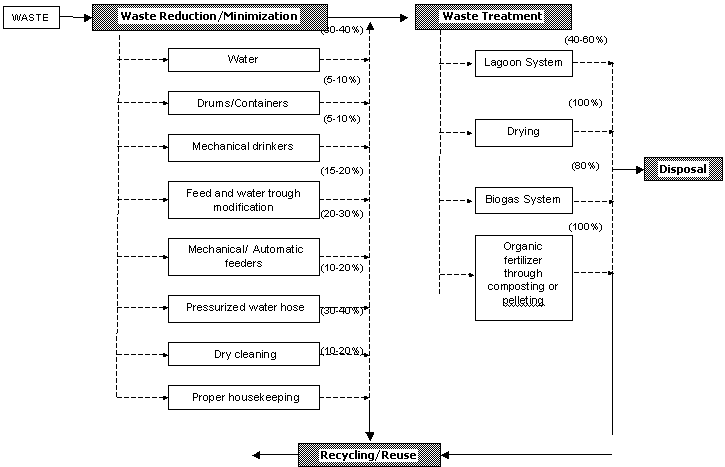
Can smallholders be expected to adopt anti-pollution technology? Since backyard raisers, collectively, contribute a not insignificant amount of pollution that has to be addressed; it is imperative that this group of raisers' awareness of their social and environmental responsibility be heightened. At the same time, these raisers need to be encouraged to adopt even simple pollution mitigating measures. There are various waste treatment technologies available for piggeries in the Philippines (ENRAP III, 1997; MADECOR-IMO, 1997; Catelo, et al., 2001) but these are far too expensive and sophisticated for backyard farms. However, there are cost-effective wastewater minimization strategies/options that backyard farms can adopt although these may tend to be labor-intensive (Figure 1). But on the sole basis of their production costs and returns, backyard raisers can afford such waste minimization options and still contribute to pollution abatement (Catelo, et al., 2001).
It may be worthwhile to look into the reasons why markets for hog waste in particular are not functioning in the manner that the market for chicken waste is doing (and appear to be doing so efficiently) when studies have shown the high potential of hog waste as organic fertilizer (MADECOR-IMO, 1997; Casas, 1998; Catelo, et al., 2001). Could it be that keeping the pig waste dry for better conversion into fertilizer is more labor-intensive than doing the same for chicken waste? Or is it just a case of uninformed or misinformed decision among raisers? Similarly, on the demand side, is this due to lack of information on the potential and cost effective environment-friendly use of organic fertilizer that prevents the wide adoption of the technology by farmers?
The following hypotheses/conjectures on the non-existence of a functioning market for pig waste in contrast to that for chicken dung are made:
1) Technology of production and waste management at site (on-farm) for poultry allows for less labor-intensive processes for drying/collecting of chicken manure:
a. Chicken (broiler, layer) housing are elevated with chicken droppings simply falling to the floor of the cages and collected regularly;
b. No water is used for waste management and therefore chicken dung is left naturally to dry; and
c. Collecting dry manure is relatively easy with simple implements such as rakes and brooms.
2) Most broiler and layer farms are relatively large in scale (e.g., 10,000 birds - 100, 000 birds for contract growers) such that a village buyer/hauler of chicken dung could fill a truckload from a single or a couple of farms.
3) The organic fertilizer properties of chicken dung has already been tried and tested even in commercial practice. Thus, pig manure is not in the same "class" as chicken manure with respect to R & D and commercialization of technology.
4) The location of peri-urban backyard farms (with no agricultural croplands operated by smallholders) makes collection, drying and disposal more problematic than in poultry farms. For a group of smallholders, there is a need for a common area and facility for assembly and further drying of pig waste.
5) Raisers find the handling of pig waste offensive because of the odor.
Given the above conjectures, it may be insightful to compare the cost of internalizing livestock waste externalities at the farm level between pig and broiler production.
On the demand side of the market, it will be useful to know the extent of use as well as the areas where pig waste is used as fertilizer. Casas (1998) revealed that corn farms are said to be the largest users of organic fertilizer in the country followed by rice farms and large-scale plantations in Mindanao as well as vegetable farmers. It should be interesting to know, however, under which form the organic fertilizers are being used by such classes of farms, the rate of utilization, and where pig and chicken manure are more dominantly used.
The Philippines has already an existing environmental regulatory framework and the country "has been noted by the Asian Development Bank (ADB) to be one best prepared to meet the challenges of environment and economic growth because of its policies and programs" (Ramos, 1999). What is needed is proper, unwavering and decisive implementation of the policies and a continuous, vigilant monitoring and evaluation of compliance by target groups. But should the implementation of policies and monitoring of compliance be left to LGUs knowing that they do not have the training and expertise to apprehend violators and may not have the teeth to implement the policies/regulations? Empowering LGUs, therefore, through relevant trainings, seminars and other forms of capacity building is an imperative. Furthermore, recognizing the fact that LGUs operate on limited budgets that may leave environmental policies on the side in their list of priorities or for environmental guarantee funds (EGFs) to become breeding grounds for corruption, perhaps there is a need to earmark resources specifically for the implementation and compliance monitoring purposes.
Just like environmental management, public health and food safety is a "continuous process of never-ending vigilance". Moreover, the country must take on preventive rather than curative approach to public health and food safety concerns, i.e., it need not wait for disaster epidemics or problems to occur before it is forced to make the appropriate action.
Reliable and systematic data base on humans getting ill from bacterial contamination or food-borne diseases have to be firmed up to determine the extent and nature of contamination, i.e., the kind of pathogens that enter the food system, and determine the extent or gravity of the problem that must be addressed.
In the same vein, serious and vigilant reporting of animal disease outbreaks like FMD, hog cholera, and Mareks, - either by the affected farms or communities - has to be done to prevent the spread of the diseases across other farms. Communities have to be consistently on the lookout and report malpractices/violations by hog and poultry farms.
As we have not yet come up with our own food safety standards, it is necessary to push for concerted efforts among concerned entities/agencies in determining how far the country wants to go with following the standards. Does the country have the "public capacity for enforcement" and does it really want to adopt the HACCP and other systems of food safety knowing that at the extreme, small hog and poultry raisers can go out of business? Or large commercial farms/integrators can pass the additional burden arising from the adoption of such food safety mechanism on to consumers? Also, in aligning our standards with those of the international market, enforcement problems can arise in terms of inadequate technical capability and infrastructure for "inspection, testing, certification and accreditation" due to lack of funds.
The implementation of food safety policies in the LGUs is also faced with the challenge regarding capacity building especially of low-income LGUs. There are certain technologies on food safety/public health that are still relatively new to the country in terms of application. But it has been noted that there is a scarcity of scientists who possess the knowledge in these new fields Thus, there is a need to increase the income-generating capacity of resource-poor LGUs since "in the field of extension, changes in the work environment seemed to work favorably only for the high-income LGUs and not in the case of low-income LGUs (Bergonia, 2000).
In meeting international food quality and safety standards, more sensitive and expensive laboratory equipment and facilities may be required. The country has to invest in these requirements for a more efficient and effective food safety regulation (Layese 2002).
The intensification in swine and poultry production over the last two decades, while contributing benefits of economic significance to the country, has likewise posed certain risks to the environment and public health.
Environmental issues and concerns mainly revolve around the pollution of residential areas that come in the form of: a) foul odors from pig farms; b) increasing population of flies that are vectors of diseases; and d) contamination of surface water and groundwater. The unabated occurrence of these problems is not due to the absence of environmental policies and regulations but rather the weakness of institutional capacities to enforce such regulations and to monitor compliance. Weak enforcement is attributed to lack, if not, the absence of technical and financial resources to do so at the local government unit (LGU) level since they began to take over the implementation and monitoring functions in their respective jurisdiction by virtue of the Local Government Code of 1991. Furthermore, LGUs had not been equipped and trained at enforcing the regulations. Political considerations also play at the prospect of reduced incomes particularly of smallholders.
Public health issues involve a) inadequate systematic programs on surveillance, vaccination, quarantine, disease monitoring and diagnostic laboratory services to prevent and control outbreak of animal diseases that may also endanger human lives; b) violation of sanitation and hygiene standards particularly in abattoirs run by LGUs and c) weak public sector capacity for enforcement of policies and standards.
Issues on food safety revolve around a) antibiotic residues in meat; b) negative consequences of the possible use of genetically modified feed ingredients; and c) handling and cold chain management to preserve quality of meat. The implementation of food safety policies is also faced with the challenge regarding capacity building especially of low-income LGUs. The country has not, as yet, come up with its own microbiological standards for food but adopts those of developed countries and international organizations. For local application, these international standards appear to be too stringent. But once formulated, the country has to decide if local standards can be aligned to and harmonized with those of developed countries' especially if it seriously has designs to export pork in the future.
Agricultural Competitiveness Enhancement Program (ACEF).
Alcantara, A. J. and R.G. Donald. 1996. Management of Livestock Waste in the Laguna Lake Watershed. ERMP Report No. 29. Delos Reyes Printing Press, Los Baños.
Benigno, C.C. 2002. "Progressing Zone Status for FMD in the Philippines". A Paper presented at the 2002 Philippine Society of Animal Science Lecture Series: A Tribute to Outstanding Scientist of the Philippines, held at the University of the Philippines Los Baños, Laguna.
Bergonia, C.B. 2000. Municipal Agricultural and Health Extension Performance in Laguna: Results of a 1998 Survey. Working Paper No. 00-02. Institute of Strategic Planning and Policy Studies, University of the Philippines Los Baños, College, Laguna.
Bureau of Agricultural Statistics, 2001.
Casas, E.V. 1998. AGPET-AMDP Small Scale Feed Milling System, University of the Philippines Los Baños.
Catelo, M. A. O., M. A. Dorado, and E. Agbisit, Jr. 2001. Backyard and Commercial Piggeries in the Philippines: Environmental Consequences and Pollution Control Options. EEPSEA Research Report No. 2001-RR6.
Delgado, C., M. Rosegrant, H. Steinfeld, S. Ehui and C. Courbois. 1999. Livestock to 2020: The Next Food Revolution. 2020 Vision Discussion Paper No. 28. Washington, D.C.: International Food Policy Research Institute.
Ecological Solid Waste Management Act of 2000.
Environment and Natural Resources Accounting Project (ENRAP) III, 1997. Philippines.
Imperial, R.A. and A.B. Javier. 1995. "Foot in the mouth". Policy Update. Agricultural Policy Research and Advocacy Assistance Program.
Laguna Lake Development Authority (LLDA) field reports, various years.
LLDA Resolution No. 169.
Layese, G. "Effective Feedback Through Food Safety Networking: The Philippine Experience" Paper presented at the FAO/WHO Global Forum of Food Safety Regulations, Marrakesh, Morocco, 28-30 January 2002.
Lipa Environmental Profile 2000
MADECOR-IMO. 1997. Establishment of an Agricultural Waste Management System for the Batangas Bay Region. Draft Final Report.
National Meat Inspection Commission.
National Statistical Coordination Board 2001
Oledan, M. T. T. and R. C. Austria, Eds. Undated Laws, Rules and Regulations Affecting the Management of Laguna de Bay and Its Basin.
Orbeta, E. and A.Calara. 1996. "Pollution in the Philippine Piggery Industry" Volumes I-A: Policy Study 5. Philippine Environmental and Natural Resources Accounting Project (ENRAP-Phase III)
Pacific Basin Economic Council (PBEC) 1999. Value Chain for Poultry.
Promotion of Renewable Energy Sources in Southeast Asia (PRESSEA), 2002.
Ramos, V. 1999. "Experiences and Lessons Learned at the Department of Environment and Natural Resources". Working Paper No. 99-10. Institute of Strategic Planning and Policy Studies, College of Public Affairs, University of the Philippines Los Baños.
Reithmuller, Paul. 2001. Philippine Livestock Sector. Draft Report to Food and Agriculture Organization of the United Nations.
Rola, A.C. 2002. "Grassroots Views of the Stakes in Rising Swine and Poultry Sectors in the Philippines". Issues Paper No. 2. Livestock Industrialization and Trade: Social-Health and Environment Impacts on Developing Countries: The Philippines. IFPRI-UN-FAO-DFID Project. Forthcoming.
Unnevehr, L. J. "Food safety issues and fresh food product exports from LDCs". Agricultural Economics 23 (2000) 231-240.
Various Presidential Decrees, Republic Acts and Department Administrative Orders of the Philippines related to the environment, public health and food safety.
www.igc.apc.org/nrdc/nrdc/nrdcpro/factor/cons.html
www.checc.sph.unc.edu/rooms/library/docs/hogs/hogcase.html.
www.inmotionmagazine.com/hwenv/html
www.ace.or.id/pressea/philippine...ass/currentand plannedutilisation.htm
Personal Communication:
Engr. Dionisio Ines, Barangay San Juan De Mata, Tarlac.
Ms. Cora Gasapos, DENR Region IV.
Juliet B. Meneses, Meat Inspector III, NMIC Regulatory Division.
Table 1. Percentage share of total hog inventory, by region, Philippines, 1980-2000.
|
|
1980 |
1981 |
1982 |
1983 |
1984 |
1985 |
1986 |
1987 |
1988 |
|
Philippines |
100.0 |
100.0 |
100.0 |
100.0 |
100.0 |
100.0 |
100.0 |
100.0 |
100.0 |
|
CAR |
3.3 |
2.8 |
3.0 |
2.4 |
2.5 |
2.4 |
2.4 |
2.3 |
2.3 |
|
Region I |
6.0 |
5.9 |
5.7 |
6.8 |
7.5 |
7.1 |
6.9 |
7.0 |
6.6 |
|
Region II |
7.4 |
6.5 |
6.3 |
5.7 |
6.4 |
6.0 |
6.5 |
6.2 |
6.3 |
|
Region III |
12.4 |
13.7 |
13.4 |
11.4 |
12.5 |
12.6 |
12.0 |
13.4 |
13.6 |
|
Region IV |
12.8 |
12.5 |
12.4 |
13.0 |
11.1 |
12.5 |
12.5 |
12.9 |
14.0 |
|
Region IX |
7.2 |
7.4 |
7.4 |
7.0 |
8.5 |
8.4 |
7.4 |
7.6 |
7.4 |
|
Region V |
7.3 |
7.3 |
7.5 |
8.2 |
8.5 |
8.4 |
7.8 |
8.3 |
8.0 |
|
Region VI |
9.0 |
9.1 |
9.2 |
9.9 |
9.6 |
9.1 |
8.9 |
9.1 |
8.8 |
|
Region VII |
8.6 |
6.9 |
6.9 |
7.6 |
5.5 |
5.6 |
7.6 |
7.2 |
7.3 |
|
Region VIII |
4.6 |
4.1 |
4.0 |
4.1 |
5.5 |
5.1 |
4.6 |
4.0 |
4.2 |
|
Region X |
5.6 |
5.4 |
5.4 |
4.9 |
4.8 |
4.9 |
5.2 |
5.5 |
5.3 |
|
Region XI |
8.9 |
11.5 |
11.7 |
11.7 |
10.3 |
10.9 |
10.6 |
9.1 |
9.1 |
|
Region XII |
2.6 |
2.4 |
2.4 |
2.6 |
3.3 |
3.2 |
3.0 |
3.4 |
3.3 |
|
CARAGA |
3.0 |
4.1 |
4.1 |
4.2 |
3.7 |
3.4 |
4.2 |
3.6 |
3.4 |
|
ARMM |
0.5 |
0.4 |
0.5 |
0.6 |
0.3 |
0.4 |
0.3 |
0.3 |
0.3 |
Cont. Table 1. Percentage share of total hog inventory, by region, Philippines, 1980-2000.
|
|
1989 |
1990 |
1991 |
1992 |
1993 |
1994 |
1995 |
1996 |
1997 |
1998 |
1999 |
2000 |
|
Philippines |
100.0 |
100.0 |
100.0 |
100.0 |
100.0 |
100.0 |
100.0 |
100.0 |
100.0 |
100.0 |
100.0 |
100.0 |
|
CAR |
2.6 |
2.6 |
2.5 |
2.5 |
2.5 |
2.6 |
2.8 |
2.8 |
2.5 |
2.5 |
2.4 |
2.3 |
|
Region I |
6.1 |
6.4 |
5.7 |
6.0 |
6.1 |
5.4 |
4.5 |
4.8 |
5.2 |
5.0 |
4.6 |
3.8 |
|
Region II |
6.0 |
4.9 |
4.9 |
5.7 |
6.0 |
5.6 |
5.3 |
4.9 |
5.2 |
5.8 |
5.4 |
5.0 |
|
Region III |
12.3 |
13.2 |
14.9 |
12.8 |
13.2 |
13.7 |
13.8 |
11.4 |
14.1 |
15.4 |
14.2 |
14.6 |
|
Region IV |
13.9 |
13.8 |
14.4 |
14.2 |
14.8 |
14.9 |
15.1 |
15.0 |
15.3 |
15.0 |
15.2 |
15.4 |
|
Region IX |
7.2 |
6.7 |
6.9 |
7.1 |
7.2 |
6.8 |
5.8 |
5.2 |
6.0 |
5.6 |
5.9 |
5.9 |
|
Region V |
8.7 |
7.9 |
7.3 |
7.3 |
7.4 |
8.0 |
7.7 |
8.5 |
7.9 |
7.6 |
8.1 |
8.5 |
|
Region VI |
9.0 |
9.2 |
9.5 |
9.4 |
8.9 |
8.8 |
8.6 |
7.9 |
7.7 |
7.7 |
7.6 |
7.4 |
|
Region VII |
7.5 |
7.8 |
7.1 |
7.2 |
7.0 |
7.1 |
7.8 |
7.7 |
7.6 |
6.8 |
7.0 |
6.9 |
|
Region VIII |
4.9 |
4.8 |
5.4 |
5.5 |
4.8 |
5.1 |
5.4 |
5.6 |
5.8 |
6.0 |
5.9 |
6.2 |
|
Region X |
5.4 |
5.7 |
5.2 |
5.3 |
4.6 |
4.9 |
4.8 |
5.3 |
5.2 |
5.2 |
6.3 |
5.9 |
|
Region XI |
8.8 |
9.1 |
9.1 |
9.1 |
9.6 |
9.7 |
10.6 |
9.8 |
10.4 |
10.1 |
9.8 |
10.7 |
|
Region XII |
3.9 |
4.0 |
3.6 |
4.7 |
4.6 |
4.1 |
3.8 |
3.4 |
3.1 |
3.2 |
3.5 |
4.1 |
|
CARAGA |
3.7 |
3.4 |
3.2 |
3.1 |
3.2 |
3.1 |
3.6 |
3.9 |
3.8 |
3.8 |
3.7 |
3.1 |
|
ARMM |
0.2 |
0.3 |
0.3 |
0.3 |
0.2 |
0.2 |
0.3 |
0.4 |
0.3 |
0.3 |
0.2 |
0.2 |
Table 2. Percentage share of total broiler inventory, by region, Philippines,1990-2001
|
|
1990 |
1991 |
1992 |
1993 |
1994 |
1995 |
1996 |
1997 |
1998 |
1999 |
2000 |
2001 |
|
Philippines |
100.0 |
100.0 |
100.0 |
100.0 |
100.0 |
100.0 |
100.0 |
100.0 |
100.0 |
100.0 |
100.0 |
100.0 |
|
NCR |
2.7 |
2.7 |
2.7 |
2.8 |
2.7 |
2.7 |
2.4 |
2.5 |
0.3 |
0.1 |
0.1 |
0.1 |
|
CAR |
0.2 |
0.2 |
0.2 |
0.2 |
0.2 |
0.2 |
0.2 |
0.2 |
0.0 |
0.1 |
0.1 |
0.2 |
|
Region I |
2.7 |
3.2 |
3.2 |
3.9 |
3.3 |
3.3 |
3.4 |
3.8 |
4.6 |
3.6 |
3.6 |
4.9 |
|
Region II |
2.4 |
1.3 |
1.6 |
1.7 |
1.6 |
1.6 |
1.0 |
1.6 |
3.8 |
2.2 |
1.9 |
2.8 |
|
Region III |
33.6 |
39.7 |
34.5 |
33.9 |
34.5 |
34.5 |
30.1 |
34.2 |
40.0 |
40.0 |
41.5 |
41.8 |
|
Region IV |
39.8 |
34.3 |
37.0 |
34.1 |
37.0 |
37.0 |
40.9 |
36.1 |
21.4 |
16.6 |
23.5 |
20.8 |
|
Region V |
0.8 |
0.9 |
1.0 |
0.8 |
1.0 |
1.0 |
0.8 |
0.8 |
1.7 |
9.2 |
3.0 |
2.6 |
|
Region VI |
4.2 |
4.5 |
4.2 |
3.6 |
4.2 |
4.2 |
3.6 |
3.8 |
6.2 |
5.5 |
5.9 |
5.7 |
|
Region VII |
3.7 |
5.4 |
5.0 |
6.5 |
5.1 |
5.1 |
7.4 |
5.3 |
6.2 |
5.4 |
5.2 |
5.1 |
|
Region VIII |
0.9 |
1.0 |
1.5 |
1.8 |
1.5 |
1.5 |
1.8 |
1.3 |
1.8 |
2.8 |
2.6 |
0.8 |
|
Region IX |
0.8 |
0.8 |
1.1 |
0.5 |
0.8 |
0.8 |
0.4 |
1.1 |
1.7 |
1.8 |
1.3 |
1.0 |
|
Region X |
1.0 |
1.0 |
1.0 |
1.0 |
1.1 |
1.1 |
1.2 |
1.1 |
4.0 |
5.0 |
4.1 |
4.7 |
|
Region XI |
6.1 |
3.9 |
5.9 |
8.1 |
5.9 |
5.9 |
5.9 |
6.6 |
7.5 |
6.1 |
6.2 |
8.2 |
|
Region XII |
0.4 |
0.5 |
0.6 |
0.4 |
0.6 |
0.6 |
0.4 |
0.6 |
0.0 |
0.1 |
0.5 |
0.4 |
|
CARAGA |
0.5 |
0.4 |
0.5 |
0.7 |
0.5 |
0.5 |
0.5 |
0.8 |
0.9 |
0.9 |
0.5 |
1.0 |
|
ARMM |
0.1 |
0.2 |
0.2 |
0.2 |
0.2 |
0.2 |
0.1 |
0.2 |
0.1 |
0.5 |
0.0 |
0.0 |
Source: Bureau of Agricultural Statistics; last update August 2001
Table 3. Effluent Standards for Class C1 waters (DENR AO No. 35, 1990)
|
Parameters |
Unit |
Concentration (OE)4 |
Concentration (NP)4 |
|
Color |
PCU |
1502 |
1502 |
|
Temperature °C rise |
mg/L |
3 |
3 |
|
pH range |
mg/L |
6.0-9.0 |
6.5-9.0 |
|
COD |
mg/L |
150 |
100 |
|
Settleable Solids |
mg/L |
0.5 |
0.5 |
|
5-Day 20°C BOD |
mg/L |
80 |
50 |
|
Total Suspended Solids |
mg/L |
90 |
70 |
|
Total Dissolved Solids |
mg/L |
- |
- |
|
Surfactants |
mg/L |
7 |
5 |
|
Oil/Grease |
mg/L |
10 |
5 |
|
Phenolic Substances |
mg/L |
0.5 3 |
0.5 3 |
|
Total Coliforms |
MPN/ |
10,000 |
10,000 |
Notes:
1 Class C waters are fresh surface waters whose beneficial uses include (1) Fishery Water for propagation and growth of fish and other aquatic resources; (2) Recreational Water Class II for boating and other activities not entailing personal contact with the water; and (3) Industrial Water Supply Class I (for manufacturing processes after treatment).
2 For wastewaters with initial BOD concentration over 1,000 mg/L but less than 3,000 mg/L, the limit may be exceeded up to a maximum of 200 mg/L or a treatment reduction of ninety (90) percent, whichever is more strict
3 Not more than 60 mg/L increase (dry season)
4 OE -old and existing piggery
NP -new/proposed piggery
Table 4. Wastewater and surface water characteristicsa.
|
Sampling Points/ |
Characteristics |
||||||
|
Source |
DO |
pH |
Total |
Total |
Total N |
Total P |
BOD |
|
Raw Wastewater |
1.80 |
7.82 |
332 |
652 |
65.40 |
13.80 |
325 |
|
Initian Creek |
2.00 |
7.74 |
223 |
427 |
47.20 |
7.80 |
226 |
|
Oobi River |
4.50 |
7.85 |
78 |
179 |
23.90 |
3.50 |
123 |
|
Balanak River (downstream) |
3.00 |
8.10 |
67 |
154 |
37.90 |
10.10 |
110 |
|
Botocan River (upstream) |
7.00 |
7.10 |
55 |
83 |
18.40 |
2.90 |
37 |
a Source: Results of water pollution tests, selected sampling points, Majayjay town, Laguna, Southern Luzon, Philippines 1999.
Table 5. Selected environmental policies affecting swine and poultry raisers in the Philippines.
|
Legal Basis |
Title |
Date of |
Salient Provision |
|
P.D. No. 984 |
Pollution Control Decree of 1976 |
1976 |
"prevent, abate and control pollution of water, air and land for the more effective utilization of the resources of this country" |
|
P.D. No. 1586 |
Establishing Environmental Impact Statement System Including other Env'tal Mgt. Related Measures and for Other Purposes |
1978 |
"attain and maintain a rational and orderly balance between socio- econ. growth and environmental protection" |
|
P.D. No. 1151 |
Philippine Environmental Policy |
1977 |
"formulate an intensive integrated program of environmental protection through a requirement of environmental impact assessments and statements: |
|
P.D. No.1152 |
Philippine Environment Code |
1977 |
"establish specific environment management policies and prescribe environment quality standards" |
|
DENR A.O. |
Revised water usage and classification/water quality criteria amending section nos. 68 & 69 and Chapter III of the 1978 NPCC Rules &Regulations |
1990 |
"maintain quality and safety of Philippine waters in a satisfactory condition" |
|
R.A. No. 7160 |
Local Government Code of 1991 |
1991 |
"the transfer and implementation of certain DENR functions devolved to the LGUs |
|
RA No. 9003 |
Ecological Solid Waste Management Act of 2000 |
2001 |
"ensure the protection of public health and environment through the adoption of a systematic, comprehensive and ecological solid waste management program" |
Source: corresponding legislative acts.
Table 6. Selected and recent public health policies affecting the swine and poultry industries in the Philippines.
|
Legal Basis |
Title |
Date of |
Salient Provision |
|
P.D. No. 856 |
Code on Sanitation of the Philippines |
1975 |
Covers sanitation on water, food and waste disposal |
|
R.A. 7394 |
Consumer Act of the Philippines |
1993 |
"...accreditation of slaughterhouse, poultry dressing plant, meat processing plant, meat cold storage and meat delivery vans.." |
|
DA M.O. No. 1; s. 2002 |
Lifting the Temporary Ban on the Importation of Live Pigs, Semen, Pork Products and By-Products from the United Kingdom |
Feb. 5, 2002 |
"Lifting of the temporary ban... upon recognition by the Office International des Epizooties (OIE) that the FMD-free status without vaccination of the U.K. has been restored on Jan. 21, 2002" |
|
DA A.O. No. 3; s. 2002 |
Temporary Ban on the Importation of Domestic and Wild Birds and Their Products Including Poultry Meat, Day-old Chicks, Eggs and Semen Originating From the State of Pennsylvania, U.S.A. |
Jan. 30, 2002 |
"Prevent the entry of pathogenic virus (H7N2) causing avian flu to protect the health of the local poultry population" |
|
DA A.O. No. 4; s. 2002 |
Temporary Ban on the Transshipment from Japan and China of Domestic and Wild Birds and Their Products Including Poultry Meat, Day-old Chicks, Eggs and Semen Originating From the State of Pennsylvania, USA |
Jan. 30, 2002 |
"Prevent the entry of pathogenic virus (H7N2) causing avian flu to protect the health of the local poultry population" |
|
DA M.O. No. 8; s. 2001 |
Temporary Ban on the Importation of Meat and Bone Meal From All Countries |
July 18, 2001 |
Ban on Meat and Bone meal (MBM) importation as precautionary measure against Bovine Spongiform Encephalopathy; MBM should not be fed to ruminants |
|
DA A.O. No.55; s. 2000 |
Implementing Guidelines on the Accreditation of Swine Breeding Farms |
Dec. 12, 2000 |
"identify, accredit, and promote swine farms with improved genetics and quality breeders...particularly among backyard farmers" |
|
DA A.O.No. 39; s. 2000 |
Amended Rules and Regulations Governing Importation of Meat and Meat Products into the Philippines |
Sept. 27, 2000 |
"Rules and regulations to prevent the entry of disease-carrying, contaminated, and/or adulterated meat and/or meat products, which endanger the lives and safety/health of the consuming public and which could lead to potentially serious economic consequences to the livestock and poultry and related industries." |
|
DA A.O. no.1; s. 2000 |
Banning and Withdrawal of Olaquindox and Carbadox from the Market |
2000 |
Banning of these "anti-microbial drugs used in livestock production to reduce salmonella shedding in animals" because of long withdrawal periods of about 70 days" |
Table 7. Comparison of accredited meat establishments, by class type, 1999-2001.
|
Meat Establishment/Class Type |
1999 |
2000 |
2001 |
|
|
Abattoir |
|
|
|
|
|
|
AAA |
9 |
7 |
7 |
|
|
AA |
65 |
62 |
69 |
|
|
A |
70 |
46 |
50 |
|
Total |
144 |
115 |
126 |
|
|
Poultry Dressing Plant |
|
|
|
|
|
|
AAA |
14 |
11 |
13 |
|
|
AA |
52 |
59 |
58 |
|
|
A |
0 |
0 |
0 |
|
Total |
66 |
70 |
72 |
|
|
Meat Processing Plant |
|
|
|
|
|
|
AAA |
25 |
11 |
13 |
|
|
AA |
52 |
59 |
58 |
|
|
A |
0 |
0 |
0 |
|
Total |
77 |
70 |
72 |
|
|
Cold Storage |
|
|
|
|
|
|
AAA |
2 |
4 |
6 |
|
|
AA |
3 |
3 |
6 |
|
|
A |
0 |
0 |
0 |
|
Total |
5 |
7 |
12 |
|
|
Poultry Dressing Area A |
7 |
0 |
0 |
|
Source: NMIC Regulatory Division Accomplishment Report 2001
Table 8. Selected policies on food safety affecting swine and poultry producers in the Philippines.
|
Legal Basis |
Title |
Date of |
Salient Provision |
|
R.A. 3720 |
Food, Drug and Cosmetic Act |
1987 |
Provides for the "adoption of measures to ensure pure and safe supply of food, to protect the health of the people and for the promulgation of food standards". |
|
DA A.O. No. 39, s. 2000 |
Amended Rules and Regulations Governing Importation of Meat and Meat Products into the Philippines |
2000 |
"Rules and regulations to prevent the entry of disease-carrying, contaminated, and/or adulterated meat and/or meat products, which endanger the lives and safety/health of the consuming public and which could lead to potentially serious economic consequences to the livestock and poultry and related industries." |
|
R.A. 8435, Ch. 7 |
Establishment of Bureau of Agriculture and Fisheries Product Standards as mandated by AFMA |
1997 |
Provides for "product standardization and food safety" |
|
D.A. A.O. no.1,s.2000 |
Banning and Withdrawal of Olaquindox and Carbadox from the Market |
2000 |
Banning of these "anti-microbial drugs used in livestock production to reduce salmonella shedding in animals because of long withdrawal periods of about 70 days" |
Table 9. Estimated health costs of households of hog raisers due to hog operations, Majayjay, Laguna, Philippines
|
Health Effects |
Backyard (n=41) |
Commercial (n=41) |
|||||||||
|
Medical |
Foregone |
Discomfortc |
Percent |
Ave. Exp |
Medical |
Foregone |
Discomfortc |
Percent |
Ave. Exp/ |
||
|
Respiratory |
|
|
|
|
|
|
|
|
|
|
|
|
|
Asthma |
11,537 |
4,290 |
15,827 |
12 |
6,434 |
27,980 |
10,010 |
37,990 |
24 |
7,722 |
| |
Bronchitis |
3,000 |
1,300 |
4,300 |
2 |
10,488 |
13,700 |
4,4420 |
18,120 |
7 |
12,627 |
| |
Pneumonia |
- |
- |
- |
- |
- |
25,500 |
2,210 |
27,710 |
5 |
27,034 |
|
Gastrointestinal |
|
|
|
|
|
|
|
|
|
|
|
|
|
Cholera |
- |
- |
- |
- |
- |
- |
- |
- |
- |
- |
| |
Diarrhea |
4,680 |
5,720 |
20,800 |
17 |
2,984 |
160 |
4,160 |
4,320 |
10 |
2,107 |
|
Others |
|
|
|
|
|
|
|
|
|
|
|
| |
Conjunctivitis |
440 |
10,270 |
21,420 |
12 |
4,354 |
400 |
7,800 |
8,200 |
20 |
2,000 |
| |
Influenza |
3,745 |
3,900 |
15,290 |
15 |
2,486 |
1,070 |
1,170 |
2,240 |
5 |
2,185 |
| |
Skin allergies |
1,030 |
- |
2,060 |
10 |
502 |
1,800 |
- |
1,800 |
15 |
585 |
a Medical costs were computed by adding up all expenses of individual households for the previous year during the duration of the ailment.
b Foregone income was computed by multiplying the number of working days lost due to the ailment by the minimum wage and then taking the sum of all these individual household values. Minimum wage is PHP130 per day.
c The value of discomfort has been conservatively assumed to be equal to the sum of medical costs and lost income. Studies have shown that the willingness to pay to avoid discomfort from an illness is at least as much as the total medical costs and foregone income, and is considerably higher for some illnesses. A WTP/COI ratio of 2.0 was selected as an adjustment factor. This follows the approach recommended in Asian Development Bank, "Economic Evaluation of Environmental Impacts:A Workbook" (Manila, March 1996).
Source: Catelo, et al. (2001)
Table 10. Estimated health costs of households near piggeries due to hog operations, Majayjay, Laguna, Philippines.
|
Health Effects |
Backyard (n=52) |
Commercial (n=42) |
|||||||||
|
Medical |
Foregone |
Discomfortc |
Percent |
Ave. Exp |
Medical |
Foregone |
Discomfortc |
Percent |
Ave. Exp/ |
||
|
Respiratory |
|
|
|
|
|
|
|
|
|
|
|
|
|
Asthma |
21,700 |
3,120 |
24,820 |
10 |
9,546 |
5,300 |
3,510 |
8,851 |
12 |
3,496 |
| |
Bronchitis |
3,450 |
4,160 |
7,610 |
8 |
3,659 |
15,380 |
30,160 |
45,540 |
17 |
12,756 |
| |
Pneumonia |
- |
- |
|
- |
|
150,000 |
5,720 |
155,720 |
2 |
370,762 |
|
Gastrointestinal |
|
|
|
|
|
|
|
|
|
|
|
| |
Cholera |
1,000 |
2,600 |
3,600 |
2 |
6,923 |
- |
- |
|
- |
|
| |
Diarrhea |
2,070 |
11,310 |
13,380 |
12 |
4,288 |
22,330 |
12,610 |
34,940 |
21 |
7,923 |
|
Others |
|
|
|
|
|
|
|
|
|
|
|
| |
Conjunctivitis |
610 |
23,660 |
24,270 |
15 |
6,223 |
1,410 |
10,920 |
11,330 |
17 |
3,454 |
| |
Influenza |
3,300 |
6,240 |
9,540 |
19 |
1,931 |
13,390 |
6,240 |
19,620 |
26 |
3,595 |
| |
Skin allergies |
16,000 |
260 |
16,260 |
17 |
3,677 |
7,800 |
- |
7,800 |
19 |
1,955 |
a Medical costs were computed by adding up all expenses of individual households for the previous year during the duration of the ailment.
b Foregone income was computed by multiplying the number of working days lost due to the ailment by the minimum wage and then taking the sum of all these individual household values. Minimum wage is PHP130 per day.
c The value of discomfort has been conservatively assumed to be equal to the sum of medical costs and lost income. Studies have shown that the willingness to pay to avoid discomfort from an illness is at least as much as the total medical costs and foregone income, and is considerably higher for some illnesses. A WTP/COI ratio of 2.0 was selected as an adjustment factor. This follows the approach recommended in Asian Development Bank, "Economic Evaluation of Environmental Impacts:A Workbook" (Manila, March 1996).
Source: Catelo, et al. (2001).
Table 11. Estimated Hog Pollution Load by Scale and by Region, Philippines, 1993.
|
Region |
Estimated Pollution Load (mt) |
Breakdown by scale |
Percent to Total |
|||
|
BOD |
SS |
N |
Commercial |
Backyard |
||
|
PHILIPPINES |
188,037 |
1,211,647 |
55,617 |
19.5 |
80.5 |
100 |
|
CAR |
4,604 |
29,670 |
1,362 |
5.4 |
94.6 |
2.4 |
|
I |
11,120 |
71,651 |
3,289 |
7.3 |
92.7 |
5.9 |
|
II |
10,830 |
69,785 |
3,203 |
1.8 |
98.2 |
5.8 |
|
III |
26,486 |
170,664 |
7,834 |
48.4 |
51.6 |
14.1 |
|
IV |
29,438 |
189,686 |
8,707 |
44.3 |
55.7 |
15.7 |
|
V |
12,979 |
83,632 |
3,839 |
2.2 |
97.8 |
6.9 |
|
VI |
13,768 |
88,717 |
4,072 |
13.2 |
86.8 |
7.3 |
|
VII |
16,186 |
104,297 |
4,787 |
3.7 |
96.3 |
8.6 |
|
VIII |
12,592 |
81,140 |
3,724 |
0.5 |
99.5 |
6.7 |
|
IX |
8,726 |
56,228 |
2,581 |
1.1 |
98.9 |
4.6 |
|
X |
11,989 |
77,252 |
3,546 |
4.3 |
95.7 |
6.4 |
|
XI |
20,571 |
132,554 |
6,084 |
28.2 |
71.8 |
10.9 |
|
XII |
8,749 |
56,373 |
2,588 |
4.6 |
95.4 |
4.7 |
Source: ENRAP III, 1997.
Table 12. Estimated Pollution Load by Coverage of Regulation, Philippines, 1993.
| |
Type |
BOD5 |
|
|
(mt) |
(%) |
||
|
Regulated |
Commercial, 30 cmd and above |
6,205 |
3.3 |
|
Unregulated |
Commercial, below 30 cmd |
30,462 |
16.2 |
| |
Backyard |
151,370 |
80.5 |
|
Total |
|
188,037 |
100.0 |
Source: ENRAP III, 1997.
Adapted form Catelo, et al. (2001)
LAGUNA LAKE DEVELOPMENT AUTHORITY
Satellite Office, 2nd Floor, Rizal Sports Club,
Rizal Provincial Capitol Compound, Pasig City
RESOLUTION NO. 169
Series of 2001
APPROVING THE POLICY GUIDELINES GOVERNING THE
OPERATION OF BACKYARD/SMALL-SCALE HOG FARMS IN THE
LAGUNA DE BAY REGION
Whereas, Republic Act No. 4850, as amended by Presidential Decree No. 813 and Executive Order 927, empowers the Laguna Lake Development Authority to issue regulations when necessary to effectively carry out its mandate particularly with regard to the regulation of pollution within the Laguna de Bay Region;
Whereas, LLDA Board Resolution No., 41, Series of 1997 exempts backyard hog farms with a population of not more than 100 heads or a sow level of not more than 20 heads from securing an LLDA clearance;
Whereas, the responsibility of regulating small-scale backyard hog farms if routinely passed on to the various local government units which however lack the necessary expertise or the technical capacity to undertake effective pollution control program as evidenced by the absence of clear policies governing backyard hog raising particularly the proper disposal and management of hog farm wastes;
Whereas, collectively, small hog farms contribute an even larger volume of pollution into the waste load of Laguna de Bay compared to large commercial hog farms; and
Whereas, considering the large volume of wastes emanating from small-scale piggeries, there is a need to regulate the activities of all backyard hog farms within the Laguna de Bay Region to effectively and efficiently implement the "Pollution Control Law of the Philippines" otherwise known as Presidential Decree No. 984;
NOW THEREFORE, foregoing premises considered, BE IT RESOLVED, as it hereby RESOLVED to adopt the following Policy Guidelines Governing the operation of Backyard or Small-Scale Hog Farms in the Laguna de Bay Region.
SECTION 1. Title. These guidelines shall be known and cited as the "Policy Guidelines Governing the Operation of Backyard Piggeries or Small-Scale Hog Farms in the Laguna de Bay Region".
SECTION 2. Statement of Policy. The Laguna Lake Development Authority in accordance with its mandate which seeks to maintain the ecological integrity of the Laguna de Bay Region is cognizant of the collective contribution of backyard small-scale hog farms to the pollution load of the Laguna Lake. It is the policy of the LLDA to actively promote proven waste minimization and reduction technologies as well as waste recycling and reuse practices among small piggery or backyard hog farm owners in order to more effectively regulate pollution emanating from such farms.
SECTION 3. Scope and Coverage. These guidelines shall apply to all backyard piggeries or small scale hog farms with an animal population of not more than 100 heads or a sow level of not more than 10 sows and operating within the Laguna de Bay Region.
SECTION 4. Definition of Terms. The following terms, abbreviations and phrases, as used in these guidelines, shall have the following meaning:
Authority or LLDA means the Laguna Lake Development Authority
Waste Recycling/Reuse refers to the utilization of hog waste for other purposes e.g. fertilizer (solid), watering of plants (liquid), etc.
Waste Treatment refers to management techniques applied to reduce the pollution load coming from the backyard piggeries e.g. biogas technology, pelleting, etc.
Waste disposal refers to the final disposition of solid and liquid hog farm wastes. A common form of waste disposal is direct discharge of wastes into the rivers or creeks.
LGU refers to the Local Government Unit
One (1) sow level is equivalent to ten (10) adult hogs
Small Scale or Backyard Hog Farms or Piggeries refer to hog farms or piggeries with an animal population of not more than 100 heads or a sow level of not more than 10 sows.
Waste Reduction/Minimization refers to activities/techniques employed to minimize the generation of both liquid and solid wastes in a particular piggery or hog farm (e.g. installation of mechanical drinkers, etc).
Biogas Digester System refers to the anaerobic breakdown of organic materials which produces methane or biogas as a by-product.
Lagoon System is a simple method of treating wastes using a series of dig-out ponds which function as settling ponds.
TPED or Tubular Polyethylene Digester a low cost type of biogas system using polyethylene plastics as the digester chamber
SECTION 5. Waste Management Hierarchy (WMH). For the purpose of this Resolution, the LLDA hereby adopts a Waste Management Hierarchy stipulating preferred or desirable options for managing hog farm wastes. The WMH advocates an expressed preference for the adoption by hog farm owners of waste minimization or waste reduction technology and waste reuse and recycling practices over end of the pipe waste treatment and disposal measures (Fig. 1).
SECTION 6. Creation of Composite Team. A Composite Team will be created specifically to oversee the implementation of these policy guidelines. The team shall be composed of representatives from the Community Development Division - Laguna Lake Development Authority, River Councils/Foundations, Local Government Units concerned and backyard hog raisers or Associations of Backyard Hog Raisers in the particular river basin with the following duties and responsibilities:
B. Community Development Division - Laguna Lake Development Authority
Lead in the organization and development of a Training Module and undertake the envisioned Training/Seminar as part of the Information Education Campaign.
Raise environmental awareness and promote greater involvement and support from various sectors for the various environmental management and protection efforts.
Initiate the organization of Backyard Piggery Owners or Small Scale Hog Raisers into associations which will serve as for a for the contemplated awareness raising activities.
C. Local Government Units
Pursuant to the Sanitation Code of the Philippines, it shall be incumbent upon all Local Government Units within the Laguna de Bay Region to:
Process and issue Sanitary Permits to all Hog Farms (Commercial or Backyard) within their area of jurisdiction.
Maintain an inventory of all hog farm operators in their respective areas of jurisdiction and monitor the status of each hog farm/piggery to determine compliance with all Pollution Control Laws and Regulation.
In close coordination with the LLDA and the River Councils or Foundations working in their specific areas, the LGU's shall require all hog farm owners and their representatives to undergo training on waste reduction and minimization technologies.
D. River Councils/Foundations
Conduct physical survey of the river in the river basin concerned and pinpoint sources of pollution emanating from backyard hog farms.
Act as a network of river guards and environmental stewards and report to the LGU and the LLDA all cases of violation of environmental laws and outright disregard for anti-pollution laws and standards committed by backyard hog raisers.
Undertake Information, Education and Motivation Campaigns to raise the level of environmental and health awareness of backyard hog raisers.
E. Backyard Hog Raisers or Association of Hog Raisers
File complaints against member or non-member of the Association who violates the provisions stated herein.
Promote compliance with environmental standards
Pursue livelihood project that will enhance the condition of the environment for the benefit of the Association
SECTION 7. Requisite for the issuance and renewal of Permit/s. Existing and still to be established commercial-backyard scale piggeries/hog farms shall be covered by the requisite/s for the renewal and issuance of permits identified herein:
· All commercial-backyard scale hog farms to be established within the Laguna de Bay Region are required to submit mitigating measures or waste treatment options before the Municipal Health Office and the Office of the Mayor can issue Sanitary and Business Permits, respectively. Following are some of the recommended options (Fig.2).
· Waste Water Reduction/Minimization
This involves the modification of standard mechanisms applied in existing hog farms or piggeries to reduce or minimize water usage.
o Use of drums or storage water tanks during cleaning operation;
o Installment of mechanical drinkers to minimize consumption and wastage of water;
o Feed and water trough modification;
o Use of mechanical/automatic feeder to reduce food wastage
· Waste Treatment Options
o Installation of Biogas Digester
Commercial-backyard scale hog farms with population of at least 10 heads but not more than 100 heads are compelled to adopt this option.
For hog farms of less than 10 heads, installation of a TPED (Tubular Polyethylene Digester) as a treatment option is also recommended.
o Lagoon System
The use of ponds or lagoon system is recommended for hog farms with at most five (5) heads.
For the marginalized hog raisers less than 10 heads, the requirement of lagoon system as well as the tubular polyethylene digester shall not be compulsory until after a period of one year from the effectivity of the rules.
o Drying of Manure
This involves the removal of solid hog wastes (manure), drying and applying to farms/gardens as fertilizer. Hog raisers who will adopt this option shall construct a lagoon or pond as the main repository of the wastewater during cleaning operations.
o Establishment of a Pelleting Plant (Organic Fertilizer) and/or common Treatment Facilities.
This can be achieved through the formation of a Cooperative composed of backyard hog raisers in the locality.
· For existing commercial backyard hog farms with at least one (1) but not more than 100 heads, a lead time of at least three (3) but not more than five (5) months shall be given to build/install or apply waste treatment mechanisms and facilities. Hog farms, specially those having a population of at least ten heads, without enough space for the installation of biogas digesters are required to institute waste reduction measures, at source and consequently adopt appropriate options.
· For Contract Growers, contracting firms will likewise be required to institute treatment options befitting the number of heads to be raised. Failure to set-up treatment mechanisms will mean non-issuance and/or cancellation of permit.
SECTION 8. Revocation/Cancellation of Permit/s. The Sanitary Business permits issued by responsible offices can be revoked or cancelled based on the following grounds and as recommended by the composite team: for newly established hog farms - the mitigating measures or waste treatment options which the proponent submitted as requisite for securing permits did not materialize; for existing hog farms - the lead time given to build/install and apply waste treatment mechanisms and facilities has lapsed.
SECTION 9. Strategies for Implementation. To successfully execute this policy the LLDA will make use of the following approaches/methods:
IEC - Make intensive Information Education Campaign through series of consultations, dialogues, and discussions with commercial backyard scale hog farm owners in the different localities within the Laguna de Bay Region.
Provision of Technical Assistance - The LLDA shall provide Training and Seminars on the different technologies that can be adopted by Hog Farm Owners.
Community Organizing - the LLDA to lead the organizing of all commercial backyard hog raisers into Cooperatives or Associations.
Involvement of private investors in financing costly undertakings such as building a common waste treatment facility and procuring and installing pelleting machine/s.
Coordinate with multi-national and local companies, who are subsidizing contract growers, to cooperate, support and adopt the policy.
To assist LGU's in drafting appropriate resolution and ordinances geared toward minimizing pollution emanating from Backyard Hog.
The composite team shall conduct joint regular monthly monitoring/ocular inspection of all newly established and existing commercial-backyard scale hog farms in a particular town. The Sanitary Officers and representative/s from the LLDA shall conduct water sampling and analysis on a quarterly basis to ensure compliance and that the treatment facilities are being put to good use. Report of the visits, inspections and or water analyses shall be prepared and made available anytime. Copies of such reports shall be distributed to the members of the composite team including the Legal Division of the LLDA for the appropriate legal action if and when warranted.
· Using the Monitoring and Compliance Report, the Composite Team shall identify all complying hog raisers. The Local Government Unit shall in turn give incentives based on the recommendation of the Composite Team. Following are the possible incentives to be given:
o A reduction of thirty percent (30%) of the fee for renewal of Business and Sanitary Permits.
o A certain percentage of the fines collected from non-complying hog raisers shall be reallocated for the benefit of the identified complying hog raisers.
These policy guidelines shall take effect immediately upon the approval of the LLDA Board of Directors and will remain enforced unless otherwise revoked.
APPROVED on September 27, 2001:
GREGORIO V. CABANTAC
Acting Chairman
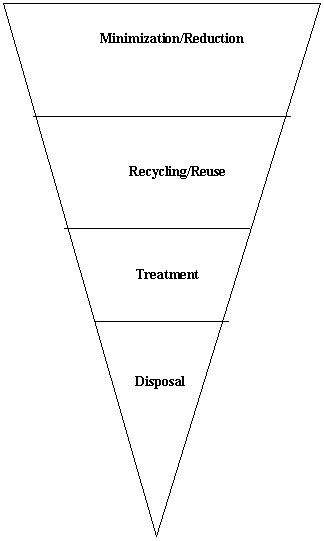
|
[114] Assistant Professor,
Department of Economics, University of the Philippines Los Baños,
Philippines. [115] For an extensive review of the international literature on the environmental effects of hog waste, see Catelo et al., 2001. [116] Class C waters are fresh surface waters whose beneficial uses include a) Fishery Water for propagation and growth of fish and other aquatic resources; b) Recreational Water Class II for boating and other activities not entailing personal contact with the water; and c) Industrial Water Supply Class I (for manufacturing processes after treatment). [117] Personal communication with Engr. Dionisio M. Ines, spokesperson of Barangay. San Juan de Mata residents in Tarlac. [118] Resolution No. 169, series of 2001 passed on September 27, 2001. [119] For more information, see www.igc.apc.org/nrdc/nrdc/nrdcpro/factor/cons.html [120] See www.checc.sph.unc.edu/rooms/library/docs/hogs/hogcase.html. [121] Visit www.inmotionmagazine.com/hwenv/html for more details. [122] Personal communication with Mrs. Juliet B. Meneses, Meat Inspector III, NMIC Regulatory Division. [123] For the very large farms (i.e., integrators), it is quite rare that visitors are allowed at all. [124] Personal communication with an animal scientist, University of the Philippines Los Banos. [125] Some households are forced to purchase airconditioning units or more electric fans than necessary and consequently, their electricity bills also increase. Others have used additional, thicker curtains and constructed higher cement walls. [126] As interpreted by Ms. Cora Gasapos, DENR Region IV. [127] Personal communication with a hog contract grower who had to request an accredited personnel to prepare the IEE because he lacks the capability to do it himself. Since the personnel was a friend, only PHP15,000 was charged instead of the minimum fee of PHP50,000. There is also a PHP3,000 processing fee and several other requirements such as: vicinity/cadastral/topographic map, panoramic view of project site and adjoining properties, LGU certificate, zoning/locational clearance and other permits from concerned agencies. [128] The fixed fee depends on the volume of wastewater discharged: 0-30 cu.m.=PHP5,000; 30-150 cu.m. = PHP10,000 and >150 cu.m. = PHP 15,000. The variable fee is computed by multiplying total kg.BOD by PHP5/kg. Kg BOD = (BOD concentration x volume of discharge x no. of discharge days x.001 conversion factor). [129] For details, see LLDA Resolution no. 169, s. 2001. [130] Some backyard and small commercial hog farms are not aware of such food safety concerns. [131] See www.ace.or.id/pressea/philippine...ass/currentand plannedutilisation.htm for details |