


The four field projects in this chapter are taken from the Interregional Project for Participatory Upland Conservation and Development (PUCD). This project started in 1991 with the aim of promoting people's participation in the conservation and development of upland catchments. It is financed by the Italian Government and executed by FAO. After completion of the first phase at the end of 1993, the interregional project was extended for another period of three years. In the national field projects, emphasis is given to the adaptation and application of participatory methods for the promotion of an integrated approach to watershed management. Direct support is given to projects in Pakistan, Nepal, Rwanda, Burundi and Bolivia (Bolivia is not included in these case studies).
The development objective of this interregional project is the active involvement of local communities in the management and development of upland catchments in accordance with the social, economic and production system requirements of the rural communities concerned. The immediate objectives of the interregional project and the individual field projects are: (1) the installation of five integrated upland conservation and development projects in the selected countries incorporating the participatory approach; (2) the coordination of upland catchment management systems in the five target countries, ensuring mutual strengthening of design, planning, implementation, monitoring and evaluation of methods and tools; and (3) contribution to information dissemination and transfer of approaches, methods and techniques on participatory management of upland catchments.
The project approach is process-oriented and focused on local capacity building. Project workplans are based on the outcome of the participatory planning process. Interinstitutional networking and linkages are considered important instruments for broadening the scope of technical support available for implementation of local plans with the local communities. In addition, this networking is crucial because sustainable management of watersheds also depends on services of a "public works" nature from the government.
In each of these field projects, the first three to four months were reserved for assessment, restitution and planning with the local population. To facilitate this participatory approach, tools of PRA and RRA were selected and tested in action. On the basis of the results of this initial PRA/RRA period, a workplan for immediate implementation was prepared by the local population together with the project team. Implementation of activities started in most cases by the end of 1992.
The interregional project was designed with an initial pilot phase of two years in order to develop and verify the methodological approach and tools. Therefore, during these first two years, a special emphasis was given to the exchange between the five field projects of experiences undergone and lessons learned. To that end, the five project teams met in Rome for an internal technical review meeting at the conclusion of the pilot phase. The results of this meeting are presented in Chapters 3 and 4.
In Nepal, the project is working in the Bhusunde Khola Watershed (BKW), located in Ghorka District in the Western Development Region. It has an area of 44 km2 with a steep topography. It is a typical mid-hill area of Nepal with north-facing steep slopes and south-facing gentler slopes. The climate varies from subtropical in the low lying areas (around 450 m) to subtemperate in the upper parts of the watershed (around 1 500 m). The area has a population of approximately 20 000 people. Brahmins, Chhetries and Gurungs represent the major ethnic groups, but ethnic and occupational caste groups such as Kumal, Kami, Damai and Sarki also inhabit the area in small numbers. Most of the villages and settlements are inhabited by mixed ethnic and occupational castes except for some homogeneous settlements of Gurungs, Brahmins and Kumals. Population pressure and economic hardship have resulted in migration to the Terai and other areas over the past several decades. This migration continues.
As small farmers, the people depend on subsistence agriculture. The average landholding is less than one hectare. Most of the area in Bhusunde watershed (65%) is under cultivation. The valley floor and the bottom slopes are usually under irrigated rice cultivation, while dryland crops are cultivated on the upper slopes of the mountains. Livestock is an integral part of the farming system. Traditionally, animals are grazed on community land and forest: this grazing land is very scarce, so the pressure of animals on land is very high.
Households are clustered into small hamlets or villages (tols) scattered within "wards", the lowest level of government administration. In this area, government administration is based on four Village Development Committees (VDCs), each one made up of nine wards. VDC members (Chairperson, Vice Chairperson and Ward Representatives) meet once or twice each month. They regulate all development activities in the VDC. There are no women Ward Representatives.
It is common for households within tols to be linked by patrilineal kinship ties. The most important unit of social organization and economic life is the individual farm household (ghar or pariwar). At this level, significant decisions regarding land use and farming practices are made, influencing both privately owned resources and common lands. This process of decision-making is democratic, consensual and egalitarian, with women members and even children participating in household discussions, which are aimed at reaching consensus. In public meetings, where consensus is also sought, women are absent. Although women play active roles in farm decision-making, their status is inferior to that of men in many other respects. This is particularly so among the high caste groups, where women in general have far less autonomy, authority and power than men both outside and inside the home. However, education and new economic opportunities for women are changing this traditional picture of gender inequality among high castes. Among middle and lower caste groups, a greater social and religious equality between the sexes has always existed.
Infrastructure in the area is minimal. There are no roads, health clinics or post offices, nor are there adequate water systems. The trails or farm roads are difficult to travel in the hilly areas. The most visible infrastructural feature in the area is the large number of schools. On the other hand, a number of development organizations are active in this region The Gorkha Development Project (with German bilateral aid) works mainly throught VDCs and the government ministry offices in Gorkha District. International non-governmental organizations (NGOs) such as Save the Children, CARE and Worldview International, as well as local NGOs (Drabya Shah Community Forestry Preservation and Management, Sarbodaya Society Building Association, Community Development and Research) provide valuable opportunities for linkages with the project.
In this project, participatory rural appraisal is considered the first step in a larger participatory process that will continue throughout the life of the project. The initial PRA activities were specifically focused on directly involving villagers in the planning that guided implementation of the activities through the first year. The sequence of the different stages is described in the diagram in Figure 6.1 (below). The diagram shows that the project uses participatory assessment at six separate times, giving inputs at various points along a chain of stages linking the farmers of the project area to the implementation of their activities.
1. Appraisal
At stage one, a rapid field reconnaissance was carried out over the entire project area as the initial step of the planning phase. Contacts were made in the field with the villagers in each VDC area in order to familiarize them with the project and its objectives, to introduce the VDC members to the project field team and to discuss and record major issues related to soil conservation and management. For this purpose, maps of VDC areas were prepared for further discussion and analysis at VDC level. These maps served as reference for identification of the villages that were in greatest need of watershed conservation and management activities. On the basis of the results obtained, pilot villages were selected for follow-up actions. Village meetings were held and local priorities for project activities were identified. By the end of these meetings, a long list of activities was obtained for each area. These village meetings were positive and informal, without going through the official VDC structure. They focused attention on specific activity selection rather quickly, without a prior, structured process of problem identification or an analysis of the physical and social conditions of the communities.
Next, there was a second series of field visits for the purpose of narrowing down the long lists of priorities for project activities. This time, a record was kept of persons attending the general meetings, as was a list of the priorities decided upon. After these general meetings, one member of the project team went on "site tour" with a small group of villagers to see and discuss each site (gully, landslide, trail, forest). These "site tours" provided a good opportunity to discuss informally many aspects of potential project activities. Other members of the project team occasionally remained in the main village area to conduct semi-structured interviews with women. Towards the end of these field trips, more structured assessment activities were conducted in two villages on the basis of the results of mapping exercises for the natural resources. These exercises were videotaped, as was a general priority-narrowing meeting with villagers and project personnel.
These initial assessment tools (general meetings, semi-structured interviews, site tours and mapping) were already familiar activities to villagers, with the exception of mapping. This allowed for flexibility and informality, which put villagers at ease and stimulated open discussion and debate. This was enhanced by the fact that these meetings were arranged in village communities rather than through the VDC/Ward structures. On the other hand, the timing of the second stage during the rice-harvesting season was not convenient. In the case of village women, interviews were held after (instead of before) the general village meeting when important decisions had already been made. This activity showed that women were eager to discuss their interests in small groups and that in some cases their priorities differed from those of men.
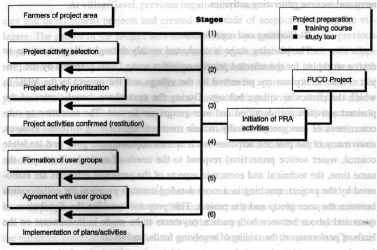
Figure 6.1: Participatory assessment (PA) stages
2. Restitution
During the stage of restitution of the results of the assessment of priority issues, meetings were held with the villagers and videos of previous meetings and slides of critical sites in the project area were shown to them. During this phase, three major sessions were conducted. First, a meeting was arranged in one of the villages. However, transport of video equipment proved to be so difficult that the planned activities had to be dropped. For the second session, farmers from each of the remaining villages were invited to attend a meeting at the base camp of the project. Along with 10 male farmers, two women (both from the same village) attended this meeting.
Project activities were reviewed site by site, then an agricultural calendar was prepared for the assessment of time availability of both men and women for project implementation. This exercise was conducted as a first step towards planning the implementation of the identified activities, trying to match labour needs for project implementation with local labour needs for agricultural tasks. The day after this meeting, a final session was held at the base camp with VDC chairs and vice-chairs in order to inform them officially of project activities and methodology. The following development activities and resource management measures were confirmed with the village representatives: water source protection, trail improvement, irrigation channel improvement, gully and landslide control, degraded land improvement and income generating activities.
3. Planning and organization
The planning stage is conducted mainly through village meetings to draft a workplan for the selected priority activities using forms prepared by the project. These workplans are presented by the village and the project to the VDC to which the particular village belongs. During the next phase, beneficiaries of the planned activities are identified and user groups are formed. The executive or subcommittees of user groups usually include members representing different villages, since many of the planned activities (such as trail improvement, gully and landslide control, water source protection) respond to the needs of several villages. At the same time, the technical and economic aspects of the proposed activities are elaborated by the project, resulting in a more detailed contract proposal for collaboration between the user group and the project. This proposal specifies the distribution of costs and labour between both parties, payments to be made in instalments on the basis of performance, the raising of revolving funds, and so on.
4. Implementation
So far, almost all planned activities have been implemented by 22 user groups. The project has provided the required material, financial and training inputs. The user groups assumed their responsibility for the organization and mobilization of the labour inputs. Support from other line agencies has been sporadic since the activities selected were those that would remain as much as possible within the mandate of the government counterpart agency, the Department of Soil Conservation and Watershed Management.
One of the major constraints faced by the project since its initiation has been the insufficient number of field staff and poorly timed transfer of international staff to and from the project. Initial training for project staff was not sufficient to develop the necessary conceptual orientation and analysis of participatory approaches; nor was it adequate in terms of practical training in the effective use of PRA tools in the field. Moreover, very poor infrastructural facilities in the field resulted in transportation and communication bottle-necks that impeded effective coordination between the project and the villages. Because of these and other circumstances, field staff preferred to remain in their offices rather than spend more time in the field and stay at the base camp.
At village level, previous negative experiences with government agencies and development projects had created an attitude of scepticism among the villagers. The people of the project area have been heavily conditioned by the previous "top-down" style of development projects, and they have established their own adaptive attitudes of suspicion, mistrust and pursuit of individual gain. Under these circumstances, it is important for a project to show that its approach is innovative. To promote this innovative approach effectively in the field, the project staff has to have the right skills and attitudes and a proper understanding of participatory approaches. As mentioned, the project faced serious constraints in this respect. Moreover, the project had to demonstrate its credibility as a serious partner, meaning that activities should produce rapid results.
Participatory planning, however, takes time, requiring careful assessment of proposed activities with the different interest groups before implementation can be initiated. This might easily result in decreasing interest in the project among the villagers, especially among the less privileged. In this case, the process of participatory appraisal and planning of participatory was speeded up. Activities were selected without a community environmental assessment exercise or problem identification and analysis. Together with these constraints, the potential opportunities for improved resource management in the area include a strong local awareness of and concern with problems of environmental degradation. In addition, villagers are very able and apparently willing to organize themselves into viable user groups. A strong tradition of democratic discussion and debate and group decision-making through consensus is also an asset. Finally, the recent political changes in Nepal have encouraged people to express their interests more openly and to pursue their rights to control their natural resources.
Most of the planned activities have been implemented, and the user groups have demonstrated their technical and administrative capacity to carry out the activities as agreed upon with the project. However, most of the villagers consider the project-supported activities not as their own initiatives but rather as ad hoc external initiatives to which they contribute. This perception is further reinforced by small but important details. For example, in order to assess critical areas of the watershed in which to focus project activities, a base map was prepared by the project instead of the villagers. The villagers indicated critical areas with coloured paper markers, which they could have done without any support from the project team. After the meeting, the map was removed by the team for reproduction, instead of remaining as property of the VDC.
Under the responsibility of the user group committees, labour and time are mobilized for specific activities, such as trail improvement. Once the work has been finished, maintenance and repair activities become necessary that do not necessarily require the large-scale mobilization of labour. Therefore, although most of the activities were identified as short-term solutions for specific problems, they should gradually be placed within the context of an integrated approach to participatory management and conservation of natural resources. The results achieved so far should be used as inputs for new priority activities, in order to develop a coherent sequencing of project development.
This might also have consequences for the organizational set-up for local project planning and implementation. Thus far, single-activity user groups have been formed. In some villages this has led to a proliferation or duplication of these groups, creating confusion and problems of coordination and administration.
Organizational structures need to be promoted for planning and implementation of an integrated and coherent programme of interrelated activities.
This case study has demonstrated that sufficiently trained field staff is a precondition for the effective promotion of participatory approaches in the field. Training and preparation of project staff should be focused not only on practical skills but also on conceptual, methodological and attitudinal issues. The practical field experiences should be used systematically as inputs for further capacity building of the project staff.
Only limited baseline data about the local communities were collected, and particular attention was not paid to specific interest groups. Unless special meetings are held with disadvantaged groups such as the poor or women to discuss and analyse their problems and opportunities, it is difficult to elaborate strategies to facilitate a higher degree of participation for them. It is difficult to counter the influence of local artisans and the elite in planning and implementation. Particular emphasis should be given to the elaboration of strategies to ensure that women are involved in the assessment, planning and implementation phases. Women are not members of the VDCs and traditionally do not become involved in local group meetings. They are, however, key actors with respect to forest resource use, and they are strongly affected by the consequences of poor upland conservation, such as degraded trails, landslides and poor water sources.
Furthermore, little systematic attention has been given to local knowledge systems with regard to management of natural resources. Of course, during the public meetings, individual interviews, site visits, planning meetings and implementation of the activities local knowledge and skills have been expressed or used by the villagers. However, the technical design of some of the selected activities, for example, was prepared mainly by the project staff or external advisers.
In practice, the participation of most of the male villagers is limited to the stages of appraisal, restitution (to a certain extent) and implementation, and to a lesser extent to the elaboration of specific plans. However, the project and its participatory approach aim at encouraging local people to come together in consultation with the project, to determine activities, discuss their feasibility and define the responsibilities of the different actors. This process should be seen as a learning experience for the local community and for the project, and that takes time. Although it seems interesting to invite village representatives to the base camp to attend a three-day planning meeting, this reduces the planning exercise from a village-based learning experience almost to that of an individual. Broad-based village participation or consultation for planning is fundamental. This helps the local people to understand more clearly what their "participation" in "planning" means in terms of their power to make decisions.
Finally, the case study has shown that it is very important for community members to feel that some progress is being made. In the case of the Quetta case in Pakistan (below), photo albums were used as a system to record some of the important moments during the process. In addition, a contract was signed with a local NGO to provide specific services to some of the villages. In the Bhusunde Khola watershed the services of a number of NGOs could have been mobilized in order to undertake short-term interventions. The initial period of time allocated for the participatory assessment and planning phase of the project was too short in view of the size and population of the watershed. The availability and professional experience of national and international project staff was a bottleneck.
In Pakistan, the project is being executed through the Balochistan Forest and Wildlife Department of the Ministry of Agriculture. The project area is the Kanak Valley, Mastung District, Balochistan, southwest of Quetta. It is an area of about 40 000 ha with a population of about 20 000 living in 40 villages. Its climate is semi-arid with an average precipitation of 170 mm. Within this area, the 8 000 ha subwatershed of Noza has been selected to start project activities.
The population of this watershed belongs to the Brahui ethnic group, composed of more than a dozen tribes, which are divided in clans, sections, subsections, lineages and sublineages. Each tribe is ruled by a Sardar, the chief of the tribe. Usually the village is a small community that coincides with a segment of a lineage or with some extended families. Thus, all the families of a village usually have strong kinship bonds. Each village has a leader or chief. Decisions are taken on behalf of the village by the chief and an informal village council. This council is composed of the elders or old wise men who represent the interests of the villagers. Women are excluded from this decision-making body. In Brahui society, the status and position of women is very low and, because of the control of men over their behaviour and movements, they have very little direct access to life outside the village.
An estimated 6% of the land is used for rain-fed agriculture, 2% for irrigated orchards, 1 % for vegetable production and the remaining 90% left for grazing animals in the so-called fan areas. The use and ownership of uncultivated land is usually governed by traditional land tenure systems and used as communal property. This kind of land is very often degraded through overgrazing and soil erosion. Most of the fan area and a certain portion of land around the villages fall into this category. Land used for agricultural purposes is divided among all the families by the village chief according to the needs of each family. In addition to this system, there are written laws and regulations that give the property rights to land based on public registers. These two systems overlap and either or both may be used according to the circumstances. Furthermore, tenancy is a very common form of land use in the project area. An estimated one-third of the farmers are tenants while two-thirds are owners or holders of traditional use rights. Most of the land worked by the tenants belongs to absentee landowners living outside the Noza project area. In the most common tenancy arrangement, labour is provided by the tenant while all other inputs are provided by the landowner. Then, the landowners receive two-thirds of the total output and the tenant retains one-third.
Water, because of its scarcity and the low rainfall levels, is the most important natural resource in the area. The most significant cash crop, apples, could not be produced without irrigation from tubewells. In the 14 villages of the project area there are 80 tubewells. On irrigated land worked by tenants output is divided as follows: one-seventh to the landowners, two-sevenths to the tenant and four-sevenths to the well owner, the person(s) who has invested the capital for digging the well. On irrigated land worked by the owner, four-sevenths of the output goes to the well owner and the remainder is retained by the landowner.
Educational facilities are very poor and as a result about 90% of the population over 10 years is illiterate. The literacy rate for girls and women is only 1% as there are no schools for girls in this region. Similarly, primary health care facilities are very limited, in particular for maternal and child health care. As a result, health is a critical issue for women in the project area.
1. Appraisal
The project started with preparatory activities for the execution of an initial participatory assessment and planning phase, which involved the rural population in the elaboration of the project workplan. For that purpose, in a limited number of villages, the methods and tools of PRA were tested. Prior to this, secondary data were collected and contacts with other relevant organizations were established. At the end of this preparatory phase, the project was presented to the project area Union Council, which is the local representation of the Provincial Government of Balochistan.
During appraisal, the following tools were used: group meetings, timeline exercises, map building exercises, semi-structured interviews, ranking, rating and sorting exercises, community environmental assessment (transect walks) and strengths, weaknesses, opportunities and limitations (SWOL) analysis.
The timeline exercise was used during group meetings as an instrument to encourage discussion of present problems and issues, and explore their relation to historical events. The drawing of village maps proved to be a very successful activity to understand how the villagers see their village. On the other hand, the activity as such is easily monopolized by those who know how to use the drawing materials. Although both tools are supposed to be instruments to orient further discussions, the general impression is that the villagers considered these activities to be something for the project, and not for themselves: they provide the project with information it needs to determine the activities to be implemented.
The transect walk usually took place after the timeline and map building exercises, and was used as a means to verify and complement the information. These field visits with farmers were very useful in obtaining a better idea of the complex water management systems. Villagers showed interest in the transect walk because it gave them the opportunity to illustrate their problems in the field. However, the objective of these field visits should be clearly explained as they might also be perceived by the farmers as a commitment by the project to solve individual problems.
In the case of the women's programme, similar tools were used but different challenges had to be faced. Group meetings are new for these women, since they have not had previous contact with other projects nor with health or social welfare workers. The project team had to help women to learn how to conduct meetings (speaking one by one and listening to each other). In addition, since women do not have much authority over children, toys were included in the toolbox in order to keep the children relatively quiet. After two months of regular group meetings it was possible to hold productive sessions in relative peace.
In every group meeting, one project team member acts as the "observer" and records the meeting. This has been very useful as it constituted a good in-service training opportunity for the staff in disciplined listening. The observer's notes are discussed by the team and used as inputs for the planning for the next meeting. As the women are illiterate, tape recorders were used to record group discussions and decisions. The tapes are replayed for the village women to reinforce group discussions and to illustrate the process. Moreover, although photographing women is culturally sensitive in the project area, project photo albums have been introduced in all the villages. A technique employed by the team for strengthening village organization and group building among the women is to remove all the photos from the album and ask the women to arrange them on the floor in sequence. Spatially, women are more accustomed to working on the floor than sitting and viewing a flip chart. The women then discuss the sequence of activities done by the group and while doing this they remember the process and can see their own progress.
The timeline exercise was conducted by women in two villages. Some older women, married into the family of the village chief, were the appointed "speakers" for women and they outlined the history of the village with younger women listening and occasionally giving comments. The timing of events is established mainly through association with marriages, deaths and births in the village, or with natural calamities such as floods or epidemics. For these women, the exercise seemed to be one of listing all the negative events in the past ten years of their lives. Initially, the map building exercise created some difficulties because the women were very shy about using drawing materials and paper. One of the women said: "Oh, we are illiterate. How can we possibly make anything on paper?" But once they started drawing they had few problems. The project team was hesitant to suggest a transect walk because it was not known how women moved about the village, but the idea surfaced naturally when the women were anxious to show the project team the village after drawing the map. Because residents of these villages are all related, women are free to move within the village. but they use certain routes.
Finally, daily time profile exercises were included as a tool for the participatory appraisal phase. For this exercise, use was made of cards of different size with simple drawings of women performing specific activities. Women select a drawing that indicates what they do at a certain time of the day and the size of drawing selected suggests roughly how much time is spent on the activity. This exercise was used as a tool of holding semi-structured interviews with key women informants. In the early phase of the PRA it was found, however, that women were reluctant to allow project team members to hold private interviews. There are feelings of jealousy in the group and women think that if project staff talk to a woman individually then this particular woman might gain something from the project that others won't get. A similar point was observed in the case of the visits to the individual farms of the men. Therefore, the team decided to conduct this exercise with one or two women in a group setting so that all women could see what the exercise involved. Then women were asked to volunteer to do the exercise with the project team in their own homes, which proved to work quite well.
2. Restitution and planning
On the basis of the results of the assessment phase, the project has been able to get a better perception of the main issue in the sustainable management of natural resources. In the past, the production system comprised subsistence agriculture (rain-fed and irrigated) on the plain areas and livestock husbandry in the poorer grasslands of the fan (grazing) area on the slopes of the mountains. Traditional karezes (hand-dug underground irrigation tunnels) provided water to irrigate the fields for vegetable and fruit production.
Increased population pressure, the introduction of the motor pump, the low price of energy, the availability of technology for digging tubewells and the increasing market for cash crop production have led to rapid expansion of irrigated agriculture. Tubewells provide increasingly large and unregulated amounts of water to agricultural fields, resulting in a lowering of the level of the water-table by some 0.8 m each year. Furthermore, there is a great waste of water. Once pumped to the surface, water is "stored" in ground reservoirs and channelled above ground, mostly through unlined canals to the fields. Nearly 30% of the water pumped to the surface is lost through infiltration and evaporation. Another problem is related to the degradation of the fan area grasslands. This common property land used by transhumant herders has become overgrazed and of very limited utility. No trees are left and what cannot be grazed is cut by farmers and nomads to meet their fuel needs. As a result, infiltration of rainwater has decreased significantly, to the point where the traditional karezes are drying up, triggering increased well digging.
In view of this analysis and the desired actions mentioned by the villages, the project has been able to distinguish three fields of action as a general framework: (1) increase the infiltration of rainwater by reducing runoff; (2) improve on-farm water harvesting techniques and water management; and (3) improve water-use regulations. The next step was to review and discuss this framework with the villages and identify and agree upon priority actions that would fit within this framework. In practice, this meant making a more thorough cause-effect analysis of the issues mentioned by the villagers, in order to arrive at a feasible plan of action for each village. For that purpose, posters were prepared and presented to the villages in order to visualize the "water issue".
Since the main problems are water-related and most of the dug wells and tubewells are the private property of a small number of powerful people, it was difficult to visualize a comprehensive strategy within reach of the majority. People know that the excessive number of wells is a key factor in lowering the water-table, but they feel they cannot do much about it. This is partly true. In spite of restrictive regulations, it is not too difficult for contractors to get an official permit to install a new tubewell. As a consequence, their number is still increasing and the situation can best be described in terms of "mining of water."
However, the farmers depend for their income on wage work done on tubewell irrigated lands. Hence, measures that would affect the tubewells might affect their job opportunities as well. Therefore, it was decided to follow both a short-term and a long-term strategy. In particular, the short-term strategy was very important, since a follow-up phase of the project was not yet guaranteed. For the short term, the project and the villages agreed to implement activities that would optimize efficient use of irrigation water by reducing waste due to infiltration and evaporation, such as the construction of underground cement pipelines from the tubewell to the reservoir, cementing of channels and reservoirs, establishment of nurseries for the production of seedlings far the fan area (fuelwood and fodder) and for the orchards (fruit trees), repairing of dikes and field levelling and rehabilitation of experimental plots in the fan areas.
In the case of the women, poultry raising was agreed upon in most of the villages as an income generating activity for which support could be expected from the project. The assessment phase encouraged a broad identification of problems and needs. Although it was possible for project staff to guide women to select activities that the project is capable of supporting, the assessment had raised their expectations. While they expressed their needs for fuel and fodder, their priorities, aside from income generating activities, concerned the need for health services and education. Therefore, the project contacted government line agencies and NGOs to provide their services in these fields.
The restitution and planning phase has been a crucial moment for the elaboration of the project workplan and the mobilization and allocation of project resources and services. In addition, this phase resulted in a very dynamic process of negotiation between the villages and the project concerning the activities as proposed by both of them. In some cases, village proposals have not been supported by the project, such as the construction of a school or a tubewell. Some project proposals, such as rehabilitation of degraded fan areas, were agreed upon by the villages if other villages would do the same.
Once the activities had been selected, the project started to assist the villages to plan and undertake their implementation. For that purpose, Village Associations were established, both for men and for women. The Village Associations are seen as vehicles for the planning, organization and implementation of an activity being undertaken in collaboration with the project. The strategy of the project is to assist the villagers in understanding and respecting certain rules and procedures applied to the support provided by the project. The role of the project is to provide technical assistance, advice and some physical inputs to selected activities while the villagers are responsible for organizing and implementing the activities agreed upon. Since most of the Village Associations have been established recently, it is too early to comment upon their functioning.
It has proved to be difficult to achieve a clear understanding among the villagers of what the participatory approach means in practice. In this region, near the Afghan border, many projects are delivering relief to Afghan refugees. It is understandable, therefore, that the villagers should assume that outsiders are always the "givers", bringing free inputs to poor people. It appears that this attitude prevails irrespective of a project's methodology. It is an attitude that constantly needs to be addressed by the project team. In addition, there is also the attitude expressed by many women that "we are poor and illiterate therefore whatever is decided or whatever happens, we will be grateful". It is common for the villagers to consider themselves too poor to undertake action or not intelligent enough to assume responsibilities.
Participatory approaches aim at creating opportunities for different interest groups to express their priority needs and problems. In the Kanak Valley it was difficult and almost impossible to involve the different interest groups in the appraisal phase. First, it took more time than expected to contract female project staff to start fieldwork with the women in the villages. There are almost no Brahuispeaking female professionals and the competition in the donor community to contract these scarce human resources is very strong. Because of these limitations, field-work with the women started long after the project had initiated its activities in the villages. Second, the appraisal exercises were conducted with small groups, mainly composed of representatives of the local elite. In spite of the efforts of the project team to propose to the village heads to invite more people to attend the meetings, the results have not been fully satisfactory. An important factor in this context is the role and powerful position of the village chief. He feels that he represents the villagers, so from his point of view there is no need to invite other villagers except close relatives. Moreover, the timing of the appraisal exercises during winter was not appropriate (although it could not be postponed). Many villagers work as day labourers, so that meetings cannot be held before 3 pm, and even then many people have not yet returned. Formal meetings in the evening are not possible, at least in the winter, because of the failing light and the low temperatures. Another factor is that many people in the project area spend the winter in the lower parts of Balochistan, especially the livestock owners (who wish to feed their animals and to look for wage labour) and day labourers. Even the elders, who play an important role in decision-making, often leave the area in winter in search of warmth, or for religious activities. Finally, in particular at the beginning of the period of work in the fields, some villages did not appear to be interested because the project could not give a clear answer when asked what activities would be executed. It seems to be that this "lack of clarity" has been interpreted as lack of openness, which has created some distrust. On the other hand it should be kept in mind that the participatory appraisal exercises require significant investments from the participants in terms of time, patience and understanding. The appraisal tools as such do not enhance participation of the local population: people will not join the meetings just because they like the exercises. In particular the less privileged groups usually assume a wait-and-see attitude to decide whether or not these activities are of interest to them.
The language issue has been an important constraint, both within the project and between project and villages. In particular at project level, it turned out to be difficult and sometimes impossible to translate some of the basic concepts for which no proper equivalents seem to exist. In all training sessions for the national field staff, translation into Urdu was needed, which affects the quality of these events. Moreover, this situation made it impossible, in particular for the international staff, to use specific situations or group dynamics experienced in the field as references for practical field staff support in situ.
The methods, techniques and tools used, worked well in general. Effective use has been made of the "toolbox", which proved to be very useful. The approach was new for the villages as well as for the national project staff. Therefore, in particular for the field staff, intensive in-service training and follow-up support in the field was needed. For both groups, this way of working with each other was an interesting experience that was gradually internalized. However, appraisal exercises have to be carefully explained in terms of objectives, methods and expected results. In order to reorient the general understanding among the villages that these exercises are conducted for the benefit of the project (which, to a certain extent, is true), it is important to develop feedback instruments as much as possible. The photo album, as used in the women's programme, is a good example. In general, visualization of the different steps and the progress made seems to be an effective way of recording the process. This kind of visual recording provides also the means to monitor the process, by understanding the extent to which the issues are understood among the parties involved and whether the process is moving in the right direction.
It has been mentioned that meetings and discussions are easily monopolized by the representatives of the local elite groups. Because of this situation, many villagers do not attend the meetings or keep silent. Under these conditions, the field staff has to act with a certain diplomacy, trying to create conditions that might permit a greater number of people to participate. It has been demonstrated in the Kanak Valley that individual exercises, such as drawing, are effective tools to stimulate each individual to express his or her perceptions, no matter whether they know how to manage the drawing materials. However, the experiences demonstrate that the PRA approach, which is aimed at general participation, does not easily lend itself to traditional hierarchical social groups such as those existing in the project area. In this context, the project women's team has concluded that in some villages more emphasis needs to be put on group building and training to increase individual self-confidence and participation before moving to the identification and planning for activities.
The PRA was conceptualized as an initial stage of the project, aimed at the generation of the project's workplan for the time left until the completion of its (first) two years. In practice the PRA did more than that. The PRA tools generated information that proved to be relevant for setting the agenda on both sides. At the same time, they stimulated a process of mutual confidence building as a result of the intensive interaction between the villages and the project. Because of frustrating past experiences with the Forestry Department and projects, this confidence building is a fundamental step for participatory approaches to be effective. Interpersonal communication skills of the field staff and their ability to listen and to learn are priority areas for their training and support. This has to be done systematically, for example through special task assignments to record the meetings with the villages and to review the notes critically afterwards as a group.
Restitution of the results of the assessment phase needs to be carefully prepared, implemented and evaluated. The experiences in the Kanak Valley demonstrate that it is convenient to invite other organizations or departments to attend these meetings with the villages when delivery of their services is being considered. Feasibility of village proposals has to be discussed with the villages and technical and organizational aspects should be elaborated with them. A striking example has been the proposal of women to start a commercial poultry farm. The practical consequences of having a commercial poultry farm were elaborated with inputs from the technical support staff in group discussions. Then it turned out that the idea was imposed by the men and that the women had never considered all the steps and the time involved in successfully operating such a farm. Probably, the men had imposed this idea anticipating that in practice they would run the farm themselves. Other cases have also shown that proposals should be carefully reviewed and discussed. Specific information on crucial aspects, such as ownership of land or water sources (wells) should be in order to prevent decisions being made on the basis of incorrect or incomplete information.
The establishment of Village Associations constitutes an important first step towards strengthening local capacity for the planning, implementation and monitoring of specific activities. This institutional strengthening at local level is still in its initial stage and needs to be further supported by the project through training and regular follow-up visits. The small size of the village populations and the fact that most of the families are related to each other seem to be contributing to the effective functioning of the Associations. On the other hand, there are significant differences within and between villages with regard to availability of and access to resources such as land, water and livestock. Therefore, the Village Associations will probably not succeed in mobilizing the village population in general unless opportunities are created to propose activities that respond to the interests of specific groups. Although the project does not have the means to change the existing power structure within villages or Village Associations, the field staff should still endeavour to ensure the inclusion of all interested villagers and to encourage full consultation when decisions are taken. The project should also promote equitable arrangements for sharing responsibilities and benefits related to the activities supported by the project.
In Rwanda, the PUCD project is working in three sectors of the commune (Municipality) of Runyanya, Province of Butare, in the south of the country. The Municipality is the executing agency. It is an area of about 35 km2, with a population of 13 000, giving a density of 370 people per km2. The three administrative sectors are Kibingo, Karama and Buhoro. Each sector is composed of cellules ("cells", similar to subcounties), which generally include a number of collines ("hills"), the lowest level of organization for administrative purposes. Traditionally, the colline constitutes a social unit of organisation, control and solidarity based on extended family links and interests, under the leadership of a Council of Elders. The social and physical collines do not necessarily coincide: a physical "hill" can include more than one social colline and vice versa. Therefore, the physical division of a watershed can have consequences for the colline as a social unit, with one part of an extended family "belonging" to one subwatershed and another part to another subwatershed. The main ethnic groups are Hutu and Tutsi. The Batwa constitute a small minority and are a disadvantaged group.
The climate is temperate with an average temperature of 20oC, four seasons and an annual rainfall that varies between 1 000 and 1 400 mm. The collines are a characteristic feature of the landscape with an altitude of around 1 850 m. In general, the soils are degraded and poor. Subsistence agriculture is predominant, practised on small landholdings. Around 80% of the farmers have less than one hectare.
Officially, all land belongs to the State, but traditional usufruct rights are usually respected. In the irrigated lowland areas, however, a process of concentration of land-holdings in the hands of a few families is under way. Because more and more land is being brought under agricultural production, grazing lands are disappearing. As a consequence, the number of cattle is decreasing rapidly, resulting in diminishing supplies of organic fertilizer available for agriculture. Because of demographic pressure and lack of off-farm employment opportunities, land is being overexploited for agricultural production and the average size of landholdings is becoming smaller. The combined effects of rising population, hilly topography, poor quality of the soils and climatological irregularities have resulted in a serious degradation of the natural resources.
Starting in July 1992, the project conducted a participatory appraisal with the local population. This was an iterative process of problem analysis, planning, programming and implementation of priority actions, followed by planning of more complex activities for the short and mid-term. A detailed project workplan was elaborated and finalized on the basis of actions selected and planned by the population. The process can be described as follows.
1. Appraisal phase
This phase included preparatory activities including getting acquainted with the local environment and selecting 10 representative "pilot-collines". In August a four-day training session on the participatory approach was conducted for project staff. As in the case of Nepal, this workshop was attended by representatives from other projects and organizations working in this region, so that the objectives and methodology of this project could be explained to a wider public.
After this workshop, in collaboration with two local NGOs, two multidisciplinary teams conducted fieldwork in the selected area at colline level, sub-colline level and farm level. The meetings at colline level were announced and introduced by the government representatives of the respective Sectors of the Municipality of Runyinya and were attended by numerous people, both men and women, of varying ages. More structured appraisal exercises were conducted at sub-colline level and farm level. Several PRA tools were used, including semi-structured interviews, the timeline exercise, the agricultural calendar, and rating, ranking and sorting of agricultural crops. Meetings were videotaped. About 40% of the participants at the meetings were women. This fieldwork period took almost one month. During the appraisal phase, people were invited to express their needs and to propose actions. Because of the relatively long history of development assistance projects operating in the region, the first reaction of most people was: "What will the project be doing for us?" They were generally quite surprised when asked what they felt the project should do. Most people wanted the project to carry out activities to generate employment opportunities and income.
2. Restitution phase
This phase took 2-3 weeks, was completed by the end of October and was less elaborate than the appraisal phase, mainly because this phase coincided with an agricultural peak period. Because of this, the groups attending the meetings were smaller. The meetings started with a presentation of the objectives, followed by the video that was made of the appraisal meeting. After the video presentation, people were invited to make comments. When environmental issues were discussed, these points were further illustrated with the projection of slides of relevant local sites and situations. This first part of the restitution phase was concluded with a presentation of a summary overview of the issues raised. On the basis of this overview, the people indicated what they considered most important. Those actions that everybody agreed were priority actions were kept as "definitive". This resulted in a list of identified priorities, which was still very long, ranging from agriculture and animal husbandry to water, infrastructure, crafts, extension and training, health, and education. On the basis of this list, three programmes were then formulated by the project: soil conservation and soil fertility improvement, income generation and infrastructure.
Out of the activities identified, so-called "spark actions" (actions étin-celles) were selected. These are actions that the people consider to be urgent and of common interest, for which they are prepared to collaborate collectively and that can be supported by the project in the very short term. After having selected these "spark actions", a local "antenne" (usually a local leader) was selected for each of the collines as a liaison between the project and the colline population, and for feedback of the results of the meetings to the local population.
The restitution phase was terminated with an internal evaluation work-shop of two days, in which the project team discussed and analysed the results and worked out a first draft workplan. In addition to the project team, the Mayor of the Municipality of Runyinya, some of his technical and field staff and two farmers' representatives participated in this workshop. The workshop was focused on evaluating the results of the appraisal and restitution phase and elaborating strategies to provide adequate support to plan and implement the priority actions. In particular, training needs of the project staff and the farmers were discussed, as was the organizational setup.
3. Planning and organization
In order to strengthen the cohesiveness and the commitment of the local population, it was decided to start the planning phase with the "spark actions". For that purpose, training was organized in November combining technical aspects of the "spark actions" with methodological aspects of participatory planning. Subsequently, for the planning of these "spark actions" at field level, core groups of four persons were elected to support the local spokesperson, forming a development committee for each of the collines and responsible for the supervision of all the planned actions. This core group, however, would not touch the executive responsibility of each of the specific target groups. These core groups should become a dynamic unit for the promotion of local empowerment, integrated development of the colline and sustainable management of its natural resources. The core groups attended a four-day planning workshop in February 1993 to discuss and analyse the programmes for each of the collines. As a final preparatory step for the implementation phase, a workshop was held in March for the antennes and the project team to develop common criteria for self-evaluation, including indicators, phases, methods and tools.
4. Implementation
A total of about 150 groups, involving approximately 1 700 members, have initiated their respective projects. These comprise the three programmes mentioned above: a programme for soil conservation and soil fertility improvement, a programme of income generating activities and a programme for infrastructure improvement. Within the first programme, different projects are carried out, such as tree nurseries, hillside stabilization, planting of fodder grasses or shrubs, stall feeding for manure production, genetic improvement, erosion control and use of agricultural inputs. The target groups of each of the projects sometimes overlap. The organizational setup, as well as the mechanisms and procedures for external support, depend on the specific activity and the resources available. In some cases, existing équipes agricoles (agricultural teams) were reactivated by their members, and in other cases new groups were formed. Most of the activities are externally supported, both by the project and by the Municipality. In general, the groups themselves define their internal rules and regulations without project interference. In specific cases, such as genetic improvement, agricultural inputs and credit for livestock, more detailed agreements are made between the parties involved in order to ensure equal opportunities for those who meet the criteria as the project support is provided on a rotative basis.
The income generating programme includes projects such as the bakery for a girl scout group, a restaurant, a grain mill project, livestock (pigs and goats), local beer production and small shops. In general, these income generating projects have required more careful assessment of feasibility. In the case of the "Abunzubumwe" women's group, for example, the initial idea of the group was to start a chicken project. After a study tour to similar projects outside the project area, the women changed their minds and proposed a goat raising project as feeding of these animals would be less problematic and the products (milk/meat and manure) would respond to their immediate needs of improved diet and soil improvement.
As in the case of the income generating projects, the infrastructural projects (roads, bridges, management of water sources) have to be carefully and critically assessed, including from a technical point of view, because their implementation requires large-scale mobilization of labour and sometimes high financial investments. On the other hand, particularly in the case of the water sources projects, it was found that in general the organization of project management was established by the local people almost spontaneously, and that in most cases rules and regulations had been clearly defined. The conclusion might be that the more an activity responds to real and vital needs of the majority of the local population, the more spontaneously the people take action and organize themselves.
The activities carried out so far have led to a number of results. Without any doubt, the capacity of the population to give direction to its own development process has increased. Although still incipient, there is an increased level of farmers' organization. Production and conservation programmes have been started, and physical works have been implemented. Methods and tools for planning and implementation have been tested and are being used locally.
One of the major constraints encountered in this project is the contradiction between the long-term and short-term perspectives: possibly because of the generalized poverty in the region, the local population is inclined to give priority to actions geared towards short-term results. The "spark actions" are supported by the project in order to respond to this short-term orientation and to strengthen its credibility as a serious partner. It also attempts to create some space at local level to develop a long-term programme of activities for the sustainable management of natural resources. However, this long-term perspective cannot be consolidated when the pilot phase of the project has a duration of only two years and a follow-up phase has yet to be negotiated with the donor country.
The participatory approach is a new concept in Rwanda. As a consequence, a fundamental reorientation of attitudes, expectations and behaviour patterns, is needed, both at local and institutional level. In particular during the initial stage, the project had to deal with traditional compensation expectations of "core groups" and "key persons" at local level because of the opportunity cost of their time investments in the project. This factor is closely related with the socio-economic and cultural reality of the region: in general, organizational links between groups of families are very weak also because of the dispersed settlement patterns, and there is almost no indigenous tradition of farmer organization for the pursuit of common interests. In addition, the poor infrastructural facilities and the fact that animal traction is unknown constitute important time-consuming factors for most families, in particular for women, in satisfying basic needs such as water, health and marketing of cash crops.
The case study indicates that local communities are gradually perceiving the project as their own. The most important instrument in this context has been the supportive role of the project in training and the provision of equipment and materials for the implementation of priority activities identified and agreed upon through dialogue. Local communities are more and more capable of analysing their problems and constraints, determining their priorities, taking decisions and mobilizing their own resources for the implementation of their own projects. An open dialogue is active between the local communities and the project staff, manifesting itself during appraisal, planning and evaluation meetings. In particular, it has proven to be very useful to review and analyse the process and results obtained together with the administrative authorities, farmer representatives and the project team.
During all phases of the project, the political authorities of the Municipality participated in the meetings with the local communities. A number of administrative and technical issues have been dealt with and possible solutions envisaged. In the case of the swamp areas of Buhoro, for example, conflicts between different groups were officially brought to the attention of the administrative authorities. As a result, the poorer minority Batwa tribe recovered swamp areas from which they had been excluded. Similar interventions took place with regard to water rights: in most cases where water management and administration was identified as a priority action, the water sources were "private property". In Karama, where a location was needed for the construction of a bakery, the administrative authorities provided the necessary support. Many other examples exist of direct and effective negotiation between local communities and the administrative authorities. In particular the Mayor of the Municipality played a key role in this process of facilitating political support.
One of the instruments of participatory planning is the promotion of local self-organization. The initial strategy of promoting core groups and local project spokespersons at colline level has not yet led to the expected results. In view of the low level of farmer organization and the individualistic orientation, much time is still needed for the development and consolidation of appropriate organizational structures of farmers at colline level. These structures were proposed by the project as a experiment in establishing regular links between the project and the colline and to deliver its services as efficiently and effectively possible. Aware of the experimental nature of this organizational setup, the project has followed the functioning of these structures closely. Certain difficulties appeared, not only with regard to the functioning of these structures (abuse and monopolization of power) but also with regard to the perception and understanding of the local communities of the tasks and responsibilities of those who had been elected by them. Therefore, the policy of the project has been reoriented towards supporting agricultural groups and other functional groups. By the end of 1993, some 150 of these groups had been recorded.
At the time of the case study, it was found that, to a certain degree, local knowledge had been integrated in the proposals for action. In particular some of the appraisal tools such as the timeline exercise, the elaboration of the agricultural calendar and the rating, ranking and sorting of agricultural crops constituted effective instruments for that purpose. The results of these exercises have been important inputs into the analysis of the current situation, to determine priorities, to propose solutions and to plan activities. However, it is difficult to determine whether local technical knowledge is being integrated or just "common knowledge". Therefore, it is felt that more systematic and targeted efforts are needed to identify local knowledge systems and to assess their potential for further adaptation of local project planning and implementation.
The results of local capacity strengthening for self-development are modest but promising. However, some critical points should be kept in mind. The participatory approach is a slow process and it takes time to develop and consolidate the necessary conditions to be able to be effective. It is very important not to overestimate the capacity of the local population to participate in project activities and to assume additional tasks and responsibilities. Therefore, the rhythm and the evolution of the local groups should be carefully followed, supported and respected. One should not expect these groups to have developed a perfect internal organization in the short term. The activities undertaken by the groups and the results obtained should be reflected upon by the groups and the project team as learning experiences that might further strengthen their capacity and accountability. As much as possible, these experiences should be shared with similar groups in the region or elsewhere.
However, it is also important to keep in mind the institutional capacity of the project and other organizations to support and follow up local initiatives adequately. This is not only in terms of time but also in terms of technical and methodological capacity of the staff. Interinstitutional networking and linkages require time investments for promotion, support and follow-up actions. The experiences in Rwanda demonstrate that progress has been made, particularly at the level of the Municipality of Runyinya. On the other hand, because of the very limited previous experience with participatory approaches and the institutional environment of the region, progress has been limited by a chronic lack of sufficient and sufficiently qualified personnel. The participatory approach requires not only intensive work in the field but also a systematic sharing and feedback of field experiences among the project staff and collaborating organizations in order to strengthen commitment and skills. The project experiences in this respect demonstrate that the institutional framework might constitute a more limiting factor for the promotion of participatory approaches than socio-economic constraints at local level.
