5.1 The echo recordings and their interpretation
5.2 The estimates of total fish biomass
5.3 Fish distribution on the Arakan Coast
5.4 Fish distribution in the Delta area
5.5 Fish distribution on the Tenasserim Coast
5.6 The distribution by depth of bottom trawl catches
5.7 The Deep Sea Shrimp Trawling Ground
5.8 Biomass estimates based on catch rates in the bottom trawl
5.9 Analysis of catches of shallow water shrimp
Assessment of the abundance of fish resources based on acoustic observations combined with experimental fishing is a method which especially lends itself to fish found in schools or other aggregations in mid-water. This is, however, a type of behaviour which characterizes a considerable number of the fish species found in Burmese waters. But there ate also notable exceptions, e.g. surface schooling tunas and tuna-like species and strictly bottom dwelling fish such as rays and flounders. Any fish found very close to the bottom (½-1 m) or in the very surface layer will escape echo sounder detection. For navigational reasons the work with the R/V "Dr. Fridtjof Nansen" is limited to waters deeper than about 15 m. The extreme inshore waters of the northern Arakan coast, the eastern Gulf of Martaban and the mid part of the Tenasserim Coast could thus not be covered.
Because of differences in behaviour and size, different species or groups of fish species may give rise to different types of echo-recording. Small-sized pelagic fish are for instance often found in well-defined schools, the recordings of which can be distinguished from those of the often looser aggregation in which semi-demersal larger fish are often found. Such classification of the echo recordings is of considerable assistance in interpreting the acoustic observations, but a positive identification by fishing operations is still indispensable and also provides the only means of sampling fish in this type of combined survey.
Based on previous experience and on identification by fishing, the fish recordings from the Burmese waters were classified as follows:
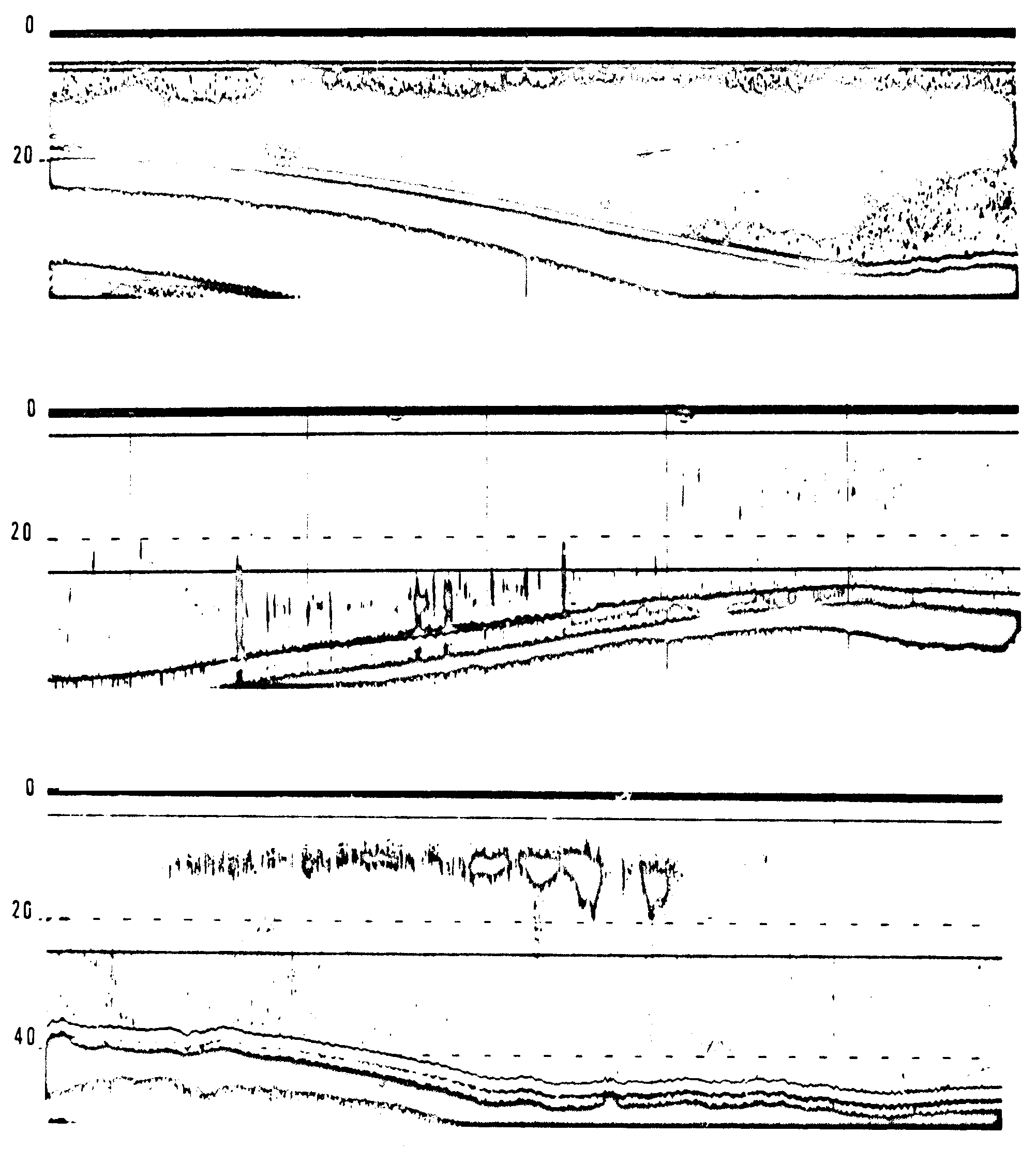
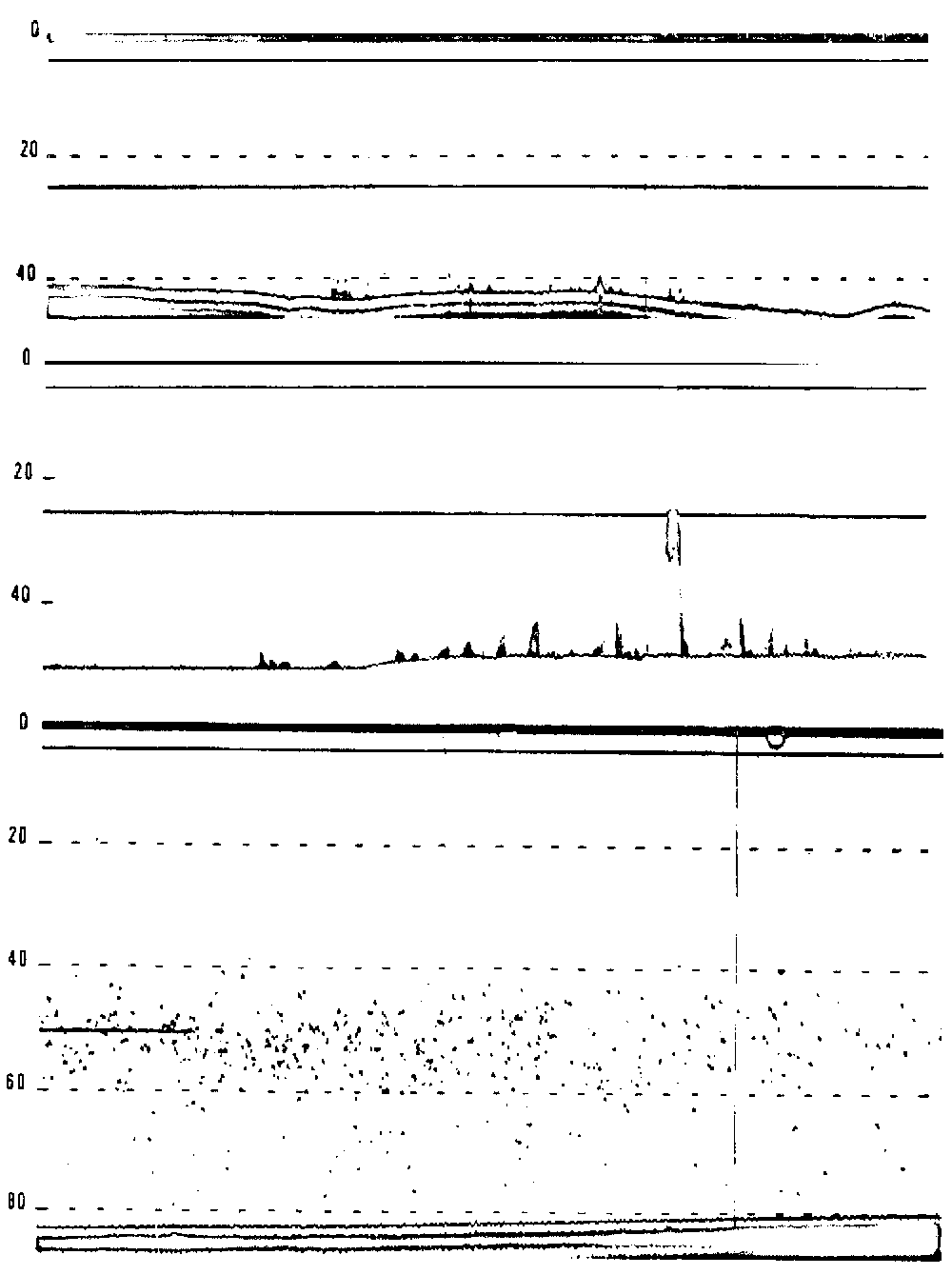
(i) Recordings of true larger schools or dense layers mostly in upper water, Figure 11. These will most often derive from pelagic schooling fish usually of smaller size e.g. clupeiods, scads. This type was the most common in the coastal areas.In our analysis we will thus distinguish between the abundance and distribution of "pelagic fish" - anchovies, sardines, scads and small mackerels on the one hand and of "other fish" - croakers, grunts, snappers and other demersal and semi-demersal fish as well as larger pelagic tuna-like fish, - on the other. The catch records provide of course detailed accounts of the species caught by the various gears. One should note, however, that the terms "pelagic" and "demersal" only indicate a general tendency of behaviour. Pelagic fish are often caught in quantities in bottom trawls and pelagic trawls can be used to catch demersal fish when distributed in mid water.(ii) All other fish recordings which especially comprised looser agreegations of smaller and larger fish near the bottom and in mid-water. These are ascribed to demersal or semi-demersal fish such as croakers grunts, breams, snappers, sharks, ponyfish etc. This type of recording was also common, and examples are shown in Figure 12. In this group was also included single fish traces or small schools of bigger fish closer to the surface waters. These recordings are thought to derive from tunas and tuna-like fish. They were less common and probably often "lost" in dense plankton recordings near the surface.
A third category of fish traces, i.e. from mesopelagic fish species is usually also recorded in this type of survey work. This consists of lantern fish and other small-sized related species. While found in high abundance off the shelf in the north-western Arabian Sea this type proved, however, to be relatively scarce in Burmese waters, except in a limited part of the Delta region.
The acoustic observations relating to the two categories of fish described above were recorded continuously along all survey tracks, and they form the basis for the preparation of charts of distributions of fish. The unit of measurements of fish abundance in these charts relates to the acoustic echo received from the fish and they are therefore termed echo-intensity-charts and show the relative abundance and distribution of fish. They are transferred into estimates of absolute abundance of fish biomass measured e.g. in tonnes/n.m2. by help of a conversion factor which must be adjusted to the settings and performance of the instruments and to the size of the fish in the area. The basis for this conversion is explained in Annex II to this report.
In the further descriptions of this; report the information on the distribution and behaviour of the fish obtained from the acoustic systems will be presented in the form of charts of echo-intensity distribution and will thus only show relative values. For each sub-area and category of resources a conversion to estimates of total fish biomass will be made. In addition come the catch rates and catch compositions from the fishing operations which will be used to identify, interpret and supplement the acoustic survey data.
On the basis of the charts of echo-intensity distribution the total echo- abundance for each area and type of fish was calculated by a planimetric integration. Table 2 shows the results. The table also presents the parts of the areas in which relatively dense concentrations were found. It is evident that there is a higher tendency for the small pelagic fish to be concentred in areas of higher abundance, than for the demersal and semi- demersal fish.
Table 2. Acoustic indices of abundance
|
SMALL PELAGIC FISH: |
||||
|
Indices |
Dense concentrations* as % of total |
|||
|
|
Oct.-Nov. |
March-April |
Oct.-Nov. |
March-April |
|
Arakan coast |
59.100 |
57.500 |
88 |
63 |
|
Delta area |
103.800 |
219.600 |
50 |
49 |
|
Tennasserim coast |
19.400 |
176.200 |
30 |
81 |
|
Total |
182.300 |
453.300 |
60 |
63 |
|
OTHER FISH |
||||
|
Indices |
Dense concentrations* as % of total |
|||
|
|
Oct.-Nov. |
March-April |
Oct.-Nov. |
March-April |
|
Arakan coast |
21.500 |
19.900 |
32 |
20 |
|
Delta area |
39.900 |
122.100 |
0 |
39 |
|
Tennasserim coast |
18.400 |
21.900 |
0 |
0 |
|
Total |
78.800 |
163.900 |
9 |
31 |
*Mean integrator values >20/n.m.The indices of echo-abundance were then converted to estimates of biomass using the conversion factors discussed and presented in Annex II. Account should, however, be taken of the failure of the survey to cover the extreme inshore shallow water areas. These areas often hold abundant resources of fish, but in the absence of more specific information an adjustment have been made assuming that the mean fish density in the uncovered inshore areas is equal to that of the areas covered by the survey. The raising factors for the estimated total biomass are then the quotients total shelf to shelf area surveyed. They are as follows:
|
|
Autumn 1979 |
Spring 1980 |
|
Arakan coast |
1.20 |
1.20 |
|
Delta area |
1.44 |
1.16 |
|
Tennasserim coast |
1.37 |
1.18 |
Table 3. Estimated biomass for the total shelf areas (In 1 000 tonnes)
|
SMALL PELAGIC FISH: |
||
|
Area: |
Autumn 1979 |
Spring 1980 |
|
Arakan coast |
180 |
170 |
|
Delta area |
370 |
640 |
|
Tennasserim coast |
70 |
520 |
|
Total |
620 |
1330 |
|
OTHER FISH |
||
|
Area: |
Autumn 1979 |
Spring 1980 |
|
Arakan coast |
130 |
120 |
|
Delta area |
290 |
710 |
|
Tennasserim coast |
120 |
130 |
|
Total |
540 |
960 |
5.2.1 The small pelagic fish, Arakan coast
5.3.2 Other fish, Arakan coast
5.3.3 Results of the fishing operations, Arakan coast
The total estimated biomasses found along this part of the coast were as mentioned above as follows (1000 tons):
|
|
Autumn |
Spring |
|
Small pelagic fish |
180 |
170 |
|
Other fish |
130 |
120 |
|
Total |
310 |
290 |
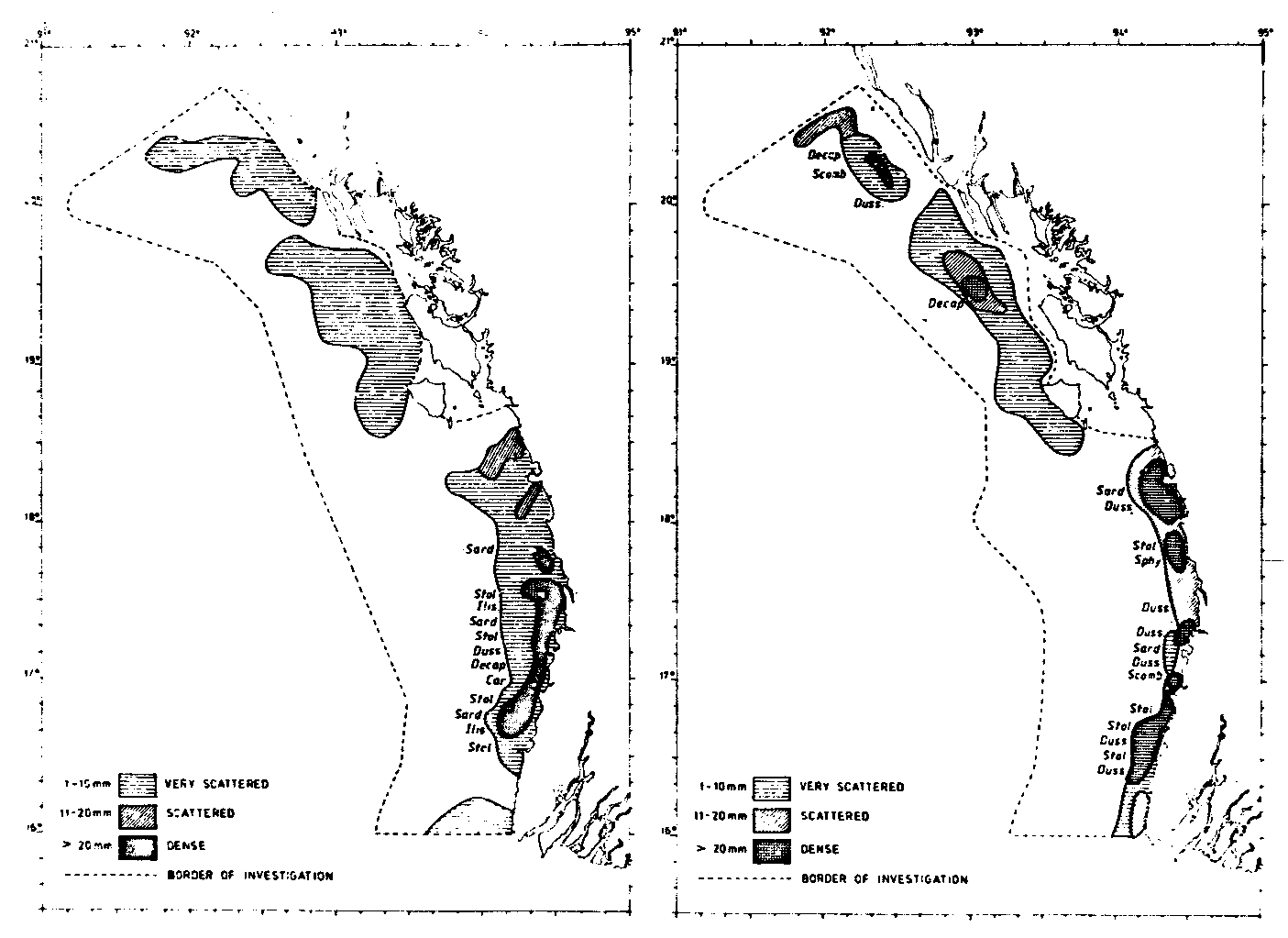
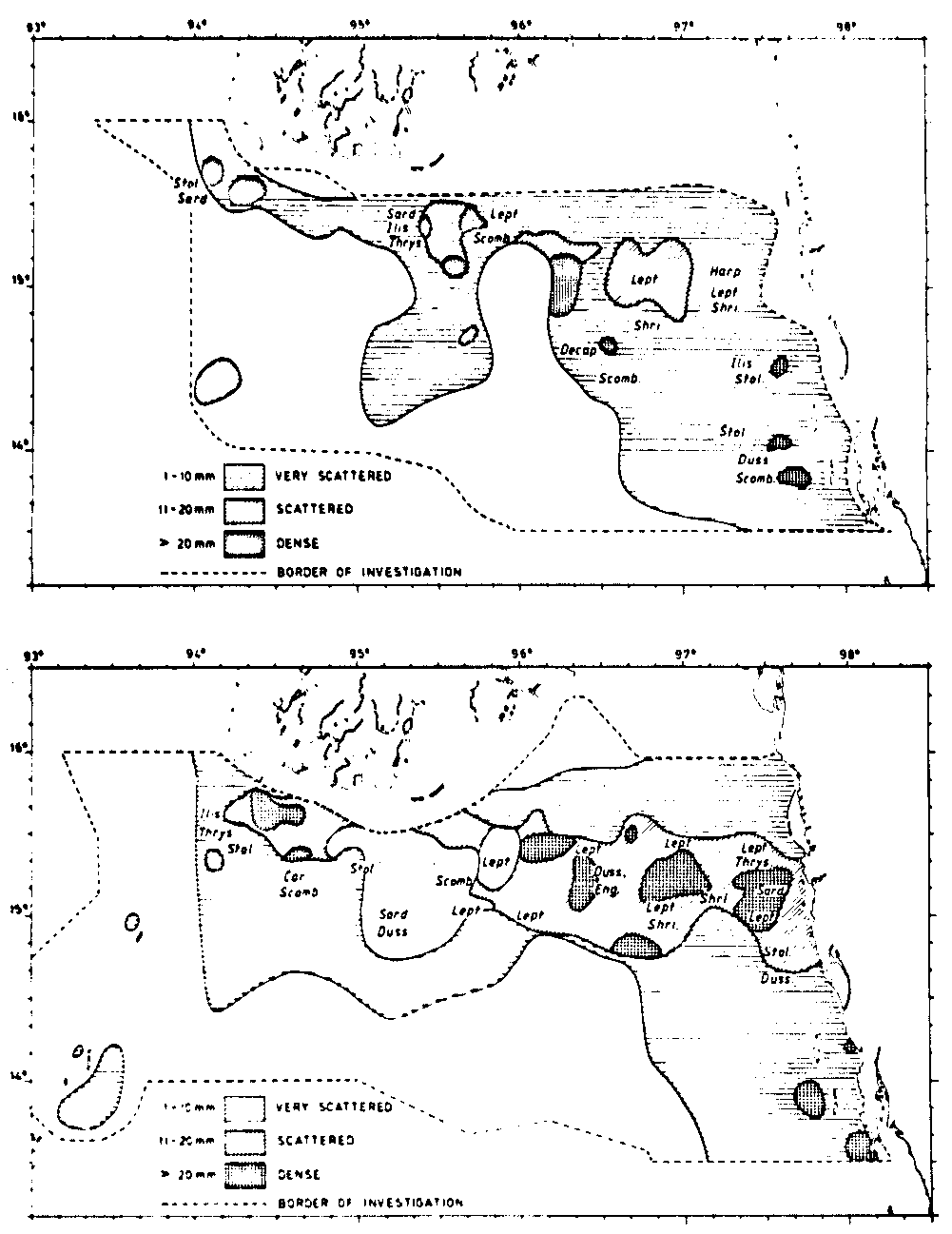
Figure 13 shows that the small pelagic fish are mainly distributed in the inshore areas of the coast south of Sandoway. This corresponds to the narrowest part of the shelf. Especially in the heavier concentrations the fish occuried in well defined schools during daytime as layers at night.
Aimed mid water trawling was conducted to identify these pelagic concentrations of fish.The locations of the fishing stations are shown in Figures 1-4 and the catches and their composition are recorded in Annex Table IV.The results for each of the seasons are summarized in Table 4. From this it appears that sardines and anchovies by far dominate in these catches in both seasons. In the autumn sardines occurred in 5 of 7 catches, in the spring in 7 out of 12 catches. The genera found were Sardinella, Dussumeria and Ilisha. The anchovies represented mostly by Stolephorus were almost as common as the sardines, while the remaining pelagic fish consisted of Carangids, Scomberomorus and Sphyraena. From the figures showing the mean part by weight of the catches of these various categories it is evident that the sardines anchovies and carangids generally make cut substantial parts of the catches while Scomberomorus and Sphyraena are by-catches.
(...)
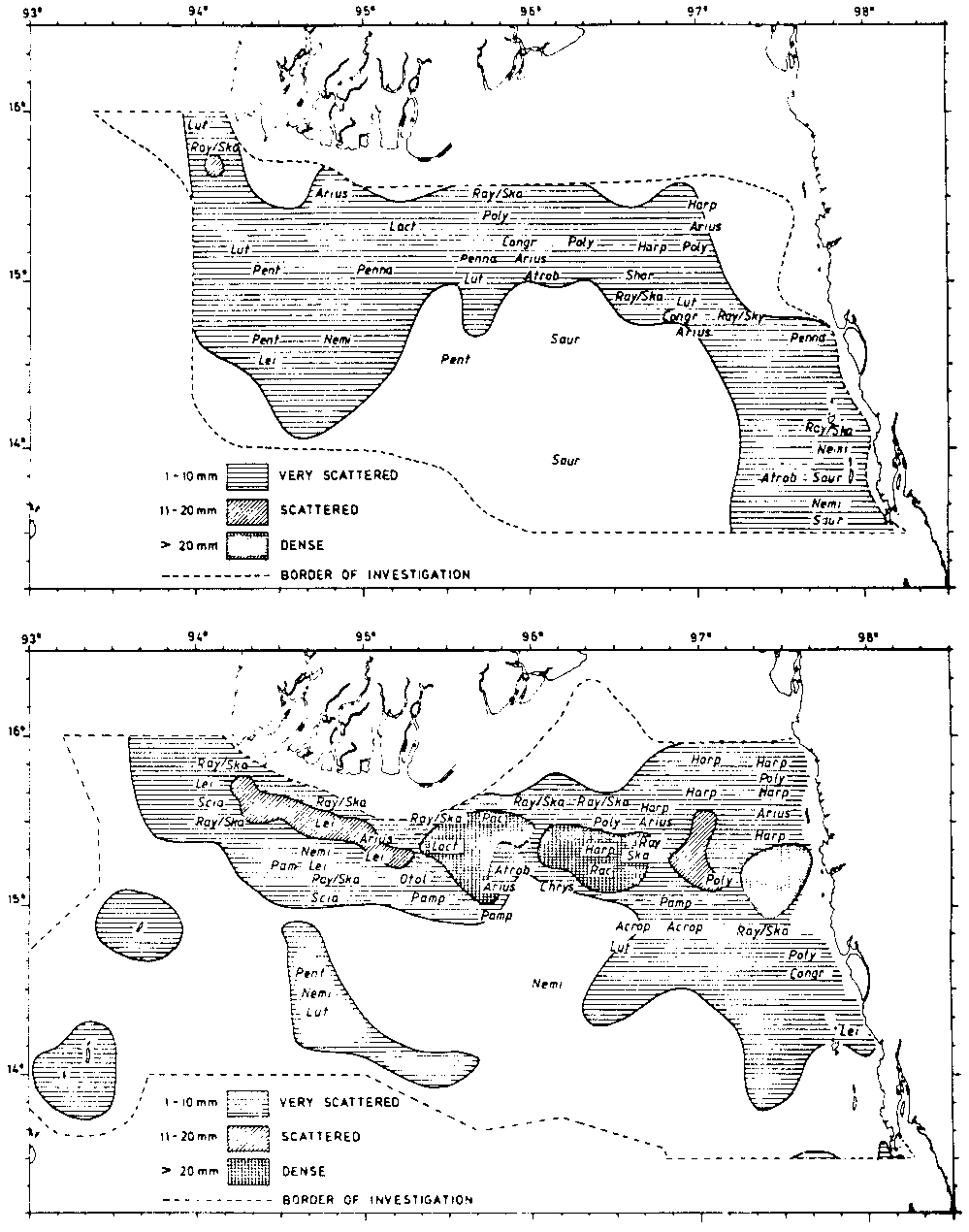
The composition of the mid water hauls has also been used to indicate the locations of occurrence of the various types of fish in the distribution charts, Figure 13. It is, however, uncertain to which extent these indications of local occurrence provide a typical or general description of the distribution of the fish over a longer period of time.
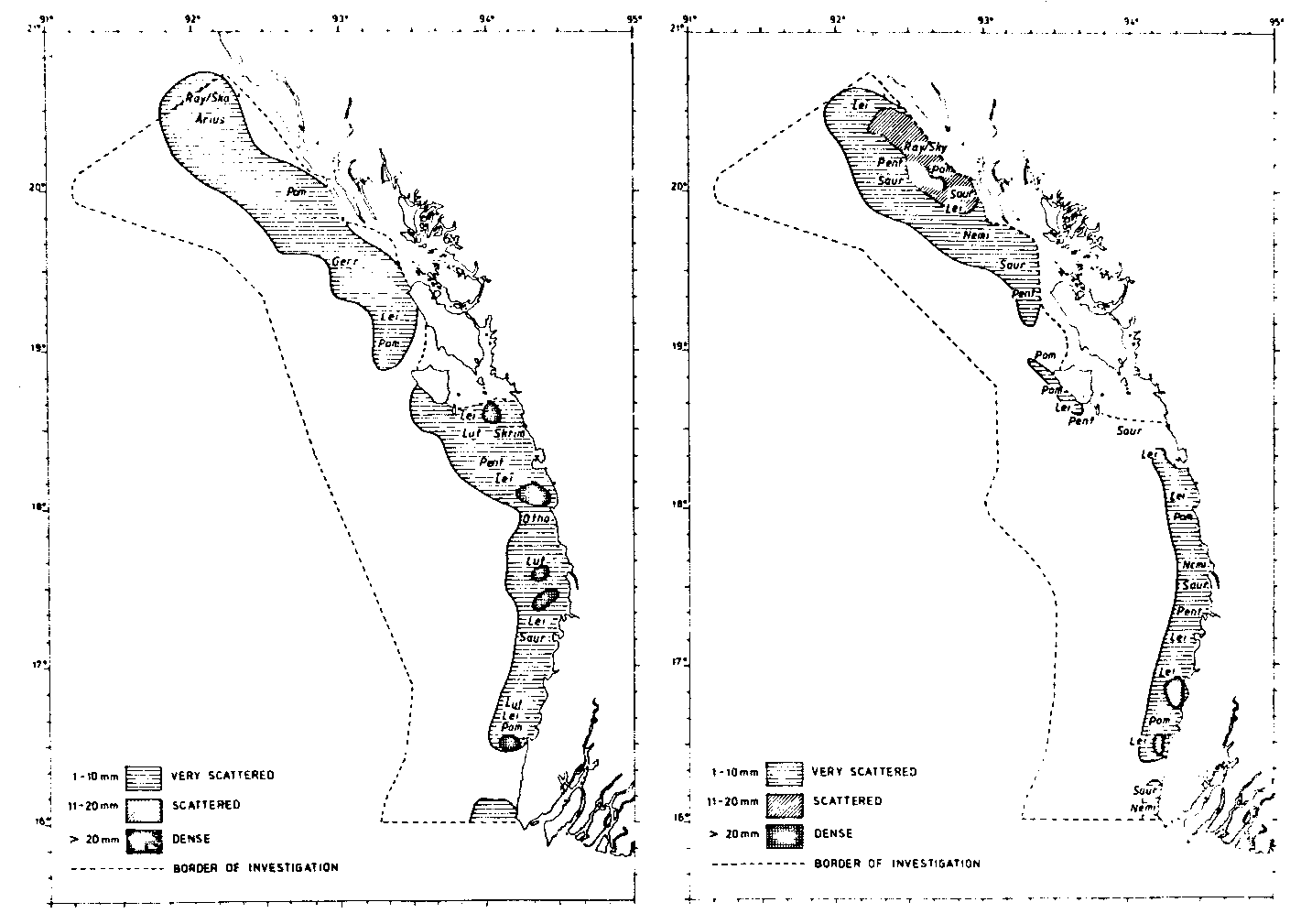
List of codes used to indicate fish distribution in figure 13 - 18 and their corresponding fish species or group names.
|
Acrop |
= |
Acropoma japonicum |
|
Arius |
= |
Arius sp. |
|
Atrob |
= |
Atrobucca nibe |
|
Car |
= |
Caranx sp. |
|
Congr |
= |
Congresox sp. |
|
Chrys |
= |
Chrysochir sp. |
|
Decap |
= |
Decapterus sp. |
|
Duss |
= |
Dussmeria sp. |
|
Eng |
= |
Engraulis sp. |
|
Gerr |
= |
Gerrus sp. |
|
Harp |
= |
Harpodon sp. |
|
Ilis |
= |
Ilisha |
|
Lact |
= |
Lactarius lactarius |
|
Lei |
= |
Leiognathus sp. |
|
Lept |
= |
Lepturacanthus |
|
Leth |
= |
Lethrinus sp. |
|
Loligo |
= |
Loligo sp. |
|
Nemi |
= |
Nemipterus |
|
Otho |
= |
Otholithes sp. |
|
Pamp |
= |
Pampus sp |
|
Penna |
= |
Pennahia sp. |
|
Pent |
= |
Pentaprion sp |
|
Poly |
= |
Polynemus sp. |
|
Pom |
= |
Pomadasys sp. |
|
Rac |
= |
Rachycentron sp. |
|
Rast |
= |
Rastrelliger sp. |
|
Ray/ska |
= |
Rays and skates |
|
Sard |
= |
Sardinella sp. |
|
Saur |
= |
Saurida sp. |
|
Scia |
= |
Scianeidae |
|
Scomb |
= |
Scomberoides sp. |
|
Selar |
= |
Selar sp. |
|
Shar |
= |
Sharks |
|
Shri |
= |
Shrimps |
|
Sphy |
= |
Sphyraena sp. |
|
Stol |
= |
Stolephorus sp. |
|
Thrys |
= |
Thryssa sp. |
Table 5. Occurrence by families of pelagic fish on all fishing stations (bottom- and mid water trawl), and proportion by weight of total catch of pelagic fish.
|
ARAKAN COAST |
||||
|
Total no. of stations |
Sept.- Nov. |
March - April |
||
|
56 |
|
49 |
|
|
|
No. of stations occurring |
% of total catch |
No. of stations occurring |
% of total catch |
|
|
Clupeidae |
30 |
38 |
21 |
52 |
|
Engraulidae |
22 |
28 |
12 |
25 |
|
Trichiuridae |
20 |
21 |
14 |
4 |
|
Carangidae |
19 |
3 |
19 |
16 |
|
Sphyrenidae |
21 |
9 |
11 |
2 |
|
Scombridae |
15 |
1 |
9 |
1 |
As shown in Figure 14 the distribution of demersal and semi-demersal fish as indicated by the acoustic data is also confined to the shelf with the centres of higher concentration well inside the shelf edge. In the March-April survey there is a tendency for this type of fish to be found even further inshore and in shallower waters than in September-October. This may be related to the lifting of the oxygen-deficient layer from autumn till spring as discussed under 4 above. An inshore movement of bottom fish may also explain the lower biomass estimate for the spring survey, a greater part of these fish is then found in the extreme inshore shallow waters which could not be covered by the survey.
Table 6 shows the occurrence of the most common families of demersal- and semi-demersal fish in the catches on the Arakan coast during the two main survey periods. Ponyfishes (Leiognatidae), croakers (Sciaenidae) and grunts (Pomadaridae) were both widespread and made out the greatest part of the catches, but also lizard fishes(Synodontidae) and catfishes (Ariidae) were common. Squids and shrimp were widespread although contributing little to the total weight of the catches in contrast to sharks and rays which made out a significant part of the catch on relatively few stations.
In the distribution maps fishes predominant in the bottom trawl hauls in the various regions have been recorded approximately where caught. In the extreme north rays and skates were found together with ponyfish, Pomadasys and Saurida. From Sandoway southwards the dominating forms are again Pomadasys and Leiognatus with Saurida, Lutjanus and Nemipterus spp.
Table 6 Occurrence by families of "other fish" on all fishing stations, and their proportion by weight of total catch of "other fish".
|
ARAKAN COAST |
||||
|
Total no of stations |
Sept - Nov |
March-Apr |
||
|
Ariidae |
56 |
8.4 |
49 |
3.0 |
|
Carangidae |
18 |
1.4 |
12 |
1.4 |
|
Gerridae |
20 |
0.8 |
16 |
17.2 |
|
Lactaridae |
17 |
5.8 |
10 |
2.1 |
|
Leiognatidae |
17 |
7.5 |
9 |
19.0 |
|
Lutjanidae |
39 |
1.9 |
19 |
0.6 |
|
Mullidae |
14 |
1.1 |
8 |
2.8 |
|
Muraenesocidae |
24 |
0.9 |
16 |
1.2 |
|
Nemipteridae |
9 |
0.8 |
7 |
4.8 |
|
Pomadasidae |
24 |
21.4 |
18 |
10.4 |
|
Sciaenidae |
29 |
33.4 |
22 |
4.5 |
|
Scombridae |
21 |
2.1 |
17 |
1.1 |
|
Synodontidae |
21 |
1.8 |
13 |
6.2 |
|
Sharks and rays |
27 |
3.3 |
26 |
9.6 |
|
Squids |
16 |
0.5 |
8 |
0.8 |
|
Shrimp |
28 |
1.4 |
17 |
2.6 |
|
Miscellaneous* |
28 |
6.5 |
18 |
12.7 |
*Includes about 17 families of fish occurring in few catches, and with less than 1 % of catch and non-fish catches such as Jelly fish.
A summary of all fishing activities in this area during the two periods is as follows:
|
|
BOTTOM TRAWL |
PELAGIC TRAWL |
||
|
|
Oct - Nov /79 |
Mar - Apr /80 |
Oct - Nov /79 |
Mar - Apr /80 |
|
Number of stations |
45 |
28 |
11 |
22 |
|
Total catch (kg/hour units) |
27420 |
35976 |
1455 |
5242 |
|
Mean total catch per hour kg |
609 |
1285 |
132 |
238 |
|
Max. catch rates kg |
6390 |
5250 |
380 |
680 |
The detailed data for each station are recorded in Annex Table IV. The average catch rate in bottom trawl in March-April/80 is about twice that in Oct-Nov/79. This should not be interpreted directly as indicating a higher abundance, since a considerable part of the autumn fishing relates to a special shrimp survey near Sandoway. Also pelagic trawling yielded somewhat higher catches during the spring survey. This may in a general way indicate a higher availability of pelagic schooling fish, but in our survey system fishing with mid-water trawl is conducted for the purpose of identifying the various types of echo-recordings of fish and for sampling and this type of operation does not provide much information of interest for assessment of fish abundance or catchability.
Bottom trawl fishing provides more comprehensive data, both with regard to the availability of the demersal stocks and the composition of the catches. One should, however, note that exploratory fishing conducted as in this survey will not simulate a commercial fishery. One important difference is that commercial fishing will be concentrated in areas with high abundance of desired species whereas the exploratory fishing will cover a wider range of fish densities. The average catch rates in this survey would thus be expected to be lower than those of a commercial fishery. There is on the other hand an effect which will act in the opposite way when the survey is conducted in an unfished virgin area. A commercial fishery will after having been established reduce the standing biomass and result in a decline of catch rates. One should keep these reservations in mind when considering the following analysis of the bottom trawl results.
Tables 7 and 8 show the distribution of the various most common forms of fish on catch groups and the mean catch. The fish forms are ranged in the order in which they contribute to the total catch. It appears that in the autumn croakers made out about 1/4 of the total catch in the area, followed by grunts and clupeoids. These three groups contributed nearly half the catch. The catch rates (standardized to one hour hauls) for each form of fish were mostly lower than 50 kg/h, but with a fair part between 50-199 kg/h and a few above 500 kg/h.
The fewer hauls in the spring were dominated by anchovies, ponyfish, mojarras and grunts with a fair number of catch rates exceeding 500 kg/h. The commercial value of the different types of fish differs considerably. To enable an evaluation on the basis of this criterion the various fish species were allocated on 4 economic classes (Appendix Table III). An analysis of the bottom trawl catches according to their composition of fish of different commercial value is shown in Table 9. It appears that more than 80% of the total catch are fish in economic class 2 and 3. The catch rates of these classes of fish (considered as a whole) are fairly high - frequently exceeding 200. kg/h and often also 500 kg/h.
Table 7. Distribution of the catches by families In 45 bottom trawl hauls on the Arakan coast Oct/Nov 1979.
|
Catch grouping |
>10 kg/h |
10-49 kg/h |
50-199 kg/h |
200-499 kg/h |
>500 kg/h |
% incidence in total no. of hauls |
Mean catch |
% of total catch |
|
FAMILY: |
|
|
|
|
|
|
|
|
|
Sciaenidae |
5 |
8 |
3 |
0 |
2 |
40 |
145 |
24 |
|
Pomadasyidae |
5 |
12 |
9 |
2 |
1 |
64 |
93 |
15 |
|
Clupeidae |
9 |
9 |
3 |
0 |
1 |
49 |
46 |
8 |
|
Ariidae |
9 |
2 |
1 |
0 |
1 |
29 |
37 |
6 |
|
Engraulidae |
7 |
1 |
0 |
0 |
1 |
20 |
36 |
6 |
|
Trichiuridae |
8 |
5 |
1 |
0 |
1 |
33 |
35 |
6 |
|
Leiognathidae |
7 |
12 |
5 |
3 |
0 |
60 |
32 |
5 |
|
Lactaridae |
8 |
6 |
1 |
0 |
1 |
36 |
25 |
4 |
|
Mesopelagic fish |
0 |
0 |
1 |
1 |
0 |
4 |
12 |
2 |
|
Carangidae |
15 |
8 |
2 |
0 |
0 |
56 |
11 |
2 |
|
Rays |
4 |
1 |
2 |
1 |
0 |
18 |
11 |
2 |
|
Sphyraenidae |
6 |
6 |
0 |
1 |
0 |
29 |
10 |
2 |
|
Scombridae |
11 |
7 |
2 |
0 |
0 |
44 |
10 |
2 |
|
Synodontidae |
13 |
9 |
1 |
0 |
0 |
51 |
8 |
1 |
|
Shrimps |
13 |
7 |
1 |
0 |
0 |
47 |
6 |
1 |
|
Lutjanidae |
4 |
7 |
2 |
0 |
0 |
29 |
6 |
1 |
|
Lobsters |
3 |
0 |
1 |
0 |
0 |
9 |
3 |
- |
|
Squids |
14 |
2 |
0 |
0 |
0 |
36 |
2 |
- |
|
Other fish |
|
|
|
|
|
|
80 |
13 |
|
TOTAL |
|
|
|
|
|
|
608 |
100 |
|
Catch grouping |
>10 kg/h |
|
50-199 kg/h |
200-499 kg/h |
>500 kg/h |
% incidence in total no. of hauls |
Mean catch |
% of total catch |
|
FAMILY |
|
|
|
|
|
|
|
|
|
Engraulidae |
0 |
2 |
1 |
0 |
1 |
14 |
199 |
17 |
|
Leiognathidae |
1 |
1 |
3 |
2 |
5 |
43 |
175 |
15 |
|
Gerridae |
1 |
2 |
2 |
1 |
1 |
25 |
160 |
13 |
|
Pomadasyidae |
3 |
4 |
8 |
2 |
1 |
64 |
95 |
8 |
|
Rays |
3 |
0 |
2 |
0 |
2 |
25 |
89 |
7 |
|
Clupeidae |
0 |
3 |
2 |
4 |
1 |
36 |
81 |
7 |
|
Synodontidae |
4 |
7 |
6 |
0 |
1 |
64 |
55 |
5 |
|
Nemipteridae |
5 |
6 |
5 |
0 |
1 |
61 |
45 |
4 |
|
Sciaenidae |
2 |
7 |
1 |
3 |
0 |
46 |
42 |
4 |
|
Carangidae |
2 |
10 |
2 |
0 |
1 |
54 |
37 |
3 |
|
Ariidae |
4 |
2 |
3 |
1 |
0 |
36 |
27 |
2 |
|
Mullidae |
6 |
3 |
4 |
1 |
0 |
50 |
26 |
2 |
|
Shrimps |
4 |
8 |
2 |
1 |
0 |
54 |
24 |
2 |
|
Lactaridae |
0 |
4 |
2 |
1 |
0 |
25 |
19 |
2 |
|
Lohsters |
3 |
0 |
0 |
0 |
0 |
11 |
0.5 |
- |
|
Squids |
5 |
4 |
1 |
0 |
0 |
36 |
6 |
- |
|
Other Fish |
|
|
|
|
|
|
107 |
9 |
|
TOTAL |
|
|
|
|
|
|
1187 |
100 |
October-November 1979
|
Class: |
<10 kg/h |
10-49 kg/h |
50-199 kg/h |
200-499 kg/h |
>500 kg/h |
% incidence in total no hauls |
Mean catch |
% of total catch |
|
Economic class 1 |
11 |
21 |
10 |
2 |
1 |
84 |
86 |
14 |
|
Economic class 2 |
12 |
5 |
19 |
7 |
2 |
82 |
311 |
51 |
|
Economic class 3 |
11 |
17 |
11 |
5 |
1 |
87 |
193 |
32 |
|
Economic class 4 |
37 |
4 |
4 |
0 |
0 |
44 |
16 |
3 |
|
Class: |
<10 kg/h |
10-49 kg/h |
50-199 kg/h |
200-499 kg/h |
>500 kg/h |
% incidence in total no hauls |
Mean catch |
% of total catch |
|
Economic class 1 |
7 |
6 |
12 |
2 |
1 |
82 |
104 |
9 |
|
Economic class 2 |
5 |
0 |
8 |
7 |
8 |
89 |
494 |
42 |
|
Economic class 3 |
8 |
3 |
5 |
4 |
8 |
86 |
548 |
46 |
|
Economic class 4 |
10 |
10 |
8 |
0 |
0 |
79 |
42 |
3 |
5.4.1 The small pelagic fish, Delta Area
5.4.2 Other fish, Delta Area
5.4.3 Results of the fishing operations, Delta area
It seems pertinent to stress that the extreme inshore parts of the Delta area particularly those of the eastern Gulf could not be covered for navigational reasons.
The total estimated biomasses during the two surveys were (in 1000 tons):
|
|
Autumn |
Spring |
|
Small pelagic fish |
370 |
640 |
|
Other fish |
290 |
710 |
|
Total |
660 |
1350 |
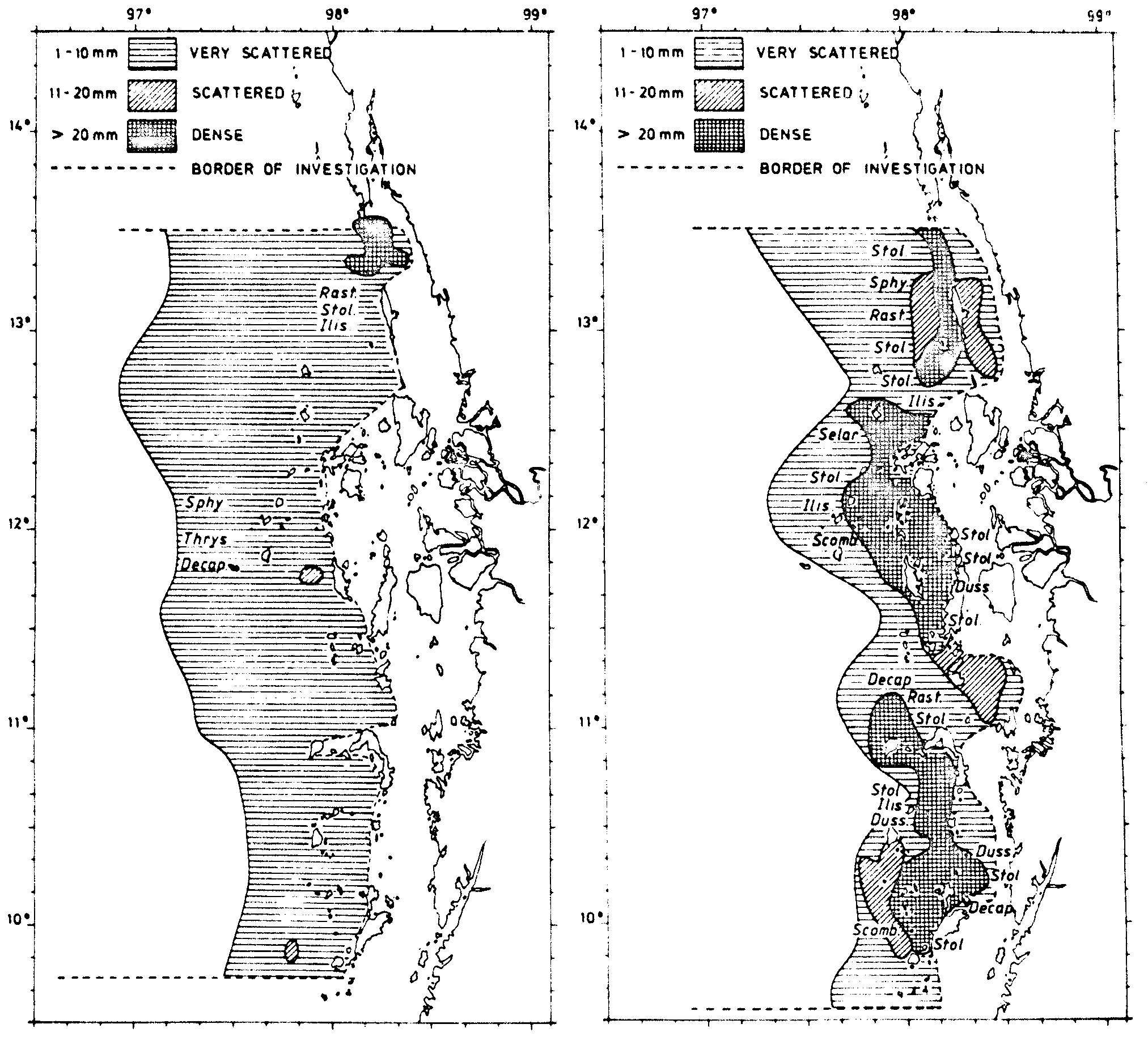
Figure 15 shows the distributions of the biomass at the two seasons. The main concentrations are found in a belt not more than about 60 n.m. wide roughly covering the bottom depth countours from about 15 to about 60-70 m.
The biomass during the second survey (March-April) is nearly 2 times higher than that of the first, but the composition seems largely to be the same. As shown in Table 10 the most common fish in the mid water hauls were sardines, anchovies and ribbon fish. Scombrids and carangids were also relatively common. In parts of the area small pelagic shrimp (Acetes) could be found in abundance in mid water as well as on the bottom. Leiognathus, Harpodon, squid and fish larvae were also frequently found in the mid water catches.
Table 10. Identification of small pelagic fish by aimed mid water trawling. Frequency of occurrence (when being more than 10% of catch by weight) and mean part of weight of catch (%).
|
DELTA AREA |
|||
|
|
Sept. - Nov. |
March - April |
|
|
Total no. hauls |
19 |
25 |
|
|
Clupeids |
5 - 31 % |
10 - 40 % |
|
|
|
Sardinella |
2 16 % |
4 - 44 % |
|
|
Ilisha |
3 - 35 % |
1 - 33 % |
|
|
Dussumeria |
1 - 16 % |
4 - 14 % |
|
|
Raconda |
|
5 - 26 % |
|
Engraulids |
6 - 47 % |
6 - 44 % |
|
|
|
Thryssa |
2 - 36 % |
2 - 28 % |
|
|
Stolephorus |
4 - 53 % |
4 - 43 % |
|
|
Carangids |
1 - 59 % |
3 - 40 % |
|
|
Decapterus |
1 - 59 % |
2 - 44 % |
|
Scombrids |
6 - 25 % |
4 - 41 % |
|
|
|
Scomberomorus |
4 - 27 % |
3 - 36 % |
|
|
Rastrelliger |
2 - 16 % |
|
|
Trichiurids |
8 - 28 % |
12 - 26 % |
|
|
|
Lepturacanthus |
6 - 25 % |
12 - 26 % |
|
Leiognatus |
5 - 43 % |
5 - 74 % |
|
|
Shrimp |
4 - 38 % |
2 - 16 % |
|
|
Miscellaneous |
9 - 39 % |
13 - 38 % |
|
Table 11, Occurrence by families of pelagic fish on all fishing stations (bottom- and mid water trawl), and proportion by weight of total catch of pelagic fish.
|
DELTA AREA |
||||
|
Total no of stations |
Sept - Nov |
March - April |
||
|
70 |
|
95 |
|
|
|
No of stations occurring |
% of total catch |
No if stations occurring |
% of total catch |
|
|
Clupeidae |
31 |
11 |
33 |
24 |
|
Engraulidae |
34 |
35 |
44 |
33 |
|
Trichiuridae |
44 |
40 |
55 |
35 |
|
Carangidae |
23 |
6 |
29 |
7 |
|
Sphyrenidae |
12 |
7 |
10 |
1 |
|
Scombridae |
12 |
2 |
5 |
1 |
The oceanographical regime which no doubt governs the distribution of bottom fish in this area is related to the river outflows and there is as demonstrated in chapter 4 above a marked change in both salinity- and temperature conditions from September-November till March-April. The change in the distribution of the fish with considerably higher concentrations during the last cruise may well be related to the change of the environment.
In the central and eastern parts of the Delta area some difficulties of identification of the echo recordings were encountered with relation to the occurrence both in mid water and closer to the bottom of shrimp of the Genus Acetes which is of little or no commercial interest. Relatively heavy concentrations of mesopelagic fish located in the southern part of the central Delta area are not included in the fish distribution chart.
Table 12 shows the occurrence in the catches of the most common forms of fish during the two surveys. The relatively high abundance of croaker (Sciaenidae) and catfishes (Ariidae) is a common feature with the fauna of the Arakan coast, but otherwise the Delta fauna differs in several respects from those of the coastal regions to the north and south. Noteworthy is the regular presence of threadfins (Polynemidae), pike congers (Muraenesocidae;) and Bombay duck (Harpodontidae). Sharks and rays are (...) widespread and abundant, while ponyfish (Leiognathus) is far less common than in the other areas.
The prominent forms in the catches are roughly located in Figure 16. Rays and skates are common everywhere while Polynemus is found in the central and eastern parts. Harpodon is particularly dominant in the catches from the shallow eastern parts of the Delta. Saurida and Nemipterus are common in the southeast towards the Tenasserim coast.
Table 12. Ocurence by families of "other fish " on all fishing stations and their proportion by weight of the total catch of "other fish"
|
DELTA AREA |
||||
| Total no of stations |
Sept - Nov |
March - Apr |
||
|
No of stations occurring |
% of total catch |
No of stations occurring |
% of total catch |
|
|
Ariidae |
70 |
4.4 |
95 |
8.1 |
|
Carangidae |
29 |
0.2 |
36 |
6.1 |
|
Gerridae |
8 |
1.3 |
27 |
1.0 |
|
Harpadontidae |
18 |
2.2 |
10 |
20.5 |
|
Lactaridae |
8 |
2.1 |
18 |
1.6 |
|
Letognatidae |
11 |
2.6 |
21 |
1.3 |
|
Lutjanidae |
25 |
4.2 |
26 |
2.6 |
|
Mullidae |
22 |
1.9 |
20 |
3.3 |
|
Muraenesocidae |
24 |
5.6 |
23 |
1.4 |
|
Nemipteridae |
20 |
2.6 |
19 |
2.9 |
|
Polynemidae |
26 |
6.2 |
21 |
3.0 |
|
Pomadasidae |
19 |
0.9 |
25 |
2.7 |
|
Sciaenidae |
28 |
18.5 |
26 |
9.7 |
|
Scombridae |
33 |
2.2 |
37 |
0.8 |
|
Synodontidae |
16 |
2.8 |
20 |
2.4 |
|
Sharks and rays |
20 |
18.3 |
24 |
13.9 |
|
Squids |
53 |
0.8 |
52 |
0.6 |
|
Shrimp |
23 |
11.6 |
27 |
6.9 |
|
Miscellaneous |
40 |
11.2* |
40 |
12.0 |
*include 12 families of the fish occurring in few catches and with less than of catch
A summary of all fishing stations in this area during the two periods is as follows:
|
|
BOTTOM TRAWL |
PELAGIC TRAWL |
||
|
Sept - Nov /79 Mar - Apr / 80 |
Sept - Nov / 79 Mar - Apr / 80 |
|||
|
Number of stations |
44 |
57 |
26 |
39 |
|
Total catch (kg) |
18280 |
29248 |
6021 |
21786 |
|
Mean total catch per hour (kg) |
415 |
513 |
232 |
559 |
|
Max. catch rates (kg/h) |
2260 |
1380 |
1140 |
5340 |
Tables 13 and 14 show the distribution on catch groups and mean catch rates for the most common types of fish. The largest parts of the total catch were made out of few forms: croakers, rays, ponyfish, pike congers, threadfins, Bombay ducks and ribbonfish. These types also gave the highest catches although the overall means are only of the order of 30-70 kg/h. A special survey was as already mentioned made of the Bombay duck-distribution which accounts for the relatively high values in the spring.
Table 13. Distribution of the catches by families in 44 bottom trawl hauls in the Delta area Oct/Nov 1979
|
Catch grouping |
>10 kg/h |
10-49 kg/h |
50-199 kg/h |
200-499 kg/h |
>500 kg/h |
incidence in total no of hauls |
Mean catch |
% of total catch |
|
FAMILY |
|
|
|
|
|
|
|
|
|
Sciaenidae |
17 |
10 |
15 |
1 |
1 |
68 |
71 |
18 |
|
Rays |
25 |
8 |
8 |
2 |
1 |
52 |
47 |
12 |
|
Shrimps |
19 |
16 |
7 |
2 |
0 |
70 |
37 |
9 |
|
Polynemidae |
34 |
3 |
6 |
1 |
0 |
39 |
24 |
6 |
|
Muraenesocidae |
26 |
11 |
7 |
0 |
0 |
43 |
22 |
6 |
|
Trichiuridae |
36 |
14 |
3 |
1 |
0 |
43 |
22 |
5 |
|
Ariidae |
25 |
15 |
4 |
0 |
0 |
66 |
17 |
4 |
|
Lutjanidae |
32 |
10 |
1 |
1 |
0 |
43 |
16 |
4 |
|
Sharks |
31 |
12 |
0 |
1 |
0 |
52 |
14 |
3 |
|
Synodontidae |
2 |
11 |
0 |
1 |
0 |
41 |
11 |
3 |
|
Engraulidae |
34 |
9 |
1 |
0 |
0 |
48 |
8 |
2 |
|
Nemipteridae |
31 |
11 |
2 |
0 |
0 |
50 |
10 |
3 |
|
Sphyraenidae |
40 |
1 |
0 |
1 |
0 |
14 |
7 |
2 |
|
Mullidae |
34 |
9 |
1 |
0 |
0 |
48 |
7 |
2 |
|
Lactaridae |
42 |
1 |
0 |
1 |
0 |
11 |
7 |
2 |
|
Leiognathidae |
36 |
6 |
2 |
0 |
0 |
34 |
7 |
2 |
|
Harpadontidae |
38 |
3 |
3 |
0 |
0 |
16 |
6 |
2 |
|
Carangidae |
37 |
6 |
1 |
0 |
0 |
30 |
5 |
1 |
|
Gerreidae |
36 |
7 |
0 |
0 |
0 |
36 |
5 |
1 |
|
Clupeidae |
38 |
5 |
1 |
0 |
0 |
41 |
5 |
1 |
|
Other fish |
|
|
|
|
|
|
50 |
12 |
|
TOTAL |
|
|
|
|
|
|
398 |
100 |
|
Catch grouping |
>10 kg/h |
10-49 kg/h |
50-199 kg/h |
200-499 kg/h |
>500 kg/h |
% incidence in total no of hauls |
Mean catch |
% of total catch |
|
FAMILY |
|
|
|
|
|
|
|
|
|
Harpadontidae |
43 |
4 |
2 |
3 |
5 |
28 |
87 |
17 |
|
Rays |
35 |
7 |
12 |
1 |
2 |
47 |
52 |
10 |
|
Scianidae |
26 |
16 |
14 |
1 |
0 |
60 |
40 |
8 |
|
Leiognatidae |
44 |
4 |
6 |
2 |
1 |
30 |
36 |
7 |
|
Ariidae |
29 |
19 |
7 |
1 |
1 |
63 |
30 |
6 |
|
Engraulidae |
40 |
7 |
8 |
2 |
0 |
54 |
26 |
5 |
|
Shrimps |
45 |
10 |
2 |
0 |
0 |
40 |
25 |
5 |
|
Trichiuridae |
36 |
13 |
7 |
1 |
0 |
60 |
22 |
4 |
|
Carangidae |
42 |
10 |
4 |
1 |
0 |
42 |
17 |
3 |
|
Mullidae |
44 |
10 |
2 |
1 |
0 |
35 |
14 |
3 |
|
Clupeidae |
46 |
7 |
3 |
1 |
0 |
37 |
13 |
3 |
|
Nemipteridae |
40 |
13 |
4 |
0 |
0 |
35 |
12 |
2 |
|
Polynemidae |
47 |
7 |
2 |
1 |
0 |
39 |
12 |
2 |
|
Mesopelagic fish |
56 |
0 |
0 |
0 |
1 |
2 |
12 |
2 |
|
Pomadasyidae |
39 |
14 |
4 |
0 |
0 |
40 |
11 |
2 |
|
Synodontidae |
42 |
13 |
2 |
0 |
0 |
33 |
10 |
2 |
|
Lutjanidae |
50 |
6 |
0 |
1 |
0 |
30 |
8 |
2 |
|
Sharks |
45 |
10 |
2 |
0 |
0 |
40 |
7 |
1 |
|
Lactaridae |
53 |
2 |
2 |
0 |
0 |
18 |
6 |
1 |
|
Lethiridae |
54 |
2 |
0 |
1 |
0 |
7 |
6 |
1 |
|
Serranidae |
54 |
2 |
0 |
1 |
0 |
11 |
6 |
1 |
|
Muraenescidae |
47 |
9 |
1 |
0 |
0 |
29 |
5 |
1 |
|
Acropomidae |
55 |
1 |
0 |
1 |
0 |
7 |
5 |
1 |
|
Other fish |
|
|
|
|
|
|
52 |
10 |
|
TOTAL |
|
|
|
|
|
57 |
514 |
99 |
|
October-November 1979 |
||||||||
|
Class: |
<10 kg/h |
10-49 kg/h |
50-199 kg/h |
200-499 kg/h |
>500 kg/h |
% incidence in total no of hauls |
Mean catch |
% of total catch |
|
Economic class 1 |
4 |
13 |
20 |
5 |
2 |
98 |
116 |
29 |
|
Economic class 2 |
2 |
12 |
25 |
4 |
1 |
100 |
120 |
30 |
|
Economic class 3 |
3 |
12 |
18 |
9 |
2 |
100 |
138 |
34 |
|
Economic class 4 |
20 |
18 |
5 |
1 |
0 |
86 |
26 |
7 |
|
March-April 1980 |
||||||||
|
Class: |
<10 kg/h |
10-49 kg/h |
50-199 kg/ |
200-499 kg/h |
>500 kg/h |
% incidence in total no of hauls |
Mean catch |
% of total catch |
|
Economic class 1 |
7 |
20 |
23 |
6 |
1 |
98 |
94 |
18 |
|
Economic class 2 |
10 |
16 |
16 |
15 |
0 |
89 |
109 |
21 |
|
Economic class 3 |
9 |
4 |
20 |
12 |
12 |
95 |
272 |
53 |
|
Economic class 4 |
20 |
30 |
6 |
0 |
1 |
89 |
40 |
8 |
5.5.1 The small pelagic fish on the Tenasserim coast
5.5.2 Other fish on the Tennasserim coast
5.5.3 Results of the fishing operations, Tenasserim Coast
The total estimated biomasses were (1000 tons):
|
|
Autumn |
Spring |
|
Small pelagic fish |
70 |
520 |
|
Other fish |
120 |
130 |
|
Total |
190 |
650 |
The biomass of the second survey is some 7 times that of the first. The distributions are shown in Figure 17. From the mid water trawling it is evident that anchovies represented by far the most widely distributed and common fish, see Table 16. But also sardines were wide-spread, while scombrids and carangids were only found in 4 out of 20 hauls in the spring cruise.
The analysis of the total fishing stations, presented in Table 17, indicate a wide distribution by area of both anchovies and sardines, but a marked dominance in catches of anchovy. Also the other pelagic fish families are shown to have a relatively wide distribution, but with small total catches compared to that for anchovy.
The areas of high abundance during the second survey formed a belt some 20 n.m. wide in the waters of the archipelago. The boundaries of these fish areas towards the shallower inshore waters were located except in the region from abt. 11°50' to 12°30' LN where inshore navigation was not possible.
The densities of demersal and semi-demersal fish are considerably lower on the Tenasserim coast than in the Delta area and also significantly below those of the Arakan coast which represent a much smaller shelf area. There are no marked differences in distributional features between the two surveys as seen in Figure 18.
Table16. Identifications of small pelagic fish by aimed mid water trawling. Frequency of occurrence (when more than 10 % by weight) and mean proportion of weight catch (%).
|
TENASSERIM COAST |
|||
|
|
Sept.-Nov. |
March - April |
|
|
Total no. Hauls |
4 |
20 |
|
|
Clupeids |
|
7 - 33 % |
|
|
|
Ilisha |
2 - 16 % |
4 - 22 % |
|
|
Dussumeria |
|
5 - 13 % |
|
Engraulids |
3 - 16 % |
|
|
|
|
Stolephorus |
2 - 24 % |
14 - 70 % |
|
|
Thryssa |
1 - 11 % |
|
|
Scombroids |
|
4 - 36 % |
|
|
|
Scomberomorus |
|
2 - 57 % |
|
|
Rastrelliger |
1 31 % |
2 - 15 % |
|
Carangids |
|
4 - 37 % |
|
|
|
Decapterus |
1 - 10 % |
2 - 46 % |
|
|
Selar |
|
2 - 27 % |
|
Trichiurids |
|
|
|
|
|
Lepturacanthus |
1 - 16 % |
2 - 34 % |
|
Sphyrena |
1 - 17 % |
2 - 21 % |
|
|
Leiognatus |
1 - 25 % |
2 - 24 % |
|
|
Miscellaneous |
1 - 78 % |
3 - 25 % |
|
|
TENASSERIM COAST |
||||
|
Total no of stations |
Sept. - Nov. |
March - April |
||
|
23 |
|
57 |
|
|
|
No. of stations occurring |
% of total catch |
No. of stations occurring |
% of total catch |
|
|
Clupeidae |
8 |
1 |
26 |
14 |
|
Engraulidae |
9 |
92 |
22 |
74 |
|
Trichiuridae |
11 |
1 |
14 |
4 |
|
Carangidae |
13 |
1 |
24 |
5 |
|
Sphyrenidae |
7 |
3 |
15 |
1 |
|
Scombridae |
4 |
1 |
15 |
1 |
Table 18. Occurrence by families of "other fish" on all fishing stations, and their proportion by weight of the total catch of "other fish"
|
TENNASSERIM COAST |
||||
|
Total no of stations |
Sept - Nov |
March - Apr |
||
|
No of stations occurring |
% of total catch |
No of stations occurring |
% of total catch |
|
|
Ariidae |
23 |
2.7 |
57 |
5.4 |
|
Carangidae |
8 |
2.1 |
12 |
2.3 |
|
Gerridae |
6 |
2.1 |
15 |
1.3 |
|
Lactaridae |
10 |
12.0 |
11 |
4.0 |
|
Leiognatidae |
6 |
15.5 |
11 |
56.9 |
|
Lutjanidae |
14 |
1.7 |
24 |
2.9 |
|
Mullidae |
88 |
4.8 |
10 |
2.7 |
|
Muraenesocidae |
10 |
3.5 |
22 |
0.5 |
|
Nemipteridae |
8 |
4.7 |
5 |
2.0 |
|
Pomadasidae |
11 |
6.4 |
21 |
6.5 |
|
Sciaenidae |
9 |
12.7 |
18 |
0.9 |
|
Synodontidae |
8 |
2.6 |
9 |
3.6 |
|
Sharks and rays |
10 |
3.1 |
19 |
0.8 |
|
Squids |
10 |
1.9 |
8 |
0.6 |
|
Shrimps |
10 |
2.5 |
23 |
0.3 |
|
Miscellaneous |
6 |
21.7 |
8 |
9.3 |
A summary of the fishing stations in this area during the two periods is as follows:
|
|
BOTTOM TRAWL |
PELAGIC TRAWL |
||
|
Sep - Nov /79 Mar - Apr /80 |
Sep - Nov / 79 Mar - Apr /80 |
|||
|
Number of stations |
16 |
26 |
7 |
30 |
|
Total catch (kg) |
14308 |
27074 |
579 |
8923 |
|
Mean total catch per hour (kg) |
894 |
1041 |
83 |
297 |
|
Max. catch rates (kg /h) |
3930 |
5070 |
510 |
1060 |
The fishing was considerably less intensive than in the-two other areas. The higher catches in the pelagic trawl in the spring support the impression of a higher total biomass of small pelagic fish in this season.
Table 19. Distribution of the catches by families in 16 bottom trawl hauls on the Tennasserim coast Oct/Nov 1979
|
Catch grouping |
>10 kg/h |
10-49 kg/h |
50-199 kg/h |
200-499 kg/h |
>500 kg/h |
% incidence in total no of hauls |
Mean catch |
% of total catch |
|
FAMILY |
|
|
|
|
|
|
|
|
|
Engraulidae |
13 |
1 |
1 |
0 |
1 |
19 |
577 |
68 |
|
Sciaenidae |
12 |
0 |
4 |
0 |
0 |
44 |
33 |
4 |
|
Leiognathidae |
7 |
5 |
4 |
0 |
0 |
63 |
32 |
4 |
|
Lactaridae |
15 |
0 |
0 |
1 |
0 |
19 |
31 |
4 |
|
Pomadasyidae |
9 |
6 |
1 |
0 |
0 |
56 |
17 |
2 |
|
Mullidae |
13 |
4 |
1 |
0 |
0 |
56 |
12 |
1 |
|
Nemipteridae |
10 |
5 |
1 |
0 |
0 |
63 |
12 |
1 |
|
Carangidae |
9 |
7 |
0 |
0 |
0 |
63 |
12 |
1 |
|
Trichiuridae |
12 |
3 |
1 |
0 |
0 |
50 |
9 |
1 |
|
Muraenesocidae |
14 |
0 |
2 |
0 |
0 |
19 |
9 |
1 |
|
Clupeidae |
14 |
1 |
1 |
0 |
0 |
25 |
9 |
1 |
|
Other fish |
|
|
|
|
|
|
99 |
12 |
|
TOTAL |
|
|
|
|
|
|
852 |
100 |
Table 20. Distribution of the catches by families in 26 bottom trawl hauls on the Tennasserim coast March - April 1980
|
Catch grouping |
>10 kg/h |
10-49 kg/h |
50-199 kg/h |
200-499 kg/h |
>500 kg/h |
% incidence in total no of hauls |
Mean catch |
% of total catch |
|
FAMILY |
|
|
|
|
|
|
|
|
|
Leiognathidae |
13 |
1 |
3 |
3 |
6 |
58 |
510 |
49 |
|
Sciaenidae |
18 |
3 |
2 |
2 |
1 |
35 |
81 |
8 |
|
Pomadasyidae |
12 |
6 |
6 |
2 |
0 |
69 |
59 |
6 |
|
Ariidae |
18 |
2 |
3 |
3 |
0 |
42 |
49 |
5 |
|
Carangidae |
18 |
7 |
5 |
1 |
0 |
73 |
37 |
4 |
|
Lactaridae |
17 |
4 |
4 |
1 |
0 |
38 |
36 |
3 |
|
Synodontidae |
19 |
3 |
8 |
0 |
0 |
62 |
32 |
3 |
|
Clupeidae |
18 |
6 |
3 |
1 |
0 |
50 |
31 |
3 |
|
Lutjanidae |
20 |
3 |
2 |
1 |
0 |
31 |
25 |
2 |
|
Mullidae |
16 |
5 |
5 |
0 |
0 |
73 |
24 |
2 |
|
Nemipteridae |
16 |
13 |
3 |
0 |
0 |
73 |
18 |
2 |
|
Engraulidae |
23 |
2 |
0 |
1 |
0 |
15 |
15 |
1 |
|
Gerreidae |
23 |
2 |
0 |
1 |
0 |
35 |
11 |
1 |
|
Trichiuridae |
22 |
2 |
2 |
0 |
´ |
19 |
11 |
1 |
|
Other fish |
|
|
|
|
|
|
104 |
10 |
|
TOTAL |
|
|
|
|
|
|
1048 |
100 |
Table 21 Distribution of the catches by economic classes in the bottom trawl on the Tennasserim coast
|
October -November 1979 |
||||||||
|
|
>10 kg/h |
10-49 kg/h |
50-199 kg/h |
200-499 kg/h |
>500 kg/h |
% incidence in total no of hauls |
Mean catch |
% of total catch |
|
Economic class 1 |
5 |
6 |
5 |
0 |
0 |
88 |
43 |
5 |
|
Economic class 2 |
5 |
2 |
8 |
1 |
0 |
88 |
95 |
11 |
|
Economic class 3 |
3 |
4 |
7 |
1 |
1 |
88 |
671 |
79 |
|
Economic class 4 |
9 |
2 |
4 |
1 |
0 |
81 |
44 |
5 |
|
March April 1980 |
||||||||
|
|
>10 kg/h |
10-49 kg/h |
50-199 kg/h |
200-499 kg/h |
>500 kg/h |
% incidence in total no of hauls |
Mean catch |
% of total catch |
|
Economic class 1 |
2 |
9 |
12 |
3 |
0 |
100 |
95 |
9 |
|
Economic class 2 |
2 |
6 |
8 |
6 |
4 |
96 |
270 |
26 |
|
Economic class 3 |
7 |
3 |
6 |
2 |
9 |
77 |
636 |
61 |
|
Economic class 4 |
8 |
12 |
5 |
1 |
0 |
96 |
43 |
4 |
Table 22 shows an analysis of catch rates versus depth, and their composition by economic classes. On the Arakan coast the catch rates in the shallowest zone 10-24 m is clearly higher in the spring than in the autumn. This is probably related to the change in the oceanographical conditions between the two seasons as discussed in chapter 4. In the spring, water with low oxygen content, cover large areas of the shelf and will cause A shoreward movement of the demersal fish. Fishing at depths greater than 50 m gave low catch rates on the Arakan coast, but the economic value of the catch in deeper waters was relatively higher than at shallower depths.
In the Delta there is no clear seasonal difference in the depth distribution of the catches and the catch rates decline more slowly with depth although there is a clear tendency for highest rates in depths of less than 50 m. The value of the fish is relatively higher in the deeper strata. On the Tennasserim coast the relatively few hauls indicate high catch rates in the shallowest strata dominated by fish of economic class 3 (ponyfish), with lower catch rates but relatively more valuable fish in the deeper waters.
Table 22. Mean catch in bottom trawl by depth strata and by economic classes (kg/h).
|
ARAKAN COAST |
||||
|
|
Dept in metres |
|||
|
SPRING |
10-24 |
25-49 |
50-74 |
75-149 |
|
Economic class 1: |
98 |
141 |
2 |
0 |
|
Economic class 2: |
482 |
357 |
22 |
0 |
|
Economic class 3: |
869 |
737 |
2 |
0 |
|
Economic class 4: |
43 |
49 |
13 |
0 |
|
Economic class 1 - 4: |
1492 |
1284 |
39 |
0 |
|
Number of hauls: |
11 |
13 |
4 |
0 |
|
AUTUMN: |
|
|
|
|
|
Economic class 1: |
127 |
109 |
33 |
72 |
|
Economic class 2: |
181 |
572 |
27 |
42 |
|
Economic class 3: |
115 |
342 |
21 |
15 |
|
Economic class 4: |
6 |
9 |
2 |
26 |
|
Economic class 1 - 4: |
429 |
1032 |
83 |
155 |
|
Number of hauls: |
8 |
21 |
5 |
5 |
|
DELTA AREA |
|
|
|
|
|
SPRING: |
|
|
|
|
|
Economic class 1: |
93 |
77 |
137 |
27 |
|
Economic class 2: |
84 |
231 |
49 |
46 |
|
Economic class 3: |
329 |
308 |
37 |
3 |
|
Economic class 4: |
24 |
15 |
146 |
34 |
|
Economic class 1 - 4: |
530 |
631 |
369 |
110 |
|
Number of hauls: |
35 |
12 |
8 |
3 |
|
AUTUMN: |
|
|
|
|
|
Economic class 1: |
219 |
101 |
144 |
34 |
|
Economic class 2: |
135 |
187 |
65 |
43 |
|
Economic class 3: |
177 |
212 |
83 |
35 |
|
Economic class 4: |
34 |
10 |
11 |
16 |
|
Economic class 1 - 4: |
565 |
510 |
303 |
128 |
|
Number of hauls: |
7 |
17 |
10 |
7 |
|
TENNASSERIM COAST |
|
|
|
|
|
SPRING: |
|
|
|
|
|
Economic class 1: |
102 |
92 |
41 |
135 |
|
Economic class 2: |
359 |
360 |
124 |
10 |
|
Economic class 3: |
851 |
907 |
185 |
7 |
|
Economic class 4: |
39 |
59 |
54 |
11 |
|
Economic class 1 - 4: |
1351 |
1417 |
404 |
163 |
|
Number of hauls: |
10 |
8 |
4 |
4 |
|
AUTUMN: |
|
|
|
|
|
Economic class 1: |
83 |
40 |
33 |
30 |
|
Economic class 2: |
144 |
75 |
107 |
100 |
|
Economic class 3: |
3284 |
115 |
40 |
17 |
|
Economic class 4: |
172 |
4 |
26 |
29 |
|
Economic class 1 - 4: |
3681 |
234 |
206 |
176 |
|
Number of hauls: |
3 |
6 |
4 |
2 |
Along the Arakan coast and down to about 13ºLat.N the slope of the shelf beyond one hundred fathoms is very steep and generally unsuitable for trawling. In the Andaman Sea from 13ºLat.N southwards to about 10ºLat.N the shelf edge which here lies some 100 n.m. offshore is far less abrupt and slopes only gently down towards a steep fall-off beyond 500 m's depth. There is thus formed a very extensive ground some 200 n.m. long and from abt 10-40 n.m. wide with predominantly even ground suitable for bottom trawling. The ambient conditions on this ground with temperatures of 11-12ºC and oxygen content of abt 0.8 ml/l are similar to those found within the same depth ranges off the SW Indian coast and off Sri Lanka in the Gulf of Mannar. In these other locations deep sea shrimp and -lobsterhave been found to exist partly in commercial quantities together with various species of deep sea fish.
Figure 19. Trawl stations on the Deep Sea Trawling Ground
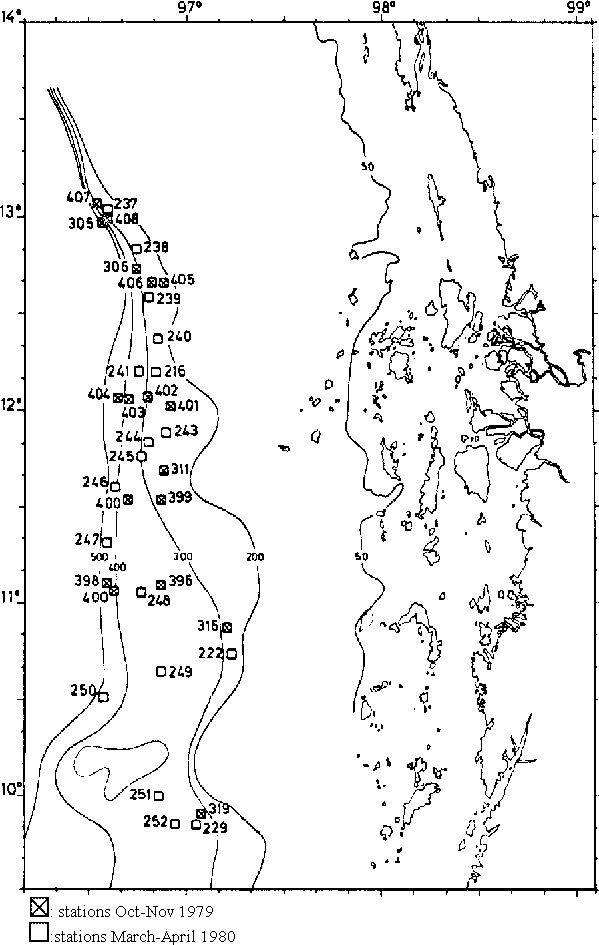
Exploratory fishing was carried out on this deep sea ground both in October-November and in March-April. A total of 38 hauls were made with the ordinary shrimp-cum fish trawl equipped with bobbins. Figure 8 shows the locations of the fishing stations set out in a map where also the contours of the 200, 300, 400 and 500 m depth are shown. Table 23 presents a summary of the findings.
Table 23. Catch rates at the Deep Sea Trawling Ground (kgs/h).
|
|
No hauls |
Total catch |
Shrimps |
Lobster |
Fish |
||||
|
Range |
Mean |
Range |
Mean |
Range |
Mean |
Range |
Mean |
||
|
Oct - Nov 1979 |
20 |
40-176 |
178 |
0-155 |
34 |
0-28 |
4 |
40-450 |
140 |
|
March - April 1980 |
18 |
76-328 |
133 |
0-65 |
18 |
0-36 |
7 |
46-300 |
108 |
The catch rates obtained in this exploration are far too low to be of commercial interest. In a similar survey in the Gulf of Mannar off Sri Lanka catch rates ranged up to abt 500 kg/hour for shrimp, 140 kg/hour for deep sea lobster and 1.2 tons/hour for fish. The total area of the deep water ground in the Andaman Sea is, however, very extensive and the resources of shrimp, lobster and deep sea fish must be very considerable in terms of total biomass. Some further trial fishing should be conducted to see whether there exist seasons or areas of higher concentrations than those found during the present survey.
The bottom trawl fishing was in general not distributed in a manner which allows an analysis of the catches for quantitative estimates of the biomass.
In a few areas the trawl survey approximated, however, a fixed grid system. Nakken and Sann Aung (1980) reported on the results of an analysis of such data from the autumn survey. In April a trawl survey was conducted of the eastern shallow part of the Delta area in which the location was chosen on a grid basis, see Figure 4. The data were as follows:
|
No of trawl stations: |
21 |
|
Mean catch per n.m.: |
209 kg |
|
SD |
141 kg |
In part of the area covered by the trawl-survey Bombay duck was abundant. In 9 hauls the catches of this species ranged from 0 - 390 kg/n.m. with an average of 157 kg/n.m., corresponding to a density of 15.7 tons/n.m.2. The estimated biomass in a 2 700 n.m.2 - area was thus about 42 000 tons.
The survey tasks did not include that of the assessing the resources of shallow water shrimp which is of such considerable commercial importance in Burma. A shrimp survey would have required different types of gear, vessel and survey design. However, shrimp formed part of the catch in a number of the trawl hauls especially in shallow waters in the Delta and on the Arakan coast, and an analysis of the shrimp data was made as follows:
In order to limit the study to areas where shrimp is reasonably abundant only trawl hauls with catches of shrimp exceeding 10 kg/h were considered. Furthermore the analysis was limited to Penaeid shrimp by excluding "small shrimp" or "white shrimp", mainly Acetes spp. with no commercial value. The results of the analysis are shown in Table 24. The mean catch rates were 28 kg/h and 60 kg/h on the Arakan coast in autumn and spring respectively and 73 kg/h and 65 kg/h in the Delta in the two seasons. The fish catch was on the average very high in these hauls with shrimp only forming between 1 and 13 percent of the total catches. Metapenaeus dominated the catches with Penaeus as the second most important genus. An analysis of the depth distribution of the catches indicated that by far the highest rates were obtained in the 10-24 m stratum. The rates decreased to about 1/4 in the 25-49 m depth stratum on the Arakan coast. The decline of catch rates with depth was even more pronounced in the Delta, but shrimp occured even to depths beyond 75 m in this region although in small numbers.
Table 24. Analysis of catches of shrimp in bottom trawl.
|
|
ARAKAN |
DELTA |
TENNASSERIM |
||||
|
Oct - Nov 79 |
Mar - Apr 80 |
Oct - Nov 79 |
Mar - Apr 80 |
Oct - Nov 79 |
Mar - Apr 80 |
||
|
Total no of hauls |
45 |
28 |
77 |
57 |
16 |
26 |
|
|
No of hauls with catch >10 kg/h of shrimps* |
8 |
10 |
10 |
12 |
0 |
1 |
|
|
Mean catch/hour shrimps* (kg) |
28 |
60 |
73 |
65 |
|
12 |
|
|
Mean bycatch of fish in hauls of shrimps >10 kg/h* |
2284 |
1890 |
480 |
698 |
|
376 |
|
|
Mean bycatch of fish in % |
998 |
97 |
87 |
91 |
|
97 |
|
|
Composition of the catches (%) and no of stations with catch of shrimps
>10 kg/h (in brackets)* |
|
|
|
|
|
|
|
|
|
Metapenaeus lyssianasa |
|
|
50 (3) |
|
|
|
|
|
Metapenaeus sp |
(2) |
67 (6) |
29 (6) |
91 (11) |
|
|
|
|
Parapenaeopsis sculptilis |
|
|
|
9 (1) |
|
|
|
|
Penaeus merguiensis |
|
12 (2) |
3 (1) |
|
|
|
|
|
Panaeus monodon |
(1) |
21 (3) |
8 (3) |
|
|
100 (1) |
|
|
Solenocera sp |
|
|
10 (2) |
|
|
|
|
|
Unidentified |
(5) |
|
|
|
|
|
* Excluding all records classified as "shrimps" in the record, if the weight is not >10 g/specimen. "small shrimps " are mainly Acetes sp.