


Geographical Targeting for Poverty Alleviation: Methodology and Applications
Food Security in Sub-Saharan Africa
CD-ROM: Food and Nutrition Library
Confronting dietary energy supply with anthropometry in the assessment of undernutrition prevalence at the level of countries
Global Information and Early Warning System (GIEWS) Brochure
David Bigman, Hippolyte Fofack (eds.)This book contains several chapters relevant to FIVIMS activities. These are: - Poverty mapping in Ecuador (D. Bigman, S. Dercon, D. Guillaume & M. Lambodt); Community targeting for poverty reduction in Burkina Faso (D. Bigman, S. Dercon, D. Guillaume, D. & M. Lambodt); Applying household expenditure survey data to improve poverty targeting: the case of Ghana (H. Fofack.); Technical approaches for geographical targeting - the role of GIS (H. Hassan, W. Luscombe & P. Nyborg) Mapping structural poverty and vulnerability in rural Senegal (H. Josserand) and Evaluation of food insecurity in the Sahel: an analysis using the demographic and health survey (DHS) data with GIS, (M. L. McGuire).
World Bank, October 2000, $40.00
http://publications.worldbank.org
Stephen Devereux and Simon Maxwell (eds.)This book brings together eleven substantial chapters on critical food security issues, and draws on a variety of disciplinary perspectives, from agricultural economics to nutrition. Most contributions reflect an evolution of thinking during the 1990s; food insecurity is no longer seen simply as a problem of agriculture and a failure of food production at the national level, but instead as a failure of livelihoods to guarantee access to sufficient food at household level. The arguments come with empirical data and case studies from across the sub-continent.
ITDG publishing, February 2001, £15.95
http://www.developmentbookshop.com
Humanity Libraries Project
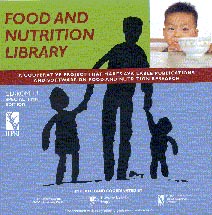
This CD-Rom library contains over 300 publications in the field of food security and nutrition. The objective is to provide those involved in the areas of food, nutrition, and basic needs with a comprehensive library of multidisciplinary insights and solutions to help solve poverty and malnutrition. The project is implemented in co-operation with numerous organisations and agencies including the UN University, ACC/SCN, IFPRI, WFP, GTZ-GATE, FAO, BOSTID , the Peace Corps and others. Development organisations are invited to participate in this project. Please contact IFPRI ([email protected]) for more information.
IFPRI, www.ifpri.org
The United Nations University, www.unu.edu
M. NubéThe prevalence of undernutrition at country level can be assessed on the basis of anthropometry or on the basis of dietary energy supply. In this article a comparison is made between both approaches. It concludes that results differ widely dependent on which approach is used and calls for a re-assessment of current practices. FAO in collaboration with the Wageningen University in the Netherlands is in the process of organising a conference on the Measurement and Assessment of Food Depreviation and Undernutrition.
Centre for World Food Studies (SOW-VU), Vrije Universiteit, Amsterdam, The Netherlands (in World Development, Vol29/7, 1275-1289)
The brochure provides an overview of the GIEWS, its major outputs and its collaboration with other FAO Hq units and the FAO's decentralized structures. It describes the System's interaction with member countries, partnerships with other UN agencies, international organizations, donors and NGOs. The various technologies used for crop monitoring and early warning are summerised with graphic examples in a manner suited to a general audience. Specific highlighted sections describe the System's role in capacity building, FIVIMS and in Crop and Food Supply Assessment Missions undertaken jointly with WFP. The brochure is available in English, French, Spanish and Arabic and can be accessed at http://www.fao.org/waicent/faoinfo/economic/giews/.
(Please notify the Secretariat about new publications that you know of that are related to FIVIMS topics and that can be included in this Section.)
