Part A: Purposes
Part B: Types of data
Part C: Methods of data collection
References
This module concentrates on the measurement of animal productivity in traditional African livestock systems. The discussion is applicable to the main species held in these systems - cattle, sheep, goats, camels and donkeys.
Measuring animal performance will, by itself, be of little use to livestock systems research if the factors which affect that performance remain unknown or unstated. These factors can be identified by examining within-system linkages/relationships or by comparing the performance of similar production systems. When making between-systems comparisons, appropriate criteria should be used.
WITHIN-SYSTEM LINKAGES/RELATIONSHIPS. Adequate information on the general features of the system under study is desirable because animal productivity is influenced by a range of inter-related factors, one or a number of which may set limits on the level of output achieved. Some of these factors are:
· availability of grazing/feed resources· water availability
· labour availability
· land tenure systems (e.g. communal grazing)
· management practices, stock wealth and production goals
· animal diseases
· animal genetic potential, and
· economic conditions (e.g. market prices, availability of inputs and infrastructure facilities).
After singling out the factors it is helpful to determine how they interact with each other.
For instance, the land tenure system may have a direct effect on management practices, grazing resources or water availability. Management practices, on the other hand, may affect the prevalence of particular diseases, market prices or access to grazing resources.
Next the effect of the above factors on animal performance should be determined by examining the relationships, such as those between:
· Stocking rate/grazing pressure and animal performance (e.g. calving rate, weight gain, mortality rates, milk production).· Seasonal conditions and animal productivity
For instance, season of birth can affect reproductive performance and may be manipulated by management. Seasonal control of mating is traditionally practiced in the Maasai pastoral system and in some Sahelian and Arab countries.
· Herd/flock size and animal performance
· Disease prevalence and animal performance (see Module 8 of Section 1).
· Herd/flock structure and animal performance
· Animal breed and animal performance under similar environmental conditions (see Table 3 as an example).
Note: Overall indicators of performance (e.g. average mortality rates) are too general to be useful. To identify realistic options for improvement, information on the relationship between performance indicators for individual animals and such parameters as age, sex, type of birth and season of birth will be needed. A significant positive relationship between pre-weaning mortality and type of birth (singles, twins etc) in sheep may, for instance, indicate the need to select against multiple births in African pastoral systems (e.g. Wilson et al, 1985a, Chapter 6).
Example:
Part A of Table 1 shows the sort of relationship one expects: cattle stocked at lower densities have better performance because of better access to feed.
Part B of Table 1 shows the opposite relationship, under uncontrolled conditions, and provides a useful warning example of the dangers of too simple an approach. What happened in this case was that areas with good grass cover (which brought about good condition in the animals) also attracted large numbers of them.
Table 1. Relationship between stocking rate and cattle performance.
A. Matopos Research Station, Zimbabwe, 1978-82.
|
Performance indicator |
Stocking rate |
||
|
3.6 ha/head |
8.1 ha/head |
||
|
Conception rate (%) |
57 |
73 |
|
|
Total milk yield (kg)1 |
548 |
752 |
|
|
Calf body weight at 270 days |
145 |
180 |
|
|
Mortality (%) |
|||
|
|
Cow mortality |
2.9 |
1.7 |
|
|
Pre-weaning calf mortality |
8.6 |
4.5 |
1 For 0-150 days postpartum.Source: Zimbabwe Government (1984).
B. On communal grazing areas of Botswana.
|
Stocking rate (ha/head) |
Percent of cattle in condition class1 |
||
|
Worst (C) |
Medium (B) |
Best |
|
|
(AB +) |
|||
|
< 4 |
5 |
56 |
39 |
|
> 4 < 7 |
13 |
59 |
28 |
|
> 7-10 |
36 |
52 |
12 |
|
> 10-20 |
37 |
58 |
5 |
|
> 20 |
30 |
56 |
14 |
1 For information on condition scoring.Source: Derived from Abel et al (1987).
Example:
Table 2. Effect of cattle herd size on animal performance, Botswana communal areas, 1979/80.
|
Performance indicator |
Herd size |
|||||||
|
1-10 |
11-20 |
21-30 |
31-40 |
41-50 |
51-60 |
61-70 |
70 + |
|
|
Conception rate (%) |
88.4 |
71.3 |
68.6 |
62.5 |
74.6 |
75.6 |
57.1 |
70.8 |
|
Abortion rate (%) |
32.4 |
23.1 |
16.9 |
12.3 |
11.1 |
19.3 |
8.2 |
10.0 |
|
Calving rate (%) |
56.0 |
48.2 |
51.7 |
50.2 |
63.5 |
56.3 |
48.9 |
60.8 |
|
Calf mortality rate (%) |
61.8 |
39.7 |
29.7 |
26.4 |
21.5 |
32.8 |
17.7 |
21.3 |
|
No. of calves/cow lifetime |
4.6 |
5.5 |
7.0 |
9.8 |
10.2 |
6.7 |
6.8 |
8.9 |
|
Adult mortality rate (%) |
9.3 |
8.3 |
8.8 |
10.5 |
8.0 |
7.8 |
8.5 |
7.1 |
Source: Bailey (1982).
Example:
Table 3. On-station growth and productivity of pure and crossbred cattle in Botswana.
|
|
Weight (kg) at: |
Weight of |
|
|
Weaning |
18 months |
weaner/cow/year (kg) |
|
|
Purebreds |
|||
|
Africander |
174 |
277 |
102 |
|
Tswana |
181 |
296 |
131 |
|
Tuli |
177 |
289 |
141 |
|
Brahman |
181 |
305 |
n.a.1 |
|
Bosmara |
204 |
324 |
n.a. |
|
Crossbreds2 |
|||
|
Tswana x Tuli |
182 |
293 |
135 |
|
Tswana x Brahman |
191 |
323 |
149 |
|
Tswana x Bosmara |
184 |
313 |
152 |
|
Tswana x Simmental |
194 |
328 |
162 |
1 n.a. = not available.
2 In each case, the female was Tswana.Source: Bailey (1982).
BETWEEN-SYSTEMS PERFORMANCE COMPARISONS. These are usually done between similar production systems to identify constraints more precisely.
For instance, a low calving rate found for particular groups or areas could point to specific causal factors which may have been difficult to single out without performance comparisons between similar production systems.
Criteria for between-systems comparisons. To be useful, between-systems comparisons should be done using appropriate criteria.
For instance, the performance of African livestock systems is commonly assessed on the basis of productivity per head rather than per herd or per hectare which may be more relevant, particularly for communal range management systems (Behnke, 1984; de Ridder and Wagenaar, 1986) (Module 6, Section 1).
Proposed improvements to livestock production should be technically feasible, economically attractive to the target group and culturally acceptable.
Technical feasibility. This means that proposed improvements are compatible with the managerial, institutional, infrastructural and environmental resources which exist in the target area.
Economic attractiveness. Often, potential increases in output may not be sufficient to induce the target group to adopt the improved technology. Therefore, cash costs and market prices facing producers, as well as the opportunity costs of making the change, must also be taken into account. Moreover, distinction must be made between outputs achieved on-station and on-farm and those achieved under traditional management, because they differ considerably.
Cultural acceptability. Unfortunately, this common- sense requirement is often ignored in the design and promotion of new technologies.
For instance, a particular land tenure system might be considered a major causal factor limiting livestock production, yet changing it may not be politically or culturally acceptable. In such a case, considerable improvement could be achieved by introducing innovations into the existing system rather than exchanging it for a completely new one (e.g. disease control measures, alterations in the seasonal timing of particular operations and better distribution of water points).
Inter-species composition of the livestock holding
Herd/flock structure
Reproductive performance
Mortality
Post-weaning mortality
Growth and weight gain
Outputs
When studying animal productivity, data may need to be collected on:
· inter-species composition of the production system's (household's) livestock holding
· herd/flock structure
· reproductive performance
· mortality
· growth and weight gain, and
· outputs (meat, milk, hides and skins). s and skins).
By 'inter-species (between-species) composition' we mean the balance between different kinds of animals (e.g. camels, cattle, sheep, goats and donkeys).
We normally compare the inter-species composition of different holdings in terms of the relative total liveweight ('biomass') of the different species, rather than in terms of their number. This is because relative biomass roughly parallels both relative output and relative pressure exerted on feed supplies.
The unit used to measure animal biomass may be kilogrammes of liveweight, but often we talk in terms of TLUs - tropical livestock units, which is the equivalent of 250 kg of biomass. The average weight of members of different species obviously differs between different areas according to the dominant breeds in each species and other conditions. In the absence of precise local information, the researcher can use the following figures which are conventionally applied for sub-Saharan Africa as a whole.
Table 4. Tropical livestock unit equivalents for sub-Saharan Africa.
|
|
Species |
Average biomass (kg) |
|
Camels |
250 |
1.0 |
|
Cattle |
175 |
0.7 |
|
Sheep/goats |
25 |
0.1 |
|
Horses/mules |
200 |
0.8 |
|
Donkeys |
125 |
0.5 |
Thus a herd of 10 cattle and 30 sheep, for instance, has a biomass composition which is 70% cattle and 30% sheep.
Knowing the inter-species composition can give us a clue to both resources and constraints. Table 5, for instance, shows how water shortage determines the inter-species composition of the livestock holdings of Somali-speaking people in southeast Ethiopia. But inter-species may also reflect (and, therefore, alert us to importance of) the availability of browse and grass or the scarcity of motor transport.
Example:
Table 5. The relative proportions of livestock species in two Somali clans in southeast Ethiopia.
|
Clan |
Density of dry-season water points (number/km2) |
Per cent of total biomass |
|||
|
Camels |
Goats |
Sheep |
Cattle |
||
|
Habar Awal |
0.04 |
72 |
4 |
15 |
9 |
|
Abaskul |
2.57 |
27 |
9 |
33 |
31 |
Sources: Cossins (1971); Watson et al (1973).
The inter-species structure of herds can also reflect management objectives. Keeping herds with mixed species composition decreases competition for feed resources, since different species tend to make rather different use of different components (e.g. grass and browse) in the total feed supply. Keeping a mix of species also reduces risk by lessening the dependency on one species for meat and milk (Wilson et al, 1985a, Chapter 6). Mixed species production also increases the likelihood of meeting basic consumption needs, particularly in terms of milk. Figure 1 provides an example of the effect of mixed herding on annual milk production in pastoral herds in western Sudan.
Figure 1. Annual cycle of lactating females in Southern Darfur, Sudan.1
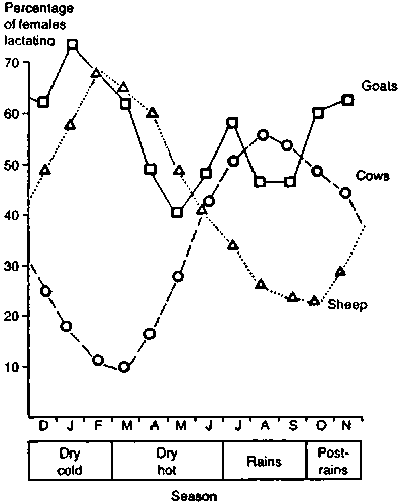
1 Assumes that lactation lasts for four months for sheep (rarely milked), five months for goats and seven months for cows.Source: Wilson et al (1985a, Chapter 6).
By the expression 'herd structure' we mean the proportion (in terms of number of head) of the herd of a single species which is formed by different age and sex classes of animals, e.g. breeding females, calves, mature bulls, mature oxen etc.
Table 6 gives an example of herd structure data from an agro-pastoral system in Zimbabwe. Figure 2 shows how structure data can be depicted graphically in the form of an 'age pyramid'.
Herd structure is usually the easiest data to collect and can indicate which further data may most need to be collected subsequently. Information about herd structure can tell us something about:
· The owner's management objectives (i.e. whether he is mainly interested in the production of milk, meat or draft power).For instance, pastoral herds tend to have as many cows as possible to produce milk for human consumption, which is an important production objective. On the other hand, males not needed for reproduction are sold to generate cash for food and other purchases.
In mixed production systems where animals are used for draught and transport, the proportion of mature oxen or donkeys in herds tends to be relatively high. (Donkeys are extensively used for draught and transport in Botswana, Mali, Ethiopia, Niger and parts of Zimbabwe.)
· Problems or constraints in the system. Data on herd/flock size and structure will give an idea about birth and death rates and offtake levels (Wilson and Semenye, 1983; Matthewman and Perry, 1985), which, in turn, may indicate where more in-depth studies are needed.
For instance, a relatively low proportion of young stock in a herd (or the target area) would suggest that adult mortality is low or pre-weaning mortality is high, or that calving percentage is low. Alternatively, it may mean that calves were sold during the year. To determine which of these causes is most likely, it will be necessary to study the general conditions of calves and cows, the level of nutrition and disease prevalence, and interview the owners.
Table 6. Average number of cattle owned/held per household in the Matabeleland communal area, Zimbabwe.
|
Livestock category |
Average holding/household Number ± S.E. |
Per cent of total herd |
|
Calves |
1.91 ± 0.17 |
19.2 |
|
Young stocka |
1.20 ± 0.17 |
12.0 |
|
Cows |
4.76 ± 0.43 |
47.8 |
|
Oxen |
0.27 ± 0.05 |
2.7 |
|
Bulls |
1.90 ± 0.15 |
19.1 |
|
Total |
9.96 ± 0.80 |
100.0b |
a Stock less than three years old.
b Difference due to rounding error only.
Source: Zimbabwe Government (1982).
Figure 2. Age pyramid for transhumant goats in Chad, 1976.

Source: Wilson and Semenye (1983).
Information about herd structure can also provide the basis for calculating or forecasting herd productivity. After a drought, for instance, pastoralists' herds often have a structure which is 90% breeding females. Knowing this enables one to forecast a large crop of calves and a rapid increase in milk supply or herd numbers in contrast to the more usual case where breeding females make up 40% of the herd.
The reproductive performance of the breeding female is probably the single most important factor influencing herd/flock productivity. This is so because:
· all forms of output (milk, meat, traction, wool and hides) depend on it, and· it is the determinant of output which varies most (has highest coefficient of variation) between flocks within a population. This variability is not random but caused by identifiable influences which can usually be manipulated.
Reproductive performance, therefore, is often the determinant of output which is most susceptible to improvement, simply by using management practices already used by some in the farming community. The usefulness of data on reproductive performance lies in their ability to help us identify causes for poor reproductive performance, and hence opportunities for improvement.
The purposes of collecting data on reproductive performance are to:
· establish the relationships (correlations) between different parameters and variables which influence reproduction, and· calculate reproduction ratios enabling comparisons of productive performance.
Many different factors influence reproductive performance, such as:
· nutrition· genes
· animal disease and health, and
· the huge variety of management practices, either alone (e.g. control of the mating period) or in conjunction with the above (e.g. mating on a rising plane of nutrition).
Establishing relationships between these factors and reproductive performance is a must when identifying constraints in particular systems. Table 7 gives an example of the relationship between feed and the reproductive performance of small ruminants in the Maasai area of Kenya.
Example:
Table 7. Effect of feeding Acacia tortilis pods in 1983 on the reproductive performance of goats and sheep.
|
|
Pod feeding |
No pod feeding |
||
|
Goats |
Sheep |
Goats |
Sheep |
|
|
Per cent of all breeding females |
||||
|
Mated |
97 |
73 |
20 |
47 |
|
Conceived |
70 |
54 |
20 |
47 |
|
Gave birth |
79 |
54 |
13 |
44 |
|
Aborted |
1 |
0 |
7 |
13 |
Source: Adapted from Peacock (1984).
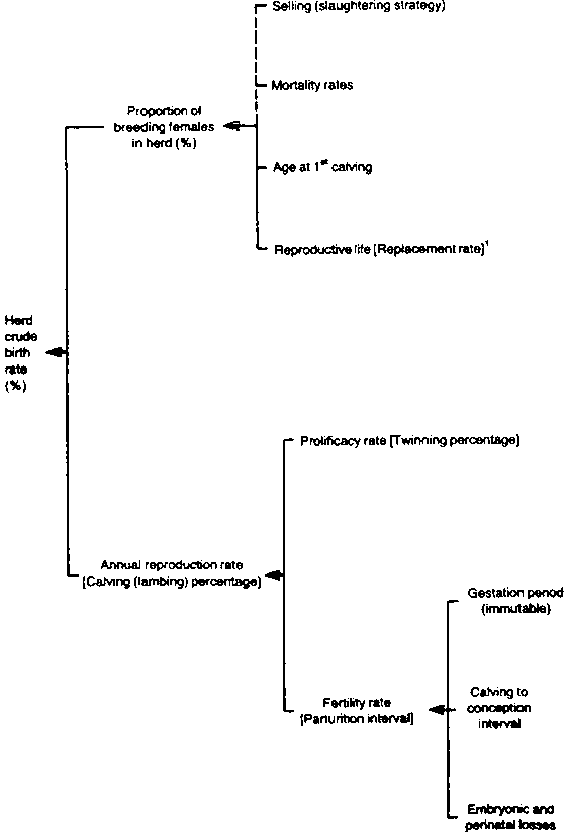
The expression 'reproductive performance' does not usually refer to a single trait, but to a combination of many. We can deal with these at various levels of complexity. Figure 3 shows, with only a moderate degree of complexity, the relations between the various components reproductive performance. We shall briefly describe and define the various concepts and their relations with each other in a way which will enable the reader to use the concepts to measure reproductive performance.
Herd crude birth. We can express the total number of calves (lambs/kids) born as a proportion of the total number of animals in the herd, and call this expression the 'herd crude birth rate', by analogy with the crude birth rate in human demography. The concept is, however, rarely used for other animals than humans.
Figure 3. Component and determinants of herd/flock reproductive performance.
1 Terms in square brackets, [ ], are synonymous or closely related.
The crude birth rate is a function of the annual reproduction rate (see below) of the breeding females, and of the proportion of breeding females in the total herd. This, in turn, is determined by certain management strategies (selling/slaughtering), by the relative mortality rates of different classes of animals, and by two reproductive traits, the 'average age at entry to the breeding herd' (i.e. when a heifer is thought to be ready for breeding), which is related to the average 'age at first calving', and the 'reproductive life' (i.e. the average number of years between first calving and last calving).
The annual reproduction rate (ARR) is the average number of births per breeding female per year. Particularly with cattle in Africa it is also referred to as the calving rate, but outside Africa, this latter term is increasingly being used to express, instead, the number of calves born per impregnation (either by natural service or by artificial insemination).
The prolificacy rate is the number of live offspring born, on average, every time a breeding female gives birth. This is usually unity (i.e. 1.0) with African cattle but is often much higher with small ruminants, for whom the expression twinning rate (percentage) may also be used.
The fertility rate is the number of times per year, on average, that a breeding female gives birth. It is also often expressed as the parturition interval, i.e. the average period of time (usually given in days) between successive births. However, expressing the fertility rate solely in terms of intervals between successive births ignores two further elements which should rightly be included. These are:
· the period of time after a heifer is considered ready for breeding before she produces her first calf, and· the time after a cow produces her last calf before she is culled or otherwise removed from the category of breeding females.
The fertility rate, in turn, is determined by the (immutable) average gestation period, by the calving to conception interval and by embryonic and perinatal losses (also loosely referred to as 'abortions').
An approximate annual reproduction rate for the herd/flock as a whole can be calculated by dividing the average number of young born per breeding female by the average parturition interval for the animal species in question (see Table 8).
Alternatively, the annual reproduction rates for individual breeding females can be calculated and aggregated to determine the overall reproductive rate for a herd or flock. Calculating the rate on an individual animal basis gives also information about the distribution of litter sizes and parturition intervals. Individual calculations are, however, time consuming and costly.
|
Examples: a) Annual reproduction rate for goats Assuming that the estimated average number of kids born per parturition in a flock of goats is 1.2 and the average parturition interval is 240 days, then the ARR for the breeding flock is: ARR (%) = {(1.2/240) x 365} x 100 = 182.5 The average number of young produced per year per breeding female thus is about 1.8. b) Annual reproduction rate for cattle Assuming that breeding cows produce, on average, one calf per parturition and that the average parturition interval is 550 days, then the annual reproduction rate for the herd is: ARR (%) = {(10/550) x365} x 100 = 66.36 |
When measuring the parameters of reproductive performance in on-farm surveys, users of the manual should remember that:
· short-term studies may underestimate the true parturition interval, because they only take account of females which give birth twice or more during the survey period, and these will be the most fertile ones; and· not all breeding females may actually be exposed to effective impregnation (e.g. because of shortage of bulls) and the wrong conclusions may be drawn about the poor performance of the female.
Table 8 gives some typical values of reproduction parameters in Africa and Figure 4 gives specific examples from Mali.
Table 8. Reproductive parameters for African domestic livestock.
|
Parameter |
Camels |
Cattle |
Goats |
Sheep |
Donkeys |
|
Gestation period (months) |
12 |
9 |
5 |
5 |
11 |
|
Age at first parturition (months) |
60 |
48 |
15 |
15 |
42 |
|
Parturition interval (months) |
26 |
18 |
8 |
8 |
11 |
|
Life expectancy (years) |
15-20 |
10-12 |
6 |
5 |
14-18 |
|
Mean number of births/reproductive period |
2.7 |
2.1 |
6 |
5 |
3 |
|
Maximum number of births/reproductive period |
9 |
8 |
12 |
8 |
8 |
Source: Wilson et al (1985a, Chapter 6, p. 118).
Source: Wilson (1989).
Pre-weaning mortality
High mortality in young stock is a major cause of low productivity in many African livestock production systems. Mortality rates of 20-25% are commonly recorded for calves (e.g. Zimbabwe Government, 1984; Butterworth, 1985), and rates of between 25 and 35% appear to be fairly typical for small ruminants (Wilson et al, 1985a. Chapter 6). For camels, the mortality rates for young stock range between 20 and 50% (Wilson, 1984a; 1986a). During drought, young-stock losses are likely to be much higher.
Causes of death. Young-stock losses before weaning are influenced by:
· season of birth which has an effect on the quality and quantity of feed (milk and forage) available, the incidence of disease and the level of parasite infestation· type of birth i.e. single, twin or triplet
· sex of the offspring
· age of the offspring (the ability to survive up to weaning time increases with increasing age)
· parity, which affects the dam's mothering ability and milk production, and
· management, which affects disease prevalence and season of birth.
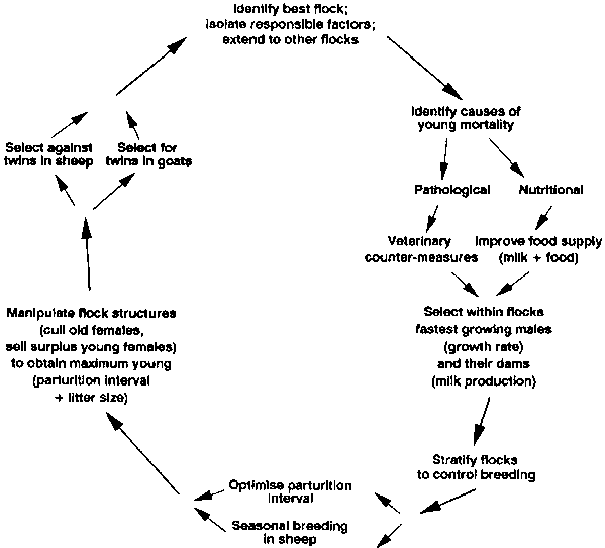
Analyses of the relations between these variables and pre-weaning mortality will often provide the basis for the design of improved management systems, e.g. through selection against twins in sheep where survival rates tend to be low (Wilson et al, 1985b).
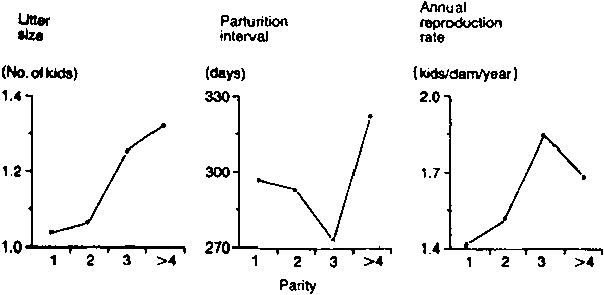
Figure 5 is an example of 'improvement pathways' devised for small ruminants in Kenya. For additional practical examples, the reader can refer to Wilson et al (1985b, c).
Measurement of pre-weaning mortality. The pre-weaning mortality rate for a herd/flock is defined as:

The estimates are usually teased on animals born alive, probably because data on abortions and still births tend to be incomplete.
In traditional production systems, post-weaning mortality tends to be lower than mortality before weaning (Traore and Wilson, 1988).
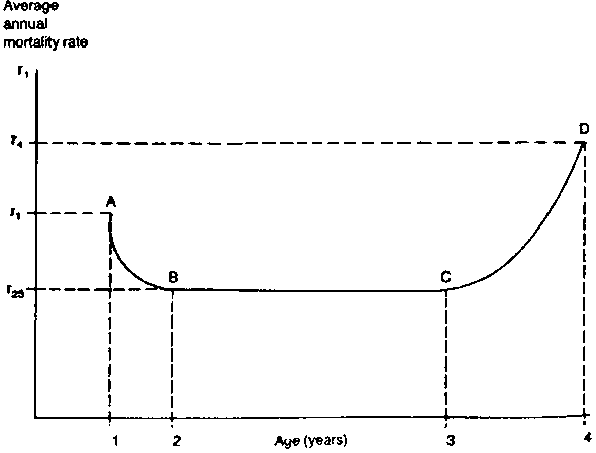
Causes of post-weaning mortality. The factors which commonly cause death after weaning are disease and malnutrition. The age of the animal also affects post-weaning mortality rates, such that the risk of death initially declines and increases again towards the end of the animal's life (Figure 6). In some parts of Africa, predators can also cause significant losses.
Measurement of post-weaning mortality rate. When data on herd/flock structure are available, overall mortality rates for particular age/sex groups within the herd/flock can be calculated as follows:

For the herd or flock as a whole:

Example:
Source: Wilson et al (1985 b).
The denominator commonly used in such calculations is the number of animals at the beginning of the period over which overall mortality is measured, which means that animals sold or purchased during the period are excluded. This can bias the result obtained (e.g. if purchases occur just after the beginning of the year, the formula will give an overestimate of the actual rate).
Therefore, the average of the opening and closing numbers is usually used as a denominator, even though this can result in bias as well. (For instance, if a large number of stock is purchased at the end of the period, the formula will underestimate the true mortality rate.)
No general recommendation can be made: the approach adopted will often be a matter of choice based on knowledge of the 'typical' pasterns of acquisition and disposal in the surveyed area, and on the degree of accuracy required. However, if accurate results are needed, it is preferable to base the denominator on the length of time animals were actually present in the herd/flock. The procedure in this case is to:
· define the period over which mortality is to be measured· define the age/sex group for which mortality rate is to be recorded (e.g. 1- to 2-year-old males; 3- to 4-year-old females etc)
· for each individual animal in the herd/flock, sum the number of days during the measurement period in which the animal was actually present. If sold or otherwise disposed of, or if the animal died during this period, sum the days present to that date
· aggregate the total number of days present for all individual animals in the selected age/sex group and divide this figure by the length of the period over which measurement took place (e.g. if the period of measurement is one year, divide the aggregate by 365), and
· relate this figure to the actual number of deaths recorded and express the result in percentage terms.
Example:
Figure 6. Average annual mortality rate ( t) as a function of age.
Source: Wilson (1987).
For a period of 1 year, the rate would be calculated as follows:

This formula requires precise records for each animal for the intended period of measurement. It will improve the accuracy of the result but will involve frequent visits to selected households. When this level of accuracy is not needed, the previous formula will normally be sufficient.
Slow growth rates in African livestock are a major cause for low productivity, affecting the age at which reproduction, commences or oxen become available for ploughing, and the weight (and age) at which animals are slaughtered.
In the study of growth and weight gain,1 one or more of the following parameters will often be measured:
· weight for age· growth rates over time by age, sex or genetic group (e.g. Msanga et al, 1986)
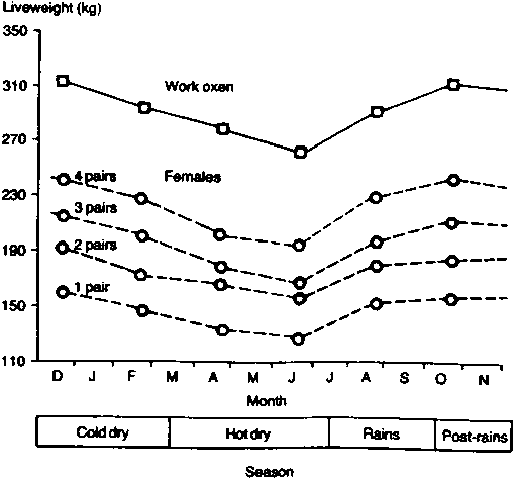
· seasonal variations in body weight (Figure 7) and growth rates, and
· compensatory gain (Module 7, Part A) following periods of seasonal stress. This may, for instance, affect the capacity of oxen to plough and the timing of crop operations.
1 Measurement of carcass composition is not discussed in this manual because the parameter is relatively unimportant in the context of African livestock production systems.
Example:
Figure 7. Effects of season on body weight of cattle, central Mali.
Source: Wilson (1987).
Weight and growth measurements should be directed towards research into the factors affecting animal performance. Weight for age records will normally be based on measurements taken at birth, weaning and after weaning.2 Measurements of liveweight over time may make it possible to isolate environmental effects and to determine whether improvements in productivity are feasible, e.g. through selection for improved weight gain or through seasonal adjustments in grazing pressure.3
2 Measurements at birth enable a more accurate estimate of daily liveweight gain and weight for age from birth up to weaning. After adjustments to normal weaning age and correcting for environmental effects, weaning weight ratings can be used to assess mothering ability as a basis for dam selection. Post-weaning weight records obtained at venous intervals can be used as a basis for individual animal selection, after making adjustments for environmental effects.3 Selection for least-weight loss is also feasible, and this trait is highly heritable in some adapted populations.
Thus, when measuring growth and weight gain,4 it is often useful to explore their relationships with breed, type of birth (singles, twins etc.), sex, parity, season of birth (which can have medium- to long-term effects on growth rate, see Figure 8), seasonal conditions, disease and management system (Wilson, 1987). Care must be taken (and this may require sophisticated statistical techniques, such as analysis of variance which is beyond the scope of this manual) not to attribute to one of these factors effects which are really caused by another factor.
4 Weight gain is only one component of growth but it is the one most commonly measured in livestock systems research. Other measurable components of weight are height and girth circumference (Wilson and Maki, 1988).
Example:
Figure 8. The effect of season of birth on growth rate of calves born in Mali in May during the period

Source: Wilson (1987).
Comparisons of growth rate performance over time can be done on the basis of average daily weight gain which is calculated as:

|
Example: The average birth weight for a group of Mpwapwa calves in Tanzania was 27.8 kg under trial conditions. At weaning (75 days), the average weight had increased to 59.3 kg (Msanga et al, 1986). The average daily weight gain (ADWG) during the period thus was: ADWG = (59.3 - 27.8)/75 = 0.42 kg/day. |
Average daily weight gain makes, however, no allowance for differences in body frame (i.e. skeletal structure), nor does weight, of itself, accurately reflect an animal's condition. Although having the same body weight, an animal with a large frame will be in a poorer condition than an animal with a smaller frame. To correct for this bias, relative daily weight gain may be used:

In African traditional systems, animals perform a variety of functions. Depending on the species, they provide milk, draught power, transport, meat, manure, hides, skins and wool. They are also good investment and a handy source of savings which can be drawn on in times of emergency or to meet particular cash needs (e.g. school fees). Last but not least, owning livestock is prestigious in some societies and confers a higher social status.
The outputs usually measured in livestock systems research are meat, milk, manure and draught power.5 This module also focuses on the measurement of milk and meat outputs and shows how composite productivity indices can be developed to provide an overall measure of animal performance. The measurement and valuation of manure as a farm input is discussed in Module 4.
5 Hides, skins and wool are generally of minor importance in African livestock systems. Animal transport, though much used in some areas, is difficult to measure accurately and is not dealt with in this manual.
Milk
Milk is widely consumed in both rural and urban areas of Africa. It constitutes a major part of the diet in pastoral communities and influences herd structure and the timing of lactations of different animal species within the herd or flock (Wilson et al, 1985a, Chapter 6).
Milk output is affected by such factors as animal species, breed/genetic potential, parity, lactation length, weaning period, disease, seasonal conditions and feed supply, and management system.
In some countries (e.g. Kenya), small-scale dairy operations produce the bulk of the marketed milk supply for urban and rural communities, while in others (e.g. Zimbabwe, Swaziland, Nigeria and Ethiopia), governments are actively involved in the promotion of such operations. Attempts are also being made to extract surpluses from the traditional sector through co-operative and other marketing agencies.
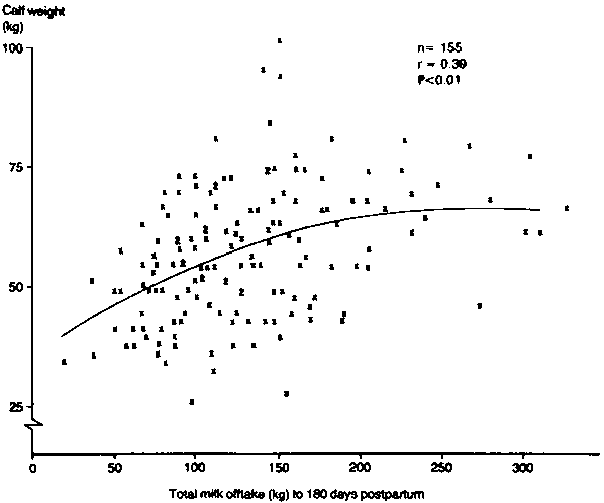
Although the type of milk data collected will largely depend on the system being studied and the objectives of the study, milk output per lactation and lactation length will almost always be measured. These parameters are particularly important in subsistence systems, where they not only are themselves affected by a number of factors but also, in turn, have an effect on human nutrition and the growth rate of young stock before weaning (Wagenaar et al, 1986; Wilson, 1987) (Figure 9).
Information on milk sales will also be needed. The amount of milk sold will depend, among other things, on such socio-economic factors as prices, market outlets, household size and household income. However, unless the system is geared towards commercial dairy production, sales will usually be opportunistic, and the amounts sold, difficult to measure. Quality assessments in terms of butterfat and protein content will usually be done for small-scale dairy operations supplying milk for processing in commercial plants.
Milk produced by a cow may either be used for feeding its own calf or be extracted for human consumption, and it is highly desirable, in order to avoid confusion, to use consistent terminology in describing these two fractions. Unfortunately, this is frequently not done, and it is difficult, when reading other people's reports, to be sure which fraction they are referring to. The following terminology is recommended:
· Extracted milk is milk taken from the cow for human consumption, in whatever form (e.g. fresh milk, yoghurt, butter), and however disposed of (i.e. by sale or by subsistence consumption in the farmer's household). In theory, although this is not a practical issue at present in Africa, extracted milk includes milk used for non-food industrial use or for feeding animals other than calves in the same herd.· Milk consumed by calf is mill consumed by the cow's own calf or by other calves within the same herd, whether this is by suckling or by bucket feeding.
· Milked-out production is extracted milk plus milk consumed by calf.
Source: Wagenaar et al (1986).
Expressions such as 'milk output', 'milk production', 'milk yield', and even 'milk offtake' are ambiguous as to whether or not they include both extracted milk' and 'milk consumed by calf' and should not be used unless a clear indication is given as to their definition. Because of this ambiguity, it is recommended that terminology suggested above is routinely used.
How milk production should be valued for surplus and deficit milk producing households is discussed in Part B of Module 4.
Liveweight output
The output of liveweight in African livestock production systems consists of four components:
· slaughter for home consumption
· sales for cash
· disposals for other reasons (e.g. gifts, ceremonies, exchanges), and
· liveweight gain of the herd.
Herd liveweight gain can result from a net increase in herd size and/or an overall increase in average body weight. If herd size and average body weight decline (e.g. during periods of drought), herd liveweight gain will be negative. The value of output, however, can increase or decrease during periods of constant body weight due to variations in price.
Each component of meat output should be measured and valued separately to obtain a true indication of liveweight production in a herd or flock. Output resulting from herd liveweight gain can be valued by its liveweight market price or converted to a dressed weight price equivalent.6 The price used to value unsold liveweight output will depend on whether the household is a deficit or surplus producer (see Part B in Module 4).7 Measurement of offtake and of changes in herd/flock numbers over time is discussed in Module 9.
6 Dressing percentage fails to take account of the value of offal (i.e. the 'fifth quarter, - Staatz, 1979) which is often consumed. If used, a liveweight conversion factor of 0.45-0.55 is normally applied. For small ruminants, a factor of approximately 45% would appear to be applicable (Wilson, 1984b).7 Wool, hides and skins output will be valued at market price. The liveweight price of an animal for slaughter will include the value of its hide or skin.
Productivity indices
In order to make meaningful comparisons of performance within and between different production systems, composite productivity indices have been developed for goats, sheep and cattle, taking into account reproductive performance, viability8 and liveweight (Wilson, 1983; Wilson et al, 1985c; Wagenaar et al, 1986). Each index is based on the assumption that breeding female productivity provides a good indication of overall herd/flock performance.
8 Viability is the rate of survival, e.g. if annual mortality is 5%, then viability is (100 - 5) = 95%.
The productivity indices are defined as:

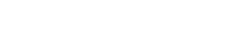
Index 1. This index gives the liveweight of progeny produced per dam per annum. It reflects reproductive performance, liveweight output and the mortality rate of young stock. For small ruminants, the ratio makes allowance for the fact that females breed more than once a year and have litter sizes of more than one. However, because the index only accounts for the weight of weaned progeny, it is deficient in that it ignores:
· differences in dams' liveweight, and hence their need for feed· advantages (social or financial) of having two smaller animals instead of one larger one, and
· milk output for human consumption or sale, even though the value of this output may be significant. There may also be significant opportunity costs associated with suckling the young for the whole of the normal weaning period. By valuing milk used for this purpose in terms of progeny liveweight, the index may understate the true value of output produced.
Indices 2 and 3 take into account the differences in dam weight by relating liveweight of progeny produced per dam per annum to the weight of the dam postpartum. Index 3 expresses dam size in terms of metabolic weight.9
9 For a discussion of metabolic weight (i.e. body weight0.75) refer to Butterworth (1985, pp. 30-32).
Overall performance expressed by the indices can then be correlated with different parameters, such as parturition interval and dam weight, to determine how it is affected by them. (Examples of correlation analysis are given in Wilson, 1986b). However, since gathering case-by-case information on such parameters is costly and time consuming in traditional livestock production systems, correlation analysis should only be done when it is absolutely necessary.
Table 9 shows the steps to be taken in calculating Index 2. For index 3 an additional step has to be taken to convert liveweight to metabolic weight.
|
Example: |
|||
|
Table 9. Steps in the calculation of productivity indices for cattle. |
|||
|
Parameter |
Code |
Calculation |
|
|
Cow mortality during year (%) |
A |
|
|
|
Calving percentage |
B |
|
|
|
Calf mortality to one year (%) |
C |
|
|
|
Percentage of cows maintained with calves reaching |
D |
B (100 - C)/100 |
|
|
one year |
|
|
|
|
Calf weight at one year (kg) |
E |
|
|
|
Extracted milk yield/completed lactation (kg) |
F |
|
|
|
Percentage of cows maintained who produce the |
G |
[B/100] [100 - (C/2)]a |
|
|
equivalent of a completed lactation annually |
|
|
|
|
Total liveweight equivalent of extracted milk yield |
H |
F[G/100]/9b |
|
|
per cow maintained (kg) |
|
|
|
|
Total liveweight of 1-year calf produced per cow |
I |
E[D/100] |
|
|
maintained (kg) |
|
|
|
|
Liveweight of 1-year calf plus liveweight equivalent |
J |
[I+H]/[{100- (A/2)}/100]c |
|
|
of milk extracted, per cow maintained (kg) |
|
|
|
|
Average cow body weight (kg) |
K |
|
|
|
Liveweight of 1-year calf plus liveweight equivalent |
J[100/k] |
|
|
|
of milk extracted per 100 kg of cow maintained annually (kg) (Index) |
|
|
|
|
|
a A cow whose calf dies during the lactation period is considered to have actually produced milk during half the period. |
||
|
b Conversion factors constructed from Drewry et al (1959). |
|||
|
c Cows dying during the year are considered to have been maintained for half a year. |
|||
|
Source: Derived from ILCA (1979). |
|||
Herd/flock structure
Reproductive performance
Mortality
Growth and weight gain
Outputs
Herd/flock structure data may be collected independently in a single-visit interview or as part of a multiple-subject survey of household size, asset ownership etc. Repeat surveys may be needed if significant changes in numbers/structure are suspected (as a result of prolonged drought, for instance). Three methods of data collection are commonly used:
· ageing by dentition
· owner/holder interviews, and
· interpretation of aggregate livestock statistics.
Ageing by dentition. Using this method, animals are individually handled by the survey team, and their age is determined on the basis of the number of erupted teeth they have (see Table 10). At the same time, their sex and functions are recorded on cards for future use. Large samples (of about 1000 animals of each species) will normally tee required to obtain reliable estimates of the overall herd/flock structure in an area.10
10 ILCA staff in West Africa have been able to handle up 300 head of smallstock or 80-100 head of cattle in a 5-hour session (Wilson and Semenye, 1983). The numbers handled will depend on the average size and dispersion of herds/flocks within the target area, and experience.
The time of tooth eruption differs between species and may be influenced by management system, seasonal conditions, sex, nutrition and body size. For camels, the pattern of tooth eruption is different from that of cattle and small ruminants (Wilson, 1984a).
Owner/holder interviews. The owners' knowledge of their animals' age may not be precise but will be sufficient if only approximate data on herd/flock structure are required. When more accurate age estimates are needed, interviews should be combined with structuring by dentition. If herd splitting is practiced (see Module 10), owners/holders should be interviewed when all the animals are at the home base, so that specific animals may be examined and their individual characteristics identified and recorded. Recent losses may also be noted (see 'Progeny history method' belong).
Table 10. Ages for incisor eruption in cattle, sheep and goats.
|
Species |
Pairs of incisors |
|||
|
1st |
2nd |
3rd |
4th |
|
|
eruption at month |
||||
|
Cattle |
27-32 |
32-36 |
40-44 |
47-54 |
|
Sheep |
14-20 |
21-25 |
26-32 |
32-38 |
|
Goats |
14-17 |
19-22 |
24-28 |
31-37 |
Sources: Kikule (1953); Wilson and Durkin (1984).
Aggregate livestock statistics. Estimates of herd/flock size and structure obtained from national, regional or district statistics (e.g. from vaccination or dip-tank records) are rarely reliable and should always be interpreted with caution (see Module 9).
Rough indications of reproductive performance can be obtained from herd/flock structure surveys. More detailed information can be obtained by using:
· progeny history method, or
· continuous recall.
The progeny history method. This involves recording the breeding history and reproductive performance of each mature female in the herd/flock.11 Offspring are identified and details about sex, function etc are recorded; if some are no longer in the herd/flock, the reason for their not being there should also be determined (see example below).
11 To ensure that all breeding animals are present, interviews should usually be conducted early in the morning before the herd/flock is released for grazing and watering.
The progeny history method has been used by ILCA to obtain data on herd structure, transactions and reproductive performance in Niger, Nigeria, Ethiopia and Kenya (Grandin, 1983). As with all other single-interview methods, the accuracy of the results will largely depend on the length of the recall period: the older the animal, the greater the likelihood of error for births early in the dam's life.
Management system and the animals' role in the overall production system also influence the reliability of recall. For instance, pastoralists, who attach great value to their animals, have been shown to have accurate knowledge of animal breeding histories, even when herds/flocks are large (Grandin, 1983, p. 284). However, in the agropastoral system where animals are bought or sold frequently, recall may be relatively poor, even when herds or flocks are small. Recall of abortions and deaths soon after birth is usually unreliable.
|
Example: The questions commonly used to solicit information on reproduction and other performance in a progeny history interview are: · How old is this cow?12 · How did you acquire it (e.g. by inheritance, purchase, birth within herd etc)? · How many calves have been born to this cow? Focus on the first calf: · Was it a male or a female? · Which season and year was it born? · Where is it? - Is it in the herd today? Show me. - Is it dead? Is so, at what age did it die and why? - Did you sell it? If so, at what age and to what sort of purchaser? - Did you slaughter it? If so, at what age? - Did you give or lend it to someone? If so, at what age? - Where else is it? (If not covered above) Now focus on the second calf.....etc. As the above shows, additional information related to management and marketing strategies, and reasons for sale or death, may be obtained during this questioning. |
12 Dentition checks could be made at the same time.
For a rapid appraisal of reproductive performance, the choice of animals can be opportunistic but for more in-depth studies, proper sampling techniques should be used. Where possible, local terms should be used to identify season of birth, age of dam, type of birth and parity (Wilson and Wagenaar, 1983). Person(s) most familiar with the animals being sampled should be interviewed. In pastoral communities, for instance, the most reliable information on progeny histories can be obtained from women and/or herd boys (Grandin, 1983).
A reasonable approximation of reproductive performance can also be obtained from a general survey of the overall breeding rate in a herd/flock, defined as the number of parturitions per number of breeding females in a defined period (Wilson and Semenye, 1983, pp. 169-170). However, data obtained by general surveys on age at first parturition, parturition intervals, abortions, still births or losses soon after birth are unreliable, particularly if the recall period is long (e.g. 1 year). Continuous survey techniques, with shorter recall periods, will then be preferred.
Continuous recall. To obtain reliable data on reproductive performance with this type of method, visits every 10 to 14 days during the breeding season and up to weaning will be required. The dam and progeny should be identified and all details recorded, including data on matings, type of birth, sex of progeny, weaning periods, mortalities and management practices. An example of a record sheet used by ILCA is given overleaf.
The animals included in the survey are commonly identified by an ear tag. In some societies (e.g. the Fulani of Mali and the Maasai of Kenya), individual animals are identified by name. Using them together with ear tags will improve identification of animals on subsequent visits.
Mortality data can be obtained from single-interview or continuous recall surveys. They can also be obtained from progeny history interviews (see progeny history example above), but recall over long periods is likely to be less accurate than for data on reproductive performance.
Single-visit surveys. These can be used to obtain overall herd/flock mortality, but long periods of recall will decrease its accuracy, especially for young stock which had died early in life.
Continuous mall surveys. This type of survey is suitable for recording individual animal losses and identifying causes of death. Details on age, sex, type of birth, parity, disease, seasonal conditions and management systems should be recorded for each animal lost to examine the effects of these variables on mortality. Disease, in particular, will require careful monitoring to determine the exact causes of death.
|
Example: |
||||||
|
CONTINUOUS RECALL SURVEY |
||||||
|
Country |
Date of first visit |
|||||
|
Region |
||||||
|
District |
Sex |
Female |
|
|||
|
Household number
|
|
Male |
|
|||
|
|
Castrated male |
|
||||
|
Species:
|
Sheep |
|
|
|||
|
Goat |
No. of animal |
|
||||
|
Breed |
|
Type of birth |
|
|||
|
1. Reproduction |
||||||
|
|
Offspring |
|||||
|
Date
|
Parturition number |
Litter size |
Sex |
Identification |
Weight |
Age (days) |
|
1 |
|
|
|
|
|
|
|
2 |
|
|
|
|
|
|
|
3 |
|
|
|
|
|
|
|
4 |
|
|
|
|
|
|
|
5 |
|
|
|
|
|
|
|
6 |
|
|
|
|
|
|
|
7 |
|
|
|
|
|
|
|
8 |
|
|
|
|
|
|
|
Observations |
||||||
|
2. Weight performance and teeth observations |
||||||
|
Date
|
Age given by owner |
Age by teeth |
Weight |
Remarks |
||
|
|
|
|
|
|
|
|
|
|
|
|
|
|
|
|
|
|
|
|
|
|
|
|
|
|
|
|
|
|
|
|
|
|
|
|
|
|
|
|
|
3. Health interventions |
||||||
|
Date
|
Intervention |
Date |
Intervention |
Date |
Intervention |
|
|
|
|
|
|
|
|
|
|
|
|
|
|
|
|
|
|
|
|
|
|
|
|
|
|
4. Mortality and offtake |
||||||
|
Lambs
|
Date |
Born and died (reason) |
Born and killed for meat |
Born and killed due to lack of milk |
Born and lost (accident, hyena etc) |
|
|
|
|
|
|
|
|
|
|
|
|
|
|
|
|
|
|
|
|
|
|
|
|
|
|
|
|
|
|
|
|
|
|
Adults
|
Date |
Died (reason) |
Sold |
Gift |
Lost |
|
|
|
|
|
|
|
|
|
|
|
|
|
|
|
|
|
|
|
|
|
|
|
|
|
Obtaining reliable information on stock mortality is very difficult, because respondents are often reluctant to declare losses caused by death. On the other hand, hopes for compensation may sometimes encourage the respondent to overstate the mortality figures. Identifying animals with ear tags should improve the chances of getting reliable information.
Data on growth and weight gain should be collected separately, not as part of a multi-subject survey. This is because such data have to be obtained by measuring animals or by visual assessments which take time and require careful recording. The owner or holder of livestock will also need to cooperate more actively.
Weight gain and growth in livestock can be estimated using four methods. In all cases, individual animals are identified (e.g. by ear tagging) and data are entered on separate record sheets.
Measurement techniques
Weighing. The weighing scales should be regularly calibrated to ensure that accuracy is maintained. If individual animal performance is to be traced over time, weighings should always be at the same time of the day to ensure consistency.
The time at which weighings take place will depend on the management system. In many cases, weighing just after daylight is comparatively easy on the animal and minimises the variations which might result from grazing and/or watering during the day. Calves which remain with the dam overnight should be weighed in the evenings.
Small ruminants and calves can be weighed on sling scales, but after calves have reached four months of age they should be weighed in a weighbridge. An ideal weighbridge is one which has a yoke to restrain the animal so that other measurements (e.g. mouthing) can be performed without difficulty. Mobile weighing scales mounted on the back of a vehicle enable the operator to cover large areas quickly. A sling with a 200-kg dial can be used for donkeys and foals, while a squeeze will be needed for horses. For camels, mobile weigh scales are inappropriate, but weights can be estimated from girth measurements.
Wilson and Semenye (1983) evolved the following formulae:
P = 53 TAH
where:
P = weight in kilogrammes
T = girth behind the breast pad (in metres)
A = abdominal girth over the hump (in metres)
H = shoulder height (in metres), and
Y = 5.071X - 457
where:
Y = weight in kilogrammes
X = girth in front of breast pad (in metres); best taken with camel in squatting position.
From a practical point of view, it must be noted that large variations in gross liveweight can occur as a result of changes in gut or bladder fill, pregnancy, parturition and tissue hydration. Also, if weight gain is used to give a measure of seasonal range productivity, mature steers or wethers should be used because the changes in their liveweight are not affected by physiological status or milk production.
Girth measurements. Estimating animal liveweight from girth measurements involves establishing a conversion factor or a regression equation which relates actual weight to girth measurement. Other relationships which include length as well as girth may only marginally improve the accuracy of results and are more time consuming and cumbersome.
Various linear, quadratic and logarithmic relationships have been used but Wilson and Henrici (1979) argue that complex formulae add little to accuracy and are of little practical use. However because of the large variations in weight occurring even among cattle of the same girth, sex and age weight/girth regressions have been developed for different sex and age groups. Equations for different cattle breeds have also been established in Africa (Thornton, 1960). A summary of results of a comparison between actual weights and weights estimated from girth measurements for a sample of cattle in Sudan is given below.
|
Example: | |||
|
Table 11. Proportion of estimates within 10% of actual weight. | |||
|
Class of animals |
Number of animals |
Proportion within 10% of actual weight | |
|
Males |
60 |
61.7 | |
|
Females |
60 |
75.0 | |
|
|
Source: Wilson and Henrici (1979). | ||
One of the main practical problems in the use of girth to estimate weight is that animals must be properly restrained. Girth measurements vary according to posture, positioning, tension of the tape, gut fill and thickness of the coat, resulting in small errors in technique.
Estimation by visual appraisal
The weight and condition of an animal can be estimated by simple visual inspection or condition scoring. Reasonably accurate estimates can be made, particularly if the observer is experienced. Less experienced observers should periodically compare their visual estimates with actual weight measurements.
Condition scoring. This is a quick, low-cost and easy method of making comparisons between systems or animals. Animals are scored by external visual examination of those parts of the body which best indicates the animal's condition.
Condition scoring relies on subjective assessment of animal condition by means of scores, but with practice, consistency can be quickly developed. The scores can then be correlated to body weight or other parameters affecting animal productivity (Nicholson and Butterworth, 198613).
13 Nicholson and Butterworth's (1986) manual can be obtained by African researchers free of charge from ILCA.
Different scoring scales have been developed for cattle in African and European management systems. ILCA has recently developed a nine-point system for African zebu cattle (Bos indicus) in which three main conditions are scored -'fat' (F), 'medium' (M) and 'lean' (L). Within these categories, further scoring subdivisions are made:
|
Category |
Subdivision |
Score |
|
Fat
|
F + |
1 |
|
F |
2 |
|
|
F- |
3 |
|
|
Medium
|
M + |
4 |
|
M |
5 |
|
|
M- |
6 |
|
|
Lean
|
L + |
7 |
|
L |
8 |
|
|
L- |
9 |
Source: Nicholson and Butterworth (1986).
Changes in condition score have been shown to be positively correlated with conception rate (Ward, 1968; Steenkamp et al, 1975), grazing resources and management skills (Reed et al, 1974), and body weight and heart girth (Nicholson and Sayers, 1987). Condition scoring can also be used to monitor changes in animal body reserves and weight over time, which is relevant for African rangelands where wide variations in feed availability are common (Modules 6 and 7).
Single versus continuous surveys
The number of weight measurements or estimates made per animal will depend on the type of survey being undertaken. If the aim is to establish an overall growth curve, samples of animals in different age groups will be weighed at one point in time. If the season in which the measurements are made is unrepresentative, several measurements will need to be made at different times to establish the curve (see Figure 9 as an example).
If, however, the aim is to determine the effect of birth type, parity, management system, season of birth, seasonal conditions and disease on liveweight, continuous surveys over a period of time will be required. The data obtained from these surveys can then be used to estimate production indices (Part B above) and to establish individual growth rates (Wilson et al, 1985a, Chapter 6; Wilson, 1987).
The frequency of weighing or weight estimation will vary with age. For calves, four weighings at 1, 3, 7 and 18 months will be necessary. Birth weight should be taken within 24 hours of actual birth whenever possible. Two weighings before four months of age are recommended, because this is the critical period of growth during which calves are almost totally dependent on their mothers for milk. Seven months is taken as the weaning date but because this is only an estimate, weights should be recorded at actual weaning and then adjusted to 210 days for comparison.
For smallstock, weights of unweaned animals should be recorded about once a fortnight. After weaning, weighings once a month will generally be sufficient.
Milk output
There is a general problem in measuring milk output in Africa, because the total milk output of a cow tends to be divided between extraction for human use and consumption by the calf, and because zebu cows often have to be stimulated by the presence or suckling of a calf before they will let down their milk. However, to face this problem, milk output from cows can be estimated by:
· weighing before and after suckling
· bucket-feeding
· oxytocin injection, and
· partial suckling and liveweight equivalents.
Weighing before and after suckling. This method is applicable to both cattle and small ruminants. Suckling animals are weighed in sling scales. These need to be sensitive because differences in weight (before and after) may range from as little as 50 g up to 3.5 kg (Wilson and Semenye, 1983). To make a proper measurement, young stock must be penned for the night before weighing.
The method is not particularly reliable because the animal may urinate or defecate between weighings. It also requires careful supervision and involves much labour.
Bucket feeding. If the calf can be trained to bucket-feed, total milk output can be measured by weighing the output hand-milked into a bucket. Complete milking out can, however, underestimate total yield by as much as 18% (Amble, 1965). To carry out the measurement, the calf must be kept away from the cow for about 12 hours.
Oxytocin injection. Injecting the cow with oxytocin will result in complete milk let-down. This method has been used for zebu cattle which are difficult to hand-milk because of their partial let-down. However, oxytocin is not commonly available, and because of this, the method is not generally applicable.
Partial suckling and liveweight equivalents. When part of the milk is used by the household and the remainder is reserved for the calf (as is common), it is possible to estimate milk yield by measuring the milk extracted for human consumption and making an additional allowance for calf consumption by use of a weight/consumption conversion factor.
The method is only applicable before the calf begins supplementing its feed requirements by grazing, which happens at about four months of age. The weight/consumption conversion factor will depend on conditions, breeds etc., and no general formula is very accurate, although a rough ratio of 1 kg of liveweight to 9 litres of milk has been suggested (ILCA, 1979). However, Montsma's (1960) co-efficients for zebu cattle in Ghana, i.e.
7.25 litres milk/kg growth from 0-8 weeks of age7.87 litres milk/kg growth from 9-13 weeks of age, and
10.53 litres milk/kg growth for 14 weeks of age, were found useful in a study of zebu cattle by Wagenaar et al (1986) in Mali.
In order to establish reasonably reliable estimates of output over the length of lactation, a minimum of four measurements per month should be taken for cattle. The measurements should be taken on days of average activities, not when cows are on heat or after dipping or vaccination. For smallstock, measurements should be taken about once per week.
Meat output
The methods used to estimate herd/flock growth and the offtake of meat from traditional African livestock production systems are described in Module 9.
Abel N O J. Flint M E, Hunter N D, Chandler D and Maka G. 1987. Cattle-keeping; ecological change and communal management in Ngwaketse. Vol. 1. Summary; Vol. 2 Main report. ILCA (International Livestock Centre for Africa), Addis Ababa, Ethiopia; Integrated Farming Pilot Project, Ministry of Agriculture, Gaborone, Botswana and Overseas Development Group, School of Development Studies, University of East Anglia, Norwich, UK Vol. 1, 45 pp; Vol. 2, 82 pp. + tables, figures, references.
Amble V. 1965. Estimation of the amount of milk sucked by calves. Indian Journal of Veterinary Science 35(1):56-57.
Bailey C R. 1982. Cattle husbandry in the communal areas of eastern Botswana PhD thesis, Cornell University, Ithaca, New York, USA. 367 pp. [Subsequently published by University Microfilms International, Michigan State University, Ann Arbor, Michigan, USA].
Behnke R. Jr. 1984. Measuring the benefits of subsistence versus commercial livestock production in Africa. In: Flora C B (ed), Animals in the farming system. Proceedings of Kansas State University's 1983 Farming Systems Research Symposium, Manhattan, Kansas, 31 October- 2 November 1983. Farming Systems Research Paper Series 6. Kansas State University, Manhattan, Kansas, USA. pp. 564-592.
Butterworth M H. 1985. Beef cattle nutrition and tropical pastures. Longman Inc., New York, USA. 500 pp.
Cossins N J. 1971. Pastoralism under pressure: A study of the Somali clans in the Jijiga area of Ethiopia. Livestock and Meat Board, Addis Ababa, Ethiopia. 99 pp.
Drewry K J. Brown C J and Honea R S. 1959. Relationships among factors associated with mothering ability in beef cattle. Journal of Animal Science 18:938-946.
Grandin B E. 1983. Livestock transactions data collection. In: Pastoral systems research in sub-Saharan Africa Proceedings of the IDRC/ILCA workshop held at ILCA, Addis Ababa, Ethiopia, 21-24 March 1983. ILCA (International Livestock Centre for Africa), Addis Ababa, Ethiopia. pp. 277-287.
ILCA (International Livestock Centre for Africa).1979. Trypanotolerant livestock in West and central Africa: Volume 1. General study. ILCA Monograph 2, ILCA, Addis Ababa, Ethiopia. 147 pp.
Kikule S B. 1953. Age-changes in the teeth of zebu cattle. East African Agricultural Journal 19(2):86-88.
Matthewman R W and Perry B D. 1985. Measuring the benefits of disease control: Relationship between herd structure, productivity and health. Tropical Animal Health and Production 17(1):39-50.
Montsma G. 1960. Observations on milk yield, calf growth and conversion rate on three types of cattle in Ghana. Tropical Agriculture (Trinidad and Tobago) 37(4):293-302.
Msanga Y N. Syrstad and Mgheni M. 1986. Influence of season of birth on weight for age in two genetic groups of cattle. Tropical Animal Health and Production 18(4):217-221.
Nicholson M J and Butterworth M H. 1986. A guide to condition scoring of zebu cattle. ILCA (International Livestock Centre for Africa), Addis Ababa, Ethiopia. 29 pp.
Nicholson M J and Sayers A R. 1987. Relationships between body weight, condition score and heart girth changes in Boran cattle. Tropical Animal Health and Production 19(2): 115-120.
Peacock C P. 1984. The productivity of smallstock in three group ranches in Kajiado District, Kenya. PhD thesis, Reading University, Reading, UK
Reed J. Doxey D, Forbes A, Finlay R. Geering I, Smith S and Wright J. 1974. Productive performance of cattle in Botswana. Tropical Animal Health and Production 6.
de Ridder N and Wagenaar K T. 1986. Energy and protein balances in traditional livestock systems and ranching in eastern Botswana. Agricultural Systems 20(1):1-16.
Staatz J. 1979. Livestock and meat marketing in West Africa, 3. Ivory Coast and Mali Centre for Research in Economic Development, University of Michigan, Ann Arbor, Michigan, USA. 439 pp.
Steenkamp J D G. van der Hoorst C and Andrew M J A. 1975. Reconception in grade and pedigree Africander cows of different sizes: Postpartum factors affecting reconception. South African Journal of Animal Science 5:103-110.
Thornton D D. 1960. The estimation of Ankole and zebu cattle weights by girth and measurement. East African Agriculture and Forestry Journal 26(2): 140-143.
Traore A and Wilson R. 1988. Livestock production in central Mali: Environmental and pathological factors affecting morbidity and mortality of ruminants in the agropastoral system. Preventive Veterinary Medicine 6(1):63-75.
Wagenaar K T. Diallo A and Sayers A R. 1986. Productivity of transhumant Fulani cattle in the inner Niger delta of Mali ILCA Research Report 13, ILCA (International Livestock Centre for Africa), Addis Ababa, Ethiopia. 57 pp.
Ward H K 1968. Supplementation of beef cows grazing on veldt Rhodesian Journal of Agricultural Research 6: 93-101.
Watson R M, Tippett C I and Tippet M J. 1973. Aerial livestock and land-use surveys of the Gigigga area, Ethiopia: January 1973 and final report. Resource Management and Research Ltd. Nairobi, Kenya. 88 pp.
Wilson R T. 1983. Studies on the livestock of Southern Darfur, Sudan. VIII. A comparison of productivity indices for goats and sheep. Tropical Animal Health and Production 15(2):63-68.
Wilson R T. 1984a. The camel Longman, London, UK 223 pp.
Wilson R T. 1984b. Livestock production in central Mali: Contribution of sheep and goats to the meat supply of a Sahelian town. International Goat and Sheep Research 2(4):293-300.
Wilson R T. 1986a. Reproductive performance and survival of young one-humped camels on Kenya commercial ranches. Animal Production 42:375-380.
Wilson R T. 1986b. Livestock production in central Mali: Long-term studies on cattle and small ruminants in the agropastoral system. ILCA Research Report 14, ILCA (International Livestock Centre for Africa), Addis Ababa, Ethiopia. 111 pp.
Wilson R T. 1987. Livestock production in central Mali: Factors influencing growth and liveweight in agro-pastoral cattle. Tropical Animal Health and Production 19(2):103-114.
Wilson R T. 1989. Reproductive performance of African indigenous small ruminants under various management systems: A review. Animal Reproduction Science 20:265-286.
Wilson R T and Durkin J W. 1984. Age at permanent incisor eruption in indigenous goats and sheep in semi-arid Africa. Livestock Production Science 11(4):451-455.
Wilson R T and Henrici A. 1979. A new method for the estimation of live weight from girth measurements in Baqqara cattle in the Sudan. Bulletin of Animal Health and Production in Africa (OAU-STRC) 27(2): 145-150.
Wilson R T and Maki M O. 1988. Goat and sheep population changes on a Masai group ranch in south western Kenya, 1978-1986. Agricultural Systems 29(4):325-337.
Wilson R T and Semenye P. 1983. Livestock productivity and management. In Pastoral systems research in sub-Saharan Africa. Proceedings of the IDRC/ILCA workshop held at ILCA, Addis Ababa, Ethiopia, 21-24 March 1983. ILCA (International Livestock Centre for Africa), Addis Ababa, Ethiopia. pp. 151-182.
Wilson R T and Wagenaar K T. 1983. Enquête preliminaire sur la demographie des troupeaux et sur la reproduction chez les animaux domestiques dans la zone du projet gestion des pâturages et élevage de la République du Niger. ILCA Mali Programme Document AZ 80, ILCA (International Livestock Centre for Africa), Bamako, Mali. 95 pp. [ILCA library accession number 30996]
Wilson R T. Diallo A and Wagenaar K T. 1985a. Mixed herding and the demographic parameters of domestic animals in arid and semi-arid zones of tropical Africa. In: Hill A G (ed), Population, health and nutrition in the Sahel: Issues in the welfare of selected West African communities. KPI (Kegan Paul International), London, UK pp. 116-138.
Wilson R T. Peacock C P and Sayers AR. 1985b. Pre-weaning mortality and productivity indices for goats and sheep on a Masai group ranch in south-central Kenya Animal Production 41:201-206.
Wilson R T. Traore A, Peacock C P. Mack S and Agyemang K 1985c. Early mortality of lambs in African traditional livestock production systems. Veterinary Research Communications 9(4):295-301.
Zimbabwe Government. 1982. Communal Area Development Report 5: South Matabeleland North Gwanda Baseline Survey, 1982 ARDA (Agricultural and Rural Development Authority), Harare, Zimbabwe. 65 pp.
Zimbabwe Government. 1984. South Matabeleland: Provincial background information on agricultural human and water resources. Post-independence developments and social infrastructure. Communal Area Development Report, ARDA (Agricultural and Rural Development Authority), Harare, Zimbabwe. 116 pp. + annexes.