Getachew Asamenew, Hailu Beyene, Workeneh Negatu and Gezahegn Ayele
Farming systems of Vertisol areas in Ethiopia - Background
Farm surveys in some Vertisol locations in highland Ethiopia
Natural resources
Farm resources
Crop and livestock interaction
Feed production and livestock feeding
Constraints to production
Livestock production constraints
Researchable areas
With 12.61 minion ha of Vertisols (Berhanu Debele, 1985) Ethiopia ranks third in Vertisols abundance in Africa after Sudan and Chad. Of these about eight million ha are in the Ethiopian highlands and these account for 63% of all Vertisols in the country (see map in Chapter 2).
In some parts of the country, Vertisols cover large areas of several km2 while in others they are included within other soil types. These soils are common on terrains with poor drainage such as seasonally flooded depressions, basins, deltas, alluvial plains, valleys and undulating plateaux and side slopes (Berhanu Debele, 1985).
Only about two million ha (25%) of the Vertisols in the Ethiopian highlands are presently cultivated. This area accounts for about 23% of the total Ethiopian arable land. As the rest of the Vertisols are mostly in bottom lands, they get flooded and waterlogged during the wet season and, therefore, remain uncultivated and used mainly for dry-season grazing. Grasses are the predominant natural vegetation. Trees are rare in Vertisol areas and are scattered except along river banks. Among the most prevalent grasses on Vertisols are Agrostis, Cyprus, Sporobolus, Cynodon, Eleusine, Hyparrhenia and Digitaria spp (Berhanu Debele, 1985).
Vertisols are fertile and in areas where they are abundant in the highlands human and livestock settlements are dense, and farm sizes are small. In the highlands, the crops grown on Vertisols include teff (Eragrostis tef), wheat (Triticum spp.), barley (Hordeum vulgare) faba bean (Vicia faba), field pea (Pisum sativum), grass pea/rough pea (Lathyrus sativus), chickpea (Cicer arietinum), lentils (Lens culinaris), linseed (Linum usitatissimum), noug (Guizotia abysssinica) and fenugreek (Trigonella foenum-graecum).
To understand the Vertisols farming systems of the Ethiopian highlands, informal and formal surveys were carried out at four representative Vertisol regions: Dogollo/Were Ilu (southern Wello), Ginchi (western Shewa), Inewari (northern Shewa) and Ada/Debre Zeit.
In 1986, ILCA carried out informal surveys at Dogollo and Inewari in order to understand the farming systems. Such surveys were also conducted by the Institute of Agricultural Research (IAR) at Ginchi in 1986 and by the Alemaya University of Agriculture at Ada/Debre Zeit in 1988/89. This was followed by one-time detailed formal farm surveys at Dogollo, Inewari and Ginchi in 1988/89. The rest of this chapter mostly presents results of these formal surveys.
Objectives of the surveys
The objectives of the farm surveys were as follows:
· To understand the existing farming systems in order to develop appropriate Vertisol technologies· To identify production constraints and opportunities for technological interventions
· To identify recommendation domain, and
· To compile baseline data in order to assist in ex-post Vertisol-technology evaluation.
The survey method
In the formal survey, sample farmers were selected randomly from representative Peasant Associations (PAs) in each study location. At Dogollo, 142 farmers were sampled from a total of 1537 farm households in three PAs: PA015, PA023, PA024 each with farm family size of 714, 402 and 421, respectively. A sample of 165 farmers were selected at Inewari from a total of 1529 families in four PAs: Wele Deneba, Tatessa, Ejersa Kubete and Bolo. The household size of each PA was 211, 356,345 and 617, respectively. The sample farmers at Ginchi were 102 from a total of 781 families in four PAs: Berdo Legebatu, Taro Legebatu, Taro Jemejem and Okote Awash. At Debre Zeit, 65 sample farmers were surveyed. The summary of the sample size is given in Table 1.
Table 1. Sample farmers surveyed at Dogollo, Ginchi and Inwari.
|
Locations |
Sample size |
|
Dogollo |
142 farmers |
|
Ginchi |
102 |
|
Inewari |
165 |
|
Debre Zeit |
65 |
The study areas located in the high potential cereal livestock (HPCL) zone represent the farming systems of Vertisols areas in the Ethiopian highlands (see map in Chapter 2). Debre Zeit and Ginchi are located at 1900 m and 2200 m asl, respectively, while both Dogollo and Inewari are at an altitude of 2600 m asl. Each of these locations represents different traditional Vertisol management practices.
Soils
Vertisols, heavily textured soils dominate the survey area. Because of the high content of shrink-swell clay in these soils, cultivation is difficult when they are dry and waterlogging is a problem when they are wet. On average the clay content of Vertisols amounts to 64% at Inewari, 59% at Ginchi and 62% at Dogollo (Kamara and Haque, 1988a).
Rainfall and temperature
The rainfall in the study areas is bimodal. Up to 60 to 70% of the annual rainfall is received during the main rains (meher) that normally occur from June to September. The short rains (belg) usually start in February/March and extend into April but are inadequate for cropping in any of the study locations. In years when belg rains are adequate and reliable some farmers grow pulses on Vertisols. The belg rains are, however, useful in high altitude (2600 m asl) to grow barley on soils other than Vertisols. In Vertisol areas the belg rains are important for seedbed preparation and planting is done during the main season. The belg rains are also important for the regrowth of natural forages which contribute significantly to livestock production at this time of the year.
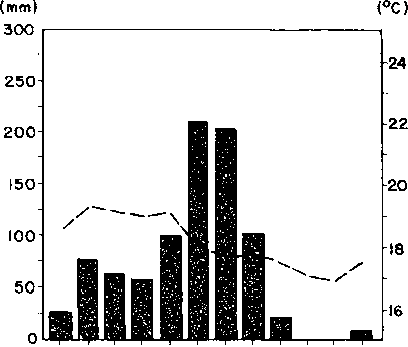
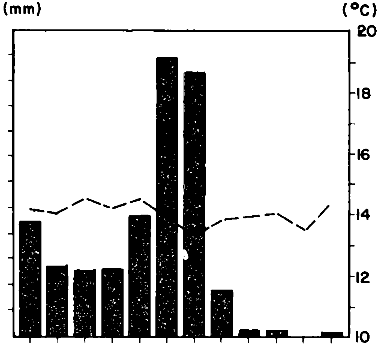
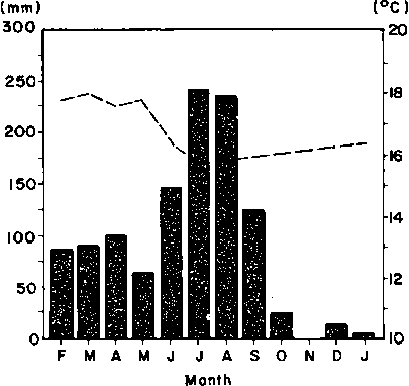
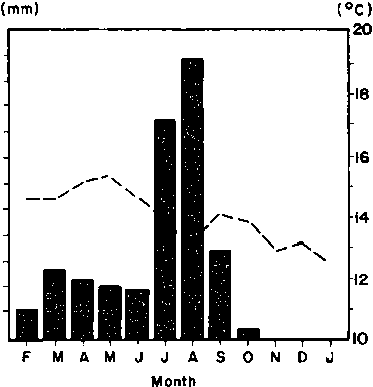
At Dogollo, Ginchi and Inewari the rainfall averages between 900-1000 mm/year. In rare cases the total amount of rainfall drastically drops below average resulting in moisture stress. But its effect is not as severe in these areas as in the lowlands or other highlands. The main rainy season normally starts in June, reaches its peak in August and gradually ceases in mid-September. Average annual rainfall and mean temperature of several years in other Vertisol locations in the Ethiopian highlands are shown in Figure 1.
Figure 1. Mean monthly rainfall and temperature at Debre Zeit, Dogollo, Ginchi and Inewari.
Debre Zeit: Mean rainfall & temp. 1977-91
Dogollo: Mean rainfall & temp. 1986-88
Ginchi: Mean rainfall & temp. 1986-91
Inewari: Mean rainfall & temp. 1986-89
Source: Compiled from weather stations of ILCA and MOA.
In general, daily temperature is moderate in the survey locations. On average the minimum temperature does not fall below zero, and hence frost damage to crops is uncommon as in areas above 2600 m asl. October to February are normally the coldest months.
Land
The survey locations being densely populated, farm sizes are on the average small with some variations within and between the survey locations. The land size allotted to individual farmers by a Peasant Association (PA) as per the Land Reform Declaration of 1975, depended on family size, fertility of the land, the number of PA members and the total land area available within the PA. Hence farm sizes varied within and between PAs and between locations. Average farm sizes at Dogollo, Ginchi and Inewari are shown in Table 2.
Table 2. Average farm sizes (ha) and land use at Dogollo, Ginchi, Inewari and Debre Zeit.
|
Land class |
Dogollo |
Ginchi |
Inewari |
|
Cultivated |
1.7 |
2.6 |
1.9 |
|
Pasture land1 |
0.2 |
0.5 |
0.1 |
|
Total |
1.9 |
3.1 |
2.0 |
1 Does not include communal grazing areas.
In the highlands, arable Vertisols are extensively cropped. Over 90% at Dogollo and Inewari and 84% of the land at Ginchi is cultivated.
Farm sizes being generally small while family sizes are large, land is hardly left fallow. Fallow land, on the average, accounted for less than 1% of the total land holdings in all the survey locations. For example, if a farm family is unable to till all the cultivable land because of shortage of inputs particularly labour and draught animals, the land is normally leased.
Individually owned pasture lands are quite small. Farmers mostly depend on communal pasture lands to graze livestock but these lands are heavily stocked and overgrazed.
There is a high variation in the distribution of land holdings among farmers of the three sites considered as shown in Table 3. At Ginchi the distribution tends to be skewed to the right. Here, 41% of the farmers own 3.5 ha or more, and 24% own over 4 ha. About 5% of the farmers own less than 1.5 ha.
The land holdings of about 54% of the farmers fall between 1.5 ha to 3.5 ha. Contrary to that at Ginchi, farm land holdings at Dogollo, is extremely skewed to the left with 52% of the farmers owning less than 1.5 ha. The proportion of farmers owning between 1.5 ha and 2.5 ha accounts for 25%. At the time of the survey only 2% of the farmers owned over 2 ha. Allocation of land holdings at Inewari is normally distributed compared to Ginchi or Dogollo, Twenty-one per cent of the farmers own less than 1.5 ha, and 61% of the farmers own between 1.5 ha and 2.5 ha. Only 5% of the farmers owned over 3 ha.
Land holdings are highly fragmented. The average number of plots per farm at Dogollo, and Inewari is 4.4 and 6.3, respectively.
Table 3. Distribution of land holdings at Dogollo, Ginchi and Inewari, 1988/89.
|
Farm sizes (ha) |
Percentage of farmers |
||
|
Dogollo |
Ginchi |
Inewari |
|
|
Less than 1 |
34.5 |
- |
- |
|
1 to 2 |
31.7 |
24.5 |
61.8 |
|
2.1 to 3 |
23.9 |
29.4 |
33.9 |
|
3.1 to 4 |
8.5 |
22.6 |
3.6 |
|
Over 4 |
1.4 |
23.5 |
0.6 |
|
Total |
100 |
100 |
100 |
Source: Getachew Asamenew (1991).
Farm household and labour
In general family sizes per farm are large, and it amounts to five persons at Dogollo, and 5.6 persons at Ginchi and Inewari. The family is the major source of farm labour and most of it comes from members of 15 to 65 years of age. Children over the age of eight years also contribute labour, particularly to livestock tending. The proportion of the active adult family members contributing to the total work force per farm in the three survey locations is nearly equal (76% at Dogollo, and 74% at Ginchi and Inewari).
There is division of labour by sex and age. Women and children contribute to weeding, harvesting, threshing and transporting grain. Livestock husbandry activities (feeding, milking, herding, barn-cleaning, dung cake-making and forage collection) are shared among the household members. The responsibility of women includes milking cow (at times assisted by men), barn-cleaning and dung cake-making. Men are involved in forage collection and feeding livestock. Herding of livestock is mostly the responsibility of children. Ploughing is done by men and in general farming is their responsibility.
Some family members engage in other non-farm activities during the dry and the main rainy season. Hence, all of the family members are not available for farming.
Children between eight and 14 years old are also involved in farming during the main rainy season. They contribute to the manual construction of broadbeds furrows (at Inewari) to oxen-handling, weeding and transportation.
The available labour for farming is restricted by religious holidays and tradition. As most farmers in the Ethiopian highland Vertisol locations are followers of the Coptic Orthodox church, they observe a number of religious holidays on which they are customarily prohibited to undertake any cropping activities. Hence on average only some 15 days a month are used for such activities. This constrains labour available for cropping during the peak demand period. Fencing and livestock husbandry activities are permitted to be undertaken on religious holidays.
Additional labour is acquired through exchange labour between families (locally known as debo) or hired. The local wage ranges between EB 1.00 to EB 3.00 per day.
Livestock
Cattle are the most important livestock species in Ethiopian agriculture. Their principal contributions include draught power for cultivation, threshing and to provide manure.
The cattle owned are the shorthorn zebu breed and they are mainly kept to produce draught oxen. Milk production is secondary because of absence of regular market. Hence except around Addis Ababa, where milk markets are available, in all other Vertisol areas crossbred cattle are rare. Other livestock on farm are small ruminants and equine.
The number of oxen accounts for 38%, 29% and 36% of the cattle herd at Inewari, Dogollo, and Ginchi, respectively, generally the stocking rate/ha is high. Individually owned grazing lands are quite small (Table 2) and communal grazing lands are not available to all farmers, and when available it is usually overgrazed.
Sheep are economically important in the highlands. Farmers keep sheep for various reasons. They are a significant source of investment, security end cash. They are easily sold off at times of economic difficulties. In normal years too, sheep are sold and purchased according to the needs of farmers. Two or three sheep are slaughtered per household per year on average in the Vertisol areas. They also provide manure. During the dry season manure collected from the pens is mixed with cattle manure and prepared into dung cakes to be used as household fuel. During the rainy season however, the sheep manure collected is often wet and mixed with mud which makes it difficult to use as fuel. It is then used to fertilise crop land.
Breeding ewes above one year old make up the highest proportion within the flock: up to 57% at Dogollo, and 54% at Inewari.
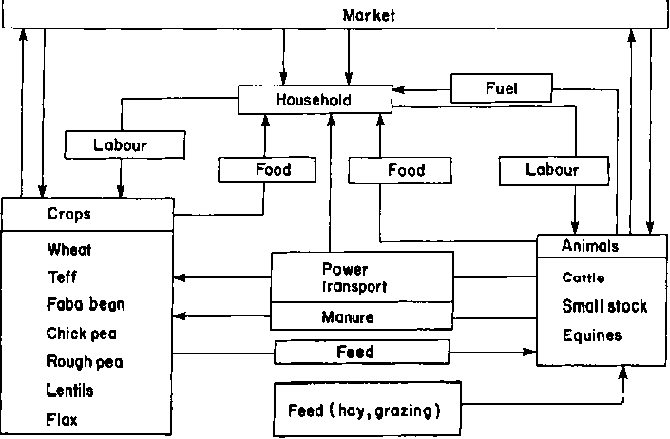
Crop and livestock subsystems are highly integrated. Crop residues provide a major share of the livestock feed while milk, meat, hides, manure and income are major livestock outputs. Livestock also serve as stored wealth in the form of physical animal number, and therefore serve as an asset and security. The major contribution of livestock to smallholder farming is provision of draught power for cropping. Figure 2 illustrates the crop/livestock interaction in the Ethiopian highlands mixed farming systems.
Oxen are used for cultivation, planting and threshing, generally oxen are preferred for cultivation, but whenever there is a shortage of draught power bulls are paired with oxen under the same yoke. In all instances cultivation is traditionally done with paired animals. The Inewari and Dogollo, areas are two of the few areas in Ethiopia where the use of horses for ploughing is very common. Horses are paired either with each other or with oxen and, in some instances, with bulls under the same yoke. Horses tend to be fester then oxen but can tee used for shorter intervals (four hours on average compared to 6-7 hours for oxen) because they get tired more quickly. However, the area covered per day is similar to that of paired oxen. Oxen can also be resold when they are unable to pull the plough or at any time in case of economic difficulties. Hence, oxen are more valued then equine.
In the Vertisol areas farmers who own less than two oxen overcome the problem of inadequate draught power by the following arrangements:
1. Mekenajo, a farmer with one ox pair his ox with that of a neighbour farmer's who also has only one ox2 Yegeleba shiyach is an arrangement whereby a farmer without oxen borrows a pair of oxen to cultivate his land and repays with his straw harvest to the oxen owner at the end of the cropping season
3. Hiring oxen for cash. The rent for a pair of oxen with a harness in Inewari and Dogollo, is EB 5.00 per day.
4. Minda is renting of one or two oxen in exchange for grain or human labour.
5. Debo is another arrangement whereby relatives and friends with oxen assist in cultivation, free of charge except for the lunch provided to them.
In the Ethiopian highlands the majority of farmers own oxen. Farmers who own at least one ox account for 60% at Dogollo, 83% at Ginchi, 76% at Inewari and 91% at Debre Zeit.
Figure 2. Crop/livestock interactions in the Ethiopian highland Vertisols.
Source: Getachew Asamenew (1991, adapted from McDowell, 1985).
Cropping details
Cereals, pulses and oil seeds are food crops grown in Vertisol areas in the Ethiopian highlands. The importance of each crop type in terms of area covered varies from location to location. Wheat is the major crop at Dogollo, and Inewari covering 50.4% and 40% of all cultivated land, respectively. Nearly all farmers grow wheat at Dogollo, (99.1%) and Inewari (98.2%). The percentage of farmers growing various crops at Dogollo, Ginchi and Inewari is shown in Table 4.
Table 4. Percentage of farmers growing various crops at Dogollo, Ginchi and Inewari.
|
Crops |
Percentages |
||
|
Dogollo |
Ginchi |
Inewari |
|
|
Wheat |
99.1 |
61.8 |
98.2 |
|
Teff |
86.2 |
97.1 |
83.6 |
|
Faba bean |
72.4 |
- |
80.6 |
|
Rough pea |
30.2 |
68.6 |
63.6 |
|
Lentils |
29.3 |
2.9 |
15.8 |
|
Chickpea |
2.6 |
64.7 |
68.0 |
Source: Getachew Asamenew (1991).
Teff (Eragrostis tef) is the second most important cereal crop grown by 86.2% of the farmers on about 21% of the cultivated area at Dogollo, (Table 4). Here, other cereal crops like maize, sorghum and barley (Hordeum vulgare) have minor importance in the cropping systems and together they account for less than 2% of the cultivated area. Faba bean (Vicia faba) is the main pulse crop occupying about 14% of the cultivated land. Rough pea/grass pea (Lathyrus sativus) and lentils (Lens culinaris) are other important pulse crops at Dogollo, The major oil crops grown are linseed (Linum usitatissimum) and noug (Guizotia abyssinica).
At Inewari teff (Eragrostis tef) is the third important crop in terms of the area it covers (15%) and grown by 83% of the farmers. Although some oats and barley are also grown, land area devoted to these crops is insignificant (Table 4). Faba bean is the major pulse crop, and it is grown by 80.6% of the farmers on 17.3% of the total cultivated area. Other important pulse crops in the area are chick pea (Cicer arietinum) and rough pea (Lathyrus sativus) (Table 5).
At Ginchi teff is the major crop, grown by 97% of the farmers on an average of 1.31 ha/farm (cv 46%) and occupying 49.2% of the total cultivated land. Wheat is the second important crop. Other cereals grown at Ginchi include maize, sorghum and barley. Chick pea (Cicer arietinum) and rough pea/grass pea (Lathyrus sativus) are grown by over 60% of the farmers and each occupies 9.6% and 10.9%, respectively. Noug (Guizotia abyssinica) is also grown at Ginchi (Table 5).
Cropping techniques calendars
In general cereals require finer seedbed preparation than pulses and hence more cultivations are carried out before sowing cereals. As specified earlier, seedbed preparation for planting begins normally with the belg rain in March/April. Cultivation generally continues up to May depending on the soil moisture, and resumes in mid-June when the main rain commences. Traditionally, farmers without adequate number of draught animals take advantage of the long ploughing period to share them with others.
Table 5. Crop combinations (ha) on average-sized farms at Dogollo, Ginchi and Inewari.
|
Crop |
Dogollo |
Ginchi |
Inewari |
|
Wheat |
0.86 |
033 |
0.73 |
|
Teff |
0.36 |
1.33 |
0.28 |
|
Dura |
0.01 |
0.12 |
- |
|
Maize |
- |
0.06 |
- |
|
Sorghum |
- |
0.06 |
- |
|
Oats |
- |
- |
0.01 |
|
Barley |
- |
0.06 |
0.02 |
|
Faba bean |
0.23 |
- |
0.32 |
|
Rough pea |
0.09 |
0.25 |
0.20 |
|
Lentils |
0.07 |
0.01 |
0.03 |
|
Chickpea |
0.01 |
0.28 |
0.21 |
|
Field pea |
- |
- |
0.02 |
|
Noug |
0.01 |
0.17 |
- |
|
Linseed |
0.03 |
- |
0.03 |
|
Others |
0.02 |
0.04 |
0.03 |
Note: Dashes indicate crops not grown in the area.
Source: Getachew Asamenew (1991).
Farmers have various ways of overcoming the problem of waterlogging in Vertisols. The traditional Vertisol management practice at Inewari is more efficient compared to other sites, all crops except teff are grown on manually constructed broadbeds and furrows (BBF) at Inewari. To make these BBF, the fields are cultivated several times (at least twice), using pairs of oxen or horses or pairing one with the other. Then the fields are sown with crops. Next, narrow furrow lines, approximately 80 cm apart, are demarcated with the use of well-trained oxen. Following these furrow lines, the farmer's family members scoop up the soil from either side of the line to construct the BBF by hand. The distance between the furrows at the deepest points averages 120 cm (broadbed of 80 cm and two midpoints on the furrows on either side measure 40 cm).
At Dogollo, furrows and ridges locally known as shurube are the conventional seedbeds in Vertisols which are constructed with the use of oxen. Furrows are shallow and the ridges are narrow (30-50 cm). Therefore, the drainage is less effective compared to BBF. At Ginchi crops grown on Vertisols are traditionally on flat fields after excess water has been drained off.
Since teff tolerates waterlogging, it is sown awing the wettest part of the rainy season, i.e. from late July to mid-August. The seedbed for teff is commonly puddled and trampled. Planting of crops that require better-drained soils at the time of planting is delayed until August/September after the fields are drained off naturally. The disadvantages of this practice are that the full length of the growing period is not utilised, and that soil degradation occurs since the cultivated fields are exposed to erosion awing the early part of the growing season. Vertisols on higher slopes drain faster and hence crops can be planted relatively earlier. Faba bean and barley are the main crops grown on higher slopes.
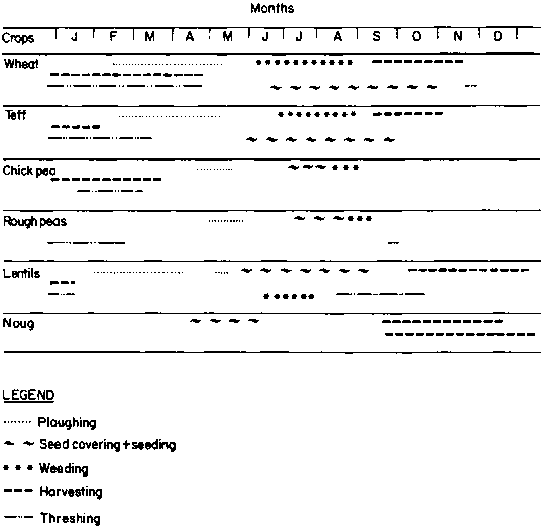
The general cropping calendar for the Ethiopian highland Vertisols is illustrated in Figure 3. Most farm activities often overlap. As the Vertisol fields get puddled when wet, weeding is done after the end of the main rains. This is also a busy period for planting pulses like chickpea and rough pea/grass pea. In high altitude Vertisol areas, weeding extends from mid-September to the beginning of November. In lower altitude Vertisol areas e.g Debre Zeit, planting is done early and the growing period is short. Harvesting of cereals (teff and wheat) starts in November compared to higher Vertisol areas where most crops are planted late and harvested in January and February.
Crop inputs
Inputs to cropping in the Ethiopian highlands differ between areas. Unavailability and high costs are among the main limiting factors to the wide use of purchased inputs. Pesticides are not usually available, but required occasionally to control pests. The same constraints apply to the use of herbicides by smallholders Di-ammonium phosphate (DAP, 18% N 46% P) and urea (46% N) are the commonly used inputs. These fertilisers are sold to farmers on credit or cash by the Ministry of Agriculture (MOA) through Peasant Service Cooperatives. Farmers usually apply fertiliser on cereals: teff, wheat and barley. Its use on other crops is very rare.
At the time of the survey, 35% of the farmers at Dogollo, 76.5% at Ginchi and 673% at Inewari used fertiliser. Quantity of fertiliser used per farm was small (Table 6).
At Debre Zeit farmers' modal fertiliser application rates were: DAP 87-100 kg/ha and Urea 30-38 kg/ha (Workeneh Negatu and Gezahegn Ayele, Debre Zeit Research Center, Ethiopia, unpublished data). In general very little manure is returned to the soil. As manure is the main household fuel source little is spared for use as fertiliser. But in some instances sheep manure and ashes are used on garden plots.
Figure 3. A general cropping calendar in the Ethiopian highland Vertisols locations.
Seeds used commonly are the local variety. The seeding rate is high. In general seeds used are not clean and the rate of germination is low. Sowing is done by broadcasting.
Table 6. Per cent of farmers using fertiliser, quantity of fertiliser used, number of plots and size of area fertilised, 1988/89.
|
Description |
Dogollo |
Ginchi |
Inewari |
|
% farmers using fertiliser |
35 |
76.5 |
67.3 |
|
Fertiliser/farm (kg)1 |
47 |
62.5 |
75.0 |
|
Mean no. of fertilised plots |
1.6 |
1.2 |
2.0 |
|
Mean area fertilised (ha) |
0.204 |
0.33 |
0.22 |
1 Mean of farmers using fertiliser.
Source: Getachew Asamenew (1991).
Crop yields
Crop yields on Vertisols in the Ethiopian highlands are low. As shown in Table 7, all types of crops yielded less than one ton per hectare at Inewari. The average yields per farm in a good year are just adequate to meet the household food requirements. The variations in crop yields are quite high.
Seasonal waterlogging in Vertisols, pest damage, use of local variety seed and a low amount of fertiliser are some of the factors for low yields.
Table 7. Yields of grain from traditional cropping at Inewari, 1988/89.
|
Crop |
Yield (kg/ha) |
|
Wheat |
797 |
|
Teff |
885 |
|
Chickpea |
814 |
|
Rough pea |
554 |
|
Lentils |
346 |
|
Fenugreek |
594 |
Source: Getachew Asamenew (1991).
Livestock management
The traditional livestock husbandry practiced across the Ethiopian highlands is similar. Livestock are kept in a 'kraal' during the night. During the day time, they are herded on communal pasture, private grazing lands or in a stubble depending on the season. Livestock of mixed species are herded together during most of the day. The movement of livestock is closely monitored to avoid crop damage.
There is a seasonal pattern in the use of grazing lands. From February to early June most grazing is on bottom-land pastures and on crop stubble. Stubble grazing takes place mostly after the harvest, i.e the end of November in lower altitudes and December in higher altitudes generally extending up to January/March. Since the bottomlands get flooded during the rainy season, all grazing takes place higher up where the land is better drained. Animals are moved to the hill sides to graze.
Feed production
In the Ethiopian highland Vertisol areas fodder supply is erratic and seasonal. On-farm supply of fodder depends on:
· The cropping pattern
· Harvesting practices
· Weeding intensity and frequency
· Access to private pasture land
· Access to communal pasture land and productivity
· Stocking rates
· Road-side grazing, and
· In a few instances, purchases of straw and hay.
Cereal straw being the most common animal feed, the proportion of cereals in the cropping pattern determines feed availability on the farm. Generally, straw yields on the Ethiopian highland Vertisols are low. Table 8 confirms this.
The low yield, particularly at Dogollo, is due to the critical waterlogging during the growing period. At that location in a normal wet year, excess water results in extremely low growth so that the average crop residue yield amounts to only slightly higher than one ton DM/farm. Although the problem of waterlogging is better controlled by planting crops on manually made BBF at Inewari, yields of straw are still low. The average yield per farm amounts to about two tons DM.
Table 8. Straw yields at Dogollo, and Inewari, 1988.
|
Crop |
Dogollo kg/ha |
Inewari kg/ha |
|
Wheat |
611 |
1042 |
|
Teff |
514 |
972 |
|
Oats |
- |
907 |
|
Barley |
892 |
854 |
|
Rough pea |
639 |
624 |
Source: Getachew Asamenew (1991).
The availability of fodder from individual farms and communal lands depends on the rainfall distribution. Almost all the fodder production is rain-dependent and occurs between June and September.
Due to the variation in the climatic conditions feed supply within a given year fluctuates considerably. Three feeding periods may be identified: (1) the main rainy season or the meher (July-September) with abundant plant regrowth, (2) the dry period with scarce native pasture, and (3) the short rainy season, the 'belg' that normally occurs between February and April. As the start and end of the meher season varies from year to year, the beginning of the subsequent feeding periods also shifts. Natural grazing is the main source of livestock feed but its availability can vary particularly during the dry season. As pasture areas are extremely small, hay-making is not a common practice. Hay making begins as early as September in some cases and continues up to the beginning of November. Some farmers use communal grazing land throughout the year except when it is flooded but not all farmers have access to communal pasture lands in every Peasant Association.
In the Ethiopian highlands, natural pasture can produce 6 tons DM/ha but when continuously grazed it yields only 2.5 tons DM/ha (Jutzi et al, 1987a). As frequent grass outtake leads to a reduction in DM yield upto 50%, yield from heavily grazed pasture may not exceed 1.5 t DM/ha (Jutzi et al, 1987a).
On average, the available feed per farm in the Vertisol areas only meets the body maintenance requirements of the animals. Very little is left over for growth and production. The estimated available feed per farm per year at Inewari, Ginchi and Dogollo, is 27%, 30% and 37% less than the annual requirements, respectively.
Feeding of livestock
Teff and wheat straws are important sources of livestock feed in the highland Vertisol areas. Barley and oat straws are also important in areas where they are produced. Only cereal straw has commercial value. As pulse straw is stocky and rough, it is commonly used for household fuel and floor cleaning. When pulse straw is fed to animals, it is mixed with cereal straw. Straw supplementation is commonly restricted to work-oxen and lactating cows. However, farmers who are well-supplied with feed also supplement calves and working equine. But grass hay is commonly fed to working oxen and milking cows during the dry season. Feed supplementation is commonly done when the animals are at the homestead. Oxen engaged in work have priority for most feed supplementation. The amount of straw fed depends on the work expected from the ox. During the peak period, on average 5 to 10 kg of straw is fed to an ox each day.
Weight of straw is locally expressed in kurbet, which is roughly the size of a hide for packing straw when transporting on donkey. A small kurbet weighs about 30 kg, while medium and large sizes weigh 40-50 kg. In a normal year, the price of one kg of cereal straw, on average, amounts to EB 0.10 in Vertisol areas like Debre Zeit and Inewari. Grass hay which is used for making hay is cut between September and October. Hay becomes available in the market from December upto August. As straw is available after the crop harvest, i.e. from December to April, the price of hay also drops during this period. The price goes up again between June and August when straw is highly in demand because during this time all stored feed on-farm is depleted and natural grass is inadequate. This is also a peak working period for oxen.
Like for other classes of livestock, the main source of feed for sheep is native pasture and stubble grazing. In general hay, straw or other feeds are supplemented only during severe feed stress. Although sheep fattening is fairly common throughout the highland Vertisol areas, supplementation is not common except in the Inewari area. A number of farmers are engaged in sheep-fattening activity. At the time of the survey, 32% and 27% of the farmers at Inewari and Dogollo, respectively, are reported to have fastened sheep.
The major reasons cited for not fattening sheep are shortage of capital and feed. Traditionally sheep fattening takes 4-8 months, and is usually targeted for consumption at Ethiopian Christmas and Easter (January and April).
Farmers' view of constraints to their farm production can give a good insight into the opportunities for technological intervention. Constraints to agricultural production in the Ethiopian highlands are summarised in the following subsections. This summary is a compilation of farmers' responses, discussions with informants, and application of observations and analyses of the farming systems.
Crop production constraints
Constraints to crop production in the Vertisol study sites include waterlogging, shortages of land, land degradation, improved inputs, working capital, animal draught power and labour as well as weeds, pests and diseases.
Waterlogging
Seasonal waterlogging is a general constraint in the Ethiopian highland Vertisol areas. As a result yields of grain and crop residue are low (Tables 7 and 8). The severity of this constraint vary from location to location depending on the availability of rainfall during the growing period, the degree of temperature that affects evapo-transpiration, and the tillage practice to overcome waterlogging. Farmers in all the Vertisol areas surveyed realise the negative effect of poor drainage on food and feed 'production. They also know that solution to waterlogging could increase farm productivity.
Shortage of land
In the highland Vertisol areas farm sizes are' small averaging less than 0.5 ha per family member (Table 2). However, they have to support large families and livestock. The situation is further aggravated by the low farm productivity. This is a critical problem in view of the ever-growing population and decline in yields.
Soil degradation
Due to poor management end shortage 'of land sloppy lands are continuously cultivated and natural vegetations are denuded. Hence the rate of soil erosion is high.
Shortage of improved inputs
The commonly used fertilisers: Di-ammonium phosphate (DAP) and urea are not widely used by farmers because of their unavailability, irregularity in their delivery and the financial inadequacy to purchase them. At the time of the survey fertiliser was sold to farmers in some Peasant Associations (PAs) mostly on a loan basis by the Ministry of Agriculture through Service Cooperatives (SCs). SCs required that all other farmers who took fertiliser loans should repay the cost immediately after their crop harvest in order to be eligible for the next loan. A farmer would not be eligible for a loan until all farmers in a given PA repaid their debts. This was reported to be a critical constraint to those farmers who regularly settled their debts promptly.
Although farmers in general are aware of the positive effects of chemical fertilisers on crops, the rate used per farm is quite low (Table 6) because of the reasons listed above
The seeding rate is high because of the impurities and low germination rate of local variety seed. Although there are some, IAR-released varieties of wheat in the country, they are not yet readily 'available to all farmers.
Hence, the constraints' on the use of fertiliser and improved seed are more institutional in nature.
Draught animal shortage
The uneven distribution of work-oxen has been a critical problem in the farming systems of the Vertisol areas. As most crops are planted after several cultivations with draught animals, farmers without these animals are at a disadvantage to plant the most profitable crop mixes on time. The traditional draught-animal exchanges are no relief because animals become available only after cultivation of land of the owner of the animals is completed. This was a problem for 79% of the farmers at Dogollo, 42% at Ginchi, 73% at Inewari as they had none or only one ox.
Weeds
The reason for several cultivations before planting most cereals in the Vertisol locations is to control weeds. In spite of several cultivations weed infestation is extremely high in these areas. The major weeds in the Ethiopian highland Vertisol areas are: 'asendabo' (Phalaris paradoxia), 'borecho' (Scorpiurus muricatus), 'wortebet' (Plantago lanveolata), 'wajema', (Medicago polymora) etc. Use of impure local seed largely contributes to the proliferation of weeds. The weeding operation that normally starts after the Vertisols are drained off naturally in September/October is highly labour-intensive. It takes 28-35% of the labour required by the crops. Moreover, early manual weeding is difficult in waterlogged soils. Generally use of selective herbicide is limited.
On the other hand, as farm sizes in most areas shrink and shortage of animal feeds becomes critical, weeds will be an important feed source in many of the Vertisol farming systems.
Pests and diseases
Sometimes a short dry spell following onset of the main rains, insects (mainly grasshoppers) attack crops in the lower and medium-altitude highlands such as at Debre Zeit and Ginchi. Insects such as aphids cause considerable damage to wheat even in high altitude Vertisol areas. Faba bean is frequently attacked by the stalk borer. The main crop diseases are chocolate spot, rust and smut.
Animal nutrition
Livestock feed supply is erratic and seasonal. There is severe shortage during the dry season and at the beginning of the main rains. The most critical period is between April and the beginning of July, when all feed resources are virtually depleted. Conservation of straw and, in a few instances of hay is inadequate. Whatever is conserved is preferentially fed to draught animals. Additional feeds are required awing ploughing and planting. The high energy demand of working animals is not met and hence their condition deteriorates rapidly awing this period.
Individually owned pasture lands are small and rare in some areas. Due to land shortage grazing lands are being encroached for crop production. The stocking rate on available communal lands is high. There is no restriction on the number of livestock tended on the communal grazing lands. Consequently, every individual farmer tries to maximise the feed intake by his livestock, causing overgrazing and land degradation. Farmers maximise the number of animals in their herd because (1) work oxen are frequently replaced (2) livestock are regarded as a very important asset of wealth and security, and (3) individual benefits are higher from larger herds since grazing is communal property.
The commonly used feedstuffs (i.e. pasture straw and hay) in the Ethiopian highlands have low digestibility (Mukassa-Mugerwa, 1981). The protein content is below the required level. Hence the feed available can at most meet the maintenance requirements of livestock. As a result animals suffer from low growth rates, poor fertility and high calf mortality (Gryseels, 1988).
Marketing
Although output of livestock products particularly of milk is low, there is no ready market for livestock products in the Vertisol areas away from Addis Ababa, since they are not served with milk collection centres. This forces farmers to process milk into butter which is normally sold to merchants and occasionally to local consumers.
Animal health
In general the main livestock diseases reported in the case study areas were: (1) internal parasites e.g. fascioliasis, lung worms, ascaris etc (2) bacterial diseases e.g. sheep pasteurellosis (3) blackleg and (4) anthrax Mostly local medicines are used since modern veterinary services are not widely available.
Shortage of working capital
Farm cash income is extremely low with almost no surplus available for reinvestment on the farm itself. This had partly hindered the wide use of purchased inputs. Credit to individual farmers is not widely and readily available.
An understanding of traditional farming systems can enable one to design appropriate technology options for on-farm research. Technologies can be introduced from elsewhere and be adapted. Technologies in the target area can also be modified or refined to solve constraints. The desired characteristics are that technologies should be (a) simple, low-cost and quickly comprehensible by farmers; b) be within users' reach and c) compatible with overall extension objectives and policies.
The Ethiopian highland Vertisol locations have common socio-economic characteristics. Land and capital are scarce. Available farm resource has to sustain large farm families and livestock. Hence, appropriate technologies are required to increase productivity using the scarce farm resources. Vertisols in the target areas are known to have high agricultural potential. As there is a high livestock and crop interaction, intervention in one of the subsystems directly or indirectly affects the other. Improvement to the livestock subsystem could, in turn, improve the crop subsystem or vice verse.
Improved Vertisol management
Appropriate technologies to better manage Vertisols is a desirable intervention in the Ethiopian highland Vertisol farming systems. A better Vertisol management can be brought about by improving the surface drainage. The positive effects of surface drainage on agricultural productivity of Vertisols have been widely documented. Few of the improved techniques suggested to solve the problem of surface drainage in these soils include the use of the wheel-tool carrier by the International Crops Research Institute for Semi-Arid Tropics (ICRISAT) in India and the formation of cumberbeds with the use of tractors by the Institute of Agricultural Research (IAR) in Ethiopia.
As these techniques require a high financial investment, they can be adopted only within the recommendation domain that has the means to procure them. When resource-poor smallholder farms are the target group, farm technologies have to be simple and cheap. Where farms are subsistent-oriented with low annual farm cash income as in Ethiopia, research on simple, low-cost and easily adoptable surface drainage technologies are needed. An effective surface drainage technique does exist locally at the Inewari plateau in central Ethiopia. But as already pointed out, human drudgery in constructing the BBF can be replaced by animal draught power, thus increasing social welfare. The development of an animal-drawn implement for this purpose becomes a priority research area. The formation of broadbeds and furrows (BBF) with the use of an appropriate animal-drawn implement is basic to solve seasonal waterlogging in Vertisols.
On-farm verification and transfer of such a technology are discussed at length in Chapter 8.