5.1. Introduction and Overview
5.2 Germplasm Conservation, Dissemination and Evaluation
5.3 Information and Knowledge Exchange
5.4 Training
5.5 Networks
5.6 Country and Regional Projects
5.7 Overall Assessment
The International Programmes at IRRI have a dual objective: to strengthen NARS rice research capacity, and to provide valued services to the international rice research community. The role of strengthening national rice research systems has been played by IRRI since its establishment. It has done this through training and other knowledge-sharing activities including scientific publications, conferences and workshops, collaborative networks and joint development of country and regional projects. These activities are regarded as necessary in achieving the goals of the CGIAR because (a) countries with weak research systems face difficulties in raising production; (b) improved rice technologies developed at IRRI are of limited value unless national programmes have the capability to test and adapt them to local conditions; (c) strengthened national rice research systems can more easily address many rice problems through their own research efforts and through collaboration with IRRI and other IARCs or other NARS; and (d) IRRI can help solve regional problems more easily and in relatively less time through collaboration with strengthened national rice research systems.
Major services provided by IRRI to the rice research community through its International Programmes are those that are linked to IRRI's role as the global centre for rice germplasm, and for knowledge on all aspects of rice research, science and technology. These services are unique to IRRI for which it carries an explicit and full responsibility.
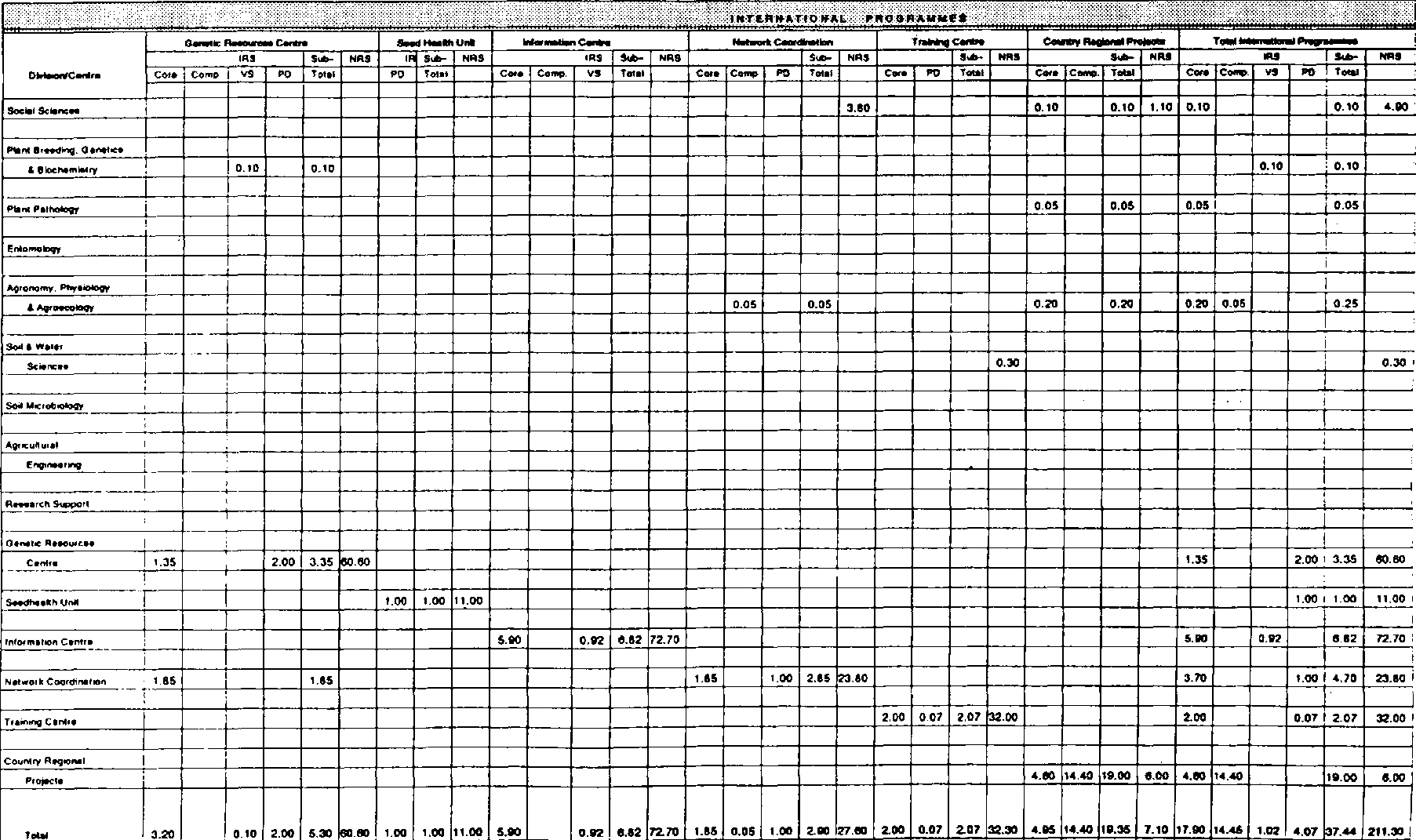
The International Programmes at IRRI are headed by a Deputy Director General, and the activities are implemented through 18 projects organized through five programmes: Germplasm Conservation, Evaluation and Dissemination; Information and Knowledge Exchange; Training; Networks; and Country and Regional Projects (Table 5.1). Each programme is headed by a Centre Head, and each project has a project coordinator. The seed Health Unit is also part of the International Programmes, reporting directly to the DDG. Activities of the International Programmes are managed outside the research matrix through a line departmental structure, with some inputs from the disciplinary divisions (Table 5.2). For 1983, International Programmes are expected to be supported by a total of core and complementary staff of 37.44 IRS and 211.3 headquarter NRS.
Table 5.1 IRRI Projects by International Programmes, as of September 1992
|
No. |
Project code |
Title |
|
|
Germplasm Conservation and Dissemination |
|
|
1 |
GC-1-1 |
Conservation of rice genetic resources |
|
2 |
GC-1-2 |
International Network for the Genetic Evaluation of Rice (INGER) |
|
|
Information and Knowledge Exchange |
|
|
|
|
|
|
3 |
ID-1-1 |
Improved library services |
|
4 |
ID-2-1 |
Improved publication of research results |
|
5 |
ID-2-2 |
Copublication of IRRI material |
|
6 |
ID-3-1 |
Improved rice database and database information services |
|
7 |
ID-4-1 |
Conferences and workshops |
|
8 |
ID-5-1 |
Public awareness |
|
|
Networks |
|
|
9 |
NT-2-1 |
International Network on Soil Fertility and Sustainable Rice Farming (INSURF) |
|
10 |
NT-2-2 |
Asian Rice Farming Systems Network (ARFSN) |
|
11 |
NT-2-3 |
Integrated Pest Management Network (IPMN) |
|
|
Training |
|
|
12 |
TR-1-1 |
Improved management of degree and nondegree training |
|
13 |
TR-2-1 |
Improved management of group training |
|
14 |
TR-2-2 |
Courseware development |
|
15 |
TR-2-3 |
Course transfer/Collaborative training |
|
|
Country and Regional Programmes |
|
|
16 |
CR-1-1 |
Country and Regional Projects in Asia |
|
17 |
CR-2-1 |
Country and Regional Projects in Africa |
|
18 |
CR-3-1 |
Country and Regional Projects in Latin America and the Caribbean |
Table 5.2 Staff Allocation by Division and Programme - Estimate for 1993
5.2.1 Evolution and Current Focus
5.2.2 Achievements and Impact
5.2.3 Assessment
This programme is operated by the Genetic Resources Centre (GRC) through its two units, the International Rice Germplasm Centre (IRGC) and the International Network for Genetic Evaluation of Rice (INGER). It is concerned with maintaining the rice genepool through the long-term conservation of cultivated and wild rice germplasm, and with widening the genetic base of rice varieties around the world through the international exchange and evaluation of rice germplasm in multi-location trials. In the past INGER activities were carried out under the Networks Programme. In July 1991, INGER became part of GRC.
IRGC: The International Rice Germplasm Centre (IRGC), was reorganized in 1983 from IRRI's Genetic Resources Programme, and was designated as one of IRRI's Global Research Services. Its primary functions are: collection, characterization, documentation, conservation and dissemination of rice germplasm. IRGC also provides training and technical assistance to national and regional genebanks.
INGER: The International Rice Testing Programme (IRTP) was initiated in 1975 as part of the Genetic Evaluation and Utilization Programme (GEN). Ever since its inception, IRTP, funded mostly by UNDP, has served as a powerful research tool, strongly linking IRRI and NARS.
IRTP was launched to organize a low-cost global network of systematic collection, distribution and testing of rice genetic materials. To provide an effective regional focus, IRTP in 1984 was organized into IRTP-Asia, IRTP-Africa, and IRTP-Latin America and the Caribbean. IRTP-Africa was established in 1985 as a joint project of IRRI, IITA, WARDA and the national rice research systems in Africa. The coordinator for IRTP-Africa has been located at IITA and for IRTP-Latin America at CIAT. The global coordinator located at IRRI also serves as coordinator for IRTP-Asia.
In 1989, IRTP was reorganized as INGER to reflect the full scope of the activities, and with the objectives of making the world's elite germplasm available to rice scientists, and providing them an opportunity to assess the performance of their own breeding materials over a range of environments. However, a fifty percent reduction in funding for the 5-year period starting July 1991 forced INGER to reduce the number of evaluation nurseries and the testing sites it could handle.
The structure and mission of IRGC and INGER were peer-reviewed in 1991. The review recommended against merger between IRGC and INGER because of the short term activities (packing nurseries for specified delivery dates) of INGER and the long term nature of IRGC activities.
It is an established fact that NARS regard the activities of IRGC and INGER as one of the major strengths of IRRI. This was confirmed through a questionnaire survey of NARS world-wide (Appendix IV). Analysis being conducted by IRRI in collaboration with Yale University to quantify the flow of genetic material, and the information about their characteristics, from IRGC and INGER clearly show that IRGC has been responsible for increasing the pool of landrace materials and the use of INGER nurseries by national programmes. These in turn have caused an increased volume of flow of varieties, and have led to a high aggregate number of released material.
This achievement also reflects the fact that the germplasm activities of GRC benefit from their strong links with research activities related to genetic enhancement and breeding, as well as other research activities (Table 3.1). For example, currently 0.65 IRS time is spent in a project on genetic characterization of conserved germplasm located in the cross-ecosystems programme (Table 3.2).
IRGC: Capacity to effectively handle large volume of seed samples has been a hallmark of IRGC which received 2,930 seed samples during 1991, bringing the total number of accessions for the different categories to: O. sativa, 74,000; O. glaberrima, 1,300; wild species, 1,900; and genetic testers and mutants, 20. This represents the largest international collection of rice germplasm.
The Panel notes that there have been significant improvements in the efficiency of the Centre brought about by recent changes in handling operations and upgrading IRGC's technical standards. For example, seed production and rejuvenation activities are now limited to dry season cultivation. Similarly, computerized labelling of seed packets, and pre-packing of 10 g seedlots for distribution have significantly increased germplasm distribution efficiency.
To improve the accessibility of germplasm information contained in the GRC database, a revised version of IRRIGEN (a micro-computer based rice germplasm software) was released to national programmes in Asia and Africa, and information on IRGC accessions is now accessible electronically directly through appropriate communication systems. The database files and their management are currently under review in order to modify the structure for cross compatibility between files and to enhance electronic access to the computerized data.
INGER: INGER today is the largest single pathway for distributing, exchanging and testing new rice varieties and breeding lines world-wide. Available evidence show that 17.2 percent of rice varieties released in the indica regions of the world were crossed at IRRI. In 1980s, 23.5 percent of the area was planted with these IRRI varieties. In addition 30.8 percent of the released varieties had at least one IRRI parent and an additional 6.3 percent had at least one IRRI grandparent. The enormous importance of borrowing as a strategy for the development of modem varieties is borne out by the fact that since 1970, less than 8 percent of the new varieties have been 'pure' national developments. The most significant contribution of genetic resources has been through the use of IRRI germplasm as parents, and while these were not channelled through INGER prior to 1975, in recent years it has been the biggest single channel for developing new varieties facilitating the use of IRRI parent lines taken from INGER. The Panel commends IRRI for the creation of this enabling rice germplasm environment through the INGER mechanism. Indeed, since 1981, more than half of the released varieties (400 out of 797) have either been borrowed through INGER or were bred from parents borrowed from INGER. This is, by any measure, an extraordinary achievement, and IRRI and its national collaborators deserve fall credit and recognition.
A large amount of valuable information has been generated through INGER on biotype and race differences among major pests and pathogens, on location-specific resistance genes, and on interaction of rice and major weather factors, which helped in the construction of simulation models.
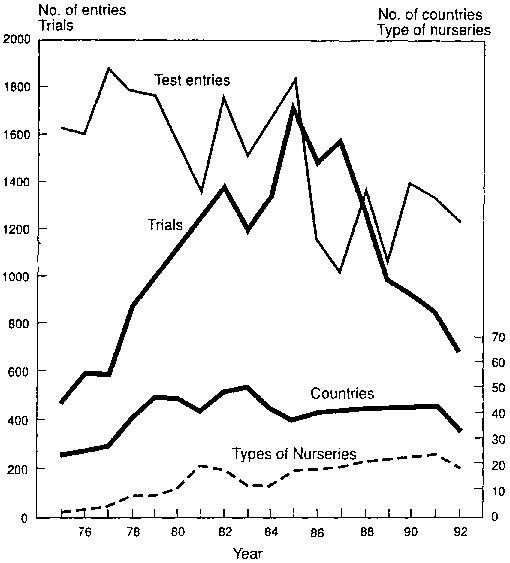
1985 was a record year in seed distribution (Fig. 5.1) when 1,707 sets of 30 types of nurseries (composed of a total of 2,736 entries) were sent to 62 countries. In 1991, the figures for nursery distribution were: 856 seed sets of 25 types (composed of 1,927 entries) to 49 countries. During the 18 years of operation, a total of 37,143 entries (including some yearly repetition) were evaluated through 25-30 types of nurseries at about 600 test sites in different ecosystems, and 231 entries originating from 29 countries and 3 IARCs were released to farmers in 55 countries.
INGER has allowed international seed exchange to be made unhampered by political restrictions, which was originally possible only via IRRI. This major achievement together with the joint monitoring site visits involving NARS and IARC scientists, are services that are highly valued by NARS.
It is the Panel's view that INGER, with its sharper focus on germplasm and environmental characterization, has brought a greater level of effectiveness in IRRI's germplasm exchange and evaluation activities. INGER has made the germplasm exchange and evaluation activities more demand-driven, and less supply-driven. INGER has enhanced the possibilities for targeting germplasm material. Some of the decrease in the number of seed sets and types of nurseries in the recent years can be explained by this increase in effectiveness. However, the Panel is greatly concerned to note that since July 1991, INGER activities have had to be reduced because of the 50 percent reduction in funding. The Panel encourages IRRI to make every effort to mobilize the required resources to protect the integrity and the worldwide effectiveness of INGER.
We highly commend IRRI's efforts in collecting wild species of rice. Considering the anticipated frequent utilization of genes of wild rice species in the future both in conventional breeding and in gene transformation, IRRI undoubtedly needs to continue this effort, in cooperation with NARS.
The strategy adopted by INGER to conduct its coordinated field trials through NARS has played a significant role in linking IRRI and NARS, and in the rapid identification of promising germplasm and cultivars. This has brought increased effectiveness in the evaluation and dissemination processes of INGER, which is commendable. In general, however, the potential value of a germplasm collection is based on the extent and accuracy of its characterization with respect to cytological, physiological and agronomical traits and habitat. The Panel strongly encourages GRC to ensure that germplasm related site information is collected as a matter of routine so that the overall information can be useful in formulating research activities in germplasm conservation and utilization.
Figure 5.1. Trends in INGER global nurseries, 1975-92.
Further, because INGER can supply significant amounts of data on the existence of biotypes and races or genotype-environment interactions, the comprehensive information that could be obtained from INGER is also valuable for constructing databases for the GIS and other networks. The Panel commends the efforts that are underway to consolidate the inventory of seed stocks and databases.
As the purposes of IRGC and of INGER differ markedly, the Panel agrees with the conclusion of the peer review that they should be retained as separate and distinct activities. The whole process from preparation of entries to shipment in INGER is different from that in IRGC, but some parts of data analysis, including chemical analysis can perhaps be conducted with one set of facilities. The Panel concurs with the decision to house the two functional units within GRC but wishes to clearly emphasize that IRGC and INGER represent two of the largest global core responsibilities of IRRI whose integrity the Institute can least afford to jeopardize.
Recommendation 5.1
The Panel recommends that IRRI make every effort to mobilize required resources to protect the integrity and the worldwide effectiveness of INGER and to maintain the high level of management capability required for INGER's success.
5.3.1 Scientific Communication and Publications
5.3.2 Library
5.3.3 Public Awareness
In this section we comment on IRRI's programmes in scientific communication and publishing services (CPS), the library, and public awareness. Non-library databases are covered in Section 6.8 and computer services in Section 8.6. On IRRI's organization chart, the public awareness function reports directly to the DG while communication and publications, and library and documentation services, are part of the Information Centre which reports to the DDG for International Programmes. The person handling Public Awareness also serves as the Information Centre Head and the unit within the Information Centre that addresses scientific communication. Thus in the public awareness capacity he reports directly to the DG and in the capacity of head of the Information Centre he reports to the DDG for International Programmes.
During the period under review, funding for each activity remained in approximately the same proportions. As we look out ahead at 1992 and 1993, we see a major increase in the allocation of resources for public awareness.
Since 1987 output of this unit has remained fairly constant as can be seen from Table 5.3.
In 1991, IRRI published its first 'electronic book' a computer readable edition of Publications in the International Agricultural Research and Development Centres. The Research Paper Series ceased publication at the end of 1991 with the expectation that, in the future, these types of papers would either be published in the journal literature or in a briefer form in the International Rice Research Newsletter. Three newsletters ceased publication: the Integrated Pest Management Newsletter (in 1987), the International Azolla Newsletter (in 1989), and the Deepwater Rice Newsletter (1990). One newsletter was begun, the IRRI Hotline, a newsletter about IRRI achievements, aimed at decision-makers in the donor community.
Table 5.3 IRRI Publications: 1987-1991
|
|
1987 |
1988 |
1989 |
1990 |
1991 |
|
Total Books |
17 |
15 |
17 |
10 |
17 |
|
Books co-published in multiple language editions |
4 |
4 |
6 |
5 |
4 |
|
Research Paper Series |
8 |
6 |
2 |
6 |
7 |
|
Newsletters |
7 |
7 |
7 |
5 |
8 |
A study of the audiences of IRRI scientific publications, and their expectations over the next 10 years has been undertaken by an IRRI research fellow. A Peer Review of the Communication and Publication Services unit, carried out in November 1991, commended CPS for this "extremely productive operation, turning out high quality, relatively low cost, first-class materials".
The Panel is concerned about what appears to be declining resources allocated to scientific publishing and communication. Between 1990 and 1993, the budget for CPS is planned to decline from US$553,000 to US$396,000 in nominal dollars. In 1993 International Rice Research Newsletter will be renamed to International Rice Research Notes and reduced from six to four issues a year, to reduce mailing costs. IRS editors on board in CPS have been reduced from 3 to 2, and these positions are being used increasingly for producing quick turn-around public awareness material rather than for scientific publishing. While recognising the significance of public awareness activities for the future of IRRI, they should not be at the expense of scientific communication support. Throughout our report we have made suggestions for improving IRRI's effectiveness in science. We are concerned that the current capacity in scientific communication and publishing will be insufficient to meet IRRI's needs. Consequently, the Panel urges IRRI make every reasonable effort to ensure that adequate resources are devoted to scientific publishing and scientific communication activities required by its research programme.
IRRI is the only CGIAR centre to have the provision of a global information service for any interested scientist as part of its legal mandate. The Articles of Incorporation state as one of IRRI's organizing objectives "To establish, maintain and operate an information centre and library which will provide, among others, for interested scientists and scholars everywhere a collection of the world's literature on rice". As the volume of agricultural literature has increased, and storage and transmission technology capabilities advanced, the library's mission could be viewed as moving from an emphasis on ownership to one of access to information, with increased attention to service.
The IRRI Library is the major world repository of rice literature. The collection consists of monographs, serials, maps, microfilm, a clippings collection, English translations of some journal articles, and a reprint collection of articles on rice, published in journals not held by IRRI. The library compiles the International Bibliography of Rice Research and its bi-monthly supplements, published as the Rice Literature Update and available in machine readable form. A wide array of relevant indexing and abstracting services are available, increasingly in the CD-ROM format. The library provides traditional library services such as circulating materials, lists of acquisitions, photocopying, interlibrary loans, and literature searches. Within IRRI, photocopies of tables of contents are circulated. The catalogue of holdings is automated, but available only to users on the IRRI LAN or by modem. Online Public Access Catalog (OPAC) terminals are not available for use in the library. The library is crowded, poorly laid out, has no signage, and is heavily used as a study hall for UPLB students. It has limited service hours and fire protection.
At the same time, IRRI has an extremely valuable resource of rice information. The challenge now is to organize the library's activities and resources, through automation, in such a way that they can be exploited more effectively by researchers and students. With information now available in machine readable forms, it can be searched and packaged so that the information provided the user is relevant and precise. The library must become more active in identifying specific market segment needs, developing products and services such as the selective dissemination of information, and promoting the availability of the Library's services and resources. In the country visits, the Panel learned that few scientists are aware of the information resources available to them from IRRI; they assumed that only IRRI-published items were available. As noted in Section 5.4.2 the panel suggests that the Library collaborate with the Training Centre to produce a module on library resources and services to be used as part of training courses already being offered by IRRI. A beginning has been made in automating library operations and services as a result of a consultancy review in early 1989; more remains to be done. The Panel suggests that a consultancy review of the entire library services and operations would be useful.
The worldwide library environment has changed markedly even over the past ten years. It is critical that the Head of the Library be linked with international colleagues who face similar challenges and who can collaborate on shared solutions. Because of rising costs, libraries no longer have the luxury of functioning as isolated islands whose main functions are to collect, organize and preserve collections. The Panel is aware that discussions are taking place about how the library should be staffed, at such time as the present Librarian retires. In filling the position soon to be vacated, the Panel urges that the successor is professionally qualified to play a leadership role in international fora on information service and management issues, in addition to managing an international library centre using the most up-to-date approaches and technologies.
Recommendation 5.2
The Panel recommends that, in replacing its retiring librarian, IRRI employ a professional who has demonstrated competence as an international leader in the diverse areas of library and information services management.
IRRI has developed a broad range of public awareness activities over the years. In the review period, it has issued a frequent stream of news releases; conducted IRRI Press Days; hosted a steadily increasing stream of journalists (46 in 1989, 108 in 1990, and 150 in 1991); been the subject of major television programmes in the Philippines, Australia, Canada, and the U.S.A.; educated approximately 30,000 visitors (mostly school children) a year; developed and revised the multi-media presentation Rices in IRRI that is shown to these visitors; published nine country booklets in a series called Facts on Cooperation; and begun publication of the IRRI Hotline, a compilation of IRRI's achievements aimed at donors.
It is not surprising that the peer review team in 1991 affirmed that IRRI "has a public awareness programme comparable to the best of any similar research organization".
As we look ahead, the Panel notes the major increases in public awareness funding at IRRI. Funds spent in 1991 were US$100,000, while in 1992 US$220,000 was budgeted but estimates are that US$400,000 will be spent, and in 1993 US$440,000 is planned. While we are fully sympathetic with the importance of public awareness activities to the future of the CGIAR Centres, this seems to be an extraordinarily rapid rise.
5.4.1 Participant Statistics
5.4.2 Current Programme and Future Direction
5.4.3 Assessment
The mission of IRRI's training programme is to enhance NARS capacity for rice and rice-related research through collaboration with national research systems including universities, and other institutions.
Since the inception of the training programme in 1962 more than 7,000 scientists and technicians have participated in training and professional advancement programmes. Of this number 2,577 were trained or on board during the period 1987-1991, in the categories shown in Table 5.4.
The previous review recommended that greater emphasis be given to training Ph.D. students since many countries were developing their own capacity to provide M.S. level of instruction. Table 5.4 illustrates the relative increased emphasis on Ph.D. candidates; in 1987 the percentage of Ph.D. to M.S. plus Ph.D. candidates was 52 percent, by 1991 it had increased to 68 percent.
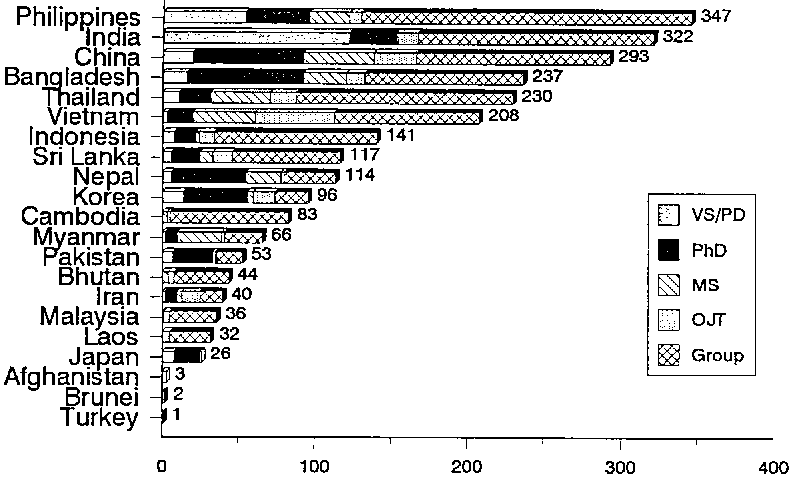
Almost 90 percent of the participants came from Asian countries; the distribution by country within that 90 percent is shown in Figure 5.2.
Table 5.4 Categories of Participants: 1987-1991
|
CATEGORY |
1987 |
1988 |
1989 |
1990 |
1991 |
TOTAL |
|
Research Fellow* |
45 |
32 |
62 |
51 |
41 |
231 |
|
Visiting Scientist* |
19 |
19 |
8 |
5 |
- |
51 |
|
Ph.D. Research* |
89 |
83 |
107 |
86 |
82 |
447 |
|
M.S. Research |
81 |
55 |
57 |
39 |
39 |
271 |
|
Non-Degree (OJT) |
55 |
36 |
39 |
41 |
33 |
204 |
|
Group Training |
355 |
269 |
181 |
282 |
286 |
1373 |
|
Total |
644 |
494 |
454 |
504 |
481 |
2577 |
* These figures reflect the number of participants in these categories each year. Thus the same research person may be indicated in more than one year.
During the period under review the proportion of female participants increased slightly each year in all categories except Visiting Scientist. In 1991 women comprised 17 percent of the participants compared with 10 percent in 1987. The percentage is still low for Group Training (15 percent in 1991), the largest training category. The Panel recognizes that participants for these courses are selected based on the recommendation of the NARS, not by the IRRI/TC. Nevertheless, strategies for increasing participation by women in this category can be developed. One approach would be to set aside a designated number of slots for women, to be nominated by the NARS.
The 1987 Panel recommended that "to the extent possible encouragement should be given to those postdoctoral candidates who have thesis work in first-class universities and that Fellowship selections should be made with a view of bringing fresh ideas to IRRI". We have reviewed the list of institutions from which IRRI research fellows graduated between 1987 and 1991, and note that many came from prestigious universities. During the five-year time period, the candidates were recruited from 13 countries and 43 institutions (Table 5.5).
The IRRI Training Centre itself is responsible for five regular courses. The remaining courses are designed in the Divisions, supported by one person seconded from the Training Centre to each course to assist in instructional design and in the preparation of course materials.
Support courseware includes performance objective manuals, guidebooks and handbooks, basic skills development booklets, slide-tape modules, interactive computer assisted instruction, video-instruction, and glossaries. The development of appropriate courseware is even more critical for the presentation of in-country courses and the transfer of courses to the NARS. More comprehensive Trainee Manuals and Instructor Manuals are being developed and will be pilot tested in the joint Thai/IRRI rice production research course later this year. Illustrative of the priority being given to courseware development has been the recent appointment of a courseware specialist and the array of 48 courseware titles produced.
Figure 5.2 IRRI Trainees - Asia: 1987-1992
A challenge for many IRRI trainees is that most published scientific research and almost all IRRI training programmes are in English. This handicap was expressed to us in our country visits and noted in an internal assessment of the Training Centre. To assist participants, an ESL (English as a Second Language) Learning Facility was established at IRRI in 1991. The unit assists IRRI scholars and trainees improve their English proficiency skills and is responsible for organizing and implementing technical writing courses to assist scholars in improving their scientific writing skills.
The Learning Centre has a small but useful library. As with other holdings scattered throughout IRRI, we suggest that the records and location for these items be included in the IRRI Library catalogue so that their availability is apparent to all potential users.
As evidenced by the NARS survey (Appendix IV), IRRI's training programmes have been well received and are expected to become even more important over the next five years. IRRI's courseware, an integral element in its group training activities, has been of good quality and will become even more crucial as IRRI continues to decentralize certain training activities to the NARS and to its consortia partners. We urge that the positions supporting this function be filled, if necessary by persons not limited to internally available staff at IRRI.
Table 5.5 Source of Research Fellows: 1987-1991
|
COUNTRY |
NO. OF INSTITUTIONS |
NO. OF FELLOWS |
|
India |
15 |
24 |
|
Philippines |
2 |
12 |
|
U.S.A. |
8 |
12 |
|
England |
4 |
4 |
|
Japan |
3 |
3 |
|
Egypt |
2 |
2 |
|
Germany |
2 |
2 |
|
Hungary |
2 |
2 |
|
China |
1 |
1 |
|
Korea |
1 |
1 |
|
France |
1 |
1 |
|
Bulgaria |
1 |
1 |
|
Pakistan |
1 |
1 |
|
Total |
43 |
66 |
IRRI's evolving strategy in training is to develop more specialized training programmes at IRRI while assisting the national systems to develop their own applied production courses. More training is being shifted away from Los Baños to national programmes to increase indigenous national training capacities. This is being achieved by providing a Training and Technology Transfer course which 'trains the trainer', and by providing IRRI-developed courseware that can be readily transferred, adapted, and translated. Examples of this approach are the recent courses done in Cambodia (conducted in the Khmer language), Myanmar, Bangladesh, and Bhutan. Table 5.6 shows the increase in 'in-country' training programmes.
As IRRI decentralizes/devolves training to locations away from the IRRI campus, it will be important for participants to have a good understanding of IRRI's resources that are available for their use at Los Baños. IRRI's mandate includes the "operation of an information centre and library which provides to interested scientists and scholars a collection of the world's literature on rice". Almost no scientists or researchers we visited in the country programmes were aware of their ability to use IRRI's information services, apart from the receipt of books and pamphlets actually published by IRRI. The Panel suggests that the Training Centre, in collaboration with the Library, develop a brief module on the role of published information in the research process, and the resources and services available from IRRI's Library. This courseware could be in the form of a video or slide/cassette programme that could readily be personalized to the language of and/or country where it is being shown. It would be used as part of existing training courses.
Table 5.6 In-Country Training Programmes
|
|
No. of Courses |
No. of Participants |
No. of Countries |
|
1987 |
3 |
54 |
4 |
|
1988 |
- |
- |
- |
|
1989 |
2 |
78 |
2 |
|
1990 |
3 |
130 |
3 |
|
1991 |
7 |
211 |
2 |
|
1992 |
8* |
156 |
5 |
* Year-to-date, August 1992
In 1991, IRRI hosted a collaborative workshop for key officials from designated rice research institutes and universities in Asia, to identify regional priority training needs and strengths of participating NARS, universities, and institutes. The objective was to develop a regional rice research training programme involving collaboration and division of labour in offering short-term group training. The intent of this workshop was to further accelerate the pace of decentralization/devolution of training activities.
At the same time, as IRRI is moving away from a prior emphasis on offering applied production courses itself, it is moving toward developing more specialized 'upstream' programmes at Los Baños, dealing with the application of new knowledge in such areas as biotechnology and environmental sustainability in different rice ecosystems. In the past several years, the following courses have been developed and offered at IRRI:
· Rice Biotechnology;
· Hybrid Seed Production;
· Geographic Information Systems;
· Simulation/Systems Analysis in Rice Production;
· Quantitative Methods in Pest Ecology;
· Biological Control.
This dual approach makes sense to the Panel.
In 1991, the Training Centre initiated a 2-year impact study of its M.S./Ph.D. training programme and this year has begun a similar study of its group training programmes. No findings are available yet.
The Panel judges the Training Centre to be an effective, well-directed asset for IRRI's central missions of research and institution building. The lessons learned from decentralization are being assessed in on-going studies and being reflected in future training planning. The Panel was pleased to read the thoughtful document recently prepared for the IRRI Board on Decentralization and Devolution of IRRI's Short-term Group Training: Progress, Lessons Learned, and Future Direction. The Training Programme has recently been subject to an internal review. That assessment was positive and the recommendations made have been accepted by management.
We support the direction the Centre is taking in supporting IRRI's strategy and applaud the careful attention it is giving to learning from experience.
5.5.1 Evolution and Current Status
5.5.2 Asian Rice Farming Systems Network (ARFSN)
5.5.3 International Network on Soil Fertility and Sustainable Rice Farming (INSURF)
5.5.4 Integrated Pest Management for Rice Network (IPM-R)
5.5.5 Assessment
IRRI, like all CGIAR Centres, uses networking as a mechanism to bring together scientists from different countries and disciplines to work together. IRRI's relationships and interactions with the NARS of rice growing countries have evolved over the last 30 years. The nature and type of interactions have changed as the national systems have gained expertise and resources; as the scientific community has gained access to new knowledge, tools, training, concepts and communication techniques, and as the international rice research agenda has changed in response to new demands.
Early networking interactions with national programmes focused on disseminating, verifying and adapting new technologies to improve the productivity of irrigated rice. As the scientific capacity in many national programmes strengthened, collaborative research activities involving both IRRI and national scientists were undertaken. At present IRRI's international Programmes include three networks (others are housed in Research Programmes and have been discussed in Chapter 3).
This Network originated in 1975 as part of the Multiple Cropping Department, and was called the Cropping Systems Network, which was changed later to its current name as a result of the inclusion of livestock and fisheries into the set of activities covered by the Network.
When it was initiated, the goal of the ARFSN appears to have been more ambitious than seems to be the case now. It was part of what was then a new trend to promote inter-disciplinary research using systems approach. IRRI's Department of Multiple Cropping was the main proponent of this line of activity. While the approach has yielded little in terms of research output, it did contribute to the development and refinement of the methodology of conducting on-farm trials and facilitate the exchange and evaluation of useful cropping systems and farming systems practices.
In line with the thinking at the time it was started, ARFSN is a vehicle used by IRRI to promote collaborative work with NARS, and to further interdisciplinary work among NARS scientists. The Institute had no trouble finding collaborators from among the NARS scientists, growing now to 70 collaborating institutions in 18 countries. Indeed, the network has continued to grow, despite the admonition of the Third External Panel Review that it should cease expanding. The promotion of interdisciplinary work among NARS scientists has never been successfully achieved, however, in part because the structure of the public research systems among the NARS allows for very little interdisciplinary work. In particular, NARS have very few social scientists, who are usually essential collaborators in the effective conduct of most farming systems studies. ARFSN has however extended assistance to a number of NARS in Asia in establishing national farming systems programmes.
Unfortunately, shortage of needed disciplinary skills seemed to have afflicted ARFSN inside IRRI as well, but in the opposite direction. The Network appears to have lost its connection with the mainstream biological research programmes of IRRI almost altogether. The Network received a major input from the late John Flinn from the Agricultural Economics Department, who was a dedicated farm-management economist. However with his departure, the Network (minus the Women in Rice Farming Systems project, about which more below) no longer is linked closely to the Social Sciences Division.
Without a rigorous intellectual input from the research programmes, the ARFSN has continued, concentrating on evaluation of various cropping patterns, the impact resulting from the introduction of new cropping patterns, and the identification of promising cropping patterns. In terms of the language used by present management, it evaluates 'technologies', technologies being conceived of as specific packages of farming practices - defined primarily by the cropping pattern.
The main output of the Network has been a series of workshop proceedings, which report on its activities. There has been some interchange among the Network participants of the various cropping patterns evaluated. Although vast amounts of cost and return, and income- and nutrition-impact data were collected, the Network has never developed a systematic approach to the collection and storage of comparable data sets, so that it has not been able to conduct a useful comparative study of the vast array of farming systems that it has studied. Nor has there been any attempt to examine the resource impact of the cropping system. The benefit to the participating NARS in recent years appear to have been marginal. The survey of the NARS indicates that their leaders do not rank ARFSN very highly as a useful contributor to their work (Appendix IV).
The NRSs in the Social Sciences Division and a visiting scientist have been working on an impact study of ARFSN, but no output has yet emerged from this project. We understand that the current head of the Social Sciences Division is finalizing the project.
ARFSN also has as one of its components the Women in Rice Farming Systems (WIRFS) project. This component is discussed fully elsewhere (see Section 6.6). It suffices here to note that other than sharing the research sites and the administrative structure in IRRI, there are relatively little substantive relations between this component and the rest of the ARFSN. The future of WIRFS can therefore be detached from that of ARFSN.
The Network on Soil Fertility and Fertilizer Evaluation for Rice (INSFER) was initiated in 1976 with the main objectives of improving and maintaining fertility to sustain high yields. The network was renamed the International Network on Soil Fertility and Sustainable Rice Farming (INSURF) in 1988, the new name being intended to reflect additional concerns such as Sustainable agriculture and environmental quality issues.
The major activities of INSURF in the past 4-5 years have included collaborative research on integrated nutrient management through proper use of chemical and biofertilizers, on long-term effects of inorganic and organic fertilizers on soil fertility and productivity, and on nutrient management strategies for adverse soils. Other activities included training, monitoring tours and planning meetings. Nearly 80 percent of the activities have been oriented to the irrigated-rice ecosystem, although the emphasis is now being also shifted to other ecosystems. The following gives the idea of ecosystem related activities during the period 1987-91.
|
Activity |
No. of Experiments/Field trials | ||
|
Integrated Use of inorganic and organic N sources | |||
|
|
(i) Irrigated lowlands |
78 |
(8) |
|
|
(ii) Rainfed lowlands |
8 |
(1) |
|
|
(iii) Rainfed upland |
11 |
(3) |
|
Long term fertility experiments |
|
| |
|
|
(i) Irrigated lowlands |
139 |
(9) |
|
|
(ii) Rainfed lowlands |
4 |
(1) |
|
P x lime interaction in acid upland |
46 |
(3) | |
|
N - efficiency in irrigated lowlands |
14 |
(5) | |
|
Comparison of Hand-and-machine-applied N-fertilizers |
8 |
(4) | |
The progress and achievements of INSURF were recently summarized in the Terminal Report of its phase 1988-90. The conclusions reflect our own evaluation of the programme: "because of limited information in addition to the agronomic data, it is rather difficult to draw more specific conclusions (from the research reported). Each collaborator should be able to arrive at more relevant conclusions for his own use (than is possible from the data obtained) and to compare his results with other collaborators". A similar concern was stated in the final report of the Peer Review of Networks (1991). It states "while a commendable number of experiments had been executed, scientific rigor was difficult to assure. Thus, the generated data may not have always been fully exploitable".
The last EPR suggested that there should be a closer interaction with ARFSN, particularly at planning stages and through conduct of research at the same sites, and that the linkages of the programme should be strengthened with the soils wing at IRRI. The panel further noted that a number of countries felt that simple fertilizer trials no longer met their needs and that some of the countries could contribute to more in depth studies. It is our assessment, however, that during the past five years there has not been a perceptible improvement in the scientific content of the network. That its practical usefulness to the member countries has been limited is reflected in the low rating that this programme was given by NARS in response to the questionnaire circulated by the TAC Secretariat, and by panel members' discussions with several NARS scientists. Improving nutrient use efficiency and developing integrated nutrient management practices for intensive rice-based cropping systems will be key issues in ensuring sustainability of production and productivity in the major rice ecosystems. To achieve the necessary scientific quality of research on such complex issues would call for a total revision of the existing programmes. Careful selection of representative sites and their characterization, in-depth monitoring of changes due to imposition of well thought out treatments, and adoption of modelling approaches for prediction of long-term effects would provide the kinds of data needed in this important area.
IPM, basically, aims to develop the best mix of pest management measures to enhance natural controls and to ensure judicious use of pesticides. The broad perspective of IRRI's pest management research is to address strategic issues that will help fill the knowledge gaps needed to design management options that will promote and sustain low pest populations utilizing the principles of IPM-R. IPM-R Network has the objective to highlight the value of this approach in national programmes; promote interdisciplinary site - specific research and encourage national programmes to develop safer and more economical pest management technology. It was also intended to link IRRI's research with FAO's IPM network that concentrates on extension of technology to the farmers.
IPM-R started in six countries in July 1990: China, India, Indonesia, Malaysia, Philippines and Thailand, and has promoted IPM techniques in a accordance with local conditions. Organization of workshops on pest problems of rice including leaffolder, golden snail, white stemborer, brown planthopper and ragged stunt virus and assistance in information exchange are some of the main accomplishments.
In the future, it is proposed to encourage and support country IPM teams to conduct research on issues identified in the diagnostic workshops.
In a recent Peer Review of the activities of the Networks it was observed that research results from IPM-R are very site/region specific and there were little chances of the results being transferable to other ecosystems.
We consider that in the future the research component of the Network activity needs to be emphasized and minimum data sets required for extrapolation of research results collected. At IRRI the Network should have strong links with concerned divisions such that these links can also provide a valuable feedback to the IRRI scientists.
Two of the networks, ARFSN and INSURF, in the Panel's judgment, have been good and useful enterprises in the past, but for reasons stated earlier, are not currently accomplishing work that is of high priority in terms of IRRI's present scientific objectives. From IRRI's point of view, the question arises whether they should be revitalized, modified, or brought to an end.
This is of course not a question for IRRI alone to decide. The two networks are shared enterprises, with many committed national researchers joining IRRI scientists in their work. IRRI certainly has no license to dispose of the networks as it sees fit, and whatever outcome is determined must reflect the views and interests of national researchers as well as IRRI's.
What IRRI must do, however, is to arrive at its own judgment as to whether these networks warrant the continued investment of IRRI time and funds, given the current severe limits on IRRI's budget and staff, and to provide that judgment to its national researcher colleagues in the networks as they jointly decide what to do next. The panel suggests that the following considerations would be relevant as IRRI addresses this question:
· Since these networks began, IRRI has made a major shift in its approach to farming systems research, moving from the cropping systems model that has guided ARFSN, to an effort to understand and influence farming systems in an ecosystem framework. The latter is a far more complex and scientifically demanding objective.· Research on farming systems and on nutrient management will certainly be of high priority on IRRI's future agenda for the ecosystem research programmes and the new research consortia. Research networks on aspects of these subjects may be useful in the future. But if so, the levels of scientific sophistication and quantitative rigour that will be needed will be well beyond those that have been built into the present networks. IRRI's own future research, and its collaborative research with national systems, must reflect the quantum jump that has been made in recent years in research methodologies.
· IRRI is thinking of setting up a Crop and Resource Management Network, concerned with the exchange, evaluation, and dissemination of information and technology, into which the technology-evaluation activities of ARFSN and INSURF would be integrated (Programme Report to the Programme Committee of the Board, 21-22 September 1992). The Panel urges IRRI to consider such a move with great care. Unlike INGER, which is built around the concept of testing a highly tangible product - that, germplasm - the new network would be evaluating less tangible and more complex technologies. Surely, IRRI should not begin such an effort without having in hand an array of new and exciting technological advances, ready for exchange and evaluation.
· Moreover, if IRRI were to establish a Crop and Resource Management Network, it would be better to build it anew, rather than by patching existing networks, like ARFSN and INSURF, which were established for different purposes and may not have the mix of participants needed for the new network.
Recommendation 5.3
The Panel recommends that IRRI, together with colleagues from national research systems, seriously consider the future of and IRRI's participation in the two Networks ARFSN and INSURF.
The IPM-R network may be a different story. Unlike the other two, IPM-R is quite new, having been started only in 1990. Moreover, it has had both research and technology exchange purposes. It also has strong ties to the scientists in the relevant research division (Entomology). In view of the importance of the further development of integrated pest management research at IRRI and in the national systems, the Panel raises the question whether the IPM-R might usefully be moved upstream in its research agenda (toward quantitative pest ecology), and be made into a research network akin to SARP, with its home in the Entomology Division. It would then be more concerned with sharing the most modem research methodologies with colleagues in national systems, and less concerned with sharing particular technologies. If this turns out upon examination to be a promising direction to move, we believe that IRRI's funds would be rather better spent than at present, with the chance of a rather larger future pay-off.
5.6.1 Background
5.6.2 Achievements and Impact
5.6.3 Assessment
Country and Regional Projects have two broad objectives: i) to strengthen the capabilities of NARS; and ii) to facilitate and undertake research aimed at generating and disseminating rice-related knowledge and technology. They are funded by bi-lateral agreements (present donors include USAID, CIDA, AIDAB, SDC, IDRC, SAREC and UNDP) and important criteria determining IRRI's involvement are the importance of rice in the countries concerned and the need for upgrading the rice research systems.
A Country Project is focused on a single country. There are currently 9 such Projects involving 15 in-country, resident IRRI scientists. Project size ranges from a team of 3-4 resident scientists (Cambodia, Egypt, Lao PDR and Madagascar) to a single scientist/liaison officer (Bangladesh and Myanmar) or, for small countries, only part of a scientist's time (Bhutan). All Projects have funds to provide backstopping by headquarter scientific inputs.
Regional Projects are a means of supporting several smaller countries whose individual rice research needs do not merit full Country Projects. Liaison Officers attached to IITA and CIAT coordinate regional efforts - primarily INGER - for SSA and LAC, respectively. IRRI has also held discussions to try to establish Regional Projects in Southern Africa (through SACCAR) and in the northern countries of the ECSA region (e.g., Tanzania, Uganda and Burundi). For the WANA region, the IRRI team Project Manager of the Egypt Country Project spends 10 percent of his time on regional initiatives.
In the Country Projects, IRRI's institution building role has ranged from strengthening existing systems to helping to create virtually new systems (as in the case of Lao PDR). It has typically involved assisting in drawing up an overall research strategy; planning and developing the physical resource base, including where necessary the establishment of new research and training centres and network sites; and developing appropriate research approaches. Training has been a critical part of the institution building process. Training at IRRI has ranged from short courses (for example, 67 scientists from Cambodia) up to postdoctoral level (several of the most senior scientists in Egypt) and there has been a strong commitment to in-country training.
The research supported by Country Projects has commonly been centred on germplasm and varietal improvement. IRRI material is reported to have formed a significant part of the breeding programme in Myanmar, to have contributed to near-release varieties in Madagascar and to released varieties in Bangladesh, Cambodia, Egypt, Vietnam, and Bhutan. Particularly in the larger Country Projects the research has also included aspects such as site characterisation, nutrient management, land and water management, integrated pest management, cropping systems and rice-fish farming. IRRI networks, particularly INGER, have formed part of IRRI's contribution.
Panel members were able to visit only one Country Project, Egypt, where IRRI has clearly made an appreciable impact on the development of the national research and training system; the inputs particularly valued by the Egyptian scientists are germplasm and training. The panel has gathered other information from documents, IRRI staff and, in the case of the Lao PDR project, the principal donor. The comments below primarily refer to Country Projects because as yet regional initiatives under this heading are limited and we consider that IRRI's plans for regional development in Africa should be discussed in the wider framework of the CG system as a whole.
The Country Projects appear to have a very positive influence on the development of national research and training systems. We regard the objective of national institution building as a legitimate and desirable activity for IRRI and would like to see greater acceptance of its importance throughout IRRI and its Board. However, we would not wish to see an significant increase in the number of Country Projects; the present scale seems to us about right. We also believe that Country Projects should be self-supporting and that they should not compete with IRRI's primary goal of conducting strategic research.
We believe Country and Regional Projects may often provide benefits to IRRI through access to germplasm or by providing greater experience of rice production systems throughout the world. We consider this latter benefit has attained greater significance since IRRI has widened the ecosystems in which it is working. An example came recently from the LAO Country Project where a diagnostic survey of slash and burn systems highlighted their importance and prompted the decision to include this type of system in the Upland Consortium.
We urge closer links with core research programmes and, with the exception of INGER, less emphasis on the traditional IRRI networks. We believe this would help to focus on research more relevant to national needs and would be more likely to provide feed-back into IRRI research. We would like to see explicit recognition of the time spent by core scientists on visits to Regional or Country Projects.
We believe that an important end objective should be to bring national systems to the point where they can then continue to work as partners with IRRI on a research collaboration basis. It should be recognised that this is seldom a short-term objective and Regional and Country Projects should ideally start with a long-term commitment.
We are pleased to note that IRRI is proposing to change the name of these Projects (perhaps to National Research Enhancement Projects) because the present name is often confused with technical assistance projects that are not related to research.
The Panel has found that the principal research-based services grouped in International Programmes are valuable and well-managed. In summary our assessment showed the following.
The Germplasm Centre and INGER are very highly valued by the national research systems, and are steadily being modified in appropriate ways to improve their services. The only concern we have expressed is that the quality of INGER's work depends crucially on having a senior scientist in charge who can devote sufficient time to the demanding international management role.
IRRI's Information Centre continues to rank high among similar programmes in other CGIAR Centres. The Panel noted the increased resources being devoted to public awareness activities. Recognising the strong pressures for such work, we wish to emphasize the equally strong need to maintain IRRI's high standards of scientific publishing. Furthermore, we have noted the great importance of refurbishing IRRI's Library, both in a physical sense and in the sense of bringing its services up to modem international standards. We believe this will continue to require an internationally recruited librarian.
IRRI's Training Centre is well along in a series of changes geared to reflect better the changing roles of IRRI as the NARS in many countries gain strength. In its training activities, as in its research, IRRI is moving upstream - toward more Ph.D. and less M.S. research training; toward devolving more training activities to the increasingly competent training programmes of the more advanced national research systems.
Country and regional projects are directly involved in helping to strengthen particular national rice research systems, the NARS, in specially-tailored fashion depending on the starting point in the particular country. We have been glad to see the increased clarity of objectives, and of criteria for measuring success, that have come with the establishment of the International Programme Management Office.
By far the major area of concern for the Panel with respect to International Programmes relates to the three Networks: ARFSN, INSURF, and IPM-R. We believe the first two, while having a productive past, are not currently serving top priority objectives of IRRI. At the same time, the Networks are not IRRI's to dispose of, but require careful joint consideration by IRRI and the NARS before deciding what to do. If they were to be continued, IRRI should in our judgment greatly reduce the resources it is devoting to them. The third network, on integrated pest management, is fairly recent, and we suggest that IRRI consider, along with the relevant national scientists, whether to move its IRRI home to the relevant research division and to move its research agenda upstream toward quantitative pest ecology. We believe such changes might make for a more productive and appropriate use of IRRI's scarce scientific resources in the IPM field.
The Panel would like to emphasize the imperative need on a continuing basis to modify and improve the array of services and activities grouped under International Programmes. This continuing revision and renewal process should reflect two main dynamic factors: the steadily changing nature of the NARS, and the steadily changing nature of IRRI's research programmes.
The NARS are highly diverse, and they suffer from ups and downs of political support and funding. But on average and over time they are gaining competence and experience that will permit them to undertake more complex research tasks. As they do so their needs for training and other kinds of service from IRRI will change.
The second main source of dynamism is the changing nature of IRRI's research activities as they move upstream toward more strategic issues and toward bringing to bear more sophisticated methodologies. The research-based services of International Programmes must change accordingly - as they have done, for example, in offering new types of training programmes (e.g., biotechnology) or new types of nurseries in INGER (e.g., gall midge resistance).
For the most part we believe International Programmes have been adopting satisfactorily to the changing needs. But the future holds much challenge.
The Panel has been convinced by IRRI, and by its own assessments, that IRRI now faces a second generation of problems arising from increasing overall productivity and more intensive land use. These problems call for more integrated approaches in the identification of future constraints and in finding research-based solutions. This will also call for a higher level of interaction with and inputs from basic sciences, and use of modern research tools and techniques (including biotechnology, modelling, GIS, etc.) for solving important strategic and applied field problems. In the light of this we believe that IRRI must prepare itself to adequately respond to future demands from NARS that are likely to be varied in nature and more complex.