“At UNGC we know that gender equality across company operations and supply chains is crucial for building stronger and more resilient economies and advancing sustainable development.”Sanda Ojiambo
Assistant Secretary-General and Chief Executive Officer, United Nations Global Compact (high-level CGE event, New York, 24 September 2024)

[A2.1, A2.3] Companies should perform gender pay gap audits at least every five years and take ongoing actions to eliminate these gaps (in accordance with the Women’s Empowerment Principles Gender Gap Analysis Tool) by ensuring equal pay for work of equal value among employees.
n/a
n/a
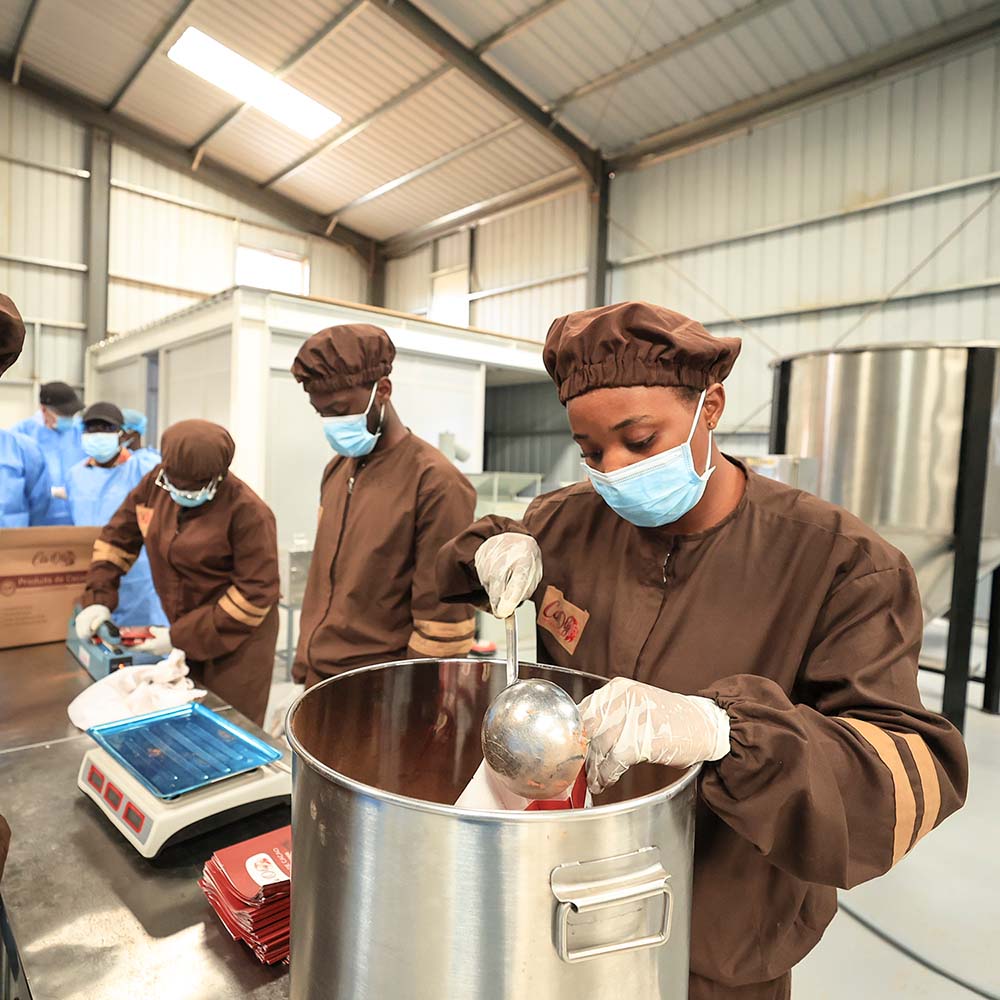
Persistent gender pay disparities remain a defining challenge for achieving gender equality in the workplace. Across industries, including agrifood systems, women continue to earn less than men for the same work, limiting their economic security, career progression and long-term financial resilience. The gender pay gap is not only a matter of unequal salaries but also a reflection of structural barriers such as occupational segregation, unequal access to education and leadership opportunities, and the burden of unpaid care work. Without clear accountability mechanisms and sustained corporate action, wage inequalities persist, slowing progress towards more inclusive economies and agrifood systems.
Wage inequalities negatively impact the productivity, efficiency and potential of agrifood value chains and systems. By contrast, ensuring equal pay and fair wages enables women engaged in agrifood systems to gain financial security and to invest in their businesses, education and families, improving growth and economic outcomes across societies and agrifood value chains. Closing the wage gap is thus a driver of gender equality in the workplace and across agrifood value chains. Without achieving this, broader efforts to achieve economic and workplace equality remain incomplete, and agrifood systems fail to reach their full economic and social potential.
The United Nations Global Compact (UNGC) advocates for responsible business practices that place gender equality at the centre of corporate strategies. Through tools and mechanisms such as its Women’s Empowerment Principles and the Gender Gap Analysis Tool, UNGC provides a framework for companies to identify, measure and address gender pay gaps within their organizations. These efforts ensure that companies go beyond compliance by taking proactive, ongoing steps to eliminate pay disparities and institutionalize fair compensation policies.
Through the CGE initiative, UNGC is scaling up efforts to ensure that companies conduct gender pay gap audits at least every five years and take corrective actions to achieve equal pay for work of equal value. This approach strengthens corporate accountability and transparency, ensuring that gender equality commitments translate into real financial equity for women in the workforce.
Through this initiative and increased commitment, UNGC will drive tangible, data-backed actions that ensure that wage equality is a business imperative rather than an aspiration.
Required citation:
FAO. 2025. Commit to Grow Equality: investing in the future of women in agrifood systems – Progress report 2025. Rome. https://doi.org/10.4060/cd4123en
The designations employed and the presentation of material in this information product do not imply the expression of any opinion whatsoever on the part of the Food and Agriculture Organization of the United Nations (FAO) concerning the legal or development status of any country, territory, city or area or of its authorities, or concerning the delimitation of its frontiers or boundaries. The mention of specific companies or products of manufacturers, whether or not these have been patented, does not imply that these have been endorsed or recommended by FAO in preference to others of a similar nature that are not mentioned.
The views expressed in this information product are those of the author(s) and do not necessarily reflect the views or policies of FAO.
© FAO, 2025
Some rights reserved. This work is made available under the Creative Commons Attribution-NonCommercial-ShareAlike 3.0 IGO licence (CC BY 4.0: https://creativecommons.org/licenses/by/4.0/legalcode.en).
Some rights reserved. This work is made available under the Creative Commons Attribution- 4.0 International licence (CC BY 4.0: https://creativecommons.org/licenses/by/4.0/legalcode.en).
Under the terms of this licence, this work may be copied, redistributed and adapted, provided that the work is appropriately cited. In any use of this work, there should be no suggestion that FAO endorses any specific organization, products or services. The use of the FAO logo is not permitted. If a translation or adaptation of this work is created, it must include the following disclaimer along with the required citation: “This translation [or adaptation] was not created by the Food and Agriculture Organization of the United Nations (FAO). FAO is not responsible for the content or accuracy of this translation [or adaptation]. The original [Language] edition shall be the authoritative edition.”
Any dispute arising under this licence that cannot be settled amicably shall be referred to arbitration in accordance with the Arbitration Rules of the United Nations Commission on International Trade Law (UNCITRAL). The parties shall be bound by any arbitration award rendered as a result of such arbitration as the final adjudication of such a dispute.
Third-party materials. This Creative Commons licence CC BY 4.0 does not apply to non-FAO copyright materials included in this publication. Users wishing to reuse material from this work that is attributed to a third party, such as tables, figures or images, are responsible for determining whether permission is needed for that reuse and for obtaining permission from the copyright holder. The risk of claims resulting from infringement of any third-party-owned component in the work rests solely with the user.
FAO photographs. FAO photographs that may appear in this work are not subject to the above-mentioned Creative Commons licence. Queries for the use of any FAO photographs should be submitted to: photo-library@fao.org.
Sales, rights and licensing. FAO information products are available on the FAO website (www.fao.org/publications) and print copies can be purchased through the distributors listed there. For general enquiries about FAO publications please contact: publications@fao.org. Queries regarding rights and licensing of publications should be submitted to: copyright@fao.org.
Cover photograph: © FAO/Peter Safari; © Patrick Zachmann/Magnum Photo for FAO; © FAO/ Jafaar Al Merei; © FAO/Gilles Sabrie; © FAO/Javid Gurbano