THEMATIC AREA 3
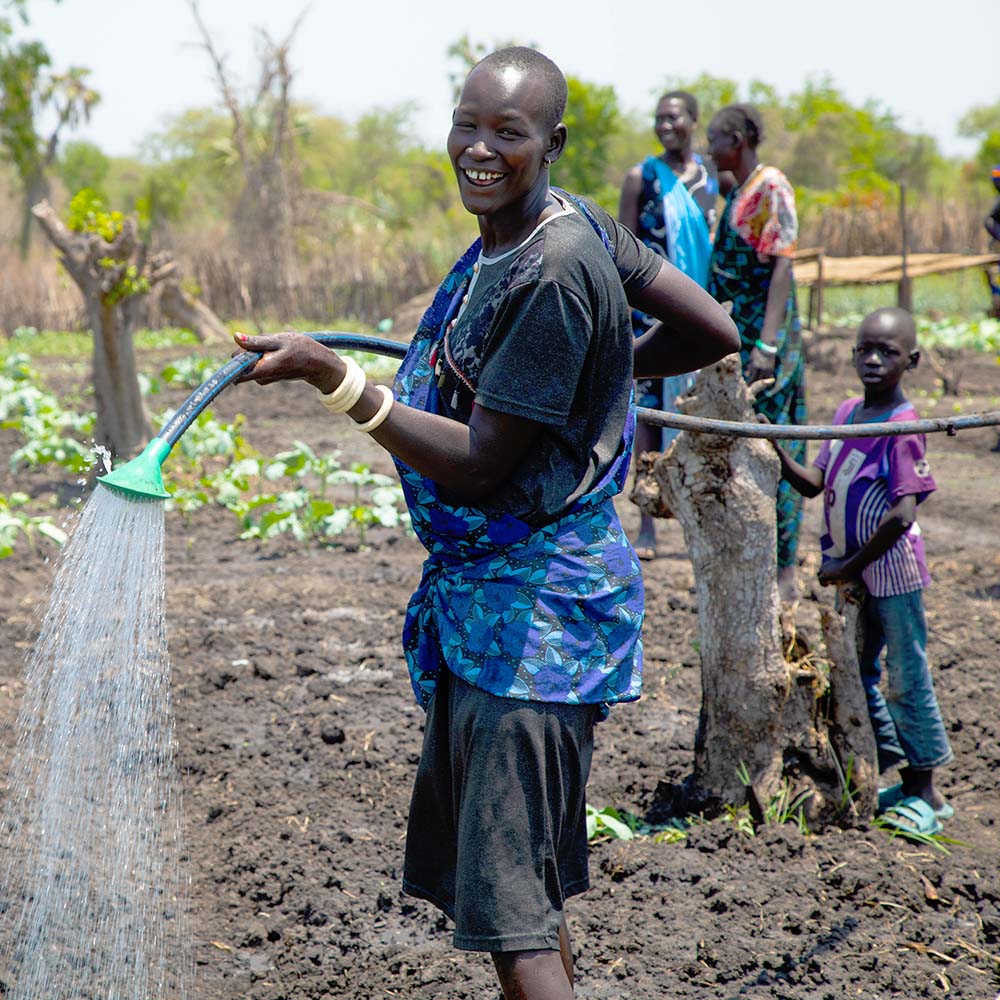
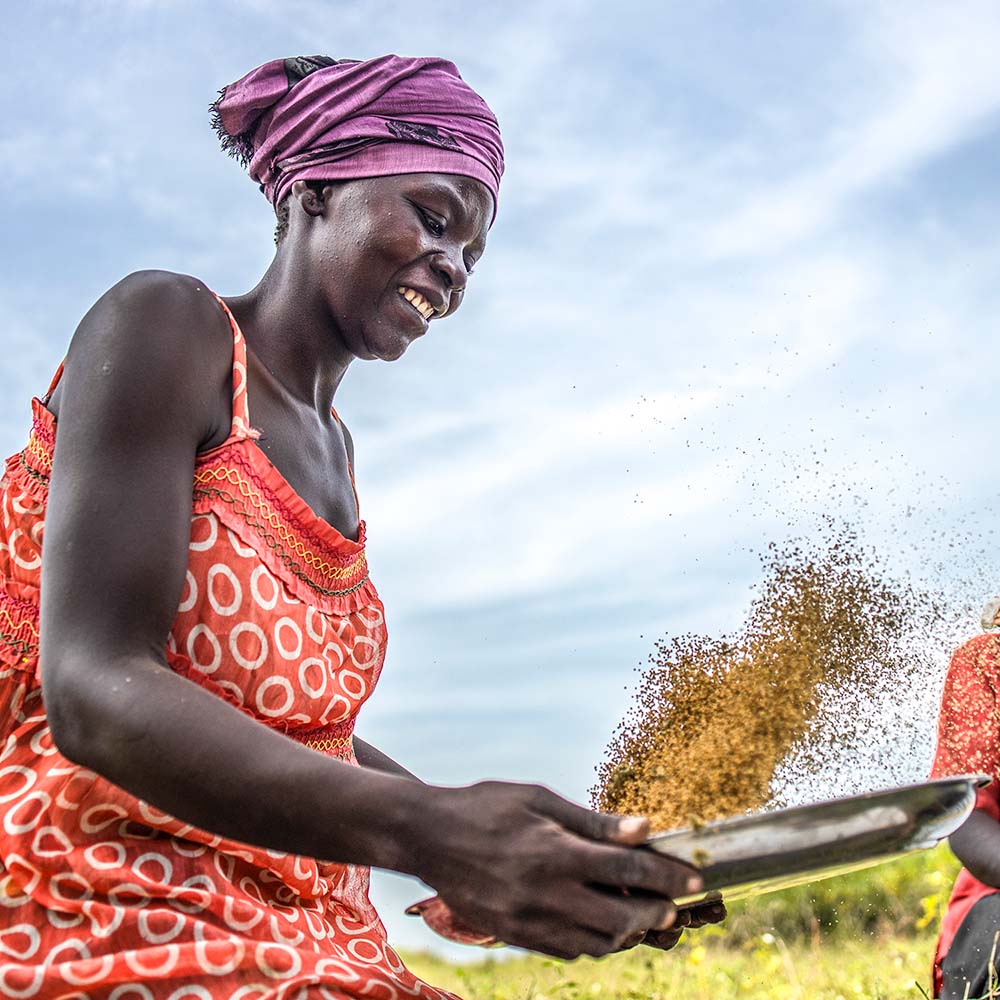
Despite their critical role in food production, women farmers continue to face systematic barriers that limit their productivity, reinforcing broader economic inequalities in agrifood systems. FAO’s research shows that women produce 24 percent less than men on farms of the same size, not because they are less skilled or efficient, but because they lack equal access to essential resources and services such as land, high-quality seeds, credit, irrigation and agricultural extension. These constraints reduce their ability to increase yields, adopt climate-resilient techniques and expand into more profitable markets. Closing the productivity gap is essential not only for gender equality but also for food security and economic growth, as evidence suggests that eliminating these disparities could increase global agricultural output significantly.9
One of the main drivers of this productivity gap is women’s limited and unsecure access to land and tenure rights, which prevents them from making long-term investments in soil health, irrigation, and sustainable farming methods. There is considerable evidence suggesting that improving women’s access to land improves food security, natural resource management, empowerment, decision-making authority, and resilience, while also reducing gender-based violence.10
Additionally, persistent gaps in women’s access to financial, credit and insurance services leave them with lower-quality inputs and fewer risk-mitigation options in the event of climate shocks or economic downturns.11 Extension services and training programmes are also disproportionately geared towards men, further excluding women from technical advances that could improve their efficiency and competitiveness. But when women are provided training and extension services, there are numerous positive outcomes: in Uganda, for example, including women model farmers in training and videos improved food security, increased adoption of new maize seeds, and helped bring about a shift in norms.12
“Rural women are at the heart of agricultural production in Ecuador. It is important to recognize their effort and the challenges they face in order to reduce the gender gap, which demands a commitment from the State through transformative actions for gender equality.”H.E. Danilo Palacios
Minister for Agriculture and Livestock, Republic of Ecuador
High-level CGE event, New York, 24 September 2024 (video message)
The CGE initiative aims to address these structural barriers by promoting gender-responsive policies that enhance women’s access to land, finance, technology and market opportunities. Inclusive land tenure and development policies that actively strive to change structural gender inequalities, include women in policy fora and provide equal access to assets and resources, have the true potential to lead to more sustainable and resilient food systems and foster food security for all. 13
By committing to this thematic area, CGE partners contribute to more equitable, resilient and efficient agrifood systems, where women can fully realize their economic potential and drive transformative change in food production and in food security and nutrition.

For bilateral development agencies, foundations, multilaterals, non-governmental organizations
For Members, producer organizations, local authorities, etc.
For businesses


Required citation:
FAO. 2025. Commit to Grow Equality: investing in the future of women in agrifood systems – Progress report 2025. Rome. https://doi.org/10.4060/cd4123en
The designations employed and the presentation of material in this information product do not imply the expression of any opinion whatsoever on the part of the Food and Agriculture Organization of the United Nations (FAO) concerning the legal or development status of any country, territory, city or area or of its authorities, or concerning the delimitation of its frontiers or boundaries. The mention of specific companies or products of manufacturers, whether or not these have been patented, does not imply that these have been endorsed or recommended by FAO in preference to others of a similar nature that are not mentioned.
The views expressed in this information product are those of the author(s) and do not necessarily reflect the views or policies of FAO.
© FAO, 2025
Some rights reserved. This work is made available under the Creative Commons Attribution-NonCommercial-ShareAlike 3.0 IGO licence (CC BY 4.0: https://creativecommons.org/licenses/by/4.0/legalcode.en).
Some rights reserved. This work is made available under the Creative Commons Attribution- 4.0 International licence (CC BY 4.0: https://creativecommons.org/licenses/by/4.0/legalcode.en).
Under the terms of this licence, this work may be copied, redistributed and adapted, provided that the work is appropriately cited. In any use of this work, there should be no suggestion that FAO endorses any specific organization, products or services. The use of the FAO logo is not permitted. If a translation or adaptation of this work is created, it must include the following disclaimer along with the required citation: “This translation [or adaptation] was not created by the Food and Agriculture Organization of the United Nations (FAO). FAO is not responsible for the content or accuracy of this translation [or adaptation]. The original [Language] edition shall be the authoritative edition.”
Any dispute arising under this licence that cannot be settled amicably shall be referred to arbitration in accordance with the Arbitration Rules of the United Nations Commission on International Trade Law (UNCITRAL). The parties shall be bound by any arbitration award rendered as a result of such arbitration as the final adjudication of such a dispute.
Third-party materials. This Creative Commons licence CC BY 4.0 does not apply to non-FAO copyright materials included in this publication. Users wishing to reuse material from this work that is attributed to a third party, such as tables, figures or images, are responsible for determining whether permission is needed for that reuse and for obtaining permission from the copyright holder. The risk of claims resulting from infringement of any third-party-owned component in the work rests solely with the user.
FAO photographs. FAO photographs that may appear in this work are not subject to the above-mentioned Creative Commons licence. Queries for the use of any FAO photographs should be submitted to: photo-library@fao.org.
Sales, rights and licensing. FAO information products are available on the FAO website (www.fao.org/publications) and print copies can be purchased through the distributors listed there. For general enquiries about FAO publications please contact: publications@fao.org. Queries regarding rights and licensing of publications should be submitted to: copyright@fao.org.
Cover photograph: © FAO/Peter Safari; © Patrick Zachmann/Magnum Photo for FAO; © FAO/ Jafaar Al Merei; © FAO/Gilles Sabrie; © FAO/Javid Gurbano