K. J. N. NdamukongMankon Station
Institute of Animal Research
P.O. Box 125
Bamenda
CameroonM.M.H. Sewell
Centre for Tropical Veterinary Medicine
University of Edinburgh
United Kingdomand
M.F. Asanji
Annexe Bambili
Advanced Teachers' College
University of Yaounde
Cameroon
Summary
Resume
Introduction
Materials and methods
Results
Discussion
Acknowledgements
References
Sheep and goat productivity under traditional management was assessed in 115 flocks by questionnaire survey. Goats were reared by 92% of farmers but only 21% reared sheep. Flock sizes were small (3-48, median 7) with larger numbers in mixed flocks. Females greatly outnumbered males. The commonest of 4 management systems included night housing and day tethering in the cropping season with tethering or free range grazing during the day in the non-cropping season. Most farmers provided salt. About 43% of farmers provided water. Breeding was generally uncontrolled. Offtake rates were 20% for sheep and 24% for goats. Mortality was higher in sheep than in goats and in young stock than in adults. Treatment of sick animals was practiced on a very small scale.
La productivité de moutons et de chèvres sous élevage traditionnel a été estimée dans 115 troupeaux au moyen d'un questionnaire. L'enquête a montré que 92 p.cent de fermiers élevaient des chèvres alors que 21 p.cent élevaient des moutons. La taille des troupeaux était petite (3-48, médian 7) avec un plus grand nombre dans des troupeaux composites. Il y avait considérablement plus de femelles que de mâles. Parmi 4 systèmes de conduite de petits ruminants identifiés, l'abri des animaux pendant les nuits et l'attache à la longue pendant les jours en saison de culture est le système le plus pratiqué. Ils sont aussi attachés à la longue ou laissés en divagation pendant les journées en saison morte. La plupart de fermiers donnaient du sel aux animaux et environ 43 p.cent de fermiers donnaient de l'eau. La reproduction était généralement incontrollée. Les taux d'écoulement étaient de 20 p.cent pour les moutons et 24 p.cent pour les chèvres. Le taux de mortalité était significativement plus élevé chez les moutons que chez les chèvres et aussi plus chez les jeunes que chez les adultes. Le traitement des animaux malades était pratiqué A très faible échelle.
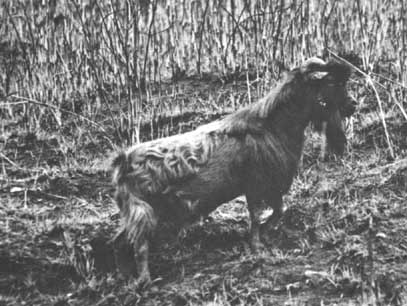
Most families in humid West Africa keep small ruminants (ILCA, 1979). The commonest indigenous types in the North West Province of Cameroon are the West African Grassland Dwarf. Few attempts to describe the husbandry systems or to evaluate modifications have been made. Disease seriously limits productivity throughout the humid and sub-humid zones (Gatenby, 1982) and information on disease prevalence for rational design and introduction of economical and effective preventive and control programmes is required.
This study attempts to assess productivity levels of sheep and goats in villages of Momo and Mezam divisions in Cameroon's North West Province, to identify production constraints, and to recommend strategies for improvement.
Interviews based on a formal questionnaire (Ndamukong, 1987) were conducted with 115 farmers from 10 villages in each of Momo and Mezam divisions during the wet and dry seasons from January 1985 to March 1987. In each village the first 5 small ruminant farmers encountered were interviewed. The main respondents in all eases were the owners. The reference period was the year immediately preceding interview.
Ownership patterns and flock structure
Sheep and goats were usually the property of individual owners, 84% being crop farmers while 48% also engaged in off-farm work. Goats were kept by 92% of farmers but only 21% kept sheep. Goats only were kept by 79% of owners, sheep only by 8%, and 13% had mixed flocks. Most farmers kept only 1 flock, whether mixed or of a single species. The usual reason for keeping goats rather than sheep was that sheep adversely affect a woman's fertility. Sheep were considered to be more prone to disease, less active (and hence likely to be killed by passing vehicles), liable to strangle themselves on the tether, more destructive to crops, and dirty. Farmers who kept sheep did so because they were moslems or because they considered them easier to manage.
Flock sizes were usually small but mixed flocks tended to be larger than single species ones. Goat flocks averaged 5 animals, there being no differences in flock size between the 2 divisions. Sheep flocks averaged 4 head, those in Momo (13 head) being larger than those in Mezam (3 head). Mixed flocks averaged 8 head with approximately equal numbers of sheep and goats. Females outnumbered males in all sections of the population and castrates were uncommon (Table 1).
Table 1. Flock structure in Momo and Mezam Divisions in north west Cameroon.
|
Species, sex and age |
Percentage of animals |
|||||
|
Momo |
Mezam |
Combined |
||||
|
Sheep (n=164) |
|
|
|
|
||
|
|
Males:
|
rams |
13 |
6 |
9 |
|
|
|
lambs |
1 |
2 |
2 |
||
|
|
castrates |
3 |
- |
1 |
||
|
|
|
Total |
17 |
9 |
12 |
|
|
|
Females:
|
ewes |
49 |
72 |
62 |
|
|
|
lambs |
34 |
19 |
26 |
||
|
|
|
Total |
83 |
91 |
88 |
|
|
Goats (n=679) |
|
|
|
|
||
|
|
Males:
|
bucks |
5 |
5 |
5 |
|
|
|
kids |
11 |
8 |
9 |
||
|
|
castrates |
1 |
2 |
2 |
||
|
|
|
Total |
16 |
16 |
16 |
|
|
|
Females:
|
does |
63 |
56 |
58 |
|
|
|
kids |
21 |
28 |
25 |
||
|
|
|
Total |
84 |
84 |
84 |
|
Management systems
The 4 systems identified were classed as tethering, semi-intensive, semi-extensive and extensive. In the tethering system, animals were kept housed at night and adults were tethered during the day. Access to fresh grazing was provided by shifting the tethering site. In the semi-intensive system, animals were housed at night and fenced in paddocks of at least 2 ha during the day. Animals were housed at night in the semi-extensive system but ranged freely during the day: they usually returned home on their own in the evening. Animals roamed freely both day and night in the extensive system: no shed was provided although they might shelter under a roof or a veranda at night.
About 97% of goat owners, 83% of sheep owners and 93% of mixed flock owners utilized systems which involved tethering at some stage. Systems that did not involve tethering were most often adopted by farmers with larger flocks.
Housing usually comprised an enclosed shed attached to or separate from the house (50%), the veranda of the house (30%), a room of the house (16%) or an open shed in a night paddock (2%). Shed walls were made of combinations of sticks, tree fern and bamboo. Floors comprised planks or logs laid on the ground or slightly raised (48%), mud (27%), raised slats (22%) or cement (3%).
Most feed was provided by natural vegetation and household scraps. Free roaming animals also fed on harvest wastes. Other feed supplementation, except salt, was rarely given. Watering was not considered essential by 47% of farmers, 43% provided water on a more or less regular basis and 10% gave it occasionally.
Productivity
Some 88% of farmers considered most of their goats gave birth only once a year. In contrast, 56% reported lambing to occur once or twice a year at an equal frequency in their flocks. Twins were more commonly reported in sheep than in goats. Mating was usually uncontrolled. Inbreeding was probably common as the progeny of the most active breeding ram or buck was often the main source of replacement males. Breeding rams and bucks were found in 50% and 25% of the flocks. Other flocks relied on animals being bred during the non-cropping season when most of the stock were on free range.
Offtake rates were 20% for sheep and 24% for goats with considerable variation between individual farmers and systems of management (Table 2).
Mortality rates were reported to vary widely. Many flocks had no mortality in the previous year while in others death rates of up to 100% in young stock, 77% in adult sheep and 93% in adult goats were reported. Death rates were higher in sheep than in goats (X² 40, P < 0.001) and in young stock than in adults X² = 23, P < 0.001).
The most common diseases in both sheep and goats in all management systems and at all seasons were diarrhoea, tick infestation, coughing and nasal discharge (Table 3). About 11% of farmers made regular use of the veterinary services and 18% treated their own animals with traditional or modern remedies (Table 4). The usual reason for not seeking veterinary attention was that the cost was not commensurate with the value of the animals.
Production constraints
Prominent among identified constraints was the necessity for the daily management of the stock.
Table 2. Offtake rates for sheep and goats under different management systems in North West Province, Cameroon.
|
Management system |
Species |
Flocks |
Offtake |
|
|
% |
range |
|||
|
Tethering
|
Sheep |
8 |
9 |
0-50 |
|
Goats |
48 |
24 |
0-67 |
|
|
Tethering/semi-extensive¹)
|
Sheep |
9 |
35 |
0-44 |
|
Goats |
34 |
28 |
0-65 |
|
|
Tethering/ extensive
|
Sheep |
6 |
23 |
0-38 |
|
Goats |
20 |
20 |
0-80 |
|
|
Semi-intensive/ semi-extensive |
Goats |
1 |
2 |
- |
|
Extensive |
Sheep |
2 |
48 |
26-71 |
|
All systems combined
|
Sheep |
27 |
20 |
0-71 |
|
Goats |
105 |
24 |
0-80 |
|
Note: 1. Where 2 systems are shown the first refers to the cropping season (Mar-Aug) and the second to the non-cropping season.
Labour problems arose when children left home. Many owners had off-farm work which restricted their involvement with routine management of the animals. The fear of animals being stolen necessitated tethering close to the home and good pastures might not always be available in the immediate vicinity. Land available for grazing is continually being reduced by encroachment of cultivation. Frequent confrontations between livestock owners and crop farmers is another factor inducing most owners to limit stock numbers to those they can conveniently manage and watch. High mortality was one of the main reasons stated by some farmers for not keeping small ruminants.
Table 3. Disease symptoms (%) described by owners of sheep and goats in North West Province, Cameroon.
|
Disease symptoms |
Species |
|
|
Sheep |
Goat |
|
|
Diarrhoea |
81 |
70 |
|
Ticks |
73 |
71 |
|
Coughing |
63 |
78 |
|
Nasal discharge |
69 |
68 |
|
Emaciation |
69 |
58 |
|
Abortion |
40 |
38 |
|
Sudden death |
42 |
35 |
|
Mange |
28 |
49 |
|
Conjunctivitis (pink eye) |
33 |
24 |
|
Bottle jaw |
35 |
18 |
|
Sore mouth |
17 |
32 |
|
Lameness |
30 |
17 |
|
Salivation and foaming at the mouth |
25 |
19 |
|
Loss of appetite |
13 |
29 |
|
Lice |
15 |
17 |
|
Dystocia |
11 |
10 |
|
Mastitis |
13 |
14 |
Table 4. Traditional and modern veterinary methods adopted by owners of small ruminants in North West Province, Cameroon.
|
Type of treatment given |
Disease or symptom against which treatment is used |
|
Waste engine oil or kerosene mixed with palm oil |
Mange, sore mouth, wounds ticks |
|
Palm oil alone or mixed with a phenolic disinfectant (Izal) |
Mange |
|
Salt |
Salivation, recumbency |
|
Salt + sulphathiazole |
Peste des petite ruminants |
|
Aspirin, sulphathiazole or tetracyclin |
All diseases |
|
Soot mixed with salt |
Any illness, especially diarrhoea |
|
Various combinations of plants either squeezed and given to the animal to drink or burned, ground into a powder and given by mouth |
Diarrhoea, mange, snake bite |
The small flock size is typical of sheep and goat production in developing countries and is comparable to flock sizes of 3.5 goats and 2.5 sheep in southern Nigeria (Matthewman, 1980; Sumberg, 1985). A tendency for larger numbers in mixed flocks has also been reported previously (Wilson, 1983). The preponderance of females agrees with earlier observations that females make up more than two-thirds of most small ruminant flocks with as many as 80% of females in derived savanna areas and 83% in true forest areas (Wilson, 1980; 1983).
Numbers of sheep and goats in Cameroon are reported to be similar (FAO, 1985) yet there is clearly a greater emphasis on goat than on sheep production in North West Province. A similar but less marked situation was reported in southern Nigeria (Matthewman, 1980) where 50% of households owned goats against 22% owning sheep.
The main reason why tethering is such a widely practised management system is because it protects growing crops. Although tethering is labour intensive, most owners utilize unpaid family labour. In addition, stock are relatively secure against theft and can be more easily protected from predation or from the extremes of weather. The limited amount of grazing available probably leads to chronic malnutrition, the consequences of which are poor growth, emaciation, increased risk of helminth infestation, and high mortality. Housing in an enclosed shed with a raised slatted floor would seem appropriate where frequent cleaning of the faeces may not be feasible. Adequate housing protects animals from rain, excessive heat, wind, cold and draughts and provides the opportunity for closer feeding and breeding control.
Managerial factors which limit the effective rate of reproduction include uncontrolled mating, inbreeding, insufficient feed for lactating females, insanitary conditions in sheds, and other forms of inadequate disease control and prevention.
Low offtake rates may reflect the fact that sheep or goat rearing is undertaken as a family tradition, the flocks being handed down from father to son, only to be disposed of at times of necessity. Small ruminant production for the majority of breeders is a sideline activity carried out in addition to the main source of income to provide a flexible source of capital.
Sheep appear to be less able to withstand the hazards of traditional management in northwest Cameroon than goats and this is probably the underlying reason why sheep are less popular among small ruminant owners. Improved management, including supplementary feeding during the dry season, allows sheep to survive and grow better than goats (Ndamukong et al, 1987).
The wide range in mortality may have been due to managerial differences among households. Owners! impressions that tick infestation is a major cause of death may arise in part because ticks are obvious parasites. Diarrhoea is the main clinical feature of nematode infestation in sheep and goats. Diarrhoea is also associated with peste des petits ruminants, along with conjunctivitis, ocular discharges, salivation and foaming at the mouth, nasal discharges and other signs of pneumonia, all of which were reported during this survey. Diarrhoea may also be caused by other pathogens including rotavirus, Escherichia coli or occasionally by Clostridium perfringens. Coughing and nasal discharges may also be associated with pneumonia or Oestrus ovis infestation. Skin lesions observed are those commonly associated with mange or lice infestation.
Improvements in village sheep and goat production might be achieved by changes in husbandry practices. Better nutrition, especially during the dry season, would improve growth rates and have an impact on disease susceptibility and mortality. Crop byproducts should be preserved, and fed with browse, whenever pastures being grazed are poor. There is an urgent need to devise methods suitable for use by small-scale farmers for preserving the abundant fodder available in the wet season for use during the dry season.
Reproductive performance could probably be improved by controlling breeding. An average of 3 parturitions every 2 yr could be ideal for optimum productivity. Such a breeding schedule would permit the exploitation of the full reproductive potential, while at the same time avoiding overstressing females. The feeding regime, especially for the females, would then need to be adequate throughout the year. Inbreeding and early conception should be avoided and could be achieved by separating the sexes and by early castration of males not selected for reproduction. It may be desirable for large flocks to have their own rams or bucks but these should be changed at least every 2 yr to limit inbreeding. A system by which breeding rams and bucks could be regularly exchanged between farmers would also be advantageous. Provision of males from government farms might also be considered.
Sporadic veterinary treatment of animals is probably ineffective, although soot in a saline solution might be of some value in the treatment of diarrhoea, and the efficacy of some local herbal medicines may be worth investigating. The unsystematic use of modern drugs is potentially dangerous. Many disease problems can be controlled or prevented by proper management. Collaboration between the extension services and owners could increase returns from small ruminants. In the first instance, it would be advantageous to concentrate on farmers with larger flocks kept in paddocks or extensively. Such farmers are more likely to be influenced by commercial considerations and be prepared to consider, and be able to afford, to implement recommendations aimed at improving productivity. Veterinary clinics in villages might be stocked with anthelmintics and basic drugs against other common diseases. This would provide an opportunity for providing simple advice on management, preferably in the form of pictorial leaflets.
Better returns from small ruminants would probably be obtained by restricting flock size to shed capacity, by early culling of undesirable individuals, and by selling old unproductive females and males. This would require a change in social attitudes to small ruminants. Changes recommended in village systems should be aimed at maximizing the efficiency of utilization of the present resources before proceeding to the introduction of more land- and labour-intensive systems of production (Matthewman, 1980).
We are grateful to the farmers who provided the information for the survey and to the government of the Republic of Cameroon for financing the study.
FAO 1985. Production year book (Volume 39). Food and Agriculture Organisation, Rome, Italy.
Gatenby R M. 1982. Research on small ruminants in sub-Saharan Africa. In: R Gatenby and J C M Trail (eds. ), Small ruminant breed productivity in Africa. International Livestock Centre for Africa, Addis Ababa, Ethiopia.
ILCA 1979. Small ruminant production in the humid tropics. Systems Study No. 3. International Livestock Centre for Africa, Addis Ababa, Ethiopia.
Matthewman R W. 1980. Small ruminant production in the humid tropical zone of southern Nigeria. Tropical Animal Health and Production 12: 234-242.
Ndamukong K J N. 1987. Sheep and goat production in the north-west province of Cameroon with special reference to parasitic gastroenteritis. Ph.D. Thesis. University of Edinburgh, Edinburgh, UK.
Ndamukong K J N. Sewell M N H and Asanji M F. 1987. Productivity of sheep and goats under three management systems at Bamenda, Cameroon. Tropical Animal Health and Production 19: 237-244.
Sumberg J E. 1985. Small ruminant feed production in a farming systems context. In: J E Sumberg and K Cassaday (eds.), Sheep and goats in humid west Africa. International Livestock Centre for Africa, Addis Ababa, Ethiopia.
Wilson R T. 1980. Population and production parameters of sheep under traditional management in semi-arid areas of Africa. Tropical Animal Health and Production 12: 243-250.
Wilson R T. 1983. Husbandry, nutrition and productivity of goats and sheep in tropical Africa. Joint IFS/ILCA workshop on small ruminant research in the tropics. Provisional Report No. 14. International Foundation for Science, Stockholm, Sweden.
Cameroon Grass land sub-type of the West African Dwarf goat at Mankon Station