K.J. PetersInternational Livestock Centre For Africa
P.O. Box 5689
Addis Ababa
Ethiopia
Summary
Resume
Introduction
Performance testing
Past trends in performance testing
Current performance recording programmes
Future prospects
References
Appendix
About 75% of Africa's livestock are associated with smallholder and agropastoral farming systems. Livestock performance can be greatly increased through improved management. Production problems, possible interventions and animal performance need to be identified within the prevailing system. On-farm testing has expanded considerably although on-station testing has been more reported. Most on-farm tests are short term, do not allow full assessment of the whole production process, and rarely match health and management data to performance. On-farm work can be complemented by on-station tests for comparative breed evaluation, assessment of specific performance ability and technology development. On-station comparisons are valuable but their application is limited by high costs and genotype environment interactions. On-farm testing is impaired by constraints which increase the number of covariates, decrease accessibility to flocks and limit estimation of breeding values. On-farm recording therefore requires a large number of flocks, monitored continuously, within a system oriented scheme. Efficient on-farm testing needs standard methods, rapid data handling and results feedback, and can best be achieved through collaborative networks which could also organise complementary on-farm and on-station genetic improvement programmes.
La plupart du cheptel Africain se trouve dans les systèmes agropastoraux des petites exploitations. La performance peut être augmentée par l'amélioration de la gestion. Contraintes à la production, interventions possibles et performances individuelles doivent être identifiées dans le système existant. Le suivi en milieu réel s'est considérablement développé alors que le suivi en station est beaucoup plus souvent cité. La plupart des premiers sont de courte durée et ne permettent que rarement la compréhension de la totalité de la production et les interactions entre les données sanitaires et de conduite d'élevage à la performance. Les travaux en milieu réel peuvent être complétés par des essais en station pour des évaluations comparatives, pour la compréhension d'aptitudes spécifiques et pour le développement technologique. Les comparaisons en station sont efficaces mais leurs applications limitées par des coûts élevés et les interactions génotype-environnement. Les suivis en milieu réel sont affectés par les contraintes qui augmentent le nombre de covariances, réduisent l'accès aux troupeaux et limitent l'estimation de la valeur d'élevage: ils nécessitent un nombre élevé de troupeaux suivis de façon permanente, une méthode homogène et rapide de collecte de données et un bon retour de l'information. Un réseau collaboratif est la façon la plus efficace de mettre en place ces contrôles et peut coordonner les programmes en milieu réel et ceux d'amélioration génétique en station.
Sheep and goats are an integral part of livestock production systems throughout sub-Saharan Africa, Small ruminants are raised for meat, milk, fibre, pelts and skins. The relative importance of each of these products varies from region to region and is largely determined by ecological and economic factors. Attempts to improve performance under these prevailing conditions must take into consideration their specific purpose in the production system and their performance potential under varying management levels. If small ruminant production improvement is to be successful, it must produce results relevant to the production system and increase economic returns to the producer.
This paper defines trends, needs and objectives of small ruminant performance testing in the context of the African production environment. Advantages and disadvantages of on-farm and on-station performance recording and particular constraints to on-farm testing are identified. Possible solutions are indicated.
Small ruminants are predominantly kept in arid and semi-arid zone pastoral production systems but their importance in smallholder farming systems is rapidly increasing. Performance improvements are essential to increase the efficiency of production and competitiveness with other species. Attempts to improve performance need to be concerned with the production environment and its effects on performance as well as with genetic factors and their implications for breed improvement programmes.
Objectives in performance testing
Performance testing is a progress-oriented, systematic process of collecting and analysing data on economically important performance traits and production practices under defined conditions. The objectives of performance testing include: identification and quantification of non-genetic constraints in order to improve husbandry, hygiene and feeding practices; economic evaluation of the production process and different technical interventions; breed characterization or evaluation under defined production conditions; and breed improvement.
Performance testing is useful and justified only if results are made available to decision makers at the farm level and in extension services and to those engaged in livestock development, breeding and policymaking.
Components of a performance test
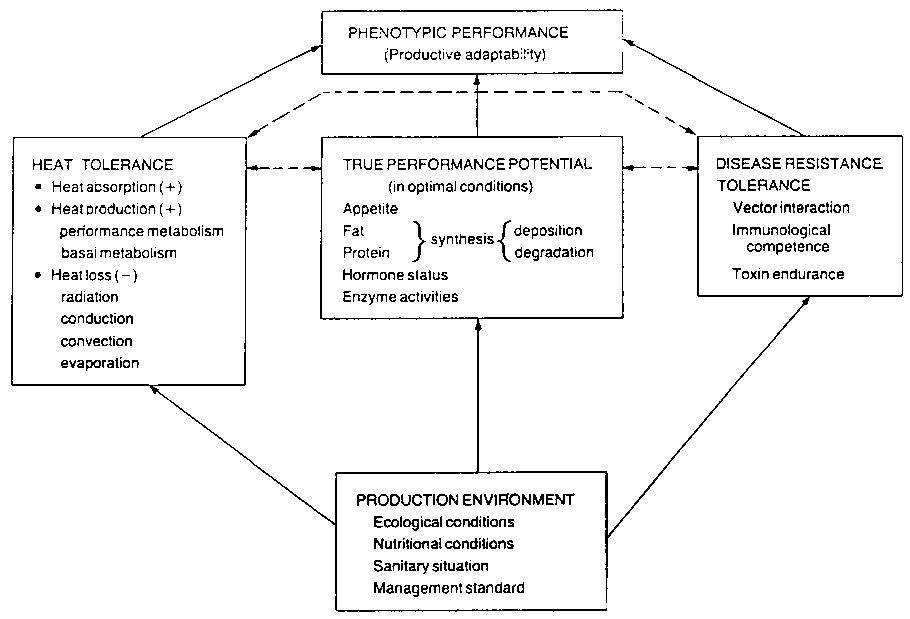
The concept of "productive adaptability" (Horst, 1983) implies that phenotypic performance is the result of an animal's true genetic capability plus its specific ability to cope with such environmental stresses as disease and heat (Figure 1). The interactions of these factors shape the productive performance of a given breed. The characteristics which must be taken into account when evaluating performance can be divided into three groups: productivity; specific performance ability; and specific adaptation ability. Productivity is an important indicator of the overall economically relevant performance ability but also gives a first impression of specific performance abilities and their variability (Table 1).
Figure 1. Schematic representation of "productive adaptability".
To understand the performance pattern for particular breed characteristics, and to provide the basis for genetic evaluation of each characteristic, detailed information about the specific performance ability of a breed is needed. (Table 2). This group of characteristics includes fertility, lactation and growth, fibre yield and composition, skin structure, and other related parameters. The usefulness of the criteria by which the specific adaptation ability of a genotype is judged is controversial (Horst, 1983). The between-breed differences of disease susceptibility and heat tolerance observed in sheep and cattle in tropical environments, however, justify the inclusion of specific adaptation ability in performance evaluation, despite the uncertainty surrounding the mode of inheritance (Table 3).
Table 1. Important traits for tropical goat production.
|
Productivity |
Parameters measured |
|
Flock meat productivity (FMP) - litter/year x litter size x kid viability to weaning x kid weaning weight x does annual viability rate |
No kids born per litter Parturition interval Kids weaned per litter Weaning weight Doe survival rate |
|
Flock efficiency - FMP (doe metabolic weight) |
Doe body weight |
|
Flock performance productivity(FPP) - FMP + (milk yield x 9) |
Daily milked out yield Lactation length |
|
Flock performance efficiency - FPP x (doe metabolic weight) |
|
Table 2. Characteristics of specific performance ability.
|
Characteristic |
Parameters measured |
|
|
Fertility:
|
females |
Age and weight at puberty |
|
males |
Age and weight at puberty |
|
|
Lactation |
Maternal and milking behaviour |
|
|
Growth |
Tissue (pre- and post-natal) |
|
|
Fibre |
Yield |
|
|
Skin |
Surface area |
|
Table 3. Characteristics of specific adaptation ability and observations needed to assess them.
|
Characteristic |
Parameters measured |
|
Disease tolerance |
Packed cell volume |
|
Heat tolerance |
Rectal temperature |
|
Water metabolism |
Water loss |
|
Feed utilisation ability |
Cell wall digestion |
Approaches to performance testing
The overwhelming importance of the effects of management on performance and the immediate impact of improved husbandry, hygiene and feeding underline the need for on-farm testing. Collection of performance information within the production environment allows the identification of production prospects, assessment and separation of management variables and their effects on the production process, the isolation of problem areas for more in-depth assessment of cause/effect relationships, and the identification of aspects in which improvements can be made (Figure 2). Data on individual reproductive and productive traits provide the basis for estimating flock performance and phenotypic variation of traits. Genetic parameters can only be estimated under controlled breeding which is difficult to implement on-farm, due to small flock sizes and mixed herding on communal pastures.
Figure 2. Livestock performance in its environmental context.
Livestock on-farm testing (LOFT) in African production systems provides information on location-specific production conditions of performance by breeds or individual animals and breed improvement options appropriate to the system. Breed comparison and the assessment of specific performance abilities are important elements in evaluating the relative merits of breeds but are unlikely to be implemented on-farm in African systems. This is because they require large numbers of animals of several breeds over several years to assess production potential in a single environment. A complementary livestock on-station test (LOST) is required to fulfill these objectives. Controlled on-station experiments are also needed for developing improved management technologies.
The genetic performance ability of a given breed and its specific adaptations need to be studied in the controlled environment of an experimental station (Figure 3). Accurate data collection is facilitated by LOST and allows animals to be tested under different levels of production intensity. The significance of the results will depend on the degree of standardisation of the station conditions and on how closely they imitate the actual production environment. Only a limited number of animals are usually implicated in LOST. Such tests are complementary to LOFT in any performance evaluation, as both tests are needed to provide comprehensive data. LOFT is undoubtedly the more important element but implementation is frequently hampered by a number of problems which have limited their extent.
Figure 3. The complementarily of livestock on-farm (LOFT) and on-station (LOST) testing.
An illustrative bibliography (Peters and Thorpe, 1988) of some 60 titles (see Appendix) indicates some major features of past activities in performance recording. Analysed for test location (on-farm, on-station), nature of testing programme (diagnostic or experimental), and duration of testing (< 2 yr, 2-3 yr, > 3 yr), and region the review (Table 4) indicates that:
the relative importance of regional small ruminant populations is reflected in the large number of references from West and eastern Africa;on-station testing is reported more frequently than on-farm recording;
on-station studies are mainly experimental;
on-farm studies are mainly diagnostic but cover only a few possible problems;
most reports relate to short and medium term studies which do not allow full assessment of reproductive performance and do not evaluate productivity and the relative importance of its components.
The principal objectives of performance recording differ between on-station and on-farm studies and depend on the duration of the study. Short term experimental and diagnostic studies on-station and diagnostic studies, of whatever length on-farm, assess non-genetic factors, excluding disease, and their effects on performance: genetic factors receive little attention. This contrasts with the majority of reports of medium and long term on-station experiments which are mainly concerned with breed evaluation and related genetic research.
On-station studies are generally financed and executed by national governments, occasionally with assistance from bilateral agencies. National governments are also the main source of data on short and medium term studies. Most long term on-station studies involve bilateral and particularly multilateral agencies. ILCA has played a major role in this respect and has also been a major executing agency for long term systems studies. Systems studies reflect the change in emphasis from on-station performance recording to on-farm research, a change principally stimulated by external agencies.
The on-station production systems invariably, include modern husbandry methods (fencing, routine disease control, use of exotic breeds, restricted breeding seasons, forage production, concentrate feeding) not practiced in the surrounding traditional system. In spite of this, performance on-station has often been below levels measured on-farm. This is largely attributable to differences in management practices, reduced feed selection possibilities and higher disease risk on-station than on-farm. Station results are therefore often of little relevance to the traditional production system nor do they contribute to a better understanding of the performance ability of the breeds tested.
Increasing awareness of these shortcomings is reflected in the number of reports now appearing that describe the use of a farming systems approach in performance testing and present results from on-farm component research. Most reports of on-farm performance testing, however, deal principally with non-genetic factors. On-station reports on breed assessment and system-relevant component testing are also rare.
Current examples of on-farm performance recording can be classified according to their objectives (Table 5). The 3 principal objectives are: diagnosis through systems description and constraint identification; testing of husbandry and hygiene interventions; and genetic improvement programmes. On-station genetic improvement programmes are sub-divided into breed comparisons and within-breed selection programmes. Most countries have on-station comparisons of breed and crossbreed performances. There are generally concurrent selection programmes based on performance testing within a major local breed or breeds.
Table 5. Current on-farm and on-station programmes for small ruminant performance recording.
|
Region and country |
On-farm¹) |
On-station²) |
||||
|
D |
M |
G |
GS |
GB |
||
|
West Africa |
|
|
|
|
|
|
|
|
Benin |
+ |
+ |
+ |
- |
- |
|
|
Burkina Faso |
+ |
- |
- |
- |
- |
|
|
Côte d'Ivoire |
+ |
+ |
+ |
+ |
+ |
|
|
Mali |
+ |
+ |
- |
+ |
- |
|
|
Niger |
- |
- |
- |
- |
- |
|
|
Nigeria |
? |
? |
? |
+ |
+ |
|
|
Senegal |
+ |
+ |
- |
+ |
+ |
|
|
Togo |
+ |
+ |
+ |
+ |
+ |
|
Central Africa |
|
|
|
|
|
|
|
|
Burundi |
+ |
+ |
+ |
+ |
+ |
|
|
Cameroon |
? |
? |
? |
- |
+ |
|
|
Congo |
+ |
- |
- |
+ |
- |
|
|
Rwanda |
? |
? |
? |
+ |
+ |
|
East Africa |
|
|
|
|
|
|
|
|
Ethiopia |
+ |
+ |
- |
+ |
+ |
|
|
Kenya |
+ |
+ |
+ |
+ |
+ |
|
|
Somalia |
+ |
- |
- |
? |
? |
|
Southern Africa |
|
|
|
|
|
|
|
|
Botswana |
+ |
+ |
- |
- |
+ |
|
|
Mozambique |
+ |
- |
- |
- |
+ |
|
|
Zimbabwe |
+ |
- |
- |
- |
- |
Note:1. D - Diagnosis of technical constraints, M - testing/monitoring of management improvements, G testing/monitoring of genetic improvements.2. GS - within breed selection, GB - breed comparison.
Examples of on-farm and on-station programmes can be found in all regions of Africa although small ruminant programmes, particularly on-farm studies, are more common in West Africa. With few exceptions, available reports indicate that the target production system for on-farm performance recording is the livestock subsystem of small-scale mixed farms. The only exception in small ruminant programmes is the recording of mixed species flocks in the pastoral system in Somalia. Since 1983, in a common programme of the Somalian Government, GTZ and ILCA, performance and health data have been recorded in 200 meat-producing flocks. The first phase of on-farm performance recording in the small-farm sector is generally diagnostic, lasting 2 yr to 3 yr during which a first series of data on breed characterization and management variables is collected. An example is the small ruminant programme in Congo, begun in 1986, where ILCA is collaborating in monitoring the health and performance of 1000 sheep and goats under traditional management in 6 villages.
On-station intervention testing follows the diagnostic phase and, after some 2 yr to 3 yr, on-farm testing is generally possible. Well established programmes, for example in Togo and Cote d'Ivoire, subsequently include on-farm testing of husbandry, hygiene and breeding interventions backed by on-station research and breed improvement programmes.
Development projects introducing new technologies and management practices may reduce the length of the diagnostic phase. Interventions are tested on-station early in the programme and released for on-farm testing when proven. The time scale may vary between 1 yr and 5 yr. Established technologies can be transferred from other systems in similar locations at the beginning of the programme. In these projects, on-farm recording serves primarily to monitor and improve husbandry, hygiene and breeding practices and to assess the economic efficiency of the newly introduced livestock sub-system and its integration into the mixed farm system. At the same time the analysis of breed performance and the estimation of population parameters can be incorporated.
Collaborative research networks could contribute to a standardised approach during the diagnostic phase and all subsequent research activities, and enhance comparison of results and transfer of technologies. Strategic research on the most crucial problems of small ruminant production, (reproductive wastage, husbandry techniques and feeding systems) has already been started by the Small Ruminant Research Network in Congo, Cote d'Ivoire, Ethiopia, Kenya, Mali, Somalia and Togo. The next 5 yr should see a rapid expansion of on-farm recording for performance assessment and production improvement through collaborative networks.
Problems with on-farm testing
Small ruminant production systems show great variations within and between regions and farming systems, as do management practices, ownership patterns and production objectives (Table 6). On-farm recording must be based on a large sample of flocks, carefully stratified following a base-line survey. In addition, a comprehensive recording of farm covariates to explain systematic differences and the major reasons for variation in performance is required.
In extensive production systems, flock mobility is a major problem. In smallholder systems small flock sizes and communal herding create problems for isolating farm or flock effects. In small single sire flocks, confounding of sire and flock effects might lead to flocks being used as replicates. Seasonality of production would facilitate recording of reproductive data but asynchronous production is most common in African systems and demands regular visits and data recording in flocks participating in on-farm performance schemes. Access to flocks by the researcher or participation in a performance testing scheme depends entirely on the cooperation of the owner. Initially, even with immediate data feedback, cooperation may sometimes only be secured through direct incentives to the flock owner.
Performance traits are affected by a number of other covariates, including such seasonal factors as feed availability, disease challenge, ambient temperature and humidity, as well as biological factors such as age of dam, parity, litter size and sex. To be able to estimate efficiently these covariates and make the necessary adjustments a data base for at least a 2 yr period is required.
Table 6. Constraints to livestock on-farm testing.
|
Problems |
Issue |
Solution |
|
Representative sample of households and animals |
Covariate distribution (environment, systems, livestock production pattern) |
Baseline survey for sample selection |
|
Management variability |
Factors affecting performance |
Selection of a sufficiently large representative sample Monitoring of management pattern |
|
Communal grazing |
Mating structure Pedigree information |
Paternal half-sib identification (blood grouping) |
|
Length of production cycle |
Risk of losing animals Effect of covariate |
Large sample size Distribution of sample and estimation of correction factors |
|
Asynchronous production |
Aseasonal breeding |
Regular monitoring |
|
Multiple Output |
Multipurpose breeds |
Measurement of different traits Assessment of economic importance Biological and economic weightings for individual output |
|
Animal mobility |
Locating herds for performance measurement |
Frequent monitoring and feedback |
|
Small flock size |
Confounding of farm and animal effects if < 2 animals/class/ farm Difficult contemporary comparison |
Exclusion from single animal farm Correction for farm effects Production synchronisation Grouped flock comparison |
|
Single sire flock |
Confounding of sire and flock effects |
Interchange of sires or AI group breeding schemes |
|
Ownership of animals |
Consent to participate |
Information and feedback strategy |
|
Particular owner attitude |
Identification of animals |
Information and feedback strategy |
Recording programmes covering more than one production cycle require individual identification of animals and accurate assessment of breeding histories. Such information can be obtained from owners but difficulties may arise when flocks have mixed ownership. Data continuity of individual animals can be affected through decisions to sell or to remove animals for various reasons. Large initial samples are required to retain a sound basis for statistical analysis of on-farm data. With coefficients of variation of from 30% to 35% for important reproduction parameters, a minimum sample of 800 animals adequately distributed over the different covariates in a given test area and participating flocks is required to obtain meaningful estimates.
Complementarity of on-farm and on-station testing
Genetic improvement schemes require a field base if they are to be successful. In the smallholder systems of sub-Saharan Africa, factors such as single sire flocks, communal grazing and small flock sizes (Table 6) mean that group breeding schemes with on-station nucleus breeding units will continue to predominate.
On-station breeding units may also provide the nucleus for gene introduction and for rapid distribution of superior genotypes through sire exchange schemes. If integrated with on-farm performance testing, these schemes can achieve immediate improvement through the selection of superior foundation animals and attain faster and more effective progress. They can also test for traits, such as disease tolerance and food efficiency, which are difficult to record in the field.
Data handling
Developments in computing facilitate the handling of performance records and associated information from farming systems research and development. Most African countries now have facilities for data entry and preliminary analysis. Final analyses and interpretation may still need to be done centrally. Despite advances in computer technology, the lack of effective mechanisms for analysis and feedback of results and recommendations to farmers, researchers and extension agents remains a major constraint to the promotion of on-farm testing and livestock development. The objectives of performance testing can only be achieved if the field data are analysed and interpreted, quickly and if recommendations made for breeding and flock management are implemented promptly. Only then can farmers, researchers and extension workers interact and collaborate effectively in increasing livestock output at the flock level.
As a first step, ILCA has developed a data entry and analysis system called IDEAS. This has been distributed to more than 50 locations in Africa. IDEAS incorporates standardised performance recording and analysis systems for management decisions. It can be used in conjunction with other software for additional analyses. Currently, ILCA is expanding the IDEAS software to cater more effectively for small flocks, to provide data management feedback, and to include a financial module.
The importance of rapid and effective data management, analysis and results feedback cannot be over-emphasised, particularly in on-farm programmes. These programmes illustrate the effective integration of microcomputer technology and appropriate software in on-farm recording in Africa and demonstrate the potential for overcoming some of the major difficulties experienced in the past.
A farming systems approach in performance testing
The success of on-farm testing schemes will be measured in terms of their ability to improve livestock management and productivity. Most management and husbandry aspects of African livestock production systems still need to be defined and thus need to be part of a livestock testing and improvement scheme.
This complex task is best incorporated in a system-oriented livestock performance testing scheme that combines data on the farm environment (market, services, etc.), with that on all farm subsystems and from the flock level. It requires a standardised recording approach, a predetermined data recording structure and an efficient data handling and analysis system. Grouping the development, implementation and analysis of such tasks into collaborative networks may speed progress, avoid duplication and attract additional funds for on-farm performance testing.
A successful on-farm performance testing scheme needs to: be concerned with the whole farm environment; cover all components of the farm enterprise; identify factors limiting production within the system; initiate integrated research to find solutions (on-station); test production or breeding interventions (on-farm); evaluate the consequences of interventions; and be instrumental in the design of improvement programmes.
Horst P. 1983. The concept of productive adaptability of domestic animals in tropical and sub-tropical regions. Scientific Journal of the South African Veterinary Association 54: 159-164.
Peters K J and Thorpe W. 1988. Current status and trends in on-farm performance testing of cattle and sheep in Africa. Proceedings of the IIIrd World Congress on Sheep and Beef Cattle Breeding 1: 275-293.
Adanse-Pipin K A. 1979. Performance of sheep fed cocoa husk-based rations in the feed lot. Internal Report. Department of Animal Science, Ghana University, Accra, Ghana.
Adu I F. Taiwo B B A and Buvanendran V. 1985. Reproduction and lamb growth performance of Balami and desert Sudanese sheep in the Sahelo-Sudan savanna zone of Nigeria. Journal of Animal Production Review, Nigeria 5: 67-76.
Adu I F and Buvanendran V. 1982. Pre-weaning performance of lambs from pure and crossbred matings among Nigerian breeds of sheep. World Review of Animal Production 18(1): 73-77.
Agyemang K, Negussie Akalework, Voorthuizen A and Anderson F M. 1985. A report on a production survey of farmers' sheep flocks in Debre Berhan area of the Ethiopian Highlands. Highlands Programme Working Paper. International Livestock Centre for Africa, Addis Ababa, Ethiopia.
Amégée Y. 1978. Le mouton de Vogan (croisé Djallonké x Sahélian au Togo. Rapport annuel. Université du Benin, Lomé, Togo.
Armbruster T. 1989. La production de l'élevage ovin dans la région forestière de la Côte d'Ivoire. Research Report No. x. International Livestock Centre for Africa, Addis Ababa, Ethiopia.
Asaré E O and Wilson R T. 1985. Notes on village systems of small ruminant production in Ghana. Group Document No. SRC 5. International Livestock Centre for Africa, Addis Ababa, Ethiopia.
Auer C B. 1985. Situation actuelle, problèmes et possibilités d'amélioration de la production animale dans l'Atacora. Colloque International sur l'Amélioration de l'Elevage en Zone Tropicale au Madagascar.
Botswana 1982. An evaluation of livestock management and production in Botswana with special reference to communal areas. Ministry of Agriculture, Gaborone, Botswana.
Bourzat D. 1984. Contribution a la connaissance du milieu agropastoral au Yatenga en Haute Volta, 1983-1984. Dissertation DESS. Université de Paris Val-de-Marne/Institut d'Elevage et de Médecine Vétérinaire des Pays Tropicaux, Maisons-Alfort, France.
Buvanendran V, Adu I f and Dyejola B A. 1981. Breed and environment effects on lamb production in Nigeria. Journal of Agricultural Science, Cambridge 96: 915.
El Amin F M. 1984. Performance recording of sheep in the Sudan. 1. Reproductive traits. Joint IFS/ILCA workshop on small ruminant research in the tropics. Provisional Report No. 14. International Foundation for Science, Stockholm, Sweden.
Epstein H. 1971. The origin of the domestic animals of Africa. Africana Publishing Corporation, New York, USA
Fall A, Diop M, Sandford J. Wissocq Y J. Durkin J and Trail J C M. 1982. Evaluation des productivités des ovins Djallonké et des taurins N'dama au Centre de recherches zootechniques de Kolda (Sénégal). Rapport de recherche No. 3. Centre International pour l'Elevage en Afrique, Addis Ababa, Ethiopie.
Faugère O and Faugère B. 1986. Suivi de troupeaux et contrôle des performances individuelles des petite ruminants en milieu traditionnel Africain: Aspect méthodologique. Revue d'Elevage et de Médecine Vétérinaire des Pays Tropicaux 39: 29-40.
Federal Ministry of Education, Science and Technology. 1984. Highlights of research achievements on animal production. National Animal Production Institute, Shika, Zaria, Nigeria.
Galal E S E, Kassahun Awgichew, Beyene Kebede, Yohannes Gojjam and O'Donovan P B. 1979. A study on fattening Ethiopian sheep: 1. Performance of highland lambs under feedlot conditions. Ethiopian Journal of Agricultural Sciences 1(2): 93-98.
Galal E S E, Kassahun Awgichew, Beyene Kebede, Yohannes Gojjam and O'Donovan P B. 1979. A study on fattening Ethiopian sheep: 2. Performance of Adal lambs on supplemented grazing. Ethiopian Journal of Agricultural Sciences 1(2): 99-107.
Gautsch K D and Negussie Akalework. 1986. Consultancy report on sheep production for ILCA's Highlands Programme. Internal Report. International Livestock Centre for Africa, Addis Ababa, Ethiopia
Haumesser J B and Gerbaldi P. 1980. Observations sur la reproduction et l'élevage du mouton Oudah nigérien. Revue d'Elevage et de Médecine Vétérinaire des Pays Tropicaux 33: 205-213.
Hendy C R C. 1980. A single visit survey of animal performance in goat flocks of Mtwara region. Proceedings of the Scientific Conference of the Tanzanian Society for Animal Production 96-108.
IAR 1986. Progress Report. Department of Animal Science, Institute of Agricultural Research, Addis Ababa, Ethiopia.
ILCA 1986. The African Trypanotolerant Livestock Network. Indications from results 1983-1985. International Livestock Centre for Africa, Addis Ababa, Ethiopia.
ILCA 1987. Livestock production in tsetse affected areas of Africa. International Livestock Centre for Africa, Nairobi, Kenya.
Bekure S. de Leeuw P N and Grandin B E. 1989. Masai herding: An investigation of pastoral production on group ranches in Kenya. Research Report No. xy. International Livestock Centre for Africa, Addis Ababa, Ethiopia.
Jahnke H E. 1982. Livestock production systems and livestock development in tropical Africa. Kieler Wissenschaftsverlag Vauk, Kiel, West Germany.
Kassahun Awgichew. 1988. The status of sheep and goat research in Ethiopia. In: Beyene Kebede and L J Lambourne (eds.), The status of livestock, pasture and forage research and development in Ethiopia. Institute of Agricultural Research, Addis Ababa, Ethiopia.
Klein H D. 1981. Contribution a l'estimation de la production sur pâturage sahélien au Niger. Revue d'Elevage et de Médicine Vétérinaire des Pays Tropicaux 34: 211-220.
Mack S D, Sumberg J E and Okali C. 1984. Small ruminant production under pressure: The example of goats in southeast Nigeria. In: J E Sumberg and K Cassaday (ads.), Sheep and goats in humid West Africa. International Livestock Centre for Africa, Addis Ababa, Ethiopia.
Matthewman R W. 1980. Small ruminant production in the humid tropical zone of southern Nigeria. Tropical Animal Health and Production 12: 234-242.
McKinnon D and Rocha A. 1985. Reproduction, mortality and growth of indigenous sheep and goats in Mozambique. In: R T Wilson and D Bourzat (eds.), Small ruminants in African agriculture. International Livestock Centre for Africa, Addis Ababa, Ethiopia.
MRST 1983. Points sur l'exécution des programmes de recherche en 1983. Département de Production et Santé Animales, Institut Sénégalais de Recherches Agricoles, Dakar, Sénégal.
MOA 1985. Livestock and Range Research in Botswana 1984/85. Animal Production Research Unit, Ministry of Agriculture, Gaborone, Botswana.
Mombeshora B. Agyemang K and Wilson R T. 1985. Livestock ownership and management in the Chibi and Mangwende communal areas of Zimbabwe. Group Document No. SRC 2. International Livestock Centre for Africa, Addis Ababa, Ethiopia.
Mtenga L A, Morungu L A, Nyaki F P and Mghani M. 1981. Effect of breed and nutrition on performance of sheep in Tanzanian. Proceedings of the Scientific Conference of the Tanzanian Society for Animal Production 123-143.
Mukhebi A W. Nyaribo F B. Bernsten R H. Reynolds J E and Mbabu A N. 1985. Proceedings of the 4th SR-CRSP Kenya Workshop. Small Ruminant Collaborative Research Support Programme, Nairobi, Kenya.
Murayi Th, Sayers A R and Wilson R T. 1987. La productivité des petite ruminants dans les stations de recherche de l'Institut des Sciences Agronomiques du Rwanda. Rapport de recherche No. 15. Centre International pour l'Elevage en Afrique, Addis Abéba, Ethiopie.
Ngere L D and Aboagye G. 1981. Reproductive performance of the West African Dwarf and the Nungua blackhead sheep of Ghana. Animal Production 33: 249-252.
Niger 1966. Etude démographique et économique en milieu pomade: démographie, budget et consommation. Société d'Etudes pour le Développement Economique et Social. Paris, France.
Njwe, R M. 1978. The effect of protein supplementation on the utilization of crude and fresh Giant Star grass (Cynodon nlemfuensis var robustus) by West African Dwarf sheep. University of Ibadan, Ibadan, Nigeria (mimeo).
Nwadi S N. 1979. Management of young kids less than 7 months. Department of Animal Science, University of Ibadan, Nigeria (mimeo).
Opasina B A and Adeoye S A O. 1984. Matching health and performance in village goats and sheep in two contrasting locations in southwest Nigeria. Humid Zone Programme Document. International Livestock Centre for Africa, Ibadan, Nigeria (mimeo).
Orji B I and Steinbach J. 1981. Post-weaning growth and development of Nigerian dwarf sheep. Tropical Animal Health and Production 13: 101-106.
Peacock C P. 1982. Seasonal breeding effects on productivity. In: R M Gatenby and J C M Trail (eds.), Small ruminant breed productivity in Africa. International Livestock Centre for Africa, Addis Ababa, Ethiopia.
Peacock C P. 1985. Measures for assessing the productivity of sheep and goats in Africa. In: R T Wilson and D Bourzat (eds.), Small ruminants in African agriculture. International Livestock Centre for Africa, Addis Ababa, Ethiopia.
Peters K J. 1987. Evaluation of goat populations in tropical and sub-tropical environments. ILCA Bulletin 28: 14-21.
Poivey J P. Landais E and Berger Y. 1982. Etude et amélioration génétique de la croissance des agneaux Djallonké. Résultants obtenus au Centre de Recherches Zootechniques de Bouaké (Côte d'Ivoire). Revue d'Elevage et de Médecine Vétérinaire des Pays Tropicaux 34: 421-433.
Pollot G E and Ahmed F A. 1979. The effect of feeding diets containing 15, 30, 45 and 60% molasses on the performance of Watish lambs. Livestock Research Bulletin No.8. Um Banein Livestock Breeding Station, Singa, Sudan.
Richard D, Humbest F and Douma A. 1985. Essais d'alimentation des moutons du Niger. Institut d'Elevage et de Médecine Vétérinaire des Pays Tropicaux/Institut National de la Recherche Agronomique, Niamey, Niger (mimeo).
Rombaut D. 1980. Comportement du mouton Djallonké en élevage rationnel. Revue d'Elevage et de Médecine Vétérinaire des Pays Tropicaux 33: 427-439.
Sempeho G. 1975. Sheep and goats in Nigerian agriculture: Structure of small ruminant production in southwest Nigeria and improvement possibilities. Ph.D. Thesis. University of Goettingen, Goettingen, West Germany.
Smith C. 1988. Applications of embryo transfer in animal breeding. Theriogeneology 29: 203-212.
Suleiman A H. El-Amin F M and Osman A H. 1978. Reproductive performance of Sudan indigenous sheep under irrigated Gezira conditions. World Review of Animal Production 14(1): 7179.
van Vlaenderen, G. 1985. Sheep husbandry development programme, Northern Togo. World Animal Review 53: 19-26.
Wilson R T. 1983. Production animale. In: R T Wilson, P N de Leeuw and C de Haan (eds.), Recherches sur les systèmes des zones arides du Mali: Résultats préliminaires. Rapport de recherche No. 5. Centre International pour l'Elevage en Afrique, Addis Abéba, Ethiopie.
Wilson R T. 1986. Livestock production in central Mali: Long-term studies on cattle and small ruminants in the agropastoral system. Research Report No. 14. International Livestock Centre for Africa, Addis Ababa, Ethiopia.
Wilson R T and Peacock C P. 1983. Structure de la population et quelques paramètres zootechniques chez les caprins et les ovins des trots villages du Nord de La Haute Volta. Document de Programme No. AZ 93. Centre International pour l'Elevage en Afrique, Bamako, Mali.