Part A: Concepts and definitions
Part B: Purposes
Part C: Types of data
Part D: Methods of data collection
References
This module concentrates on the analysis of constraints in livestock marketing.1 shows how they can be examined at both the supplier (producer) and buyer levels in order to identify possible avenues for improvement. Emphasis is given to the marketing of live animals, though much of what is said is also applicable to milk, hides, skins and wool.
1 Market theory is not dealt with in this module. A background on the theory of marketing can be obtained from any basic text on the topic (e.g. Beckman and Davidson, 1967; Kohls and Uhl, 1985). The macro-aspects of livestock marketing in Africa are discussed in ILCA's manual on Livestock policy analysis (1989).
Below is a brief description of some of the terms and concepts used in the discussion which follows.
Exchange and price
Livestock marketing involves the sale, purchase or exchange of products such as live animals, milk, wool and hides for cash or goods in kind. When sales (or purchases) are made in cash, the price paid to (or by) the producer is known as the market price. This price may be set by a government-appointed marketing agency (e.g. a marketing board), or negotiated by the free interaction of buyers and sellers at formally recognised market centres (e.g. auction yards), or it may be agreed upon informally (e.g. between neighbouring producers or between producers and rural butcheries). Informal marketing also occurs when livestock or livestock outputs are exchanged for goods in kind.
Physical and facilitating functions
Marketing also involves the movement of goods from the point of exchange to their final destination. This movement involves such operations as transportation, storage and processing (physical functions), grading, the provision of finance. risk-bearing and the dissemination of market information (facilitating functions).
Market efficiency
In livestock systems research it may be necessary to examine the efficiency of the marketing system in order to identify avenues for improvement. From the producer's perspective, an efficient marketing system is one which:
· relays consumer preferences accurately-and quickly to the producer,2 and· performs its physical and facilitating functions at the minimum cost compatible with the services required.
2 Emphasis in this module is given to the identification of marketing constraints which directly affect the producer. Nevertheless, the importance of the consumer should not be forgotten since the ultimate goal in the marketing of any product must be the satisfactory fulfillment of the needs and wants of consumers. The methods used to study consumer demand is, however, beyond the scope of this manual.
The cost of marketing will be reflected in the size of the marketing margin which is measured by calculating the difference between producer and retail prices per unit of good in question.
Gross offtake
At the herd or flock level, the total voluntary disposal of animals by sale, slaughter, exchange and/or giving is known as gross offtake. It is an absolute measure which, for a given time period (t), is defined as:
Gross offtake in period (t) = sum of sales + slaughters + exchanges + gifts during period (t)
The measure thus includes disposals for commercial and non-commercial purposes. It can be calculated at the individual herd/flock level or aggregated (summed) for an area as a whole (e.g. region, district, nation). When aggregated, gifts and exchanges between producers within treated as transfers which cancel out. They are therefore excluded from the equation. Strictly speaking, all exchanges and gifts to producers outside the area should be included. However, they are usually extremely cliff cult to measure and are, therefore, commonly ignored.
Gross offtake rate
For the purposes of comparison, gross offtake should be expressed in relative, not absolute, terms. To do this, the gross offtake rate is used, which, for a herd or flock, is defined as:

Gross offtake rate in period (t) is often termed as the offtake rate3. It only measures outflows and takes no account of acquisitions or inflows into the herd, flock or area.
3 The size of the herd or flock at the beginning of the year is commonly termed the 'opening number' and the size at the end of the year is known as the 'closing number'.
Sales rate
When outflows are measured in terms of sales, the sales rate (or commercial offtake rate) is used for purposes of comparison. It is defined as:

When gifts, slaughter for home consumption or ceremonies, and exchanges between producers are relatively unimportant, the sales rate can be used to approximate the gross offtake rate. In societies where such transactions are important (e.g. in pastoral communities such as the Maasai of Kenya), the use of sales rates alone for offtake comparisons may lead to erroneous conclusions. Data given by producers on the gifts they have made and on exchanges in such societies are often exaggerated because of a cultural tendency to over-report acts of generosity.
Net offtake rate
When acquisitions (i.e. purchases, exchanges or gifts) are significant, the 'net offtake rate' or 'net disposal rate' should be used, which is defined as:

Acquisitions may come from commercial or non-commercial sources. In pastoral societies, token data reported by producers on gifts they have received tend to be under-reported (Grandin and Solomon Bekure, 1982), and net offtake rates are often overestimated.
|
Example: A household holds 50 head of cattle at the beginning of the year. During the next 12 months, five head are sold, one is given away, one male castrate is exchanged for a heifer and one is slaughtered. In addition, two breeding cows are purchased from a neighbouring producer. The gross offtake rate (GOR), the sales rate (SR) and the net offtake rate (NOR) for the 12-month period are: GOR = [(5 + 1 + 1 + 1)/50] x 100 = 16% SR = (5/50) x 100 = 10% NOR = [(5 + 1 + 1 + 1-1- 2)/50] x 100 = 10% |
Inventory
An inventory is. the number of livestock owned or held by a producer at a given point in time. It is normally expressed in terms of the different species present, with stock in each species being grouped into different age and sex classes (i.e. male and female calves, males older than three years, females older than three years, cows, bulls and oxen).4
4 See Module 5 which discusses the estimation and use of data on herd/flock structure in animal production studies.
A negative change in inventory occurs when losses through death, theft or offtake exceed gains resulting from natural increase and acquisitions between two points in time. A positive change results when gains exceed losses for the time interval in question. Annual inventory changes are normally calculated as:
Stock on hand at end of year - stock on hand at beginning of year.
Price - Exchange relationships
Physical and facilitating functions and their efficiency
The main objective of studies of marketing issues is to determine whether marketing is a constraint to livestock production. To do this, there will be a need to study one or both of the following:
· Price - exchange relationships in order to decide whether the output of livestock products is limited by the price paid to the producer.
· Physical and facilitating functions in order to decide whether the operational aspects of marketing are efficiently performed and meet the requirements of both sellers and buyers.
When attempting to determine price-exchange relationships, one should consider which problems of measurement are likely to arise, which response relationships will need to be studied, and the determinants of the price paid by the buyers.
Problems of measurement. The study of price response relationships in livestock systems research can be both difficult and complex. The problems most commonly confronted relate to:
· the lack of reliable dataSecondary data sources on offtake, sales and prices tend to be unreliable or incomplete (Part D of this module)
· the use of appropriate prices
For instance, are current decisions to market livestock influenced by past or present prices (or both)? What weighting should be given to each in an analysis of market supply response and how should the effects of inflation be accounted for?
· the measurement of supply response
Short- and long-term price/supply responses may be quite different and may point to very different policy options. For instance, conclusions based on short-term price responses alone may result in recommendations which are inappropriate in the long term (Doran et al, 1979; Jarvis, 1984; Rodriguez, 1985). Similarly, results and conclusions may be very different when partial versus overall market-supply responses are measured (Low et al, 1980).
· the importance of informal market outlets
In some systems, producers prefer to use informal rather than formal market outlets. To obtain reliable information about prices and volumes sold or exchanged informally can be very difficult..
· differences within and between species
Price responses for stock of the same species but within different age/sex classes can be very different. In mixed systems, for instance, the disposal of productive draught oxen tends to be relatively unresponsive to price (Low, 1980). The same applies to cows in pastoral production systems (Low, 1980). Differences between species in the same system are also likely to occur because farmers' reasons for owning particular species are often very different.
· differences between types of producers
Producers of different cultures or of different sizes may respond differently to price changes, and their responses may need separate analysis (Rodriguez, 1985).
Response relationships. Bearing these difficulties in mind, a study of the following types of relationships will, nevertheless, be useful when the relative importance of price as a constraint to production is being examined. We may want to study the relationship between:
· offtake, and sales rates (or levels) and livestock priceAbsolute measures of offtake, (e.g. actual sales levels) take no account of herd or flock size, while relative measures (e.g. sales rates) do. Relationships between price and absolute or relative offtake measures may, therefore, be quite different. When using time-series data, these differences may be very important since offtake levels may (to some extent) be determined by changes in inventory levels (Low, 1980). Time-series studies aimed at determining the effect of price on marketed supply should, therefore, take into account inventory changes.
· market price and inventory changes (Tryfos, 1974; 1975; Jarvis, 1980).
· herd/flock structure and offtake, or sales rate
In other words, are offtake, and sales rates determined by herds flock structure rather than by price? (Meadows and White, 1979) In livestock systems research it is important to understand how the producer manipulates his animals to fulfil both short- and long-term needs and aspirations (Grandin and Solomon Bekure, 1982).
· market price and livestock purchases
· disposals/acquisitions and other factors which may influence livestock disposals - e.g. season, household size or structure, food prices, off-farm remittances and wealth rank.
Table 1 below shows how net offtake rates were related to wealth category in a study of Maasai pastoralists in Kenya (see Appendix in Module 1, Section 1 for discussion on wealth ranking). Figure 1 on the next page shows how, in another study of the Maasai rainfall and cattle sales were related to one another for the period 1956 -1977.
Table 1. The relationship between wealth rank and net offtake, rate, Olkarkar ranch, Kenya, 1982.
|
|
Net offtake rate (%) |
||
|
Wealth rank: Poor |
Medium |
Wealthy |
|
|
Cattle |
21 |
12 |
8 |
|
Goats |
9 |
14 |
10 |
|
Sheep |
11 |
17 |
3 |
Source: Grandin and Solomon Bekure (1982).
Module 11 describes the various methods commonly used to test the statistical of relationships such as those illustrated in Table 1 and Figure 1. If price is found to be the factor which significantly influences sales, interventions which aim to improve the market price or the value of livestock can then be compared. These can be divided into:
· direct measures (such as price-support schemes), and
· indirect measures
Such measures include upgrading the quality of stock sold by breed improvement schemes, fattening schemes, reducing the costs of marketing by improving infrastructure and offering transport subsidies.
Figure 1. Cattle sales and annual rainfall, Kajiado District, Kenya, 1956-77.
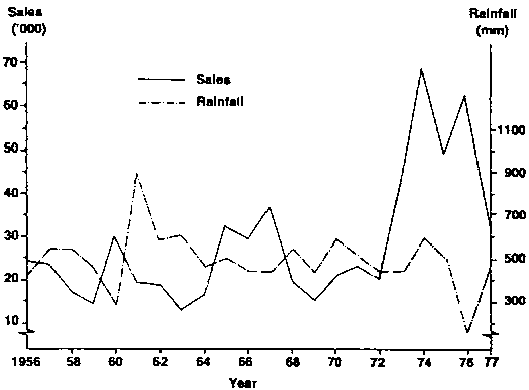
Source: Meadows and White (1979).
The determinants of the price paid by buyers. Information about the factors which determine buyers' preferences may indicate potential areas for improvement.
For instance, body weight, the condition of the animal and market location will affect the prices paid by buyers at formal and informal market outlets.
Attempts to improve the operational efficiency of livestock markets have been the focus of attention of many African livestock development projects and programmes. This is because there has been a tendency to assume that lack of infrastructural or institutional support has been the major constraint on livestock production in the continent, but often the provision of additional facilities failed to improve efficiency or induce increased production and marketed offtake (Sandford, 1983; ILCA, 1989).
If a study of the operational aspects of marketing is considered necessary, the following questions will need to be asked:
· What infrastructural and institutional support currently exists?Both formal and informal market structures and outlets should be considered. The network of informal market outlets may be well developed and preferred by producers (see Part C below).
· How and by whom are the operational functions performed?
· How essential are these functions? Are they efficiently
· Are additional functions necessary? Why are they necessary?
Secondary data sources and simple interview techniques will often provide adequate answers to most of these questions. If avenues for improvement are to be properly identified, it would be useful to examine the relationship between:
· market throughput and the costs of marketingLow levels of throughput can, for instance, affect the operational efficiency of processing plants and this can be reflected in lower prices paid to the producer.
· the number of official sale outlets (e g. auction yards) and the number of livestock or quantity of livestock products sold
The questions to be asked here are: Does the provision of official sale outlets improve the marketed offtake, of livestock and livestock products? How does the location of market facilities affect offtake and throughput? Is distance from official sale points a factor affecting sales levels?
· number of intermediaries involved in marketing and the costs of marketing
For instance, does the number of intermediaries involved increase or reduce the costs of marketing? (Cohen, 1969; Staatz, 1980; ILCA, 1989).
Data collected in market studies can be categorised as:
· Producer dataSuch data will include information about herd/flock numbers and inventories, offtake and acquisition of animals.
· Market data
Such data will include information about prices, operational functions of marketing and formal and informal mechanisms for the disposal and acquisition of livestock and livestock products.
· Other data necessary for the study of relationships such as those discussed on pages 205-207. Such other information may, for instance, be wealth ranking which may be necessary to determine the effect of wealth on offtake rates etc.
Producer data can be grouped into three broad categories: inventory data, offtake data and acquisition data.
Inventory data. In order to estimate offtake, rates, data on herd/flock numbers and sale rates must be collected. These data can also be used to value herd/flock productivity (Module 5), determine stocking rates (Module 6.) and examine the equity of livestock ownership within the target group (Module 11). Inventory data can be collected at two levels:
· Target-area or regional levelWhen available in statistical reports, such data should be checked for consistency and reliability (Module 1). Changes in the methods used to collect data or in the manner in which livestock categories are defined can mean that the data series on livestock numbers are not comparable over time. Target-area or regional data on livestock numbers can also be collected by aerial survey (see pages 205-213).
· Household level
This type of data can be obtained in surveys or by census. Depending on the system and the objectives of the study, we will aim to obtain information, for each species, on the numbers of livestock owned (or held/borrowed/loaned) by age and sex category.
In most circumstances, data on livestock holdings per household will be sufficient. It is, however, useful to distinguish between stock loaned to or borrowed by different members of the household and stock owned by the household as a whole. This is because in some societies (e.g. in the mixed farming systems of Botswana, Swaziland and Zimbabwe and in the pastoral communities of East and West Africa), lending of stock is commonly used for the purposes of resource re-distribution among relatives or neighbours.
For instance, wealthy households with larger herds may lend livestock to poorer households in order to obtain herding labour or to split their herds. Poorer households, in turn, may obtain rights to use draught oxen or milk cows for subsistence.
Offtake data. When collecting data on livestock offtake, distinction should be made between data collected at the household and target-area (or regional) levels. The data should be related to a given time period and be species-specific.
At the household level, consideration should be given to:
· Purpose of disposalFor instance, how many animals were sold, slaughtered for home consumption, slaughtered for ceremonies, given away or disposed of for other reasons (i.e. bride price).
· Disposal outlets
For instance, how many animals were sold in formal outlets (i.e. government auction yards) and how many in informal outlets (i.e. butcheries and neighbouring farms).
· Age and sex category of disposal animals
For instance, what number within each age/sex category was sold, slaughtered for direct consumption or ceremonies, and given away as gifts?
· Price of animals sold
Producers may be unwilling to divulge this type of information if they fear that they may be taxed. Any information given should be cross-checked against the sale prices received at official outlets or obtained by other producers in official and unofficial outlets.
· Reasons for livestock sales
For instance, to obtain cash for the purchase of food, because the animals were sick, because they were in the right condition for sale etc.
· Time of disposal
For instance, how many animals were sold during particular periods of the year?
At the regional level, information about offtake tends to be confined to export statistics and information about sales at official outlets, slaughters (where veterinary records of slaughters are required) and stock movements out of the area (obtainable from quarantine records, if they are kept).
Such information should always be checked for reliability, completeness and consistency. Changing market circumstances may channel sales away from official outlets, which may indicate a decline in offtake when, in fact, it may have increased. In the 1970s in Kenya, for instance, sales to the Kenya Meat Commission were diverted to 'illegal' urban butcheries because the prices they paid for inferior grades of beef were higher than those offered by the Commission (Aldington, 1978). It is, however, normally very difficult to obtain reliable data on sales to unofficial outlets.
The relative importance of these different outlets can often be determined from producer questionnaires. If they are relatively insignificant, official sales statistics may provide a reasonable indication of the overall offtake rate.
Table 2 gives data from a marketing survey conducted in Swaziland in 1978/79. It shows that 68% of cattle sales for the whole country were channelled through informal outlets, even though formal outlets were available and accessible to most producers. In cases like this, formal sales statistics will not provide a reliable indication of sales or offtake rates for an area as a whole. The table also shows that, even within the same country, there may be marked differences between different areas in the use of formal and informal market outlets for cattle sales. The reasons for these differences should always be examined in studies of this nature.
Table 2. The use of formal and informal market outlets for the sale of cattle, Swaziland, 1978/79.
|
Outlet |
Sellers selling |
Cattle sold |
|||||
|
All regions |
HV+MV |
LV |
All regions |
HV + MV |
LV |
||
|
Informal |
|||||||
|
|
Diptanks |
||||||
|
|
Locally |
29 |
26 |
37 |
29 |
19 |
37 |
|
Formal |
27 |
11 |
57 |
32 |
19 |
45 |
|
|
|
Auction yards |
17 |
4 |
40 |
15 |
2 |
26 |
|
|
Gov. abattoir |
9 |
6 |
17 |
12 |
5 |
19 |
|
|
Fattening ranches |
1 |
2 |
0 |
5 |
12 |
0 |
Notes: The percentage of sellers selling at different outlets can be greater than 100% because most sellers sold at more than one outlet. The symbols HV, MV and LV refer to the three ecological zones of Swaziland highveld, middleveld and lowveld.Source: Swaziland Government (1980).
Acquisition data. Questions asked about purchases and acquisitions will be similar to those asked about offtake. The data collected should be specific to a given time period and livestock species and should relate to:
· Method of acquisitionHow were the animals obtained? How many animals were acquired by using cash obtained from the sale of other stock, crops, remittances or handicrafts and home-made beer? How many animals were acquired by inheritance or as gifts from other producers?
· Place of acquisition
For instance, how many animals were bought from neighbours or other farmers? many were bought at official market points?
· Age and sex of acquired stock
· Prices paid for purchased animals
Prices quoted should be compared with those given by other producers or with price data from official market sources.
· Reasons for acquisitions
For instance, how many animals were acquired for specific purposes such as draught, breeding etc? This type of data can generally be inferred from data on the age and sex of the livestock acquired.
· Time of acquisition
How many animals were acquired at different times of the year?
Market data include data on prices, market throughput and physical and facilitating functions of marketing.
Price data Official price statistics for the different livestock species marketed are rarely available (Solomon Bekure and Negusie Tilahun, 1983). If they are, they tend to be either too general or inaccurate to be useful, so that market surveys specific to the area and class of livestock will often be needed. Again, a distinction must be made in such studies between informal and formal outlets since the prices paid (and the factors which determine price) are often quite different at these two types of market outlet.
Data collected on price will fall into one of the following two categories:
· cross-sectional data for prices paid for particular grades and classes of stock at one (or several) market(s) at one point in time, and· time-series data for prices paid for particular grades and classes of stock at the same or different outlets over time. Such data have been used to examine the effect of price on offtake over time (Meadows and White, 1979; Doran et al, 1979).
Where inflation exists, real, not current, prices should be used in time series analyses. Current prices should be deflated by an appropriate index of producer costs (e.g. by a relevant food price index if cattle sales are influenced by the need to purchase food), as is the case in many pastoral and agropastoral societies. (See Box overleaf).
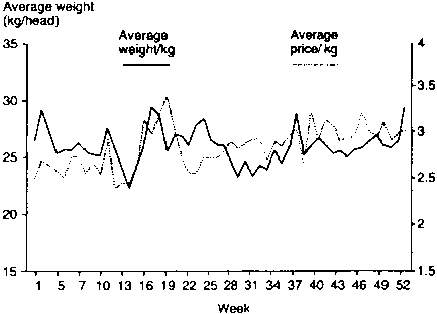
In collecting price data it is highly desirable to collect data also on the weight of the animals, so that prices can be quoted on a per-kg (liveweight) basis and not per head. Price per head and price per kg often do not move parallel to each other, and misleading conclusions can be drawn as a result of believing that they do.
Market throughput data Apart from collecting price data, data on the numbers and species of livestock sold or bought, and on the numbers of buyers/sellers involved in different formal and informal outlets, will often also be required. This type of data is called 'market throughput data'. They can be collected at one point in time (cross-sectional studies) or over time (time-series studies).
Physical and facilitating functions. In order to understand the operational aspects of marketing, both formal and informal mechanisms for the sale and purchase of livestock products need to be considered.
|
Example: Table 3 gives data on the current official beef producer price per tonne (in dollar equivalents) and the consumer price index (CPI) in an African country during the period 1980-86. Using the consumer price index as the relevant deflator for the producer price, calculate the real price for beef for each year of the period. | ||||||||
|
| ||||||||
|
The real price is calculated by dividing the current price by the CPI multiplied by 1/100. In 1982, for instance, the real price was $185 (230/1.24 = 185) The real beef prices for the other years are shown in Table 3. | ||||||||
|
| ||||||||
|
Table 3. Current beef price per tonne, consumer price index (CPI) and real beef price per tonne. | ||||||||
|
| ||||||||
|
|
1980 |
1981 |
1982 |
1983 |
1984 |
1985 |
1986 | |
|
Current | ||||||||
|
beef price/t ($) |
230 |
230 |
230 |
260 |
270 |
285 |
290 | |
|
CPI |
100 |
115 |
124 |
142 |
148 |
158 |
165 | |
|
Real | ||||||||
|
beef price/t ($) |
230 |
200 |
185 |
183 |
182 |
180 |
175 | |
|
| ||||||||
|
|
Note: The current prices rose from 1983 onwards while real prices per tonne declined from 1981. | |||||||
At the formal level, the following general types of information will be useful:
· Physical functionsThis involves market outlets, their accessibility and frequency of operation (e.g. number of sale days per month), storage and processing facilities, modes of transport (which will indicate the relative importance of livestock for trucking, trekking and railing), and the role of government in the operations of the market.
· Facilitating functions
This involves stock grades and the manner in which they are determined, credit facilities, market information services, and the manner in which information is disseminated.
At the informal level, similar information will need to be collected, but is generally more cliff cut to come by because of the unstructured manner in which market operations are often carried out. (For instance, it may be difficult to identify precisely a place where buyers and sellers meet to negotiate a price).
In the study of operational functions, attention will normally focus on the estimation of marketing margins (i.e. on market performance and efficiency). This may involve the calculation of the overall margin between the 'farm-gate' (i.e. point of first sale) and the retail level, the calculation of submargins (e.g. between primary and secondary market outlets) or the estimation of the individual costs of the different physical and facilitating functions.
A study of marketing constraints will usually involve the need to examine the types of relationships discussed in Part B. Complementary data on rainfall patterns, cropping activities, food prices, remittances, wealth rank, household size and structure will have to be collected for this purpose. The methods used to collect such data are discussed elsewhere in Section 1.
The methods used to collect producer data will differ according to whether we wish to collect information on herd/flock numbers and offtake and acquisitions.
Inventory data
Data on herd/flock numbers can be collected at the area (regional) level or at the household level. This type of data can be obtained from:
Available secondary data sources, including government statistical reports, veterinary records (e.g. diptank or quarantine statistics).
If available, such reports tend to aggregate livestock on the basis of species without differentiating according to age and sex. Estimates for cattle are likely to be more reliable than those given for other types of livestock because of logistical and other problems commonly confronted when counts are attempted for smallstock, donkeys and camels.
The figures given are commonly derived by aggregating statistics obtained from veterinary or extension officers' monthly or quarterly reports. Such statistics are often based on guesswork rather than on detailed enumeration by survey or census (Module 8). Module 1 (Section 1) discusses the principles applicable to the use of secondary data of this nature.
Aerial surveys. Low-level aerial surveys are a useful method of collecting data on numbers of cattle, small ruminants and other species (donkeys, camels) in an area. Wide areas can be covered in a relatively short period of time and periodic counts can be made to determine changes which occur between seasons or years.
Stock cannot be differentiated on the basis of sex, although, sometimes, they can be differentiated by age, using as the yardstick the relative length of back measured on aerial photographs. The herds observed from the air do not necessarily coincide with ownership or management units.
Data obtained from aerial surveys may be complemented by household surveys to determine flock/herd size and structure, if data of this nature are required. Aerial surveys are particularly applicable to areas where livestock are dispersed over wide areas (e.g. in pastoral systems) and logistic problems make random-sample household surveys impractical.
Low-level aerial surveys can, in theory, be carried out by anyone with access to suitable aircraft and with a copy of a suitable manual on the subject (e.g. Norton-Griffiths, 1978). In practice, learning how to do them well is time-consuming and costly, and it will usually make sense to contract one of the experienced international organizations (e.g. ILCA) or consulting firms to do it.
The aerial survey method most commonly used in Africa is the Systematic Reconnaissance Flight (SRF) method.5 The area selected for SRF survey is divided into systematic flight lines, usually based on a UTM grid pattern.6 Each particular flight line is divided into fixed distance intervals or 'grid cells' to ensure that every part of the area is covered systematically. The division of the area in this way makes it easier to transfer accurately information onto maps which can be easily interpreted (Milligan and de Leeuw, 1983; Clarke, 1986).
5 The systematic reconnaissance flight method has been used by ILCA in East and West Africa to count livestock and monitor rangeland resources (de Leeuw and Milligan, 1984).6 Sometimes a flight pattern which exactly corresponds to existing maps for the area will be more useful. This may, for instance be the case when ground truthing is planned (Module 6) for the study area. area. The abbreviation 'UTM' stands for the Universal Transverse Mercurator which features on many national maps.
The area actually sampled during the flight is restricted to a band of fixed width on either side of the aircraft (Figure 2). The width of this band or 'sample strip' is directly proportional to the altitude (Figure 3) and the choice of height depends on the objectives of the study and coverage desired. Overall sample cover is usually between 5 and 20% and the altitude is between 300 and 800 feet above ground level (91- 244 m). At higher altitudes than these, the width of the sample strip increases but the ability to count livestock accurately diminishes. For cattle counts, heights of 800 feet (244 m) above-ground level are sometimes used.
Figure 2. Flight pattern, grid system and sampling.
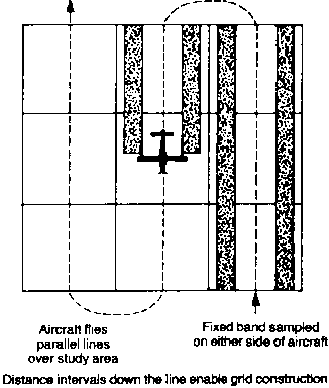
Figure 3. Schematic representation of aircraft during observation flight.
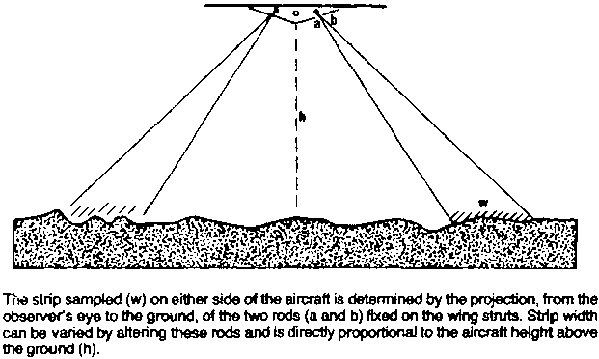
Source: Milligan and de Leeuw (1983).
Parallel adjustable rods are attached to each wing strut of the aircraft. An observer looks between these to ground level and this determines the width of the sample strip. Alternative sighting devices giving the same effect are available. Observers are located in the rear seats of the aircraft and are responsible for counting and photographing livestock and other easily quantifiable data such as human habitations or water supplies. The front-seat observer acts as a navigator and records relevant ecologic of information (e.g. vegetation, soil and farming activities).
Aerial surveys can be conducted once for rapid reconnaissance purposes or they may be repeated several times to determine seasonal changes (e.g. in stocking densities in a defined area). The data collected can be processed manually or by computer. Computer programmes are available to file and plot aerial survey data and estimates of animal populations (Clarke, 1986).
Household surveys. Willingness to declare information about livestock numbers varies within and between systems. In some societies, the counting of livestock is a cultural taboo (Grandin, 1983) while in others, the answers given are suspect because owners/holders fear the imposition of a per head livestock tax. The information given tends to understate the true position, particularly when cattle are concerned.
Additional complications occur in pastoral systems where herds or flocks are dispersed over wide areas or split on the basis of productive function. Under these circumstances it can be extremely difficult to estimate accurately the number of animals owned or held, largely because of logistical problems.
When collecting data on livestock numbers, attempts are often made to distinguish ownership and holdings of livestock at the household level. However, it can be extremely difficult to identify the actual owners of livestock within a household, particularly in societies with complex patterns of inheritance and control (e.g. the Borana pastoralists of northern Kenya) (Dahl, 1979).). The team should, therefore, be absolutely certain of the need to obtain specific ownership data before attempts are made to collect them.
Household livestock numbers data can be obtained by once-off questionnaires,7 using the following procedure:
· Establish trust with the intervieweeAssure the interviewed person that the information you wish to collect is confidential.. Do not rush the interview. Custom often requires that considerable time be spent on introductions during which it is important for the interviewer to explain the reason for the questionnaire and gain the confidence of the producer.
· Interview, where possible, the person responsible for the management of the stock concerned
For cattle, in most parts of Africa, this person will normally be a man and the head of the household. For smallstock, it will often be a woman (Mares, 1954; Perry and McCauley, 1984).
· Avoid sensitive questions
Rather than using a direct approach by asking questions such as, "How many cattle does your household hold?", adopt a more circumspect approach and ask such questions as, "Does your household hold cattle now? - How many were sold, slaughtered or given away since this time last year? - How many were purchased or received as gifts since this time last year? - How many died or disappeared since this time last year? - How many of these were cows, oxen, calves? - How many of these died as a result of disease, how many were stolen? - How many cows, oxen and calves do you hold now? - May I visit your kraal in the morning to see these animals?"
Perry and McCauley (1984) suggest a similar approach, in which sensitive questions about livestock numbers are left to the end of the questionnaire, after confidence and interest in the aims of the survey have been established.
· Avoid complex questions about the ownership of specific animals
· Where possible, conduct interviews when the animals are physically present
For instance, early in the morning before they are moved away from the kraal for grazing.
· Use the progeny history method, if visits to the site where livestock are penned or kraaled are possible
For detailed information on the progeny history method of data collection see Module 5, Part C. With this method, the owner or holder is asked to bring each breeding female to the interviewer. He is then asked to identify each of the progeny present. Animals purchased or received as gifts are also identified so that the total herd/flock size can be determined. Involving the producer in this way can help to overcome any reservations which may have existed beforehand.
· Cross-check the information by
· asking neighbours (McCauley et al, 1983)The reliability of this information will depend on the willingness of the informant to divulge confidences about neighbours. The wealth ranking method described in the Appendix to Module 1 (Section 1) relies on this kind of informant knowledge.
· making a number of casual visits to the household at the appropriate time of the day in order to check whether the original numbers given were correct, and
· incorporating cross-checks in the questionnaire
For instance, if the interviewee says he owns no cattle but, in another part of the questionnaire, he states that his own oxen are used for ploughing, there is good reason to believe that the information being given is unreliable!
7 The principles involved in the selection of samples and of the design of questionnaires are discussed in detail in Module 2 (Part c) of Section 1.
Offtake and acquisitions
Problems involved in the interpretation and use of published secondary data on offtake and acquisitions at the regional or area level have been discussed on pages 208-210. Household surveys will normally be required if the data are to be at all useful. The discussion which follows therefore concentrates on the principles involved in the collection of offtake/acquisition data at the household level.
The collection of this type of data is based on the use of recall methods (Module 2, Section 1) which can be collected at one point in time (single-interview surveys) or over time (continuous or intermittent surveys). It can also be gathered separately or incorporated into a questionnaire which deals with other aspects of the production system (e.g. household size and structure data, remittance data, crop data). As with numbers data, it is advisable to interview the person(s) responsible for the day-to-day management of the species being considered.
Single-interview household surveys. When single-interview surveys are used to collect offtake and acquisition data, it is important to establish the reference period at the outset. Normally, this will be a one-year period, and questions about sales, slaughters and purchases should begin with such phrases as:
|
Since this time last year or since the festival of..... (referring to a local reference system if possible), how many oxen have you: - sold? |
The ability of the interviewee to recall kind of information will depend on his/her involvement with the stock concerned, the frequency with which disposals or acquisitions occur and the number of stock owned or held. Where the household owns/holds relatively few livestock and disposals or acquisitions occur infrequently, recall is likely to be fairly reliable, particularly for cattle. In pastoral systems, where knowledge about each animal in the cattle herd is intimate, recall is likely to be very accurate, even for periods in excess of one year.
For smallstock, where sales and slaughters tend to occur frequently, the data obtained by single interview will tend to be less reliable. The reliability of data on prices received or paid will depend, to a large extent, on the number of animals sold or purchased at one time and the frequency of sale or purchase. Where large numbers are sold at one time, recall over long periods about specific prices (e.g. for animals within a particular age or sex group) will tend to be less reliable. Similarly, if sales or purchases occur often throughout the year, details about price at particular points in time will tend to be confused.
Intermittent and continuous surveys. To overcome these problems and to improve the accuracy of the data obtained, intermittent or continuous surveys can be used. Intermittent surveys would involve several visits at intervals of one or two months apart. Continuous (or repeat) surveys would be more frequent (e.g. once per week or fortnight over a 12-month period).8 For these types of survey, over-reporting at the first interview can be expected. Grandin and Solomon Bekure (1982) therefore suggest that data collected during the initial stages (e.g. during the first month) should be excluded from the analysis.
8 The readers should refer to Part C of Module 2 (Section 1) for a discussion of the principles of designing and planning repeat
General principles
Irrespective of the type of marketing study contemplated, a procedure should be followed which takes into account all the important aspects of the study. The discussion below outlines a procedure which is generally applicable to studies concerned with buyer/seller interactions, the collection of market throughput data, and the efficiency of market operations.
The general procedure for conducting marketing studies of the type mentioned above is:
· overview market linkages and characteristics
· decide on the type of study to be undertaken
· select markets to be studied
· decide on the frequency of data collection, and
· decide on the method of data collection to be used.
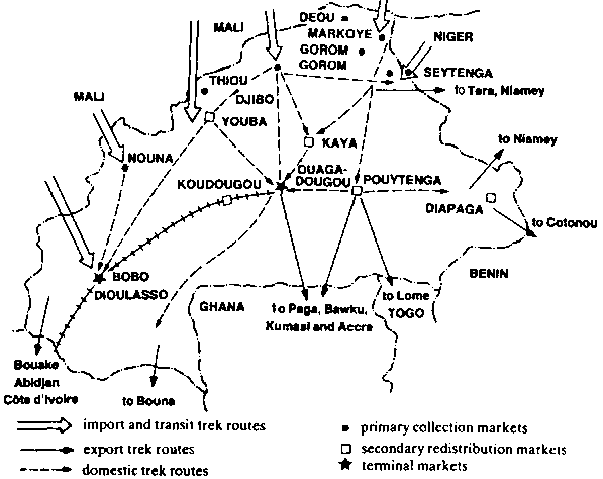
Market linkages and characteristics. The first step in the analysis of market characteristics is to identify the outlets used, establish the manner in which they are linked to each other and to identify the operations performed. Livestock market linkages (formal and informal) within the region can initially be identified by drawing up a simple map which roughly establishes the movement of stock between areas and seasons. Market outlets can be classified as follows:
· Primary markets in which the main sellers are producers and the main buyers are other producers, local butchers or traders. In these markets, livestock is bought or sold for the purposes of stock replacement, slaughter or collection for resale at larger regional markets.· Secondary or redistribution markets in which the main sellers are traders and the main buyers are butchers or traders. Livestock is bought or sold at these points for slaughter or resale at terminal or national markets.
· Terminal markets in which the main sellers are traders and the main buyers are traders or local slaughter houses. In these markets, animals are bought for the purposes of slaughter or export.
Figure 4 gives an example of the type of map described above. It shows the movement of stock to different destinations in Burkina Faso and identifies the important primary collection points, secondary redistribution centres and terminal markets. Such information can often be obtained by questioning producers, extension officers or marketing agencies/traders known to operate in the area or region. The types of informal surveys suitable for this purpose are described in Part C of Module 1 (Section 1).
Figure 4. Cattle movements and major cattle markets in Burkina Faso.
Source: Ariza-Nino et al (1980).
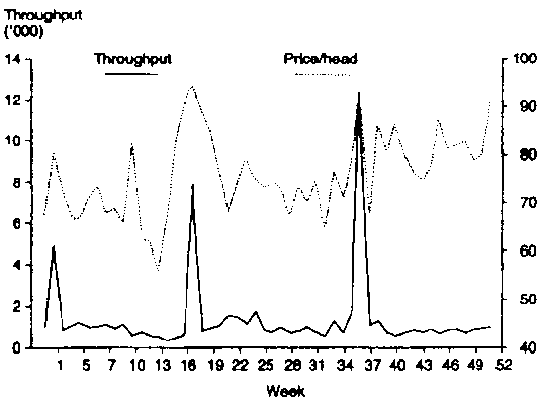
When stock movements and market outlets have been identified, it is also useful to plot on a graph official price and throughput statistics (if reliable). A simple exercise of this nature may highlight seasonal and trend influences in the marketing of livestock. Figures 5 and 6 give examples of such graphs.
Figure 5. Weekly throughput and price/head in a terminal sheep market of Addis Ababa, Ethiopia.
Additional information on the physical and facilitating functions performed should also be obtained using secondary data or informal interviews (Module 1, Section 1).
Type of study. The questions which should be answered at this point are: Is the study to be a cross-sectional or time series study? What types of data need to be collected - price or throughput data, information about the physical and facilitating functions performed? Can this type of study be carried out with the manpower and financial resources available?
Selection of markets. The selection of markets to be included in the study is essentially a sampling problem. It involves the need to establish, at the outset, the coverage desired and the resources available for study. If, for instance, there are several primary markets feeding one redistribution point, it is not necessary to collect data from all primary sources. A few can be selected on the basis of location, distance from secondary points and the volume of supply going through them (Solomon Bekure and Negussie Tilahun, 1983).9
9 The discussion here concentrates on clearly identifiable market outlets. It should be remembered, however, that informal sales between producers away from these centres can also he important. Data on informal sales of this nature can only he obtained by household surveys.
Figure 6. Weekly average weight and prices per kg in a terminal sheep market of Addis Ababa, Ethiopia.
Frequency of data collection. This will depend on the type of study envisaged, i.e. whether cross-sectional or time series studies are being planned.
Cross-sectional surveys. For such studies, data will only be collected once so that attention will be focused on the selection of the market(s) to be studied. There is always a danger that the time selected for survey will be atypical (e.g. if it corresponds to religious festivals which may affect demand and prices). If marked seasonal differences occur, these should be taken into consideration when results are being interpreted. In general, if seasonal variations are significant, time-series surveys should be used.
Time-series surveys. In such surveys, secondary data can be used to study the types of relationships outlined in Part B above. When not available, the frequency of data collection will be determined by the type of market being studied and the frequency of market days. In primary markets, livestock tend to be traded once or twice per week while in secondary and terminal markets, more frequently (e.g. several times per week). With time-series studies, the collection of data on all days will probably be impractical.
The representativeness of different market days within a week or month can be established by making initial enquiries to determine whether differences occur on particular days during the week. This can be done by checking available reports and interviewing producers, buyers and sellers.
If there are no obvious differences in market days, the number of days required for data gathering can be determined by using random sampling techniques. A convenient day each week or month can then be chosen for data collection. If there are differences, two possibilities exist:
· group market days into broad categories on the basis of differences in throughput and the numbers of buyers/sellers present, and decide on the frequency of data collection for each category, or· collect data only on the most important market day. Use an adjustment factor which reflects the difference between this day and the less important days and guesstimate data for the latter on the basis of this factor. Initial informant surveys could be used to determine the size of this adjustment factor (Solomon Bekure and Negussie Tilahun, 1983).
|
Example: Initial surveys for a given outlet show that cattle are marketed on Wednesdays and Fridays. On average, throughputs on Fridays are double those obtained on Wednesdays, so that studies are confined to the collection of data on Fridays only. Guesstimates for throughput on Wednesdays can, however, be obtained by adjusting the sampled Friday data by a factor of 0.5. |
Time-series data should be collected often enough and over a sufficiently long time period to capture seasonal variations in sales, purchases, prices, and in the number of intermediaries involved. Quantifying these variations over time will provide insights about the factors influencing the buyers' or sellers' behaviour, the market throughput and the market efficiency. Time-series and cross-sectional data can be collected by complete enumeration or by sample survey.
Exchange data
Exchange data include data on sales, purchases, prices, buyers, sellers and market throughput. Such data can be collected by complete enumeration, sample surveys or by observation or measurement of animals.
Complete enumeration. The types of data which can normally be collected by enumerators stationed at market points without much difficulty are:
· total daily sales and purchases by livestock speciesSuch data can be obtained by interviewing all buyers and sellers involved or by making actual counts of individual animal lots marketed.10 It may be necessary to distinguish animals 'on offer' from those actually sold; the numbers of animals offered for sale on a particular day may greatly exceed the number actually sold.
· number of sellers, active buyers and intermediaries
In most situations, it is fairly easy to identify sellers even when animals are grouped into large lots. However, it is not always easy to identify the active buyers or intermediaries present. They may be other farmers or pastoralists, regular or itinerant traders, butchers or government agents.
Regular attendance at a given market outlet by enumerators will improve the identification of these groups of people involved in livestock marketing. Interviewing those sellers or buyers who are well known will also help. Simple forms can be designed to record this kind of market information (see example below).
10 A lot could be as small as one animal involving the interaction of one buyer and one seller. It may, however, include animals marketed by several sellers with the price paid being determined by the interaction of several buyers.
|
Example: |
|||||
|
Daily record sheet of animals bought and sold at market X. |
|||||
|
Species: |
Date: |
||||
|
Lot number |
Lot size |
Number of animals |
Number of sellers |
Number of buyers |
|
|
Sold |
Bought |
||||
|
1 |
|
|
|
|
|
|
2 |
|
|
|
|
|
|
: |
|
|
|
|
|
|
: |
|
|
|
|
|
|
n |
|
|
|
|
|
Sample surveys. More detailed information about sales, purchases, prices, buyers, sellers, intermediaries and grades will normally be obtained by using sample survey methods.11 Depending on the objectives of the study, it is common to obtain data by interviewing a sample of buyers or sellers or by observing or measuring animals.
11 The methods will be essentially the same for cross-sectional and time-series studies.
Buyer/seller interviews. These are interviews of a sample of buyers or sellers present on a given market day. Where possible, the sample should be chosen at random to avoid bias and ensure that the information collected is representative.
For instance, interviewing only those selling large lots will tend to bias results towards the larger, wealthier herd owners/holders whose absolute sales levels tend to be higher.
The probability sampling method which is applicable in this context is systematic sampling (see 'Sampling methods and errors' in Module 2, Section 1). Using this method, one would select for the interview every kth buyer or seller arriving at the market. Where only a few buyers or sellers are involved, complete enumeration may be possible.
Questionnaires should be short since most buyers and sellers are inclined to move off soon after their activities are over. The questions asked should, therefore, be to the point, eliciting only the necessary information.
Careful planning of questionnaires beforehand is a prerequisite to the success of surveys of this nature. Preferably, enumerators should pre-test the questionnaire several times. This helps to ensure that the methods used to select sellers or buyers are properly understood. It also helps to highlight weaknesses in the questionnaire (e.g. sensitive questions).
The interviews with sellers will focus on prices received by class of stock, numbers sold, prices received by grade and class of stock, commissions and levies charged (e.g. trader commissions), reasons for sale, other outlets used, frequency of sale, distances travailed to market12 and intermediaries involved. Such surveys can be designed to complement or confirm information obtained during household surveys or they may be discrete in themselves, e.g. if the intention is to monitor producer prices over time (time-series studies) or to determine whether prices paid at one point in time differ between different markets (cross-sectional studies).
12 Producers will rarely have an accurate idea of distances in kilometres. When questions of this nature are asked, it is useful to ask the seller to nominate the place where he/she originated from. The distance can be estimated later if necessary.
When interviews with buyers are conducted, details given about prices paid for different classes of stock and commissions or levies charged should be cross-checked with data obtained in interviews with sellers. Questionnaires can also be designed to obtain additional information on the number and type of animals purchased, factors involved in the determination of price, proposed destinations for purchased livestock, mode(s) of transport used, buyer affiliations, other markets used, sources of finance and facilities available (Njiru, 1986; Solomon Bekure and Chabari, 1986). The data can be collected by single interviews or by continuous surveys. Single-interview surveys can give a rapid impression of the market system and of the need for more in-depth study.
Animal measurement/observation. This can be done on a sample of animals present on a given market day. The animals selected within each species may be differentiated on the basis of age, sex or grade (Chabari et al, 1987).
Data about the determinants of price13 can be obtained by interviewing the buyers concerned or by direct measurement. For the latter, a sample of animals would be selected on each market day (e.g. by systematic sampling of pen lots) and records of specific features assumed to affect price (e.g. species, breed, age, sex, grade, weight and condition) would be made (Chabari et al, 1987). An example of the type of record sheet that could be used for this purpose is given on the next page.
13 Cross-sectional or time series studies can be used to identify the determinants of price.
Weighing livestock is laborious and time-consuming and this tends to restrict the size of the sample used. Condition scoring can be used in conjunction with weighing or as a substitute indicator of weight. Age is best determined by dentition but this is also time-consuming. (Methods used to weigh, condition score and age animals by dentition are described in Module 5). Regression analysis can then be used to determine the effect of these and other relevant variables (e.g. breed and market location) on the price paid to producers (Module 11).
|
Example: | |||||
|
| |||||
|
Record sheet for animal bought at market (X) | |||||
|
| |||||
|
Species: |
Breed: |
Date: | |||
|
Animal number |
Sex |
Age |
Grade |
Weight/condition score |
Price paid |
|
1 |
|
|
|
|
|
|
2 |
|
|
|
|
|
|
3 |
|
|
|
|
|
|
: |
|
|
|
|
|
|
: |
|
|
|
|
|
|
n |
|
|
|
|
|
Physical/facilitating functions
Measuring these functions involves the estimation of marketing margins for which there are essentially three approaches:
· estimation of overall marketing margins· estimation of submargins, and
· complete disaggregation of physical and facilitating functions.
Overall marketing margin. The overall margin can be estimated by deducting the farm-gate price of the commodity from the price paid at retail. Comparisons between absolute margins in similar marketing systems can then be made to provide an indication of the relative magnitude of the overall marketing costs involved. (For examples of such comparisons see Sandford, 1983, p. 204).
However, where marketing systems are different (e.g. in terms of the number and quality of the services they provide) such comparisons tend to be difficult. Furthermore, even when the systems are similar there may be wide differences in the costs and efficiency of individual services offered and information about these may be needed if avenues for improvement are to be identified.
Submargins. An example of submargins is when the absolute difference between primary and secondary or between secondary and terminal market prices is derived. While providing a greater degree of disaggregation than the first approach, comparisons between similar systems can still mask differences which occur in terms of the quality and number of services offered.
Complete disaggregation of the physical and facilitating functions. This involves a more detailed breakdown of costs by operation. Individual services can then be compared in terms of cost and quality.
With the first approach, detailed understanding of the structure of the market is less important than with the second and third approaches. One only needs information about equivalent prices paid at the primary and retail levels to derive the absolute margin. A similar procedure can be adopted to calculate submargins, as is shown in the example below.
|
Example: The average price per kg liveweight (LW) of a 350-kg animal was $0.60 in a remote rural primary market. In the secondary market in the region's main town, the same animal was resold at $0.78/kg, and later in the wholesale terminal (live) market in the distant national capital for $1.14 per kg liveweight. | |
|
|
|
|
For simplicity's sake we assume this animal neither dies nor changes weight between these transactions. Later, after slaughter and butchering, the bone-outmeat of this animal is retailed at $3.94 per kg of meat, equivalent to $1.38 per kg of original liveweight. To this must be added the value of the '95th quarter' (hide, bones, offal) sold by the butcher at a further $0.25 per kg of original liveweight. The evolution of the price per kg of original liveweight is as follows: | |
|
|
|
|
|
Price ($/kg LW) |
|
Producer price |
0.60 |
|
Primary to secondary market margin |
0.18 |
|
Secondary to terminal markets margin |
0.36 |
|
Terminal market to retail margin (incl. fifth quarter) |
0.49 |
|
Total value at retail (incl. 95th quarter) |
1.63 |
Data of this type can be obtained from secondary data sources or by conducting sample surveys to make estimates of prices paid/received at the different outlets. When livestock are sold informally and not through established government outlets, it may be more difficult to obtain reliable information at the primary level. Sales in such cases tend to be irregular and the precise place where negotiations take place may be difficult to identify. Household surveys, in such cases, will probably provide the best information about prices received at the outlets used.
When complete disaggregation of the physical and facilitating functions is being attempted, the following general procedure should be adopted:
· overview the market structure and linkages· identify the main physical and facilitating operations performed between the different outlets specified (by interview, observation or the use of secondary data)
· disaggregate these operations into their sub-components
For instance, there may be several assembling points between the primary and secondary markets and, therefore, several different transport operations. Different intermediaries or agents may be involved in each case.
· identify, where possible, the type of operator responsible for each particular subcomponent (e.g. agents, traders, government officials, slaughter house and managers)
· estimate the cost of operations performed within each subcomponent identified
Hidden costs such as the opportunity costs of the traders' time, bribery charges (e.g. at border points), mortalities occurring in transit should also be accounted for. To obtain information on these costs, it may be necessary to use a combination of data collection methods - e.g. direct observation and measurement, interviews, examination of accounts (e.g. at government slaughter houses).
Costing specific physical and facilitating functions. When meat marketing margins are estimated by using complete disaggregation of the physical/facilitating functions, specific cost estimates will normally need to be made for the operations discussed below. Both the direct and indirect (hidden) costs incurred should be considered for each operation. All costs need to be expressed in equivalent terms (e.g. animal liveweight or cold-dressed weight or livestock units) if the margin is to be properly calculated.
Physical functions
The main physical functions of livestock marketing are transport, assembling and storage.
Transport. The direct costs of trucking, trekking or rail transport need to be estimated for each stage in the marketing process. It is relatively easy to calculate (or obtain information about) the costs of rail and road transport.
Rail charges will normally be based on official rates, prescribed in government gazettes. For trucking, the charges levied can often be obtained by cross-checking information given by the transport operators and producers or traders involved in the marketing process. This information should then be compared with calculated estimates of the cost per kilometre, taking into account fuel, repairs, maintenance, depreciation charges plus levies and taxes (e.g. road tax).
Trekking costs will normally involve a fee paid to hired trekkers. If farmers or pastoralists trek their own cattle, the opportunity cost of the trekker's time should be used (if this can be estimated).
Hidden or indirect costs can be important in the estimation of transport costs. In particular, the following should be fully accounted for:
· livestock deaths and forced sales which occur while animals are being transported (road and rail transport and trekking)· weight loss during transport resulting in reduced grade at the final destination (road and rail transport and trekking)
· encroachment on cropping or grazing land resulting in conflict and the need for compensation (trekking)
· bribes paid at transport check-points (road transport and trekking)
· costs associated with government maintenance of roads and trek routes, water points and holding grounds, and
· interest on capital tied up from the point of sale to final destination.
Note: Do not 'double count' any of these costs. For instance, if a trader has made an allowance for loss through death or downgrading in the charge quoted for transport there is no need to take into account any mortality that may have occurred. Similarly, if levies charged by local authorities have been included in a quoted transport cost, they do not need to be accounted for.
Assembling. Assembling in an African livestock marketing context is a physical as well as an exchange function. The assembling of livestock may occur at various stages during the marketing process where exchange takes place (e.g. at primary, secondary and terminal markets), but other physical services (e.g. holding stock before transfer) also occur. Thus, apart from data on buyers, sellers and throughput, data on any of the following costs may be needed:
· Feeding. Animals held at transit points need to be fed and handled, and charges for these services will normally be levied. Grazing fees may be charged for the use of land at each assembly point. Alternatively, it may be necessary to impute a value for the land utilised (e.g. based on its opportunity cost).· Handling. Handling charges may include health care, watering as well as wage payments for those involved. The provision of holding yards at assembly points also a cost directly attributable to the marketing of livestock. Annual costs such as repairs, maintenance and depreciation should, therefore, be apportioned equally to the livestock passing through each assembly point.
· Levies and taxes which are charged by local or government authorities for the use of land at each assembly point.
· Hidden costs. Costs such as death and loss of weight and grade which may occur at assembly points should also be accounted for if these have not been previously considered in the estimation of transport costs (see note above).
Similarly, if animals are held at assembly points for prolonged periods, interest foregone on capital tied up during the waiting period should be included if this has not been accounted in previous estimates (see note above).
Storage. The storage of slaughtered animals at abattoirs and butcheries involves direct costs such as wages and salaries, insurance, repairs, maintenance and depreciation on equipment (in refrigeration plants, for instance). Hidden costs such as the interest foregone on capital tied up in animals stored should also be included.
All other factors being constant, higher throughput levels reduce the per unit costs of storage. Low throughput levels and unpredictable supplies have been associated with high per unit storage and handling costs for many regional abattoirs in Africa (ILCA, 1989).
Facilitating functions
The main facilitating functions of livestock marketing are grading and standardisation, finance, risk bearing and information.
Grading and standardisation. These operations may take place at several points in the marketing process (e.g. at the primary level between buyers and producers, at slaughter before distribution to consumers). The salaries and wages of those involved are the main direct costs of formal grading operations (e.g. at recognised government sale yards). If grading is done informally, the opportunity costs of the grader's time is a hidden cost which should be estimated.
Finance, risk bearing and information. Each of these functions involves direct costs (e.g. interest on borrowed funds, commission charges for risk bearing and information supplied by intermediaries or traders involved in the marketing process).
Such costs are difficult to estimate when informal barter-type arrangements are made between producers and sellers or buyers and other intermediaries. In these circumstances, careful questioning of those involved would be required to establish the kinds of informal arrangement made. It can, of course, be very difficult to actually identify the different intermediaries involved in the provision of such services. Hidden costs such as bribes for the provision of market information should also be accounted for when they can be identified.
Information about the physical and facilitating costs of marketing can best be obtained by using formally structured sample surveys. Such surveys can be designed to obtain specific information about the costs of one or more of the services provided or they may be incorporated into surveys which deal with other subjects as well (e.g. the exchange functions of marketing). They can be conducted at one point in time or over time.
When conducting surveys to obtain information about the physical and facilitating costs of marketing, it should be remembered that:
· costs should be expressed in real terms (i.e. net of inflationary effects) if comparisons between different periods are to be meaningful and· rising costs of one or more operations (e.g. transport, grading) may not imply reduced efficiency in marketing.
When rising real costs are observed in some operations one should determine whether the services embodied in those operations have changed at the same time (e.g. rising real costs associated with grading may result from the use of more sophisticated grades which have been considered necessary for the improvement of the marketing system).
After the costs involved in livestock marketing have been fully accounted for, possibilities for improving marketing operations can be examined. There may be several possibilities:14
· Some operations maybe superfluous (e.g. the intermediaries involved in the process), though this should never be assumed (Cohen, 1969; Staatz, 1980).· Some operations may be inefficiently performed (e.g. in trucking, if no return loads are secured or if excessive bruising occurs) (Staatz, 1980). Poor roads can also raise the maintenance costs of trucking.
· Grading may be more sophisticated than necessary, resulting in excessive processing costs (Aldington, 19 78).
· Sale points, processing and storage facilities may be inappropriately located, resulting in uneconomic operation (e.g. in remote areas where throughput is limited or where informal outlets are preferred).
· Highly mechanised processing plants may be inappropriate (as was shown in parts of West Africa).
14 A more detailed discussion on African livestock markets and distribution systems can be found in ILCA (1989).
Operational aspects of marketing can be studied at one point in time or overtime. They can be studied separately or incorporated into studies which examine throughput or prices.
Aldington T J. 1978. Livestock processing. In: Livestock development projects course. Course notes. LDPC-CN 40. ILCA (International Livestock Centre for Africa) and EDI (Economic Development Institute of the World Bank), Nairobi, Kenya. 13 pp. [ILCA library accession number 12919]
Ariza-Nino E J. Herman L, Makinen M and Steedman C. 1980. Livestock and meat marketing in West Africa. Vol. 1. Synthesis: Upper Volta. Centre for Research on Economic Development, University of Michigan, Ann Arbor, Michigan, USA 204 pp.
Beckman T and Davidson W. 1967. Marketing. Ronald Press, New York, USA
Chabari F N. Ackello-Ogutu A C and Odhiambo M O.1987. Factors determining market prices of small ruminants from a pastoral production system in Kenya East African Agricultural and Forestry Journal 52(4):286-292.
Clarke R (ed). 1986. The handbook of ecological monitoring. Clarendon Press, Oxford, UK 298 pp.
Cohen A. 1969. Custom and politics in urban Africa: A study of Hausa migrants in Yoruba towns. Routledge and Kegan Paul, London, UK.
Dahl G. 1979. Suffering grass: Subsistence and society of Waso Borana Department of Social Anthropology, University of Stockholm, Stockholm, Sweden. 287 pp.
Doran M H. Low A R C and Kemp R L. 1979. Cattle as a store of wealth in Swaziland: Implications for livestock development and overgrazing in eastern and southern Africa. American Journal of Agricultural Economics 61(1):41-47.
Grandin B E. 1983. Livestock transactions data collection. In: Pastoral systems research in sub-Saharan Africa. Proceedings of the IDRC/ILCA workshop held at ILCA Addis Ababa, Ethiopia, 21-24 March 1983. ILCA (International Livestock Centre for Africa), Addis Ababa, Ethiopia. pp. 277-287.
Grandin B E and Solomon Bekure. 1982. Livestock offtake and acquisition: A preliminary analysis of livestock transactions in Olkarkar and Mbirikani group ranches. In: Documents prepared for the Programme Committee. ILCA (International Livestock Centre for Africa), Nairobi, Kenya. 31 pp. [ILCA library accession number 31120]
ILCA (International Livestock Centre for Africa). 1989. Livestock policy analysis. ILCA manual. ILCA, Addis Ababa, Ethiopia. [draft]
Jarvis L S. 1984. Overgrazing and range degradation: The need for and the scope of government policy to control livestock numbers. In: Proceedings of the Conference on Livestock Policy issues in Africa held at ILCA, Addis Ababa, Ethiopia, 24-28 September 1984. ILCA (International Livestock Centre for Africa), Addis Ababa, Ethiopia. 39 pp. [ILCA library accession number 33742]
Kohls R L and Uhl J W. 1985. Marketing of agricultural products. Sixth edition, Macmillan, New York, USA. 624 pp.
de Leeuw P N and Milligan K 1984. A review of integrated surveys for resource inventory and monitoring of pastoral production systems in sub-Saharan Africa. ILCA Bulletin 20: 18-22. ILCA (International Livestock Centre for Africa), Addis Ababa, Ethiopia.
Low A C. 1980. The estimation and interpretation of pastoralists 'price responsiveness. ODI Network Paper 10c. ODI (Overseas Development Institute), Agricultural Administration Unit, London, UK 23 pp.
Low A R C, Kemp R L and Doran M H. 1980. Cattle wealth and cash needs in Swaziland: Price response and rural development implications. Journal of Agricultural Economics 31(2):225-236.
Mares R. 1954. Animal husbandry, animal industry and animal disease in the Somaliland Protectorate. II. Animal industry. British Veterinary Journal 110(11):470-481.
McCauley EH, Tayeb A and Majid AA. 1983. Owner survey of schistosomiasis mortality in Sudanese cattle. Tropical Animal Health and Production 15(4):227-233.
Meadows S J and White J M. 1979. Structure of the herd and determinants of offtake rates in Kajiado District in Kenya, 1962-1977. ODI Pastoral Network Paper 7d. Overseas Development Institute, Agricultural Administration Unit, London, UK. 28 pp.
Milligan K and de Leeuw P N. 1983. Low altitude aerial surveys in pastoral systems research. In: Pastoral systems research in sub-Saharan Africa. Proceedings of the IDRC/ILCA workshop held at ILCA, Addis Ababa, Ethiopia, 21-24 March 1983. ILCA (International Livestock Centre for Africa), Addis Ababa, Ethiopia. pp. 81-105.
Njiru G K 1986. Case study of livestock marketing among the Rendille of Marsabit. In: Hansen R M, Woie B M and Child R D (eds), Range development and research in Kenya. Proceedings of a conference held at the Agricultural Centre, Egerton College, Njoro, Kenya, 1-5 April 1986. Winrock International Institute for Agricultural Development, Morrilton, Arkansas, USA. pp. 331-349.
Norton-Griffith M. 1978. Country animals. Handbook. African Wildlife Leadership Foundation, Nairobi, Kenya. 139 pp.
Perry B and McCauley E. 1984. Owner interview surveys as a basis for estimating animal productivity and disease impact in developing countries. In: Proceedings of the Symposium of the Society for Veterinary Epidemiology and Preventive Medicine. University of Edinburgh, Edinburgh, UK. pp. 54-62.
Rodriguez G Jr. 1985. Economic implications of the beef pricing policy in Zimbabwe ILCA Bulletin 22:15-20. ILCA (International Livestock Centre for Africa), Addis Ababa, Ethiopia.
Sandford S. 1983. Management of pastoral development in the Third World ODI (Overseas Development Institute), London, UK and John Wiley & Sons, Chichester, UK. 316 pp.
Solomon Bekure and Chabari F. 1986. Livestock marketing in eastern Kajiado, Kenya. In: Hansen R M, Woie B M and Child R D (eds), Range development and research in Kenya. Proceedings of a conference held at the Agricultural Resources Centre, Egerton College, Njoro, Kenya, 1-5 April 1986. Winrock International Institute for Agricultural Development, Morrilton, Arkansas, USA. pp. 351-364.
Solomon Bekure and Negussie Tilahun. 1983. Livestock marketing studies. In: Pastoral systems research in sub-Saharan Africa. Proceedings of the IDRC/ILCA workshop held at ILCA, Addis Ababa, Ethiopia, 21-24 March 1983. ILCA (International Livestock Centre for Africa), Addis Ababa, Ethiopia. pp. 327-355.
Staatz J. 1980. The economics of cattle and meat marketing in Ivory Coast - summary. CRED Discussion Paper 86. CRED (Center for Research on Economic Development), University of Michigan, Ann Arbor, Michigan, USA. 84 pp.
Swaziland Government. 1980. Report of a cattle marketing survey 1978-79. Economic Planning end Analysis Section, Ministry of Agriculture and Cooperation, Mbabane, Swaziland. 91 pp.
Tryfos P. 1974. Canadian supply functions for livestock and meat. American Journal of Agricultural Economics 56(1):107-113.
Tryfos P. 1975. Canadian supply functions for livestock and meat: Reply. American Journal of Agricultural Economics 57(2):366-367.