"Empowering women in agriculture through targeted financial solutions, climate-smart technical assistance and gender-responsive training is key to achieving climate resilience and food security. AMF is committed to bridging the gender gap in agribusiness and fostering long-term economic sustainability for gender-smart enterprises."Sawa Nakagawa
Executive Director, AlphaMundi Foundation

[A1.1] Provide tailored financial products, such as grants or impact-linked loans, specifically for women-led businesses or businesses demonstrating strong gender-smart practices in agrifood systems.
Women entrepreneurs in agrifood systems face systemic challenges in accessing financing, technical assistance and agricultural training.
At least 50 percent of SMEs funded under AMF initiatives will be women-led or have at least 30 percent female leadership representation. Financing will be provided to at least five women-led climate-resilient agribusinesses.
In 2024, the AlphaMundi Foundation (AMF) continued integrating gender-responsive approaches into its agricultural financing and development initiatives, ensuring that gender-smart businesses in agrifood systems received the necessary financial and technical support to scale their operations and impact.
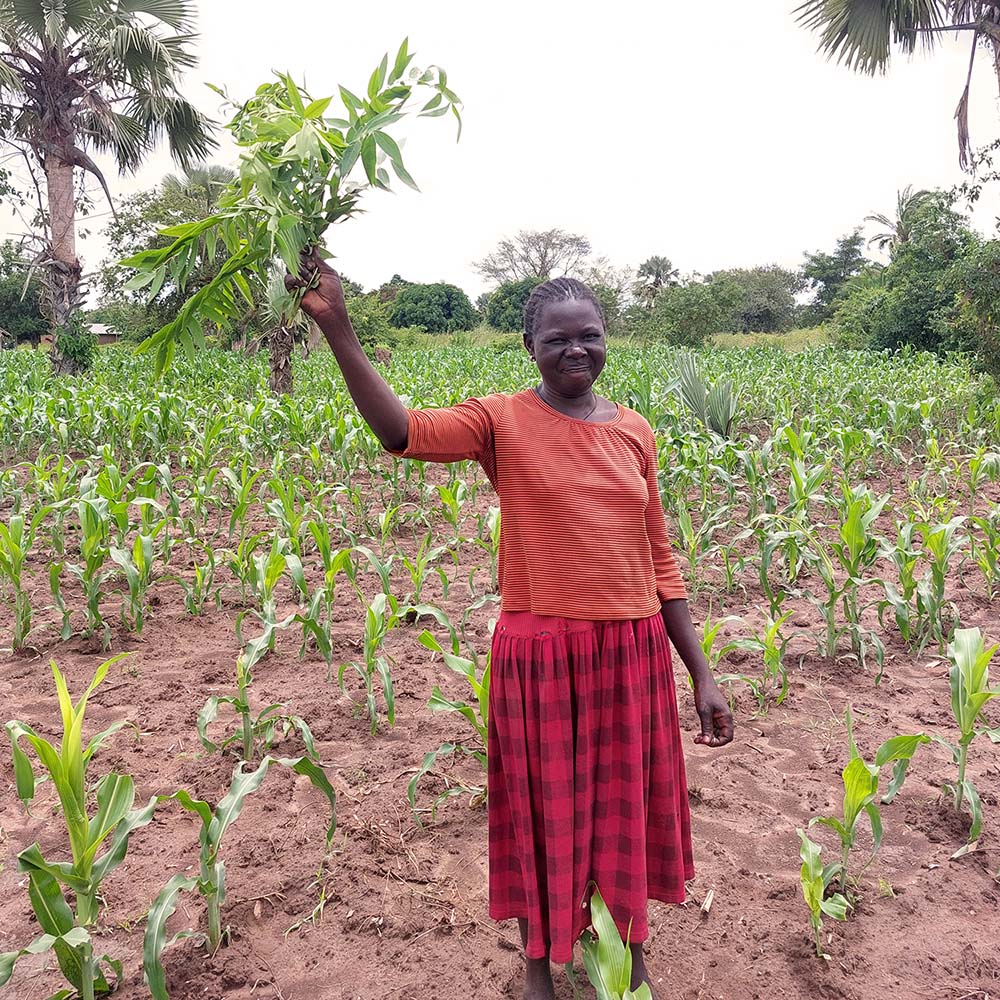
Specifically, with funding from the German Agency for International Cooperation, AMF implemented the "Promoting Organic Fertilizer Solutions in East and West Africa" project, which aimed to support sustainable agriculture and empower gender-forward small and medium enterprises (SMEs) and smallholder farmers through the promotion of organic fertilizer, capacity building, and efforts to address gender inequalities in the agricultural sector. AMF developed tailored financing solutions in the form of outcome-based grants for SMEs that prioritized gender-inclusive business models to enhance the production of organic fertilizer, while addressing gender disparities in agricultural productivity and income. Nearly 90 percent of the selected SMEs were 2X-compliant.
The project yielded significant outcomes, including the production of nearly 3 000 tonnes of biofertilizer, the establishment of 149 demonstration farms, and equipping farmers with the knowledge and skills to adopt climate-resilient farming techniques. Additionally, 9 147 farmers, 50 percent of whom are women, were trained in climate-smart agriculture, organic fertilizer use and financial literacy. To reach more women, AMF ensured that a significant number of extension officers were female to provide relatable and effective training.
To amplify its impact, AMF engaged in extensive knowledge-sharing activities, publishing two blog posts on organic fertilizer and gender-inclusive agriculture, 25 LinkedIn posts showcasing project insights and lessons learned, and one case study detailing the outcomes and innovations achieved. These efforts contributed to broader awareness to scale gender-responsive and climate-smart agricultural solutions across Eastern and Western Africa.
By aligning capacity-building strategies with climate resilience and gender equality, AMF ensured that women farmers and gender-smart SMEs gained access to finance and received targeted support for adopting sustainable agricultural practices.
Required citation:
FAO. 2025. Commit to Grow Equality: investing in the future of women in agrifood systems – Progress report 2025. Rome. https://doi.org/10.4060/cd4123en
The designations employed and the presentation of material in this information product do not imply the expression of any opinion whatsoever on the part of the Food and Agriculture Organization of the United Nations (FAO) concerning the legal or development status of any country, territory, city or area or of its authorities, or concerning the delimitation of its frontiers or boundaries. The mention of specific companies or products of manufacturers, whether or not these have been patented, does not imply that these have been endorsed or recommended by FAO in preference to others of a similar nature that are not mentioned.
The views expressed in this information product are those of the author(s) and do not necessarily reflect the views or policies of FAO.
© FAO, 2025
Some rights reserved. This work is made available under the Creative Commons Attribution-NonCommercial-ShareAlike 3.0 IGO licence (CC BY 4.0: https://creativecommons.org/licenses/by/4.0/legalcode.en).
Some rights reserved. This work is made available under the Creative Commons Attribution- 4.0 International licence (CC BY 4.0: https://creativecommons.org/licenses/by/4.0/legalcode.en).
Under the terms of this licence, this work may be copied, redistributed and adapted, provided that the work is appropriately cited. In any use of this work, there should be no suggestion that FAO endorses any specific organization, products or services. The use of the FAO logo is not permitted. If a translation or adaptation of this work is created, it must include the following disclaimer along with the required citation: “This translation [or adaptation] was not created by the Food and Agriculture Organization of the United Nations (FAO). FAO is not responsible for the content or accuracy of this translation [or adaptation]. The original [Language] edition shall be the authoritative edition.”
Any dispute arising under this licence that cannot be settled amicably shall be referred to arbitration in accordance with the Arbitration Rules of the United Nations Commission on International Trade Law (UNCITRAL). The parties shall be bound by any arbitration award rendered as a result of such arbitration as the final adjudication of such a dispute.
Third-party materials. This Creative Commons licence CC BY 4.0 does not apply to non-FAO copyright materials included in this publication. Users wishing to reuse material from this work that is attributed to a third party, such as tables, figures or images, are responsible for determining whether permission is needed for that reuse and for obtaining permission from the copyright holder. The risk of claims resulting from infringement of any third-party-owned component in the work rests solely with the user.
FAO photographs. FAO photographs that may appear in this work are not subject to the above-mentioned Creative Commons licence. Queries for the use of any FAO photographs should be submitted to: photo-library@fao.org.
Sales, rights and licensing. FAO information products are available on the FAO website (www.fao.org/publications) and print copies can be purchased through the distributors listed there. For general enquiries about FAO publications please contact: publications@fao.org. Queries regarding rights and licensing of publications should be submitted to: copyright@fao.org.
Cover photograph: © FAO/Peter Safari; © Patrick Zachmann/Magnum Photo for FAO; © FAO/ Jafaar Al Merei; © FAO/Gilles Sabrie; © FAO/Javid Gurbano