

© FAO/Adriano Gambarini/OPAN
This chapter outlines what the SPI aims to accomplish, detailing its roles, primary areas of focus and guiding principles. It explores the essential characteristics that define a functional SPI and provides an overview of three broad SPI models.
The primary aim of the agrifood SPI should ideally be stated in a clear, single sentence understandable to all. Details about how the SPI functions or intends to function to achieve that aim (e.g. through what kind of activities and with what kinds of outputs) can be provided after the aim is presented. A suitable example might be as follows: The overall aim of an agrifood system SPI (focused on food security, nutrition and livelihoods of those who are most marginalized) is to strengthen public policy decision-making processes for the just and equitable transformation of agrifood systems, leaving no one behind, through the provision of diverse, inclusively-sourced actionable knowledge on the different dimensions of agrifood systems.
For agrifood systems, cross-sectoral coordination is very important to ensure interconnectedness and coherence between different sectoral policies. SPIs can have different types of objectives depending on the activity they carry out. In general, most SPIs cover at a minimum the two following functions:
In addition to these core functions, SPIs could in some cases help produce and co-create new knowledge based on the identification of knowledge gaps and implementation needs. National SPIs are likely to need access to country-specific data and statistics to accurately prioritize their recommendations based on the severity of the issues faced, and in doing so, could generate a local demand for data (HLPE, 2022).
Additionally, three complemenatry functions related to the two core ones could be undertaken by an SPI:
In defining the objectives of the SPI, it is imperative to consider the following:
Different types of principles are relevant to SPIs. First, general principles that relate to the SPI, and second, principles that relate to agrifood systems specifically, as well as the transformation thereof. The principles outlined in this section should be used to embrace a shared understanding and be tailored and adapted to the national context.
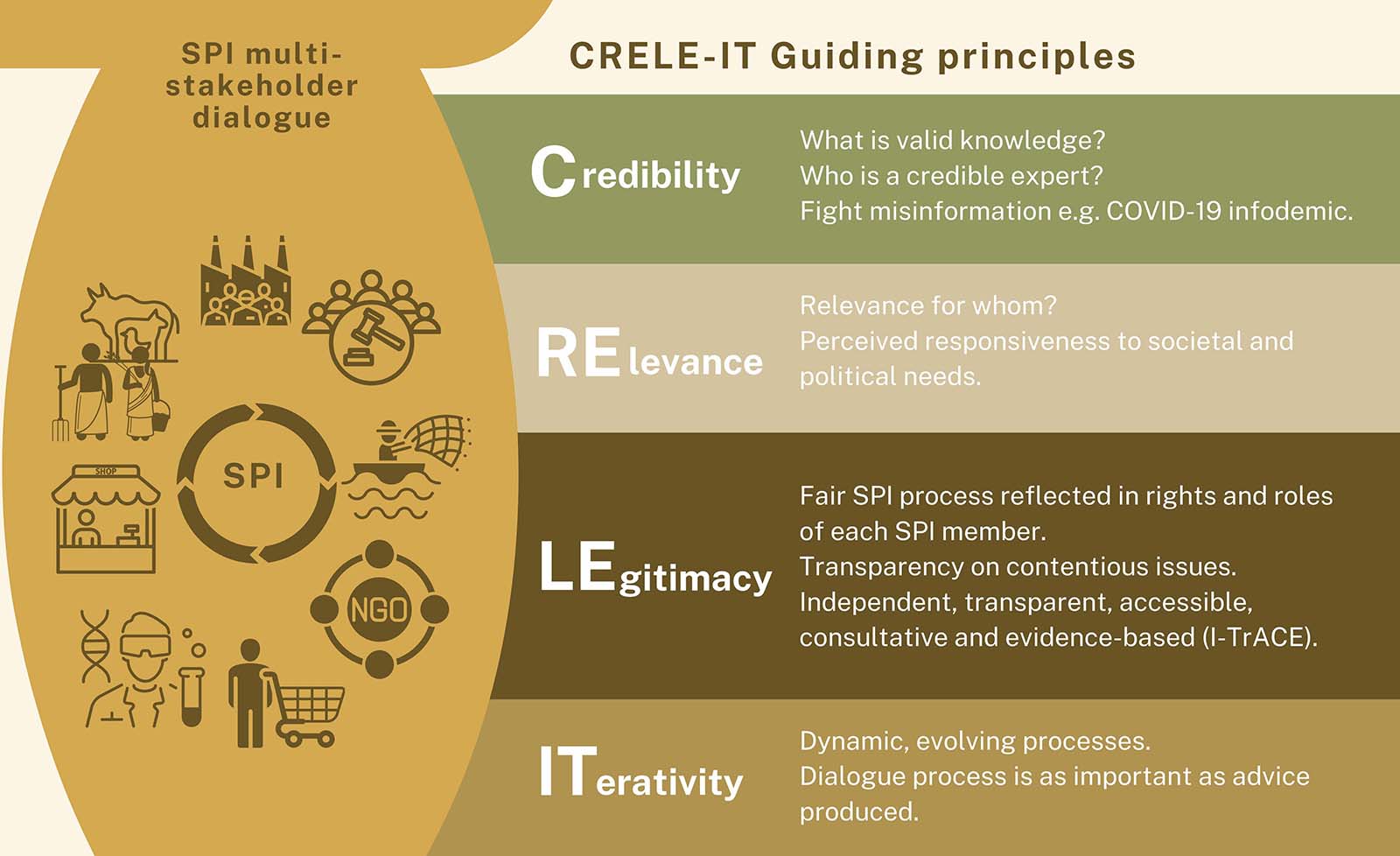
Academic analyses of existing attributes/criteria from the academic literature on SPIs posit that the main factors for success relate to the principles of credibility, relevance, legitimacy (Cash et al., 2003; Young et al., 2013; Sarkki et al., 2013; UNEP, 2017) and iterativity (Sarkki et al., 2015) – this can be abbreviated as CRELE-IT (Figure 8).
© FAO/Luis Tato
Source: Authors’ own elaboration, based on the body of SPI literature cited in the text.
Credibility refers to the perceived quality, validity and scientific adequacy of knowledge, as well as processes and knowledge holders. It relates, inter alia, to the level at which the audience considers particular knowledge to be accurate, or believable – it could be described as the “degree of trust placed in the evidence” (UNEP, 2017). Given this aspect, credibility is a product of what society or the users of SPI outputs currently consider to be valid information/knowledge. This perception is dynamic. Indeed, even in scientific circles nowadays (known for being somewhat restrictive/exclusionary in the past) actors and knowledge systems that were previously not considered are gaining acceptance and are being increasingly considered via stakeholder engagement processes, or the inclusion of local knowledge. Knowledge pluralism is being embraced by various SPIs. A prominent example is the inclusion of Indigenous Peoples’ and local knowledge in the IPBES conceptual framework and work programme (Diaz et al., 2015; IPBES, 2013, decision IPBES-2/4 in document IPBES/2/17). SPIs may also need to identify what, in relation to its users, is considered to be credible in terms of people and processes, and what mechanisms are in place to provide this credibility. Does a particular national context consider a participatory process to be credible, or only an expert panel? Is a knowledge holder with multiple PhDs considered credible, or one who has known an agrifood system intimately for decades, or a well-positioned, politically influential actor?
Finally, decision-making is increasingly occurring in the face of uncertainty, and misinformation has become commonplace. In the case of the COVID-19 pandemic, the virus represented a risk, but misinformation related to COVID-19 led to a related “infodemic”, undermining global management of the pandemic. Knowledge about the virus was contested and “misinformation function[ed] as a meta-risk that interact[ed] with and complicate[d] public perceptions of the original risk” (Krause et al., 2020). Projected as the most critical global risk in the next two years, actors are poised to exploit misinformation and disinformation, exacerbating societal and political divisions (WEF, 2024). Against this backdrop (and the emergence of artificial intelligence (AI) generated texts, which sometimes contain ‘hallucinations’ where facts are unknown but ‘filled in’ by e.g. ChatGPT in response to a request), new methods for assessing and agreeing on knowledge may be needed. The United Nations Global Principles for Information Integrity7 – encompassing societal trust and resilience, independent, free and pluralistic media, transparency and research, public empowerment, and healthy incentives –serve as a unified foundation for safeguarding and advancing information integrity across all contexts and acknowledge the need for global solidarity.
Relevance (also referred to as saliency) pertains to the perceived responsiveness of the SPI to societal or policy needs. Relevance can include various components such as scope, scale, and timing in relation to decision-making. An important challenge that arises for SPIs is the difference in timelines among various professions that influence and operate at the science–policy interface. A classic example is a scientific result missing the window of opportunity for being used, as the policymaking decision has to happen more rapidly. Knowledge production (e.g. science, Indigenous Peoples’ and local knowledge), implementation (policy and decision-making) and sharing mechanisms (e.g. social media or science communication) have different timelines and speeds. While Indigenous Peoples’ knowledge is considered to be a result of much longer timelines than most scientific studies, science has furnished the evidence of choice in policy over recent decades. Science communication can in theory rapidly convey scientific results to broad lay audiences, and social media accelerates this information sharing, albeit with a still weaker quality control of the messages that are being conveyed. Relevance is also a direct result of the interactions occurring between the producers and users of knowledge. When knowledge is presented without being solicited, it typically has minimal influence on policy processes. The longer these interactions occur in order to define the scope and content of the issue to be addressed, the more relevant the knowledge produced will/perceived to be. Finally, it is crucial to note that relevance may inadvertently result in unquestioning compliance with the perspectives of dominant actors. Thus the question of “relevance for whom?” holds significant weight if the SPI is to be equitable and just, and not solely effective and efficient (Turnhout, Dewulf and Hulme, 2016; Benton, 2023).
Legitimacy relates to the perceived fairness of the SPI process and refers to the rights and responsibilities of people in terms of transparency, inclusion, and fair, just and equitable handling of different values and beliefs. Under the right to science,8 a national government has the obligation to align its measures with the best available scientific evidence. This demands that independent science and independent scientists be engaged in informing policy decisions and those processes be established for the review of outdated policy decisions, considering the evolving, non-static nature of scientific information. Human rights obligations also fall upon businesses and the private sector. Countries are responsible that the companies under their jurisdiction do not infringe on the human rights of individuals, communities and the population.9 In addition, businesses should not be able to withhold relevant crucial scientific information from disclosure under the pretence of confidentiality when the lives and health of people are at stake.
A set of cohesive and interconnected principles – independent, transparent, accessible, consultative and evidence-based (or I-TrACE) – have been proposed to increase the legitimacy of food system SPIs (Clapp et al., 2023). Legitimacy requires careful attention to power and conflict, and it must be ensured that SPIs respect differences, and that they continue to allow for disagreement and contestation. Questions can be posed as to what constitutes evidence, what is knowledge, what is to be believed, are there degrees of truth and what value expert opinion versus inexpert opinion has. Whose knowledge is considered legitimate, and why? Hierarchies of knowledge have become established but are being called into question, justifiably so. Several global-scale intergovernmental platforms are increasingly attempting to include Indigenous Peoples’ and local knowledge, thereby acknowledging the legitimacy of such knowledge (e.g. IPBES, IPCC, HLPE-FSN) and calls have been made for established hierarchies of knowledge to be changed (The Global-Hub on Indigenous Peoples’ Food Systems, 2021). Refusing to establish a hierarchy of knowledge does not mean that all types of knowledge are equal (relativism) but rather to consider that all types of knowledge could contribute to solving complex problems. Creating a successful co-production process in which perspectives can be exchanged and heard is key. Given strong differences, new tools may be required for surfacing differences (e.g. in assumptions about science in society, such as Dressel, 2022) before attempting to handle them (be it by aiming for consensus or presenting the full plurality of views). Indeed, skilled facilitation of the SPI’s process/work is needed for working effectively at the interface. However, multiple studies indicate that the incentives for developing these skills are hindered by the professional landscape (see e.g. the personal time trade-off in Sarkki et al., 2013; Enenkel and Kruczkiewicz, 2022) and needs building (see Section 5.2 on capacity).
Legitimacy also encompasses how trade-offs are considered in deciding among policy options. In a context with strong power differentials, it will be essential to identify winners and losers of particular decisions, and determine how the decisions were reached regarding who wins and who loses (given equally beneficial outcomes for all involved actors are impossible and noting that “win” may even just be status quo rather than being forced to “lose” something).10 Transparency could include making known the controversies (and their level of intensity) that took place and were either resolved or ignored during the process of producing an output of the SPI. Some SPIs have made efforts to assess such disputes.11 Transparency around conflicts of interests is also essential. This includes several aspects, such as: the level of independence of an SPI in its decision-making (e.g. in relation to a host institution and its influence on the SPI’s decision-making and outputs); the sources of financing and possible resulting conflicts of interest; and conflicts of interest by participants in the SPI.12 Informing and addressing the possible conflicts of interest and power differentials, as well as interactions with culture and belief systems are essential for an agrifood system SPI. This will involve carefully considering issues around the inclusion and fair and meaningful engagement of stakeholders and their perspectives, experiences, beliefs and worldviews, as well as the development of clear mechanisms to identify, prevent, assess, monitor and manage conflicts of interest. Furthermore, clear rules on conflicts of interest, lobbying, and ‘revolving doors’ should be adopted for individuals and institutions participating in related governance processes, including those active in scientific research. Such rules would preserve the integrity, impartiality and mandate of national SPIs (IPES-Food, 2023).
Iterativity refers to fostering continuous and multi-directional interactions among science, policy and society. The iterativity attribute underlines the increasingly accepted view that SPIs must be dynamic evolving processes. It highlights the necessity to influence internal and external perceptions of CRELE and enhance learning and outcomes through iterative and reflexive communication (see Sarkki et al., 2015). Iterativity has a different conceptual status than the three previous principles. The other principles are “substantial principles” in that they represent specific values or normative commitments; iterativity, on the other hand, is a “procedural principle”, i.e. it indicates what the process should look like.
The World Health Organization (WHO) and the Evidence for Policy and Practice Information Centre (EPPI-Centre, based at University College London) are currently conducting a rigorous scoping review focused on the foundational principles of evidence-informed policymaking (EIP; see Box 6). This work aims to identify EIP principles described in the literature on health and social systems policymaking domains and investigates how these principles interrelate and contribute to EIP by mutually reinforcing or possibly interfering with each other in practice.
Varying perspectives and wide-ranging definitions of EIP principles create a need for a harmonized set of agreed-upon principles in this field to streamline EIP and knowledge translation efforts, help promote collaboration and serve as a robust foundation for policy-making processes. While several attempts have been made to describe principles and frameworks for evidence-informed policymaking (cf. Evidence-based Policymaking Collaborative, 2016; Parkhurst, 2017; OECD, 2020; Evaluation Task Force, 2022; WHO, 2023), a comprehensive assessment to understand the breadth of the available literature in a consolidated, unified framework is still lacking. To address this gap, the review team developed a comprehensive search strategy that included both thorough database searches and grey literature reviews. While no language restrictions were applied, the review is limited to records published since 2005. After having identified almost 9 000 initial records, the review team is now (2024) conducting a rapid review and screening the records by title and abstract before the remaining records will undergo a thorough full-text review. The anticipated findings of this scoping review will allow mapping of established EIP principles and exploration of trends over time. This work will contribute to establishing common EIP principles, ideally going beyond WHO, across international organizations, academia, government, and other actors in the evidence ecosystem. WHO and EPPI-Centre hope that the final set of identified principles will be used to foster and strengthen evidence-informed policymaking processes and collaboration across policy areas in support of the achievement of the SDGs.
Sources: Evaluation Task Force. 2022. What Works Network membership requirements. GOV.UK. https://www.gov.uk/government/publications/what-works-network-membership-requirements
Evidence-based Policymaking Collaborative. 2016. Principles of Evidence-Based Policymaking. https://www.urban.org/sites/default/files/publication/99739/principles_of_evidence-based_policymaking.pdf
Parkhurst, J. 2017. The politics of evidence: from evidence-based policy to the good governance of evidence. Routledge Studies in Governance and Public Policy. Routledge, Abingdon, Oxon, UK. ISBN 9781138939400 https://www.taylorfrancis.com/books/oa-mono/10.4324/9781315675008/politics-evidence-justin-parkhurst
OECD. 2020. Building Capacity for Evidence-Informed Policy-Making: Lessons from Country Experiences. OECD Public Governance Reviews. OECD. https://doi.org/10.1787/86331250-en
WHO. 2023. Supporting the routine use of evidence during the policy-making process: A WHO checklist. WHO. https://www.who.int/publications-detail-redirect/9789240056145
© FAO/Asif Hassan
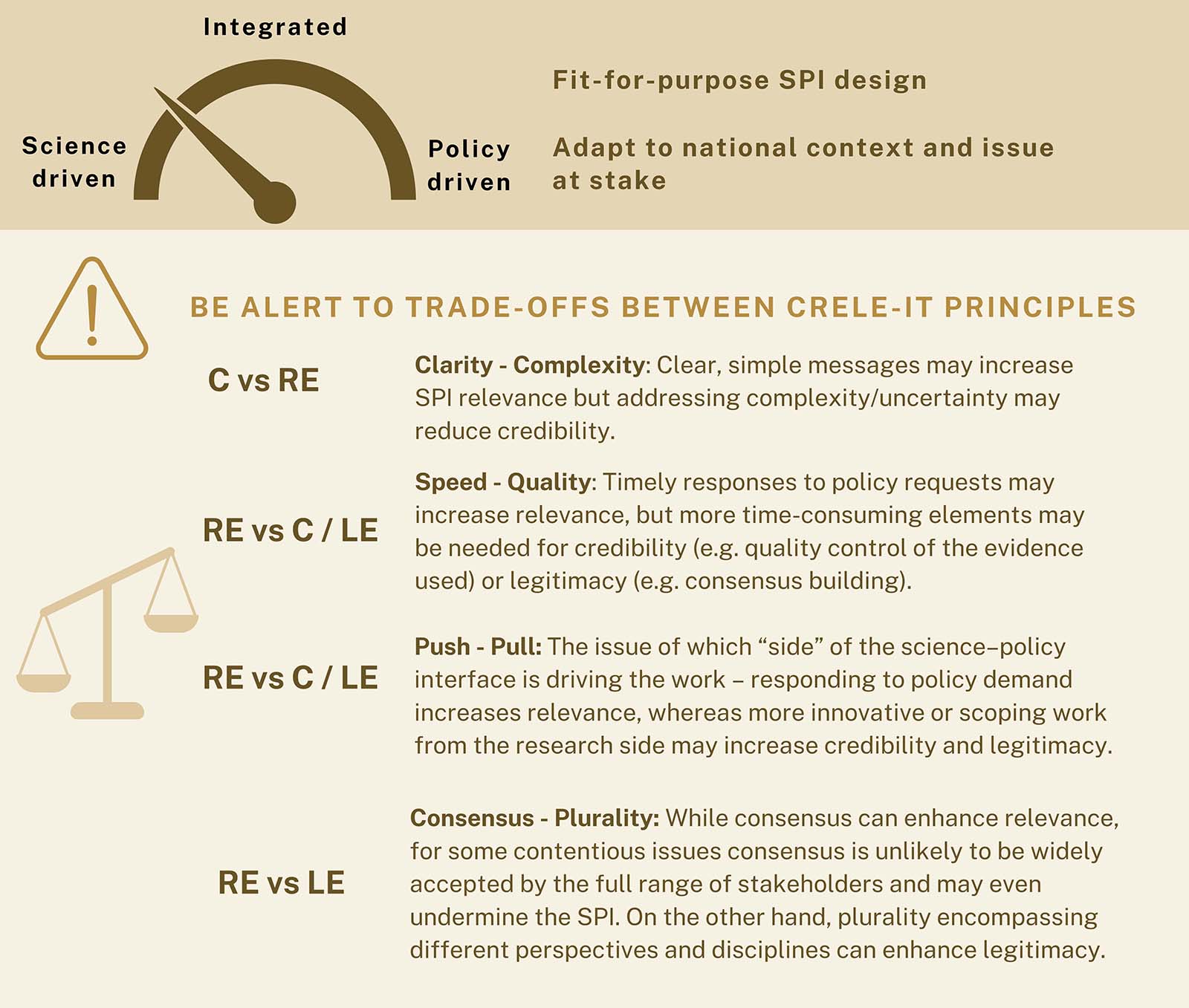
These generic principles can be implemented in different ways depending on the national context and the particular issue at stake. For instance, legitimacy may sometimes mean that a large range of stakeholders contribute intensely to an SPI and have a strong role in the SPI’s governance. At other times, it may simply mean that stakeholders are merely consulted (e.g. by means of a survey) and have limited or no say in the SPI governance. Thus, in the context of agrifood systems transformation, depending on the national context, different aspects would need addressing and, depending on existing science-for-policy mechanisms already in place, the approach would differ. The balance between these principles may vary (e.g. according to policy cycles, internal dynamics of actors, stage of establishment of the SPI) and evolve according to specific needs of the SPI and the chosen model (see Section 3.3 on models).
In defining the principles of the SPI, it is important to acknowledge that there may be trade-offs among the principles, in particular among credibility, relevance and legitimacy. Studies investigating trade-offs among types of SPI (assessments and boundary bridging initiatives, Sarkki et al., 2013) have identified four major ones, some of which relate to more than one CRELE-IT principle (Figure 9).
Source: Adapted from Sarkki, S., Niemelä, J., Tinch, R., van den Hove, S., Watt, A. & Young, J. 2013. Balancing credibility, relevance and legitimacy: A critical assessment of tradeoffs in science–policy interfaces. Science and Public Policy, 41(2), 194–206. https://doi.org/10.1093/scipol/sct046
In addition, there can be trade-offs between SPI activities as a whole and activities outside the SPI. For instance, staff involvement in interface activities versus other activities – often their main role is not at the interface but within their profession (be it as a scientist or policymaker).
Synergies among the four elements of CRELE-IT can also be found. For instance, including relevant stakeholders in an SPI process for reasons of legitimacy may also increase the relevance of the outputs because stakeholders can influence the products to be more applicable to their needs. When Indigenous Peoples’ systems are seen as an important source of knowledge (not always the case, see developments described in The Global-Hub on Indigenous Peoples’ Food Systems, 2021), including Indigenous Peoples and local knowledge for credibility can increase legitimacy (see Khan et al., 2023).
The exact constellation of trade-offs and synergies among credibility, relevance and legitimacy elements is likely to vary according to context, but also according to the broader science–policy model that underlies the SPI (see Section 3.3). Therefore, there is no single way for a given interface to ensure these attributes are present. Instead, a regular assessment of the elements of a given SPI in its given context is important. It follows that regular self-assessment and adaptive management of the SPI is essential (see Section 5.3).
The inequities and biases in the available knowledge base for agrifood systems are significant, resulting in the marginalization of specific forms of agricultural production and associated stakeholder groups, and because knowledge systems about food cannot be easily commensurate or integrated. Consensus comes at potentially too high a cost in these cases. Hence it is key to safeguard plurality in the design and procedures of an agrifood system SPI. Guiding principles at the national level could be inspired by the FAO Science and Innovation Strategy (FAO, 2022)13 which highlights the importance of taking a systemic view and avoiding a reductionist approach to framing issues, instead being pluralistic and inclusive, and ensuring the independence of knowledge from vested interests. A good example is the HLPE-FSN, which articulates with the CFS for the policy process, and ensures legitimacy by engaging in extensive stakeholder consultations, incorporating knowledge and expertise from various quarters, and approaching contested issues and knowledge gaps in even-handed ways (Duncan and Claeys, 2018).
The High-Level Expert Group (HLEG), established by the European Commission to assess the needs and options for strengthening SPIs for improved food systems governance, has put forward the following principles for effective SPIs: political legitimacy; participation of traditionally excluded and equity-seeking groups; transparency and democracy; work across scales and sectors; autonomy and rigour; and clearly defined and measurable impacts (European Commission et al., 2022). Another framework, which seems written more from a practitioners’ perspective working on agrifood systems, includes a three-thirds principle for policy engagement (Evidence, Outreach, Engagement as used by CCAFS14) and relates it to the CRELE principles (Dinesh et al., 2018). A follow-up document also includes elements related to iterativity (Koerner et al., 2020 on climate smart agriculture links it with the Campbell et al., 2006 learning wheel for effective research and development).
While there is consensus that policymaking can benefit from scientific and other types of evidence (European Commission, 2007; UNESCO, 2016), the specific norms and mechanisms of SPIs are contested (Guba and Lincoln, 2000; Van Zwanenberg and Millstone, 2005; Skelton, 2021). This is for two reasons. First, SPIs are subject to a variety of contextual factors such as the specifics of a given policy problem, the political and cultural context, or the relative degree of uncertainty. Second, there are various conceptual models to describe the relationship between science and policy, or the relationship between evidence and decision-making more broadly (Hulme, 2009; Kowarsch, 2016; Dressel, 2022). Representing competing epistemological and normative background assumptions, these science–policy models can be seen as different ways to operationalize the CRELE-IT principles and hence as different templates for the procedural and institutional architecture of SPIs. Despite their relevance, however, science–policy models often remain implicit in SPIs. This can give rise to misunderstandings or even frustration when stakeholders with different backgrounds interact in an SPI (Eigenbrode et al., 2007; Hubbs, O’Rourke and Orzack, 2020). It is therefore helpful to make the underlying science-policy models explicit and systematically reflect the background assumptions early in the design phase of SPIs (see Annex 3).
Drawing from the FAO background study on national SPIs (Stewart and Patiño-Lugo, 2024), three science–policy models are discussed below: the policy-oriented model, the production-focused model and the integrated model. Historically, there has been a dominance of either the policy-oriented or the production-focused model, but in recent decades the scholarly literature and to some extent also national SPI practices have seen a shift towards the integrated model (Mauser et al., 2013; Edenhofer and Kowarsch, 2015; Fazey et al., 2020). Yet it is important to acknowledge that all three models have their strengths and weaknesses/blind spots, and that none of them is perfect. Furthermore, these models are conceptual idealizations and do not necessarily represent real-word SPIs. When designing an SPI, it is therefore advisable to consider all three models and identify a reasonable mix that does justice to the context as well as the values of the involved stakeholders.
The three models can be described as follows:
The mandate of the Scientific Advice Mechanism (SAM) is to provide high quality and independent scientific advice to the European Commission (EC) on matters of importance to Commission policymaking, in as transparent and unbiased a manner as possible. Depending on the nature of the advice requested, and the differing subjects and timelines, it is necessary for SAM to be agile and flexible in its approaches. SAM is is made up of three parts. The Group of Chief Scientific Advisors (GCSA) is composed of seven eminent scientists, appointed in their personal capacity. Their role is to provide independent scientific advice to the College of European Commissioners to inform their decision-making, and thus contribute to the quality of European Union legislation. The advisors work closely with the Scientific Advice for Policy by European Academies (SAPEA) consortium, which gathers expertise in engineering, humanities, medicine, natural and social sciences from over 100 academies and societies across Europe. Together with a secretariat in the Commission’s Directorate General for Research and Innovation, the GCSA and SAPEA are collectively known as SAM. SAM delivers scientific opinions containing policy recommendations, as well as other lighter advice in the form of technical reports or statements that set out the evidence without policy recommendations. The scientific opinions respond to specific policy-relevant questions of one or more commissioners/vice-presidents/president, hence at the highest political level, which are then further set out in a scoping paper. The scoping paper frames the ambition of the opinion. The SAM process, quite unique, well-structured and rigorous, has been carefully fine-tuned over recent years. The scientific opinions are the result of the authoritative synthesis of evidence emerging from literature reviews, the knowledge of a multidisciplinary team of top experts conducting the evidence review, and the expertise of the GCSA in developing scientific advice. The evidence is examined against the policy landscape, and the resulting policy recommendations are reviewed in expert workshops and in stakeholder meetings. The scientific opinions are delivered to the College of Commissioners and President. Their release is supported by a public campaign to ensure transparency and their wide dissemination, which includes citizen summaries. SAM has built up a significant portfolio of expertise in areas such as agriculture, environment, health, energy, food systems, crisis management, as well as meta-analysis of scientific advice processes. Numerous opinions are related to food and agriculture, including the 2023 scientific opinion Towards Sustainable Food Consumption, which built on the 2020 opinion Towards Sustainable Food Systems that informed the European Union’s Farm to Fork Strategy at the heart of the European Green Deal. Both scientific opinions were requested by the European Union Health and Food Safety Commissioner. Furthermore, in 2017, upon request by the former European Union Health and Food Safety Commissioner, SAM produced an explanatory note New Techniques in Agricultural Biotechnology, with an updated scientific overview of new agricultural biotechnologies compared with existing techniques, which informed the public debate of the European Commission conference on modern biotechnologies in agriculture (Brussels, 28 September 2017), and was used by the Legal Service in the proceedings in a genetically modified organism case. In 2017, SAM also released an opinion on Food from the Oceans requested by the former Commissioner responsible for Environment, Maritime Affairs and Fisheries. Currently, SAM is working on scientific opinions requested on Solar Radiation Modification and One Health in the European Union. A full list of all scientific advice can be found here.
In accordance with the development in the scholarly literature and, to some extent, recent changes in some national SPI practices, this guidance rests more on the integrated than on the policy-oriented or the production-focused models. However, all three models have certain benefits and advantages. For instance, while the policy-oriented and the production-focused models may miss valuable knowledge sources and resonate less with stakeholder needs and values, SPIs inspired by these models can be less costly and faster than SPIs that engage in the extensive stakeholder dialogues envisioned by the integrated model. On the other hand, an SPI inspired by the integrated model can be more efficient when scientific evidence is contested, or when local knowledge holders have better access to the relevant data than scientists (for a classic case, see Wynne, 1996). Vice versa, the production-focused model has its strengths when scientists are the first to discover a problem, as was the case for global warming and ozone depletion, whereas the policy-oriented model is most plausible when a problem originates from the policy process, e.g. in certain contexts of administrative planning. Taken together, different actors may favour different models because they hold different normative and epistemological background assumptions, but the continued existence of all three models is justified (Dressel, 2022). Those responsible for designing an SPI should therefore consider which model, or which model mix, best suits the particular context and resonates most with the relevant stakeholders, thereby avoiding the danger of unknowingly following implicit assumptions that may lead to controversy later in the SPI and decision-making process (see Annex 3).
Creating KTPs at the country level requires a solid understanding of the local evidence ecosystem, the barriers and facilitators of evidence use, and strong connections with the key local stakeholders. Based on a situation analysis, it is possible to identify the products and services the KTP should prioritize. These priorities, in turn, point to the competencies that need to be developed. Evidence-informed policymaking and knowledge translation competencies frameworks (Barreto et al., 2023) can be used as a base for that, and further customized as needed. As the platform begins to operate, it is important to maintain open communication channels to monitor and assess the products and services developed. Through reciprocal learning with the evidence consumers and other relevant stakeholders, the KTP will gradually hone and further develop its capacity to promote evidence uptake, while also strengthening a culture of evidence use in its surroundings. WHO’s Evidence-informed Policy Network (EVIPNet) is a global initiative that promotes knowledge translation for better health policymaking (WHO, 2016). EVIPNet provides capacity-building opportunities and a learning platform for country KTPs, supporting them in leveraging the best available evidence to deliver high-quality health policies and sustainably strengthen health systems. One of EVIPNet’s success stories is the Brazilian case. In 2007, the Brazilian Ministry of Health (MoH), in collaboration with EVIPNet Global, created EVIPNet Brazil, a national network to promote evidence-informed decision-making (Wichmann, Carlan and Barreto, 2016). EVIPNet Brazil is facilitated by a unit in the MoH that works as a secretariat, supporting local KTPs across the country. Through EVIPNet Brazil, the MoH can identify relevant research questions for policy priorities, and commission related knowledge translation products providing evidence-informed policy options. In addition, EVIPNet Brazil has provided capacity building to the local KTPs and promoted public discussions on EIP, strengthening the culture of evidence use in Brazil, spreading also to other sectors and related ministries, most recently the Ministry of Human Rights and Citizenship. For the development of local KTPs, joining EVIPNet Brazil is a strategic move. Through EVIPNet, they find access to training resources, opportunities for funding and partnerships, spaces to showcase their work, and a forum to request support when needed.
Sources: Barreto, J.O.M., Romão, D.M.M., Setti, C., Machado, M.L.T., Riera, R., Gomes, R., Machado, D.A. et al. 2023. An evidence-informed policymaking (EIPM) competency profile for the Brazilian Health System developed through consensus: process and outcomes. Health Research Policy and Systems, 21(1): 105. https://doi.org/10.1186/s12961-023-01052-z
Wichmann, R.M., Carlan, E. & Barreto, J.O.M. 2016. Consolidação da Rede para Políticas Informadas por Evidências – EVIPNet Brasil: relato da experiência nacional de construção de uma plataforma de tradução do conhecimento para o SUS. Bis, São Paulo,17(1): 18-31. https://doi.org/10.52753/bis.v17i1.35359
WHO. 2016. EVIPNet in action- Executive Summary. https://iris.who.int/bitstream/handle/10665/250582/WHO-HIS-IER-REK-16.03-eng.pdf?sequence=1


Required citation:
FAO 2024. Guidance on strengthening national science–policy interfaces for agrifood systems. Rome, FAO. https://doi.org/10.4060/cd3125en
The designations employed and the presentation of material in this information product do not imply the expression of any opinion whatsoever on the part of the Food and Agriculture Organization of the United Nations (FAO) concerning the legal or development status of any country, territory, city or area or of its authorities, or concerning the delimitation of its frontiers or boundaries. Dashed lines on maps represent approximate border lines for which there may not yet be full agreement. The mention of specific companies or products of manufacturers, whether or not these have been patented, does not imply that these have been endorsed or recommended by FAO in preference to others of a similar nature that are not mentioned.
ISBN 978-92-5-139322-2
© FAO, 2024
Some rights reserved. This work is made available under the Creative Commons Attribution-NonCommercial-ShareAlike 3.0 IGO licence (CC BY-NC-SA 3.0 IGO; https://creativecommons.org/licenses/by-nc-sa/3.0/igo/legalcode).
Under the terms of this licence, this work may be copied, redistributed and adapted for non-commercial purposes, provided that the work is appropriately cited. In any use of this work, there should be no suggestion that FAO endorses any specific organization, products or services. The use of the FAO logo is not permitted. If the work is adapted, then it must be licensed under the same or equivalent Creative Commons licence. If a translation of this work is created, it must include the following disclaimer along with the required citation: “This translation was not created by the Food and Agriculture Organization of the United Nations (FAO). FAO is not responsible for the content or accuracy of this translation. The original [Language] edition shall be the authoritative edition.”
Disputes arising under the licence that cannot be settled amicably will be resolved by mediation and arbitration as described in Article 8 of the licence except as otherwise provided herein. The applicable mediation rules will be the mediation rules of the World Intellectual Property Organization http://www.wipo.int/amc/en/mediation/rules and any arbitration will be conducted in accordance with the Arbitration Rules of the United Nations Commission on International Trade Law (UNCITRAL).
Third-party materials. Users wishing to reuse material from this work that is attributed to a third party, such as tables, figures or images, are responsible for determining whether permission is needed for that reuse and for obtaining permission from the copyright holder. The risk of claims resulting from infringement of any third-party-owned component in the work rests solely with the user.
Sales, rights and licensing. FAO information products are available on the FAO website (www.fao.org/publications) and can be purchased through publications-sales@fao.org. Requests for commercial use should be submitted via: www.fao.org/contact-us/licence-request. Queries regarding rights and licensing should be submitted to: copyright@fao.org.
Cover photograph: © FAO/emergencies