

Impact on land suitability for cultivation
Studies of global land suitability for agriculture suggest that climate change will increase the area suitable for agriculture in the northern high latitudes, while tropical regions will experience a reduction in the area suitable for agriculture (Ramankutty et al., 2002; Zabel, Putzenlechner and Mauser, 2014; Olsson et al., 2019).
Of particular concern are coastal areas, including major deltas that are often intensely cultivated. These areas frequently face challenges such as coastal flooding, cyclones, storm surges, waterlogging and seawater intrusion (Habiba and Abedin, 2024). All these challenges are exacerbated by climate change and lead to degradation of soil productivity, affecting agricultural productivity.
In this report, GAEZ v5 estimates of suitable land for four selected crops during the historical period 2001–2020 were compared with projected land suitability derived from an ensemble of five climate change models. The analysis included two Shared Socioeconomic Pathways (SSPs), each associated with specific greenhouse gas emission levels represented by Representative Concentration Pathways (RCPs) (see the Annex for details). More specifically, the analysis on climate change impact used results from the GAEZ v5 historical scenario (2001–2020) and from an ensemble mean scenario for the period 2081–2100 under two climate scenarios: SSP 2.6 – assuming low emissions and significant climate mitigation efforts; and SSP 8.5 – representing a worst-case scenario with minimal mitigation. Trends were assessed separately for four selected crops – maize, wheat, cassava and soybean – under rainfed conditions.
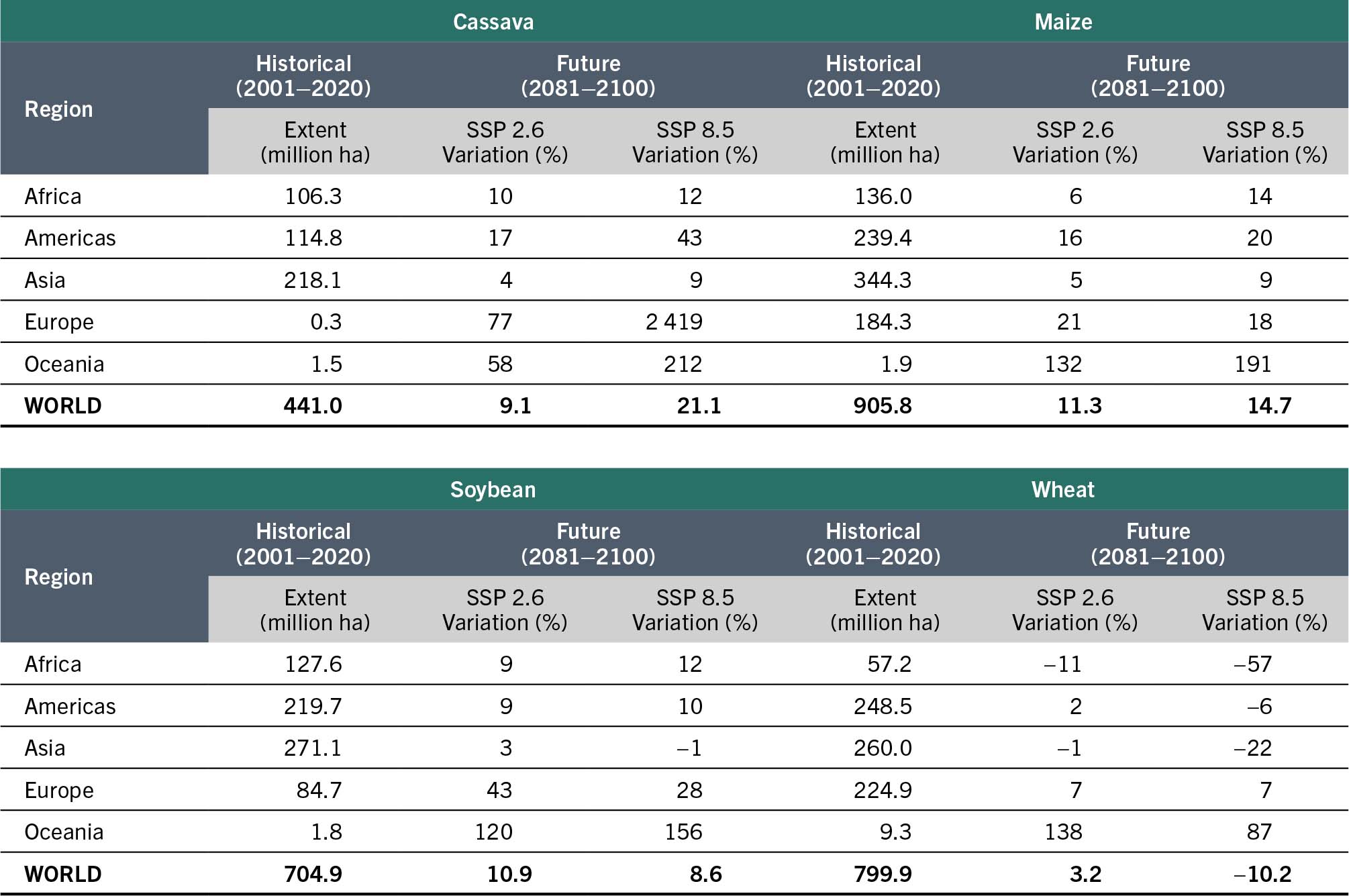
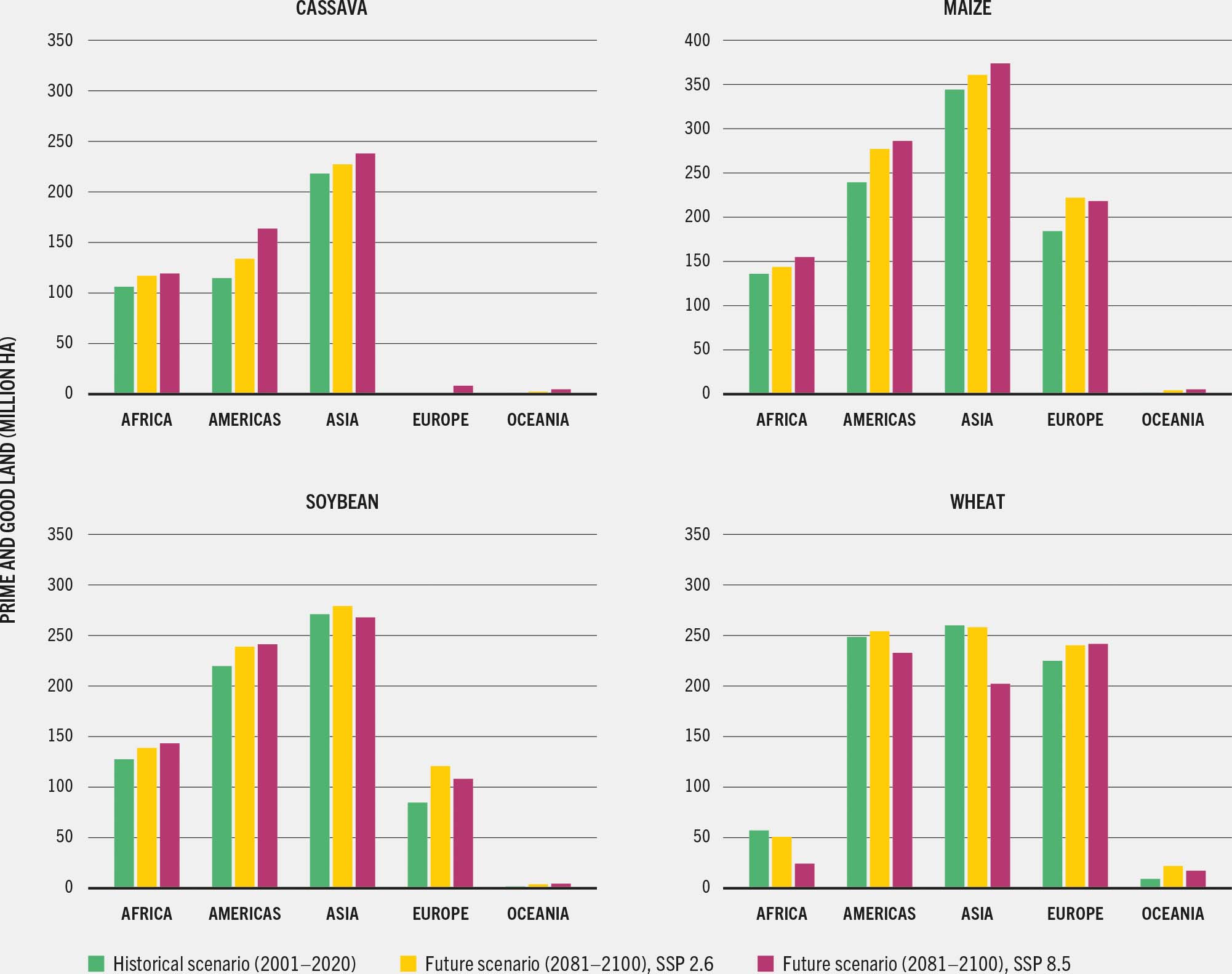
Climate change is projected to alter the distribution of suitable areas for the crops analysed (see Table 9 and Figure 23). Under the SSP 2.6 scenario, global results foresee a net increase in prime and good land suitable for all crops. Results across regions and crops show consistent patterns, with Europe and Oceania experiencing the largest increases, the Americas showing intermediate gains, and Africa and Asia projected to have the least increase. In the specific case of wheat, Africa and Asia are projected to experience some reduction in suitable land even under this moderate scenario, a pattern that becomes more pronounced under the SSP 8.5 worst-case projections.
TABLE 9 EXTENT OF SUITABLE AREA UNDER HISTORICAL CLIMATE SCENARIO (2001–2020) AND NET VARIATIONS FOR FUTURE CLIMATE SCENARIOS (2081–2100): SSP 2.6 (LOW EMISSIONS) AND SSP 8.5 (HIGH EMISSIONS)
SOURCE: Authors’ own elaboration based on FAO & IIASA. 2025. Global Agro-ecological Zoning version 5 (GAEZ v5) Model Documentation. [Cited 13 February 2025]. https://www.fao.org/gaez/en
Figure 23 Historical and projected extent of suitable (prime and good) land under rainfed conditions by region for four main crops under different climate scenarios
SOURCE: Authors’ own elaboration based on FAO & IIASA. 2025. Global Agro-ecological Zoning version 5 (GAEZ v5) Model Documentation. [Cited 13 February 2025]. https://www.fao.org/gaez/en

Under the SSP 8.5 scenario and with an assumption of advanced management conditions in place, projections indicate a net increase in suitable areas for cassava, maize and soybean, but an overall reduction for wheat. This does not necessarily imply higher production of the three aforementioned crops, as the scenarios do not take into account extreme events and socioeconomic factors; the analysis shows the maximum potential, not actual outcomes, under the assumption of ideal biophysical and socioeconomic conditions. For wheat, the largest negative impact is projected in Africa, with a 57 percent reduction from its historical 57 Mha of prime and good land. Asia is also projected to experience a substantial reduction in areas suitable for wheat, with a 22 percent decrease from the 260 Mha of prime and good land in the historical scenario. It should be noted, however, that these findings focus on changes in suitable areas for the selected crops, while increased suitable land does not always correlate with increased productivity (Jägermeyr et al., 2021), especially if climate stressors limit yields even in newly suitable areas. For paddy rice (not shown in the table), the analysis reveals important increases in water demand: +25 percent and +45 percent in the Americas and Europe, respectively, and limited reductions in the other regions.
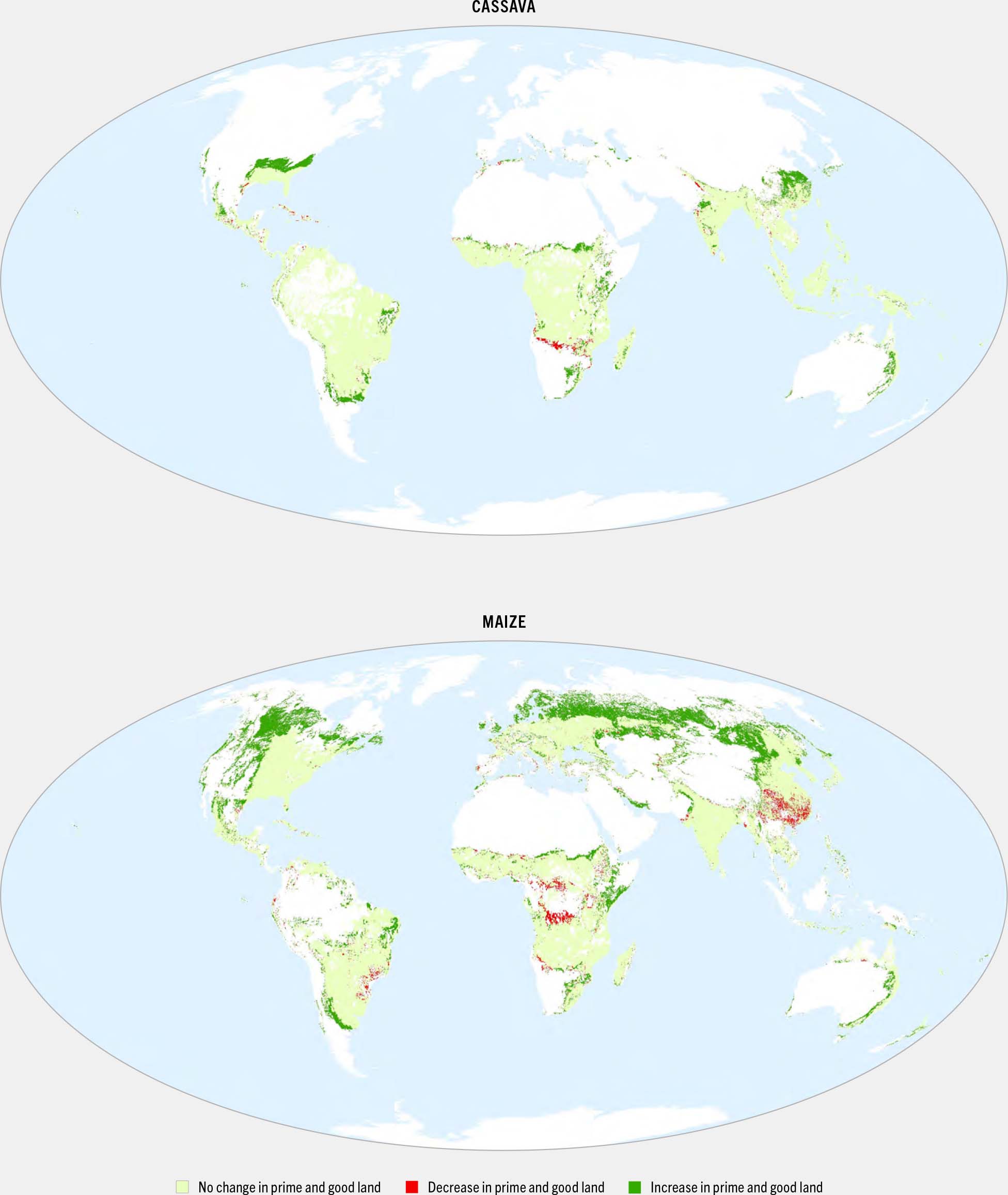
Additional insights may be gained by looking at the spatial distribution of the projected change under future climate scenarios. Figure 24 shows projected climate change impacts on land suitability under SSP 8.5, representing the highest increase in emissions and climate warming, while Figure 25 provides results for the SSP 2.6 scenario.
Figure 24 Impact of climate change on the extent of prime and good land for four crops under rainfed conditions, SSP 8.5
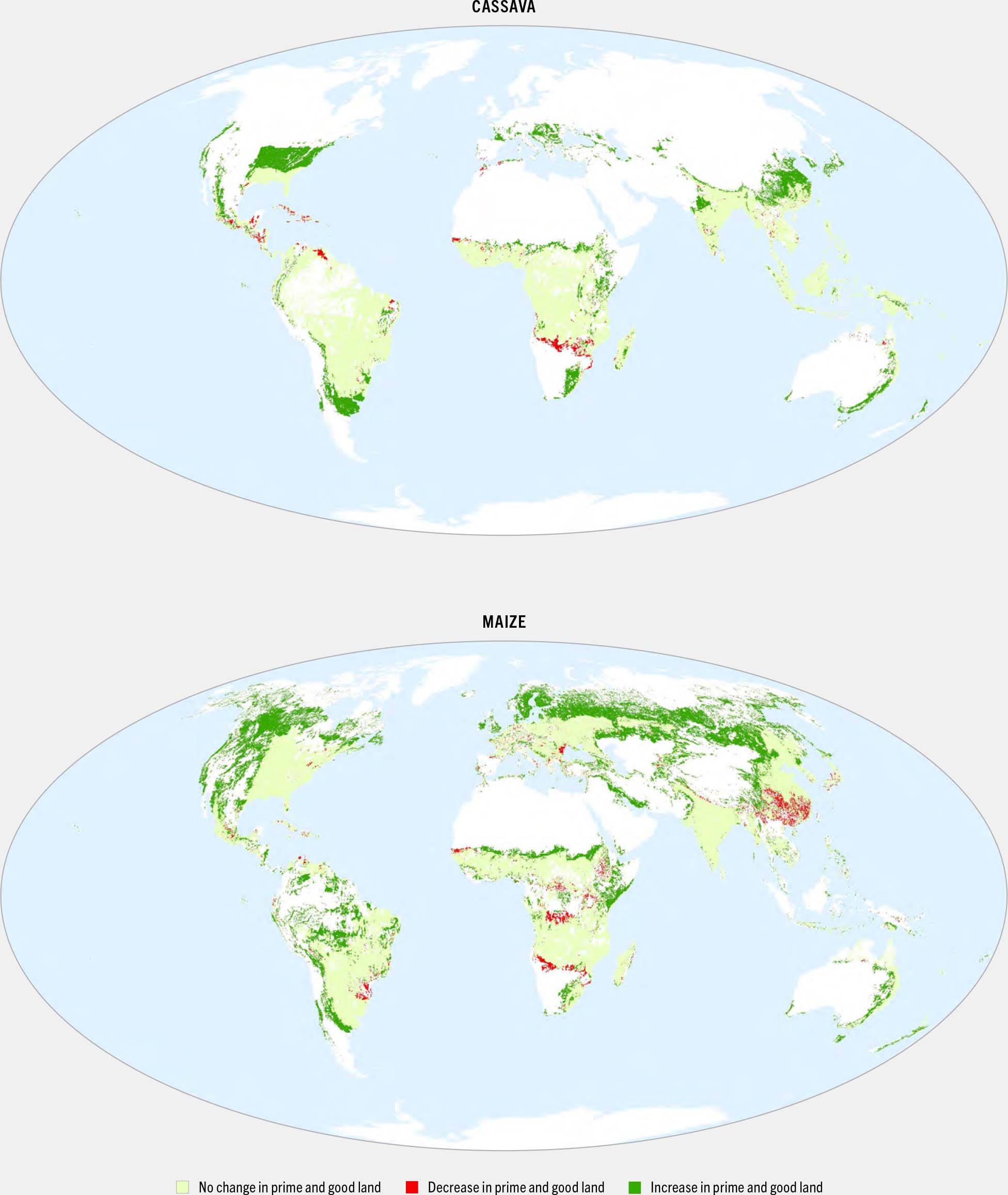
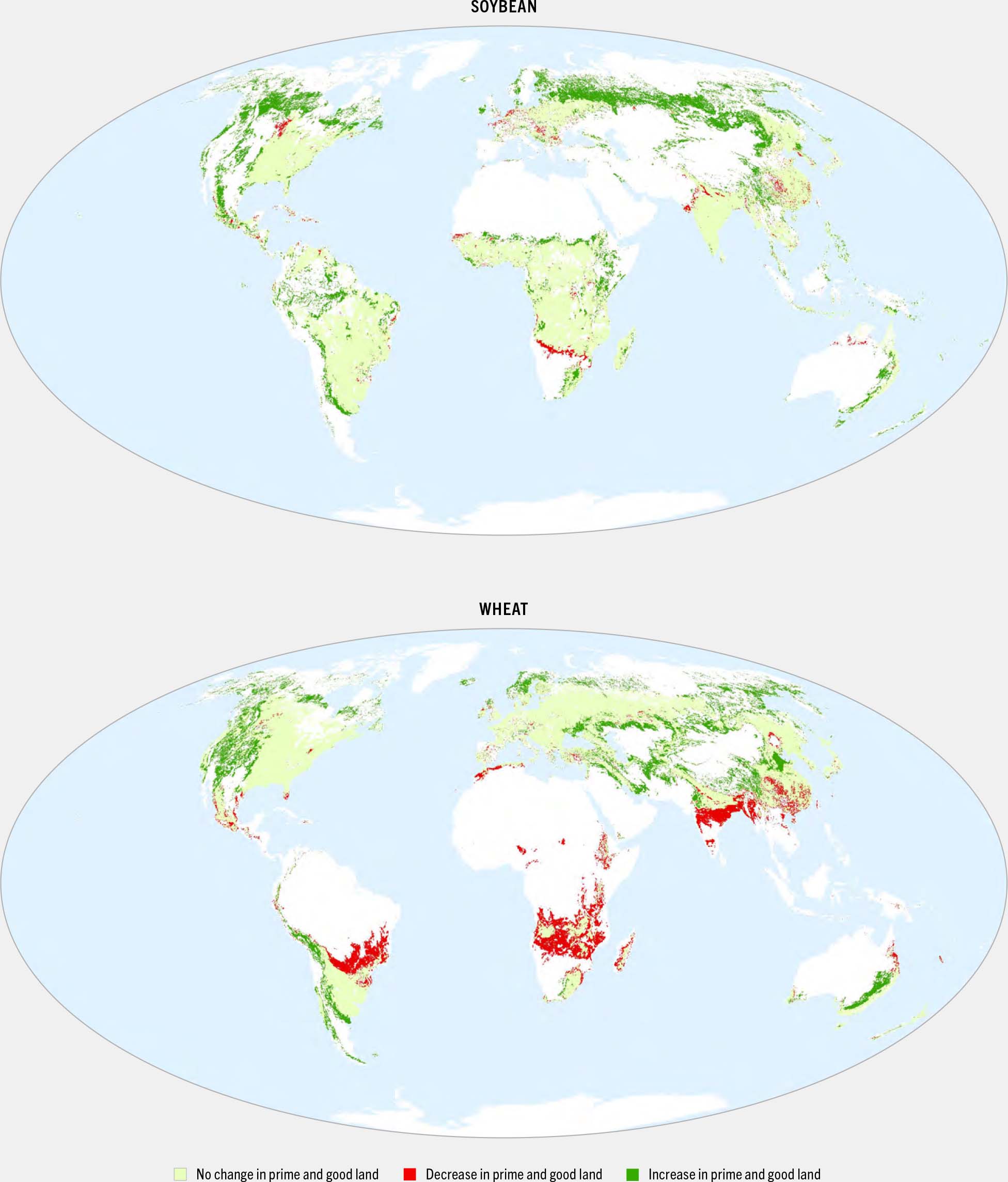
NOTE: The analysis compares the distribution of suitable land between the historical scenario (2001–2020) and future projections (2081–2100) under the SSP 8.5 high-emissions climate scenario.
SOURCE: Authors’ own elaboration based on FAO & IIASA. 2025. Global Agro-ecological Zoning version 5 (GAEZ v5) Model Documentation. [Cited 13 February 2025]. https://www.fao.org/gaez/en
Figure 25 Impact of climate change on the extent of prime and good land for four crops under rainfed conditions, SSP 2.6
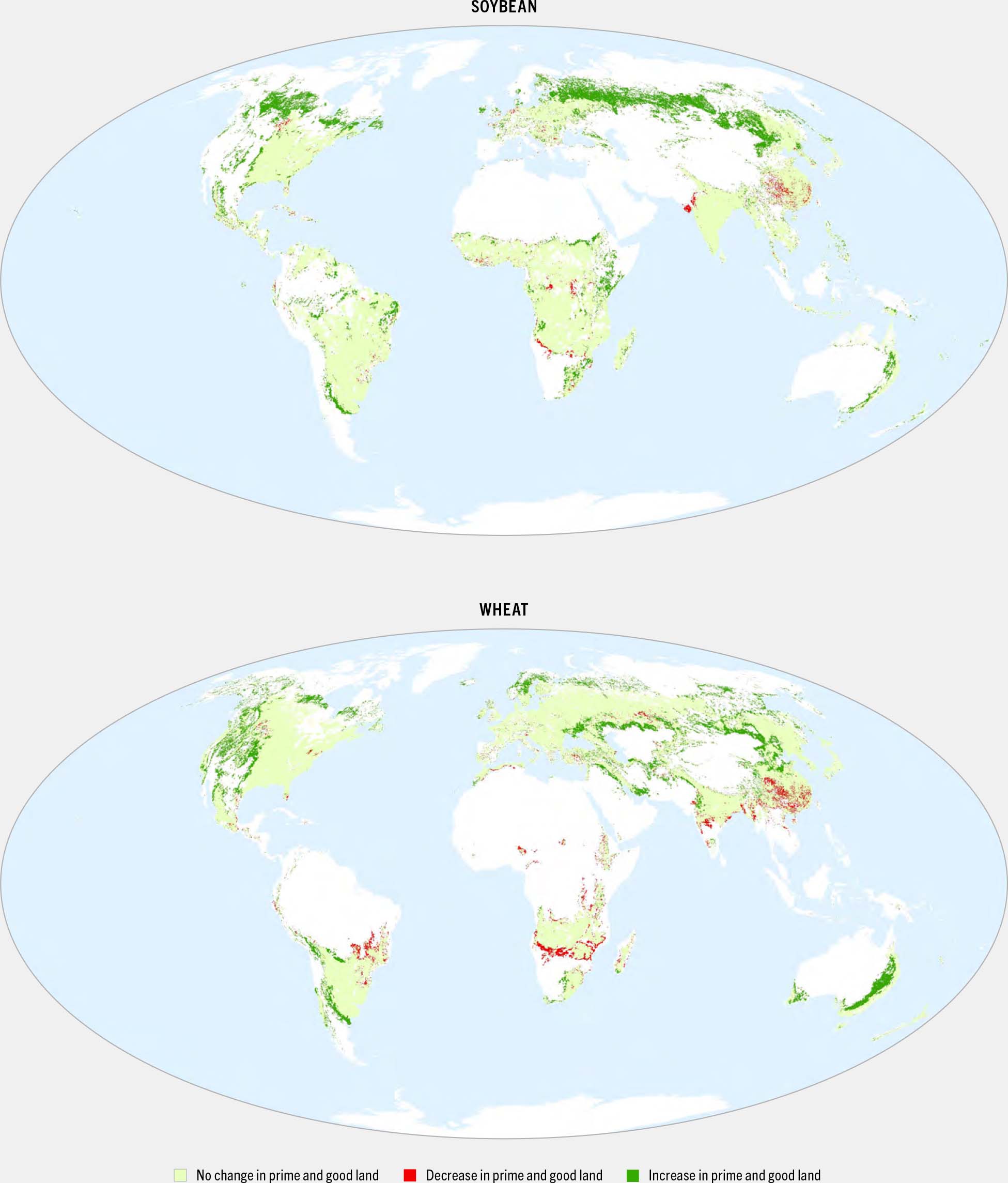
NOTE: The analysis compares the distribution of suitable land between the historical scenario (2001–2020) and future projections (2081–2100) under the SSP 2.6 low-emissions climate scenario.
SOURCE: Authors’ own elaboration based on FAO & IIASA. 2025. Global Agro-ecological Zoning version 5 (GAEZ v5) Model Documentation. [Cited 13 February 2025]. https://www.fao.org/gaez/en
Under the SSP 8.5 scenario, cassava is projected to gain additional land suitable for cultivation, including in areas where this crop is not currently grown. Notably, significant increases in suitable land are anticipated in Australia, China and the United States of America. Conversely, large cassava-producing countries, such as Zambia and Zimbabwe, are projected to face a decline in the area suitable for this crop. The GAEZ assessment of crop suitability under future climate scenarios assumes optimized management levels and focuses exclusively on rainfed conditions. Since the GAEZ analysis also integrates terrain and soil constraints, direct comparison with results from a recent study on future crop suitability (Mombo et al., 2025) is challenging. Nevertheless, both assessments agree that crop suitability under the most adverse climate conditions is likely to exhibit substantial geographical variability, largely influenced by other factors such as water availability, agricultural inputs and mechanization. The results here are at global level, so consideration should be given to national and local biophysical and socioeconomic conditions when applying the findings.
The area suitable for maize cultivation is projected to increase significantly in Northern America, Northern Europe and the Russian Federation, as well as across Sahelian countries. In contrast, decreases in suitable land are projected in China and Southern Africa, while India and most South-eastern Asian countries are expected to see negligible changes in maize suitability.
Overall, the impact of climate change on soybean appears less pronounced. Climate change is anticipated to positively affect soybean cultivation by expanding suitable areas in Canada, Northern Europe, the Russian Federation and the United States of America, However, reductions in suitable land are also projected in Western Europe. In the Southern Hemisphere, changes are projected to be less dramatic. Brazil, the world’s leading soybean producer, is expected to see some increase in suitable areas, including regions currently under different land uses. Several Southern African countries are projected to face a decline in suitable areas for soybean cultivation under the SSP 8.5 high-emissions scenario.
As indicated earlier, climate change is expected to adversely affect suitability for cultivating wheat in several regions. Under the SSP 8.5 scenario, significant reductions in suitable land are projected in Brazil, Eastern and Southern African countries, and in large parts of China and India. Conversely, increases in wheat suitability are anticipated in Canada and the western regions of the United States of America, as well as in parts of Western Asia. These trends align with findings that global warming will polarize wheat suitability, with colder regions at mid-to-high latitudes benefiting from improved conditions, while low-latitude regions are expected to face substantial declines due to rising temperatures (Guo, Zhang and Yue, 2024).
Climate change is anticipated to significantly alter the global agricultural landscape, creating opportunities for some and exacerbating constraints for others. By 2100, the northern high latitudes are expected to gain substantial agricultural land, while tropical regions will experience losses. This shift underscores the need for countries to adapt to changing conditions by implementing strategic and effective responses. Adaptation strategies such as crop diversification and shifting to more resilient options are especially important. Policy and technical support for farmers transitioning to new crops or practices are crucial. At national level, some of these changes will alter the balance between supply and demand for staple products, with consequences for food trade.
While the impact of climate change on crops is relatively easy to predict, the possible impact on other agricultural production systems such as livestock is much more complex and less well known (Thornton et al., 2009). While heat stress is often seen as the prime expected impact on livestock in all countries except cold countries, the impact on animal feed may become increasingly important as rainfall becomes more erratic and the frequency and intensity of droughts increase, affecting both croplands and rangelands.
Agricultural water demand under climate change
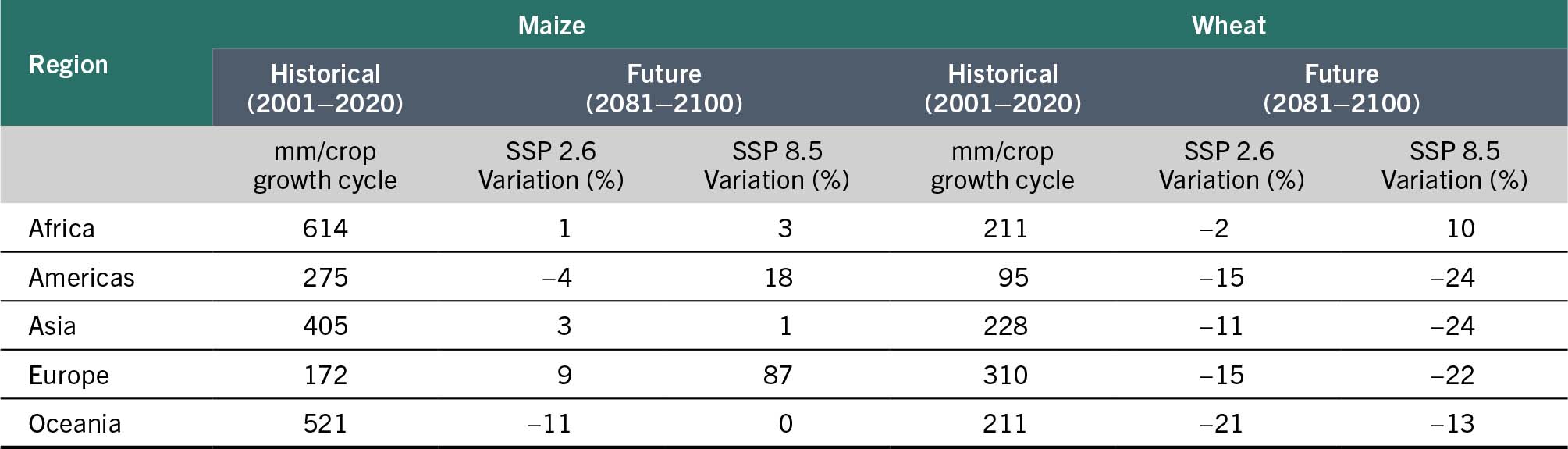
GAEZ measures crop-specific water deficits considering the balance between evapotranspiration and precipitation, a reference soil water retention capacity and the actual soil and terrain conditions for each grid cell (Fischer et al., 2021). Table 10 compares water demand for maize and wheat between the historical period 2001–2020 and two future climate change scenarios: low emissions (SSP 2.6) and high emissions (SSP 8.5). In GAEZ, water demand corresponds to the amount of irrigation water that is needed to reach the plant in order to fully meet crop water requirements. In general, together with changes in temperature regime and precipitation during the crop cycle, other factors such as the shift of the crop calendar or the selection of different crop varieties may contribute to changes in water requirements.
TABLE 10 NET IRRIGATION DEMAND IN THE HISTORICAL PERIOD (2001–2020) AND PERCENTAGE VARIATIONS IN THE FUTURE (2081–2100) UNDER SSP 2.6 (LOW EMISSIONS) AND SSP 8.5 (HIGH EMISSIONS) CLIMATE SCENARIOS
SOURCE: Authors’ own elaboration based on FAO & IIASA. 2025. Global Agro-ecological Zoning version 5 (GAEZ v5) Model Documentation. [Cited 13 February 2025]. https://www.fao.org/gaez/en
The results show significant differences in crop water requirements across the scenarios and across the regions for maize and, to a lesser extent, for wheat (see Table 10). Wheat is projected to undergo notable changes in water demand under both future scenarios. Africa is the only region where water requirements for wheat are expected to increase under high-emissions scenarios, whereas all other regions are projected to experience reductions in water demand.


